
I tested plastic, glass, large saucers, and a copper cleaner to find practical bird-bath setups for cages and yards. Here are the options I rely on for easy cleaning, bird comfort, and long-term maintenance.
I spent time putting a handful of bird baths and accessories through real-world use — in cages, hanging from trees, and sitting on patio tables. My goal was simple: find materials and designs that attract birds, cut cleaning time, and hold up to weather or cage life.
In this roundup I’m focusing on four practical approaches: a purpose-built cage bath, a large plastic saucer repurposed for the garden, a decorative glass hanging bath, and a pure-copper disc that slows algae growth. I’ll tell you what worked, what didn’t, and which setup I reach for depending on the situation.
I compared small cage-friendly plastics, large outdoor saucers, decorative glass bowls, and a maintenance-focused copper disk to show trade-offs between durability, aesthetics, and upkeep. If you want the lowest maintenance, go copper; if you want birds in tight spaces, go cage bath; if you want backyard drama, choose glass or a wide saucer.
1. Lixit Quick Lock Bird Cage Bath – Best for Cages
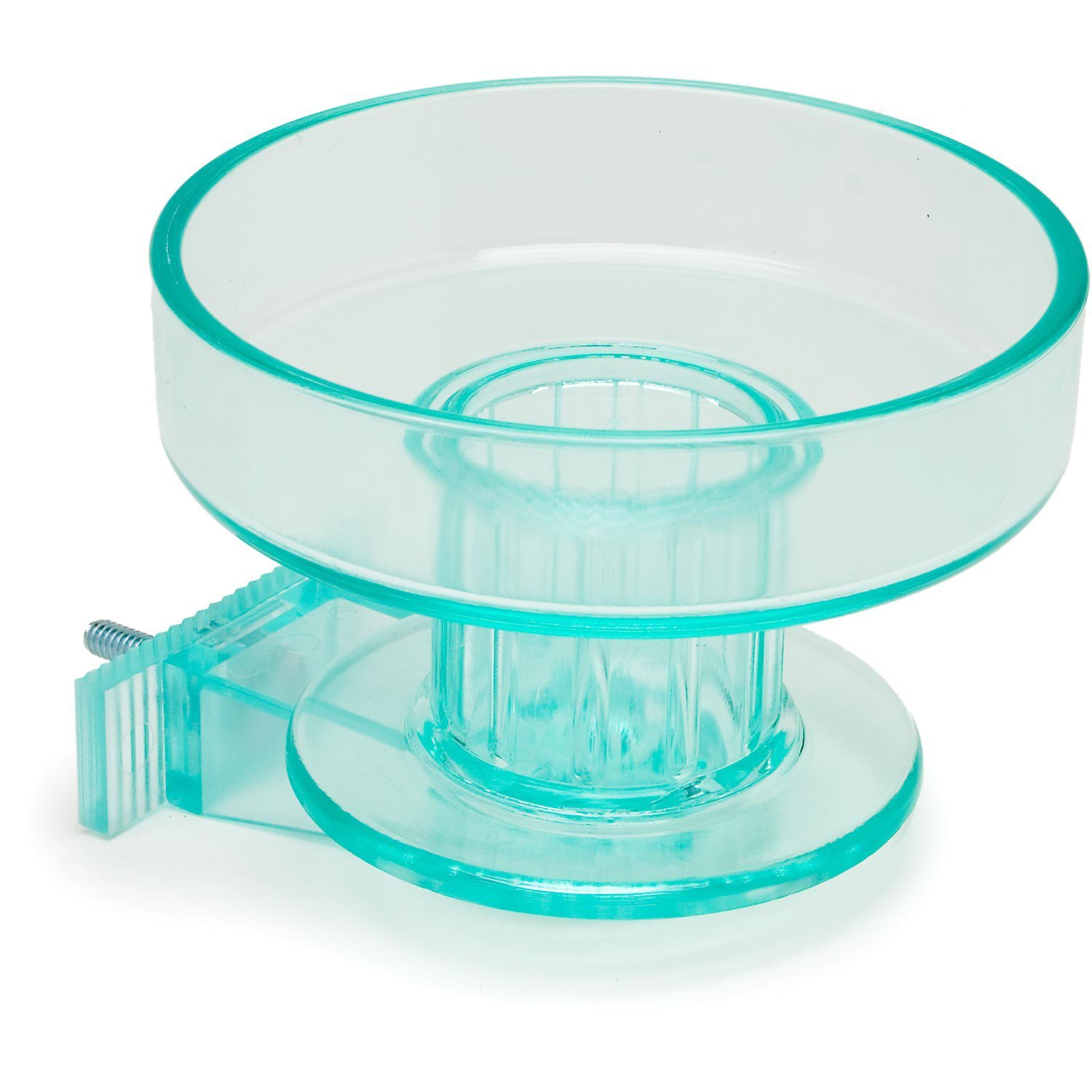
A compact, clear plastic basin with a twist-and-lock mount built for small to medium cage birds.
Why I picked it: It installs in seconds, stays secure, and makes cleaning fast when I’m managing multiple cages.
Best for: Parakeets, lovebirds, canaries, finches, and cockatiels in indoor cages.
An affordable, no-frills option for everyday cage use.
Pros
- Tool-free twist-and-lock installation
- Clear, durable plastic
- Easy to remove and clean
- Fits most cage bar spacing
Cons
- A bit shallow for larger birds
- Can crack if over-tightened
- Plain look for decorative setups
My take
I use this Lixit bath across several cages because it truly lives up to the promise of quick installation. The twist-and-lock makes it secure without tools, and the basin swivels free so I can empty and scrub it in seconds.
My small birds hopped in right away; the semi-transparent plastic seems to reassure them. In practice it’s robust — not flimsy — but I avoid tightening the nut with tools because over-wrenching is how I’ve seen similar parts crack.
If you have slightly larger birds or want a deeper pool for more dramatic splashing, the basin feels a little shallow. For daily cage life and fast maintenance, though, this is the part I keep on hand.
2. Bleuhome 19" Plant Saucer (2-Pack) – Best for Large Outdoor Baths
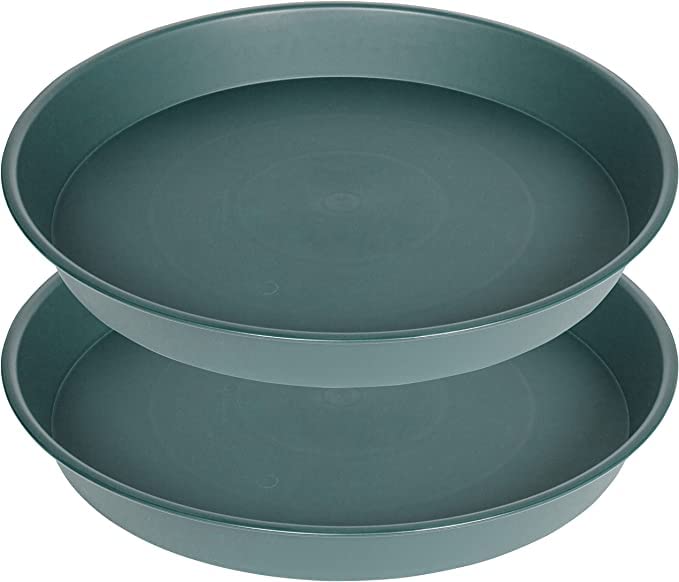
A wide, shallow polyethylene saucer that doubles as a roomy bird bath for multiple garden visitors.
Why I picked it: Its large diameter and thick PP construction give birds space to perch and bathe while staying weather-resistant.
Best for: Backyards and patios where you want multiple birds or larger species to visit.
High value for big coverage and multi-purpose use.
Pros
- Large surface area for multiple birds
- Thicker PP plastic, feels sturdy
- Matte finish looks nicer outdoors
- Multi-use as saucer or feeder
Cons
- Plastic can crack under very heavy planters
- Not as decorative as glass or metal
- Shallow for very large waterfowl
My take
I repurposed these saucers as garden baths and immediately appreciated the size — birds can perch along the rim while others splash. The 19-inch diameter gives wildlife more comfortable space than most ornamental bowls.
They feel heavier and more durable than thin, cheap plastic saucers. In sun-exposed spots they held up well, and the matte coloring blended with my planters instead of shouting ‘plastic’.
A word of caution: if you try to use one under a very heavy pot or lift a soaked, heavy planter over the rim, the plastic can crack. For pure bird-bathing use and as an inexpensive way to create a wide shallow pool, these work great.
3. MUMTOP Sunflower Hanging Glass Bird Bath – Best Decorative Hanging Bath
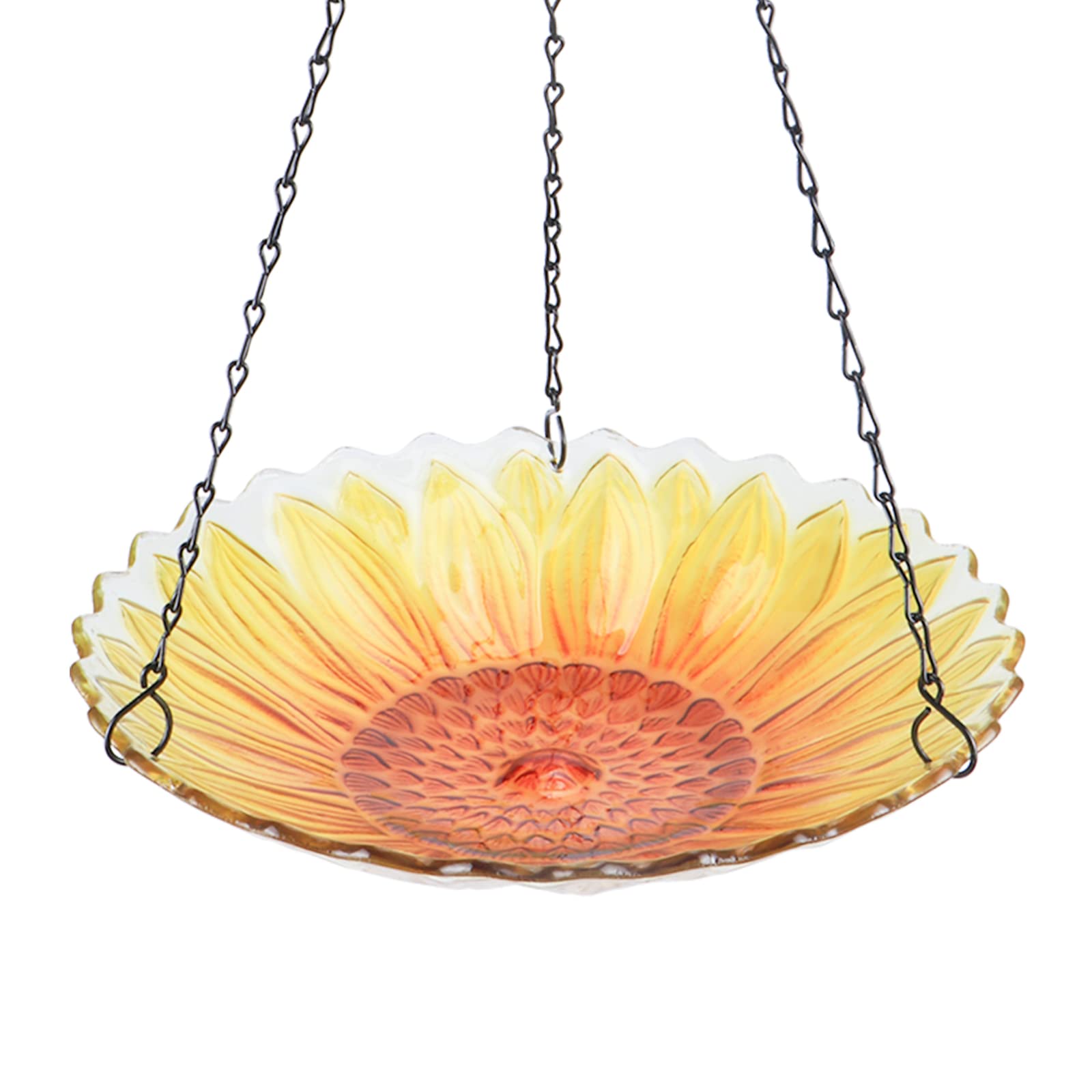
A brightly painted glass bowl with a ripple rim and rust-resistant chain for hanging in trees or from hooks.
Why I picked it: It combines eye-catching color with a shallow, easy-to-clean bowl that I can hang where ground baths aren’t practical.
Best for: Small backyard birds and spots where you want a decorative focal point.
A midrange decorative option that doubles as a feeder.
Pros
- Vibrant hand-painted glass
- Hangs to deter ground predators
- Shallow rim easy to clean
- Can double as a feeder
Cons
- Glass is fragile in freezing conditions
- Can hang slightly uneven from chain
- Not suited for heavy/dive-bathing birds
My take
I hung this sunflower bowl from a branch and it instantly upgraded the space. The colors are bright and the ripple rim gives birds a shallow, inviting bathing area.
Because it hangs, I felt better about keeping it away from neighborhood cats and deer. Cleaning is straightforward: a quick rinse and wipe gets rid of droppings and debris.
The trade-off is fragility — I brought it in for winter because glass will crack if it freezes. Also, one chain link on my unit left it a touch crooked, but the visual payoff and the safety of a suspended bath made it a favorite for decorative spots.
4. Mellbree Pure Copper Bird Bath Disk – Best for Low Maintenance
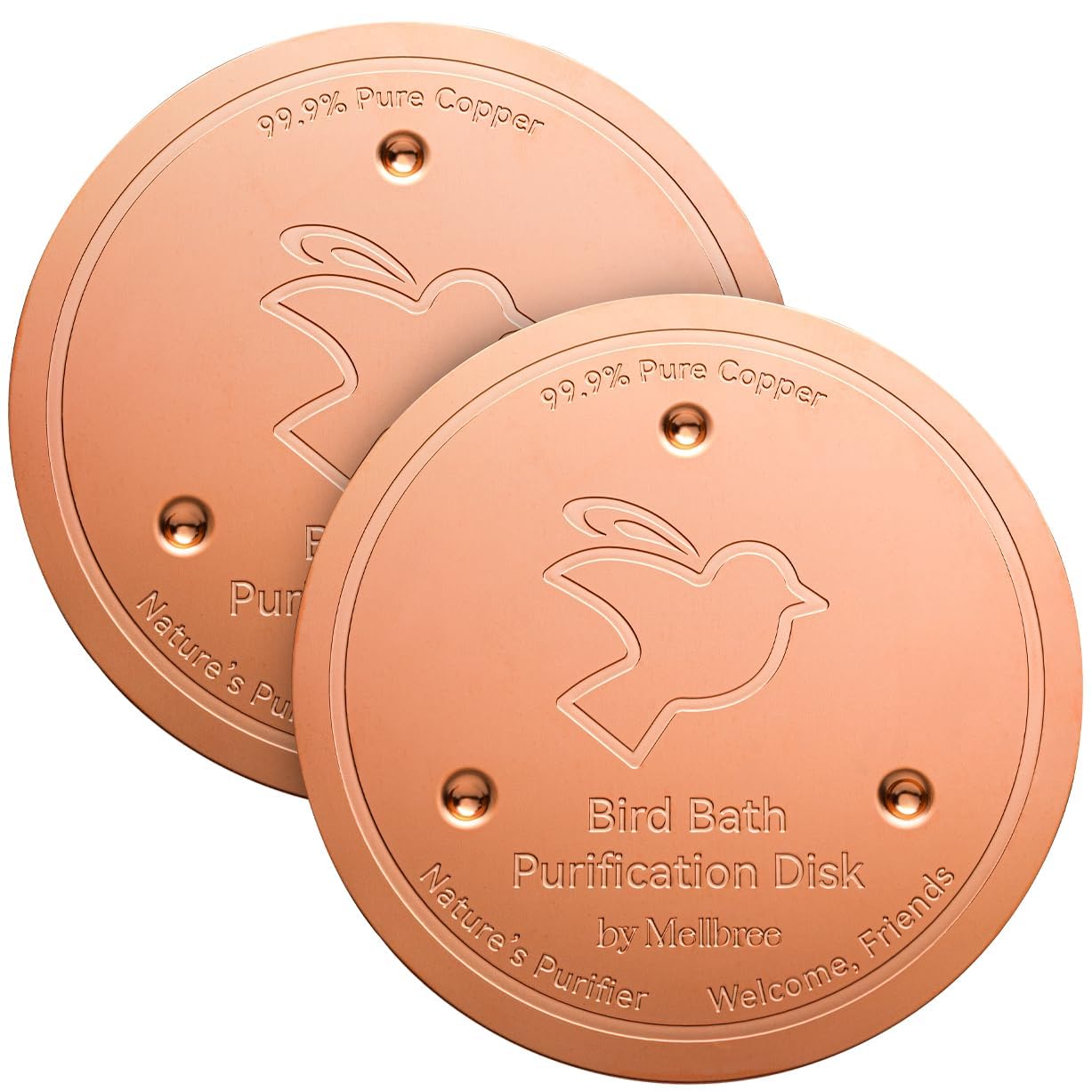
A 0.6mm, 99.99% copper disk with triple-point supports that reduces algae and extends cleaning intervals.
Why I picked it: It passively keeps water clearer and significantly cuts the time I spend scrubbing baths.
Best for: Concrete, plastic, stone, or composite birdbaths that need less algae and simpler upkeep.
A small maintenance investment that saves time over a season.
Pros
- Reduces algae growth naturally
- Easy, drop-in use
- Durable 99.99% copper
- Works year-round after passivation
Cons
- Not safe for uncoated metal basins
- Doesn’t replace occasional deep cleaning
- Large basins may need more than one disk
My take
I started using the copper disk in a concrete birdbath that used to green over within days. The difference was immediate — water stayed clearer and slimy buildup diminished noticeably.
I still change water regularly for bird health, but cleaning moved from a lengthy scrape to a quick rinse. The triple-point supports keep the disk contacting the water instead of sitting on the bottom, which I found increases effectiveness.
Important: I only use this in non-metal basins or in metal basins with intact internal coatings. Direct metal contact changes the chemistry and reduces the disk’s benefit. When used appropriately, it’s the easiest maintenance upgrade I’ve added to my bird baths.
How I Choose Bird Bath Materials
Material Trade-offs: Plastic, Glass, Copper, and Stone
I pick materials based on durability, appearance, and maintenance needs. Plastic is light, affordable, and cage-friendly. Glass looks beautiful and is easy to clean but needs protection from freezing. Copper is a maintenance helper that slows algae but isn’t compatible with bare metal basins. Stone and concrete are sturdy and heavy, but they demand more scrubbing.
- Plastic: cheap, lightweight, good for cages and inexpensive yard baths.
- Glass: attractive and hygienic, but fragile in cold climates.
- Copper: chemical-free algae control; use in non-metal basins only.
- Stone/Concrete: very durable and natural-looking, but higher maintenance.
Size and Depth: What I Look For
Birds prefer shallow water they can stand or dip into. I aim for basins that are wide enough for perching and 1–2 inches deep for small songbirds. For larger species, choose wider and slightly deeper bowls but avoid depths that create drowning risk for small birds.
- Small birds: 1–2 inches deep.
- Multiple birds: wider diameter over depth.
- Large species: increase diameter before depth.
Placement and Safety
I place baths where birds can see open approach paths — near shrubs or small trees but not too close to dense cover where predators hide. Hanging options keep baths off the ground and away from cats; ground-level trays attract ground-feeding species.
- Hang where cats can’t jump up.
- Provide nearby perches for birds to watch.
- Keep baths away from heavy pesticide use.
Maintenance Tips I Use
I refresh water frequently, rinse out debris daily in hot weather, and give a deeper scrub weekly or biweekly depending on algae growth. Copper disks extend intervals but do not eliminate cleaning.
Avoid over-tightening plastic cage hardware and bring fragile glass inside for freezing weather.
- Daily skim in hot months.
- Weekly scrub for stone or concrete.
- Use copper disks as a maintenance aid, not a substitute.
Frequently Asked Questions
How often should I change the water in a bird bath?
I change water every couple of days in hot weather and every few days in cooler conditions. If I see algae, droppings, or cloudiness I refresh immediately.
Can I use a copper disk in any bird bath?
I only use copper disks in non-metal basins — concrete, plastic, stone, or coated metal. I avoid putting copper in uncoated metal baths because the chemistry can reduce effectiveness.
Is a hanging glass bath better than a ground bowl?
It depends on my goals: I hang glass baths to deter ground predators and for decoration, but ground bowls or wide saucers attract more species and let multiple birds bathe at once.
Will birds use small cage bowls or do they prefer larger baths?
Small cage bowls like the Lixit work well for parakeets and cockatiels; larger garden baths attract more species and allow more lively bathing behavior.
Final Take
After testing these options I reach for different materials for different jobs: the Lixit for cages, the Bleuhome saucer for broad backyard coverage, the MUMTOP glass for decorative hanging spots, and the Mellbree copper disk when I want to cut cleaning time.
Pick the combination that fits your birds and your maintenance tolerance — a copper disk plus a wide saucer gives low-maintenance volume, while a hanging glass piece adds visual charm with a small, bird-friendly footprint.
Whichever route you choose, prioritize shallow depth, easy cleaning, and safe placement. That’s how I keep the birds coming back and the job of maintaining water manageable.
