
I tested seven popular shelving systems for basements and garages. Here are the ones I kept, how I used them, and which is right for your space and load needs.
I set out to find basement storage shelves that actually stand up to heavy boxes, odd-shaped bins, and the realities of a damp, busy utility space. I installed and used every unit in this roundup across my basement, garage, pantry, and laundry room so I could judge build quality, ease of assembly, load capacity, and day-to-day usefulness.
Below I break down the best option for different needs — from inexpensive plastic racks for lightweight bins to heavy steel units on lockable casters — and call out the practical pros and cons I ran into while living with each shelf.
I compared units by material, per-shelf capacity, adjustability, footprint, and whether they move easily or anchor securely. Where capacity is listed, I relied on the manufacturer's stated per-shelf numbers and my hands-on experience loading and using the shelves.
1. Amazon Basics 5-Shelf Steel Wire Shelving – Best Overall
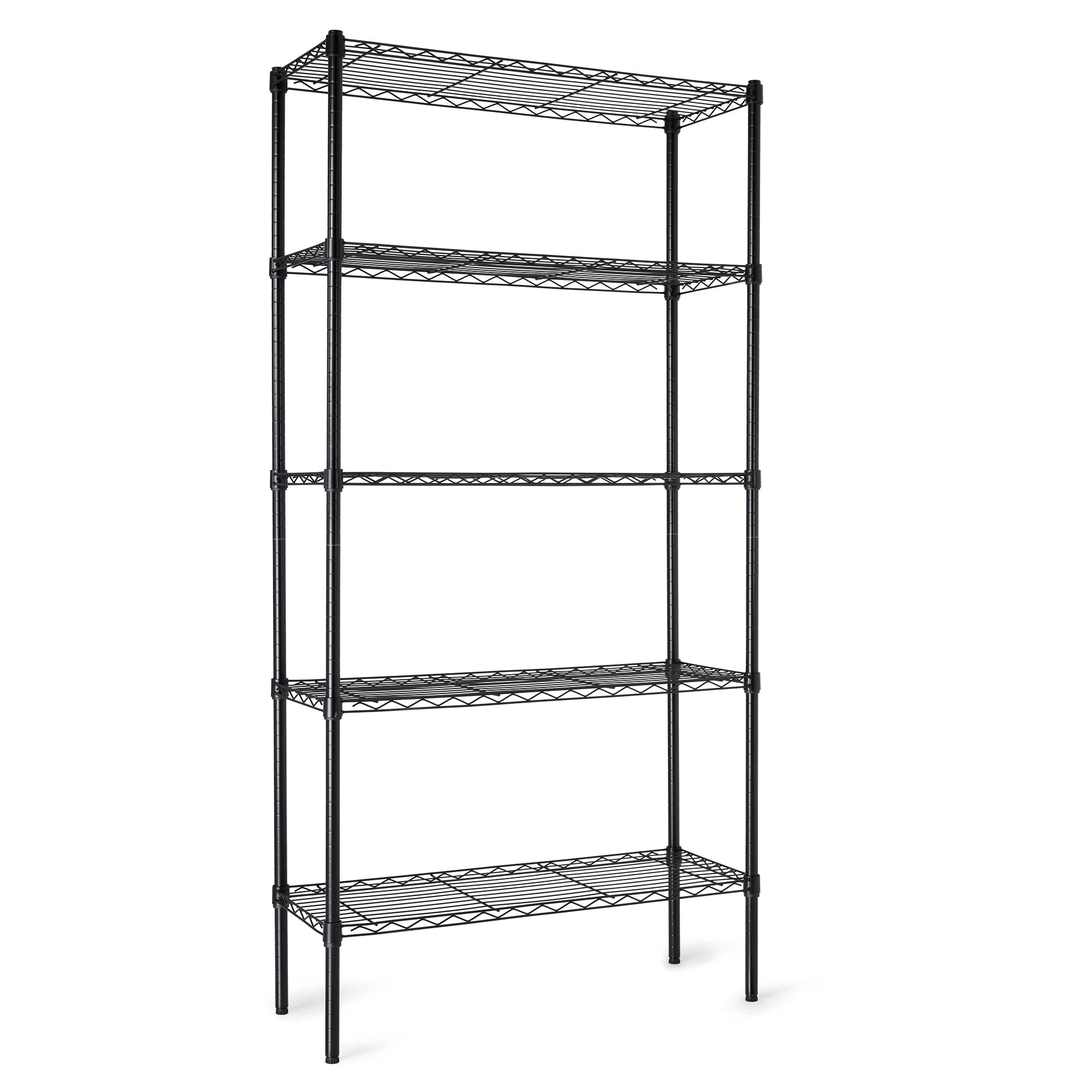
A very sturdy, no-frills steel wire rack with five adjustable shelves and a clean black finish that works in basements, garages, and pantries.
Why I picked it: Excellent strength for the price, adjustable shelves, and quick tool-free assembly.
Best for: General heavy-duty storage in basements, garages, and pantries.
Great value for heavy-duty adjustable steel shelving.
Pros
- 350 lb per shelf capacity
- Tool-free assembly
- Adjustable 1-inch increments
- Leveling feet for uneven floors
- Clean black finish
Cons
- Wobbly when empty
- Wire gaps let small items slip
My take
I use this five-shelf Amazon Basics unit in my basement because it balances strength and simplicity. The poles stack with plastic split sleeves and the shelves slide down to lock in place, so assembly was straightforward — a rubber mallet helps but isn’t required.
Once weighted, the rack feels solid. I store canning jars, small appliances, and boxes on it and the weight distribution quickly stabilizes the frame. The black finish looks tidy in mixed-use spaces and wipes clean easily.
The adjustable shelf heights let me fit tall items on one shelf and shallow bins on another. If you plan to store very small items, add liners, because the wire grid will let things tip or fall through.
2. Amazon Basics 4-Shelf Steel Wire Shelving – Best Compact
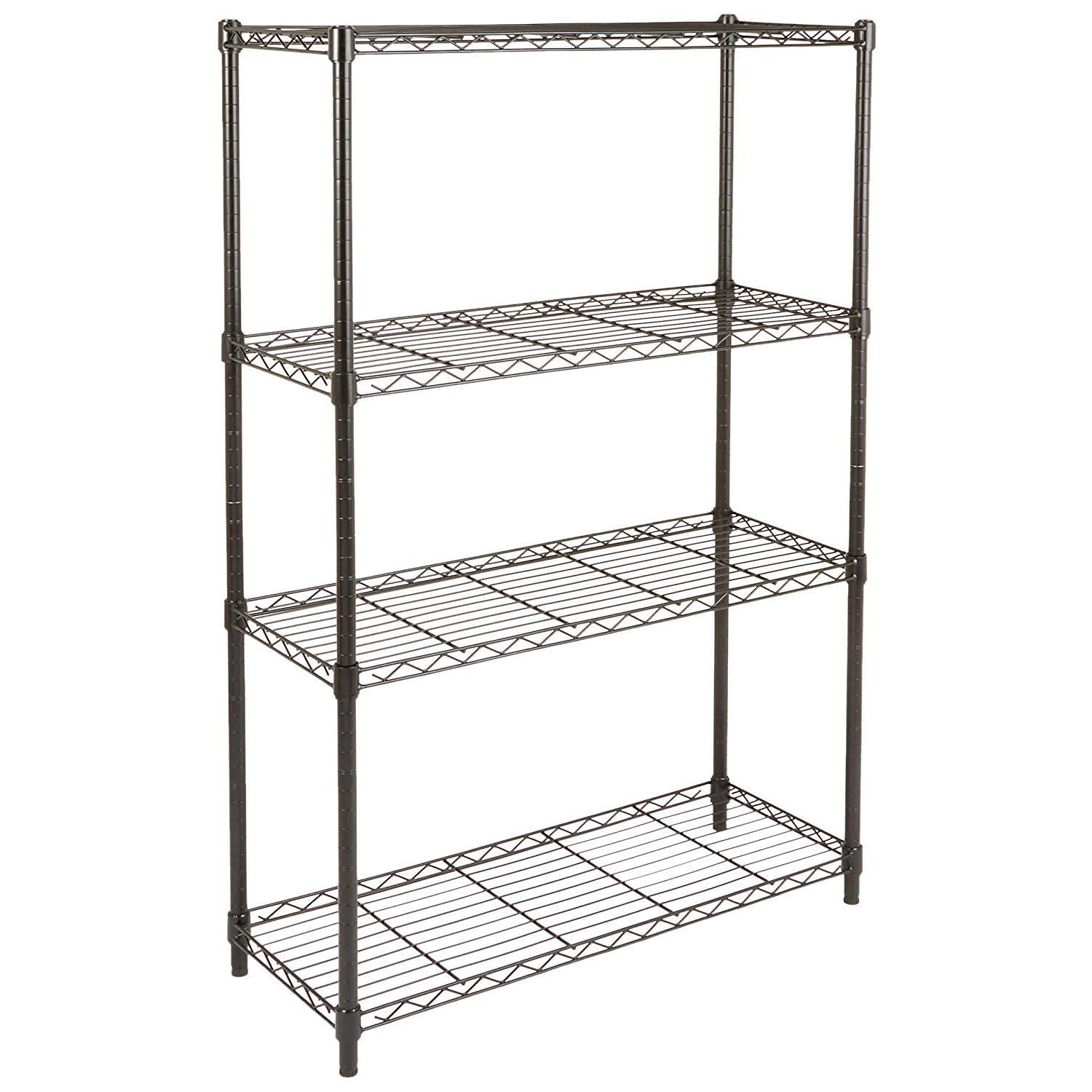
A shorter, four-shelf version of the Basics rack that gives the same per-shelf strength in a smaller footprint.
Why I picked it: Same reliable construction as the five-shelf model but in a lower height for shorter spaces.
Best for: Tight basements, garage alcoves, and pantries with limited vertical clearance.
Affordable option for heavy steel shelving in a compact size.
Pros
- 350 lb per shelf capacity
- Tool-free, fast setup
- Adjustable shelf spacing
- Stable when loaded
Cons
- Less total shelf space than taller units
- Can feel top‑heavy if unevenly loaded
My take
I chose the four-shelf Amazon Basics when I needed the same load capacity but couldn’t use a very tall unit. Assembly follows the same snap-sleeve design and took only a few minutes longer than the five-shelf model.
It behaves just like the taller unit: a little wobbly when empty, but rock solid under weight. I used it for heavy storage bins and tools and appreciated that it fit under a low basement duct where the taller rack wouldn’t.
If you’re working with limited ceiling height but still need heavy-duty steel shelving, this compact version is a practical compromise.
3. Seville Classics 5-Tier Wire Shelving – Best Finish & Fit
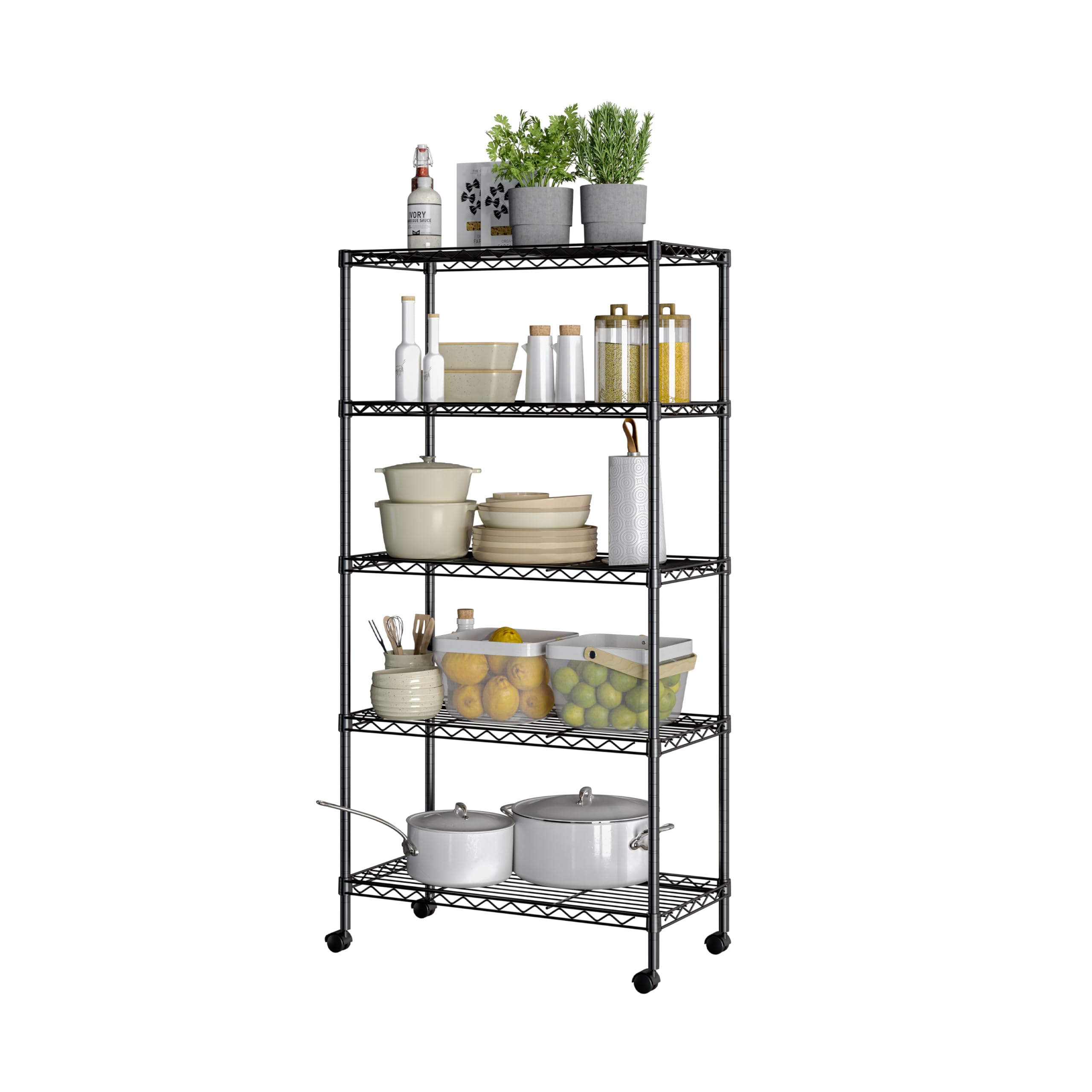
Industrial-strength steel with a black epoxy powder-coat finish, adjustable shelves, and leveling feet — I found it tidy and durable for household storage.
Why I picked it: Durable powder-coat finish and thoughtful hardware make it a good fit for indoor storage that sees occasional moisture or heat.
Best for: Pantries, bathrooms, and basements where a clean, corrosion-resistant finish matters.
A solid mid-range option with a durable finish and useful accessories.
Pros
- Durable epoxy powder-coat
- 300 lb per shelf on leveling feet
- Leveling feet included
- Easy to wipe clean
Cons
- May need liners for small items
- Slightly narrower footprint
My take
I assembled this Seville Classics unit and used it in a spare bathroom and pantry where the black finish looked more intentional than raw chrome. The powder-coat wiped clean easily after storing towels and cleaning supplies.
Assembly was straightforward and it felt sturdy once leveled. The unit shipped with hardware and even ties you can use to secure it to a wall if you want extra peace of mind.
I added shelf liners to keep small jars and packages from tipping through the wire — a cheap addition that makes this unit much more practical for pantry-style storage.
4. Sterilite 4-Shelf Plastic Utility Unit – Best Budget Plastic
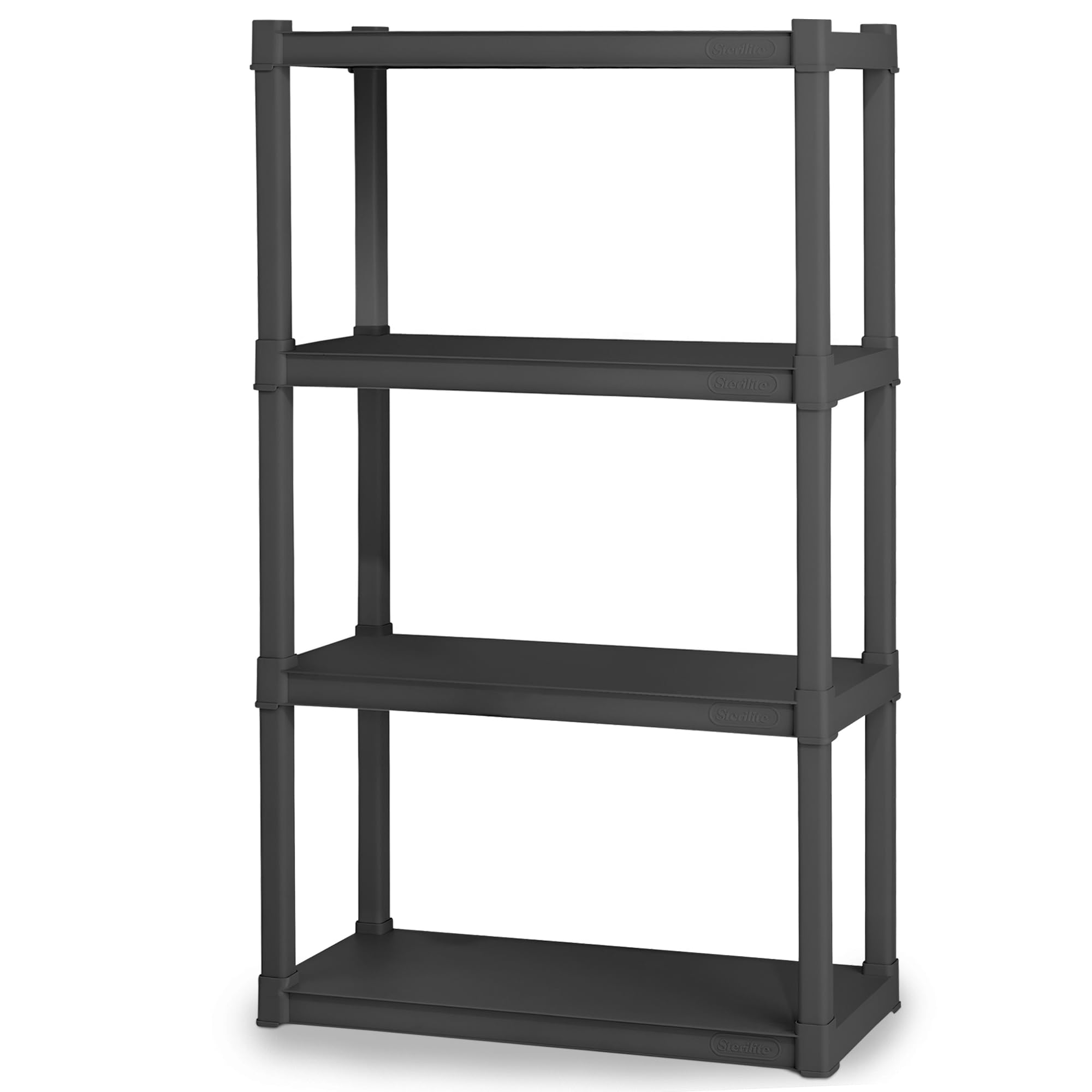
A tool-free plastic shelving unit with solid shelves that resists rust and snaps together quickly — ideal where metal corrosion is a concern.
Why I picked it: Tool-free snap assembly, solid shelf surfaces, and rust-proof construction for utility areas.
Best for: Laundry rooms, basements, garages, and anywhere you want a light, rust-free rack.
Economical and practical for lightweight to medium storage needs.
Pros
- Tool-free snap assembly
- Solid plastic shelves
- Rust-proof and low maintenance
- Made in the USA
Cons
- 50 lb per shelf limit
- Plastic looks utilitarian
My take
I keep Sterilite units in my laundry room and a couple of workshop corners. They snap together in minutes and are surprisingly stable for how light they are.
The solid shelves are great for stackable plastic tubs and don’t dent or rust, so I don’t worry about storing cleaning supplies or cans of paint. They won’t replace a heavy steel rack if you need lots of weight capacity, but they’re perfect where corrosion resistance and quick setup matter.
If you pair them with Sterilite tubs, the fit and organization are very clean and efficient.
5. Meet Perfect 6-Tier Wire Shelving on Wheels – Best Mobile
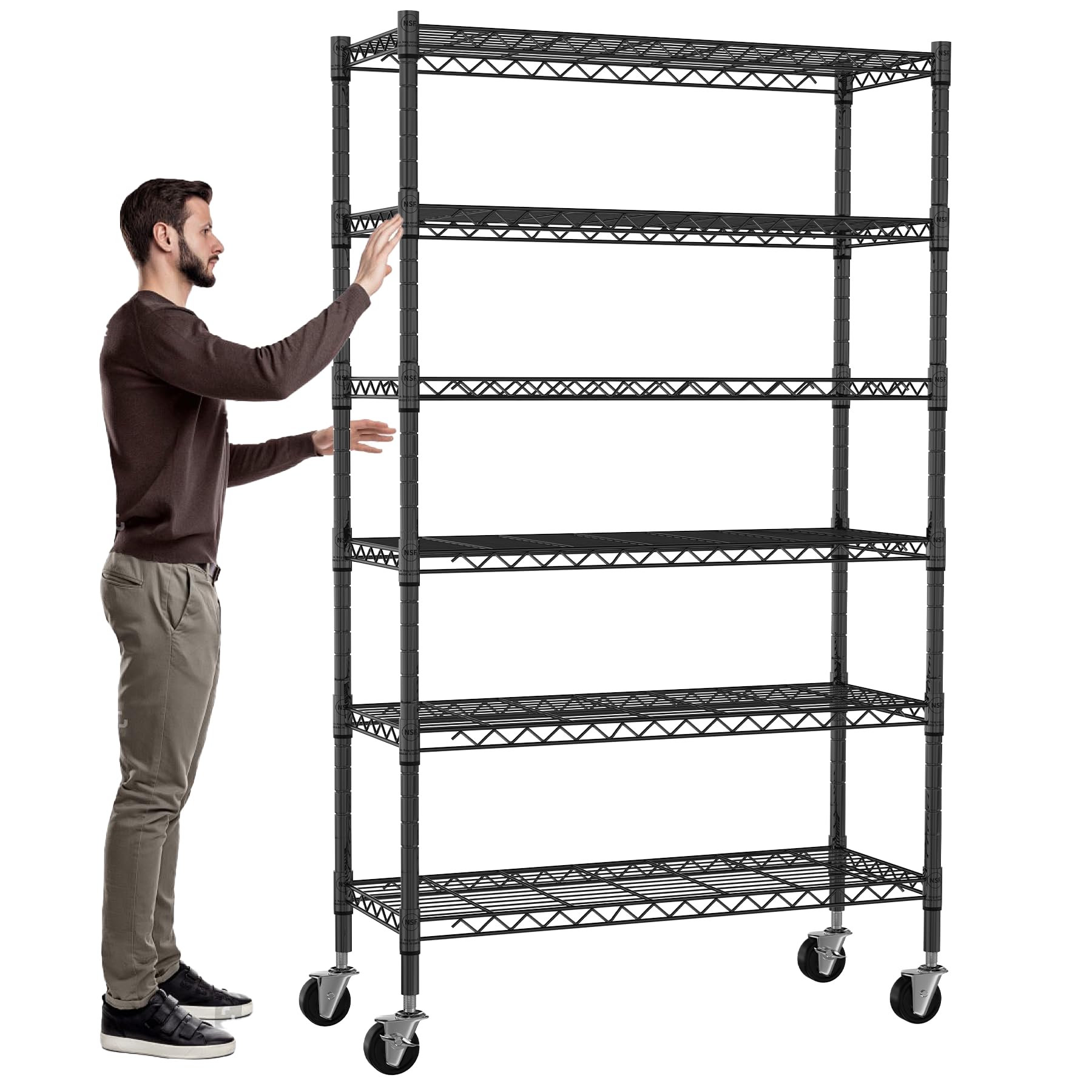
A tall, heavy-duty wire shelving unit with lockable casters so I can move and then lock it in place — great for flexible garage layouts.
Why I picked it: Lockable wheels plus high per-shelf capacity make it the go-to when I need mobility without sacrificing strength.
Best for: Garages and basements where shelving occasionally needs to be moved.
Good value if you want heavy-duty shelving that rolls.
Pros
- Lockable caster wheels
- 350 lb per shelf capacity
- Adjustable shelves
- Tall 6-tier storage
Cons
- Large and heavy to assemble
- Some shelves may arrive slightly bent
My take
I bought a pair of these Meet Perfect units for my garage and appreciated the mobility — I can unlock the casters, roll a loaded rack to the door, then lock it in place. That flexibility changed how I use my garage.
Assembly takes two people if you have full boxes to handle, but the finished system holds big totes and stacked boxes with little sag. One shelf shipped slightly bent in my set, but it didn’t affect function once installed.
The shelf locks can be a bit fussy during setup, but once adjusted they hold firmly. For storage that has to move now and then, I prefer a wheeled heavy-duty rack like this.
6. Finnhomy 8-Tier Wire Shelving – Best for Maximum Shelves
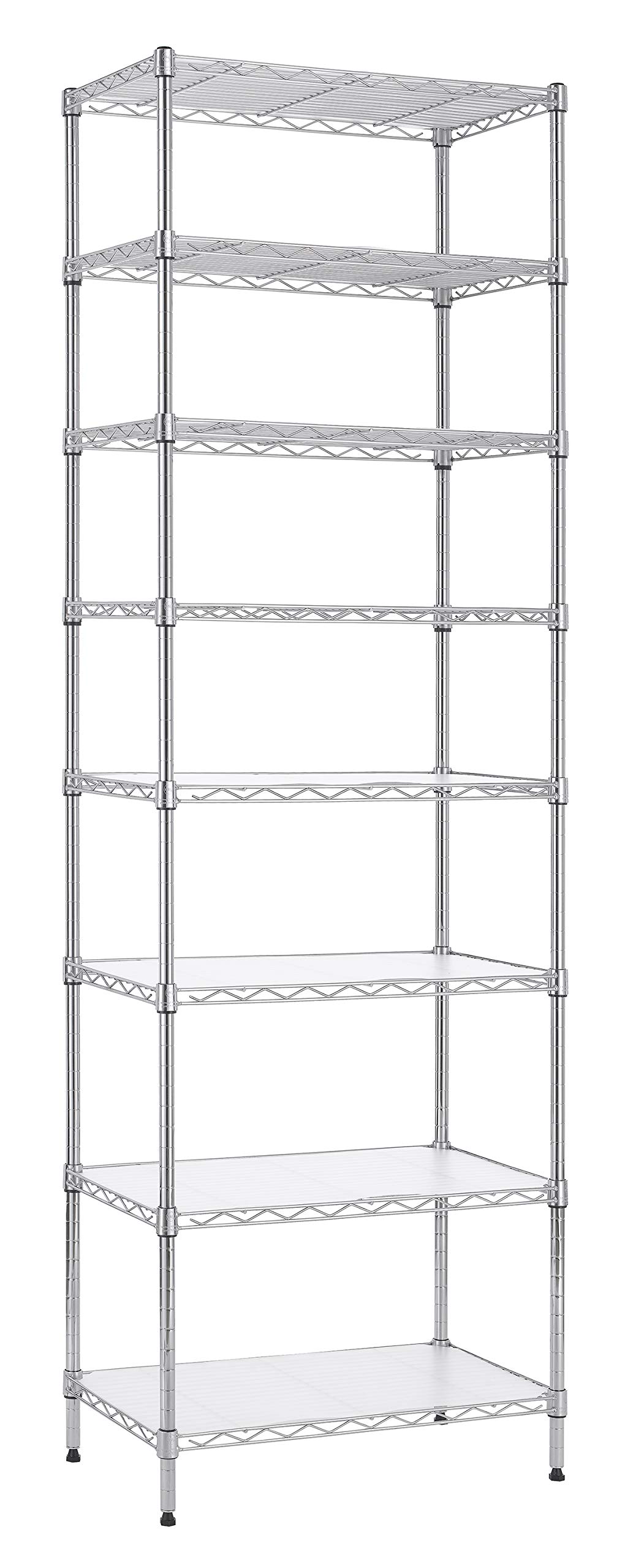
An NSF-certified tall unit with eight adjustable shelves and included PE mats — I liked how it maximized vertical space for many small items.
Why I picked it: Plenty of shelf levels and included PE mats give me flexible, tidy vertical storage.
Best for: Closets, pantries, and narrow basement corners where vertical storage is essential.
A cost-effective way to add many tiers of adjustable shelving.
Pros
- Eight adjustable shelves
- PE mats included
- 250 lb per shelf (leveling feet)
- Chrome finish resists rust
Cons
- Tall assembly takes time
- May require casters purchased separately
My take
I assembled the Finnhomy 8-tier unit in a pantry that had wasted vertical space. The eight shelves let me store cans, small appliances, and bins without crowding, and the PE mats stopped small items from falling through the wire.
Packaging was organized and the parts were easy to verify before starting. It took me a couple of hours to put together alone, but the result is a very dense, usable footprint that makes the most of narrow spaces.
The chrome finish looks clean and the unit feels sturdy once leveled. If you want mobility, plan for casters — this model ships with leveling feet only in the configuration I tested.
7. Origami R5 4-Shelf Folding Rack – Best for Portability
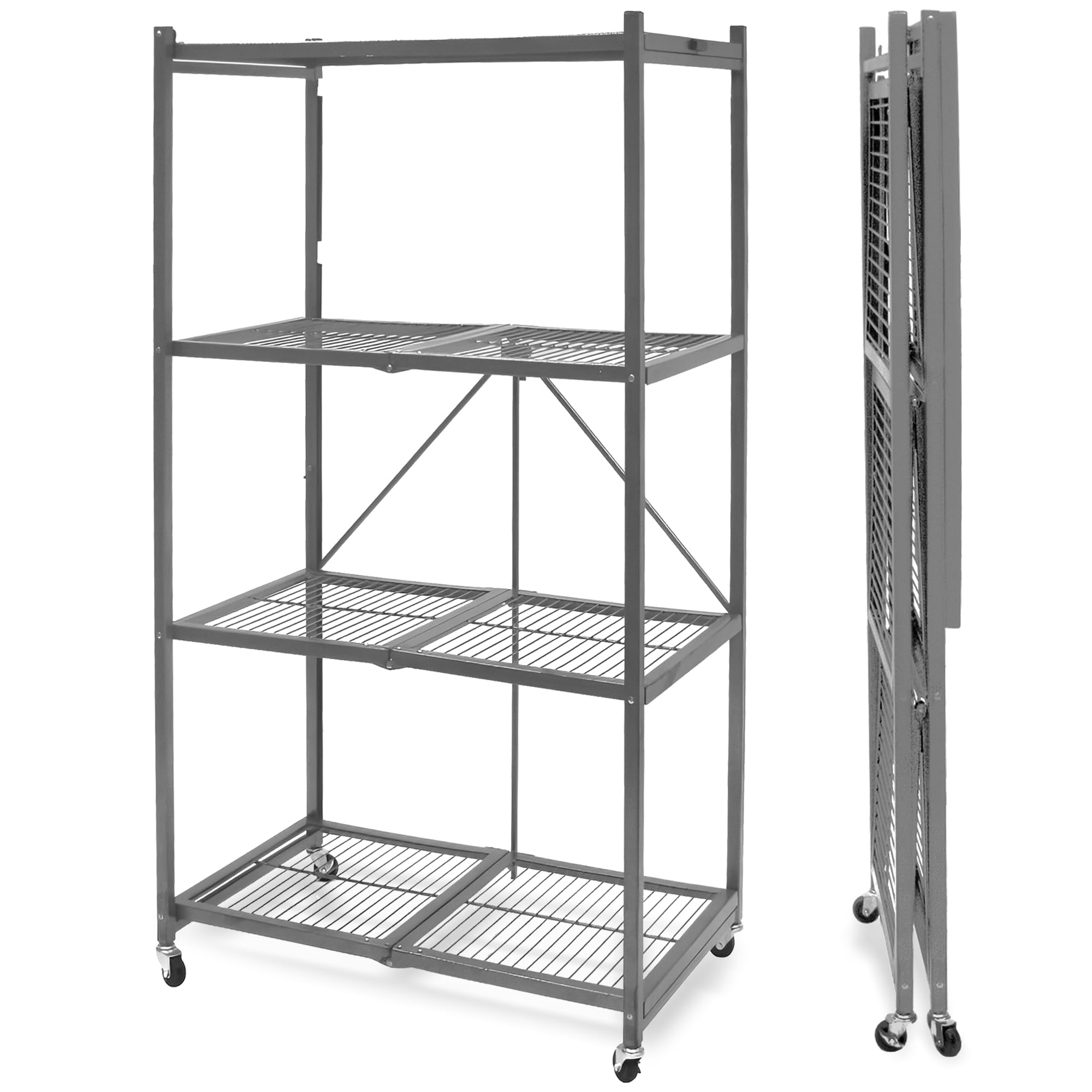
A pre-assembled, folding steel rack that sets up in seconds and folds nearly flat for storage — perfect for temporary or frequently moved storage.
Why I picked it: Instant setup and fold-flat portability make it unmatched for temporary storage and moving situations.
Best for: Storage units, temporary basement setups, or users who move frequently.
A premium convenience pick for fold-and-go shelving.
Pros
- Folds flat for storage
- Pre-assembled — no tools
- Locking caster options
- Fast setup in seconds
Cons
- Lower per-shelf capacity with wheels
- More expensive than basic racks
My take
I’ve owned several Origami racks across different houses and they’re the fastest way I know to add usable storage. The unit arrives folded, you screw in the wheels or feet, flip the top shelf, latch it, and it’s ready to go in under a minute.
With wheels installed the per-shelf capacity is reduced compared with the fixed-foot configuration, so I reserve the wheeled setup for lighter loads or for racks I need to move.
For anyone who needs to stage, pack, and move items regularly or wants a shelf that disappears into a narrow space when not in use, this folding solution is brilliant.
How I Choose Basement Shelving
Match shelving to what you store
I always start by listing what I’ll put on the shelves: heavy totes, paint cans, small jars, or a mix. Steel wire units that list several hundred pounds per shelf are the right call for heavy bins; plastic units work fine for lighter loads and damp spaces.
- Heavy tools and stacked totes: look for 300–350 lb per shelf ratings and solid poles.
- Small items and pantry goods: choose wire shelving with liners or solid-surface shelves to prevent tipping.
- Moist or heated spaces: prefer powder-coated steel or plastic to avoid corrosion.
Think footprint and vertical clearance
I measure ceiling height and available width before ordering. Tall, narrow units give a lot of storage without eating floor space, while shorter units work under ducts or in low-ceiling basements.
- Short ceiling? Pick a lower-profile rack or a four-shelf unit.
- Narrow alcoves benefit from 30" or 36" widths rather than wider commercial racks.
Mobility, assembly, and installation
If I need to move racks for cleaning or seasonal access, I opt for lockable casters. For permanent installations I prefer leveling feet and wall ties. Consider whether you want tool-free assembly or an already-folded unit.
- Wheeled units: convenient but lower weight capacity with wheels installed.
- Tool-free snap systems: fast and suitable for most DIYers.
- Pre-assembled folding racks: fastest deployment when portability matters.
Stability and safety
I always level shelving on uneven concrete and anchor tall racks to the wall if they’re in a busy area. Evenly distribute weight across shelves to prevent tipping and sagging.
- Use leveling feet on uneven floors.
- Anchor tall units if kids, pets, or earthquake risk exists.
- Spread heavy items across shelves rather than piling them in one spot.
Frequently Asked Questions
How much weight can basement shelves hold?
It depends on the unit. I’ve worked with plastic shelves rated around 50 lb per shelf up to steel wire systems that list 250–350 lb per shelf. Those ratings assume evenly distributed loads and use of leveling feet or proper assembly.
Are wire shelves bad for small items?
Wire shelves let air circulate but small items can tip through. I solve that by adding thin shelf liners or PE mats — several wire units include or accept inexpensive liners.
Do I need casters or leveling feet?
I choose casters when I need to move loaded racks occasionally; lockable casters let me roll then secure. For permanent placement on an uneven basement floor, I prefer leveling feet for a rock‑steady base.
Final Take
After installing and using each of these racks, I can say there isn’t a single perfect shelf for every basement. For all-around strength and value I reached for the Amazon Basics 5-shelf unit most often. If I need mobility, the Meet Perfect wheeled system is my go-to, and for instant, portable storage I rely on the Origami folding racks.
Measure your space, match the material and capacity to what you’re storing, and add simple accessories like liners or wall ties to make any shelf system work reliably in a basement environment.
