
I tested several copper and multi-metal polishes and wipes to find the most effective options for jewelry, home hardware, and larger surfaces. Here are the products I reach for depending on the job.
I keep a small arsenal of metal polishes at home because different tasks demand different tools. Some jobs are quick touch-ups on jewelry; others are heavy-duty work on solid metal parts or kitchen sinks.
In this roundup I cover the products I actually used on copper, brass, silver, and stainless surfaces and explain which one I pick for each situation.
If I need something fast and tidy, I go with wipes. For controlled, hands-on restoration of solid metal parts I use a paste. For everyday silver and copper upkeep I prefer a liquid cream that's gentle and leaves a protective coating.
1. Wright's Silver & Copper Cleaner – Best Overall
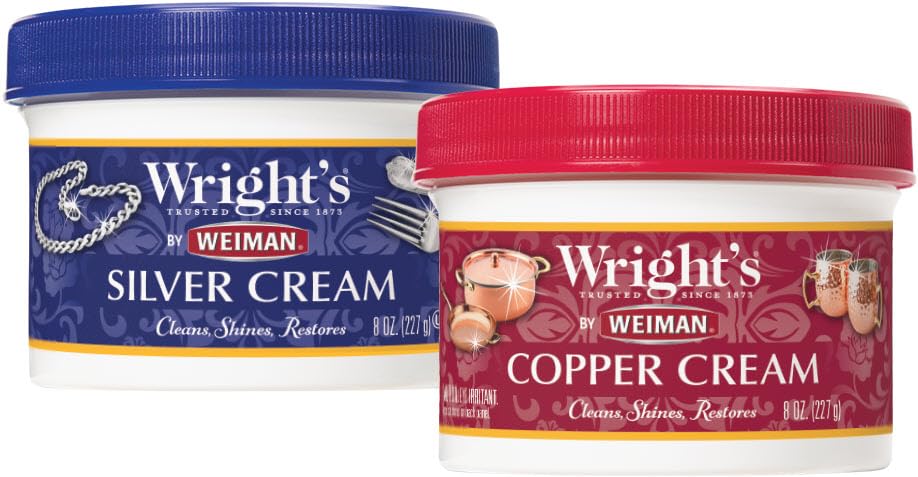
A versatile cream I use for silver, copper, brass and more; easy to apply and leaves an anti-tarnish coating.
Why I picked it: Works across many metals, rinses clean, and leaves a lasting protective finish.
Best for: Everyday maintenance on silverware, jewelry, copper mugs, and home hardware.
Mid-range value for a multi-metal polish.
Pros
- Cleans and polishes quickly
- Anti-tarnish protective finish
- Safe on many metals
Cons
- May need repeated passes on deep tarnish
- Can leave black residue on hands
My take
I reach for Wright's when I want a reliable, all-purpose polish that works on both silver and copper. It spreads easily, polishes to a mirror-like shine, and rinses away without greasy residue.
On sterling bracelets and flatware I saw fast, dramatic improvement; a little product goes a long way. For heavily tarnished pieces I repeated the process a couple times and the results were worth the effort.
I also use it on copper mugs and doorknobs around the house. The anti-tarnish coating slows re-tarnishing, so pieces stay presentable longer between treatments.
2. Weiman Jewelry Polish Wipes – Best for Quick Touch-Ups
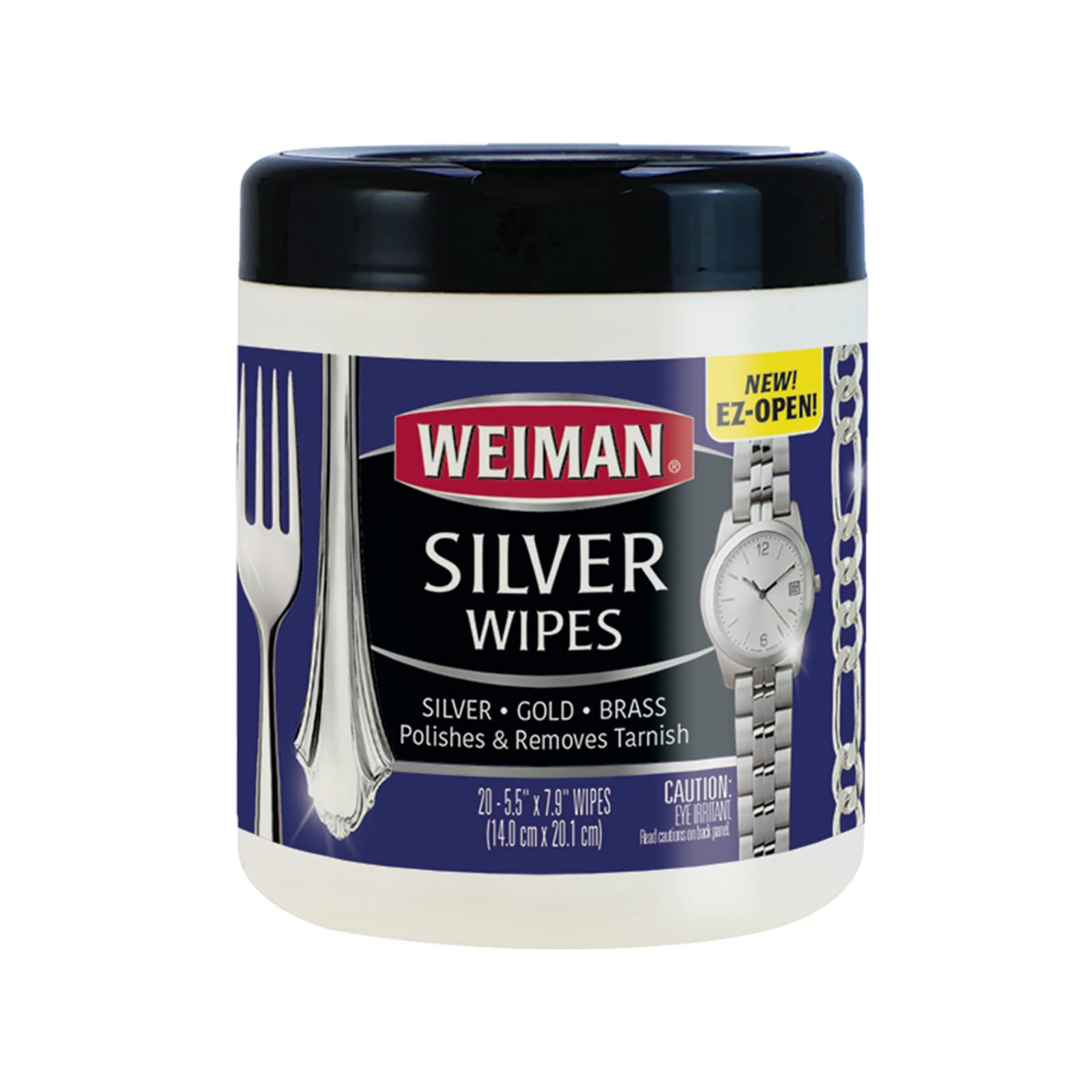
Disposable, ammonia-free wipes that quickly remove tarnish and polish jewelry and small metal items without a mess.
Why I picked it: Extremely convenient for fast polishing and safe for jewelry with stones thanks to an ammonia-free formula.
Best for: Fast touch-ups on jewelry, chains, and small silver pieces.
Budget-friendly option for frequent quick use.
Pros
- No mess, easy to use
- Ammonia-free and gentle
- Good for intricate pieces
Cons
- Not ideal for heavy oxidation
- Wipe supply runs out faster with frequent use
My take
When I want a quick, no-fuss polish I grab a Weiman wipe. One pass usually removes surface tarnish and leaves jewelry looking refreshed.
I appreciate that the formula is ammonia-free—I've used these on pieces with small gemstones without issue. They also work well on chains and small flatware where dipping would be awkward.
For very intricate or heavily tarnished items I’ll follow up with a brush or a dedicated cleaner, but for routine maintenance these wipes make the job painless.
3. Flitz Metal Polish Paste – Best for Heavy Restoration
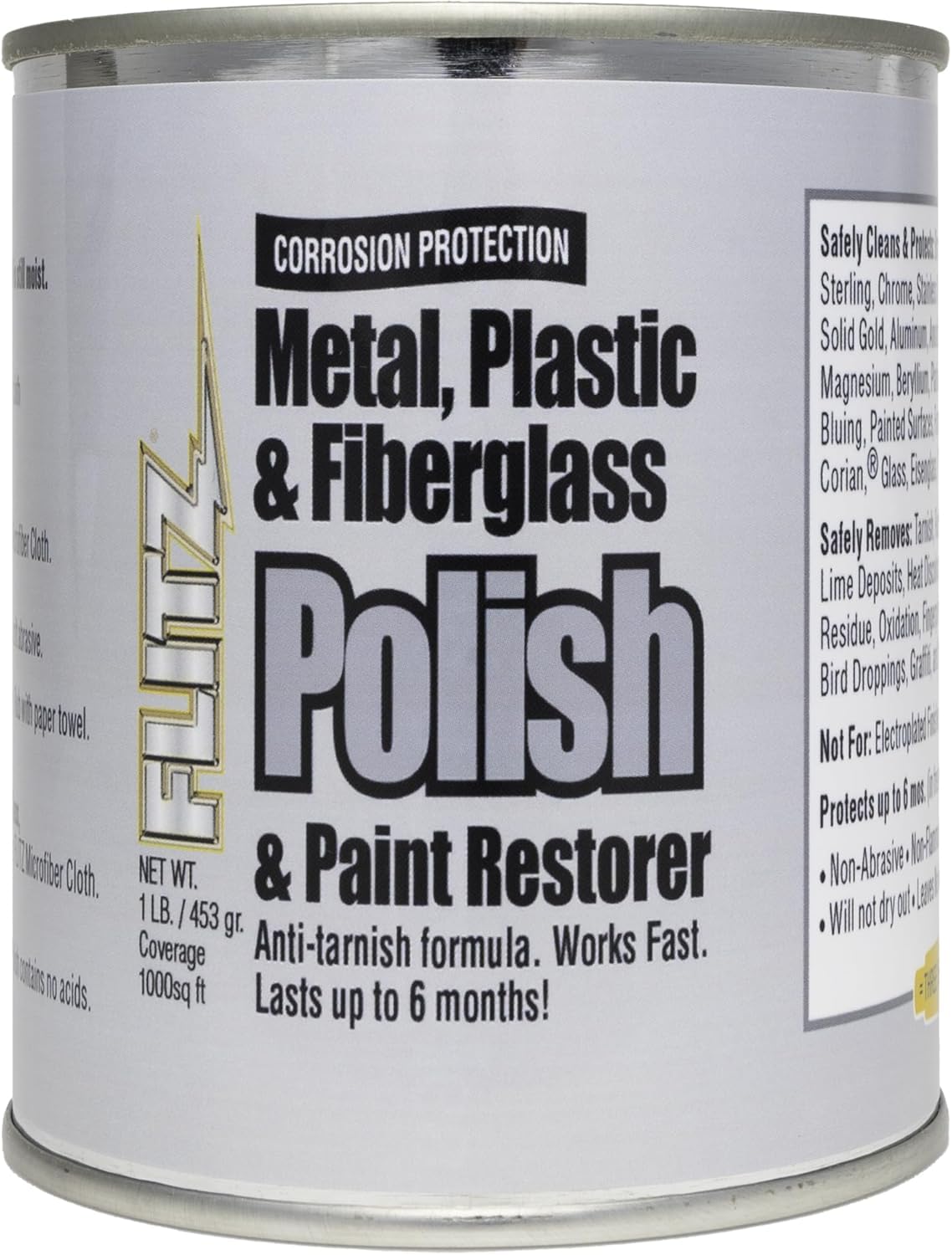
A dense, non-abrasive paste I use for restoring solid chrome, stainless, brass, copper and aluminum with manual buffing.
Why I picked it: Powerful on solid metals and predictable when I need to remove light oxidation and restore luster.
Best for: Manual restoration of solid metal parts, knives, and chrome that’s not plated.
Higher-end choice for long-term maintenance and restoration.
Pros
- Very effective on solid metals
- A little product goes a long way
- Made in the USA
Cons
- Not for plated or coated surfaces
- Requires elbow grease and time
My take
Flitz is my go-to when I need to do controlled, hands-on restoration. The paste removes light oxidation and brings out a bright finish when I buff carefully.
I use it on knife blades, solid chrome trim, and stainless parts; it performs consistently and leaves a protective sheen. Because it’s not suitable for plated pieces, I always verify the substrate first.
Expect to spend a few minutes buffing each area—this isn’t a spray-and-wipe product—but the results are precise and repeatable when I take my time.
4. Blue Magic Metal Polish Cream – Best for Large Surfaces
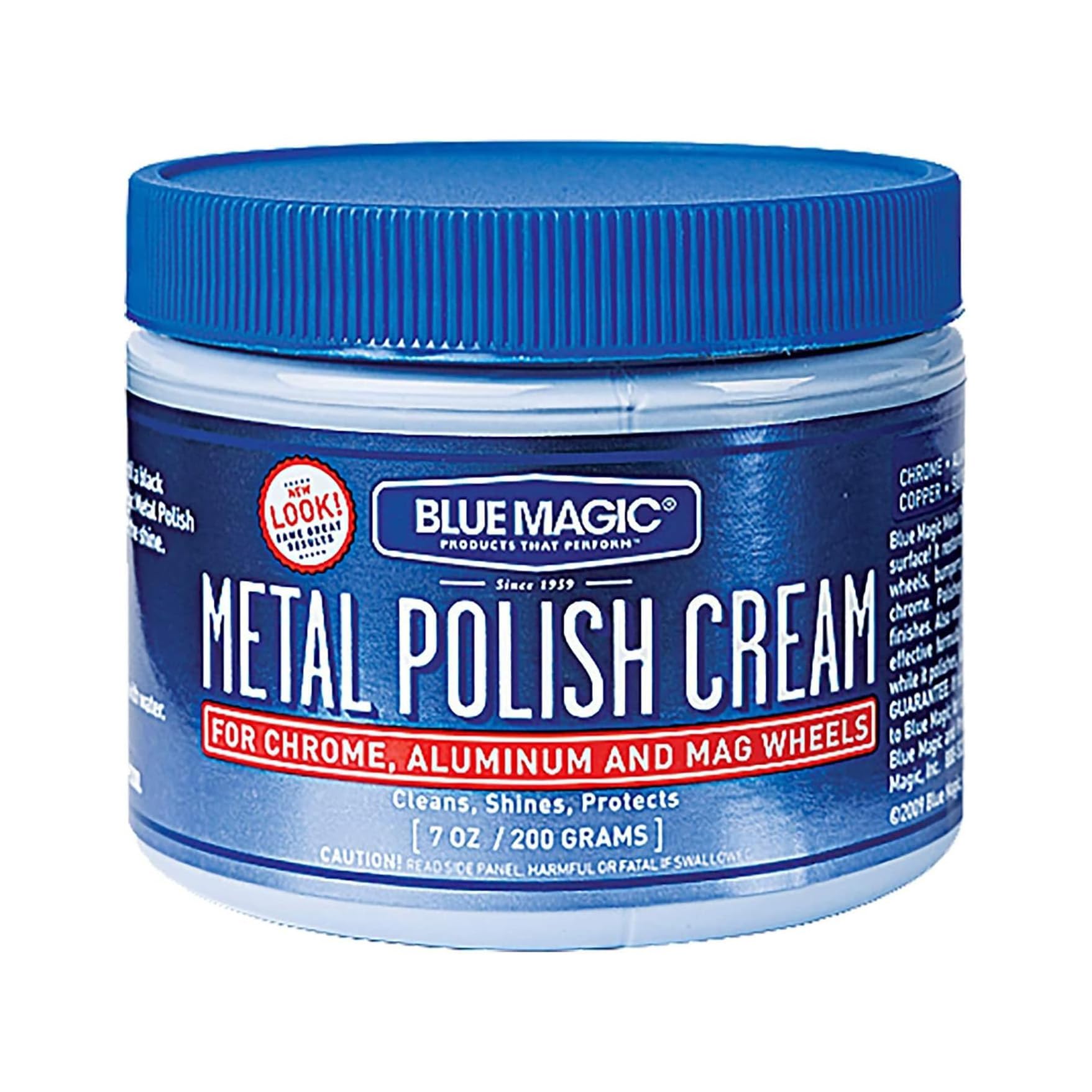
A non-abrasive cream that I use for larger metal surfaces like sinks and prep tables; restores luster and leaves a protective micro-coating.
Why I picked it: Covers wide areas efficiently and gives a durable finish that makes cleanup easier.
Best for: Large stainless, copper, brass, and aluminum surfaces in kitchens and workshops.
Affordable and effective for big jobs.
Pros
- Works well on broad surfaces
- Non-abrasive formulation
- Leaves a protective coating
Cons
- Variable results on very heavy oxidation
- Takes elbow grease on stubborn areas
My take
I used Blue Magic across long stretches of stainless and aluminum and was impressed by how much surface area a single jar covers. It evens out water stains and brightens dull metal.
On commercial sinks and prep tables I noticed an easier cleanup after polishing—the micro silicone finish helps repel water and grime. For heavily pitted or sun-baked oxidation it won’t perform miracles, but for maintenance and moderate restoration it’s a solid choice.
Application is straightforward by hand or with a buffer, and the finish stays clean without a greasy residue.
How I Choose a Copper Polish
Match the polish to the metal
I always check whether the metal is solid or plated. Pastes like Flitz are excellent for solid chrome, stainless, and aluminum, but I avoid them on plated or coated pieces.
For mixed-use household items—copper mugs, silverware, and brass hardware—I prefer versatile creams or liquids that list those metals explicitly.
- Solid metal: paste or cream for controlled restoration
- Plated/coated surfaces: use gentle, non-abrasive products
- Jewelry with stones: choose ammonia-free wipes or gentle creams
Consider application and convenience
If I need a fast touch-up, pre-soaked wipes are unbeatable. For larger jobs I choose a cream or paste and either buff by hand or use a polishing pad.
Think about how much elbow grease you’re willing to invest: heavier restoration takes time, while wipes and creams handle surface tarnish quickly.
- Wipes: quick, portable, low mess
- Creams: good for moderatesized items and surfaces
- Pastes: best for hands-on restoration and solid metals
Safety and finish
I always rinse items that touch food thoroughly after polishing and avoid leaving product residue. For jewelry with delicate settings I work gently and test on a small area first.
If you want protection between polishes, look for products that advertise an anti-tarnish or protective coating; they help delay re-tarnishing.
- Rinse food-contact items well after polishing
- Test on inconspicuous area for plated items
- Use protective gloves to avoid black residue on skin
Frequently Asked Questions
Can I use metal polish inside copper mugs that hold drinks?
I avoid polishing the interior of drinkware with chemical polishes. If I do polish a mug interior, I rinse thoroughly multiple times with hot water and soap and let it air-dry before using. For cosmetic touch-ups on the exterior, any of these products work well when fully rinsed.
Are polish wipes safe for jewelry with gemstones?
I use ammonia-free wipes—like the Weiman wipes—on jewelry with diamonds and many gemstones without trouble. Still, I test on an inconspicuous spot first and avoid prolonged soaking of porous stones.
How do I know if a metal is plated or solid?
I inspect edges and wear points for a different underlying color or base metal. When in doubt, treat the item as plated and use a gentle, non-abrasive cleaner to avoid stripping the finish.
Final Take
I keep all four of these products handy because they solve different problems: wipes for speed, Wright's for everyday multi-metal care, Flitz for deliberate restoration on solid metal, and Blue Magic when I need to cover large surfaces.
Pick the one that matches your metal and the effort you want to invest, and you’ll get consistently better results.
