
I tested a range of wall-mounted cat shelves and multi-level towers to find pieces that balance style, stability, and real-world usability. Here are the systems I reach for when I want vertical play, lounging, and safer,
I build vertical play spaces whenever I can — they save floor space and keep my cats active. Over several installs I’ve learned which shelves stay put, which materials survive claws, and which designs actually get used.
In this roundup I cover compact floating shelves, multi-level towers for large cats, and full wall systems with condos and scratchers. I installed each product, checked the hardware, and watched how my cats adopted the new routes.
If you want minimal drilling and a low-profile route around the room, I favor the narrower wood steps and single floating shelves. For heavy jumpers or multi-cat households I recommend the freestanding multi-level trees or the reinforced wall sets that mount into studs.
1. Ascentials by FurHaven Sunrise Steps – Best Overall
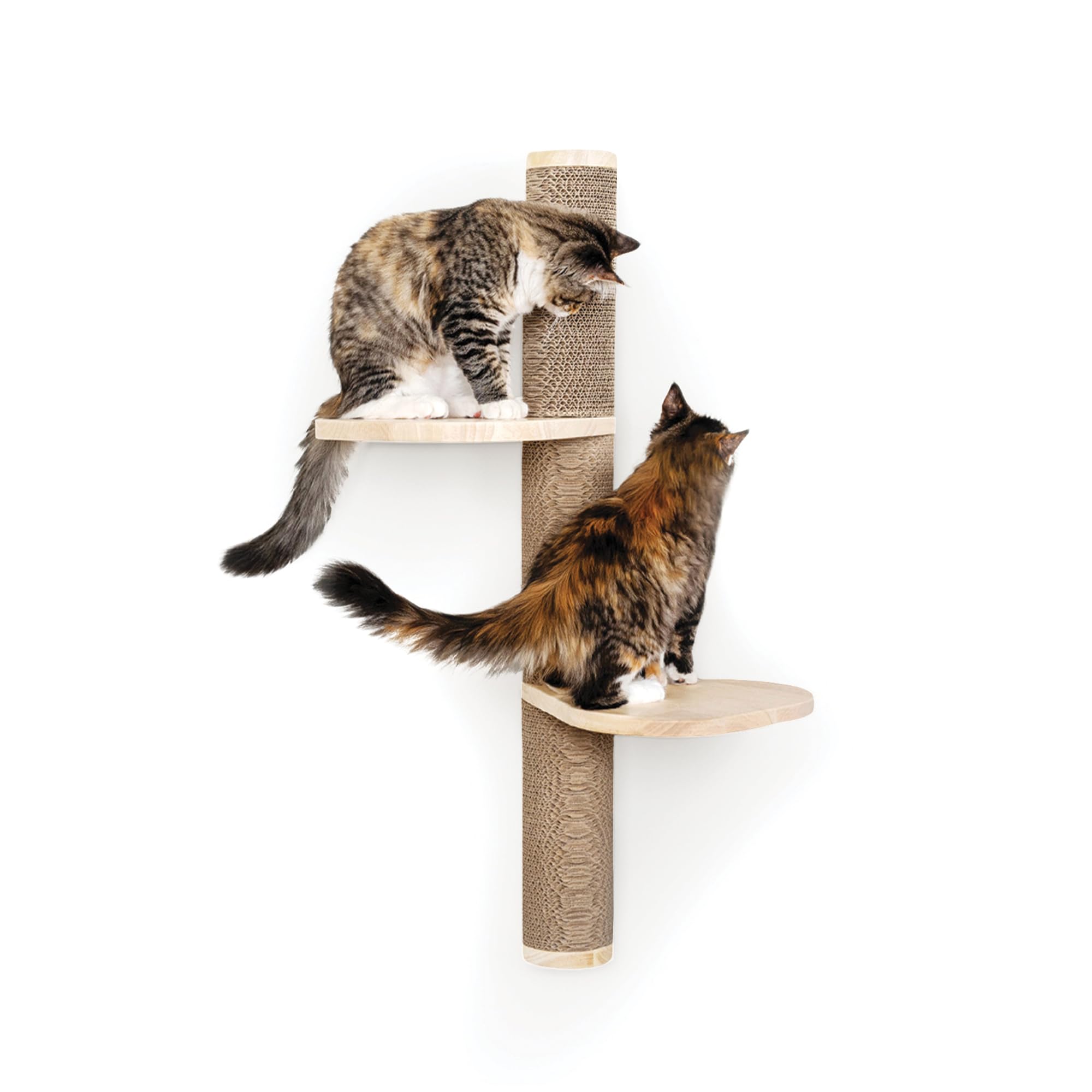
A stylish, modular wall system that combines perches, scratchers, and clear-coated oak for a polished look and practical climbing.
Why I picked it: Clean design, modular pieces, and replaceable corrugated scratch pads make this my go-to balanced option.
Best for: Homes that want a decorative, mix-and-match wall playground for smaller cats.
Midrange, good value for an integrated wall system.
Pros
- Stylish oak petal-shaped perches
- Replaceable corrugated scratch inserts
- Comes with mounting hardware and instructions
- Customizable configuration
Cons
- Rated for cats up to 18 lbs
- Perches are compact for large loungers
My take
I installed the Sunrise Steps as the spine of a small cat wall and appreciated how the clear-coated oak blends with my living room. The kit felt well made out of the box, and the corrugated cardboard inserts are replaceable, which I prefer to full-faux-sisal options.
Assembly was straightforward and the included hardware and video made placement easier. Because each perch is roughly 8.7 by 11.4 inches, I treat this as a system for smaller cats or as stepping stones for larger cats rather than a full lounge for a 20-pounder.
My cat adopted the perches quickly and uses the scratch surfaces regularly. I like that I can add other Ascentials pieces later to build a longer path without disrupting the room’s aesthetic.
2. FUKUMARU Four-Step Cat Stairway – Best Budget Steps
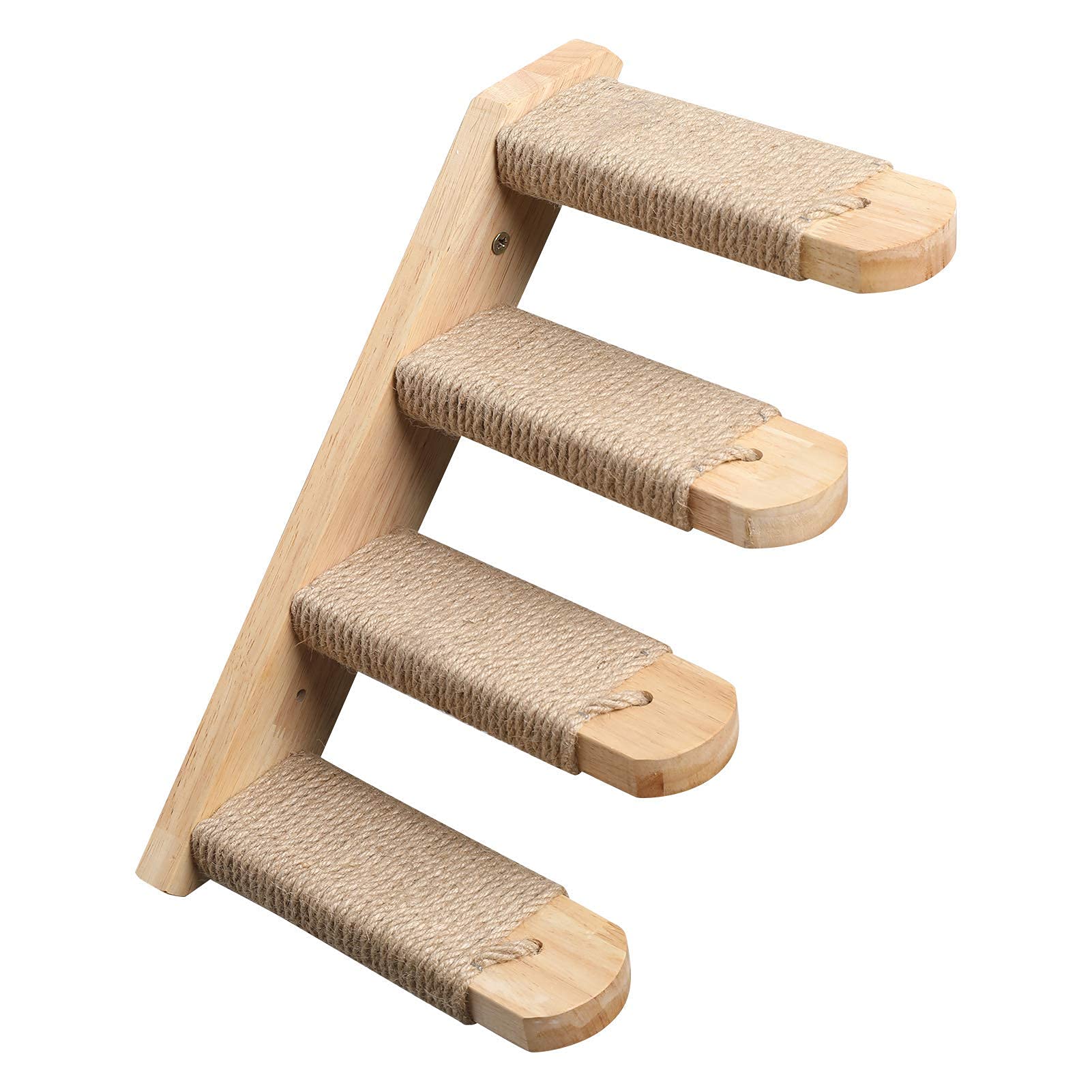
A simple, narrow four-step wall stair made from wood with jute-wrapped treads for grip and scratching.
Why I picked it: Low-profile footprint and grippy, jute-wrapped steps make it easy to create a climbing path affordably.
Best for: Small rooms, kittens, and anyone building a DIY cat wall on a budget.
Budget-friendly but consider stronger wall screws for heavy use.
Pros
- Compact, space-saving profile
- Jute-wrapped steps for grip
- Includes anchors and screws
- Clean, neutral finish
Cons
- Requires solid mounting into studs
- Supplied screws sometimes undersized
My take
I used the four-step stairway to bridge two higher platforms and liked how thin each tread is — they don’t dominate a wall. The wood feels substantial and the jute wrap gives my cats confidence on the steps.
The set includes anchors, screws, and even a drill bit in one shipment I received, which was a nice touch. That said, I ended up replacing the supplied screws with heavier fasteners when I anchored at least one screw into a stud for long-term security.
For the price and the straightforward design, this is a reliable way to add steps; just plan for proper fasteners if you have bigger or very active cats.
3. PEQULTI Large Cat Tree with Hammock – Best for Large Cats
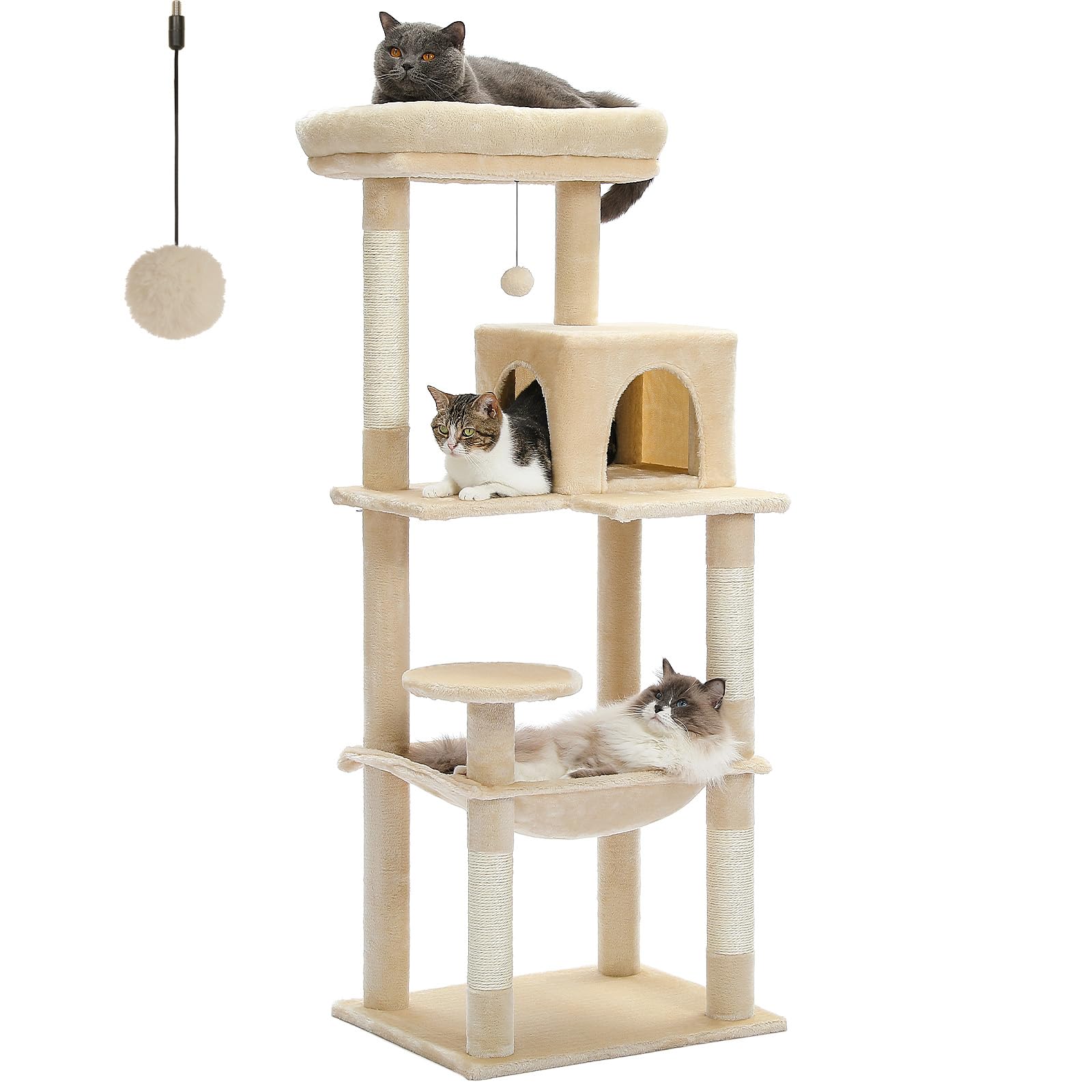
A tall, metal-framed multi-level tree with a big hammock and widened top perch designed for larger cats or multiple users.
Why I picked it: Sturdy metal frame and roomy perches make it a great choice when weight and space matter.
Best for: Owners of big or heavy cats who need a robust, tall tower.
Good midrange value for a heavy-duty multi-level tree.
Pros
- Sturdy metal frame
- Large hammock and widened perch
- Five levels for climbing
- Built for bigger cats
Cons
- Takes time to assemble
- May be too tall for some rooms
My take
I assembled this 56-inch tower for my big cat and found the metal frame gives it a reassuring stability that fabric poles alone don’t provide. The hammock is generously sized and my heavier cat lounges there comfortably.
Putting it together required patience but the instructions were clear. Once built, the platform spacing and top perch work well for a tall lookout next to a window.
If you need a tower that accommodates broader cats and multiple positions, this one does the job without feeling flimsy.
4. FUKUMARU Sisal Wall Shelf 17×10 – Best Floating Shelf
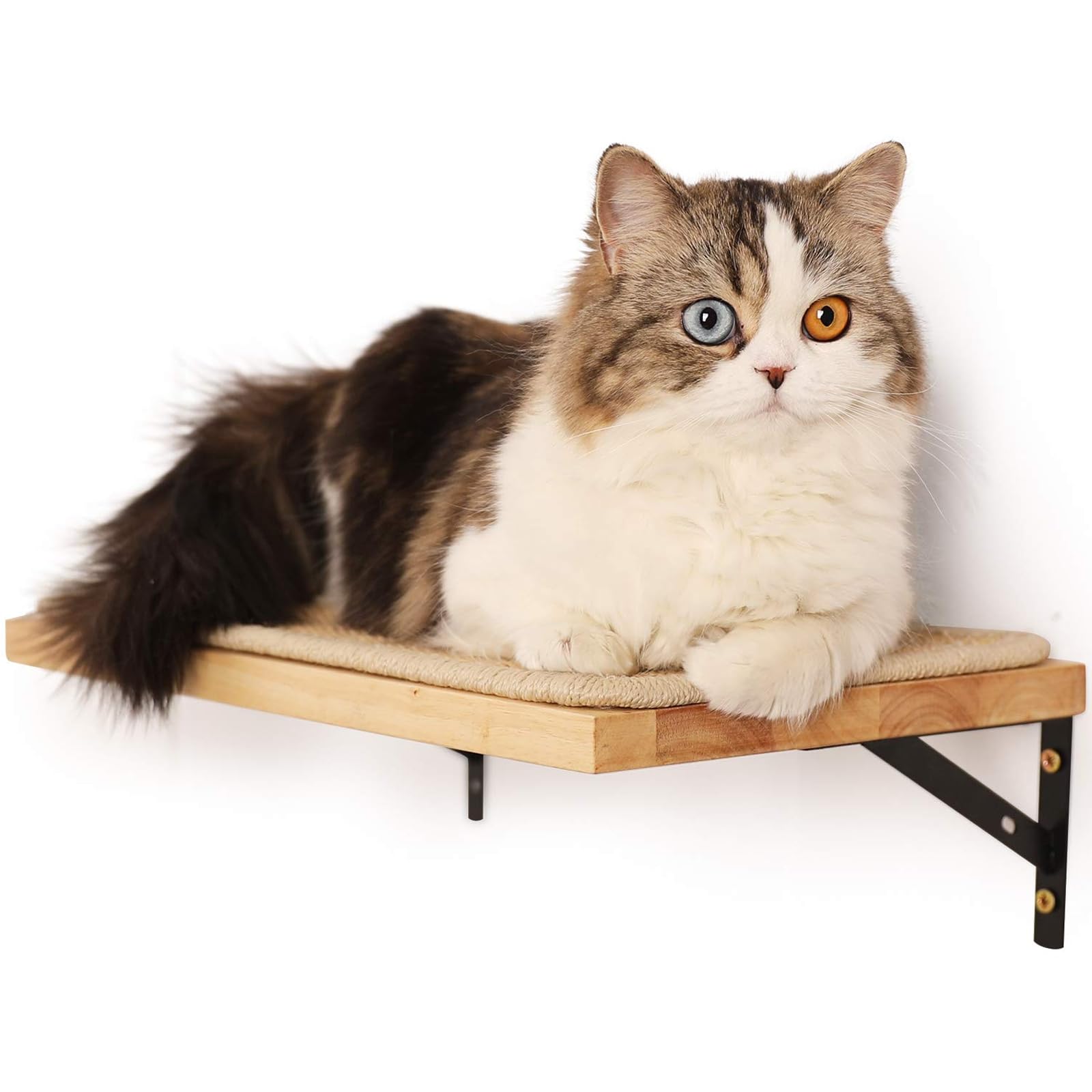
A solid rubberwood floating shelf with an easy-to-clean surface and a sisal mat for scratching and lounging.
Why I picked it: Wide, sturdy shelf surface that doubles as a step or a short lounge spot.
Best for: Cat walls that need durable, wider landing platforms.
Affordable single-shelf option with solid materials.
Pros
- Solid rubberwood construction
- 17 x 10 inch lounging surface
- Includes multiple wall anchors
- Sisal mat for scratching
Cons
- Installation can be fiddly
- Best anchored into studs for heavy cats
My take
I hung the 17-by-10 shelf as a landing between two steps and appreciated how solid the rubberwood felt under paw. The included sisal mat gives a proper scratching surface instead of just faux-fur.
Installation required care — the bracket holes are close together in some places and I swapped in my own screws for a couple of spots. When mounted into studs the shelf is noticeably stable, even with a heavier cat making dynamic jumps.
Visually, it blends nicely with neutral decor, and cleaning is simple with a damp cloth.
5. 56.3" Multi-Level Cat Tower – Best for Multiple Cats
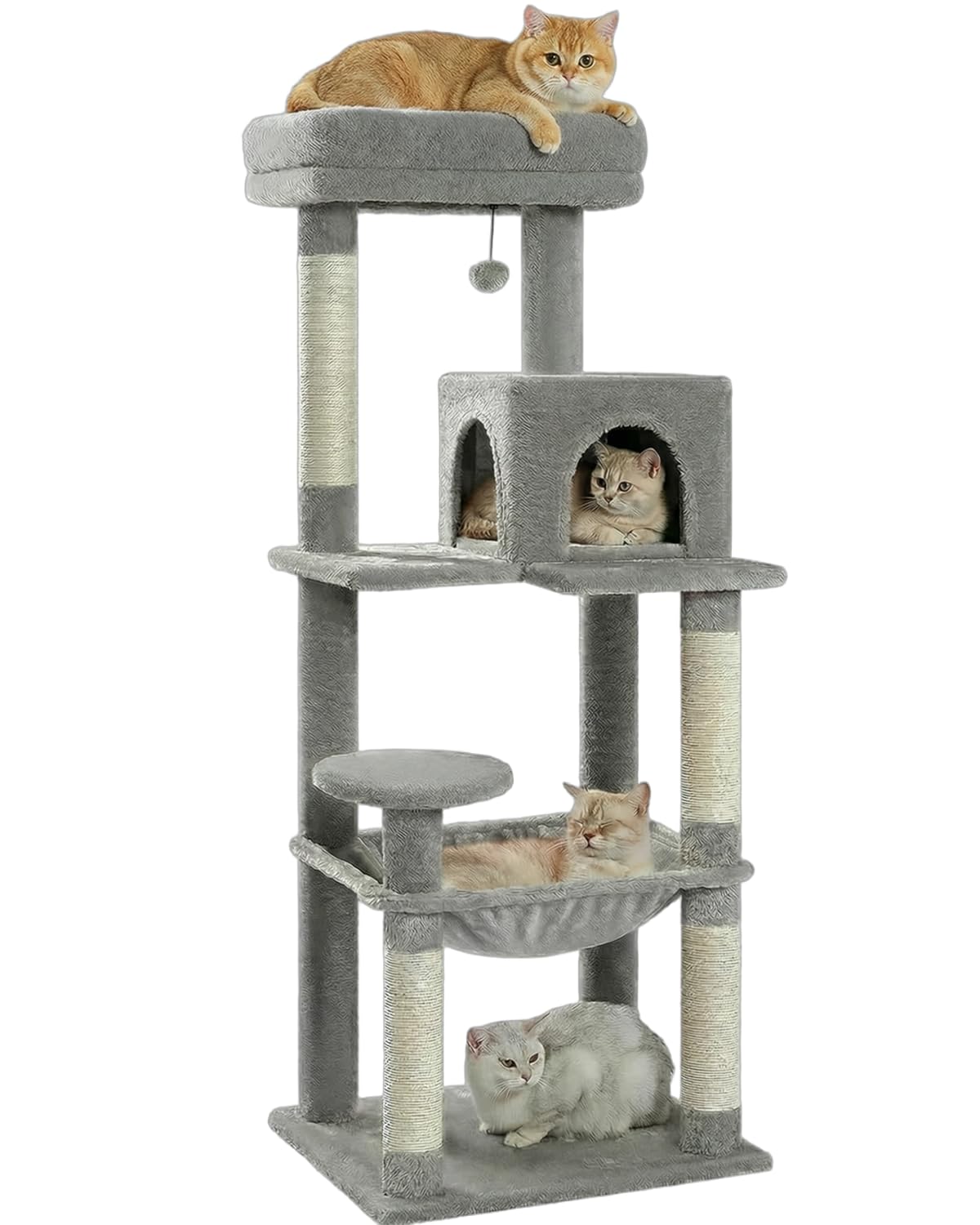
A six-tier tower with hammock, two-door condo, and widened top perch, built with reinforced posts and a wide base for stability.
Why I picked it: Reinforced structure and multiple hideouts handle several cats and varied play behavior.
Best for: Households with two or three cats that need vertical territory.
Solid value for a multi-cat setup.
Pros
- Six tiers for simultaneous use
- Reinforced posts and wide base
- Detachable, washable top perch
- Faux-fur covers for comfort
Cons
- Large footprint for smaller rooms
- Some assembly required
My take
I put this tower together in about 25–35 minutes and found the engineering clean — pieces aligned well and the reinforced posts give a confidence you can feel when a cat jumps on.
My three cats each found their favorite spots quickly: one prefers the hammock, another uses the condo, and the third stakes out the top perch. The washable top cushion is a practical touch for upkeep.
For multiple-cat homes where floor space is limited but vertical real estate is available, this tower balances comfort and durability.
6. Trixie Wall-Mounted Lounge Set – Best Wall Lounge Set
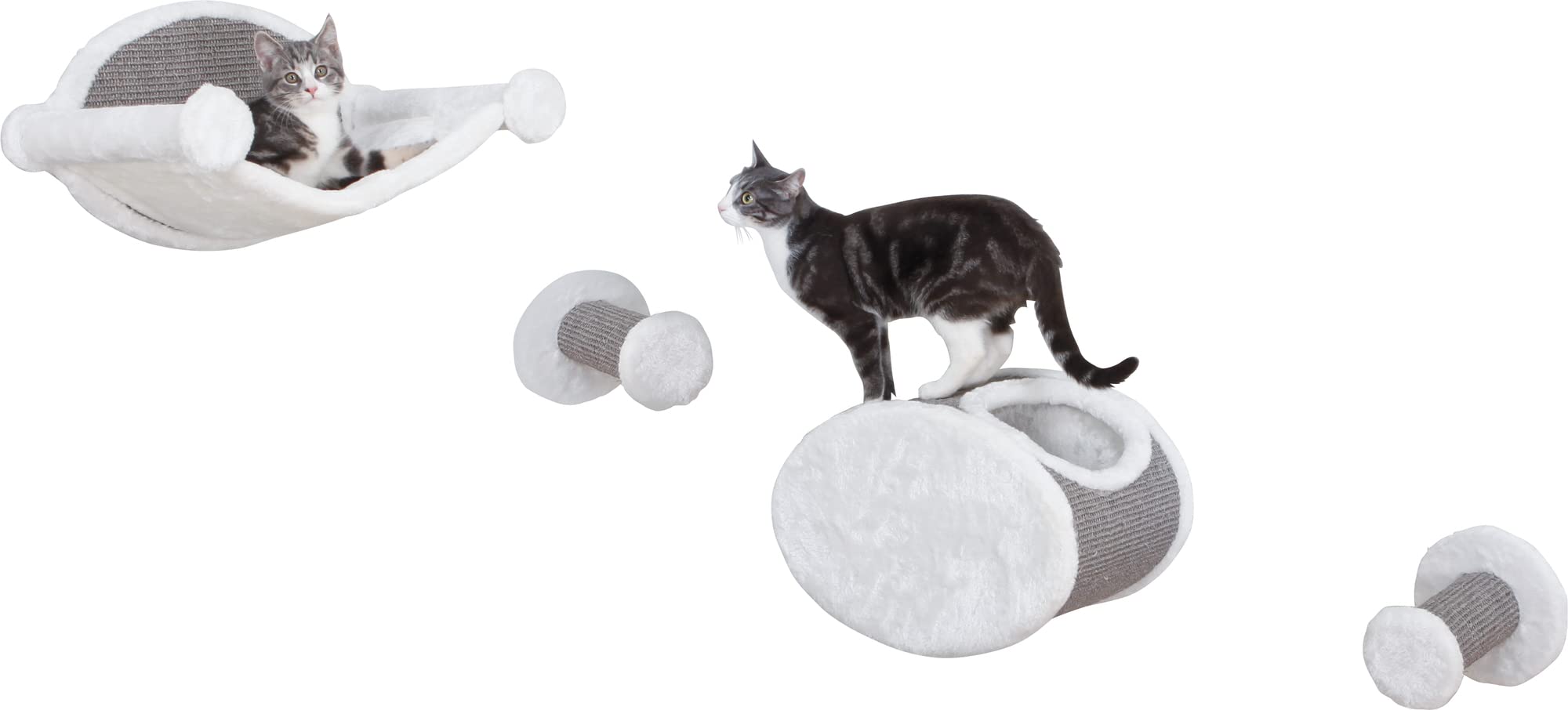
A four-piece wall system with plush-lined condos, sisal steps, and washable cushions that turns a wall into a climbing playground.
Why I picked it: Plush condos and washable cushions create comfortable retreats on the wall.
Best for: Owners who want enclosed hideaways and scratch surfaces in a configurable kit.
Higher-end wall set; quality materials justify the cost.
Pros
- Plush, removable cushions
- Durable sisal scratching areas
- Includes multiple mounting pieces
- Customizable layout
Cons
- Heavy pieces need strong anchors
- Directions could be clearer
My take
I installed the Trixie lounge set across a tall wall and the plush condos immediately became nap hotspots. The pieces have real weight behind them, which I like — it means they aren’t cardboard-thin.
Because the condos are heavy, I bolted key brackets into studs and used heavy-duty anchors elsewhere. Once secured, the system feels solid and the washable cushions make maintenance painless.
If you plan to mount several pieces, allocate time for careful layout and reinforced hardware — the payoff is a wall that functions like a cat-sized living room.
7. FUKUMARU 4-in-1 Wall Shelf Set – Best Modular Set
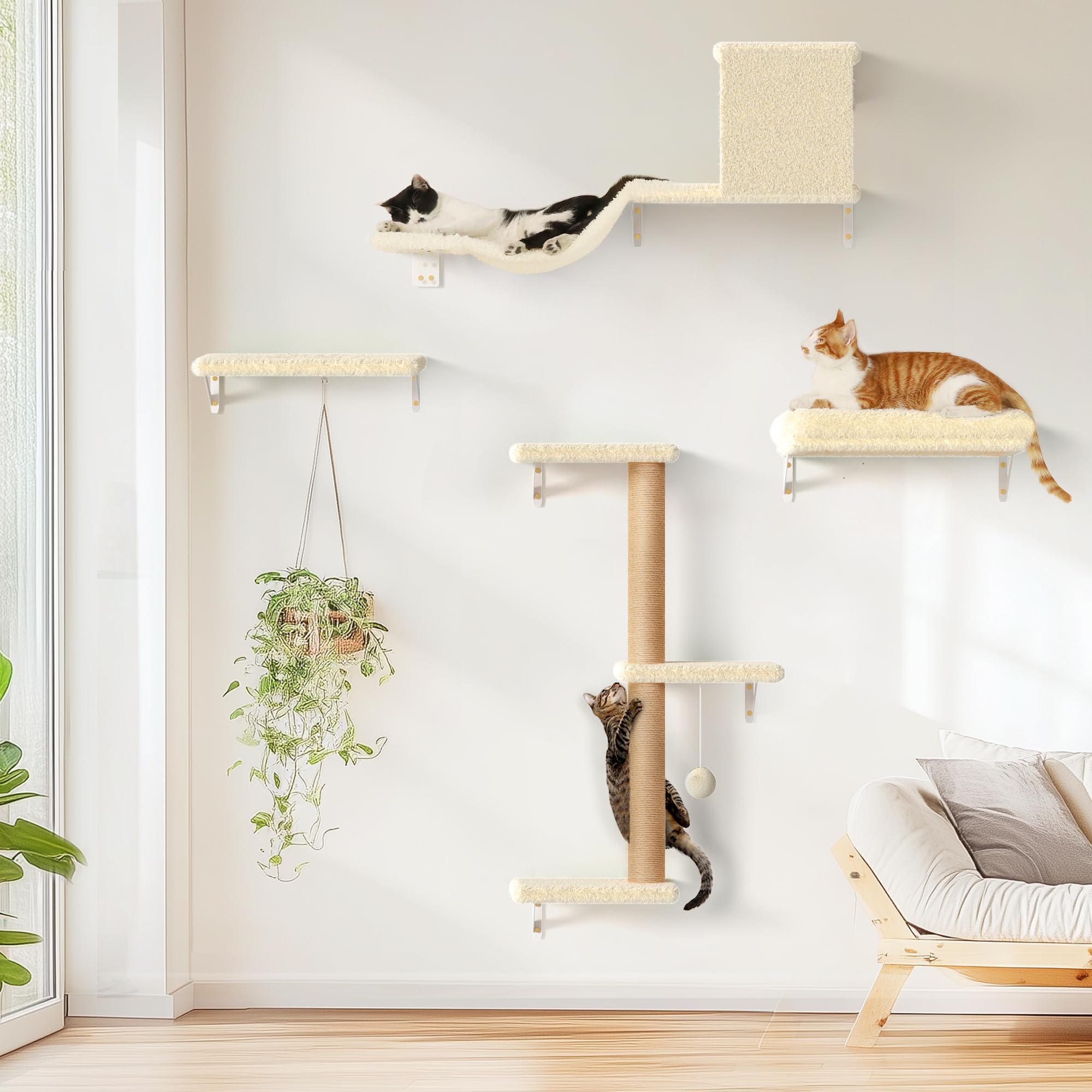
A modular set with bridge, bed, scratching post, and shelf made from multi-layer wood and velvet fabric, designed to align with 16-inch studs.
Why I picked it: Modular pieces and stud-aligned brackets sped my install and made a cohesive play path.
Best for: People building a full cat wall who want integrated bed and scratch components.
Competitive for a multi-piece modular kit.
Pros
- Designed to align with 16-inch studs
- Solid multi-layer wood construction
- Includes hammock and scratching post
- Peach velvet fabric is soft
Cons
- Fabric can show wear over time
- Hanging hardware may need reinforcement
My take
I installed the 4-in-1 set as the center of a cat wall and appreciated that the mounting pattern is intended for standard 16-inch stud spacing — it made bracket placement predictable.
The pieces feel solid and the velvet is pleasant for morning naps. My only caveat is that I swapped the supplied anchors for heavy-duty screws in a couple of spots after a month of heavy use.
When laid out as a small jungle gym the set appeals to climbers and scratchers alike, and I like that the bridge and bed give variety without overwhelming a room.
How I Choose Cat Shelves and Wall Systems
Weight capacity and materials
I always check what material the shelf or post is made of and whether the manufacturer lists a weight limit. Solid wood, metal frames, and multi-layer boards hold up best for bigger cats.
If a product lists reinforced posts, a wide base, or a metal frame, I treat that as an advantage for stability and longevity.
- Choose solid wood or reinforced posts for heavier cats.
- Prefer replaceable scratch inserts (corrugated or sisal) for easy maintenance.
- Look for washable cushions if the product has plush components.
Installation and anchors
I plan my layout around studs whenever possible. Many wall shelves work fine with drywall anchors, but heavy condos and beds should be fastened into studs or use heavy-duty toggle anchors.
I keep a set of longer screws and stronger anchors on hand; I’ve often swapped the supplied hardware for more robust fasteners.
- Locate studs and mark mounting points before drilling.
- Use heavy-duty anchors for thicker pieces if studs aren’t available.
- Measure platform spacing to create comfortable jump distances for your cats.
Design and daily use
When I plan a cat wall I mix steps, shelves, and a hiding spot so cats can climb, escape, and nap. Narrow treads work as connectors while wider shelves and condos serve as rest stops.
Think about sightlines to windows — cats use perches to watch birds, and I position top perches near windows when possible.
- Combine steps and shelves to build continuous routes.
- Place scratching surfaces near play areas to protect furniture.
- Keep cleaning and replacement parts in mind when selecting materials.
Frequently Asked Questions
Can I install these shelves on drywall?
I install many shelves on drywall, but I always anchor the heavier pieces into studs or use heavy-duty toggle anchors. For light steps you can use strong drywall anchors, but I prefer at least one stud-mounted screw for larger pieces.
How do I choose between a wall system and a freestanding tower?
I pick wall systems when floor space is limited and I want a sleek look; I choose freestanding towers when I need many hideouts or have several large cats that need sturdier surfaces without drilling.
What fasteners and tools should I have ready?
I keep a power drill, a stud finder, a level, heavy-duty screws, and toggle anchors on hand. Occasionally I swap the supplied screws for longer or thicker ones for extra security.
How do I keep scratch surfaces fresh?
I rotate or replace corrugated cardboard inserts as they wear and periodically refresh sisal by trimming loose ends. For plush pieces I remove and wash cushions when possible.
Final Take
I prefer systems that combine secure mounting, durable materials, and a layout my cats actually use. For small spaces the floating steps and shelves make the biggest difference; for larger or multi-cat homes I lean toward reinforced towers or full wall kits.
Pick your installation style, arm yourself with reliable anchors, and plan routes that connect windows and favorite spots. Do that and your cats will thank you with hours of climbing and napping.
