
I tested five practical cabinet organizers—clear bins, pull-out drawers, a cookware rack, and a two-tier pullout—to tame deep cabinets and busy pantries. Here’s what I used, why each stood out, and how I’d choose the one
I’ve fitted different cabinets in my kitchen and pantry with everything from simple clear bins to heavy-duty sliding drawers. Over time I learned that the right organizer depends on what I store, how my cabinet is built, and how much I want to install.
In this roundup I’m sharing the organizers I actually used, how they changed access and visibility in my cabinets, and which one I reach for depending on the job.
I compared clear, stackable bins for visibility, single-tier slide-outs for heavy items, and multi-tier systems for maximizing deep cabinets, so you can match capacity, installation effort, and access needs.
1. ClearSpace Clear Plastic Storage Bins (4-Pack) – Best Clear Bins
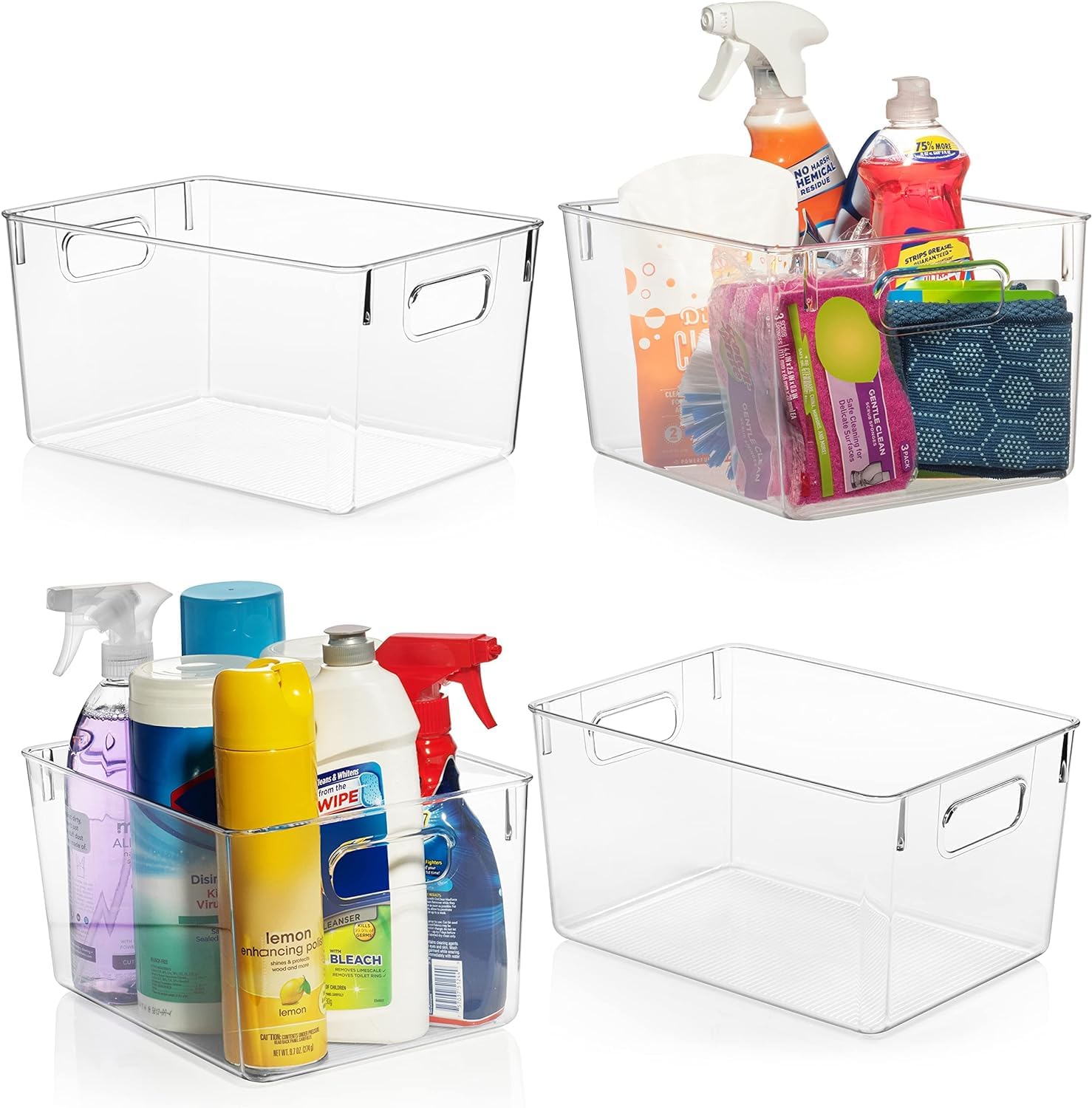
I use these clear, handled bins when I want instant visibility and easy transport inside pantry shelves and the fridge.
Why I picked it: They give crystal-clear visibility, built-in handles, and stackability for mixed pantry items.
Best for: Organizing spices, snacks, craft supplies, and fridge shelves.
Affordable and a simple add-on for any cabinet or fridge.
Pros
- Transparent for instant visibility
- Built-in easy-grip handles
- Stackable to save shelf space
- Food-safe, BPA-free plastic
Cons
- Can crack if dropped
- Limited height for very tall items
My take
I keep a set of these bins in my pantry and in a small fridge drawer because being able to see contents at a glance saves me time. The 11 x 8 x 6 size fits shelf depths I commonly see and lines up neatly when I place several side by side.
The molded handles make it simple to pull a whole group of items out, re-stock, or carry to the counter. They’re rigid enough for large spice packets and craft supplies, and I’ve wiped them clean with mild soap without any clouding.
If you need deep vertical space for tall bottles, these aren’t the answer, and I’d be cautious about dropping them because they’re solid but not indestructible. For general pantry, fridge, and cabinet sorting they’re a low-effort win.
2. LYNK PROFESSIONAL Pull-Out Cabinet Organizer – Best for Heavy Loads
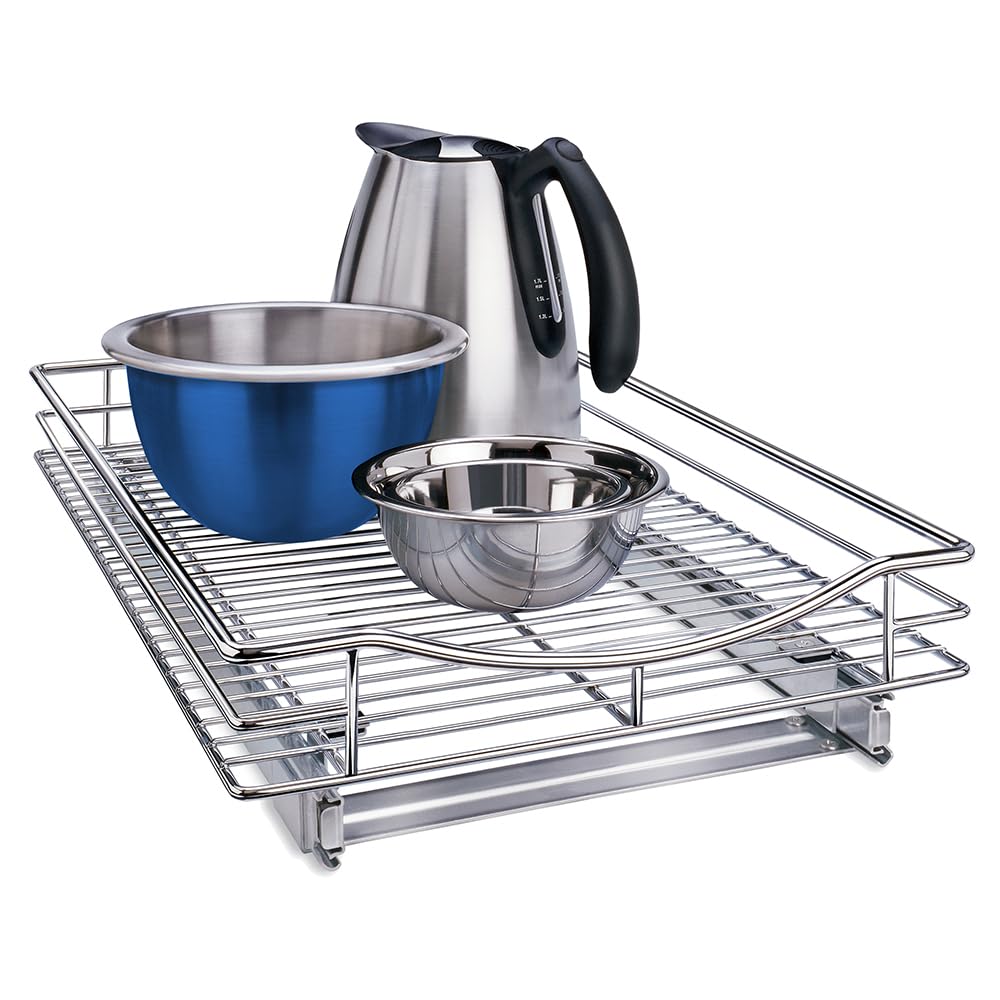
When I need a pullout that handles heavy appliances and stays smooth, I reach for this Lynk ProGlide system.
Why I picked it: Commercial-style glides under the drawer and reinforced cross bars for heavy loads.
Best for: Storing mixers, cast-iron, and bulky appliances in lower cabinets.
A more expensive option, but built for heavy-duty use and longevity.
Pros
- Commercial-grade ProGlide system
- Handles very heavy loads
- Smooth, full-extension glide
- Straightforward alignment template
Cons
- Requires proper cabinet width and depth
- Chrome finish needs occasional wiping
My take
I installed this unit under a cabinet where I store heavy countertop appliances. The glides sit underneath the drawer, which gave me every inch of usable width and eliminated the side-rail intrusion I’ve seen on cheaper units.
Sliding it in and out felt professional — no sag, no binding — even when I stocked a stand mixer and a waffle maker on the shelf. The included template made alignment painless, and the lifetime-limited warranty gave me peace of mind.
If you plan to load it with weighty cookware, this is the pullout I’d pick. Just confirm your cabinet’s clear opening before ordering so installation goes as smoothly as the drawer.
3. HOLDN' STORAGE Pull Out Cabinet Organizer – Best Quick-Install Pullout
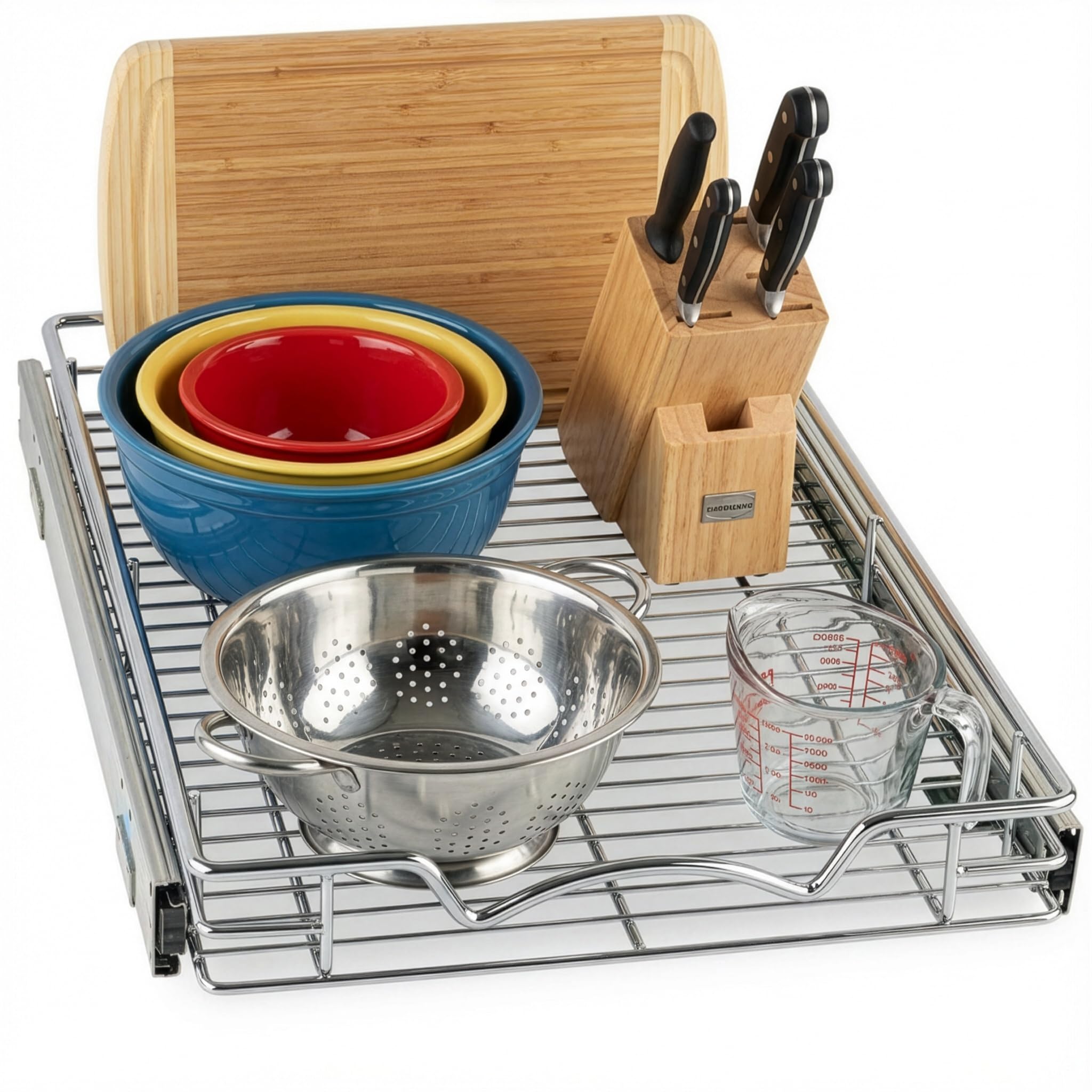
I used this caddy when I wanted a sturdy, fast install and a full-extension shelf for pots and pans.
Why I picked it: Simple template install, solid wire construction, and full extension for easy access.
Best for: Home cooks who want a durable pullout without a long installation.
Good value for a sturdy, metal pullout option.
Pros
- Easy install with hardware included
- Full-extension smooth slide
- Solid, heavy-wire construction
- Holds a respectable load
Cons
- May need rear anchoring for very heavy loads
- Requires minimum cabinet opening
My take
I installed this in about 30 minutes using the provided template and screws; the directions are clear and the hardware fit well. Once mounted, the shelf glides out completely, which was a huge help for reaching items at the back of a deep cabinet.
The metal wire frame feels robust — I regularly store casserole dishes and mixing bowls on it with no sign of bending. In one of my deeper cabinets I anchored the back to the rear wall for extra stability when fully loaded, which was an easy precaution.
This one gives a lot of functionality for the effort, and I’d recommend it when you want a practical pullout without custom carpentry.
4. Deco Brothers 3-Slot Cookware Organizer Rack – Best for Cutting Boards
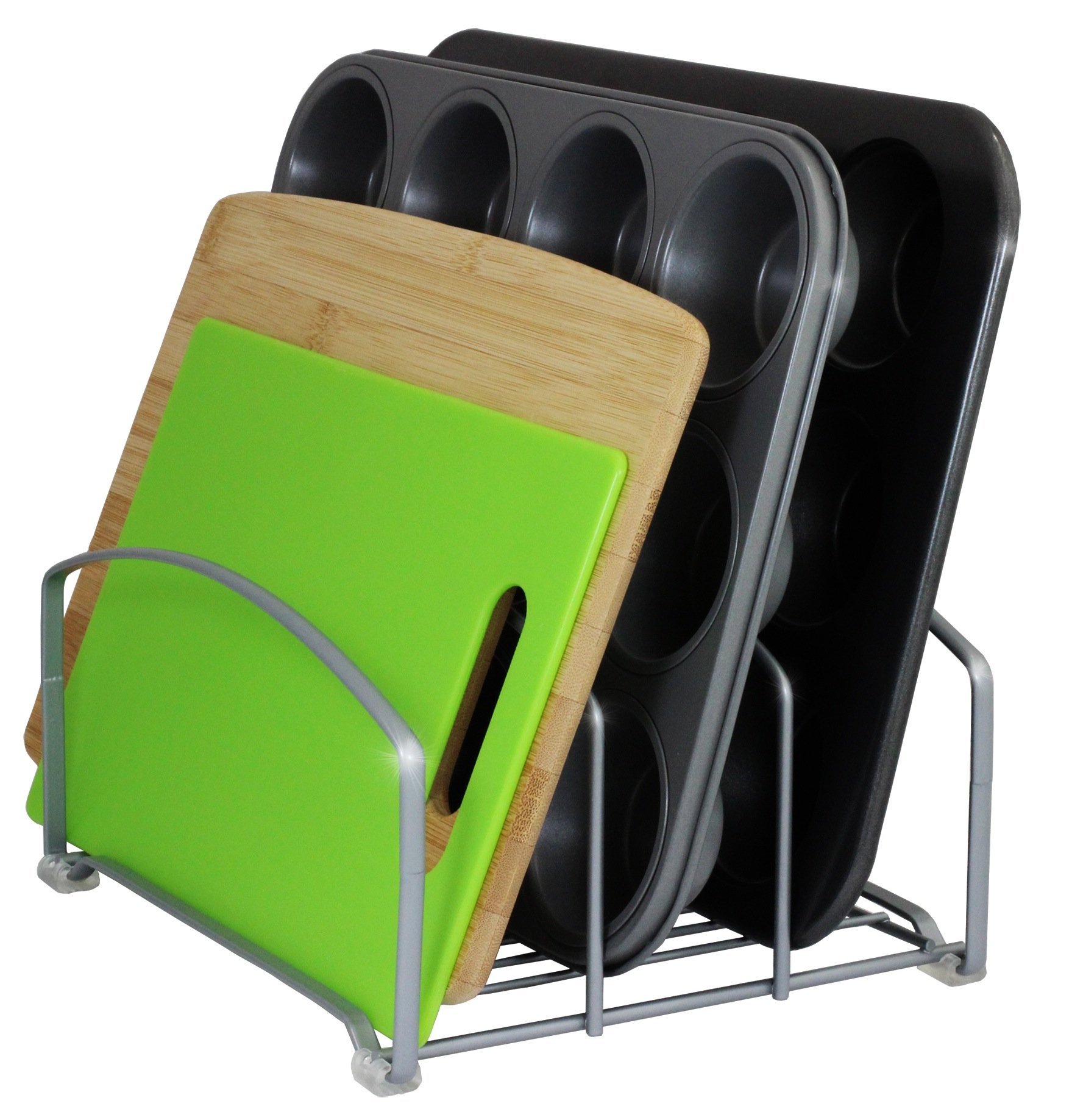
I use this compact rack to corral cutting boards, baking sheets, and pot lids so they don’t slide around in a drawer or on a shelf.
Why I picked it: Simple three-slot design keeps boards and trays upright and easy to grab.
Best for: Organizing cutting boards, cookie sheets, and shallow trays.
An inexpensive, no-fuss solution for upright storage.
Pros
- Three dedicated slots
- Sturdy gauge steel construction
- Rubber feet protect surfaces
- Compact footprint
Cons
- Slot height is low for very tall trays
- Limited capacity for many large sheets
My take
I placed this rack inside a deep cabinet and finally stopped juggling cookie sheets that kept sliding into a pile. The dividers hold boards upright and the rubber feet keep the whole unit from shifting.
It’s heavy enough to resist tipping but compact enough to live in a drawer or on a pantry shelf. My only caveat: very tall or heavy serving trays don’t get the best vertical support from the low divider height, so I reserve it for cutting boards, lids, and standard baking sheets.
For straightforward upright organization, this is the simplest tool I reach for when I want order without drilling or mounting.
5. Rev-A-Shelf Two-Tier Pullout Cabinet Organizer – Best Two-Tier Pullout
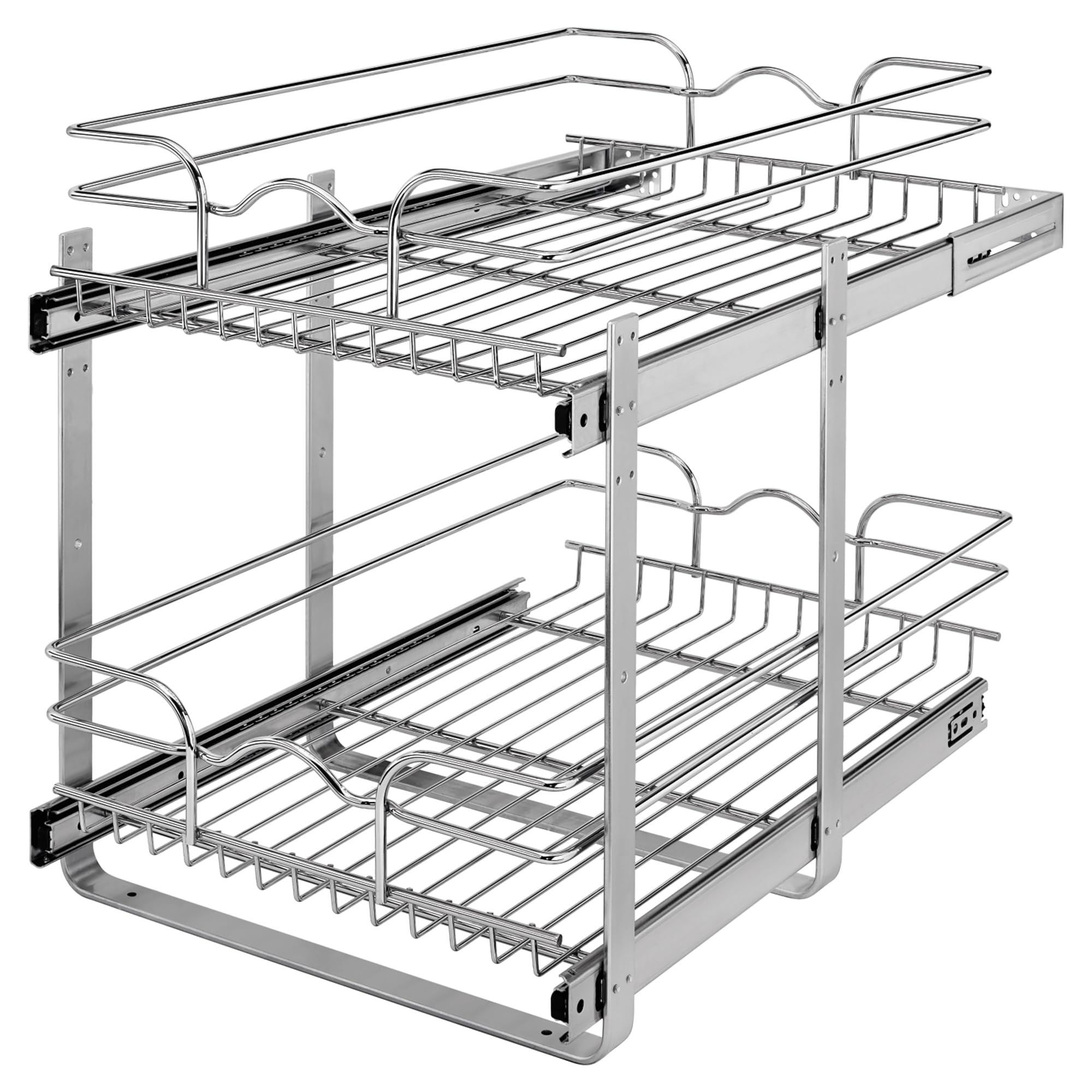
When I needed to reclaim deep cabinets and separate frequently used items, this two-tier system gave me easy access and big capacity.
Why I picked it: Two full-extension baskets with high load capacity maximize deep cabinet storage.
Best for: Large, deep cabinets where layered access makes sense.
A higher-end choice for serious cabinet reconfiguration and long-term durability.
Pros
- Two full-extension baskets
- Each slide rated for heavy loads
- Comes mostly assembled
- Great for deep cabinets
Cons
- Initial installation can be fiddly
- Requires specific cabinet height and depth
My take
I installed this in a very deep base cabinet and the difference was immediate: pots, pans, and appliances moved from the ‘mystery zone’ to items I reach for every week. Both baskets glide smoothly on ball-bearing hardware and feel solid even when loaded.
The unit ships mostly assembled and only needs a few screws, but plan for extra time on the first install — aligning the rear mounts in a deep cabinet can be fiddly. Once it’s in, though, the two-tier layout multiplies usable space without sacrificing access.
If you have tall cabinet interior height and want a finished, professional-feeling solution to deep storage, this Rev-A-Shelf system is where I’d start.
How I Choose a Kitchen Cabinet Organizer
Measure before you buy
I always measure the clear opening inside the cabinet — width, depth, and height — before choosing an organizer. Face-frame cabinets reduce the usable width, and some pullouts list a minimum opening requirement.
Measure the door swing and any toe-kick obstructions so the unit will actually slide out fully once installed.
- Measure inside width at the top and bottom of the cabinet.
- Confirm minimum depth and height listed by the manufacturer.
- Account for face frame when measuring usable width.
Match material and capacity to what you store
I pick heavy-wire or commercial glide systems for mixers, cast iron, and appliances. For snacks, spices, and produce I favor plastic bins or wire baskets.
If a product lists a weight capacity, I treat that as a working limit and add a little buffer when deciding what to store on it.
- Wire and chrome for heavy cookware.
- Plastic bins for visibility and fridge use.
- Check weight capacity for appliances.
Consider access style
Full-extension pullouts make everything visible; partial slides are fine for lighter items. Two-tier baskets multiply capacity in deep cabinets but require enough interior height.
I use vertical racks for cutting boards and lids because they keep flat items upright and easy to grab.
- Full-extension for deep cabinets and heavy items.
- Two-tier when vertical cabinet height allows.
- Vertical racks for trays and cutting boards.
Installation and tools
Some systems install in under 30 minutes with a template and a drill; others need more precise alignment. I set aside extra time for the first unit and treat subsequent installs as faster.
If you’re not comfortable drilling into cabinet floors or walls, plan for professional help or choose non-mounting options like bins and racks.
- Templates speed alignment and reduce mistakes.
- Have a drill, level, and measuring tape ready.
- Anchor rear mounts when storing heavy items.
Frequently Asked Questions
How long does installing a pullout take?
From my experience, a simple pullout with a template can take 20–40 minutes; a two-tier or deeper unit may take an hour for the first install while you adjust alignment.
Will these pullouts hold heavy cookware?
I rely on wire-frame and commercial-glide units for heavy cookware — check the listed weight capacity and consider anchoring the rear for extra stability when fully loaded.
Can I use clear bins in the fridge?
Yes. I use BPA-free plastic bins for fridge organization because they keep items grouped and visible and are easy to wash with mild soap and water.
Do two-tier pullouts reduce usable height?
They can. I only install two-tier systems where the cabinet interior provides sufficient vertical clearance; otherwise, a single deep pullout or adjustable shelf serves better.
Final Take
I choose clear bins when visibility and portability matter, a heavy-duty Lynk or similar pullout for appliances and cast-iron, and a two-tier Rev-A-Shelf when I need to reclaim deep cabinet space.
Measure first, match material and capacity to what you store, and pick the installation level you’re comfortable with. Once I swapped a few cabinets, the kitchen felt more usable every day.
