
I tested a range of portable greenhouses — from instant pop-ups to large walk-ins — and picked the ones that worked best for seedlings, balcony gardening, and small-yard vegetable plots.
I put seven portable greenhouses through hands-on use so I could tell you which styles actually perform. I wanted options that cover the needs I run into most: quick pop-ups for balcony plants, compact tabletop tents for seed starting, and walk-ins for winter protection.
Across these picks I focused on build quality, ease of assembly, how well they trap warmth and humidity, and whether they stand up to wind and weather. I also factored in shelf capacity and practical features like roll-up doors, vents, and replacement covers.
I grouped these choices so you can match a greenhouse to how and where you garden — instant pop-ups for temporary protection, table-top tents for indoor germination, and larger walk-ins for overwintering and bulk seedlings.
1. Mini 3-Tier Walk-In Greenhouse – Best Budget Walk-In
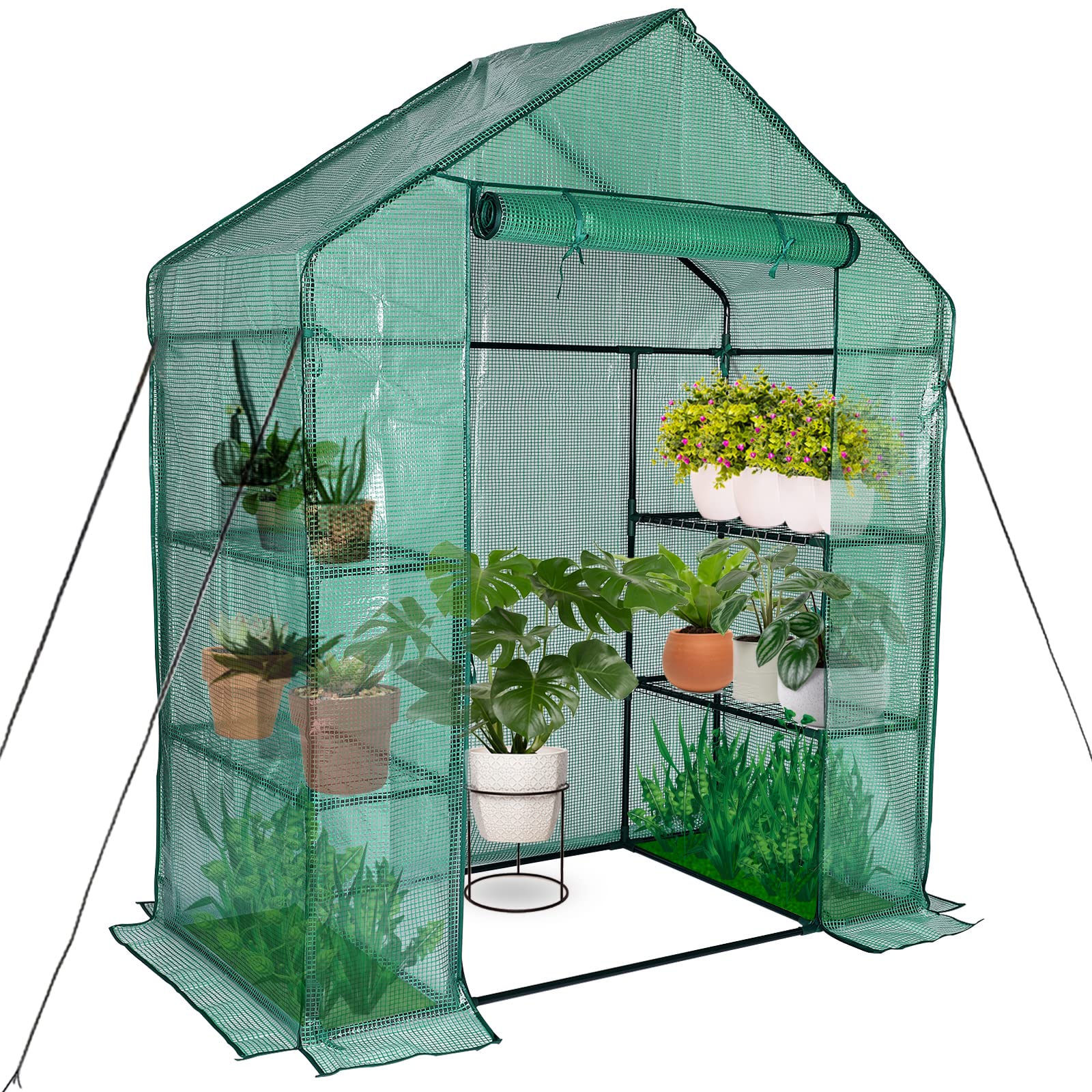
A compact walk-in with three shelves, PE cover, and an adult-height door that stretches heat and season for small-space gardeners.
Why I picked it: Roomy three-tier layout and thick PE cover at a very affordable price.
Best for: Small yards and gardeners who want a walk-in without spending a lot.
Budget-friendly option.
Pros
- Adult-height door for easy access
- Thick, low-odor PE cover
- Three shelves maximize vertical space
- One person can assemble it
Cons
- Shelves are on the flimsy side
- Zippers can be inconsistent
- Requires secure anchoring in wind
My take
I appreciated how this model gives walk-in access in a small footprint — the door is genuinely tall enough for adults to enter without ducking, and the three tiers let me stage seed trays and pots efficiently.
Putting it together is doable solo, but I kept all connector pieces separated and labeled because many of the joints look nearly identical. Once assembled the PE cover trapped heat well overnight and felt thicker than many budget tents.
I had to shore up the shelving since the factory shelves felt flimsy under heavier pots; I slid a heavy wire shelf against the back to support larger containers. I also had one zipper mishap — the left zipper on my unit wasn't fully secured at the top, so handle the zippers gently and check the seams during assembly.
For the price I found it hard to beat: good seasonal protection, minimal smell from the cover, and a practical size for patios and small yards. Just plan to anchor it and reinforce shelves if you expect heavy pots or strong wind.
2. Pop-Up Mini Greenhouse – Best Pop-Up
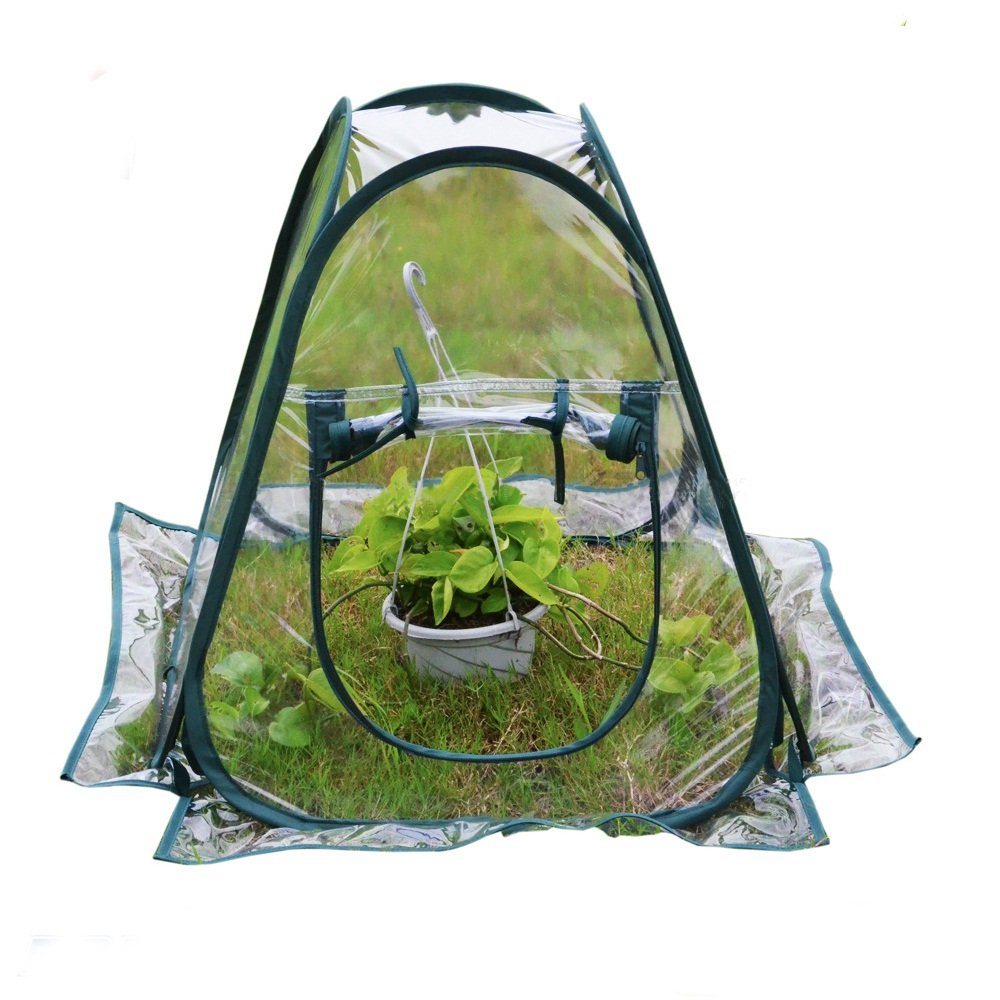
An instant pop-up tent made from clear PVC that sets up in seconds and is useful for protecting a few potted plants or a single barrel planter.
Why I picked it: Instant setup and strong PVC make it ideal for quick, temporary protection.
Best for: Balconies, patios, and indoor/outdoor pots that need short-term shelter.
Very affordable pop-up option.
Pros
- Opens and folds out instantly
- Clear PVC holds humidity well
- Comes with steel ground tacks
- Great for single-planter protection
Cons
- Folding back into the case is tricky
- Can trap excessive heat on sunny days
- Not for long-term outdoor exposure
My take
This pop-up greenhouse really does set up in seconds — I popped it over a wine-barrel planter and it protected a young tomato through wind and light storms without tearing.
The PVC is heavier than I expected and retains humidity, which helped seedlings and tropical houseplants. In cool, cloudy coastal conditions the inside stayed noticeably warmer and my tomato started growing faster.
Be warned: folding it back into the circular storage case is awkward and takes practice. Also, the tent can sweat under warm sun and low airflow, so I don’t leave it in full direct sun for long periods.
I found it perfect for temporary shelter or moving plants inside overnight. For anything semi-permanent I’d choose a framed option and better anchoring.
3. 6-Shelf Walk-In Greenhouse – Best Heavy-Duty Frame
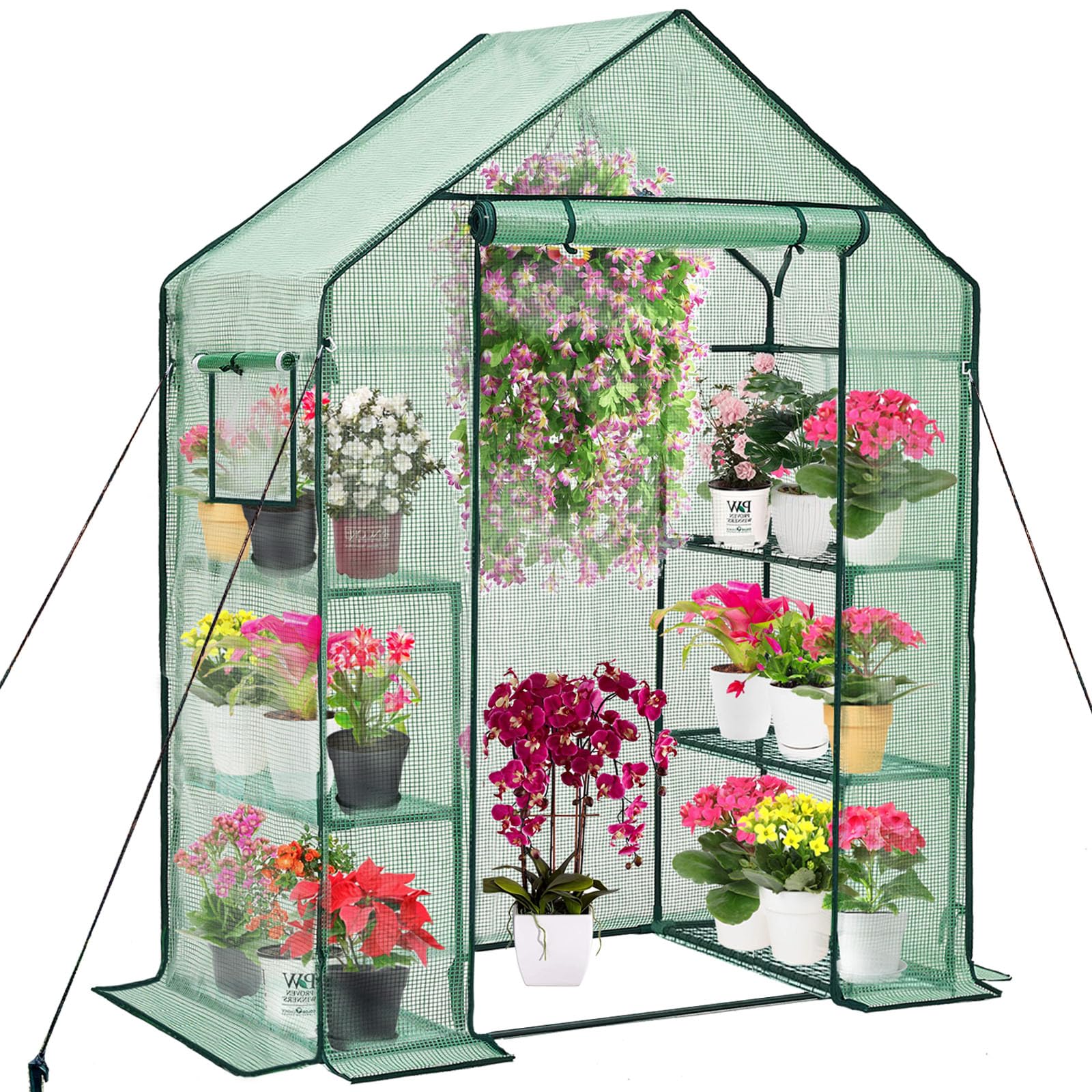
Powder-coated iron frame with six wire shelves, Velcro side windows, and a zippered roll-up door — built to support more pots and heavier use.
Why I picked it: Sturdier iron tubing and ventilation make it durable for larger seedling batches.
Best for: Gardeners who want a stronger frame and lots of shelf space.
Mid-priced durable option.
Pros
- Powder-coated iron frame resists rust
- Six wired shelves maximize capacity
- Roll-up door and Velcro windows
- Straps secure cover to frame
Cons
- Assembly can be a bit tedious
- Lightweight overall without anchors
- Can overheat in full midday sun
My take
I liked that the iron tubing feels noticeably tougher than thin pipe alternatives — once assembled it handled multiple storms with only minor adjustments.
The six shelves give me room to start flats and keep potted plants separated; I used cable ties to further secure the shelves and keep taller pots from tipping in wind.
The PE cover zips on and straps down well, but I found it important to anchor the unit. In full sun the greenhouse can get very hot, so I used the Velcro windows and rolled the door to regulate temperature.
Assembly took a solid hour and went smoother with two people, but the finished result was a useful, mobile growing space that I moved easily when I changed its location.
4. Ohuhu Tabletop Mini Greenhouse – Best Tabletop
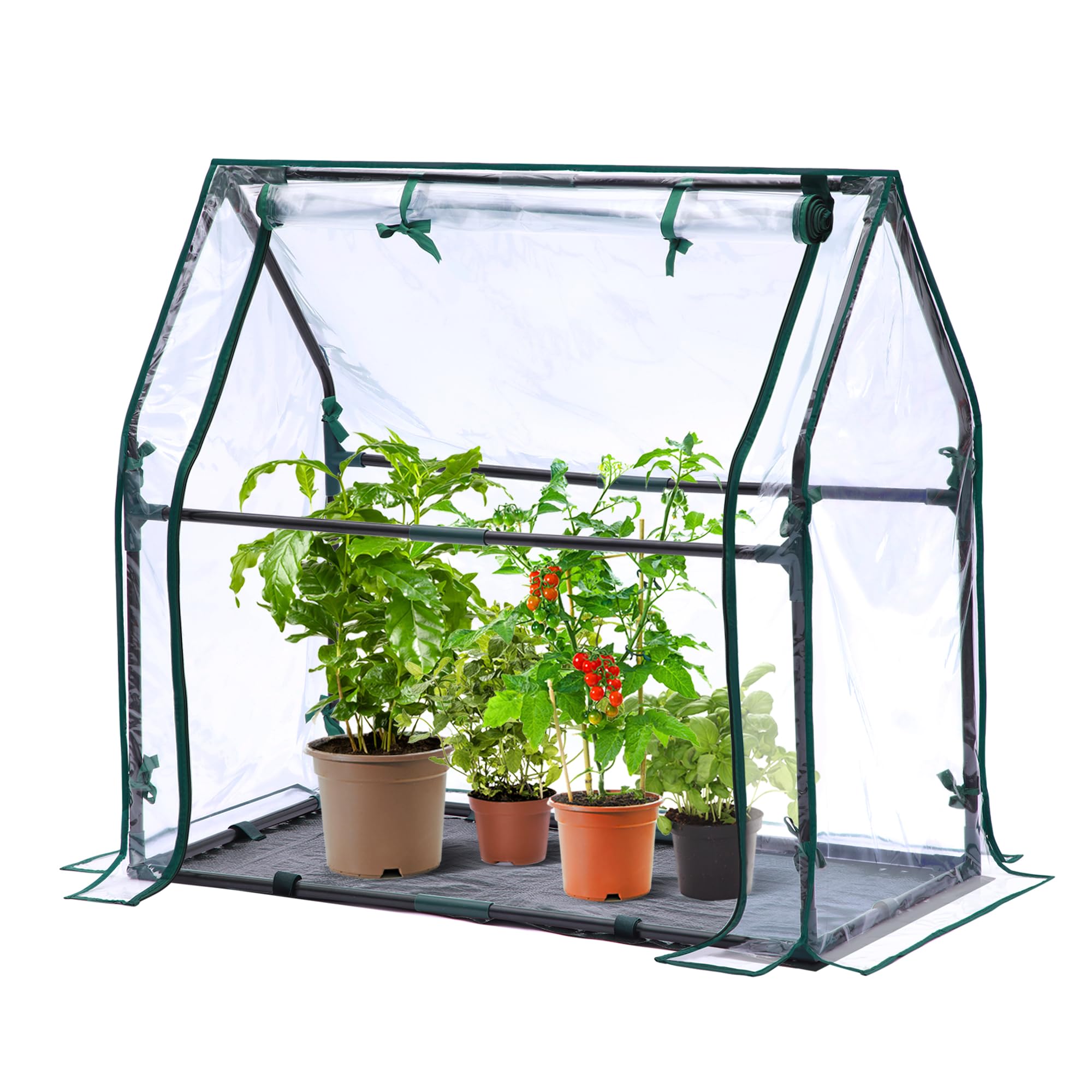
Compact tabletop greenhouse with thick PVC cover, reinforced metal frame, and a removable waterproof mat — ideal for indoor seed starting and small pots.
Why I picked it: Compact footprint with a removable mat makes cleanup and seed starting easy.
Best for: Indoor germination, windowsills, and patios with limited floor space.
Affordable compact option.
Pros
- Thick, tear-resistant PVC cover
- Removable waterproof mat
- Quick, easy assembly
- Keeps seedlings warm
Cons
- Lightweight in winds
- Not a long-term outdoor fix
- New-purchase chemical smell possible
My take
This Ohuhu unit went together in minutes and fit perfectly in my driveway staging area when I needed to harden off seedlings during a cold snap.
The waterproof mat is a small but useful touch — it made cleanup after potting simple and kept soil off my deck. The cover traps warmth effectively, which helped my pepper seedlings push earlier growth.
Because it's light I secured the base with bricks and bungee cords; without that it would struggle in gusty conditions. The construction feels good for season-to-season use if you treat it as a seasonal tent rather than a permanent structure.
Overall I found it one of the simplest and most convenient tabletop greenhouses for getting seedlings out of the house and into a controlled outdoor environment.
5. Tunnel Walk-In Greenhouse – Best Large Walk-In
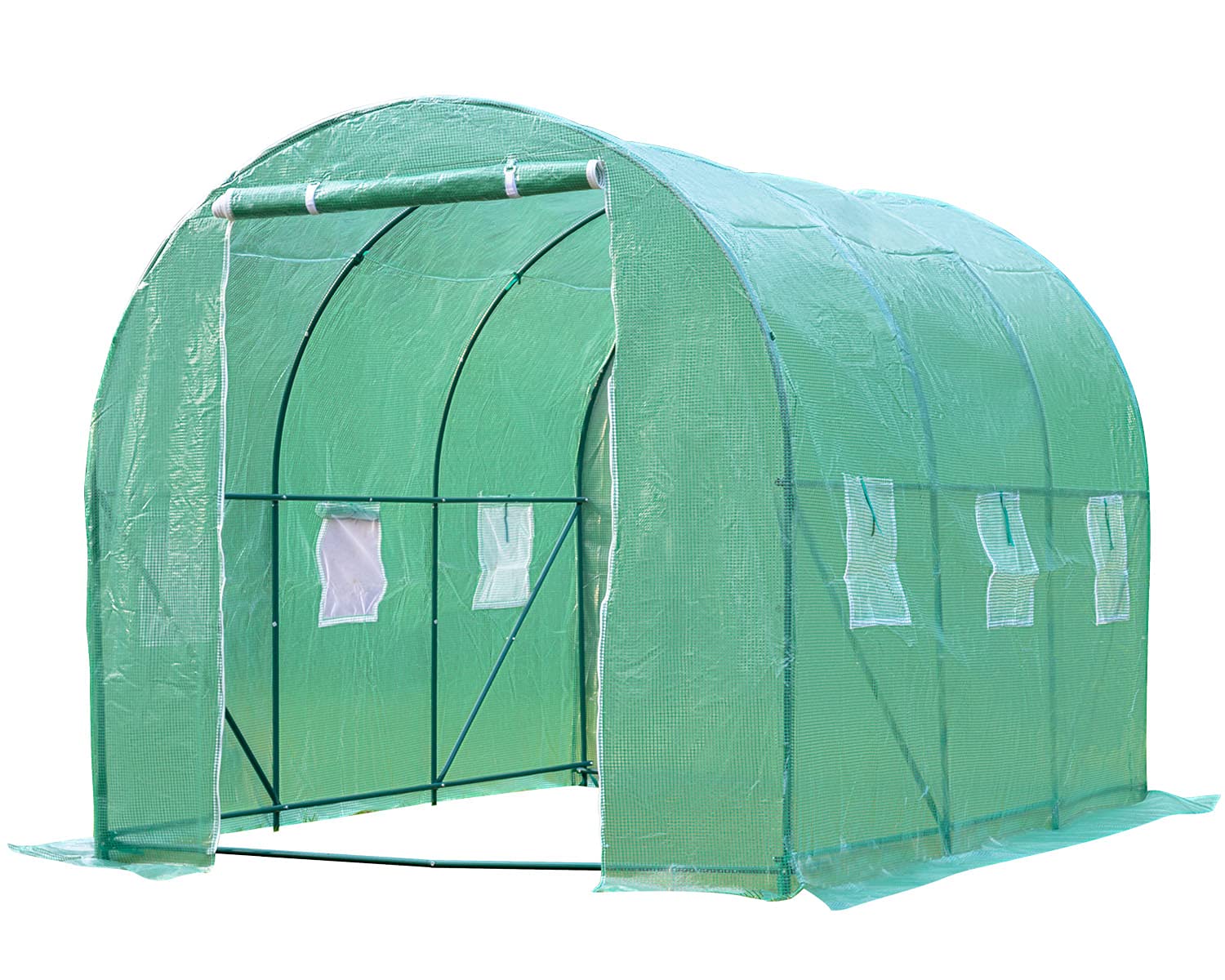
A large tunnel-style walk-in with a powder-coated steel frame, rolling-up door, and vents — made for taller plants and extended growing space.
Why I picked it: Generous interior room and a heavy-duty steel frame for larger plants.
Best for: Growers needing space for tomatoes, tall plants, and multiple raised beds.
Higher-capacity option.
Pros
- Very large growing area
- Powder-coated steel frame
- Rolling door and vents for airflow
- Good for raised beds
Cons
- Assembly can take several hours
- Included stakes are low quality
- Not ideal under heavy snow loads
My take
I set this up where I needed space for taller tomato varieties and was pleased with how much room the tunnel provides — it fits tall pots and small raised beds comfortably.
The powder-coated steel frame feels solid and the rolling door plus two vents make it easy to control airflow. I did the bulk of the assembly with one helper; follow the diagrams carefully because some pieces look very similar.
The stakes and bungee cords provided felt underbuilt for my windy site, so I upgraded to spiral anchors and stronger cords. If you expect ice or heavy snow, plan additional reinforcement — this one is best-suited for areas without prolonged heavy snow loads.
When properly anchored it kept heat and humidity well and gave me a true walk-in space for overwintering plants and staging spring seedlings.
6. 4-Tier Indoor Greenhouse – Best Indoor Shelving
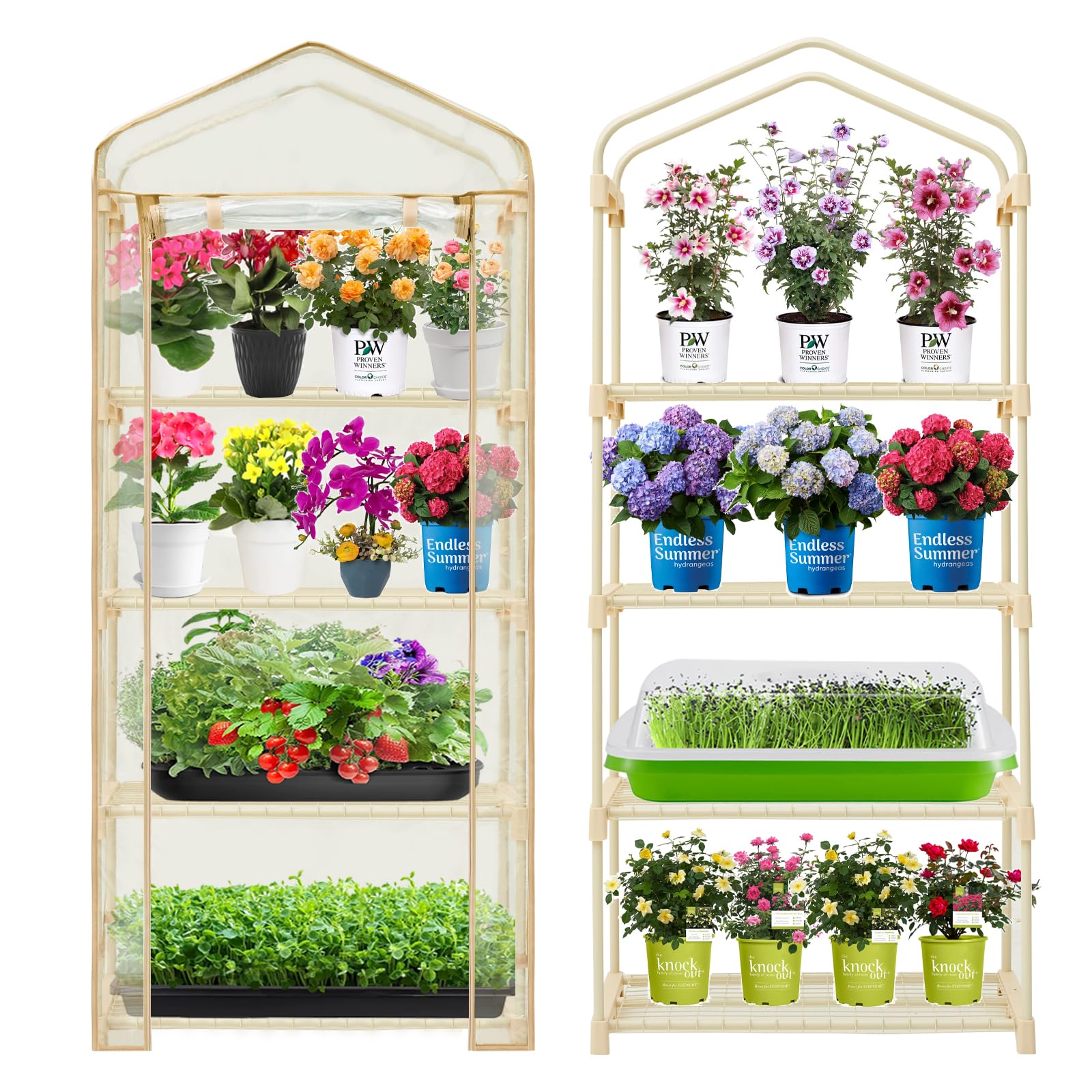
A neat four-tier greenhouse with metal shelves, clear PVC cover, tool-free assembly and a neutral trim that fits better into indoor spaces.
Why I picked it: Tool-free setup and neutral styling make it my top indoor shelving pick.
Best for: Indoor seed trays, herbs, and mushroom kits.
Good value for indoor use.
Pros
- Tool-free assembly
- Neutral beige trim looks good indoors
- 24 lb per-shelf capacity
- Clear PVC keeps plants visible
Cons
- Plastic smell initially
- Not recommended for exposed outdoor use
- Wire shelves need trays for small pots
My take
I liked this unit inside my kitchen because the beige trim looks far better than the bright-green alternatives, and it assembled quickly without tools.
Each shelf held flats and pots comfortably, though I used trays to prevent small pots from slipping through the wire shelving. I also added a grow light to the top when I needed extra light for seedlings.
There was a detectable manufacturing smell at first, but it dissipated after airing the cover outdoors for a few hours. Overall it’s a great-looking, practical indoor greenhouse for year-round starter plants and hobby projects.
7. Replacement PE Greenhouse Cover – Best Replacement Cover
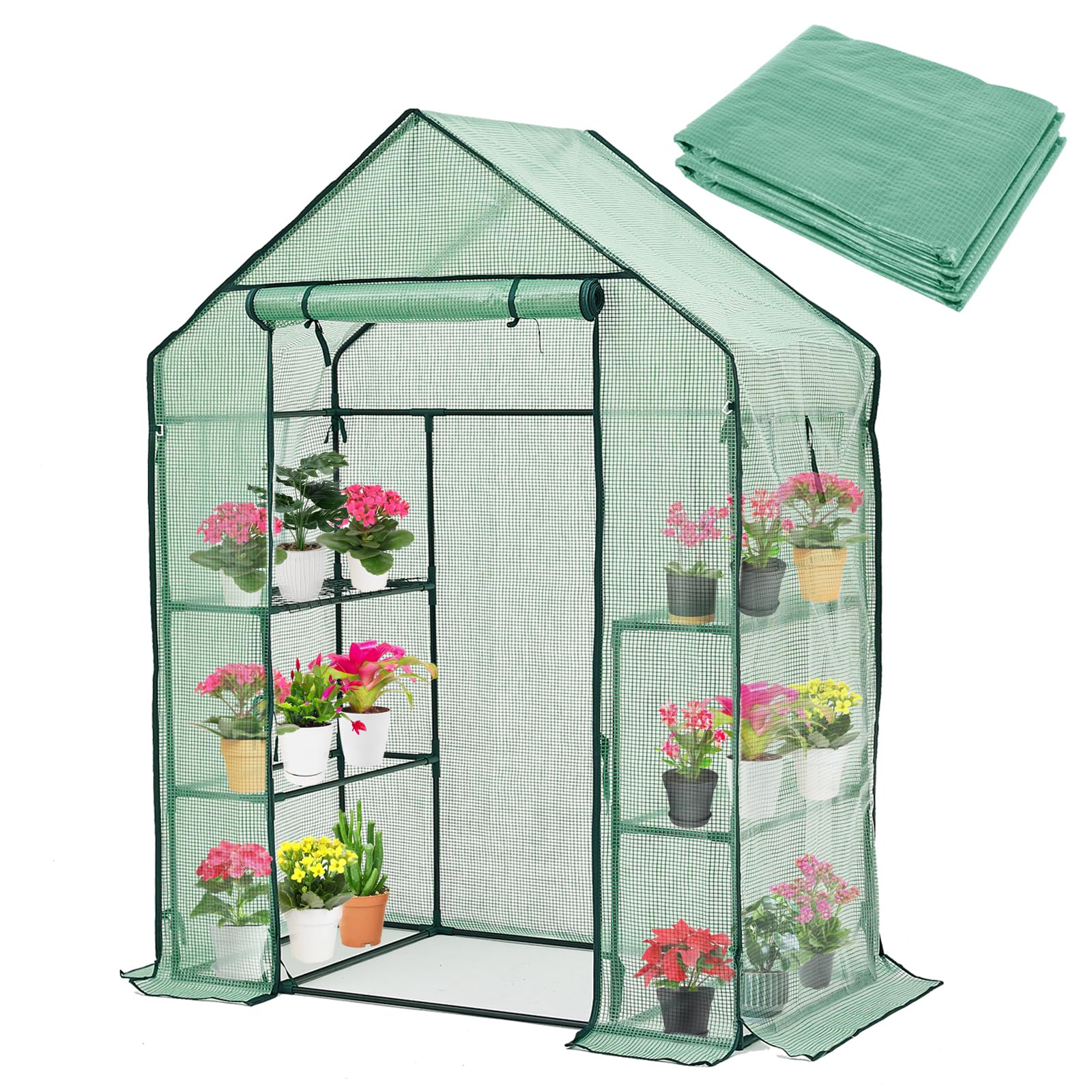
A thick PE replacement cover with roll-up zipper door, Velcro windows, and reinforcing mesh — ideal if a frame is still sound but the cover is damaged.
Why I picked it: High-quality PE with mesh reinforcement makes refreshing an old frame easy and inexpensive.
Best for: Refurbishing an existing frame or fitting a custom-built frame.
Affordable replacement option.
Pros
- Thick PE with reinforcing mesh
- Roll-up zipper door for access
- Velcro side windows for ventilation
- Easy to fit on compatible frames
Cons
- Tarp could be thicker for extreme climates
- Zipper lacks a stopper
- Frame not included
My take
I used this cover to replace a faded tarp on an older frame and it slid over the frame very cleanly — the fit was "just right" and installation only took about 15 minutes.
The material feels durable and the extra internal strands help with long-term wear. The Velcro windows are handy for quick ventilation and the clear PE provides good light diffusion.
One annoyance: the door zipper has no built-in stopper, so if you unzip fully the pull can come off the track on very tall openings. I solved it with a simple external stopper but it’s worth knowing before you install.
If your frame is still solid, this cover is a quick, cost-effective refresh that improves light and protection without buying a whole new structure.
How I Choose a Portable Greenhouse
Size and placement
I start by measuring the space I have and the plants I’ll keep inside. If I’m growing tall tomatoes or overwintering shrubs I pick a walk-in tunnel; for seed starting and herbs I prefer tabletop or 4-tier units.
Remember that a greenhouse needs anchoring room — allow for tie-downs, stakes, or weights around the base.
- Balcony or patio: choose a pop-up or tabletop tent.
- Small yard: a 3- or 6-shelf walk-in maximizes vertical space.
- Large backlog of plants: pick a tunnel walk-in for headroom and beds.
Cover material: PE vs PVC
I typically prefer thicker PE with mesh reinforcement for outdoor durability and UV resistance; clear PVC works well for temporary pop-ups and indoor units because it’s very clear and retains humidity.
If you plan to keep a greenhouse in sun-exposed spots, prioritize thicker, reinforced covers and inspect regularly for abrasion.
- PE with reinforced mesh: better for outdoor, longer-term use.
- PVC: excellent clarity and humidity control for indoor or temporary use.
Frame strength and anchoring
I judge frames by tubing thickness and whether the frame is powder-coated or rust-resistant. Powder-coated steel or iron tubing stands up to heavier pots and seasons better than thin, uncoated poles.
Even the sturdiest frames need proper anchoring; I add spiral ground anchors or heavy-weight solutions in windy locations.
- Powder-coated steel/iron: best for heavier loads and outdoor use.
- Thin metal poles: fine for indoor or sheltered locations.
- Always upgrade stakes if the included anchors look weak.
Shelving and weight capacity
I check per-shelf weight ratings and the shelf type. Wire shelves are fine if you use trays; solid shelving is better for heavy pots.
If you plan to move lots of heavy pots, add extra bracing or choose wired shelves rated for higher loads.
- Use trays with wire shelves to stop small pots from falling through.
- Look for 20+ lb per-shelf capacity for medium-sized pots.
Ventilation and access
I value roll-up doors, Velcro windows, and tie-back straps. They let me control temperature and humidity without disturbing seedlings.
Good access also makes watering, pruning, and moving plants simpler — prioritize units with full-height doors if you need to enter the greenhouse.
- Roll-up zippered doors: best for full access.
- Side windows or vents: essential in warm weather.
- Ties and straps: secure the cover against wind.
Frequently Asked Questions
Can I leave a pop-up greenhouse outside year-round?
I don’t recommend leaving pop-ups outside year-round. They’re great for seasonal protection and short-term shelter, but I remove or store them during extended storms and high winds and replace them with a framed unit for permanent outdoor use.
How should I anchor a portable greenhouse?
I anchor smaller units with steel ground tacks or bricks and use spiral anchors and heavy-duty bungee cords for larger walk-ins. If the provided stakes look flimsy, I always upgrade to stronger anchors.
Which cover material holds heat best?
PVC and PE both trap heat, but PVC tends to be clearer and retain humidity better in small tabletop tents. Reinforced PE covers are better for outdoor use and diffuse light, which reduces scorching in full sun.
Can I replace a torn greenhouse cover?
Yes. I’ve used replacement covers to extend the life of a sound frame. Make sure you match the cover dimensions to your frame and check for zipper quality and mesh reinforcement.
Final Take
I chose these picks to cover the most common portable-greenhouse needs: instant pop-ups for quick protection, compact tabletop tents for seed starting, and larger walk-ins for staging and overwintering.
If you need a simple, quick solution choose the pop-up; if you want a practical indoor setup pick a tabletop or 4-tier; and if you want true walk-in capacity go with a reinforced-frame tunnel or 6-shelf model. In every case, plan to secure the unit and consider upgrading anchors or shelving where needed.
