
I tested a range of suet feeders and suet cakes to see which designs actually hold up, stay dry, and bring in clinging birds. Here are the five feeders and suet cakes I trust in my yard.
I’ve spent seasons testing suet cages, suet cakes, multi-feeder stations, and a cedar tail-prop design to see what works for different birds and conditions. I focus on durability, bird access, weather protection, and ease of use.
Below I share my hands-on impressions of each product, who it’s best for, and the trade-offs I ran into while using them in my yard.
I compared these picks by installing them in similar locations, noting which birds visited, how easy they were to fill and clean, and whether they stayed intact against weather and clever squirrels.
1. More Birds Single-Cake Suet Cage – Best Overall
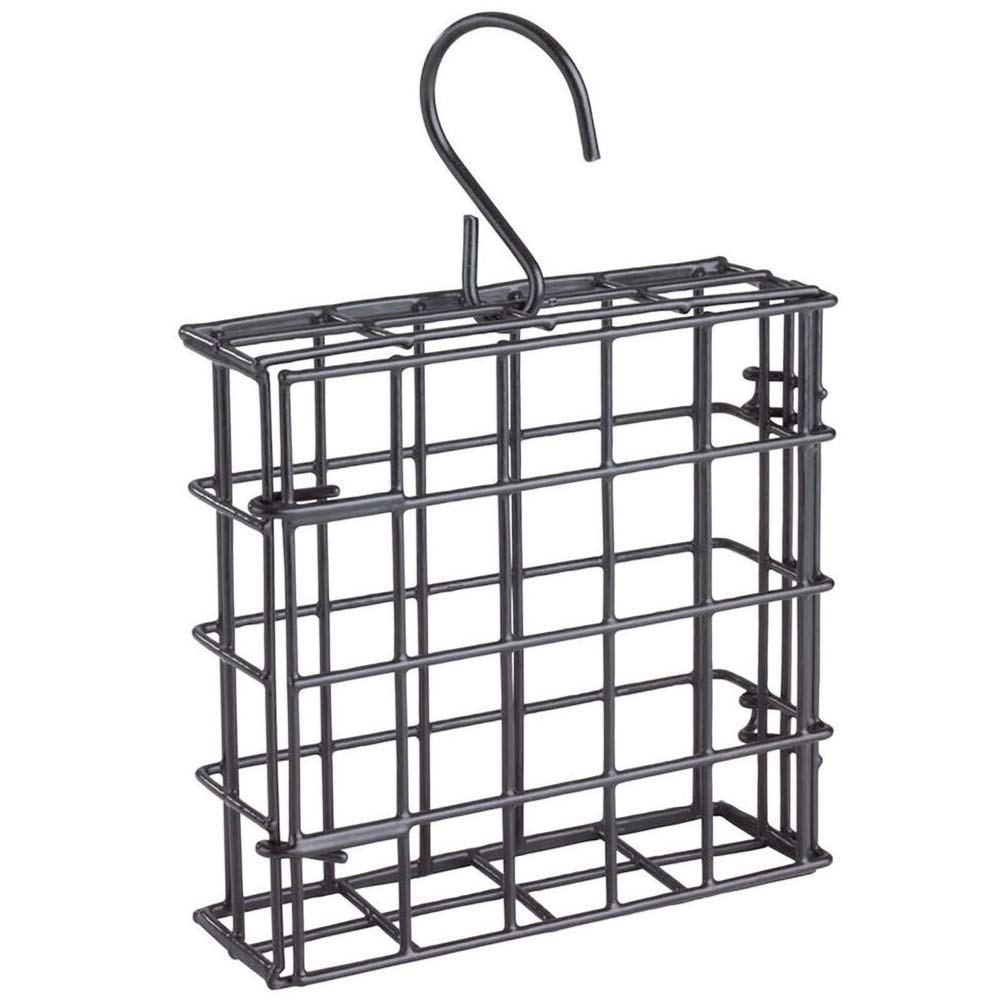
A simple, sturdy single-cake cage that handles clinging birds well and works year-round for suet, seed cakes, or nesting material.
Why I picked it: Solid steel construction, easy double-lock closure, and multi-season versatility.
Best for: Feeders who want a durable, no-nonsense suet cage for chickadees and nuthatches.
Affordable, solid-value suet feeder.
Pros
- Durable powder-coated steel
- Easy-open double-lock lid
- Works for suet and seed cakes
- Compact and bird-friendly
Cons
- Squirrels can pry it open if determined
- Holds only one cake
My take
I like this More Birds single-cake cage for its simplicity and toughness. The black powder-coated steel has held up through rain and snow in my yard without rust or bending.
Filling and refilling is quick thanks to the double-locking closure; it feels secure when closed and stays put on my hook. Small clinging species — chickadees, nuthatches, and woodpeckers — use it eagerly, and I’ve even left oranges or nesting fibers in it during off months.
My one caveat is squirrels: they’ve tested the clasps and, in a couple of placements, managed to pry things open. I solved that by mounting one higher and using a supplemental tie for extra security. For the price and build, it’s the most reliable single-cake cage I’ve used.
2. St. Albans Bay Suet Cakes (11 oz) – Best Value Suet
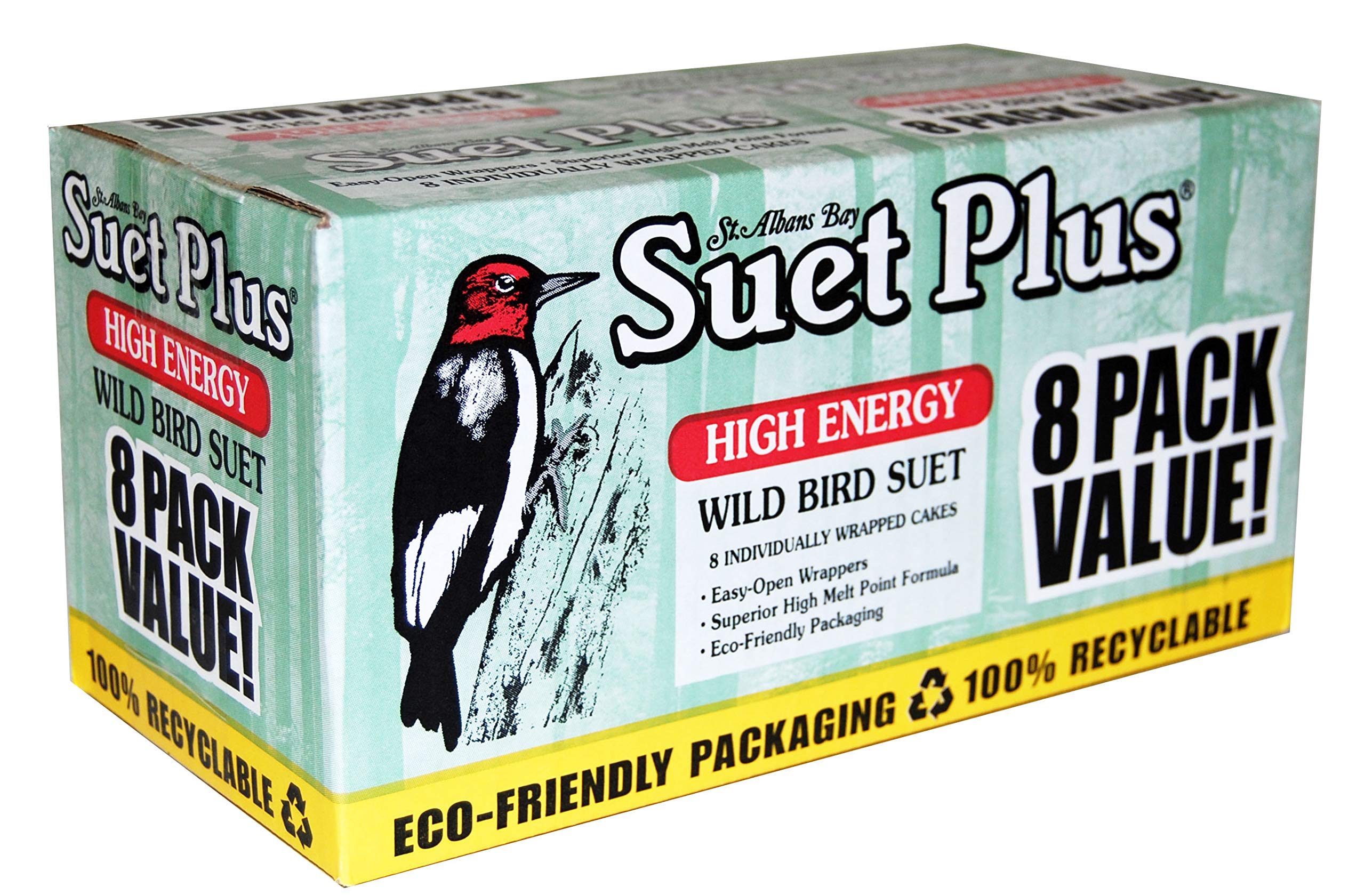
Large, melt-resistant suet cakes with high-energy ingredients that attract a wide range of clinging and perching birds.
Why I picked it: Big, melt-resistant cakes made in the USA that keep active yards fed.
Best for: Anyone who goes through suet quickly and needs a reliable, bulk option.
Great value for bulk suet cakes.
Pros
- Melt-resistant formula
- Large 11 oz cakes
- Easy-open recyclable packaging
- Attracts many bird species
Cons
- Squirrels find them irresistible
- Large size may be overkill for tiny feeders
My take
I stock these St. Albans Bay 11-ounce cakes when I want long-lasting, high-energy suet on hand. The size and formula hold up well on warmer days compared with softer suet I’ve used in the past.
The ingredient mix — rendered beef suet with cracked corn and black oil sunflower — reliably draws woodpeckers, cardinals, nuthatches, and the usual chickadee crowd. I appreciate the recyclable, easy-open packaging; it’s quick to unwrap and drop into a cage.
If you feed in a squirrel-heavy area, expect them to be popular with critters too. I solve that by using squirrel baffles or placing these cakes on higher, more protected hooks. For the volume and durability, these cakes are my go-to when I need steady refills.
3. Deluxe Bird Feeding Station Kit (91-inch) – Best Multi-Feeder Station
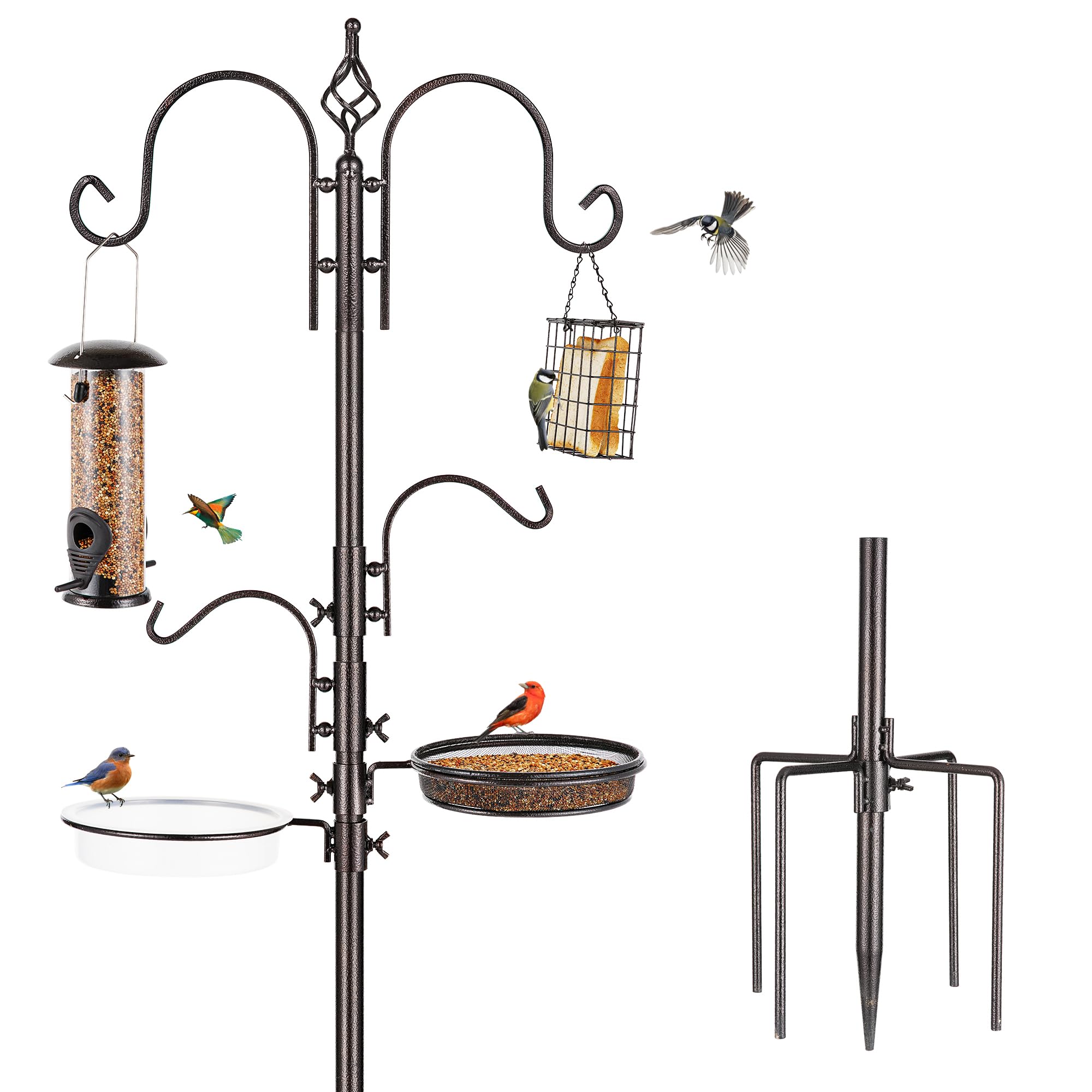
A tall, bronze-coated feeding station that holds multiple feeders, a mesh tray, and a bird bath — ideal for creating a backyard bird hub.
Why I picked it: Comprehensive setup with multiple hooks, bath, and suet holder included.
Best for: People who want an all-in-one station to hang feeders, a bath, and a planter.
More feature-rich option for yard setups.
Pros
- Multiple hanging points
- Includes suet holder and bath
- Bronze coating resists rust
- Tool-free assembly
Cons
- Feet can be short for some installations
- May need extra anchoring in soft soil
My take
I installed this 91-inch feeding station to consolidate several feeders in one spot, and it transformed my yard into a busy feeding area. The two large shepherd hooks plus extra hangers let me arrange a seed feeder, a suet cage, and the included bath without crowding.
Assembly was straightforward — I tightened nuts by hand and positioned the components where I wanted them. The bronze finish looks nicer than standard black poles and has handled wet weather without noticeable corrosion.
A note on stability: I did dig a deeper hole and tamp the base in my clay soil, and in windy spots I added a short rebar stake for peace of mind. If you want a full feeding station with minimal fuss, this kit gives me everything I need, from suet placement to a handy mesh tray for seed spills.
4. More Birds Double Suet Feeder with Weather Guard – Best for Wet Weather
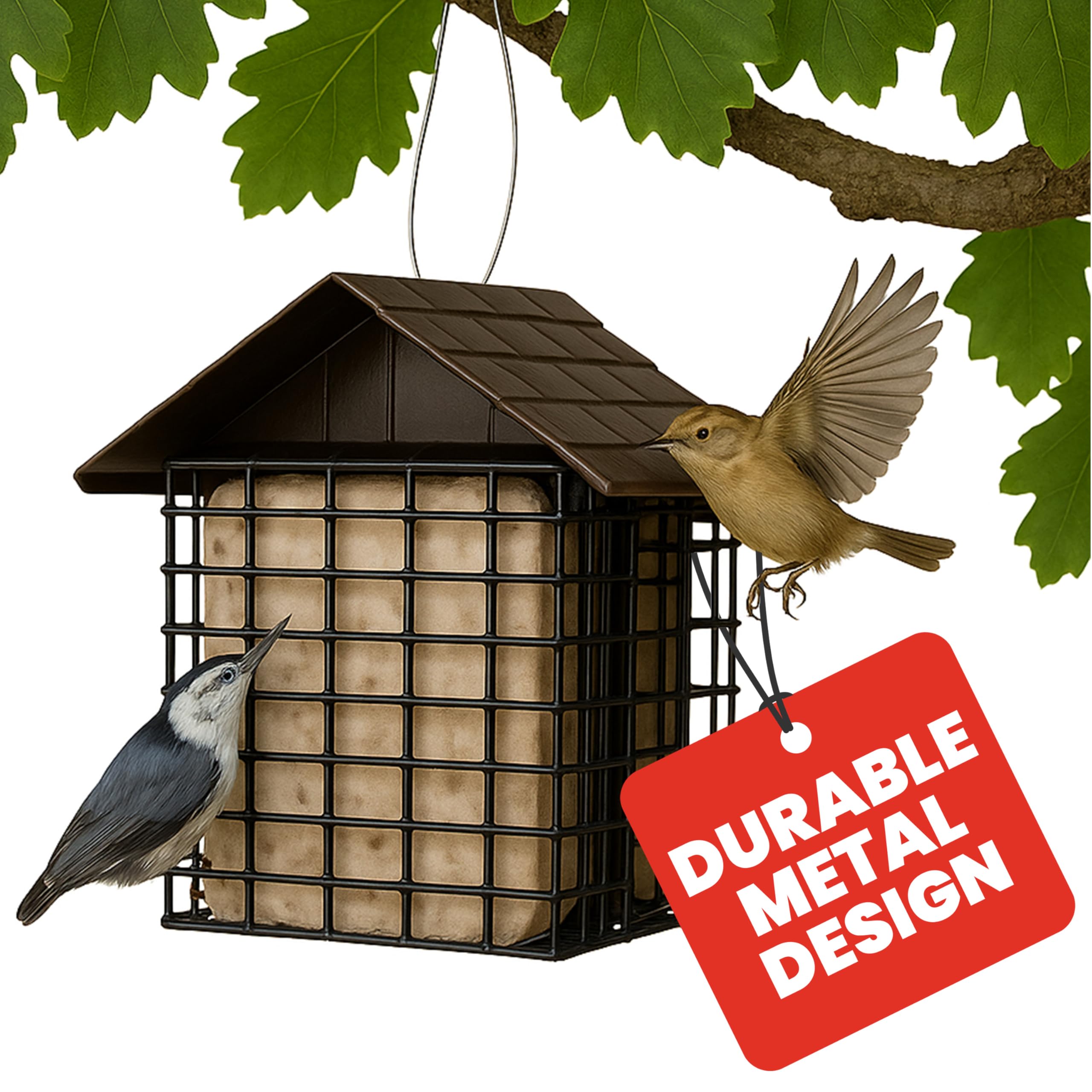
A two-cake suet feeder with a shingle-style roof that helps keep suet dry and doubles feeding capacity for busier yards.
Why I picked it: Two independent cages and a roof that sheds rain and snow.
Best for: Yards with heavy bird traffic or frequent wet weather.
Good midrange option for heavy feeders.
Pros
- Holds two suet cakes
- Weather guard roof
- Solid steel construction
- Independent locking cages
Cons
- Larger footprint can sway when crowded
- Heavier than single-cake cages
My take
I reach for this double-cake More Birds feeder when my yard is packed with hungry woodpeckers and titmice. Having two separate cages means two species or groups can feed at the same time without crowding off smaller birds.
The little shingle-pattern roof really helps. After heavy rain or wet snow, the cakes stayed drier than they would in uncovered cages, and that kept the suet usable longer during wet spells.
Installation and filling are straightforward — the double-lock closures feel secure. It’s heavier than a single-cake cage, so I make sure the hook and pole I use are sturdy. Overall it’s the best option I’ve used when I need capacity and weather protection in one feeder.
5. Nature's Way Tail-Prop Suet Feeder (Cedar) – Best for Woodpeckers
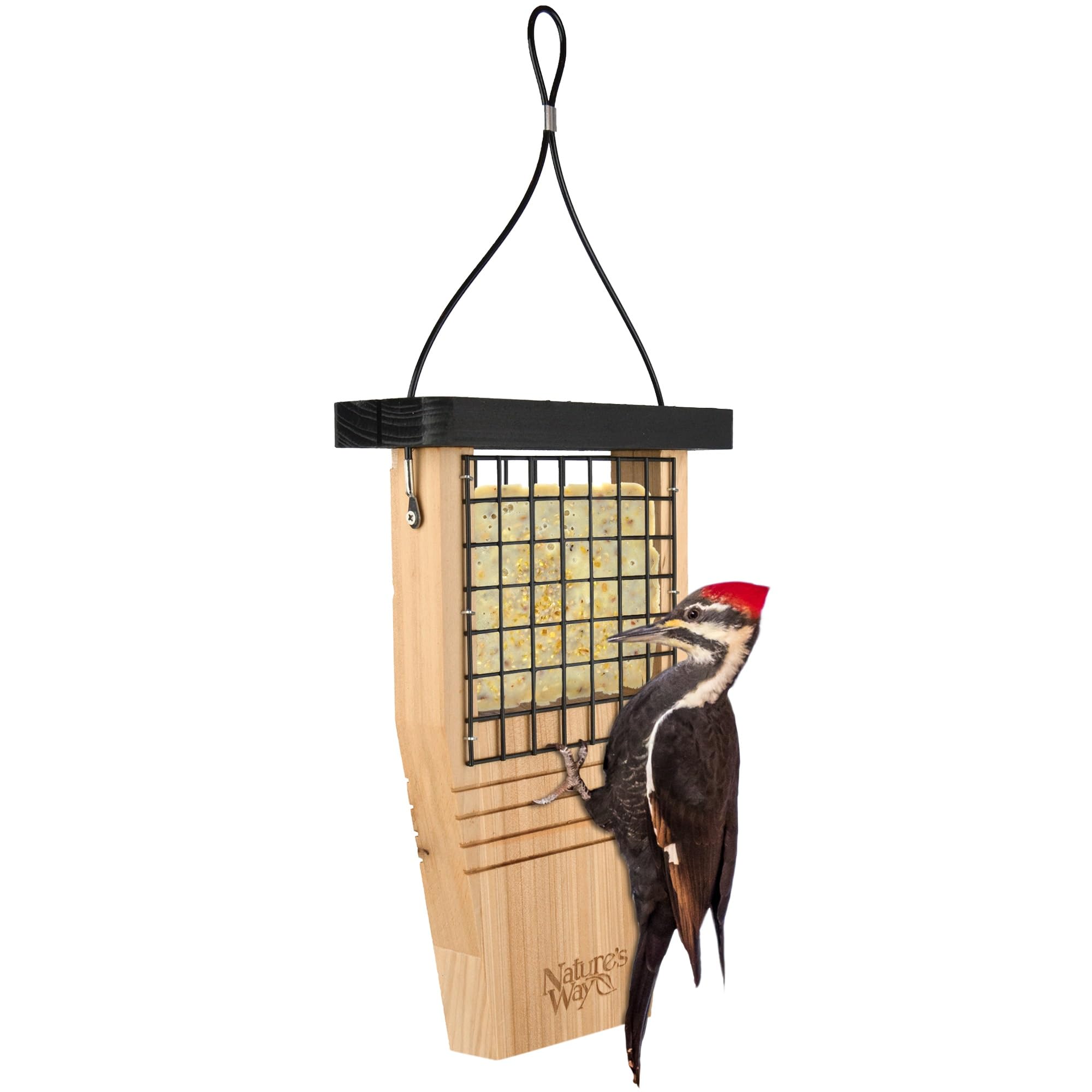
A cedar suet feeder with a built-in tail prop and kerfed gripping surfaces that encourage larger woodpeckers to linger comfortably.
Why I picked it: Tail-prop and kerfs give woodpeckers a stable feeding position.
Best for: Attracting larger woodpeckers like Downy, Hairy, and Pileated.
A natural-wood option that feels higher-end.
Pros
- Tail-prop for woodpeckers
- Cedar construction resists weather
- Rust-free screws and mesh
- Durable hanging cable
Cons
- Swaying on a hook can challenge large birds
- Holds a single cake only
My take
If I want to invite larger woodpeckers to the yard, this Nature’s Way tail-prop feeder is my first choice. The carved tail-prop and kerfed wood give visible support for birds that like to brace while they peck.
The cedar ages nicely and stands up to the elements; after many months outside it still looks good. I’ve watched Downy and Red-bellied Woodpeckers use it comfortably, and the vinyl-coated hanging cable has stayed taut.
One minor drawback: when mounted on a thin hook the feeder can sway under heavier birds. I solved that by mounting it on a more secure bracket. Overall it’s a durable, thoughtfully designed suet feeder that encourages longer visits from larger woodpeckers.
How I Choose Suet Feeders
Feeder type and target birds
I match feeder design to the birds I want to attract. Simple cages work great for chickadees and nuthatches, while tail-prop or platform-style feeders encourage larger woodpeckers.
If I want to host multiple visitors at once, I choose a double-cake cage or a multi-hook station so birds don’t fight over a single cake.
- Single-cake cages: compact, easy to place for small yards
- Double-cake feeders: best for busy yards
- Tail-prop/wood feeders: ideal for large woodpeckers
- Platforms/stations: good for mixed feeding setups
Weather resistance and placement
I put feeders under partial cover when possible and prefer feeders with roofs or weather guards if my area sees a lot of rain or snow.
Mounting height and protection from squirrels matter — I place feeders high, add baffles, or pick pole-mounted stations to reduce unwanted access.
- Choose powder-coated steel or cedar for longevity
- Use weather-guard roofs in wet climates
- Install squirrel baffles or higher mounts for protection
- Avoid direct sun to reduce melt on warm days
Ease of use and maintenance
I pick feeders with simple locking mechanisms and easy access for cleaning. Suet can get messy, so removable components or wide openings make upkeep quicker.
I also keep a steady supply of melt-resistant suet cakes in winter and switch to fruit or nesting material in shoulder seasons when birds appreciate variety.
- Look for double-lock closures or secure latches
- Removable parts speed up cleaning
- Buy melt-resistant suet for warmer days
- Rotate and discard old suet to avoid spoilage
Frequently Asked Questions
What suet should I buy for winter feeding?
I use high-energy, melt-resistant cakes with rendered suet and seeds in winter — they provide calories and hold up better in variable temperatures.
How do I keep squirrels from stealing suet?
I raise the feeder height, add a pole-mounted baffle, or place feeders away from launch points like fences and trees. Heavy-duty closures and extra ties help deter determined squirrels.
How often should I replace suet cakes?
I check suet every few days in busy seasons and replace it when it’s mostly gone or shows signs of spoilage; in warm weather I rotate more frequently to avoid melting.
Final Take
I rely on a mix of the single-cake More Birds cage, St. Albans suet cakes, and a double-cake option when my yard gets busy. For multi-feeder setups I use the 91-inch station, and for dedicated woodpecker watching I hang the cedar tail-prop feeder.
Pick the design that matches the birds you want to attract and the conditions in your yard — and mount it securely. With the right feeder and suet, I consistently get long visits from clinging birds all season.
