
I tested five freestanding wardrobe systems — from lightweight fabric armoires to heavy-duty steel racks — to find the best fit for different spaces, loads, and budgets. Here’s what worked for me and how I used each unit
I spent time assembling and living with five different wardrobe closet systems so I could compare real-world durability, storage layout, and ease of use.
In this roundup I focus on build quality, how much useful storage each design actually delivers, and which setups I’d pick for apartments, basements, or temporary storage needs.
I found clear trade-offs: open metal racks give instant access and a modern look, covered fabric wardrobes protect garments from dust, and heavy-duty steel systems are the only sensible choice when you need to store dozens of coats or heavy boxes.
1. Whitmor Modern Industrial Closet Organizer – Best Overall
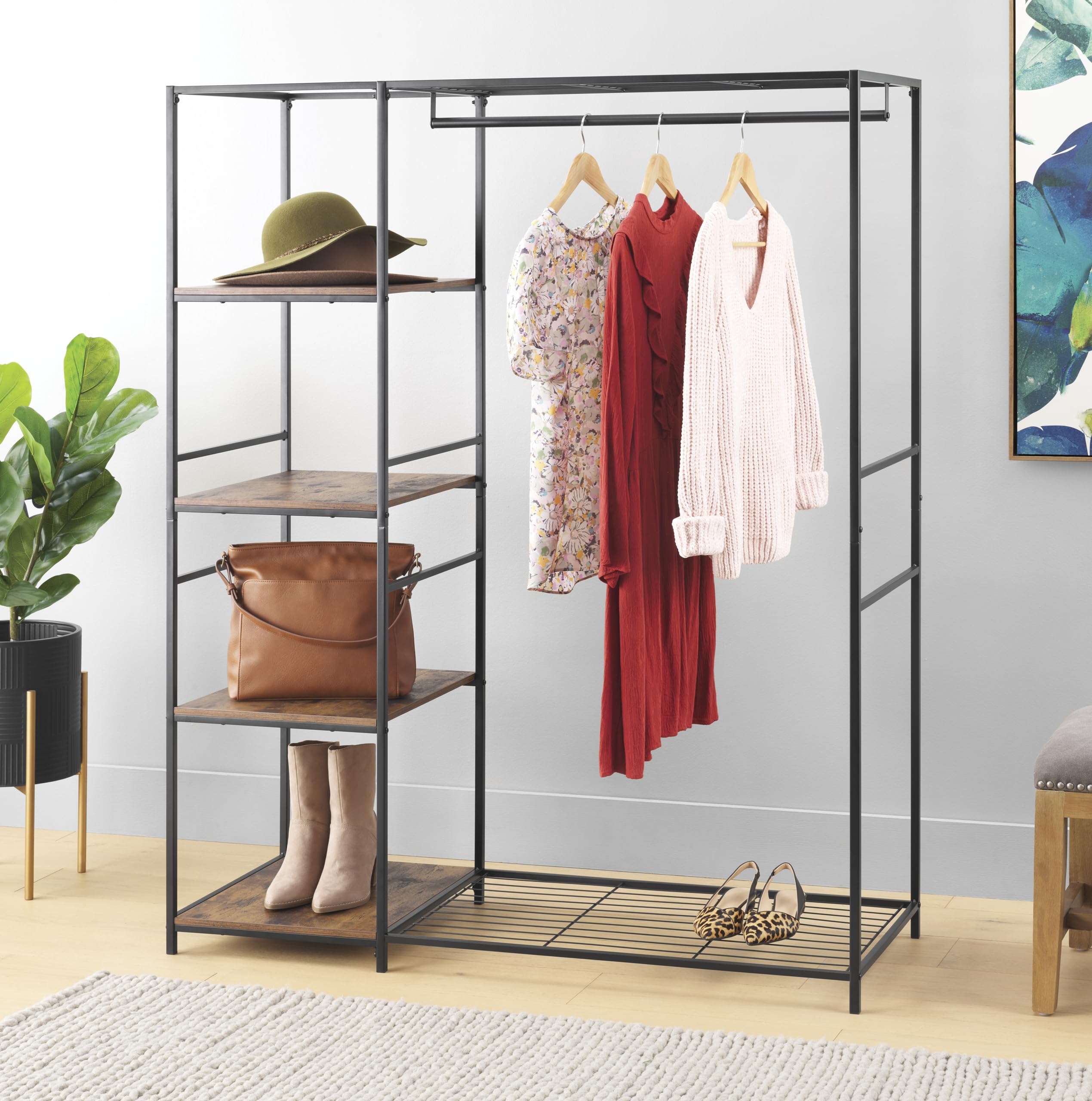
I appreciated the Whitmor unit for pairing a modern industrial look with practical storage: four shelves, a garment rod, steel frame, and particle board shelving in a compact footprint.
Why I picked it: I chose it because it balances style and sturdiness for exposed storage.
Best for: I recommend it for apartment bedrooms, entryways, or when you want the closet on display.
I consider this a mid-priced, design-forward option that still feels solid.
Pros
- I like the modern industrial styling
- I found assembly straightforward and fast
- I observed a sturdy steel frame
- I liked the combo of shelves and hanging rod
- I appreciated the compact footprint
Cons
- I noticed some joints use plastic
- I found it can disassemble if dragged
My take
I assembled the Whitmor organizer quickly and appreciated the audible snap when pieces fit together — that gave me confidence the frame was secure. The combination of steel framing with particle board shelves looks intentional rather than cheap.
In daily use I hung shirts on the top rod and heavier items on the lower sections; the side cubbies worked well for folded tops and shoes. The unit felt surprisingly sturdy for its size, though I avoid dragging it across a room because a few connectors can unseat if shifted aggressively.
If you want storage that shows rather than hides, this one hits the sweet spot: it’s attractive, practical, and simple to set up when you need extra hanging and shelf space without committing to built-in work.
2. VIPEK V5 Heavy-Duty Clothes Rack – Best for Heavy Loads
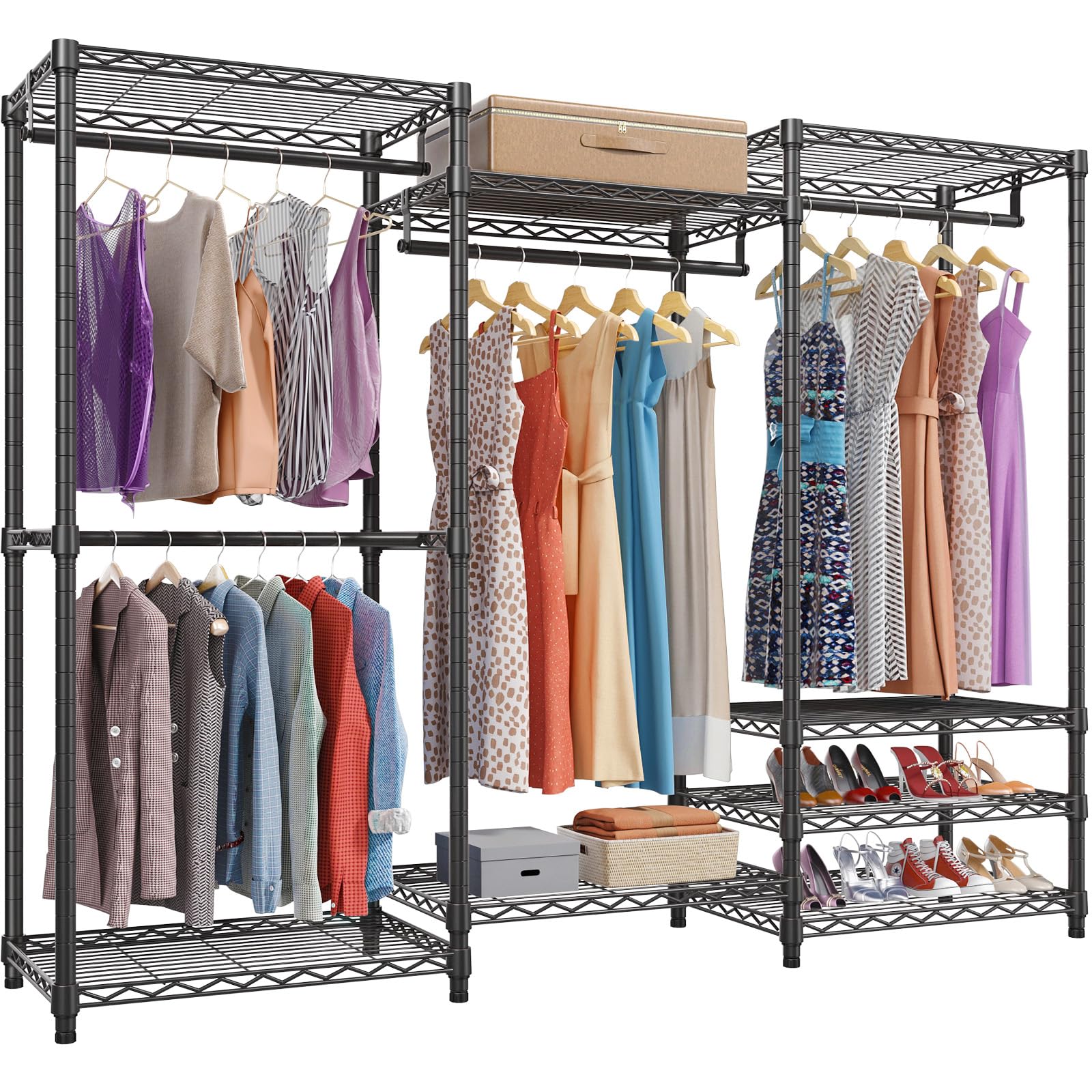
I relied on the VIPEK V5 when I needed maximum capacity — long span, six tiers, four hanging rods, and an advertised very high load limit for heavy garments and boxes.
Why I picked it: I picked it for raw carrying capacity and modular shelving options.
Best for: I suggest it for wardrobes storing suits, coats, boxes, or a large seasonal rotation.
I view this as a higher-cost, utility-first choice intended for heavy-duty use.
Pros
- I appreciated the very high load capacity
- I liked the customizable shelf layout
- I found the iron construction reassuring
- I liked multiple hanging rods for long garments
- I observed solid packaging and undamaged parts
Cons
- I found the clip system has a learning curve
- I felt some gauge was thinner than expected
My take
I assembled the VIPEK V5 and was impressed by how much it holds once properly configured. The multiple rods and tiers let me separate suits, jackets, and folded items across a single long span.
Getting comfortable with the clips took a few minutes; once I figured the technique the unit slid together easily and I appreciated the flexibility to reposition shelves. I did notice the individual shelf wires are narrower than some industrial racks I own, but the overall frame carried heavy loads without bowing.
One tip I discovered: leave a little vertical space between hanging levels to prevent shirts from brushing lower shelves. For anyone who needs big, dependable storage rather than a decorative piece, this is the rack I reached for.
3. LOKEME Portable Wardrobe – Best Portable Fabric Wardrobe
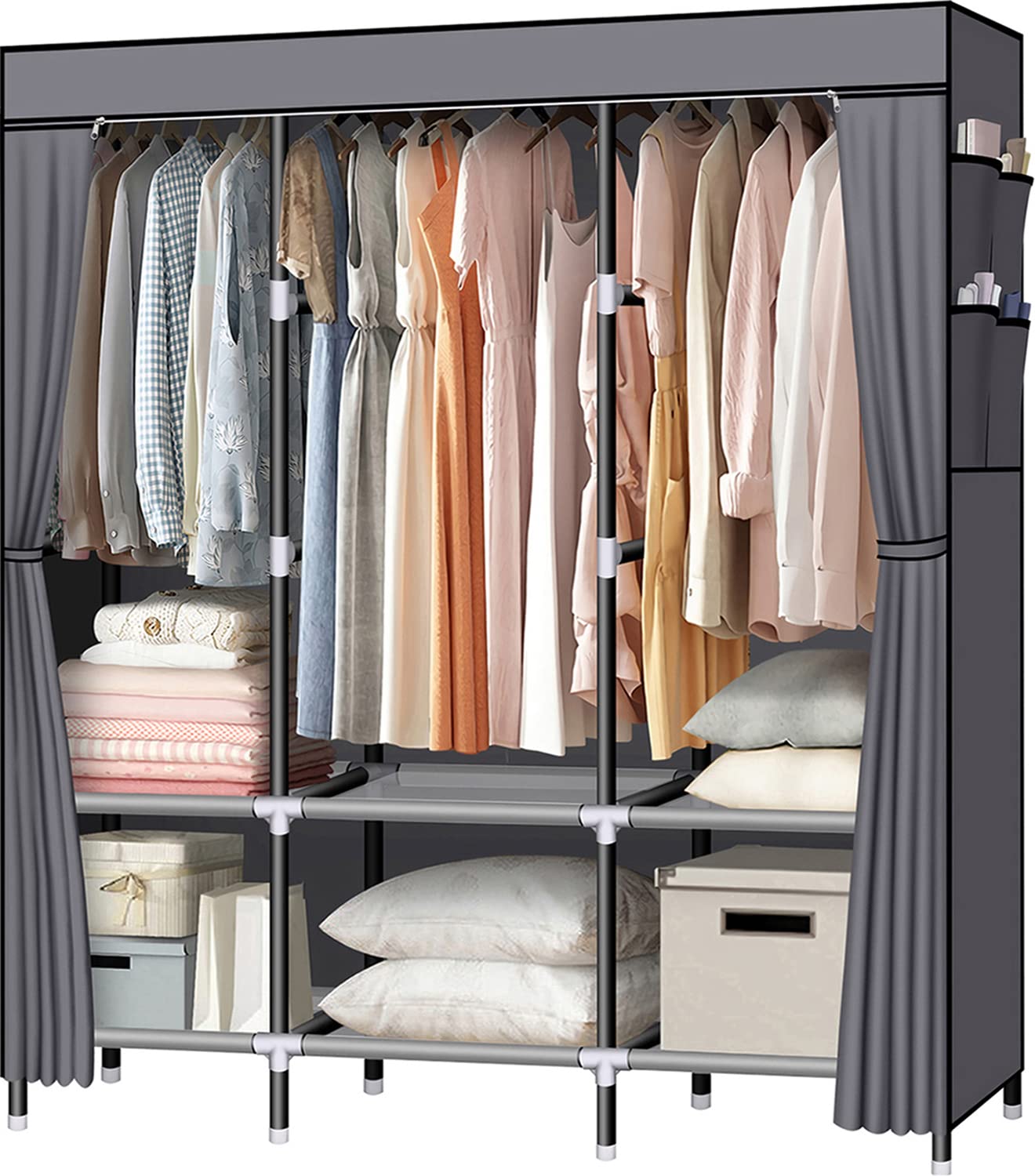
I used the LOKEME fabric wardrobe when I needed an enclosed, dustproof option: three hanging rods, six shelves, side pockets, and a breathable zipper cover made it a practical temporary armoire.
Why I picked it: I picked it for dust protection and the roomy, lightweight build.
Best for: I recommend it for renters, storage units, seasonal clothing, or temporary bedrooms.
I see this as an affordable, lightweight armoire alternative with surprising capacity.
Pros
- I liked the dust-proof zippered cover
- I appreciated the thicker 19mm steel tubes
- I found labeled parts made assembly easy
- I liked the extra side pockets for small items
- I observed good capacity for folded and hanging clothes
Cons
- I encountered one torn pocket in a unit
- I found the zipper snug until properly seated
My take
Putting the LOKEME wardrobe together was straightforward: numbered tubes and a simple connector system meant I had it up in under 30 minutes. The cover fits snugly once the frame is square, and the dual-layer shelving gives flexibility for folded garments versus shoes.
I liked that the manufacturer included extras and that the frame used thicker tubes than many fabric closets I’ve tried; it felt stable under normal loads. One unit I handled did have a torn side pocket, and I had to contact support, but the structure itself remained usable and protective of clothing.
For short-term storage or when you want to hide a wardrobe from view, this is the most practical fabric option I pulled out of the testing pile.
4. VIPEK V5C Covered Heavy-Duty Rack – Best Enclosed Heavy-Duty Option
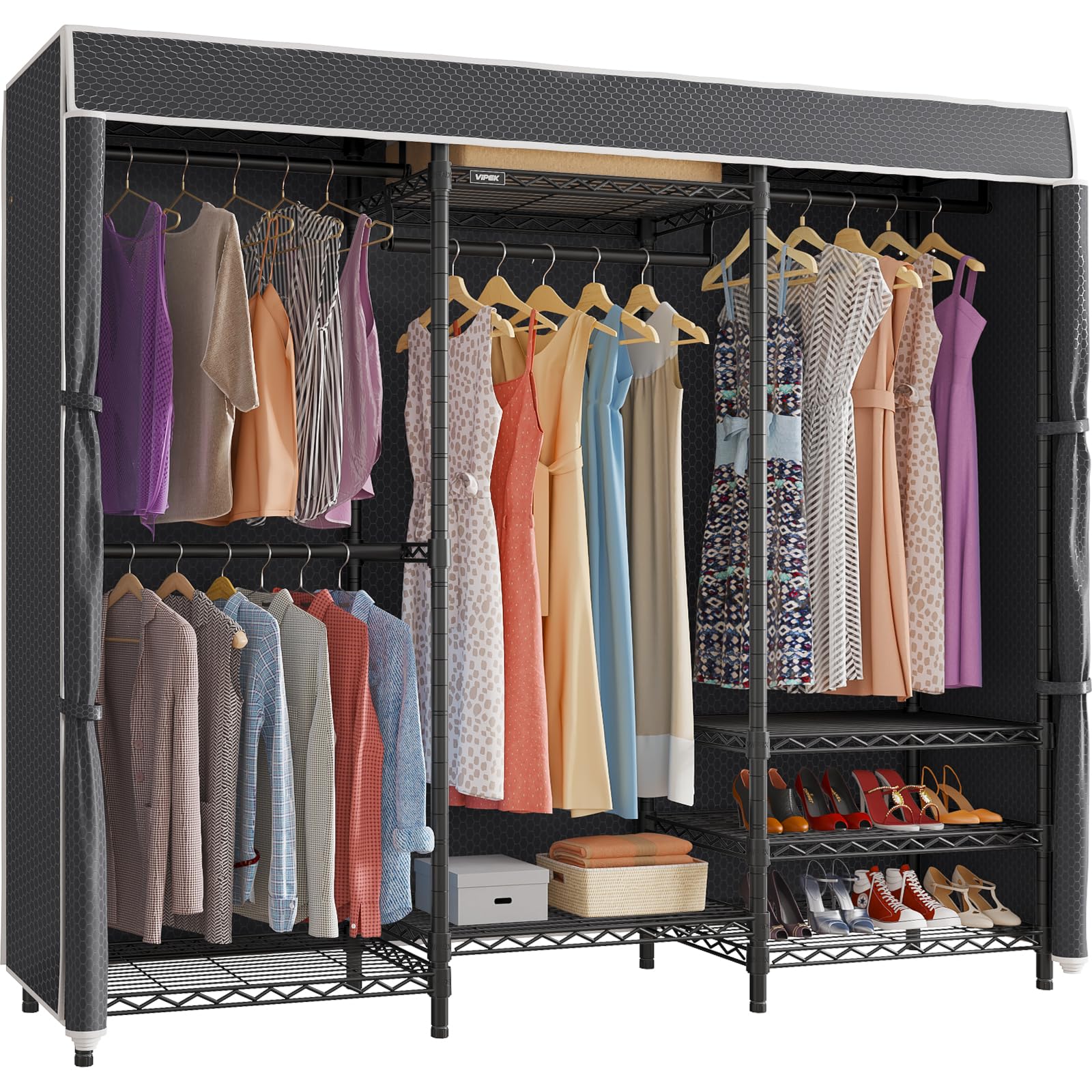
I chose the V5C when I wanted the heavy-duty framework of VIPEK but with an oxford cover to keep garments dust-free and out of sight.
Why I picked it: I wanted a rugged steel frame plus a protective cover for longer-term storage.
Best for: I use this for basement wardrobes, seasonal storage, and any situation where dust protection matters.
I consider this a more expensive, long-term storage investment that pays off for durability.
Pros
- I liked the powder-coated steel for rust resistance
- I appreciated adjustable shelving and removable rods
- I found the oxford cover keeps dust out
- I liked high per-shelf load ratings
- I observed the customizable configurations
Cons
- I noticed some bars can arrive slightly bent
- I found the cover adds assembly steps
My take
The V5C felt like a step up when I needed both strength and enclosure. The powder-coated finish reassured me about long-term corrosion resistance, and the zippered cover made it easy to keep stored clothes clean in a basement environment.
Assembly is straightforward if you follow the multi-style instructions; a second pair of hands helps during the final adjustments. I did see a couple of bent bars in one shipment, but once the unit was assembled the structure was solid and performed as advertised.
If you want a heavy-duty system and prefer contents out of sight, this model delivered the combination I was after.
5. HOMIDEC Portable Wardrobe – Best Budget Organizer
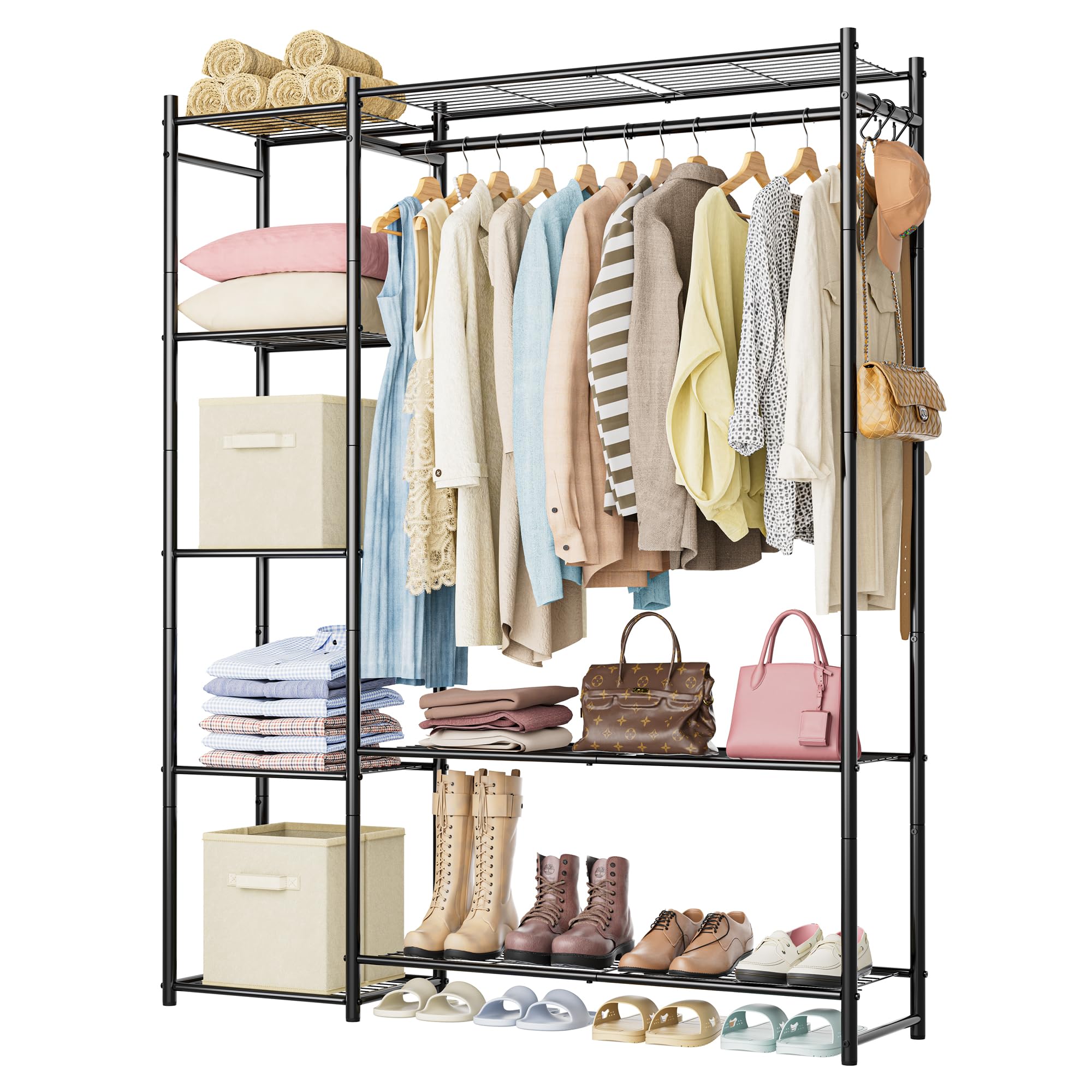
I picked the HOMIDEC rack for value: a compact freestanding system with multiple compartments, a two-tier shoe rack, hanging rod area, and adjustable feet that fits into tight spaces.
Why I picked it: I wanted a low-cost, versatile organizer for small spaces.
Best for: I recommend it for utility rooms, entryways, or when you need extra storage on a tight budget.
I view this as the most budget-friendly option that still feels stable with heavy bins.
Pros
- I liked the versatile compartment layout
- I appreciated the two-tier shoe rack
- I found the thick metal tubing sturdy
- I liked the adjustable leveling feet
- I observed fast, straightforward assembly
Cons
- I found it isn’t as heavy-duty as premium racks
- I noted it requires more assembly time
My take
I put the HOMIDEC unit in a small utility room and it transformed the space. Measuring first mattered here — the unit fit the narrow area perfectly and offered both hanging and shelf space where there had been none.
Assembly took me under an hour with clear, numbered parts. Despite being the most economical option in my group, it held heavy storage bins and a full load of laundry without complaint. The open design keeps items visible and quick to access.
If you need extra organization without a big investment, this is the rack I reached for when space and cost were the main constraints.
How I chose these wardrobe closets
Key factors I used to evaluate each wardrobe closet
I prioritized build materials and rated steel frames higher than thin wire unless the piece was intentionally lightweight and portable.
I considered layout flexibility — multiple rods, adjustable shelves, and removable components matter when your storage needs change.
I tested both open and covered systems to judge dust protection versus instant access and aesthetics.
- Measure twice — confirm height, width, and clearance before you buy.
- Decide open vs. covered: go covered if you need dust protection.
- Match capacity to load: pick heavy-duty frames for boxes and coats.
- Look for labeled parts and tool-free assembly if you want fast setup.
- Plan shelf spacing: leave room between hanging levels to avoid wrinkling.
Frequently Asked Questions
Can these racks hold heavy winter coats or boxes?
Yes — I used the VIPEK models when I needed high load capacity; their frames and rated shelves handled heavy coats and storage boxes reliably. For lighter racks, I limited packed boxes and focused on folded items.
How difficult is assembly for these units?
Most were straightforward: numbered parts and simple connectors let me assemble a unit in 30–60 minutes. The clip-based heavy-duty racks required a short learning curve, and covered models add the extra step of fitting the skin.
Are fabric covers effective at keeping clothes dust-free?
In my experience a good oxford cover with a zipper offers solid dust protection and breathability. I still recommend checking zippers and pockets for wear during setup and giving the cover a gentle stretch so it seats properly over the frame.
Final Take
After hands-on testing I kept returning to one simple principle: match the frame to the task. Heavy loads demand a VIPEK-style steel frame; short-term or hidden storage benefits from a covered or fabric wardrobe; and compact, design-forward rooms are best served by the Whitmor organizer.
I recommend picking the model that fits your space and storage needs first, then using the assembly tips above to get the most out of your freestanding wardrobe.
