
I tested a range of suet feeders — single cages, doubles with roofs, trunk-mounted baskets, and full feeding station kits — and picked the most practical options for different yards and bird habits.
I spend a lot of time watching suet feeders because they bring the most active, clinging birds to my yard all year. I looked for feeders that are easy to refill, weather resistant, and approachable for woodpeckers, nuthatches, and chickadees.
In this roundup I focused on build quality, how well the feeder keeps suet dry, ease of filling and cleaning, and whether the design helps or hinders birds and bothersome critters.
Below are the feeders that stood out in my hands-on testing and why each one earns a place in a different kind of bird-feeding setup.
I compared single-cage feeders for trunk or tree mounting, double-cake feeders with roofs for wet climates, and multi-hook station kits that include suet holders alongside seed trays and baths. If you want maximum variety in one spot, choose the station kit; if you need a weatherproof, long-lasting option for woodpeckers, favor the double feeder with a roof.
1. More Birds Suet Cage Feeder – Best Single-Cage Starter
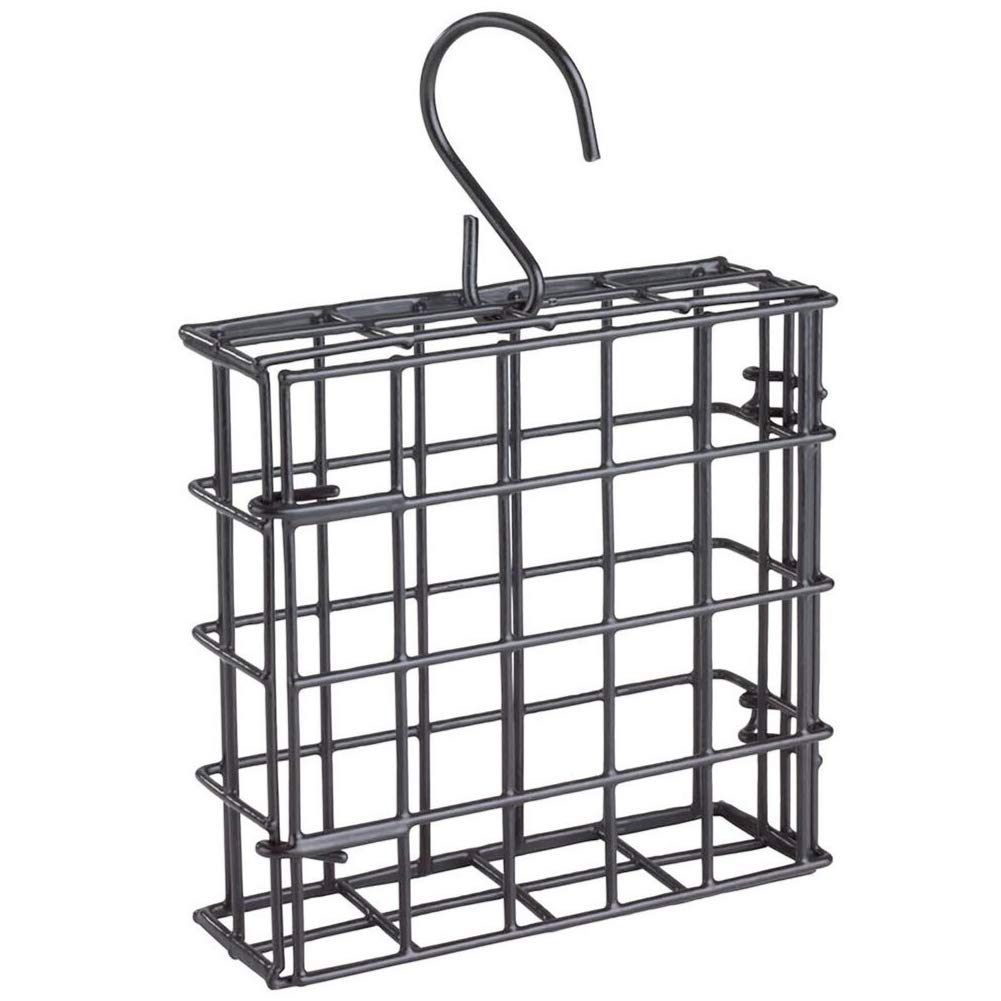
A simple, durable single-cake suet cage with a strong powder-coated finish and a secure double-locking closure.
Why I picked it: Solid steel build, easy double-locking closure, versatile use beyond suet.
Best for: Garden owners who want a no-fuss single-cake feeder for clinging birds.
An affordable, straightforward option.
Pros
- Solid steel construction
- Double-locking closure
- Versatile uses beyond suet
Cons
- Single cake capacity only
- Squirrels may pry at closures
My take
I like this More Birds cage because it’s built from solid steel and finished in a weather-resistant powder coat that holds up to seasons in my yard.
The double-locking closure is intuitive: I can open and refill quickly, and the grid is sized so woodpeckers, nuthatches, and chickadees can cling comfortably.
I used it for suet, seed cakes, and once for nesting material in spring — birds adapted to each use without trouble.
Be aware that persistent squirrels eventually figured out how to access the suet at one of my locations, so I supplemented the latch with a twist tie in windy or squirrel-prone spots.
2. Deluxe Bird Feeding Station Kit – Best All-in-One Station
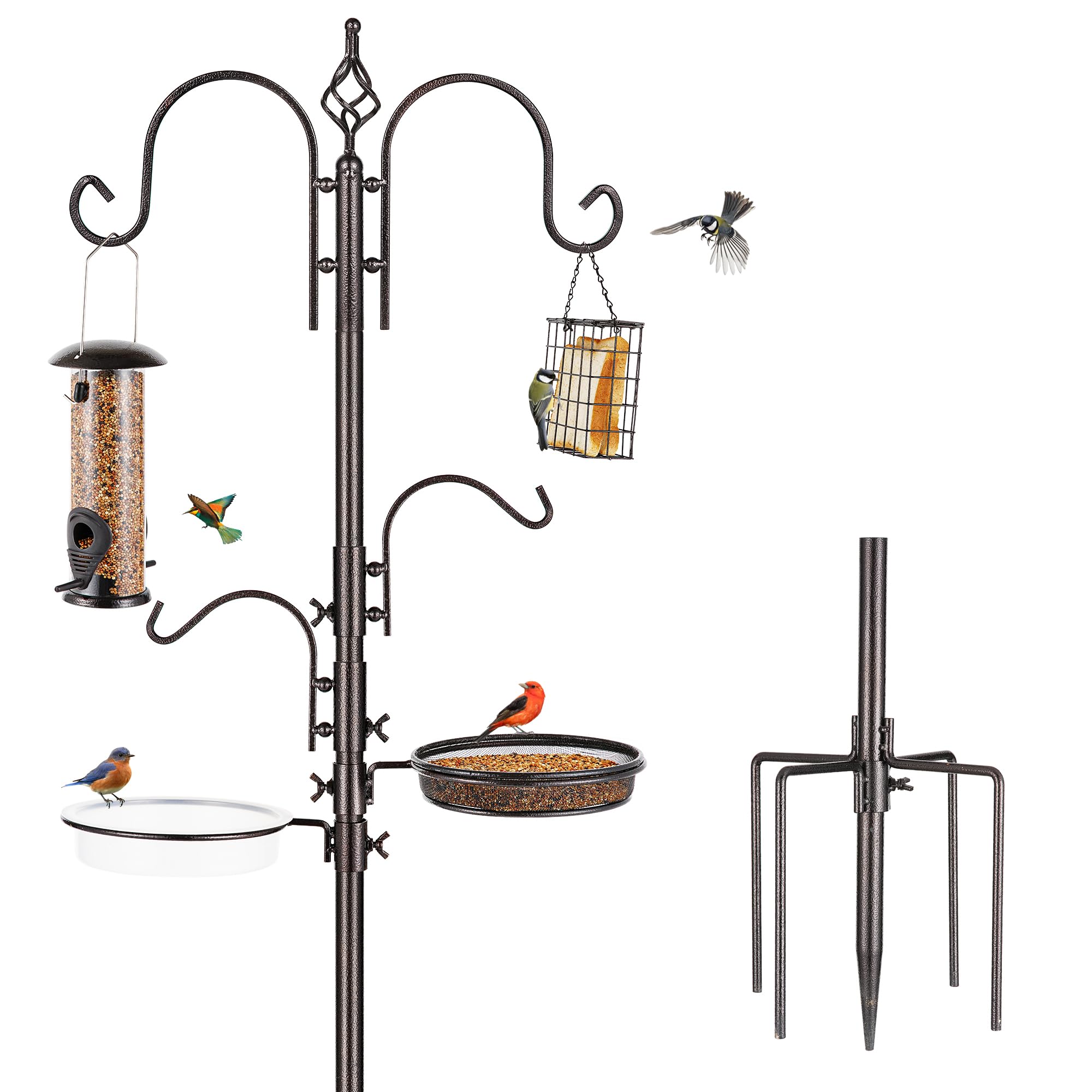
A 91-inch feeding station with multiple hooks, a mesh tray, suet holder, and a bird bath — everything I needed to create a backyard bird hub.
Why I picked it: Comprehensive kit with multiple hang points and included suet and tray attachments.
Best for: People who want a full backyard setup in one purchase.
A more complete, value-forward option.
Pros
- Multiple hanger options
- Includes bath and mesh tray
- Sturdy for the price
Cons
- Feet can be short for soft soil
- May need an extra pole section
My take
I installed the station in a sheltered spot and appreciated how many different feeders it accommodates — the mesh tray, suet holder, bird bath, and extra hooks let me run seed, suet, and water all from one pole.
Assembly was tool-free for most parts and straightforward; the pole felt solid once anchored, though I dug a deeper hole when my soil was clay.
Bird activity increased noticeably after I added the kit: multiple species used the different feeders at the same time, and the bird bath became a daily gathering spot.
If you have very soft ground I recommend sinking the base deeper or adding a rebar anchor — I did that to stop wobble in high wind and it made the station much more stable.
3. More Birds Double Suet Feeder – Best Double with Roof
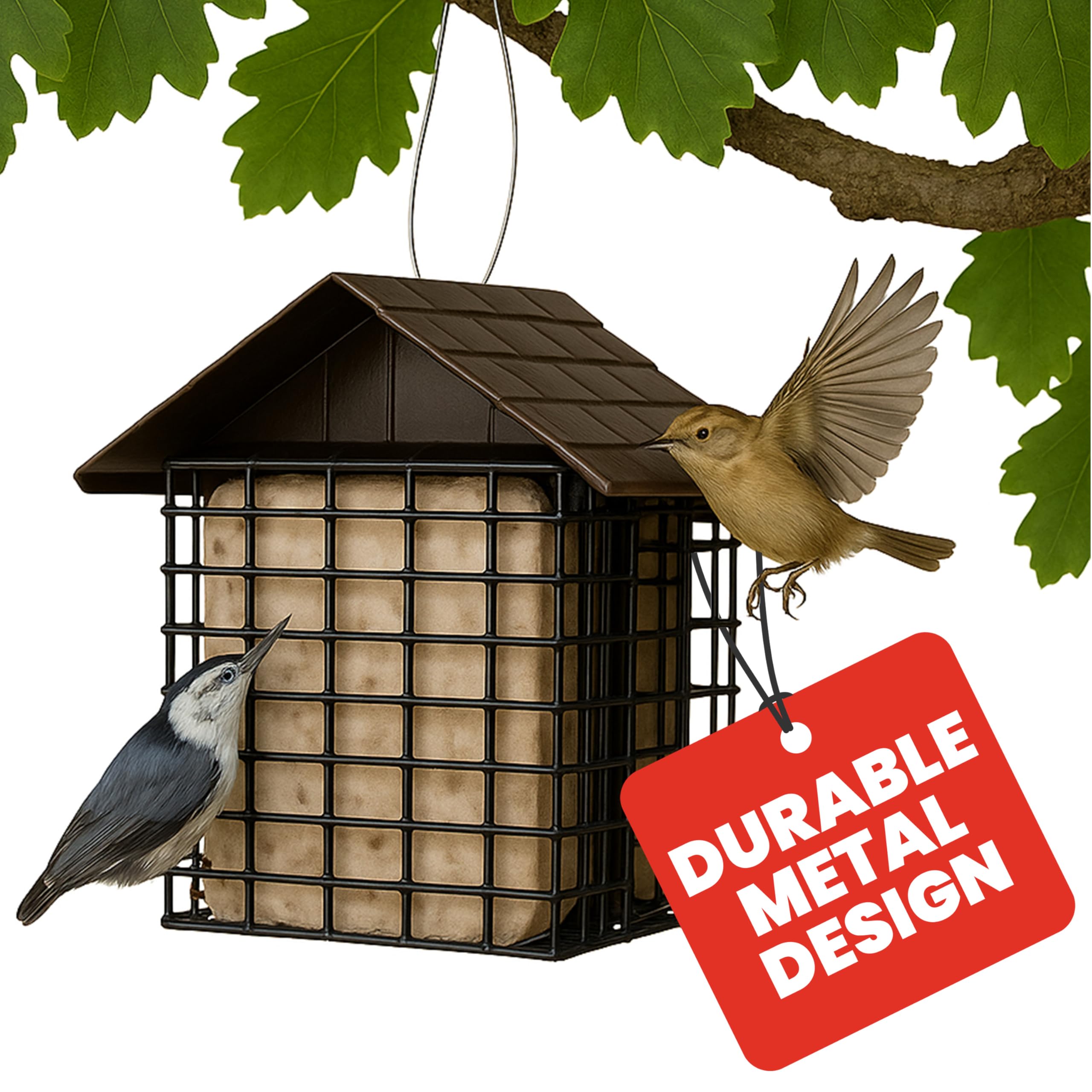
Two independent suet cages under a shingle-style weather guard roof that keeps cakes drier and attracts a wider mix of clinging birds.
Why I picked it: Two-cake capacity plus a roof for weather protection.
Best for: Yards that see frequent rain or heavy suet traffic.
A midrange choice for wetter climates.
Pros
- Holds two suet cakes
- Weather guard roof
- Easy-open closures
Cons
- Can sway when fully loaded
- Some smaller cakes may shift
My take
I turned to this double feeder when winter traffic in my yard increased and I needed more capacity without constant refilling.
The roof design does a good job diverting rain and snow, so the cakes last longer on wet days than they did in uncovered cages.
Each cage has its own double-locking closure, which makes filling tidy and fast. I noticed chickadees and titmice hop right in alongside woodpeckers without issue.
If you use cakes that are thinner than the compartment they can tip slightly, but birds quickly worked out how to access the exposed ends. Overall it’s a sturdy, low-maintenance setup that I rely on in bad weather.
4. Nature's Way Tail-Prop Suet Feeder – Best for Large Woodpeckers
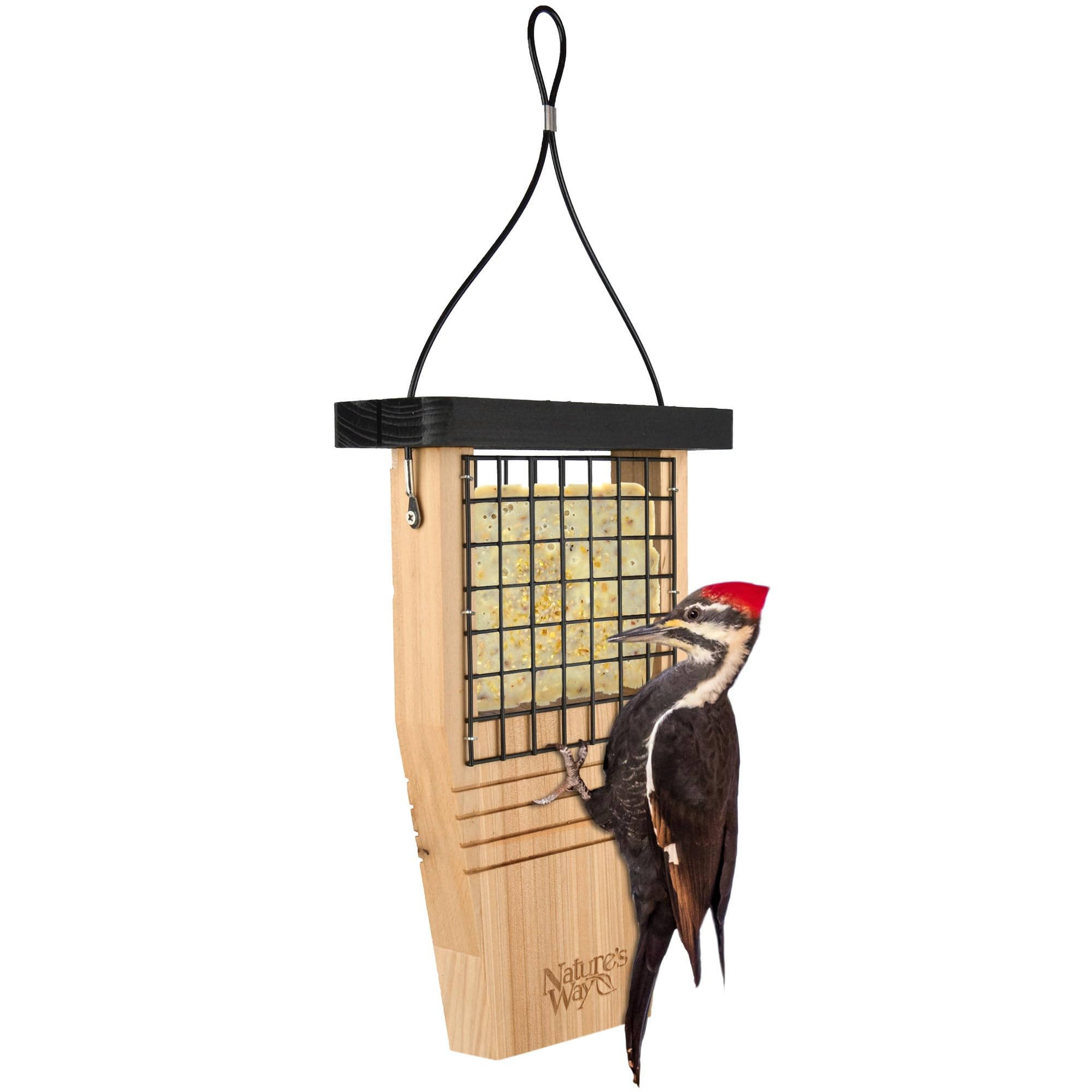
A cedar-built suet feeder with a tail-prop and kerfed gripping surface designed to attract larger woodpeckers like flickers and pileateds.
Why I picked it: Tail-prop and kerfs give big woodpeckers a stable feeding platform.
Best for: Attracting large woodpeckers and giving them a comfortable perch.
A premium natural-wood option.
Pros
- Tail-prop for stability
- Durable cedar construction
- Rust-free hardware
Cons
- Perch can sway on hooks
- Narrow step for very large birds
My take
I specifically picked this feeder to encourage larger woodpeckers, and the tail-prop makes a real difference — flickers and larger species use it confidently to brace while feeding.
The cedar looks natural in my yard and has held up for seasons without warping; the mesh and screws are rust-resistant and still function well.
Refilling is quick and straightforward, and small birds also take advantage of the suet. In my setup I mounted it on a sturdy hook to minimize sway; in lighter-hanging spots the perch can move under a heavy bird.
5. FLINTER Basket-Style Suet Feeder – Best Trunk-Mounted Basket
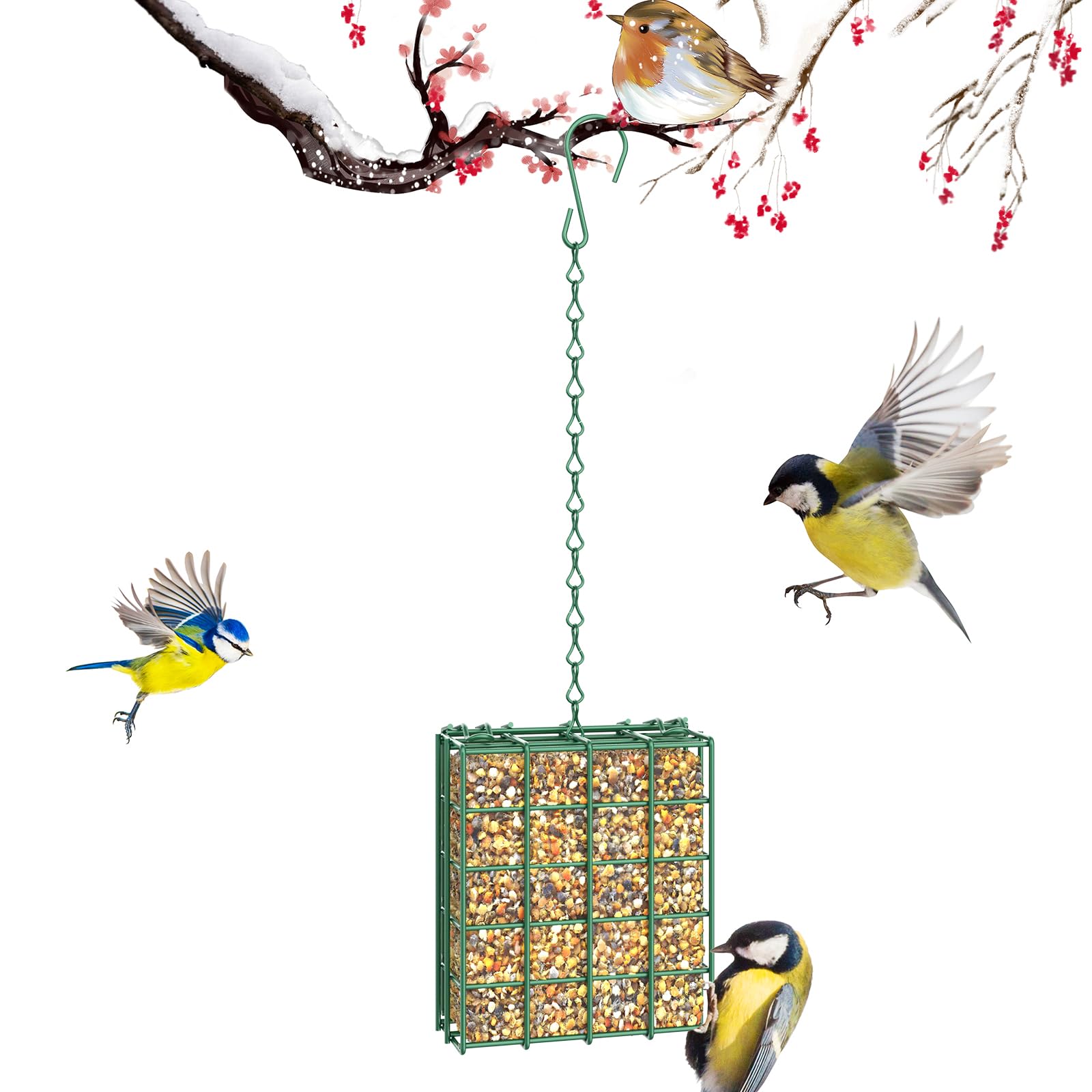
A compact basket-style cage intended to hang close to tree trunks so trunk-foraging birds can feed from all sides.
Why I picked it: Opens easily, mounts close to trunks, and suits trunk-hugging species.
Best for: Sites where nuthatches, creepers, and trunk-loving birds forage.
A budget-friendly, versatile basket feeder.
Pros
- Mounts close to tree trunks
- Easy-open lid
- Powder-coated steel
Cons
- Chain can show surface rust
- Smaller capacity
My take
I like hanging this FLINTER basket right on tree trunks where trunk-hugging species find it fast and feel secure feeding from all sides.
The lid opens easily for refilling and cleaning, and I’ve used the cage for suet cakes, halves of oranges, and nesting material depending on the season.
Construction is powder-coated steel and has stayed sturdy through rain and cold; the chain at one of my sites developed light surface rust over time, but the cage itself remained solid.
6. Kingsyard Double Suet Feeder – Best Decorative Double
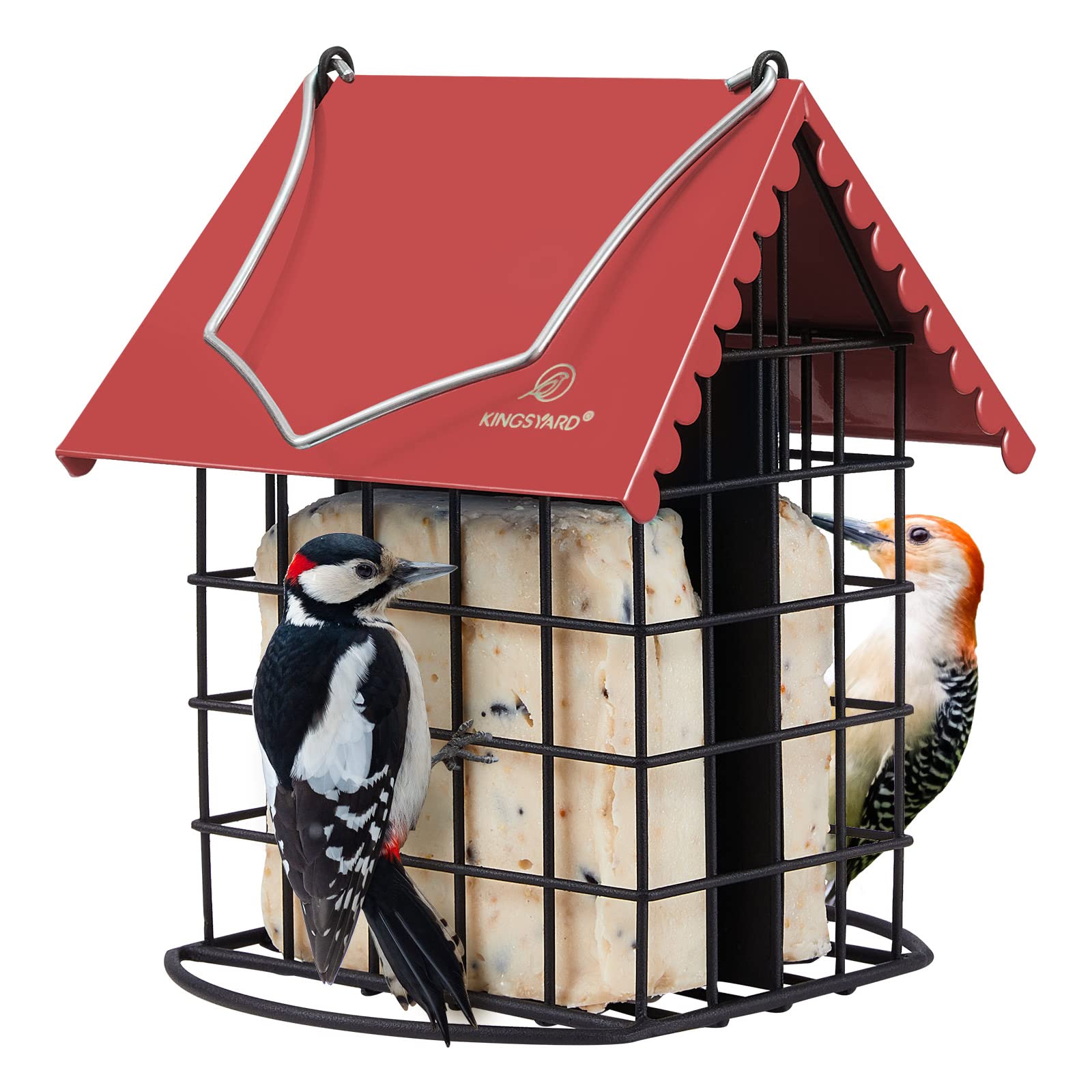
A whimsical all-metal double suet feeder with a removable roof, extra perches, and a durable powder coat for year-round use.
Why I picked it: Weatherproof roof, perches for more birds, and a decorative look.
Best for: People who want a sturdy, attractive double feeder with perches.
A midrange decorative option.
Pros
- Removable roof for cleaning
- Two perches for bird traffic
- Sturdy all-metal build
Cons
- Squirrels may still persist
- Red paint may fade outdoors
My take
The Kingsyard feeder stands out on my hook because the roof protects suet from the elements and the small perches let more birds feed at once.
I found the removable roof makes dumping and rinsing the cage very easy, which I appreciated during heavy use periods.
The metal grid is tough enough that squirrels gave up faster than they do on wooden models, though particularly determined individuals still tried creative approaches.
7. FORUP Single Suet Feeder – Best Simple Single
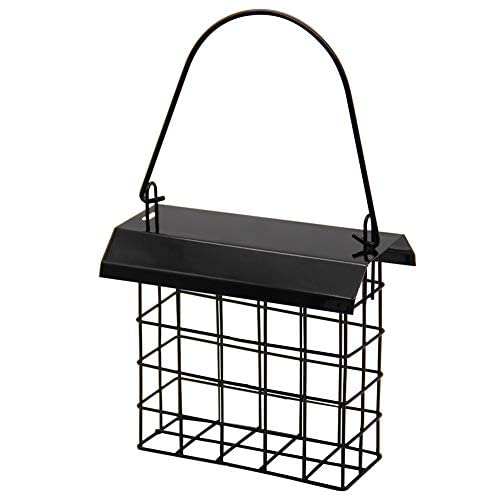
A clean, open single-cake cage with a powder-coated finish and a coated steel cable for hanging.
Why I picked it: Simple, durable, and lets air circulate to keep suet fresher.
Best for: Those who want a no-frills, long-lasting single-cake holder.
A solid lifetime-style purchase.
Pros
- Powder-coated weather finish
- Easy to hang
- Open design for airflow
Cons
- A bit wide for some cakes
- May rattle with thin blocks
My take
I appreciate the simplicity of this FORUP feeder — the open design lets air circulate so suet stays firmer longer and multiple birds can feed at once.
Hanging on my coated steel cable was instant and secure; the powder coat has held up to snow and rain with minimal wear.
My only minor quibble is that some standard suet blocks rattle in the slightly wide interior, but birds did not seem bothered and returned repeatedly.
8. FlowaFoli Double Suet & Seed Feeder – Best Large-Capacity Option
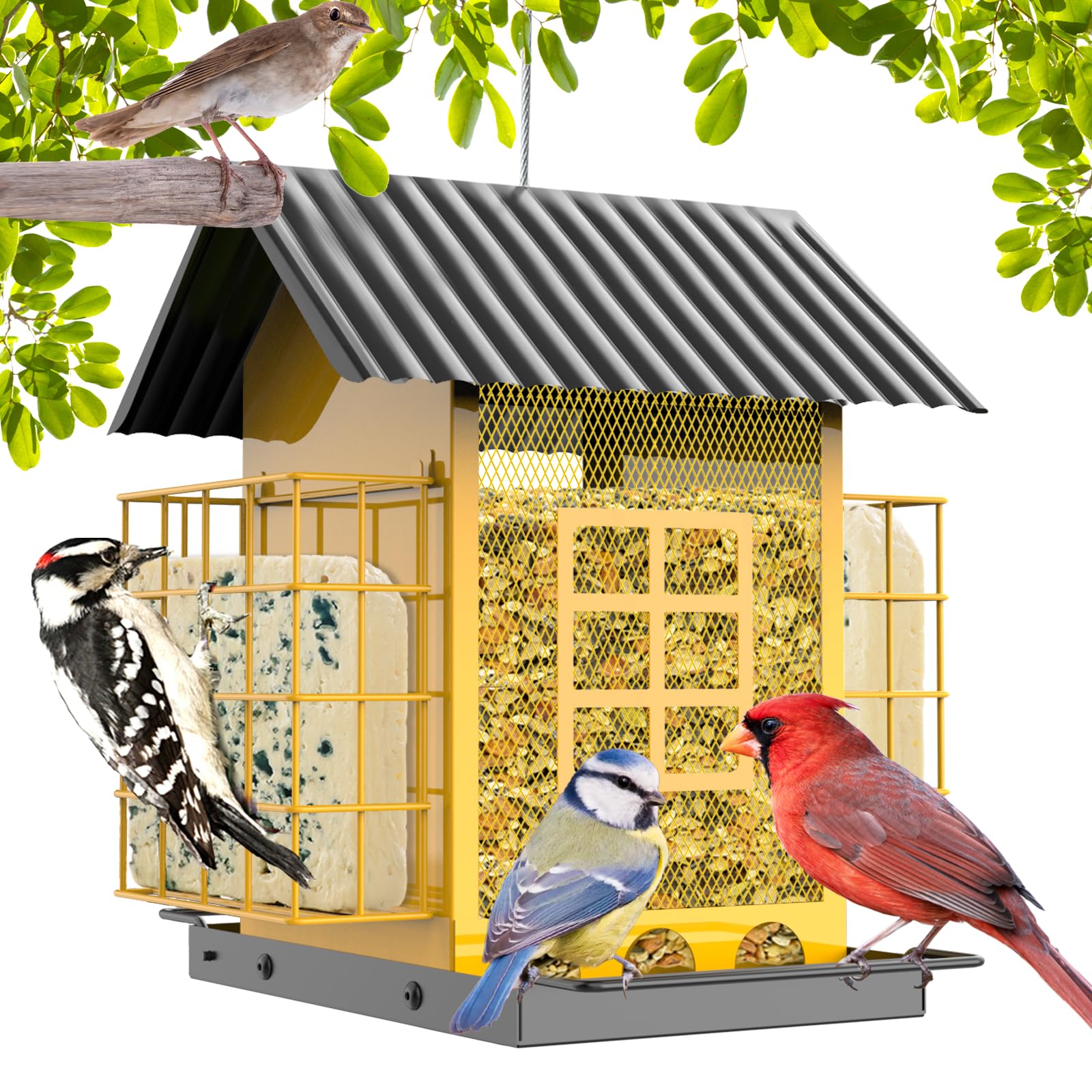
A large-capacity metal feeder that combines double suet cages with seed storage, drainage holes, and a removable roof for easy filling and cleaning.
Why I picked it: Big capacity, built-in drainage, and easy-clean roof make it versatile for heavy-use yards.
Best for: Households that want to feed lots of birds frequently.
A higher-capacity, value-oriented choice.
Pros
- Large capacity
- Built-in drainage holes
- Removable roof for cleaning
Cons
- Rain protection limited in wind
- Hanging chord non-adjustable
My take
I chose this large feeder when I needed something that could serve seed and suet in one spot for a busy yard.
The removable roof and large opening make refilling and rinsing simple, and the drainage holes prevent water from pooling in the tray.
In heavy wind-driven rain I still saw some moisture reach the feed, so I positioned it under partial shelter; otherwise it has been a reliable, substantial feeder that attracts a wide mix of species.
How I Choose a Suet Feeder
Key features I look for
I prioritize feeders that keep suet dry, are easy to refill and clean, and are built of materials that resist rust and wear.
Capacity matters depending on how often I can refill: single-cake cages are fine for casual feeding, while double-cake or large-capacity models cut down on trips to the kitchen.
- Weather protection: I prefer a roof or place the feeder under cover to keep suet from spoiling.
- Durability: Powder-coated steel or cedar with rust-free hardware lasts the longest for me.
- Access: Cages sized for clinging birds help woodpeckers and nuthatches feed comfortably.
- Ease of cleaning: Removable roofs or wide openings save me time and keep feed sanitary.
Placement and installation I recommend
I hang feeders near trees for trunk-foraging species, but keep them far enough from branches that squirrels can’t easily leap onto them.
For pole-mounted stations I sink the base deep or anchor with rebar in loose soil to stop wobble and reduce sway under heavy bird traffic.
- Hang single cages close to trunks for nuthatches.
- Use a pole with a baffle or mount higher than four feet to discourage ground predators and some squirrels.
- Place feeders where you can view them from a window for easy enjoyment.
Managing squirrels and critters
I accept that determined squirrels will test most cages, so I combine strategies: a good latch, placement away from launch points, and a pole baffle.
If squirrels repeatedly pry a latch, a small twist tie or zip tie as a backup works for me without harming birds.
- Add a baffle above or below the feeder.
- Mount on a pole far from fence lines and trees.
- Use heavier-gauge metal feeders to frustrate persistent chewers.
Refilling and seasonal care
I clean feeders regularly with warm soapy water and a brush and rinse thoroughly; removable roofs make that task much quicker.
In warm weather I switch suet to fruit halves or nesting materials where appropriate to avoid melt and spoilage.
- Clean feeders every few weeks or when switching feed types.
- Store unused suet cakes in a cool, dry place.
- Inspect hardware each season for rust or loose screws.
Frequently Asked Questions
What size suet cakes do I need?
I use standard suet cakes for most cages; double feeders accept two standard cakes. If a cage is a bit larger, I either trim thin cakes or add a small support so they don’t shift.
How do I stop squirrels from stealing suet?
I place feeders away from jump points, add a baffle on the pole, and reinforce latches with a twist tie when necessary — those steps reduced theft in my yard.
Can I use suet feeders year-round?
Yes. I feed suet in winter for energy and in warmer months I swap to oranges, fruit halves, or nesting material to avoid suet spoilage and continue attracting birds.
How often should I clean my feeder?
I rinse and brush feeders every few weeks and more often if feed gets wet or moldy. Removable roofs make cleaning much faster for me.
Final Take
If you want a reliable single-cage feeder to start, I recommend the More Birds suet cage for its solid construction and simple design.
For wetter climates or busier yards, the double feeders with roofs give me better weather protection and less frequent refilling.
If you want the whole ecosystem in one place, the deluxe feeding station kit made the biggest immediate difference in daily bird activity at my house.
