
I tested five popular yarn winders and a metal swift so you can pick the right tool for your stash, table, and workflow. I focus on build, capacity, clamp fit, and how evenly each one winds center-pull cakes.
I've been turning skeins into neat, center-pull cakes for years, and using the right winder makes a bigger difference than you might expect. In this roundup I put together options that cover casual crafters, heavier-duty use, and the swift you'll want beside a winder.
I evaluated each unit for ease of setup, clamp stability, how evenly it winds, how much yarn it holds, and any annoying quirks—like squeaks or gear skipping. Below I explain which one I reach for in different situations and why.
If you want an all-around, small-footprint winder I lean toward the Knit Picks units; if you need high capacity and industrial build, I prefer the Stanwood metal winder. Add the metal swift if you work from hanks often.
1. Knit Picks Yarn Ball Winder – Best Overall
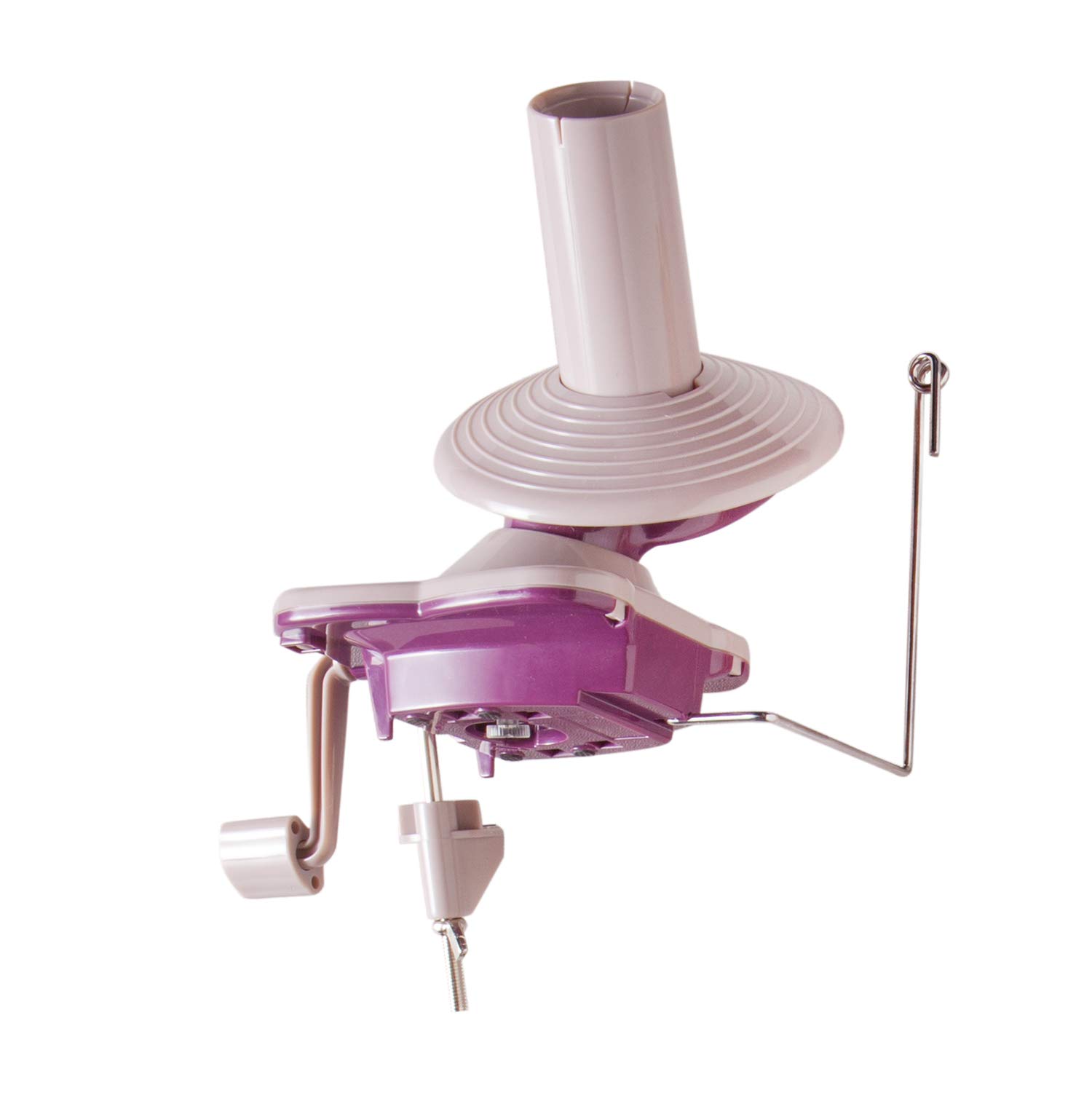
A compact, solid hand winder that makes tidy center-pull cakes and clamps securely to most tables.
Why I picked it: Balances build quality, ease of use, and tidy results in a small package.
Best for: Casual knitters and crocheters who want a dependable, space-saving winder.
Affordable, good value for regular use.
Pros
- Compact and space-efficient
- Solid, adjustable clamp
- Produces tidy center-pull cakes
- Smooth winding action
Cons
- Limited capacity for very large skeins
- Assembly instructions are sparse
- Clamp can be awkward to tighten
My take
I reach for this Knit Picks winder when I want a no-nonsense machine that fits on my kitchen table. It came with minimal assembly; the instructions were light, but I had it together quickly and the clamp holds firmly across a range of table thicknesses.
In use it winds evenly and produces neat center-pull cakes that sit well on a dispenser or in my project bag. It’s a relatively small winder, so I don’t try to cram very large cones onto it—those need the larger machines—but for skeins and partials it’s ideal.
The only real friction points are the clamp style (takes a little muscle to secure) and the short, general instructions. Once set, though, I can control the speed and tension easily and get consistent results every time.
2. Knit Picks Ball Winder (Purple) – Best Budget
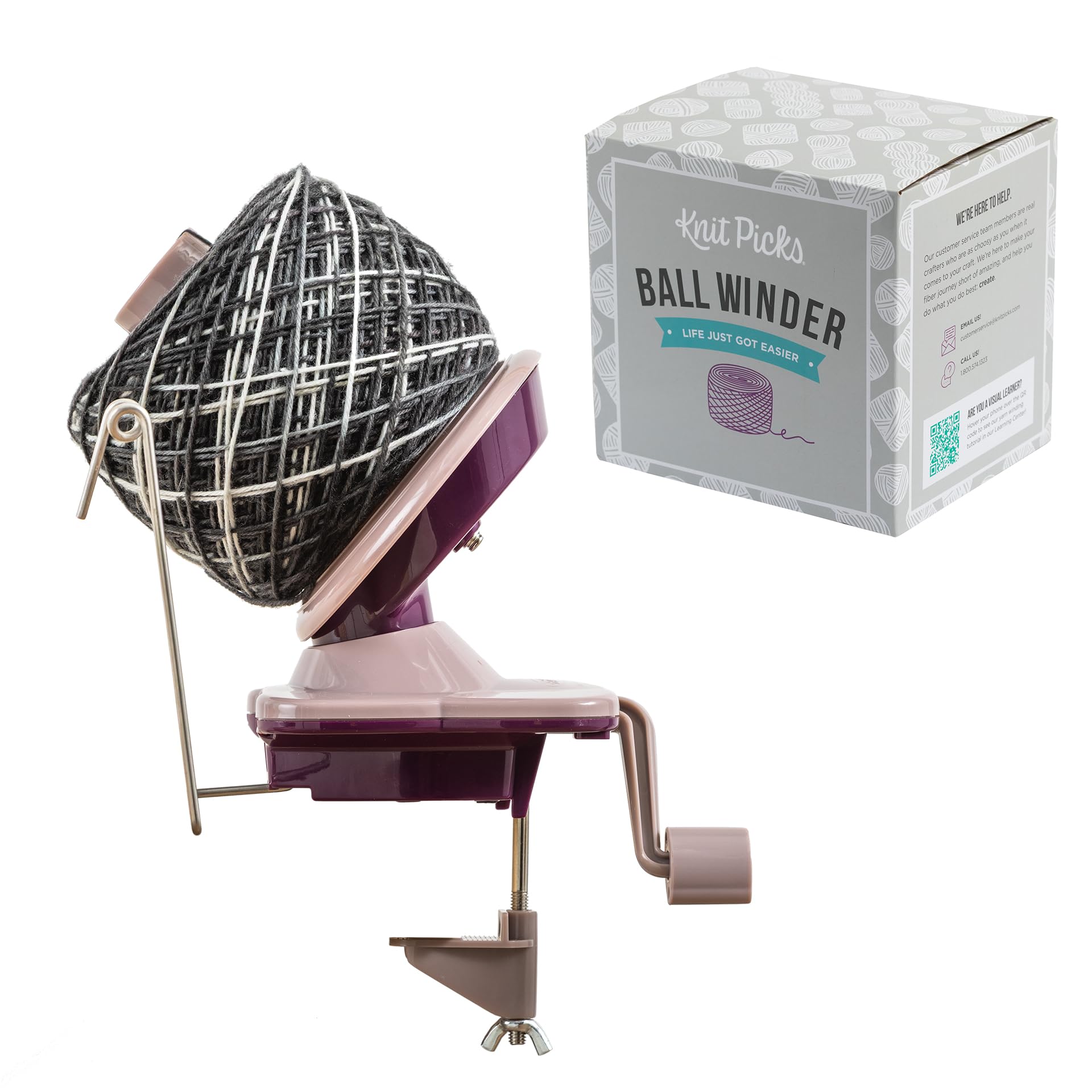
A value-minded Knit Picks winder that handles most yarn weights and stores compactly with a removable spindle.
Why I picked it: Simple, lightweight, and capable across many yarn weights with compact storage.
Best for: Budget-conscious makers who need a reliable, everyday winder.
Very affordable and a smart buy for frequent use.
Pros
- Handles lace to bulky yarns
- Removable spindle for compact storage
- Foldable guide arm
- Adjustable table clamp
Cons
- Limited cake size capacity
- Can squeak without lubrication
- Large bulky skeins may slip
My take
This purple Knit Picks winder is a dependable, practical choice when I want the essentials and nothing fancy. It accepts a wide range of yarn weights—lacy fingering all the way up to thicker worsted and some bulky yarns—so I use it for most of my stash.
I like the removable spindle and foldable guide arm because it stashes easily in a drawer or craft bag. If I push the handle too fast it can squeak; a drop of lubricant quiets it and restores smooth operation. I also keep an eye on cake size because if the cake gets too large the yarn can roll off the top edge.
For the price and performance, it’s a great everyday workhorse that integrates smoothly with a yarn swift or a handheld feed.
3. Stanwood Needlecraft Metal Yarn Winder – Best Heavy-Duty
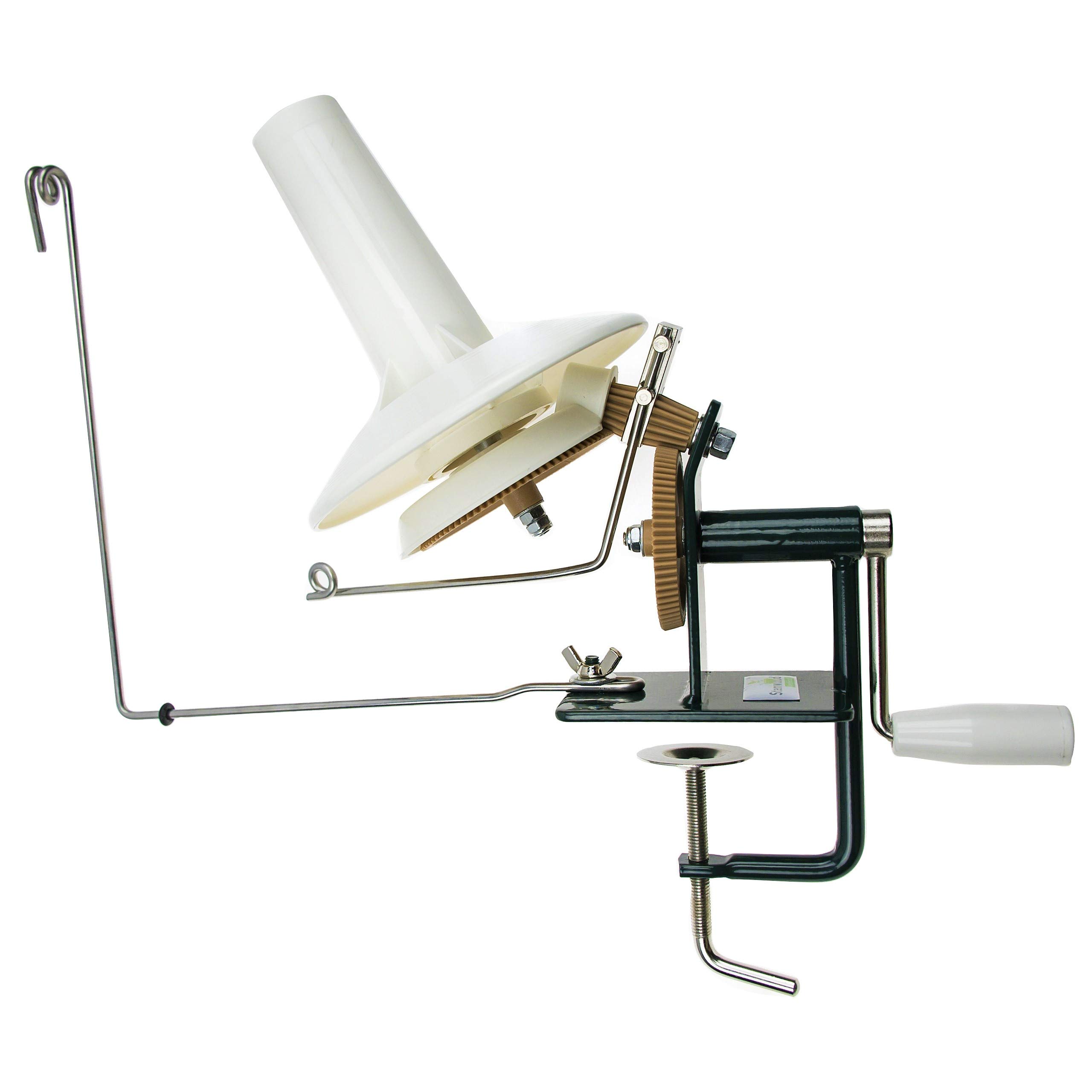
A heavy-duty, steel-built winder with a large capacity and smooth gearing for frequent, high-volume winding.
Why I picked it: Unmatched build and capacity for makers who wind a lot of yarn.
Best for: Regular winders and small-batch sellers who need durability and large cakes.
More expensive, but built for long-term heavy use.
Pros
- Thick steel construction
- High yarn capacity
- Smooth, reinforced gears
- Tool-less, fast setup
Cons
- Heavier and less portable
- Higher upfront cost
- Takes more space on a table
My take
When I need to tackle larger skeins or batch-wind many cakes, this Stanwood metal winder is my go-to. The steel frame feels rock-solid and the reinforced nylon gears deliver a smooth, quiet winding experience compared with cheaper plastic models.
I appreciate the generous capacity; I routinely wind bigger skeins without having to split them. I also found it helpful to wind twice—first to relax tension, then again for a looser, perfect cake—especially when working with dense fibers.
Because it’s heavier and built like a tool, I wouldn’t call it portable, but for home studios or regular, heavy use it’s worth the space and investment.
4. Craft Destiny Yarn Winder – Best Starter Winder
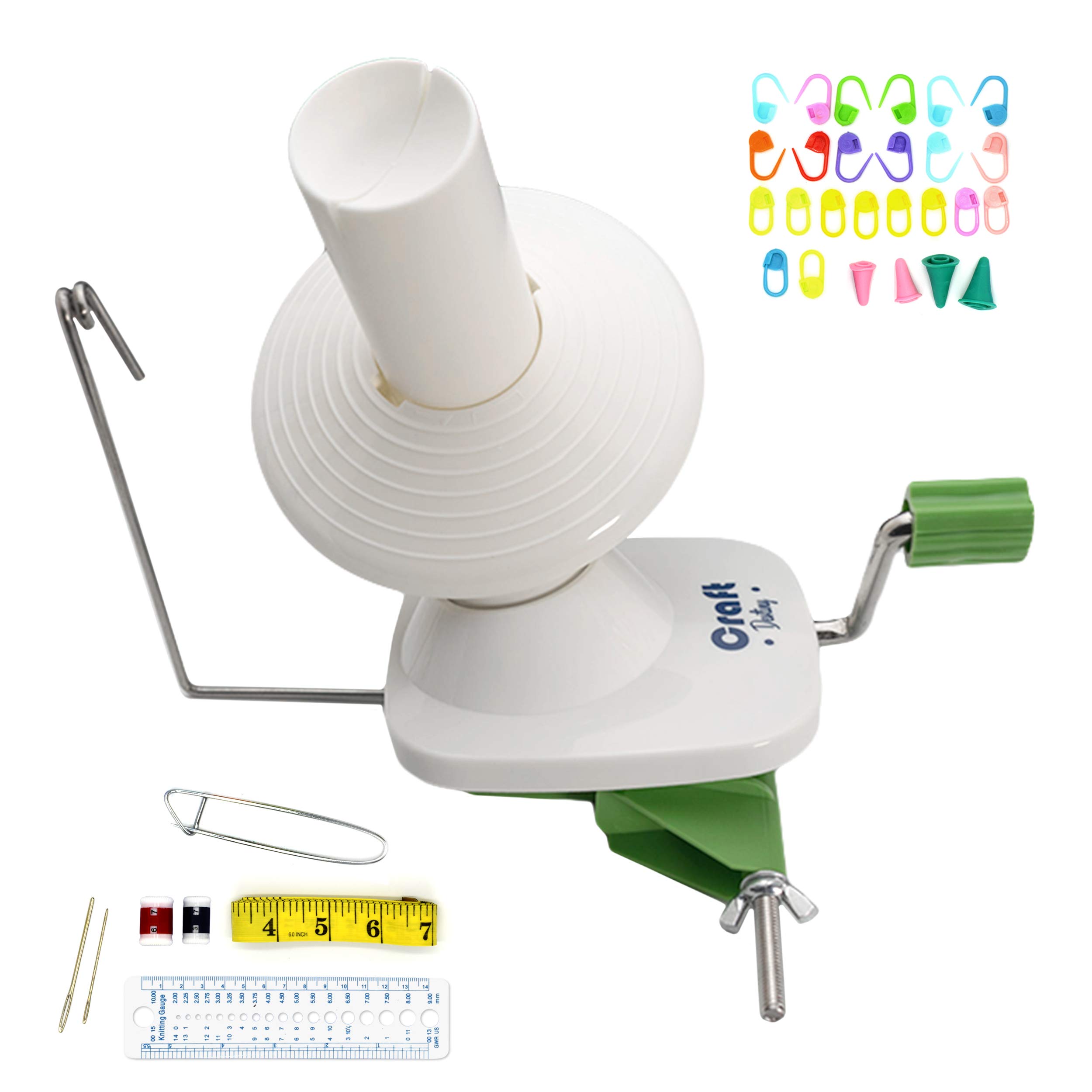
A straightforward, metal-handled winder that’s easy to set up and nice for occasional use, with a few durability caveats.
Why I picked it: Straightforward operation and a sturdier handle than many budget options.
Best for: Occasional winders and crafters testing a winder for the first time.
Good value for casual use.
Pros
- Metal handle and clamp
- Easy to set up
- Accepts center or outside pull
- Compact footprint
Cons
- Reported gear/grinding noise
- Can detach from table if not tightened
- Limited capacity for large cones
My take
I kept this Craft Destiny winder handy for quick jobs and the metal handle gives it a sturdier feel than the cheapest plastic options. It goes together fast and clamps to a tabletop without fuss, which is great when I want a fast cake before I start a project.
A handful of sessions showed that if I get into a very fast rhythm the clamp can loosen on thinner tables, so I retighten and check it before a long winding run. I also encountered loud cranking on one sample; light maintenance or contacting the maker is an option if gears begin to skip. For casual use, though, it does the job reliably and is easy to store.
5. Metal Yarn Swift – Best Accessory (Swift)
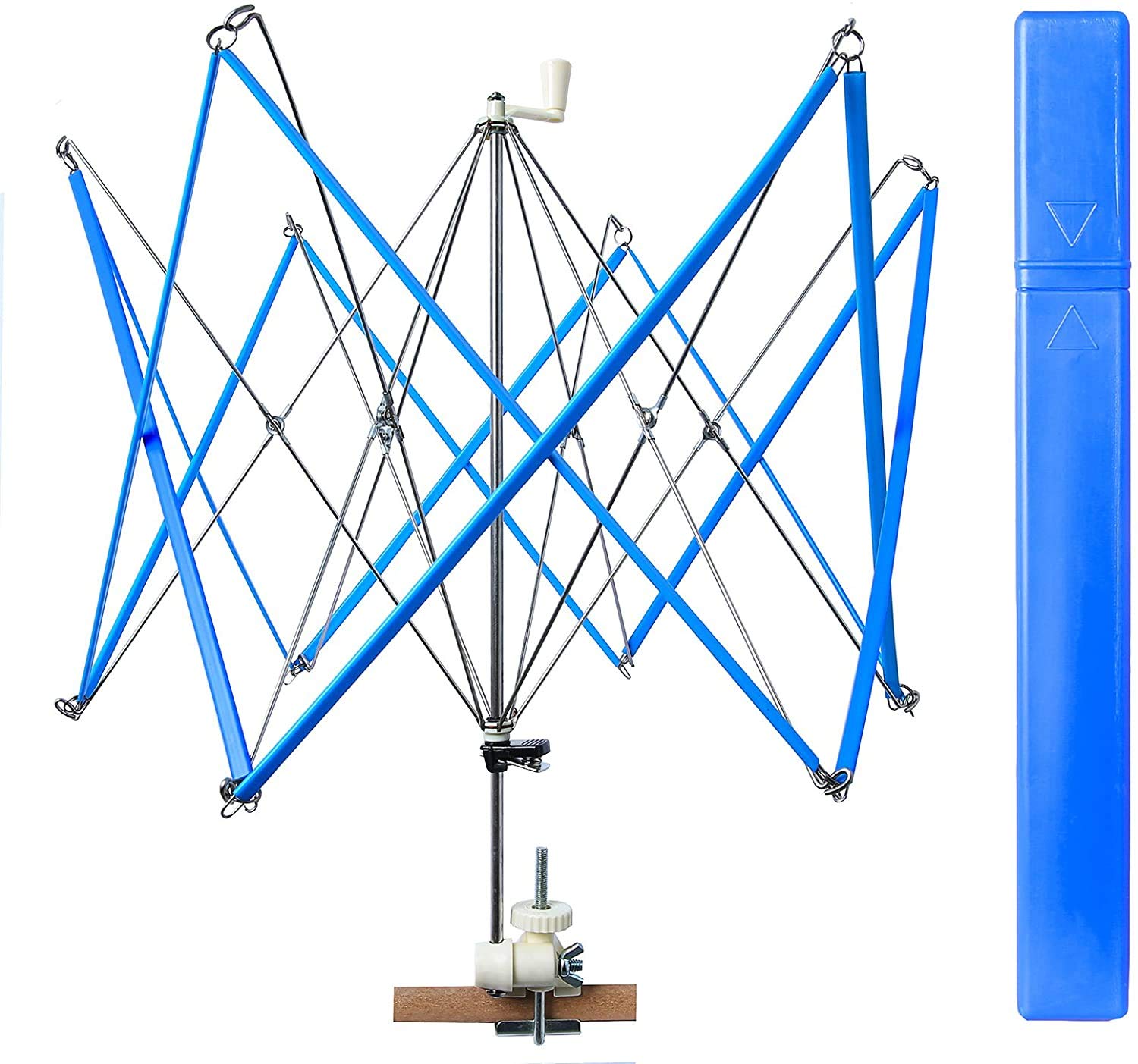
A metal, foldable swift I use alongside a winder to transform hanks into tidy, feedable skeins.
Why I picked it: Metal parts and compact case make hank handling fast and repeatable.
Best for: Anyone who buys hanks or wants smoother feeding into a winder.
Economical way to add hank-winding capability.
Pros
- Sturdy metal construction
- Compact, folds into a case
- Works horizontal or vertical
- Handles many yarn weights
Cons
- Clamp may mark wood tables
- Plastic top handle feels basic
- Not for very long hanks
My take
I pair this metal swift with a ball winder whenever I’m working from hanks. It sets up fast, clamps securely, and spins smoothly while I wind; that combination cuts down tangles substantially compared with holding a hank on my knees.
The metal construction makes it lighter and more compact than a wooden swift, and the included storage case keeps it protected. I did note the clamp can leave marks on delicate table finishes, so I use a protective pad underneath. For the money it’s an efficient, low-fuss companion to any ball winder.
How I Choose a Yarn Winder
Key features I check before buying
I focus on build material, clamp compatibility, capacity, and how the winder integrates with a swift or dispenser. Those four things determine whether a winder becomes a daily workhorse or an occasional tool gathering dust.
Noise and maintenance matter to me. A well-built gear train won’t grind or squeak under moderate speeds, and small winders sometimes benefit from a drop of machine oil if they start protesting.
- Clamp size and style: I make sure it fits my table edge without slipping.
- Capacity: match the winder to the largest skeins you buy.
- Material: steel frames last longer; plastics are lighter and cheaper.
- Ease of storage: removable spindles and foldable arms make life easier.
- Swift compatibility: use a swift for hanks; handheld winding works for partial skeins.
Practical tips from my experience
I wind at a steady, moderate speed. Wind too fast and cakes can fly off or slip; too slow and it takes forever.
When a cake feels too tight, I wind it twice—first to remove slack, second to produce a relaxed cake that feeds properly.
- Protect your table: use a thin pad under the clamp.
- Lubricate squeaks: a drop of sewing-machine oil quiets handles and gears.
- Watch cake size: stop before yarn rolls off the top edge.
Frequently Asked Questions
Do I need a swift to use a ball winder?
Not always. I often wind small partial skeins by hand into a winder, but when I buy hanks I use a swift—it's much smoother and prevents tangles.
Can a small winder handle bulky yarn?
Many small winders handle bulky yarn, but I avoid making extremely large cakes on compact models. If I work with thick cones regularly I choose a higher-capacity metal winder.
How do I stop a cake from slipping off?
I slow my winding speed and keep the skein feeding slightly away from the winder so tension is consistent. If a cake grows too tall I stop and rewind a bit smaller.
Final Take
If you want a compact, dependable everyday option, the Knit Picks models are my go-to. For heavy use and large skeins I choose the Stanwood metal winder. Add the metal swift if you work from hanks frequently—together they make winding fast and tangle-free.
Whichever winder you pick, check clamp fit for your table, mind cake size, and wind at a steady pace. With those small habits your yarn will stay organized and project time will feel smoother.
