
I tested felt and non‑slip furniture pads across floors and furniture types to find the best protectors for scratching, sliding, and everyday wear.
I spend a lot of time protecting floors in rental homes and my own place, so I’ve tried dozens of pads to stop scratches, scuffs, and sliding. In this roundup I compare felt protectors, rubber-backed grippers, and hybrid pads to cover every common use.
My selections focus on adhesion, pad thickness, shape options, and how each product behaves when furniture is moved. I’ll tell you which pads I rely on for delicate hardwood, which ones stop couches from creeping, and where to avoid over‑grippy options.
I tested each pad on hardwood, laminate, vinyl, and tile where possible. Felt pads are my go-to when I need easy sliding and scratch protection; rubber- or hybrid-backed pads are what I pick when I want an anti‑slip solution that holds heavy furniture in place.
1. X-PROTECTOR Felt Pads 133‑Piece (Brown & Beige) – Best Overall
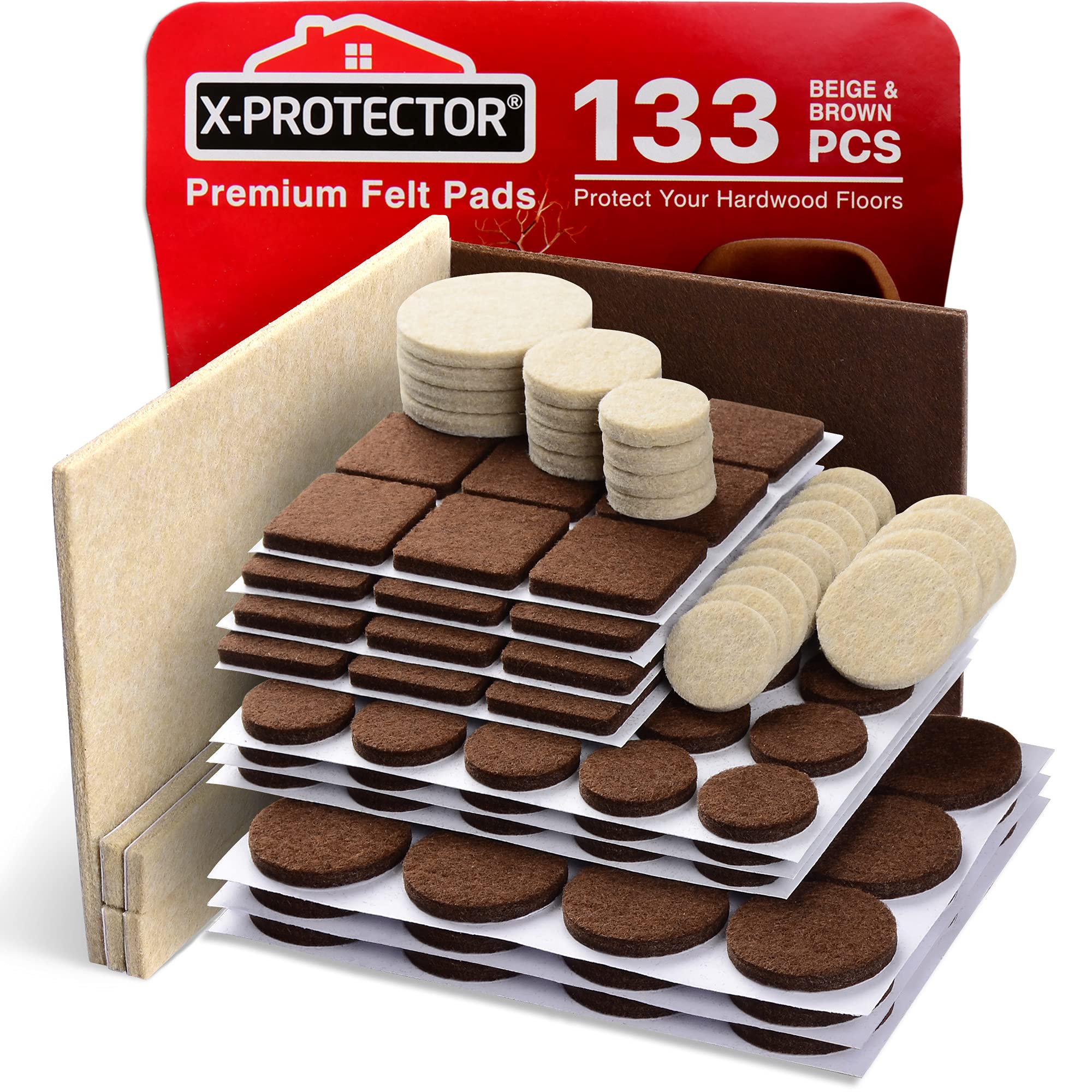
A massive, mixed-size set with two colors and strong adhesive sheets that makes protecting nearly every piece of furniture fast and economical.
Why I picked it: Huge size assortment, two colors, dense felt, and adhesive sheets for fast application.
Best for: Homes with varied furniture — chairs, cabinets, tables, and decorative items.
Very affordable for the quantity and variety provided.
Pros
- Wide range of sizes and shapes
- Two colors to match furniture
- Thick, dense felt for cushioning
- Adhesive sheets speed installation
Cons
- Not ideal for furniture that's moved often
- A few tiny sizes can be fiddly to place
My take
I like this kit because it solves nearly every pad-size problem in one package. The two-color approach (brown and beige) is practical — I used brown on dark wood chairs and beige on light tables so the pads blend in.
Installation was quick thanks to the adhesive sheets: I peeled a sheet, pressed pads onto the furniture foot, and I was done. The felt feels dense and thick enough to cushion without making furniture unstable, and chairs glide across floors smoothly.
In everyday use the adhesive stuck well on wood and metal legs. The only time I had a problem was when I purposely slid a heavy piece across the floor repeatedly — one pad eventually came loose. For mostly-stationary furniture this set is excellent; for pieces you reposition daily, consider a stronger-backed gripper.
Overall I keep these on hand for general purpose protection and for finishing odd-sized furniture feet around the house. The quantity and variety make them a great value.
2. X-PROTECTOR Non‑Slip Rubber Pads 2" (16-Pack) – Best Non‑Slip Small Pack
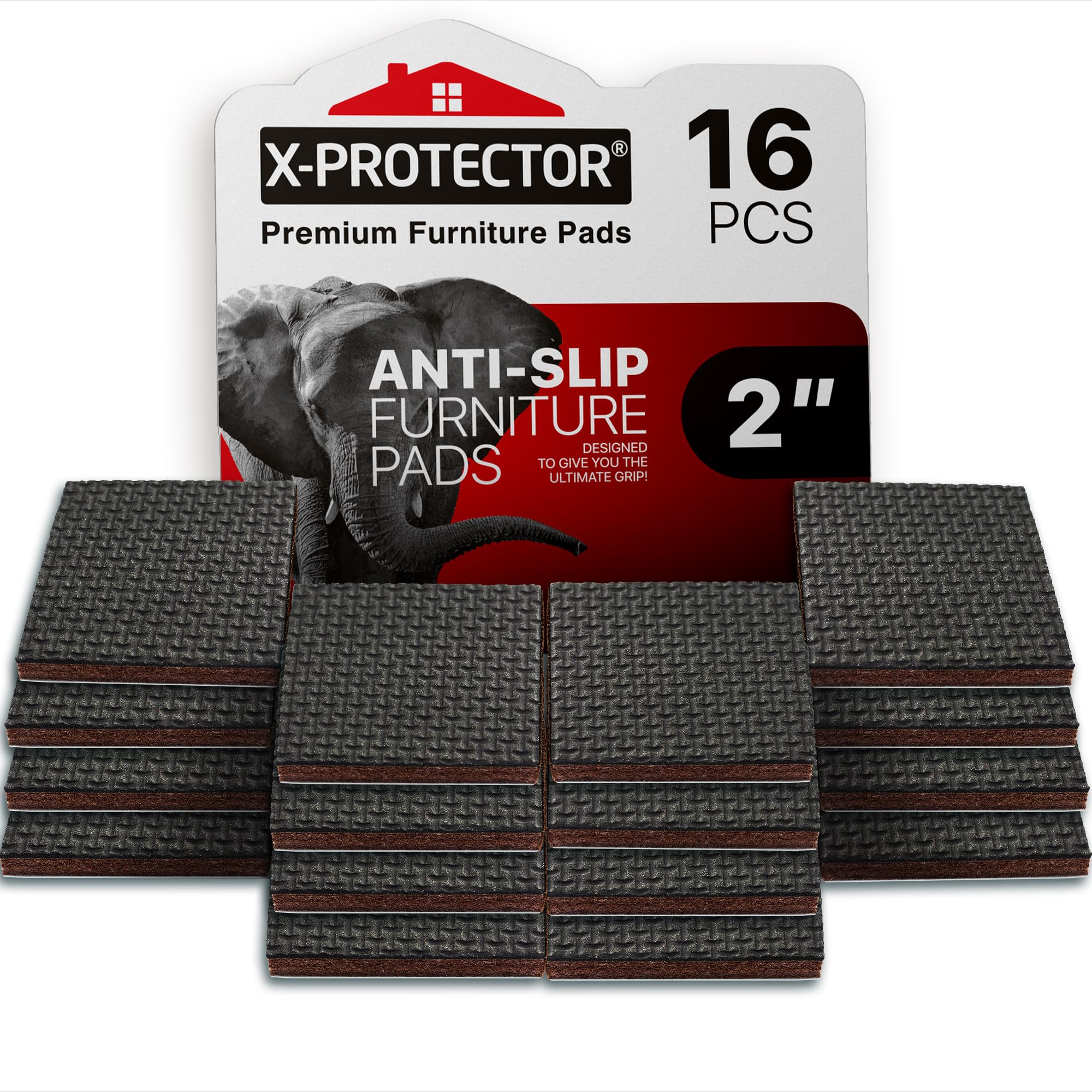
Square hybrid pads with thick felt and a rubber textured base that really hold sofas and beds in place on slick floors.
Why I picked it: Thick felt plus grippy rubber backing with tenacious adhesive for stopping sliding.
Best for: Sofas, loveseats, and chairs that slide on wood or tile.
Priced toward performance over quantity.
Pros
- Stops furniture from sliding
- Thick felt cushion with rubber backing
- Tenacious adhesive
- Easy to trim to fit
Cons
- Can leave light residue on floors
- Only a small number of pieces in the pack
My take
When I wanted to stop my couch from creeping forward on vinyl planks, these pads delivered. I cleaned and dried the feet first, pressed the pads in place, and the couch stayed where I put it even when I tried to slide it.
The combination of felt and textured rubber is smart: the felt still provides a protective cushion while the rubber grips the floor. I did find a little sticky residue on the floor after removal, but it wiped away with a mild cleaner.
Because the pack is limited in count, I reserve these for the largest or most problematic pieces that actually need grip. For smaller chairs or items I prefer plain felt that allows easy repositioning.
3. X-PROTECTOR Non‑Slip Rubber Pads 3" (12-Pack) – Best Heavy‑Duty Grip
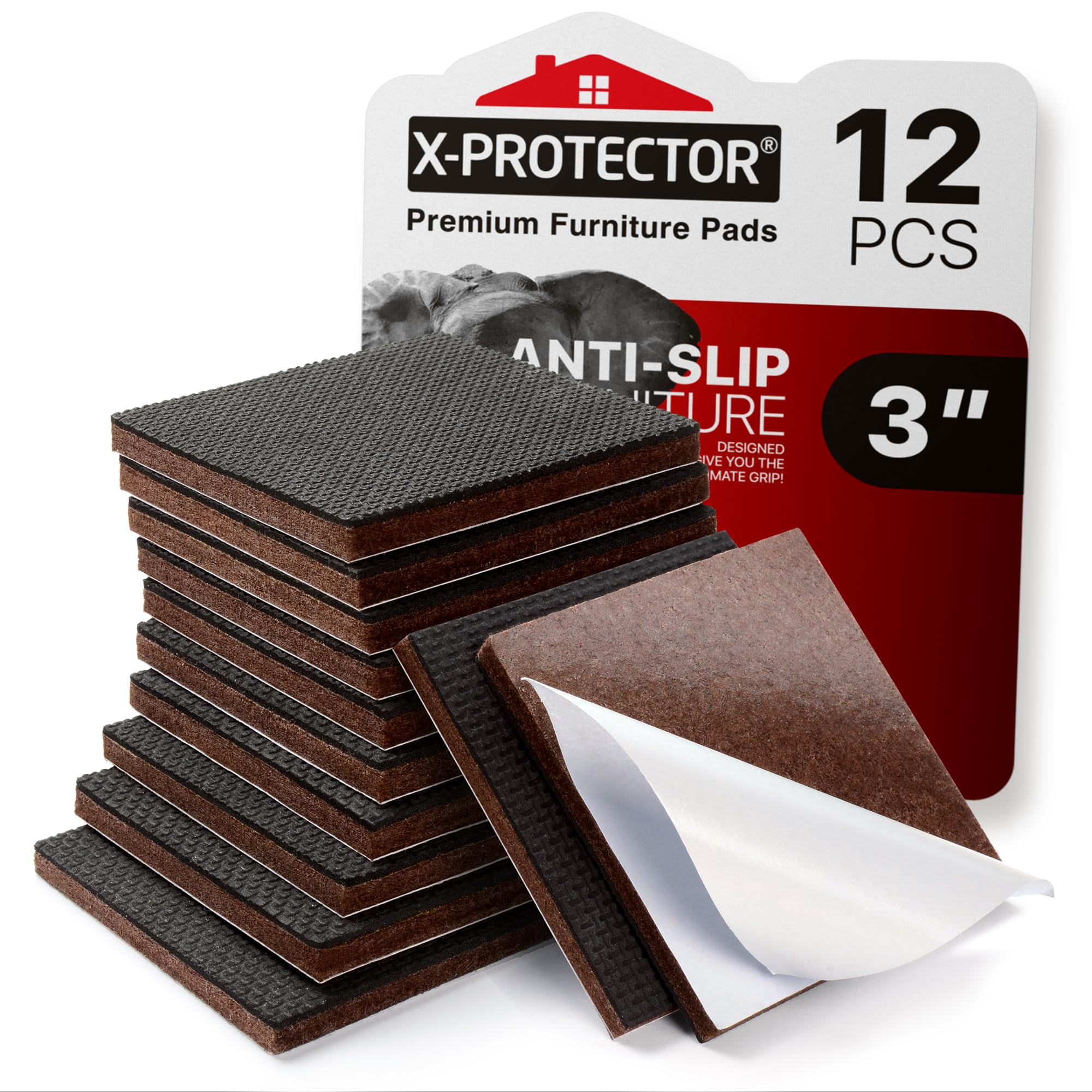
Large, aggressive grippers that cling to floors — ideal when you want a permanent hold under big sectional pieces or work jigs.
Why I picked it: Largest size and very strong grip for heavy furniture and workshop uses.
Best for: Sectionals, ottomans, and furniture you don’t want to move.
A practical pick if you prioritize grip over mobility.
Pros
- Very strong non‑slip performance
- Thick cushion protects floors
- Textured rubber grips wood and tile
- Works as anti‑slip pucks in workshops
Cons
- Makes moving furniture difficult
- Overkill for frequently moved pieces
My take
I used the 3" pads on the back feet of a sectional and they locked the pieces in place so securely I had to lift the sections to reposition them. If you need a set-and-forget hold, these are perfect.
I also repurposed a couple as anti‑slip pucks for woodworking; the rubber side grips wood well and the felt protects finished pieces during routing and sanding.
A word of caution: these pads are extremely grippy. If you like to slide furniture for cleaning or rearranging, these will hamper that. For anything intended to stay put they’re my first choice.
4. Scotch Felt Pads 1" Round (32‑Pack) – Best Small Round Pads
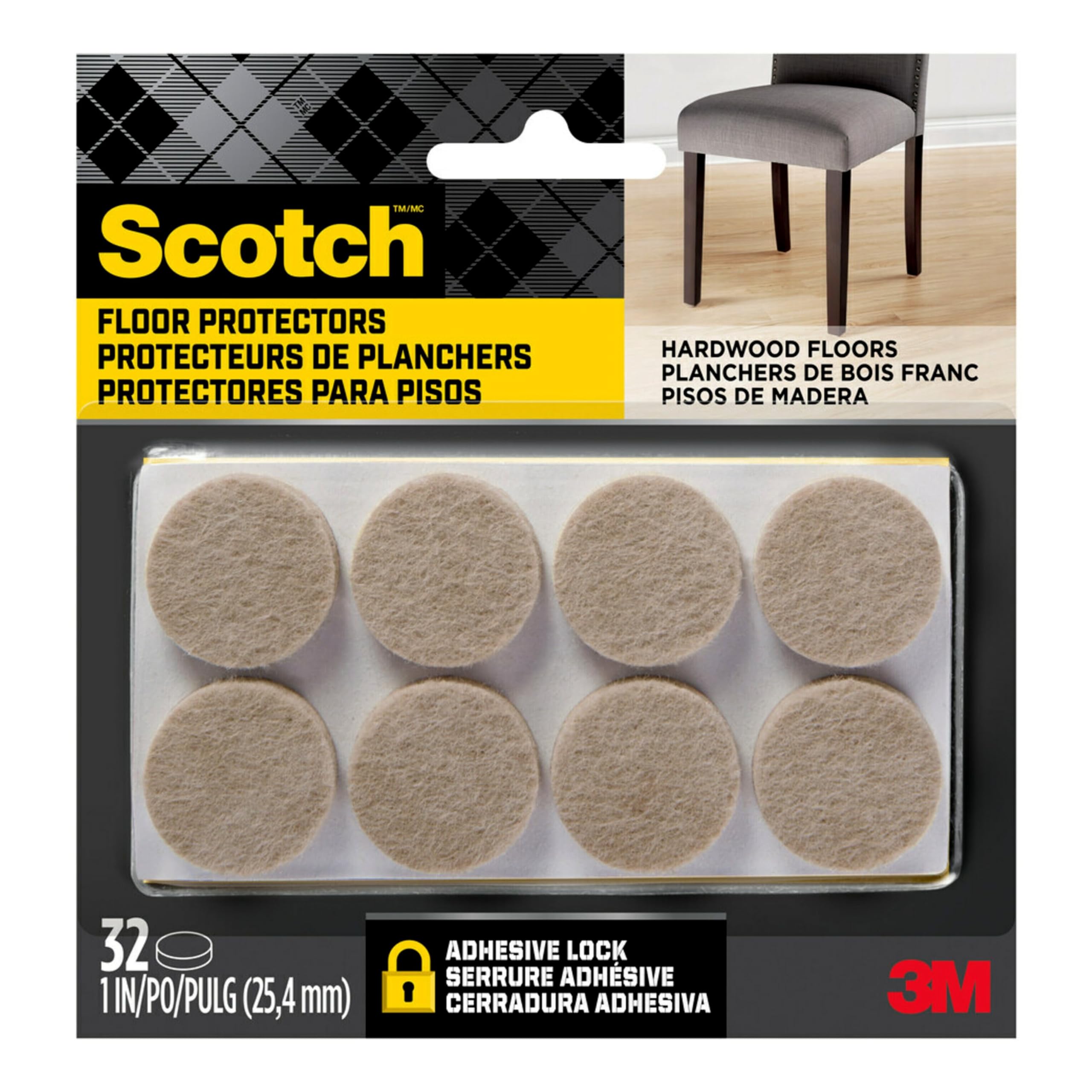
A simple, reliable one-size solution from a trusted brand — easy to apply and great for chairs, lamps, and decor.
Why I picked it: Reliable adhesive, consistent felt thickness, and simple peel‑and‑stick application.
Best for: Standard chair legs, lamps, and small decor that you move occasionally.
Affordable and widely available for everyday use.
Pros
- Trusted brand and consistent quality
- Easy peel‑and‑stick application
- Felt allows smooth sliding
- Good for small legs and décor
Cons
- Only one size and color
- Not suited for very heavy legs
My take
I reached for Scotch pads when I needed a fuss‑free solution for dining chairs and several lamps. They peel and stick quickly and the felt is thick enough to protect hardwood without feeling flimsy.
Once applied, chairs glide across the floor easily and the pads do a good job of dampening noise. I even used a few with drops of essential oil for a subtle scent trick around the house — they held the oil and stayed put.
If you want a straightforward small pad from a brand I trust, these are my go-to. Just plan ahead if you have oversized or oddly shaped feet, since this pack only offers the one size and color.
How I Choose Felt and Non‑Slip Pads
Types of pads and when I use them
I break pads into three categories: pure felt, rubber-backed hybrids, and full rubber grippers. Felt pads are best when I want to protect finish and still slide furniture. Hybrids give me both protection and some anti‑slip. Full rubber is what I use when I want heavy-duty hold.
- Felt: easy sliding, scratch protection, good for chairs and lamps.
- Hybrid (felt + rubber): balance between protection and grip.
- Rubber: prevents movement, ideal for heavy sofas and appliance feet.
Sizing, shape, and coverage
I measure the furniture foot and choose a pad that covers the contact area. Bigger pads distribute pressure and reduce indentation; small pads work for thin legs or decorative pieces.
- Round pads fit most chair legs.
- Square or rectangular pads are better for broad feet.
- Use larger pads for heavy furniture to avoid concentrated wear.
Adhesive strength and surface prep
A pad is only as good as its bond. I always clean and dry furniture feet before applying adhesive pads. For long-term hold, press firmly for 30 seconds and wait 24 hours before stressing the pad.
- Clean residue and dust with isopropyl alcohol.
- Avoid applying to wet or oily surfaces.
- Replace pads if the adhesive softens or dirt builds up.
Maintenance and replacement
I check pads periodically for wear or compression. Felt compresses over time and can collect dirt; rubber can lose tack. Replacing pads every year or sooner keeps protection effective.
- Inspect pads when you move furniture.
- Swap out flattened or torn pads promptly.
- Keep a mixed pack for odd sizes and quick fixes.
Frequently Asked Questions
Can I use felt pads on laminate and vinyl?
Yes—I use felt pads on laminate and vinyl all the time to stop scratches. For very slick surfaces I pair felt with a rubber-backed option if I also need anti‑slip grip.
How do I remove adhesive residue?
I remove residue with a soft cloth and a mild cleaner or isopropyl alcohol. For stubborn residue I warm it slightly with a hair dryer before wiping.
How often should I replace felt pads?
I check pads every six to twelve months. Replace them sooner if they’re compressed, torn, or no longer sticking well.
Final Take
I keep a mix of pads on hand: a large variety kit for general protection, a small stash of hybrid grippers for problem furniture, and oversized rubber pads for heavy sectionals. That lets me protect floors without sacrificing function.
Choose based on whether you want to glide furniture easily or lock it in place — both have a place in a well‑protected home.
