
I tested four bike covers for outdoor storage and transport. These picks balance weather protection, fit, and durability for rack-mounted bikes, e-bikes, and single-bike storage.
I spent time putting covers on a range of bikes — from commuter e-bikes to mountain rigs — and used them on decks, garages, and hitch racks. In this roundup I focus on real-world fit, material strength, and practical details like wind buckles and lock holes.
If you want a cover for transporting two bikes on a hitch rack, for keeping an e-bike on a deck, or for a low-cost single-bike solution, I lay out which covers worked best for me and why.
I compare heavy-duty transport-ready covers, transparent PVC options that let you see the bike, ripstop stationary covers for regular outdoor storage, and budget 210D covers. Think about whether you need transport-grade protection or a lighter, static storage solution before choosing.
1. Puroma 600D Bike Cover — Fits 2 Bikes (Rack Transport) – Best Overall
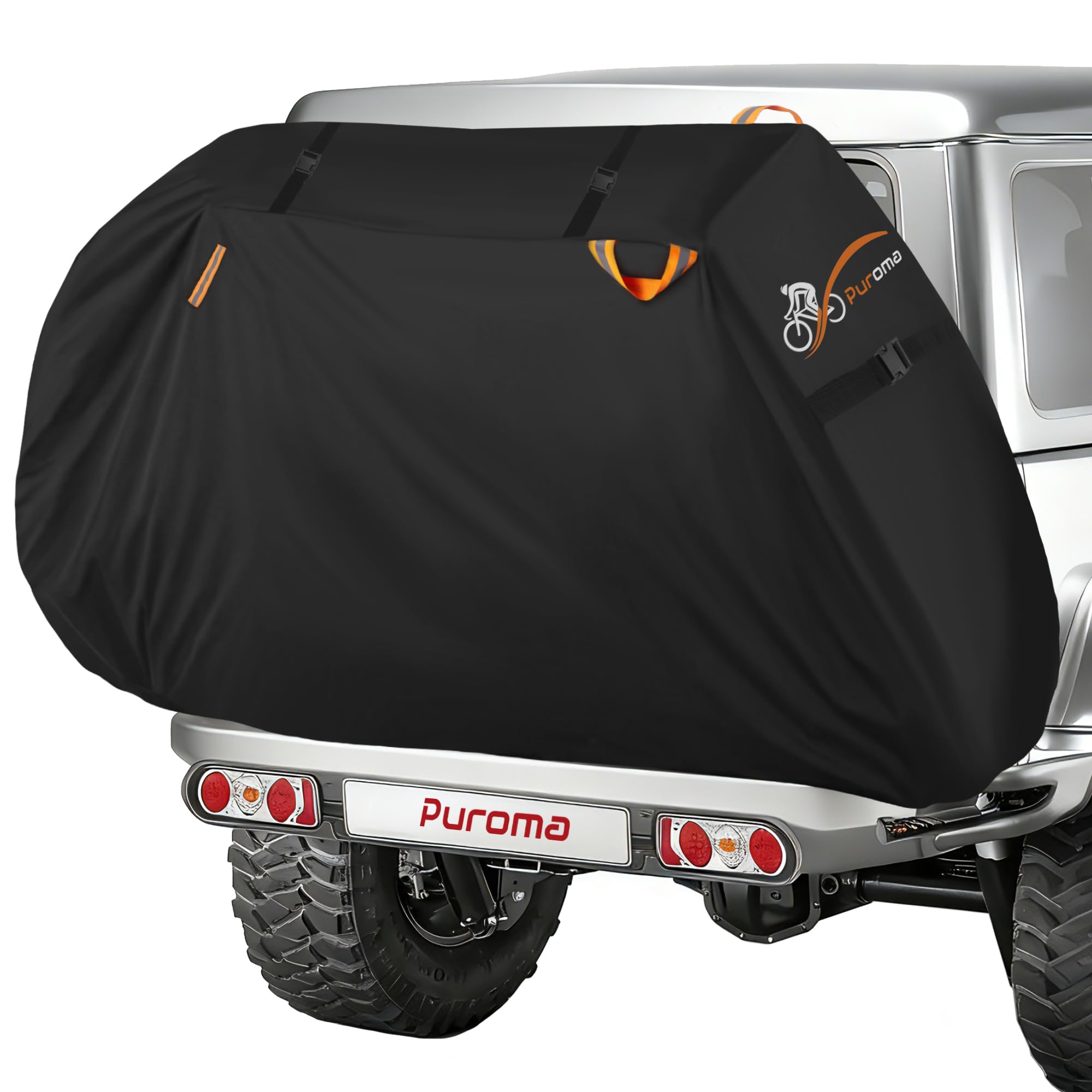
I used this heavy 600D cover to protect two bikes on a hitch-mounted rack; it delivered on waterproofing, UV resistance, and wind security.
Why I picked it: 600D waterproof fabric, five wind buckles, lock holes, and reflective strips make it transport-ready.
Best for: Transporting two bikes on a hitch rack and long-term outdoor storage.
A reliable mid-range option for heavy-duty outdoor use.
Pros
- Thick 600D waterproof fabric
- Five adjustable windproof buckles
- Front and rear lock holes
- Reflective strips for low-light visibility
- Comes with a storage bag
Cons
- Can block taillights on smaller vehicles
- Large folded size takes room in a trunk
My take
I ran this cover on my hitch rack for months and found the 600D material genuinely waterproof and resistant to sun fading. Rain beads up and rolls off; the PU/600D combo held up through heavy showers without leaking onto the bikes.
The five adjustable buckles made a big difference in windy spots. I could cinch it snug to prevent flapping that eats fabric, and the reinforced stitching felt far better than lighter covers I’d used before.
Reflection strips helped me spot the bikes at dusk, and the dual lock holes let me thread a cable through frame and cover for extra security. One practical note: on small vehicles the cover can obscure taillights, so I added auxiliary lights when transporting at night.
Build quality impressed me — heavy fabric and bar-tack double stitching — and I’ve had this cover for well over a year with continued good performance. If you need a transport-capable, weatherproof option for two bikes, this is the most dependable choice I tested.
2. PRO BIKE TOOL Transparent PVC Bike Cover (Single Bike) – Best Transparent
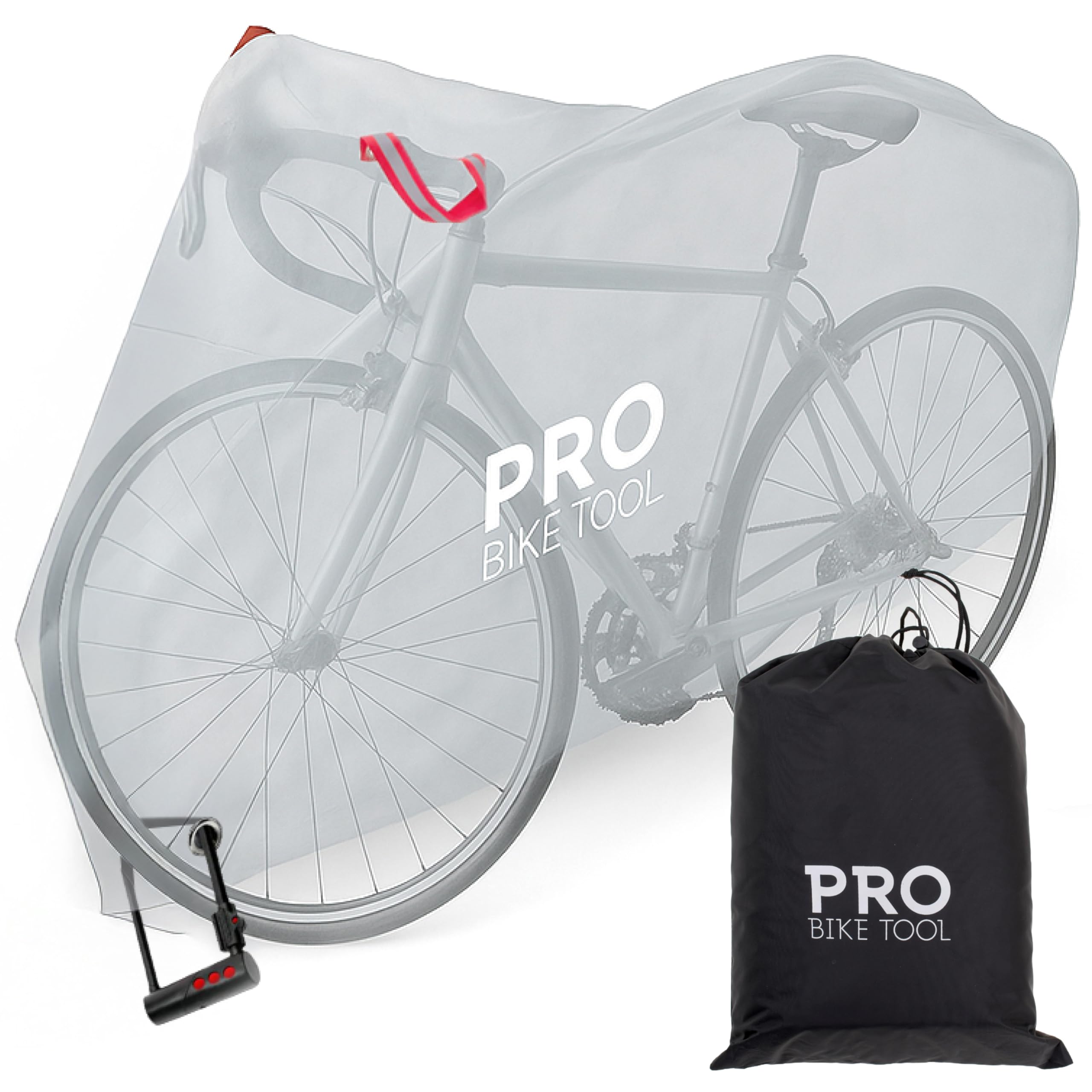
I used the clear 0.15mm PVC cover when I wanted visibility and simple waterproof protection for a single bike, including long trips.
Why I picked it: Clear PVC lets you see the bike, with heat-welded seams, reflective loops, and wheel-fit toggles.
Best for: People who want to inspect a stored bike without removing its cover, and indoor/outdoor storage.
A straightforward, budget-friendly transparent option.
Pros
- Clear PVC shows the bike underneath
- Heat-welded seams for water resistance
- Reflective safety loops
- Chain hole rings and buckle strap
- Wheel-fit rope and toggles
Cons
- Rubbery texture can be awkward to handle
- Very snug fit; size up if unsure
My take
I took the transparent PRO BIKE TOOL cover on a long road trip and appreciated being able to check my bikes without removing the cover. The 0.15mm PVC felt tougher than cheap vinyl and handled the elements well.
Heat-welded seams and multiple straps — two lower bike straps and top straps — kept the cover tight and reduced flapping. The wheel-fit toggles and chain hole rings made a secure installation easy, even when I mounted two heavy e-bikes during travel.
The material has a rubbery feel that takes a minute to get used to when pulling the cover on. I also found a tight fit can be hard to get on and off, so I recommend ordering one size up if you’re between sizes and adding a soft sock over sharp parts to avoid chafing the cover.
Overall, the transparency plus solid seam work makes this a practical choice when you want visibility and dependably sealed protection.
3. TeamObsidian 210D Ripstop Bike Cover – Best for Stationary E‑bikes
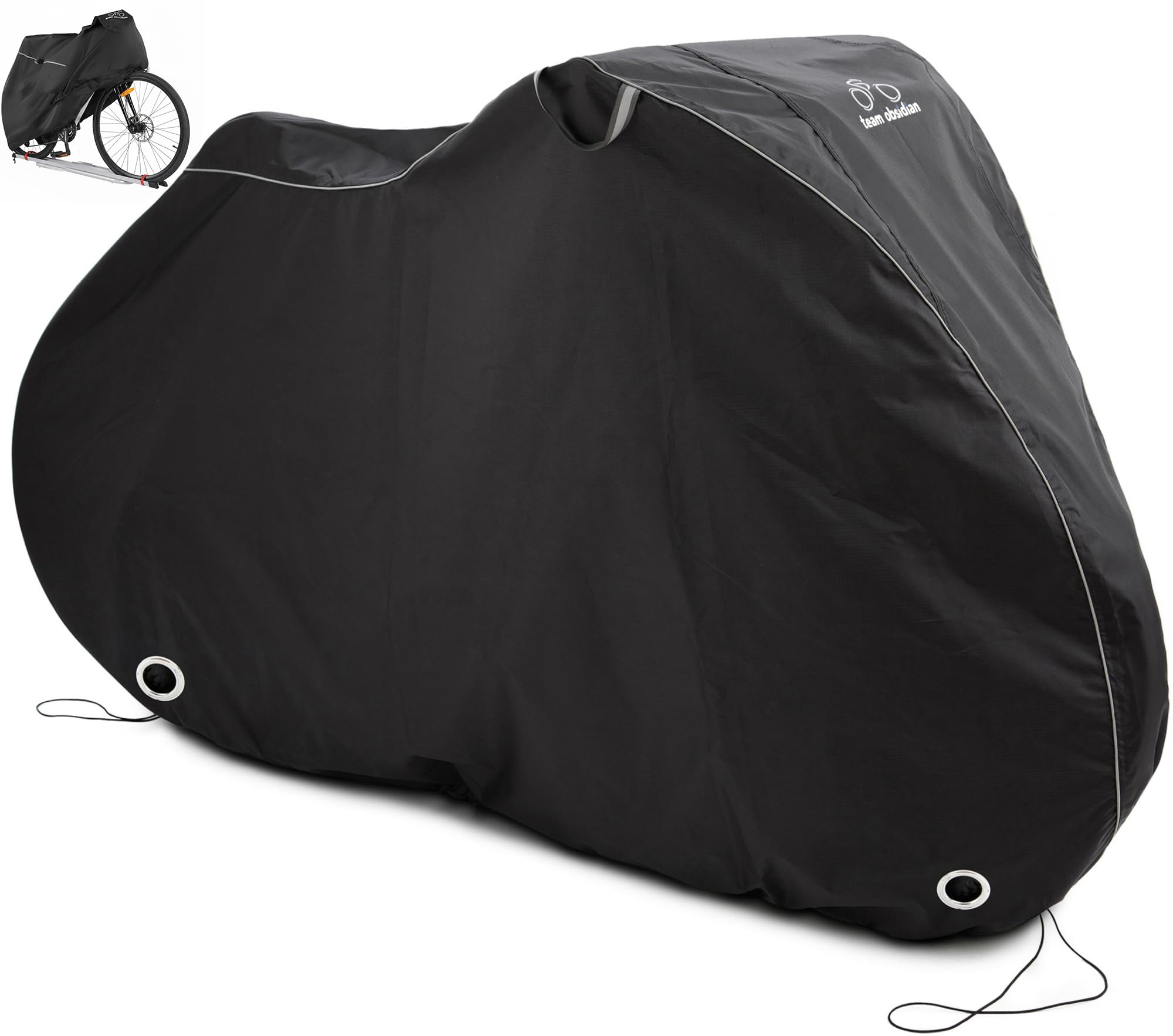
I used this ripstop 210D cover on deck and garage bikes; it offered robust PU-coated protection and a confident fit for my e-bike.
Why I picked it: 210D ripstop with PU coating, lock holes, reflective straps, and easy top handles for daily use.
Best for: Stationary outdoor or garage storage of e-bikes and heavy bicycles.
Good mid-range value with a longer warranty option.
Pros
- Ripstop 210D tent material
- PU waterproof coating
- Front and back lock holes
- Reflective straps and top handles
- Available sizes for large e-bikes
Cons
- Not intended for transport on racks
- Bulkier than lighter covers
My take
I kept my e-bike covered on a third-floor deck and the TeamObsidian held up to sun, wind, and occasional rain. The ripstop 210D material with PU coating felt tough and waterproof without being overly heavy.
Removing and replacing the cover was straightforward thanks to the top handles, and the front/back lock holes made securing the bike easy. The reflective straps added welcome visibility in low light.
This cover is designed for stationary storage rather than hitch-mounted transport; I didn’t attempt long-distance rack travel with it. For regular outdoor parking or garage use, the build and available sizes make it dependable.
I also appreciated the warranty extension option offered by the brand, which gave me added confidence in long-term use.
4. Topcrown 210D Bike Cover (XL for 1 Bike) – Best Budget
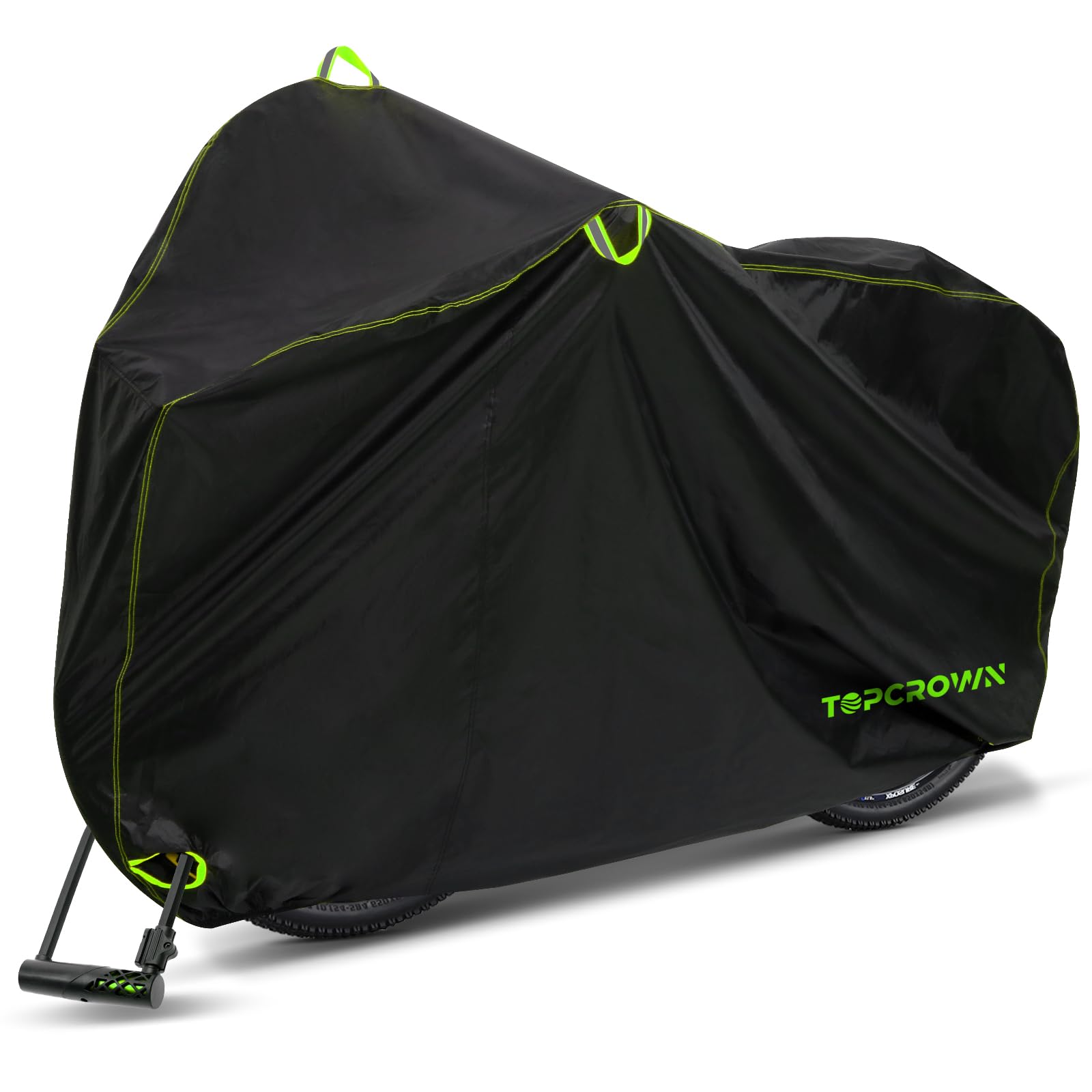
I used this affordable 210D cover for single-bike protection and found it to be lightweight, water-resistant, and a solid value — with some caution around thin spots.
Why I picked it: 210D multi-layer fabric with PU and anti-UV coating, elastic base, and wheel buckles for wind resistance.
Best for: Budget-conscious riders who need decent protection for a single bike.
An affordable choice that balances weight and weather protection.
Pros
- 210D fabric with PU and anti-UV coating
- Elastic hem and wheel buckles for wind hold
- Woven lock hole to protect paint
- Stylish green accents
- Includes storage bag
Cons
- Material can be thin and tear-prone
- Not recommended for transport on racks
My take
For the price, the Topcrown cover offers surprising protection: the multi-layer 210D with hydrophobic and PU coatings kept my mountain bike dry through several showers.
I liked the elastic hem combined with front and rear wheel buckles; once cinched, the cover resisted wind better than other cheap covers I’ve tried. The woven lock hole is a thoughtful touch to avoid metal-on-paint abrasion.
My only real gripe was a small tear after a couple of months of use in a windy spot. The fabric is lighter than the 600D option and needs a bit more care when putting on and taking off. If you handle it gently and avoid rubbing it over sharp edges, it’s an excellent budget pick.
If you need long-term heavy-duty performance or transport-grade durability, step up to thicker material. For single-bike static storage on a patio or in a garage, this delivers solid value.
How I Choose an Outdoor Bike Cover
Key features I check first
When I evaluate a cover I focus on material weight, waterproofing method, and reinforcement points. Heavier denier fabrics (like 600D) last longer in sun and high wind, while 210D options balance weight and cost.
I always look for reinforced stitching, bar-tack points, or heat-welded seams — those details make a real difference in how a cover handles repeated use.
- Denier and coating: higher denier + PU coating = longer life
- Seams: heat-welded or double-stitched seams resist leaks
- Security: lock holes and reinforced grommets protect frames
- Wind control: adjustable buckles, elastic hems, and wheel straps stop flapping
Sizing and fit tips I use
I measure bike length, handlebar width, and wheel diameter before ordering. If I’m between sizes I choose the larger size for easier on/off and to avoid stress on seams.
For hitch-mounted transport, I verify the cover’s transport designation and allow extra room so taillights aren’t obscured.
- Measure with accessories attached (baskets, fenders, windshields)
- For two-bike covers, place bikes side-by-side as recommended
- Size up for heavy e-bikes or fat-tire bikes
Materials and durability I trust
I prefer thicker fabrics like 600D for long-term outdoor exposure; they resist UV breakdown and tearing better. For short-term or indoor use, 210D or PVC can be a lighter, cheaper option.
Transparent PVC is handy when I want to see the bike without removing the cover, but it can be stiffer to handle and heat-sensitive in direct sun.
- 600D: best for heavy-duty outdoor and transport
- 210D: good on decks and garages, lighter and more affordable
- PVC: transparent option that shows the bike under cover
Security and wind management I recommend
Covers with multiple buckles, wheel straps, and elastic hems hold up better in wind. I always loop a cable lock through a lock hole if I leave a bike unattended.
Reflective strips and dedicated lock holes are small details that matter for safety and convenience.
- Use lock holes to secure the bike inside the cover
- Cinch all buckles and tuck excess material to reduce flapping
- Add auxiliary lights for transport if a cover might block taillights
Care and maintenance I follow
I clean covers with mild soap and water, let them air-dry fully before folding, and store them in their bag to avoid mildew. Avoid folding while wet.
Inspect seams and grommets periodically and patch small tears early to extend useful life.
- Wash gently; avoid harsh detergents
- Dry completely before storage
- Patch small holes to prevent larger rips
Frequently Asked Questions
Can I use these covers while transporting bikes on a hitch rack?
Yes, but only the covers rated for transport. I used the Puroma 600D specifically on a hitch rack and found it suited for travel. Other covers in this roundup are intended for stationary storage and aren’t designed for prolonged rack transport.
Should I size up or down when ordering a cover?
I usually size up when between options. A slightly larger cover is easier to put on and reduces stress on seams; a tight cover can be hard to handle and increases wear on the fabric.
How do I prevent covers from flapping in the wind?
I always use all available buckles, cinch the elastic hem, and secure wheel straps. For extra protection during storms I tuck the cover under the wheels and add a cable lock through the lock holes to anchor the bike.
Are transparent PVC covers durable enough for long trips?
I used a transparent PVC cover on a long cross-country trip and appreciated the visibility and seam strength. The PVC I tested held up well, but I’d still recommend checking for rubbing points and sizing up for an easier fit.
Final Take
My pick depends on how and where you store your bike: choose the Puroma 600D for transport and heavy exposure, the PRO BIKE TOOL PVC if you want visibility, TeamObsidian for stationary e-bike protection, and Topcrown for budget single-bike storage.
I focused on real-world fit, materials, and fastening systems so you can match the cover to your bike and storage situation. With the right size and a few anchoring straps, any of these will keep your bike ready to ride.
