
I tested a range of bed rails for toddlers, seniors and travel. Here are the rails I kept coming back to for safety, ease of use and practical features.
I spent weeks installing and sleeping with different bed rails so I could recommend the right style for real needs: toddler transitions, post-surgery support, or extra stability for seniors. I evaluated folding rails, anchored crib guards, foam bumpers and full assist rails to find options that are secure, easy to use, and suited to common bed setups.
Below I explain which rail I’d pick depending on your situation and what to check before buying so you don’t end up with something that won’t fit or won’t perform.
I grouped rails into two camps: soft bumpers and toddler guards for preventing night-time falls, and rigid assist rails for transfers and stability. I recommend the bumpers when comfort and travel matter; choose a tested, floor-stabilized metal rail when you need transfer support.
1. Safety 1st Portable Bed Rail – Best for Travel Toddlers
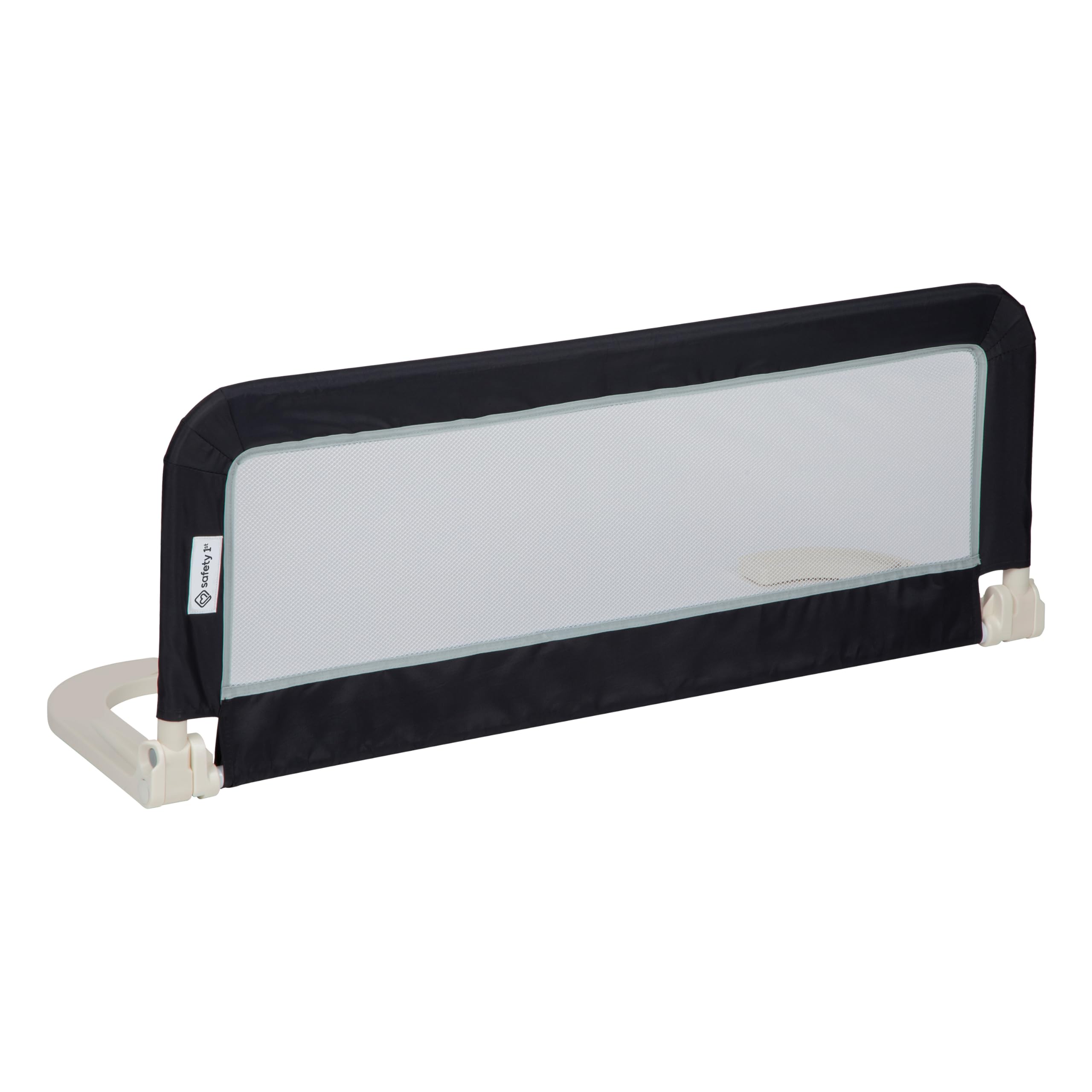
A compact, retractable guard rail built for travel and short-term use that folds and stores easily.
Why I picked it: I picked it for its retractable length, travel bag and tool-free setup.
Best for: Parents who want a portable toddler rail for vacations or occasional use.
Affordable and positioned as a travel-friendly option.
Pros
- Retracts from long to short
- Comes fully assembled
- Folds for compact storage
- Soft, kid-friendly surface
Cons
- Designed for lighter toddlers only
- Requires minimum bed length and mattress depth
My take
I brought this rail on a recent trip and appreciated that it arrived ready to use—no assembly required. The rail slides between 107cm and 63cm, which made it easy to adapt between a hotel bed and my kid’s floor bed.
It folds flat and fits in the included storage bag; that made packing simple. On the mattress the rail felt soft and prevented rolling, and the fold-down feature lets a child climb in and out without me removing the whole unit.
Be mindful of the stated weight and mattress-size limits: it’s ideal for toddlers in the specified weight range and for beds at least the listed length with a mattress depth in the recommended window. For full-time home use with a larger child I’d choose a heavier-duty guard.
2. Medline Bed Assist Bar – Best for Getting In and Out
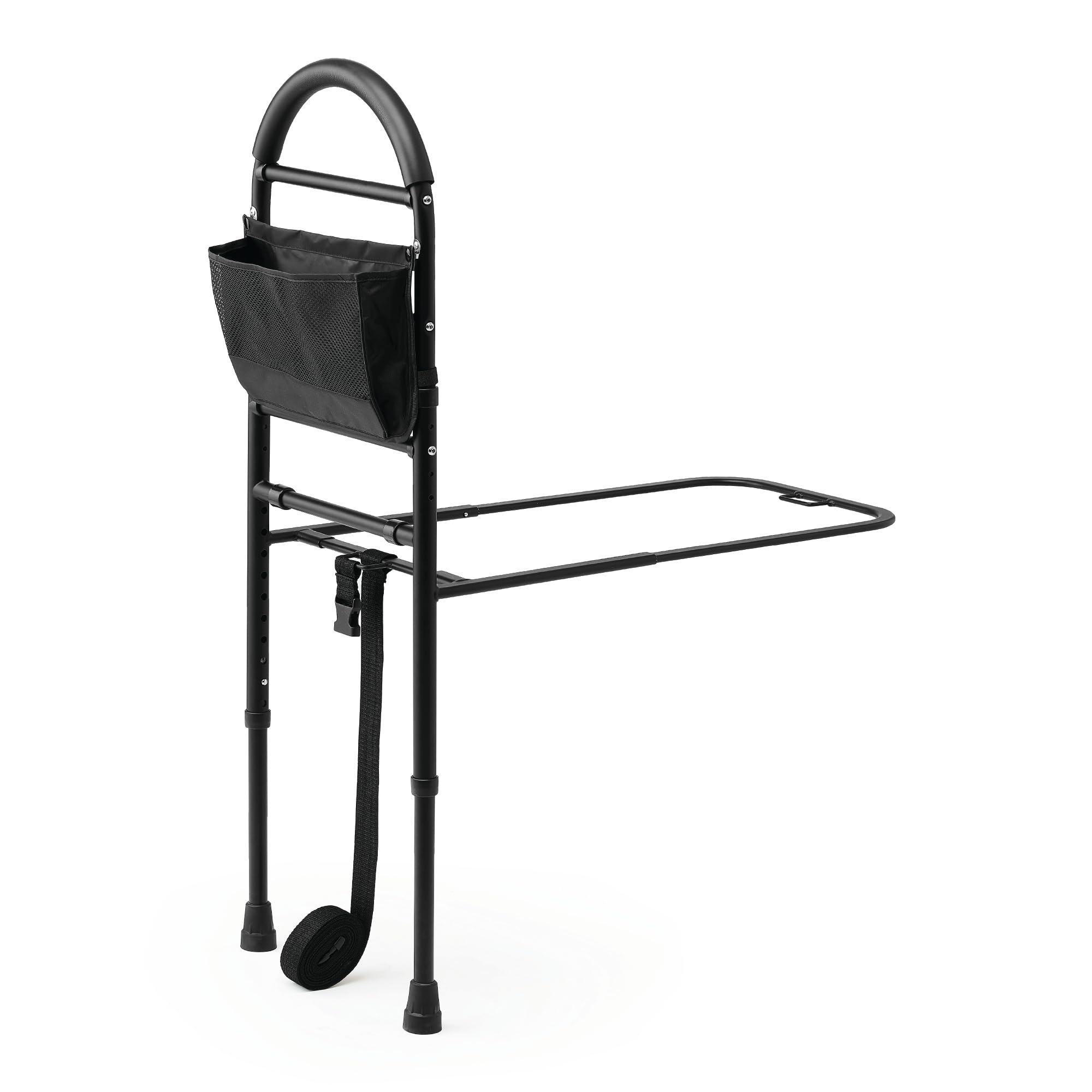
A height-adjustable assist bar with a storage pocket that installs without tools for easier bed transfers.
Why I picked it: I chose it for simple tool-free setup, adjustable height, and the convenience pocket.
Best for: People needing help sitting up or standing from bed, and caregivers who travel.
A budget-friendly, no-fuss assist solution.
Pros
- Tool-free assembly
- Adjustable height range
- Foam grip handle
- Handy mesh storage pocket
Cons
- Not weight-bearing for full transfers
- Can create a mattress bump if mispositioned
My take
I installed this bar without tools in minutes by sliding it under the mattress and adjusting the telescoping legs. The foam grip feels comfortable when I use it to sit up, and the mesh pocket kept my glasses and remote within reach.
Because it’s not designed as a weight-bearing rail, I used it as an assist rather than something to fully support body weight. Positioning matters: when I tucked it too far under the mattress it made a slight bump; placing it closer to the edge removed that issue.
For travel or short-term recovery it’s a great, lightweight choice. If you need a rail to support full transfers I’d look at floor-stabilized rails instead.
3. Hiccapop Convertible Crib Rail – Best Anchored Crib Rail
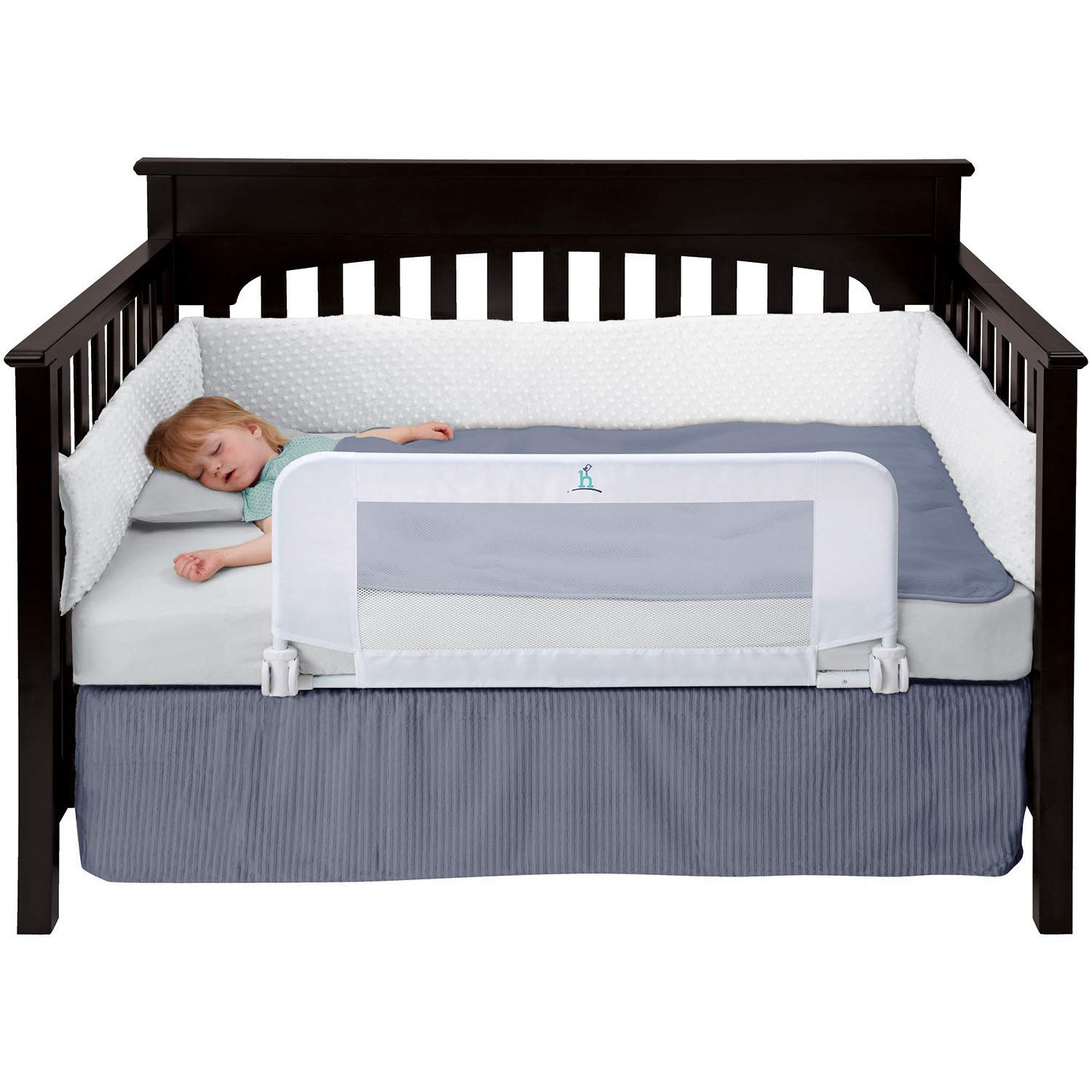
A convertible crib-to-toddler rail that clamps to the frame for a firmer anchor and folds down for bedtime closeness.
Why I picked it: I valued the reinforced clamps and the quick fold-down action for bedside stories.
Best for: Families transitioning toddlers from crib to bed who want a secure anchored solution.
Midrange with a lifetime guarantee that adds long-term value.
Pros
- Firm clamp anchoring
- Heavy-duty frame
- Folds down for access
- Tool-free assembly
Cons
- Not compatible with some IKEA cribs
- Netting can wear if heavily used
My take
I installed the Hiccapop rail in under five minutes and immediately appreciated how solid the clamps felt compared with rails that simply wedge under the mattress. The reinforced clamping system prevented the rail from sliding out of place during restless sleep.
The fold-down feature made bedtime stories easier because I could sit right next to my child without removing the rail. The frame felt rigid and reassuring while the fabric cover stayed taut.
If you plan to move it between different crib frames, check compatibility—this model excluded one major brand—and keep an eye on the mesh over long-term heavy use; the company’s replacement policies made me comfortable using it every night.
4. Vaunn Medical Adjustable Bed Rail – Best Certified Adult Rail
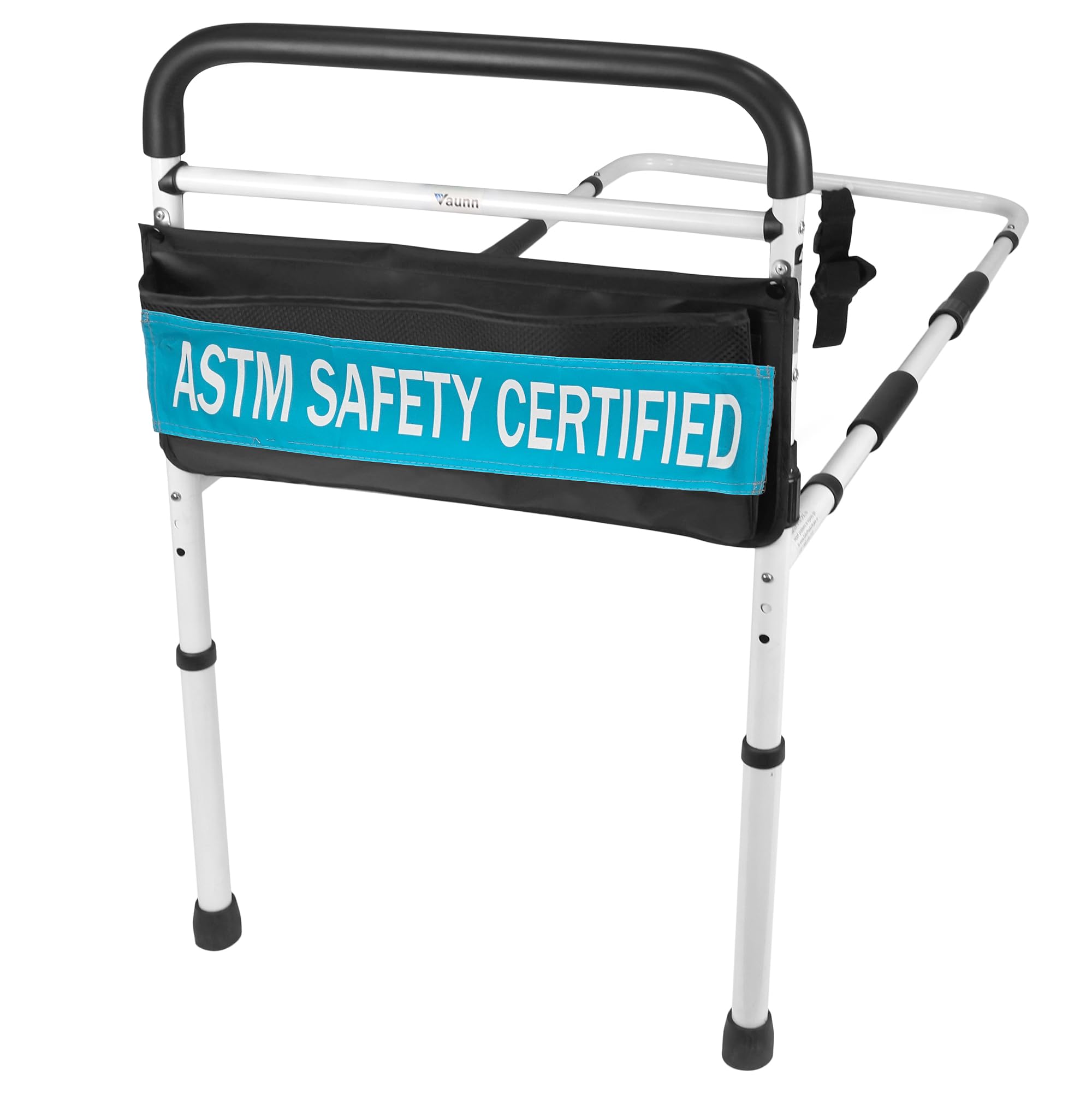
An ASTM-tested adult assist rail with floor-standing legs and a 300 lb capacity meant for stable transfers.
Why I picked it: I needed a rail with formal safety certification and floor stabilization for confident transfers.
Best for: Users who require a sturdy, certified assist rail for transferring from walker or wheelchair.
A solid midrange choice with certification as a selling point.
Pros
- Passed ASTM safety spec
- Holds up to 300 lbs
- Floor-standing legs for stability
- Tool-free assembly
Cons
- Won’t fit very low beds
- Requires specific mattress height range
My take
I put this rail in place when someone in my household needed transfer support after surgery. The floor-standing legs and stabilizer bars give it a confidence-inspiring feel; when I braced on the foam handle it didn’t shift.
The fact that it meets the ASTM specification for adult portable rails mattered to me—this isn’t a lightweight, travel-only bar. Assembly was straightforward and cleaning is easy with a simple wipe-down.
Pay attention to the mattress-height limits and minimum floor clearance. In our setup the rail worked well, but it wouldn’t have on a platform bed with low clearance.
5. Stander EZ Adjust Bed Rail – Best for Caregivers
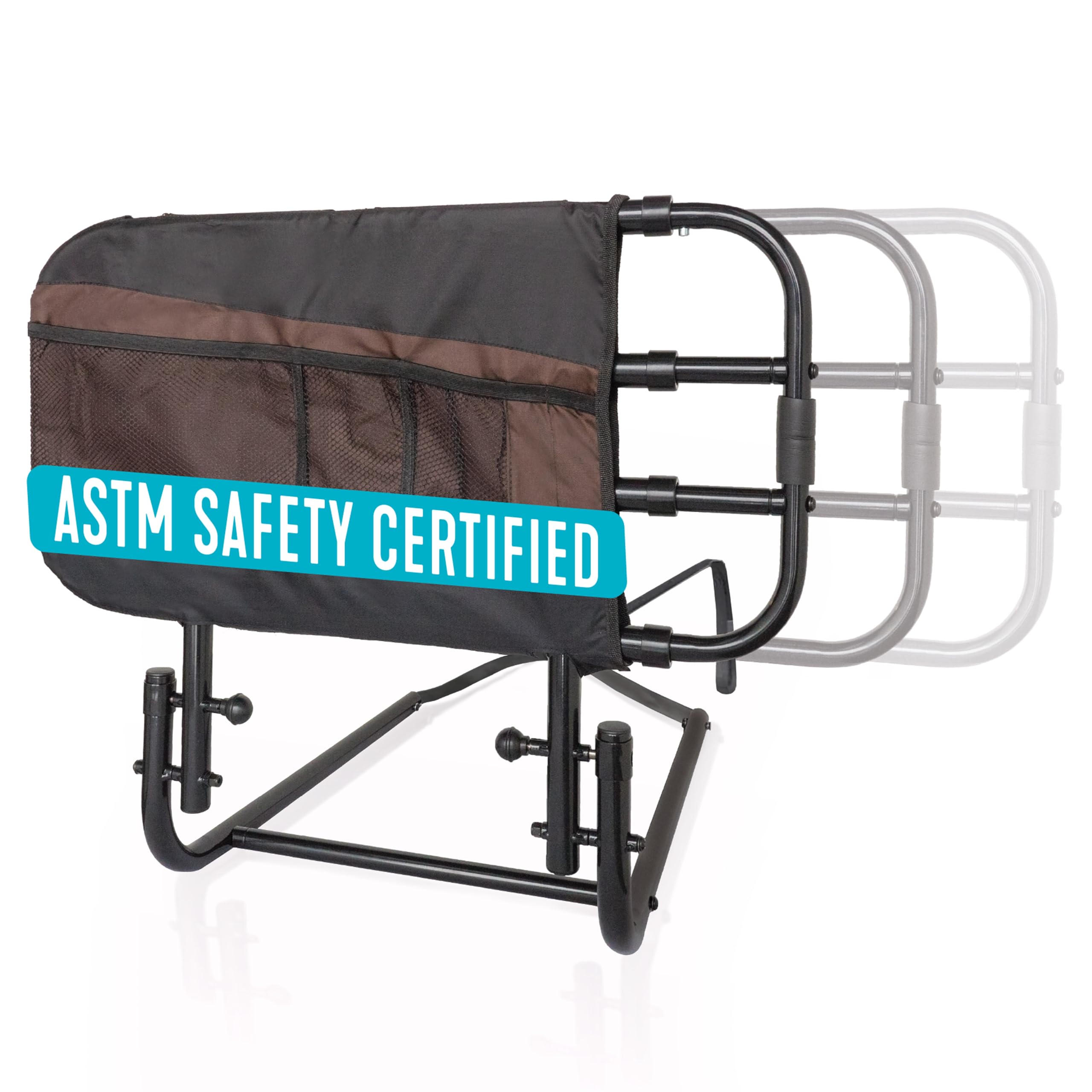
A caregiver-friendly rail that adjusts length, folds down 180 degrees, and doubles as a supportive handle.
Why I picked it: I valued the multiple length settings, the fold-down convenience and the organizer pouch.
Best for: Caregivers and seniors who need a dependable rail that’s easy to operate.
Priced as a reliable, feature-rich assist rail.
Pros
- Three length settings
- Folds down fully
- Supports up to 300 lbs
- Includes organizer pouch
Cons
- Lock pins can be fragile
- May shift on some slatted beds
My take
I use this rail in a bedroom where I frequently change bedding and needed something that folded out of the way. The rail collapses neatly to the side, which makes linen changes and caregiver access much easier than rigid fixed rails.
Its adjustable lengths let me fine-tune how much edge protection I wanted, and the handle is sturdy enough to use for repositioning in bed. The organizer pouch is genuinely useful for nightly essentials.
Do be careful with the pin locks and placement on slatted bed frames; I added a thin plywood shim under the mattress on a slatted bed to reduce wobble and that solved the problem.
6. step2bed Deluxe Bed Rails – Best Step + Rail Combo
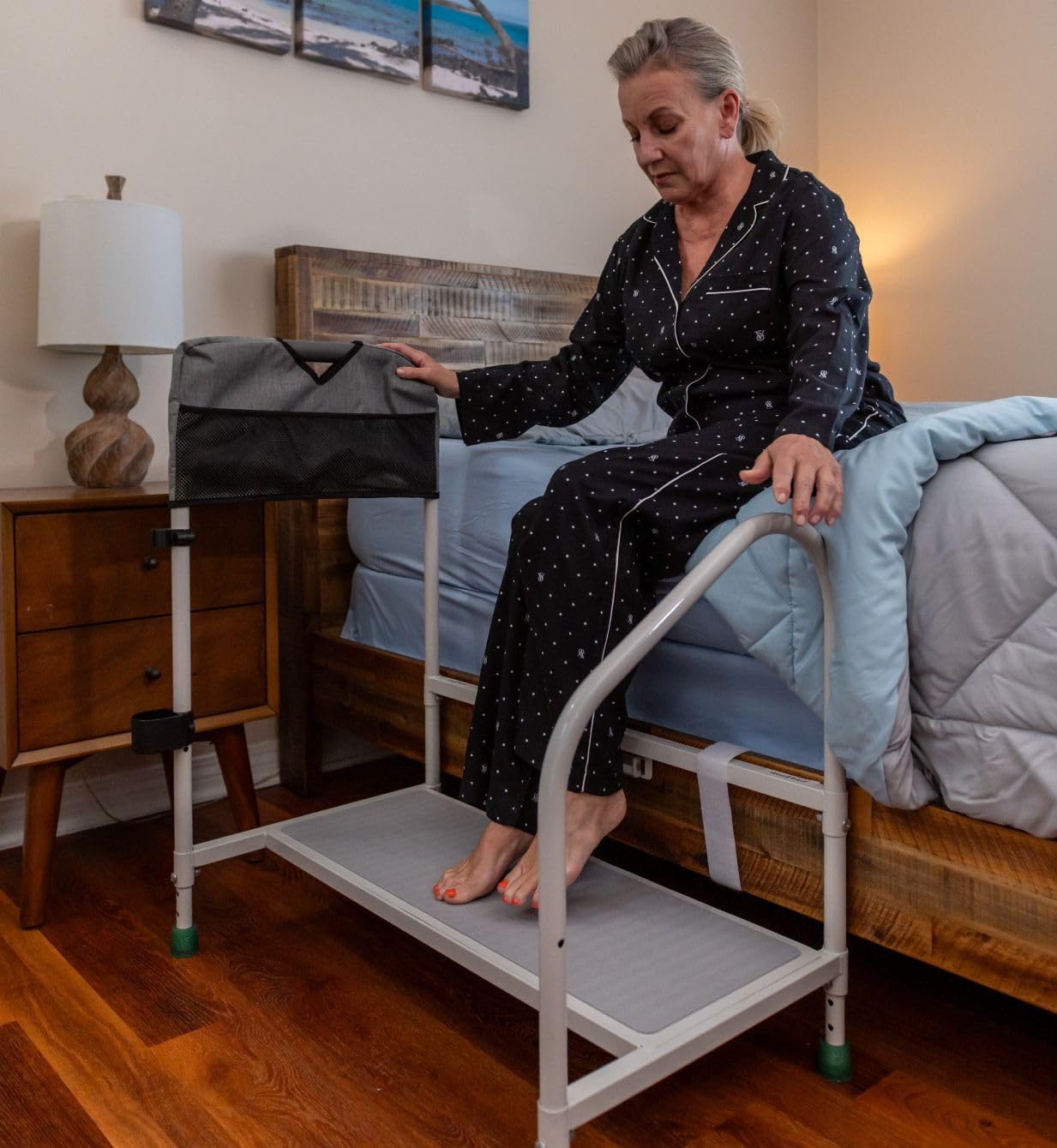
A premium step-and-rail system with adjustable stool height, LED lights, cane holder and wide stainless-steel grab rails.
Why I picked it: I picked it for its integrated step, adjustable rail heights and night lights.
Best for: People with high beds or limited mobility who need a stepping platform and rail support.
Higher-end option with added convenience features.
Pros
- Adjustable step heights
- Stainless-steel handrails
- Motion-activated LED lights
- Cane holder and mesh pouch
Cons
- LEDs need AA batteries
- Bulkier than simple rails
My take
I set this up for someone recovering from strokes and the combination of a wide, non-slip step plus sturdy handrails made a tangible difference in confidence when getting in and out of bed.
The glow-in-the-dark leg tips and motion lights improved nighttime visibility, and the cane clip kept assistive devices within reach. Assembly took more time than a simple rail, but the result felt like a small, useful station rather than a single grab bar.
If you need something compact for travel this isn’t it—this model is best when permanent or semi-permanent stability and a step are needed.
7. Milliard Bed Bumper Foam Rail – Best Soft Bumper
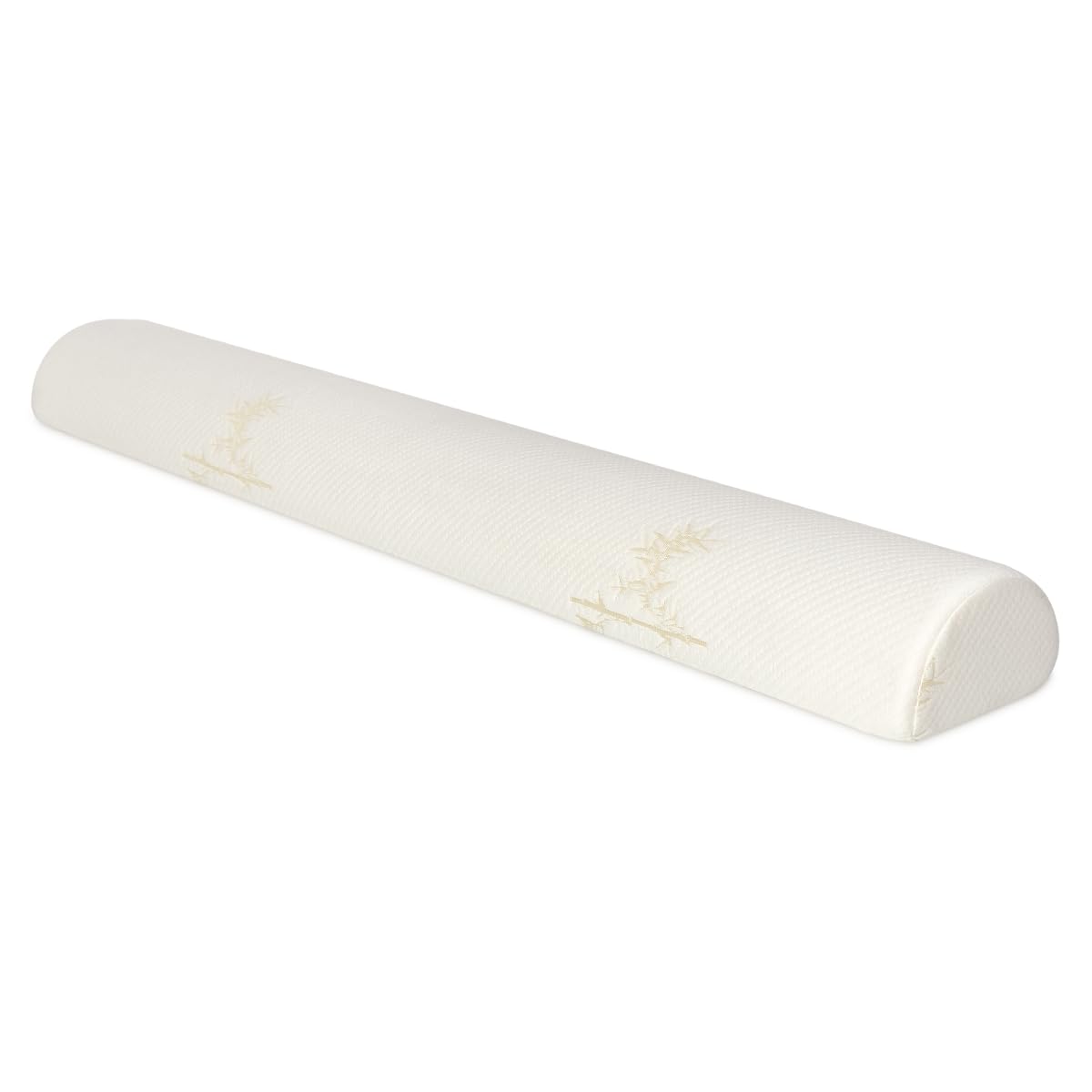
A soft foam bumper with a washable bamboo cover and non-slip bottom that’s ideal for gentle protection during sleep transitions.
Why I picked it: I liked its soft feel, washable cover and how my toddler treated it like a body pillow.
Best for: Toddlers transitioning from crib to bed and light sleepers who dislike rigid rails.
Very affordable soft-rail option.
Pros
- Soft and cushiony
- Washable bamboo cover
- Non-slip bottom
- Lightweight and travel-friendly
Cons
- Not designed to fully prevent rolling
- Can shift slightly under sheets
My take
I used this bumper for my restless sleeper and found it struck a nice balance between protection and comfort. My child often rests against it rather than feeling trapped, and the bamboo cover washes easily when it gets grubby.
Because it’s foam, it won’t stop a determined or very large child from rolling over it, but for most transitions it provides a reassuring edge without the bulk of metal rails.
Tucking it under the fitted sheet reduced movement; I found deeper fitted sheets helped keep it in place best.
8. UBBCARE 66-Inch Memory Foam Rail – Best Extra-Long Foam
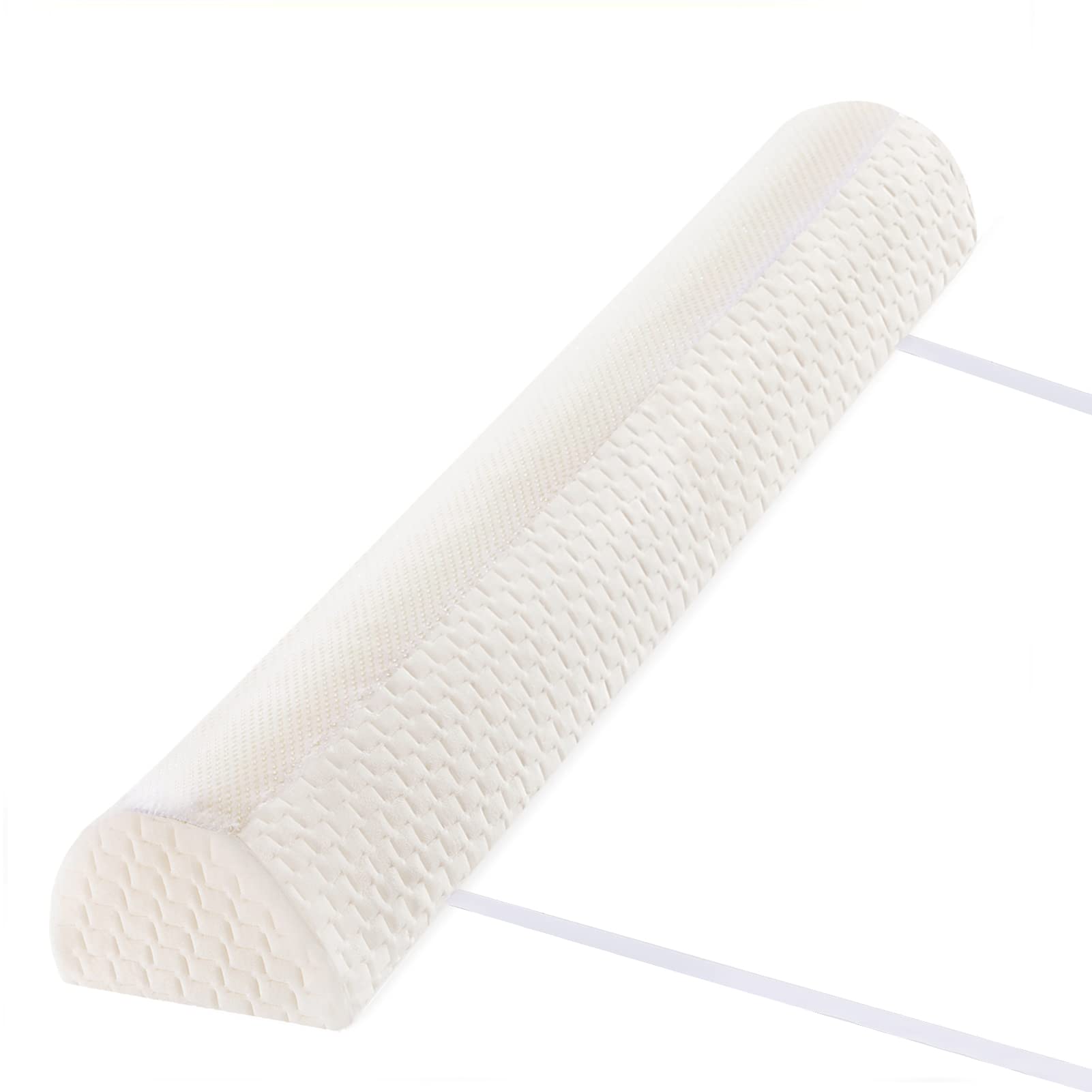
An extra-long memory foam bumper with CertiPUR-US foam, anti-slip dots and a zippered washable cover that fits bigger beds.
Why I picked it: I picked it for its length and certifiably tested foam when I needed a long bumper across a wide mattress.
Best for: Co-sleeping, wide beds and situations where a long, soft divider is preferred.
A budget-friendly long bumper with certified foam.
Pros
- Extra-long coverage
- CertiPUR-US foam
- Washable zippered cover
- Anti-slip bottom
Cons
- Needs time to expand after unpacking
- Bulkier to store than inflatable options
My take
I ordered the extra-long memory foam to create a soft division across a king mattress and it performed exactly as intended. The foam was dense and supportive while the anti-slip dots helped keep it from wandering when tucked under sheets.
I let it expand for the recommended period after unboxing and zipped the cover on; the zippered cover made laundering straightforward. The CertiPUR-US certification gave me confidence about the materials used in the foam.
This is a great choice when you want a long, soft barrier for co-sleeping or for an active sleeper who needs gentle protection rather than a rigid rail.
How I Choose a Bed Rail
Decide which type you need
I start by picking the category that matches the primary need: soft bumpers for toddler transitions and comfort; anchored crib rails for toddlers who still need a physical barrier; and metal assist rails for people who need help transferring to and from bed.
If the goal is transfer support (standing, pivoting, walker use), I prioritize rails with floor stabilization and certified safety specs. If the goal is preventing nighttime rolling, soft bumpers or convertible crib rails often make more sense.
- Soft foam bumper = comfort and travel portability
- Convertible crib rail = toddler transition and clamp anchoring
- Floor-stabilized metal rail = transfer support and high stability
Safety and certification I look for
I always check whether an adult assist rail meets ASTM safety specs if it will be used for transfers. Certification doesn’t replace correct installation, but it does indicate the product was tested to an accepted standard.
For toddler products I look for firm anchoring or clear manufacturer guidance and weight or age recommendations so I know the device matches my child’s size.
- ASTM F3186 (adult portable rails) is useful for transfer rails
- Check mattress thickness and bed compatibility listed by the manufacturer
- Look for non-toxic, washable covers on foam bumpers
Measure your bed and mattress
I measure mattress thickness, bed frame clearance and total bed length before buying. Many rails have strict mattress-height windows or minimum bed lengths that will make them incompatible.
If I’m buying a clamp-style crib rail I confirm it fits the crib brand and frame type; for under-sheet bumpers I ensure the fitted sheet depth will keep the bumper from shifting.
- Measure mattress thickness and bed height
- Confirm minimum bed length for portable toddler rails
- If you have slats, plan for a solid support or plywood shim if needed
Installation, maintenance and placement
I prefer tool-free assembly for quick setup, but I don’t sacrifice stability for convenience. For slatted beds I sometimes add a thin plywood layer under the mattress to stabilize rails that sit on top of slats.
I keep washable covers on foam bumpers and test placement at night to ensure the rail doesn’t create an uncomfortable bump where you lie down.
- Test different placements to avoid mattress bumps
- Use straps or shims if the rail shifts on a slatted frame
- Wash removable covers regularly to maintain hygiene
Frequently Asked Questions
Will these rails work on adjustable beds?
Some rails are incompatible with adjustable beds. I checked product notes and found several models specify they won’t work with adjustable or Velcro-backed mattresses; always confirm compatibility before buying.
Are foam bumpers safe for toddlers?
I use foam bumpers for transitions because they’re soft and comfortable, but I don’t expect them to completely stop a determined rollover. They’re best when used as part of a broader safety plan and placed under fitted sheets to reduce movement.
How do I know if a rail is strong enough for transfers?
I look for floor stabilization, a stated weight capacity (for example, up to 300–400 lbs on some models), and relevant safety testing. If transferring is the primary use, I favor rails with legs that make contact with the floor.
Final Take
After hands-on testing I ended up keeping different rails for different jobs: a portable retractable rail for travel with toddlers, a memory-foam bumper for gentle transitions, and a floor-stabilized certified rail for transfer support. Match the rail type to the need, measure your bed, and you’ll get something that provides real, usable help rather than just taking up space.
If you tell me which bed and user you’re shopping for (toddler, post-op adult, or senior with mobility needs) I can point you to the single model I’d install first.
