
I tested a range of portable coffee makers so I could drink proper coffee on the trail. These are my picks for the best balance of flavor, weight, durability, and cleanup.
I’ve made coffee from a stove-top percolator, a bulky French press, multiple AeroPress iterations, and travel pour-overs on long backpacking trips. Over dozens of outings I learned that the right brewer for the trail isn’t just about taste — it’s about pack size, cleaning headaches, and how quickly I can get a hot cup when the morning is cold.
In this roundup I focused on portability, brew quality, cleanup, and durability. I kept each pick practical for real trips: lightweight options that nest into a mug, insulated presses that survive a fall, and simple pour-over systems that give consistent results with minimal fuss.
I compared these brewers side-by-side by making the same beans and grind on each device, timing brew and cleanup, and carrying each on at least two overnight trips to test packability and durability.
1. AeroPress Original Coffee Press – Best Overall
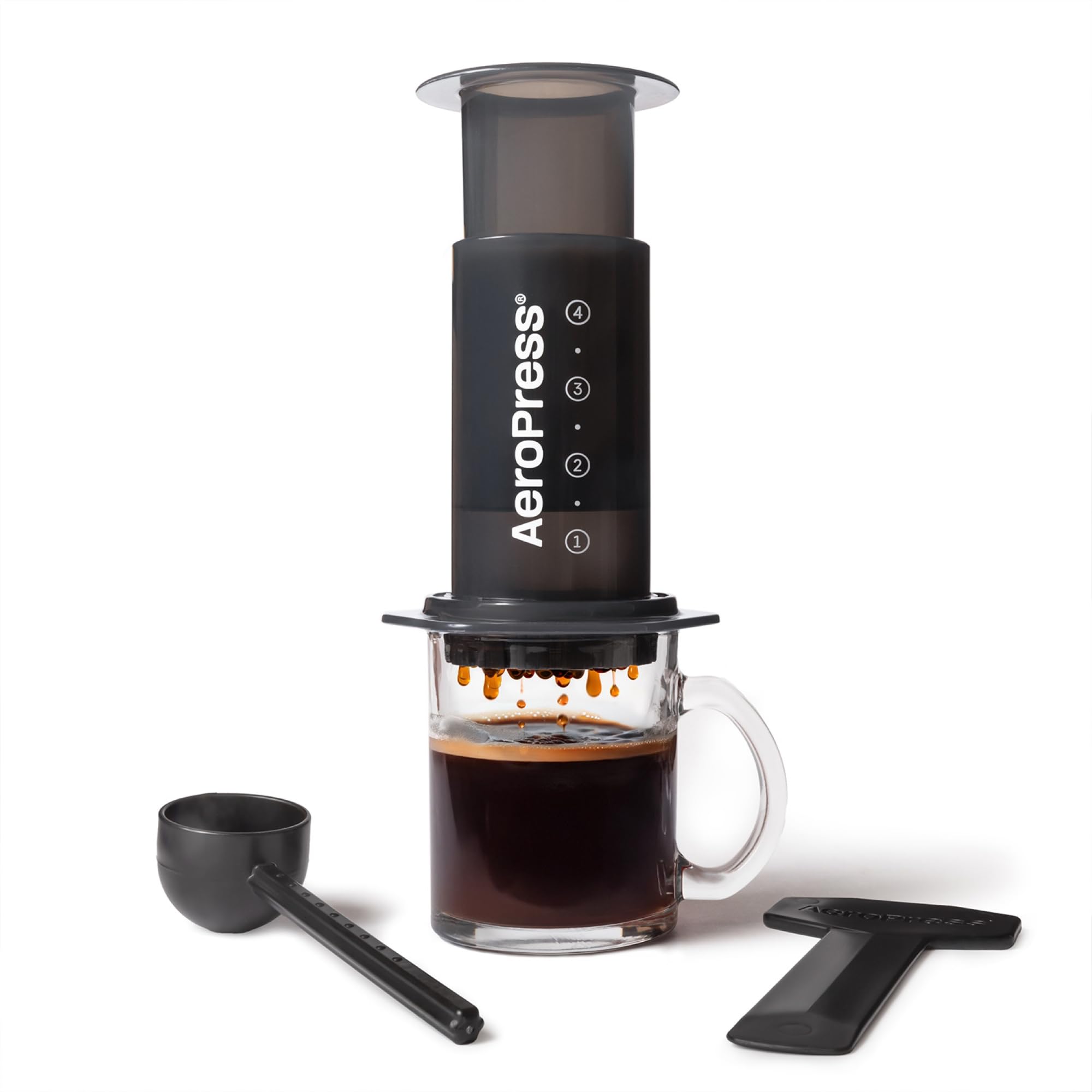
My go-to single-cup brewer that balances speed, control, and clean flavor.
Why I picked it: Versatile 3-in-1 brewing, very fast, and consistently clean cups.
Best for: Backpackers who want café-level control without weight or mess.
Affordable, great value for versatility and durability.
Pros
- Fast brews under two minutes
- Very portable and shatterproof
- Produces clean, low-bitterness coffee
- Easy to clean—grinds pop out
Cons
- Single-cup output
- Requires separate cup or mug
My take
I reach for the AeroPress when I want a no-fuss cup that still highlights the beans. It combines aspects of a French press, pour-over, and espresso-style extraction into one compact device, and that versatility is exactly why I keep it in my kit.
On trail mornings I can heat water, bloom grounds for 30 seconds, and press a finished cup in under two minutes. Micro-filtration and the short pressure push mean I get full flavor without bitterness or grit, and the spent puck ejects cleanly so I’m not lugging wet filters home.
I’ve used the AeroPress at home and on multi-day trips; it handles travel abuse well because it’s lightweight and nearly indestructible. If you like to experiment with grind, temperature, and brew time, this is the tool that gives you control without complexity.
2. AeroPress Go Travel Coffee Press Kit – Best Travel Kit
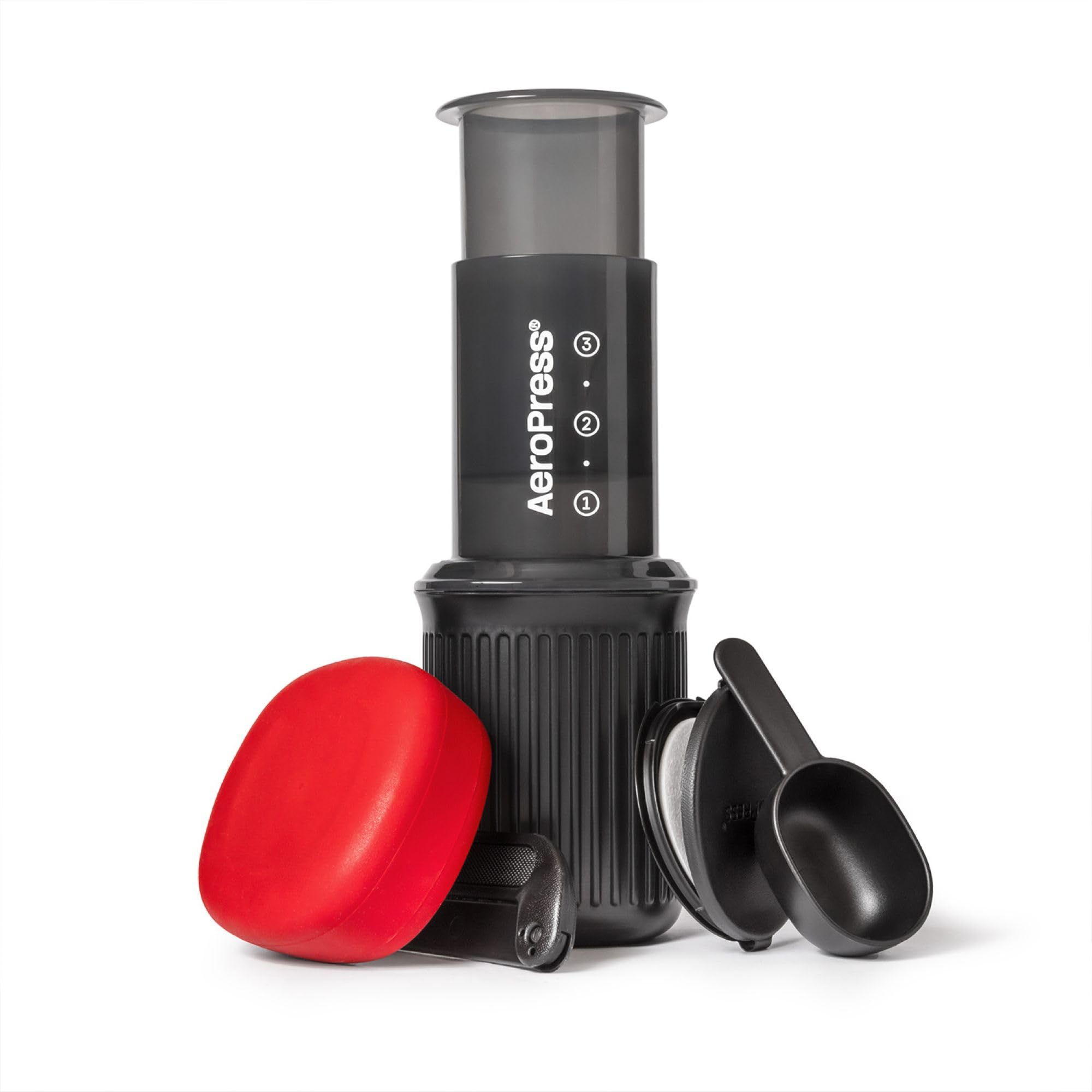
AeroPress performance packed into a mug that stores the press for true portability.
Why I picked it: All-in-one kit fits into its travel mug—excellent for multi-day trips.
Best for: Hikers and travelers who want a complete brewing kit that nests.
Mid-range travel option with thoughtful accessories.
Pros
- Press nests inside the mug
- Includes microwaveable mug and lid
- Fast, consistent cups
- Easy cleanup on the trail
Cons
- Small filter container
- Single-cup capacity
My take
The Go is the AeroPress I take when I’m flying or backpacking. The entire system packs into the supplied mug, so I have a stable vessel and storage all in one. That tiny bit of space savings makes a big difference when every ounce matters.
Brewing works the same as the Original: short steep, then press. I like that I can make hot or iced coffee quickly and that cleanup stays minimal — the puck comes out and a quick rinse is usually enough. I did notice the filter holder could hold more filters, but I’ve worked around that by carrying a small spare packet.
If you’re experimenting with a reusable metal filter or a flow-control cap, the Go adapts well. For me it’s the best compromise when I want AeroPress quality but need the brewer to fit inside my travel mug.
3. AeroPress Go Travel Coffee Press – Best Compact Choice
Compact and consistent — the Go that earns its spot in a small pack.
Why I picked it: Tiny footprint and reliable extraction for quick campsite coffee.
Best for: Short trips, hotel stays, and day hikes where space is limited.
Slightly pricier than the standard model but built for travel.
Pros
- Compact packing into mug
- Consistently clean cups
- Simple inverted method works well
Cons
- Only one cup at a time
- Accessory space is limited
My take
I’ve used the Go for months and it still performs like day one. The inverted method works great for dialing in extraction on the trail, and I appreciate that it’s microwave-safe when I’m staying in a rental cabin and want to reheat water quickly.
The unit’s durability stood out on multi-day hikes — no broken parts, and the silicone lid keeps things clean in my pack. For anyone who values a compact kit that doesn’t compromise taste, the Go is hard to beat.
4. Coffee Gator Stainless Steel French Press – Best Insulated French Press
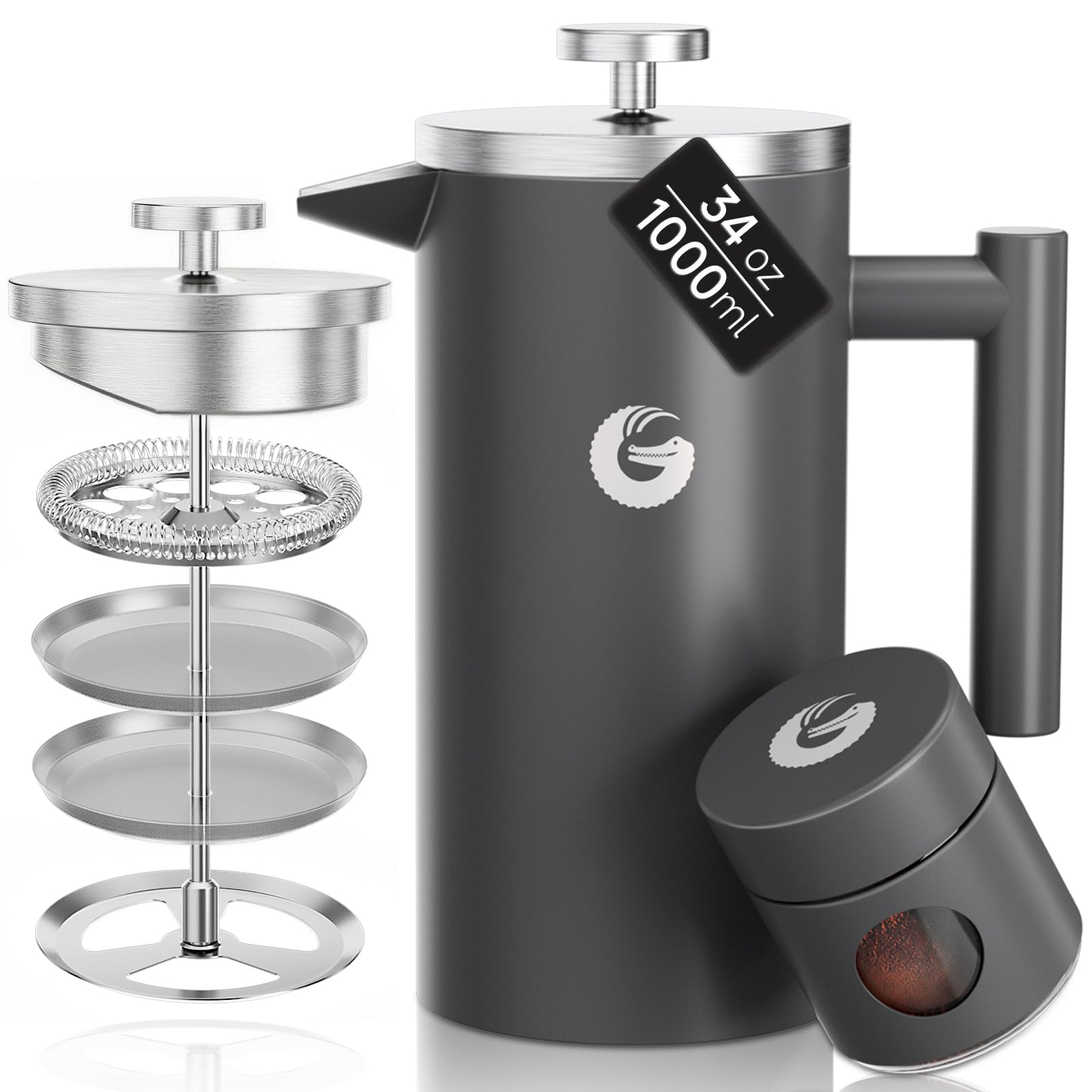
A heavy-duty insulated French press that keeps coffee warm and limits sediment.
Why I picked it: Double-wall insulation and multi-screen filtration for hotter, cleaner pots.
Best for: Car campers and boaters who want larger serves and long-lasting heat.
Good value for an insulated, durable press.
Pros
- Double-wall insulation retains heat
- Double-screen filtration reduces sediment
- Rust-resistant stainless steel
- Includes coffee storage jar
Cons
- Heavier than plastic devices
- Can feel bulky for solo hikers
My take
I brought this French press on several car-camping trips where I wanted multiple cups without reheating. The vacuum-layered body keeps coffee warmer far longer than a glass press, and the double-screen filter does a solid job of holding back fines while allowing oils to pass for a richer taste.
It’s clearly built to last — I’ve dropped similar glass presses before and the stainless unit survived without a scratch. The flip side is weight: I won’t carry this on long backpacking routes, but for camp-and-park outings it’s become my go-to when I want a few generous cups and minimal heat loss.
The included travel canister is a nice touch for keeping grounds tidy. Overall, this press gives the full-bodied French-press experience with fewer trade-offs for colder mornings.
5. OXO Brew Single-Serve Pour-Over – Best Simple Pour-Over
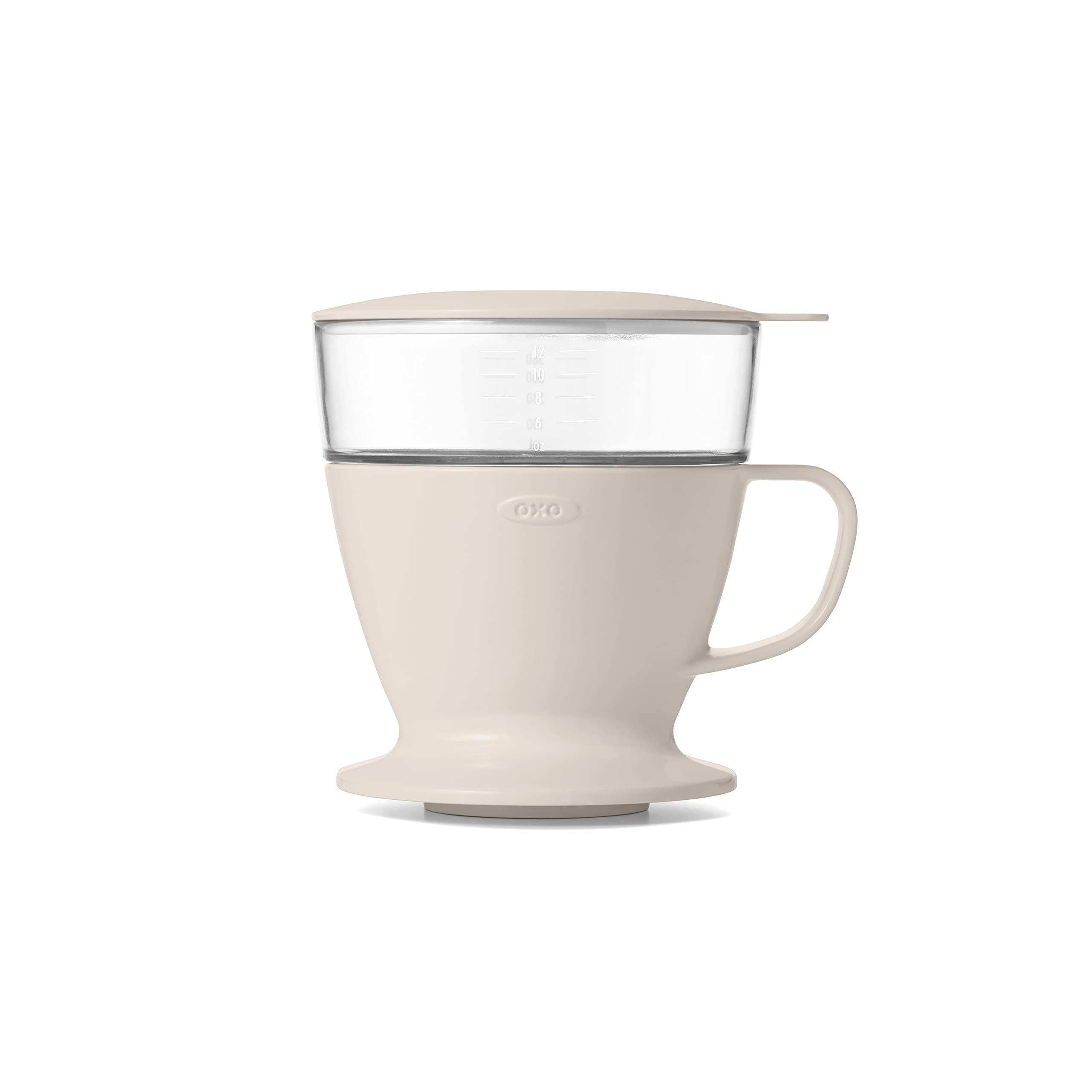
An easy, consistent pour-over that automates the water distribution step.
Why I picked it: Auto-drip tank evens the pour for predictable flavor with no fuss.
Best for: Anyone who wants pour-over taste without manual pouring technique.
Budget-friendly and great for daily single-cup use.
Pros
- Auto-drip tank ensures even extraction
- Measurement markings are helpful
- Comes with unbleached cone filters
- Very easy to clean
Cons
- All-plastic body feels less premium
- Not ideal for multi-cup brew
My take
When I want pour-over clarity but don’t want to stand and pour, the OXO system is perfect. I fill the reservoir, set it on a mug, and the tank controls water flow for a balanced extraction — I don’t need to perfect a circular pour.
The included unbleached filters make cleanup tidy, and the whole unit is light enough to slip into a travel bag if I’m heading to a cabin or hotel. The trade-off is that it’s fully plastic, so I avoid using it when I want a no-plastic taste profile, but for convenience and consistency it’s hard to beat.
6. Stanley All-In-One French Press – Best All-in-One Camp Pot
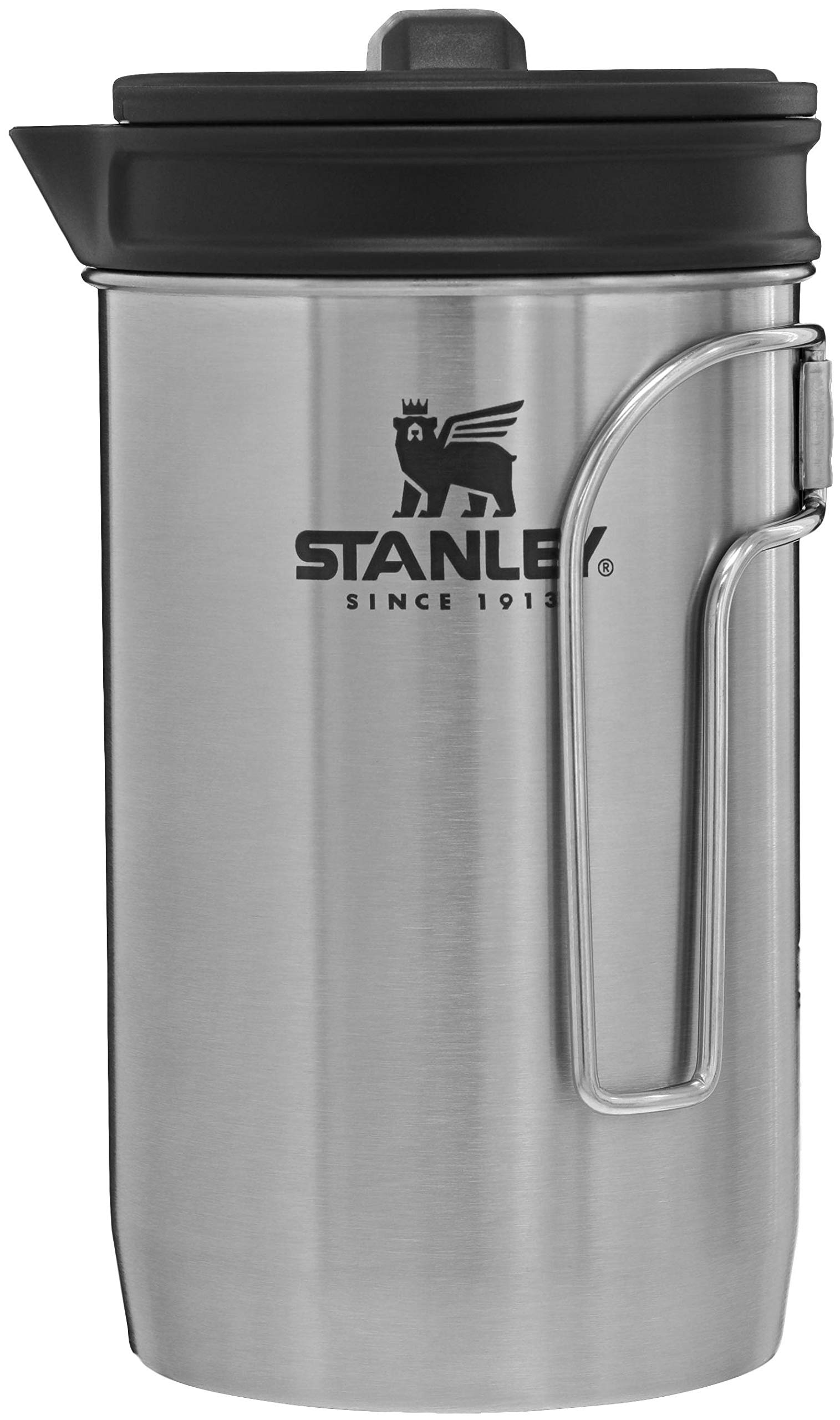
Boil, brew, and even cook in one stainless steel pot built for rough use.
Why I picked it: I can heat water over a flame and press in the same vessel.
Best for: Backcountry cooks and RV users who want multifunction gear.
Excellent value for a rugged, multipurpose camp brewer.
Pros
- Boil, brew, and cook in one pot
- Durable stainless steel construction
- Fold-away handle for compact packing
- Makes multiple servings
Cons
- Nylon parts may age faster
- Heavier than single-cup options
My take
This Stanley is the workinghorse I bring when I need more than coffee. I’ll boil water right in the pot, add grounds, steep, and press — all without moving liquids between containers. That simplicity is a big advantage on windy campsites or when I’m short on dishes.
It’s rugged: I’ve used it over camp stoves and open flames and the steel body holds up. My only reservation is the nylon press parts — they work well but I keep an eye on them for wear during extended backcountry use. For multi-person trips where durability and capacity matter, this pot is my first choice.
7. COSORI Pour Over Coffee Maker – Best Large Pour-Over
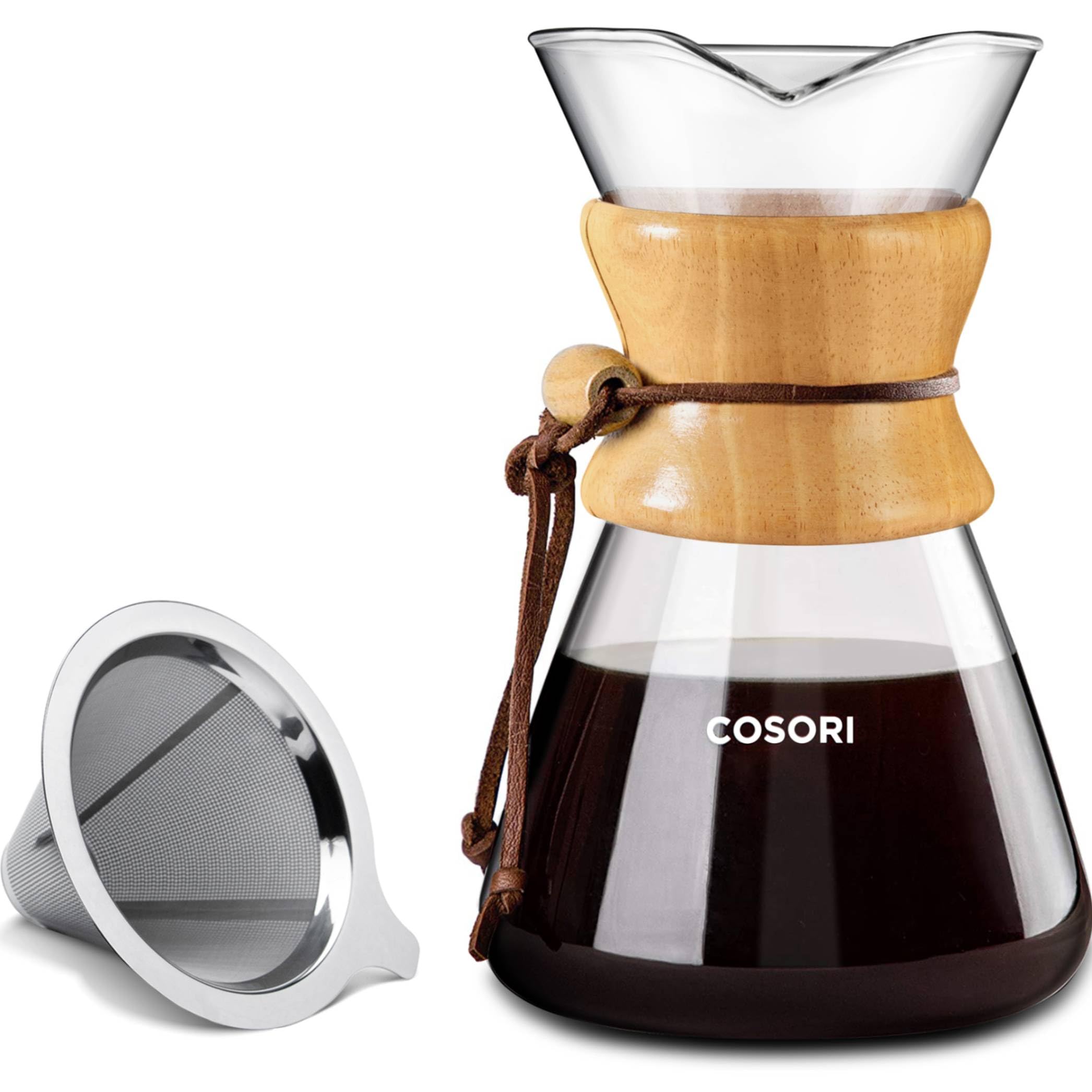
A large, stylish pour-over with a double-layer stainless filter for a fuller cup.
Why I picked it: Double-layer filter and borosilicate carafe give fuller flavor and stovetop reheating.
Best for: Camp kitchens and mornings when I want several cups from one brew.
Good mid-range choice for larger pour-over batches.
Pros
- Double-layer stainless filter
- Borosilicate glass carafe is heat-resistant
- Large 34 oz capacity
- Dishwasher-safe parts
Cons
- Filter mesh has had durability issues
- Wood sleeve needs careful cleaning
My take
I picked the COSORI when I wanted a pour-over that could make multiple cups and still taste great. The stainless double-layer filter lets some oils through for body while keeping grounds out, and the glass carafe stands up to gentle reheating on low heat.
It’s the most social brewer here — I’ll often use it at camp when two or three people want coffee at once. I did have one filter mesh fail on me, but the company sent replacements quickly. The wooden sleeve looks nice, though I avoid soaking it and give it a careful wipe instead.
How I Choose a Backpacking Coffee Maker
What I prioritize for trail coffee
I focus on five things when I pack a brewer: flavor, weight, cleanup, durability, and versatility. Flavor tells me whether the device is worth carrying; weight matters on long routes; cleanup determines how much water and time I need at camp; durability affects how long the gear lasts; and versatility lets me adapt to different mornings.
- Flavor: Does the device highlight beans or mute them?
- Weight: Can I carry it for days without regret?
- Cleanup: Is spent coffee easy to dispose of in the backcountry?
- Durability: Will it survive in a pack or over a camp stove?
- Versatility: Can it make espresso-style shots and larger cups?
Brew methods and taste profiles
I choose an AeroPress when I want clean, low-bitterness coffee with control over variables. I pick a stainless French press for full-bodied pots that stay hot. For consistent pour-over flavor with minimal technique, I use the OXO or COSORI systems.
- AeroPress: Clean, fast, and highly controllable
- French press: Rich, oily, fuller body
- Pour-over: Clarity and delicate flavor
Packability and practical tips
I pack the smallest complete system I can—ideally one that nests into a mug or doubles as storage. On multi-day hikes I minimize extra pieces and carry fewer filters or a reusable metal filter. I also plan for cleanup: I bring a small cloth and use biodegradable soap only when necessary.
- Choose nested systems (AeroPress Go) for tight packs
- Bring a tiny brush or cloth for easy cleaning
- Carry spare filters or a reusable metal filter
Materials and durability
Stainless steel and borosilicate glass are durable, but glass is heavier and can break. I treat plastic units as my lightweight option, accepting that some plastics may affect flavor for very picky palates. If I expect rough handling, I pack stainless steel.
- Stainless steel: Best for durability and heat retention
- Borosilicate glass: Good for flavor and stovetop reheating
- Plastic: Lowest weight and usually dishwasher-safe
Filters and cleanup
I consider whether the brewer uses disposable filters or a reusable mesh. Disposable filters make cleanup simple on a short trip; reusable filters cut waste but require an extra rinse. I always pack a small zipbag to carry wet grounds out if I’m at risk of leaving a mess.
- Disposable paper filters: easy cleanup, consistent
- Reusable metal filters: less waste, fuller-bodied cup
- Always pack a small bag for wet grounds when required
Frequently Asked Questions
Can I make espresso-style coffee with these portable brewers?
Yes — I get espresso-like shots from an AeroPress by using a fine grind and pressing firmly. It’s not a true espresso machine, but it produces a concentrated, syrupy shot that I use for lattes or stronger cups.
How do I clean gear on multi-day trips?
I eject the puck or dump grounds into a small sealed bag and rinse with a little water. For metal filters I swish them in water and give them a quick scrub with a tiny brush. I avoid using soap in fragile ecosystems and pack out any wet waste.
What grind size do I use for each brewer?
I use medium-fine for AeroPress (depends on recipe), coarse for French press, and medium for pour-over. I dial grind size by taste: if it’s too bitter, I coarsen; if it’s weak, I go finer.
Final Take
I carried all of these brewers on real trips and adjusted my picks based on how often I hike, how much I’m willing to pack, and how many cups I want at camp.
For the best all-around experience I keep an AeroPress Original in my bag; for true travel convenience the AeroPress Go is unbeatable. If I’m sharing coffee at camp or need long heat retention, I grab a stainless press like the Coffee Gator or Stanley.
Whichever you choose, focus on the combination of flavor, weight, and cleanup that fits your trips — that’s what has made my mornings on the trail noticeably better.
