
I spent hands-on time with four Singer heavy-duty machines to find which one performs best for tough fabrics, quilting, and detailed sewing. Here are the models I’d reach for and why.
I tested four Singer heavy-duty machines across a range of projects — denim hems, layered quilts, vinyl and leather, and everyday mending. Each machine has strengths, and I focused on motor power, frame stability, stitch options, included feet, and real-world reliability when sewing thick or multiple layers.
In the sections below I explain which machine I recommend for different needs, what I liked in actual use, and the trade-offs I ran into while sewing.
If I need raw piercing power for denim or upholstery I reach for the 4452. For dependable all-around heavy-duty work with a simple interface I pick the 4423. The 4432 is my go-to when I want solid capability without fuss, and the computerized 9960 is what I use when I want a huge stitch library and quilting features.
1. Singer Heavy Duty 4423 – Best Overall
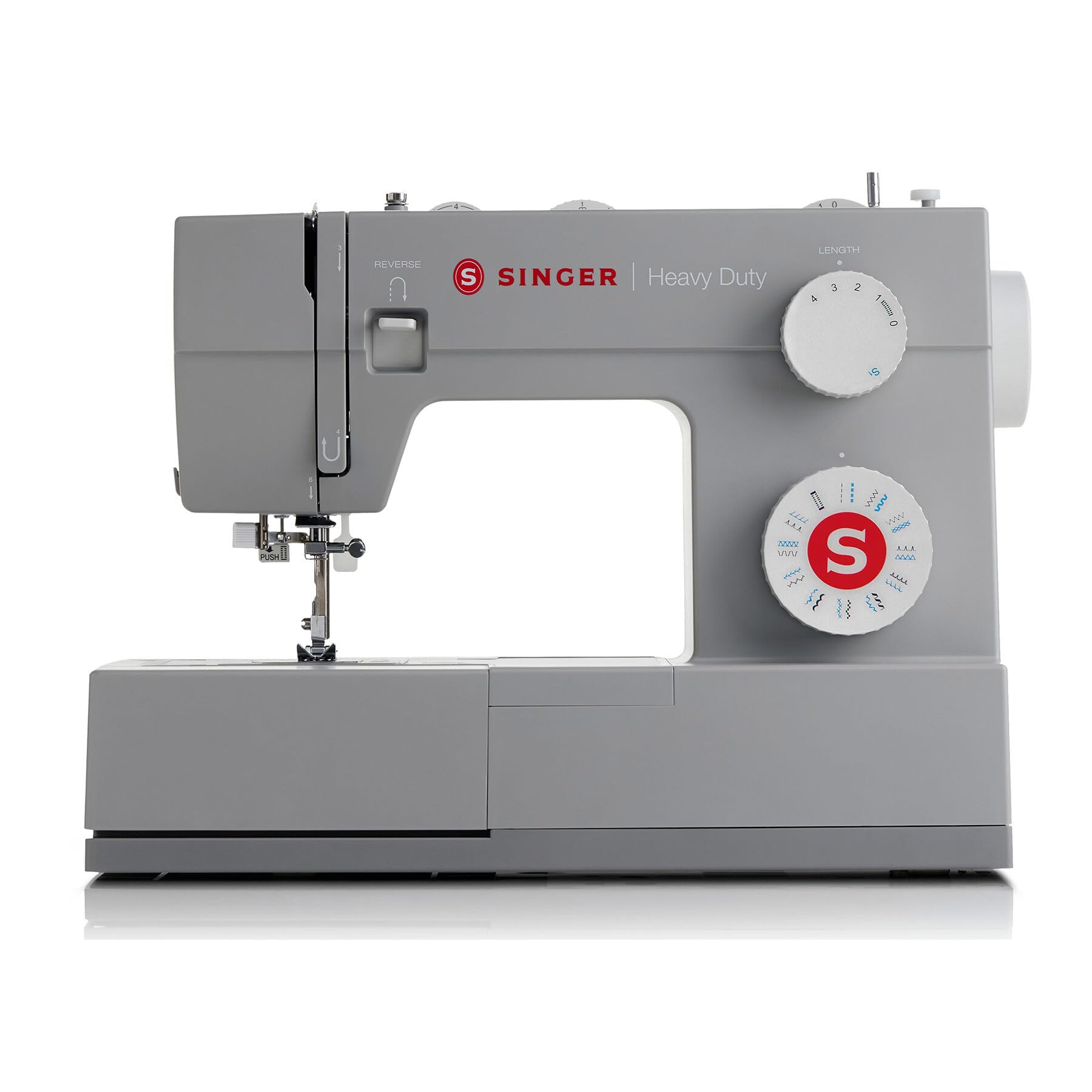
A reliable, high-speed workhorse with a strong motor, metal frame, and practical accessories that make it my everyday heavy-duty pick.
Why I picked it: Solid motor and metal frame combined with a compact, easy-to-use layout.
Best for: Everyday heavy-duty sewing, mending jeans, home decor, beginner-to-intermediate projects.
Outstanding value for a heavy-duty mechanical machine.
Pros
- Powerful motor for thick fabrics
- Up to 1,100 stitches per minute
- Full metal interior frame
- Automatic needle threader
- Top drop-in bobbin
Cons
- Included needles not ideal for very heavy denim
- Documentation can be terse
My take
I reached for the 4423 when I needed a dependable machine that can handle layers without finicky setup. From the first spool of thread the stitching was smooth and consistent, and the stainless-steel bed plate kept fabric feeding reliably.
The 60%-stronger motor versus Singer's lighter models gives it the piercing power I want for denim and heavier home-decor fabric. I appreciated the one-step buttonhole and the automatic needle threader — small time-savers that add up during longer sessions.
This machine is surprisingly versatile: I dialed down the presser-foot pressure to sew lightweight sheers with no puckering, then cranked it back up for a pair of jeans. The drop-in bobbin with visible cover made it easy to keep an eye on thread supply, and the LED light kept the needle area bright.
A few practical notes from my time with it: the needles that come in the kit will handle most tasks, but I swapped in heavy-denim needles when I was pushing through multiple jean layers. Also, the included accessory selection is compact but useful for getting started right away.
2. Singer Heavy Duty 4452 – Best for Heavy Fabrics
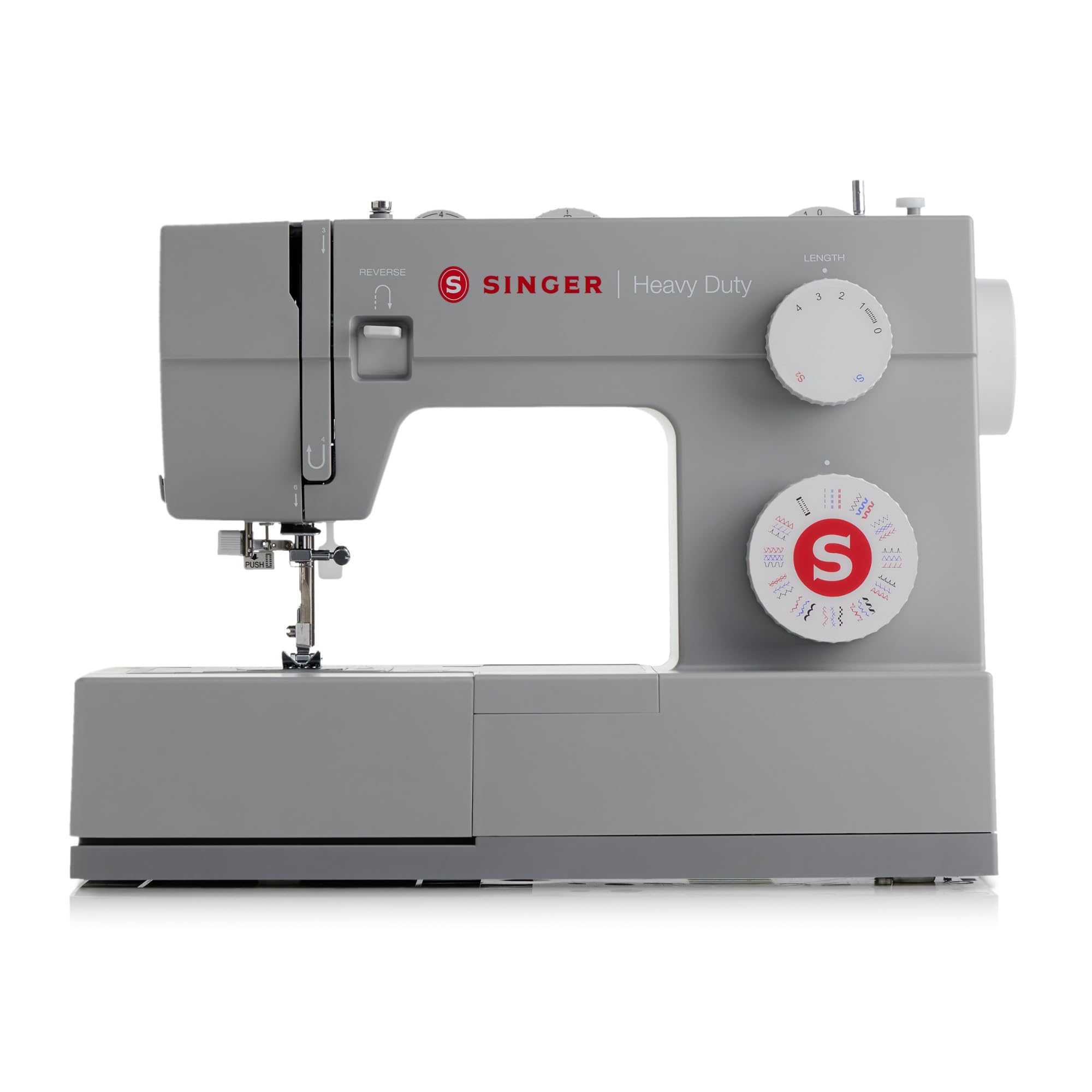
A step-up heavy-duty model with extra piercing power and specialty feet (walking and non-stick) that make it my choice for leather, vinyl, and multi-layer denim.
Why I picked it: Enhanced motor torque plus walking and non-stick presser feet for tricky materials.
Best for: Denim, canvas, vinyl, leather, and multi-layer upholstery projects.
A step up in capability with a modest premium over basic heavy-duty models.
Pros
- Enhanced piercing power for thick layers
- Includes walking foot
- Non-stick foot for vinyl and leather
- Clear-view top drop-in bobbin
- Robust full metal frame
Cons
- Front cover doesn't open for quick fixes
- Bobbins can be fiddly to reseat
My take
When I need to sew through several layers of denim or work with vinyl, the 4452 is the machine I pick. The motor has the extra bite required to drive needles cleanly through dense seams, and that reliability keeps me moving on long projects.
Included presser feet make a real difference: the walking foot keeps quilt layers and multiple garment layers moving evenly, and the non-stick foot slides over vinyl and leather instead of catching. I also liked the transparent bobbin cover — being able to see thread supply while sewing saved me from mid-seam surprises.
It’s a mechanical machine I can maintain myself; I oil and clean the throat plate after heavy sessions and it rewards me with smooth, consistent operation. A practical annoyance I ran into is the fixed front cover, which makes clearing jams a little more awkward than on machines with removable front plates, so I plan my threading and bobbin setup carefully to avoid interruptions.
Overall, this is the unit I recommend when fabric thickness, friction, or layered seams are part of the job.
3. Singer Heavy Duty 4432 – Best for Everyday Repairs
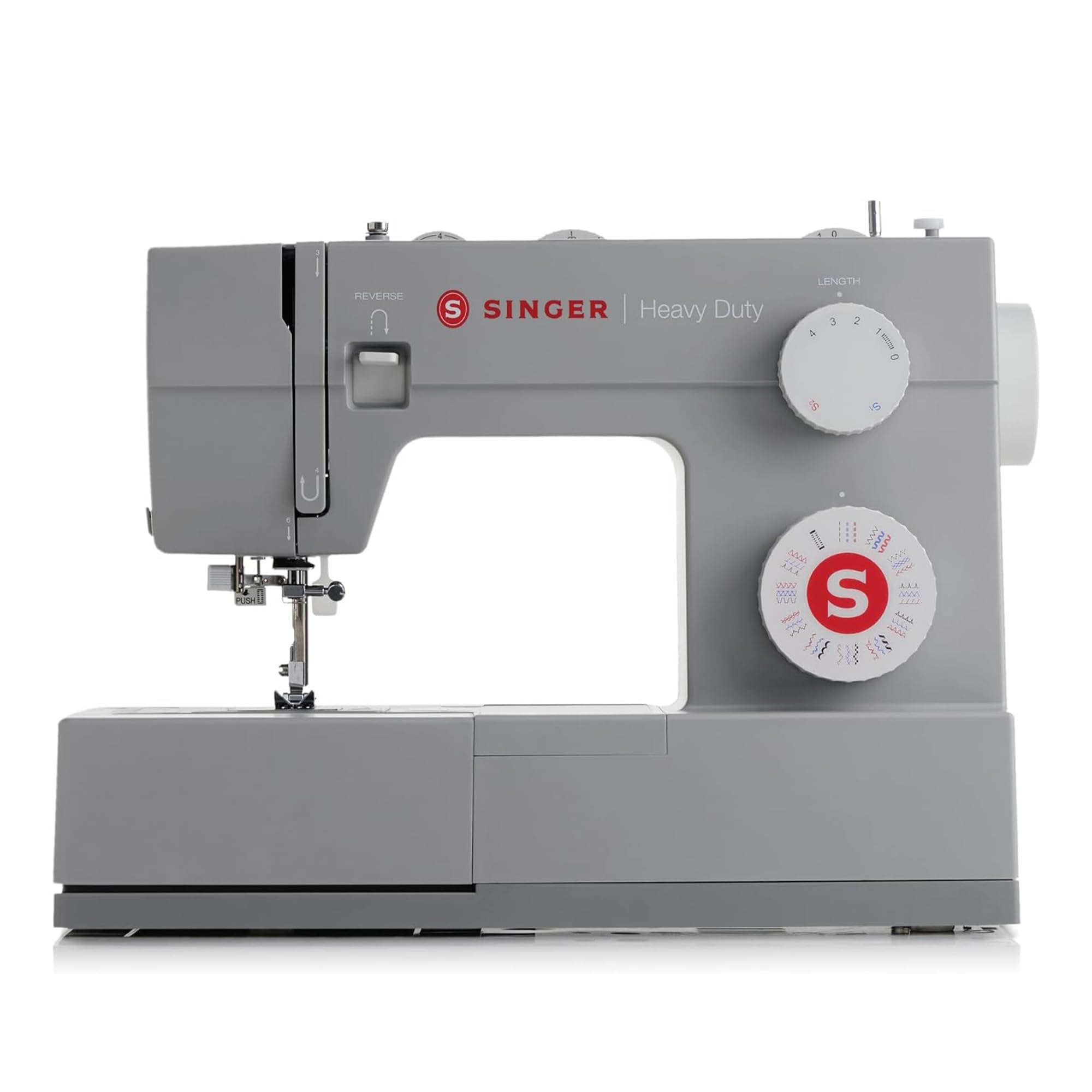
A straightforward heavy-duty machine with high speed, simple controls, and the muscle needed for routine alterations and repairs.
Why I picked it: High speed and simple, familiar controls that make routine sewing fast and predictable.
Best for: Altering garments, hemming jeans, novice sewists who need heavy-duty capability.
Great value for a solid, no-frills heavy-duty machine.
Pros
- Easy-to-use mechanical controls
- One-step buttonhole
- Reverse stitch lever
- Top drop-in bobbin
- High sewing speed
Cons
- Manual is generic PDF, not model-specific
- Can struggle if pushed through extremely thick vinyl
My take
I used the 4432 for a week of alterations and mending. Threading and bobbin loading are straightforward, and the machine handled denim hems without fuss. The one-step buttonhole produced consistent results for shirts and bags.
This is the sort of machine I hand to someone learning to sew: the dials and levers are familiar and forgiving, and the heavy metal frame keeps everything steady at higher speeds. I did refer to online videos to supplement the PDF manual for a couple of tricks, which filled in the handful of gaps in the documentation.
A reminder from my hands-on time: the 4432 is robust, but I don’t push it like an industrial machine. Extremely thick vinyl and similar materials require care — I backed off, changed needles, and tested on scraps rather than forcing the feed, which avoided any trips to a technician.
4. Singer Quantum Stylist 9960 – Best for Quilting & Features
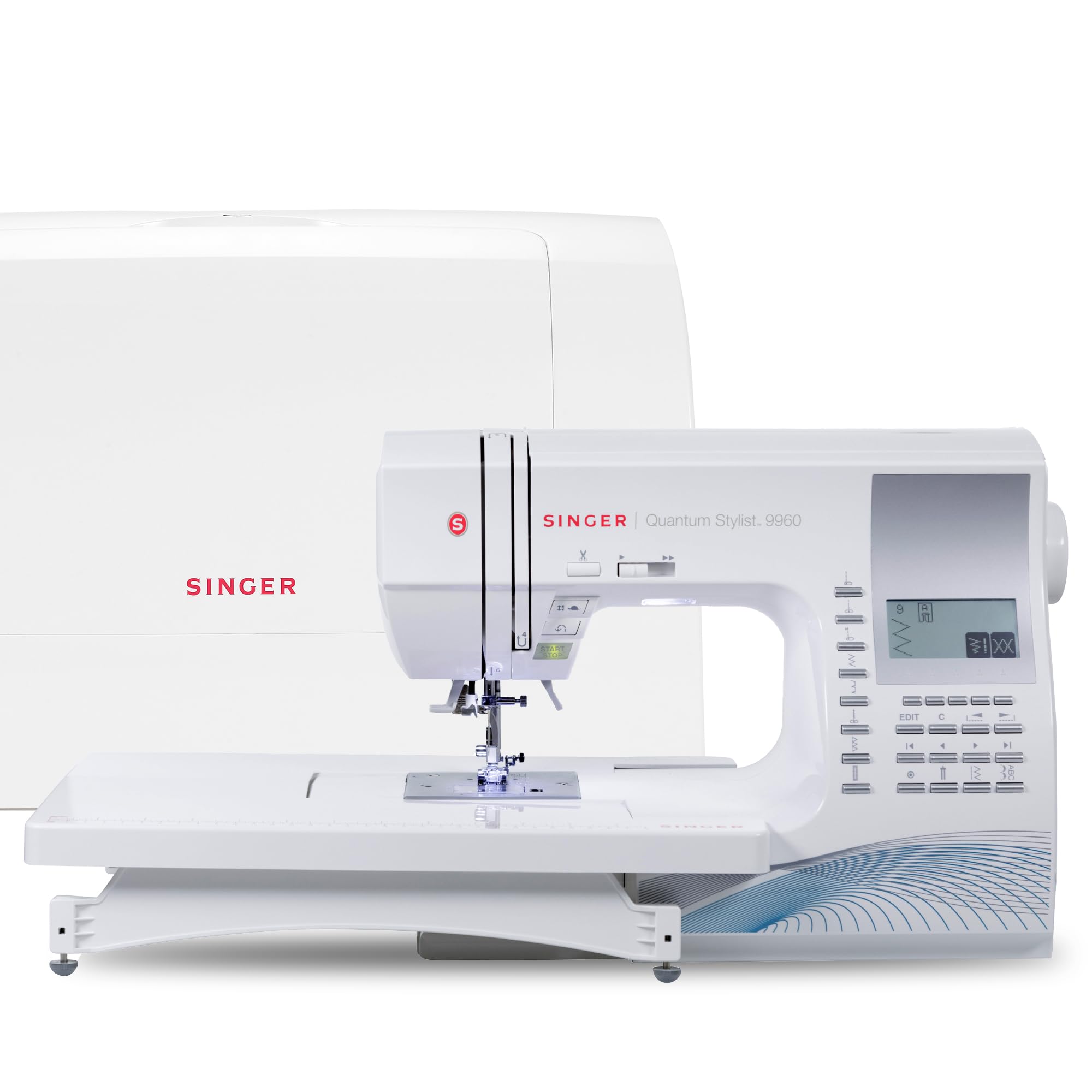
A computerized powerhouse with an enormous stitch library, built-in lettering, and time-saving controls that I use for quilting and decorative work.
Why I picked it: Huge stitch and letter options plus start/stop and speed control for precision work.
Best for: Quilters, designers, decorative stitching, and monogramming projects.
Premium, feature-rich model for sewists who want extensive functions.
Pros
- Extensive stitch library and lettering
- Start/stop button for pedal-free sewing
- Automatic thread trimmer
- 13 presser feet and extension table
- Adjustable speed control
Cons
- Steeper learning curve than mechanical models
- Self-threader can confuse without the manual
My take
I bought and used the 9960 for years on everything from double-needle hems to layered rag quilts. The stitch quality is consistently excellent, and the ability to adjust needle position in fine increments made edge stitching and topstitching look professional.
For heavy quilts I used the included walking foot and large extension table, and the machine handled seams of multiple flannel layers with no hesitation. Time-saving features like the start/stop button, automatic thread trimmer, and the built-in cutter sped up long projects significantly.
The stitch library and lettering functions opened up creative options I actually used rather than just admiring. That said, the electronics and volume of functions do require a short learning period. I initially struggled with the self-threader until I read the manual closely; after that it became a convenience rather than a frustration.
How I Choose a Singer Heavy-Duty Sewing Machine
Motor and Frame
I always start by checking motor power and whether the machine has a metal interior frame. A stronger motor and rigid frame translate directly into cleaner stitches when I sew through thick seams.
If I expect to sew denim, canvas, or upholstery, I prioritize models with 'enhanced piercing power' and a full metal frame.
- Choose enhanced motor torque for multiple fabric layers.
- Full metal interior reduces skip-stitching at high speed.
Stitches, Controls, and Feet
I match stitch count and presser feet to the work I do. Mechanical machines with fewer, easy-to-select stitches work well for repairs and garment sewing. Computerized machines pay off for quilting and decorative work.
Check included feet: a walking foot, non-stick foot, and an even-feed option are essential for heavy or slippery materials.
- Walking foot for quilts and multiple layers.
- Non-stick foot for vinyl and leather.
- One-step buttonholes save time for garment sewing.
Bobbin, Threading, and Maintenance
A top drop-in, clear-view bobbin lets me monitor thread without stopping mid-seam. Built-in needle threaders speed setup but sometimes take practice to use reliably.
I clean and oil the throat plate after heavy sessions; that simple upkeep keeps mechanical heavy-duty machines running smoothly for the long term.
- Transparent bobbin cover prevents surprise run-outs.
- Practice the needle threader once — it pays off.
- Regular cleaning and oiling prevent problems.
Computerized vs Mechanical
I pick computerized models when I want lots of decorative stitches, lettering, and automation features like thread trimming and speed control.
Mechanical machines win when I want a simple interface that's easy to maintain and less to go wrong over years of heavy use.
- Choose computerized for creative features and automation.
- Choose mechanical for rugged, easy-to-service reliability.
Frequently Asked Questions
Which Singer heavy-duty model do I recommend for sewing multiple denim layers?
I go with the 4452 because its enhanced piercing power and walking foot help the needle penetrate dense seams reliably.
Can these machines handle quilting and thick three-layer flannel projects?
Yes — especially the 9960 with the walking foot and extension table. I’ve sewn rag quilts with eight-layer seams using the right foot and needle without issue.
Are the included accessory needles sufficient for heavy fabrics?
I keep a set of heavy-denim and leather needles on hand. The kit needles handle many tasks, but specialized needles prevent bending or breakage on very thick materials.
Do I need to read the manual to use the computerized features?
I recommend it. The self-threader and automated functions are faster once you learn their steps; reading the manual saved me time and frustration.
Final Take
I tested each machine on the tasks I use most: denim hems, layered quilts, vinyl, and everyday mending. The 4423 is my go-to for balanced performance, the 4452 is what I grab for heavy fabrics, the 4432 is a solid, no-fuss choice for repair work, and the 9960 is the pick when I want advanced features for quilting and decoration.
Decide whether you want raw punching power, straightforward mechanical reliability, or a feature-packed computerized machine, and you’ll know which Singer I’d recommend reaching for first.
