
I tested four very different bed tents and canopies so you can pick the right one for privacy, insect protection, princess-style rooms, or a kids’ play nook.
I spent time setting up and sleeping under four popular bed tents and canopies to see how they perform in real bedrooms. Each option serves a different need—from creating a private, dark sleep pod to keeping mosquitoes away to adding a whimsical princess touch for kids.
In the sections below I explain what stood out about each product, who it’s best for, and the practical trade-offs I ran into while using them.
I compared structure, material, ease of installation, ventilation, and real-world usability (how it fits a mattress or hangs from the ceiling) to pick these four. My selections prioritize stability and day-to-day convenience over novelty features that don’t hold up.
1. Alvantor Bed Canopy Twin Pop-Up Tent – Best Overall
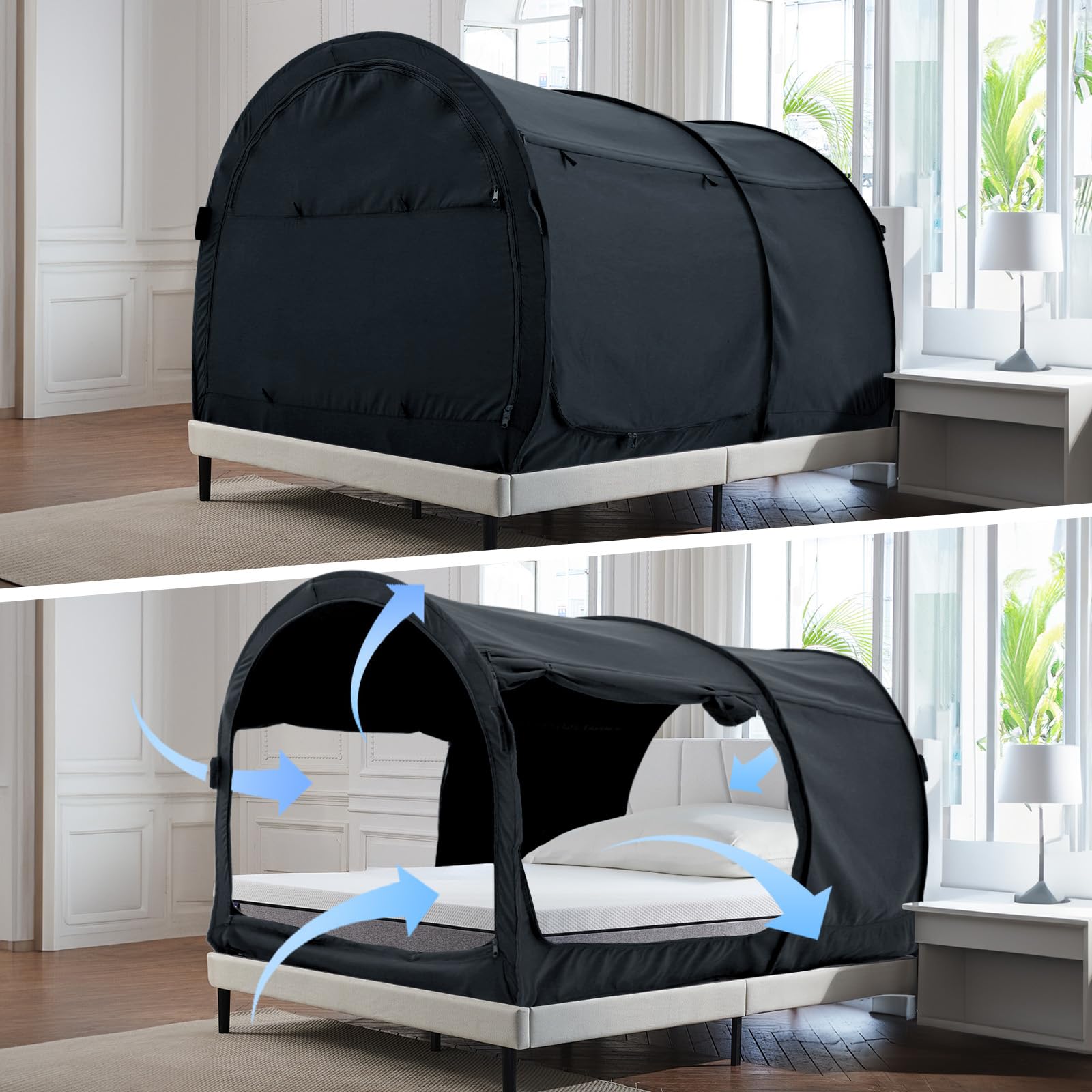
A twin-sized pop-up canopy that turns a bed into a private, light-reducing sleep space with a stable frame and full-floor design.
Why I picked it: It combines a true pop-up frame with breathable pongee fabric and full-floor coverage that integrates with the mattress.
Best for: People who need privacy, light reduction, or a warm microclimate on a twin mattress.
Higher-end option for a durable, bed-integrated tent.
Pros
- Quick pop-up setup
- Full-floor design prevents slipping
- Light-reducing pongee fabric
- Multiple zip openings for airflow
Cons
- Bulky to fold for storage
- May be heavy with very dense mattresses
My take
I set this up over a twin mattress in under five minutes thanks to the pop-up PVC ribs and shock-corded poles. The patented 2-in-1 construction holds its shape without a metal frame, and the tent felt stable even when I shifted around at night.
The dark grey pongee fabric noticeably reduced early-morning light while still letting the inside feel breathable; mesh panels at the head and foot kept airflow steady so I didn’t get stuffy. I appreciated the full-floor panel that tucks under the mattress—nothing slid around once the mattress sat on it.
Zippers on both sides make entry convenient and I used the internal hanging loop for a reading light. The pack folds down small for a tent this size, though I found a lighter mattress made setup and teardown easier. Fabric is machine-washable if you unzip and remove the poles first.
2. VISATOR Dome Mosquito Net Canopy – Best Mosquito Protection
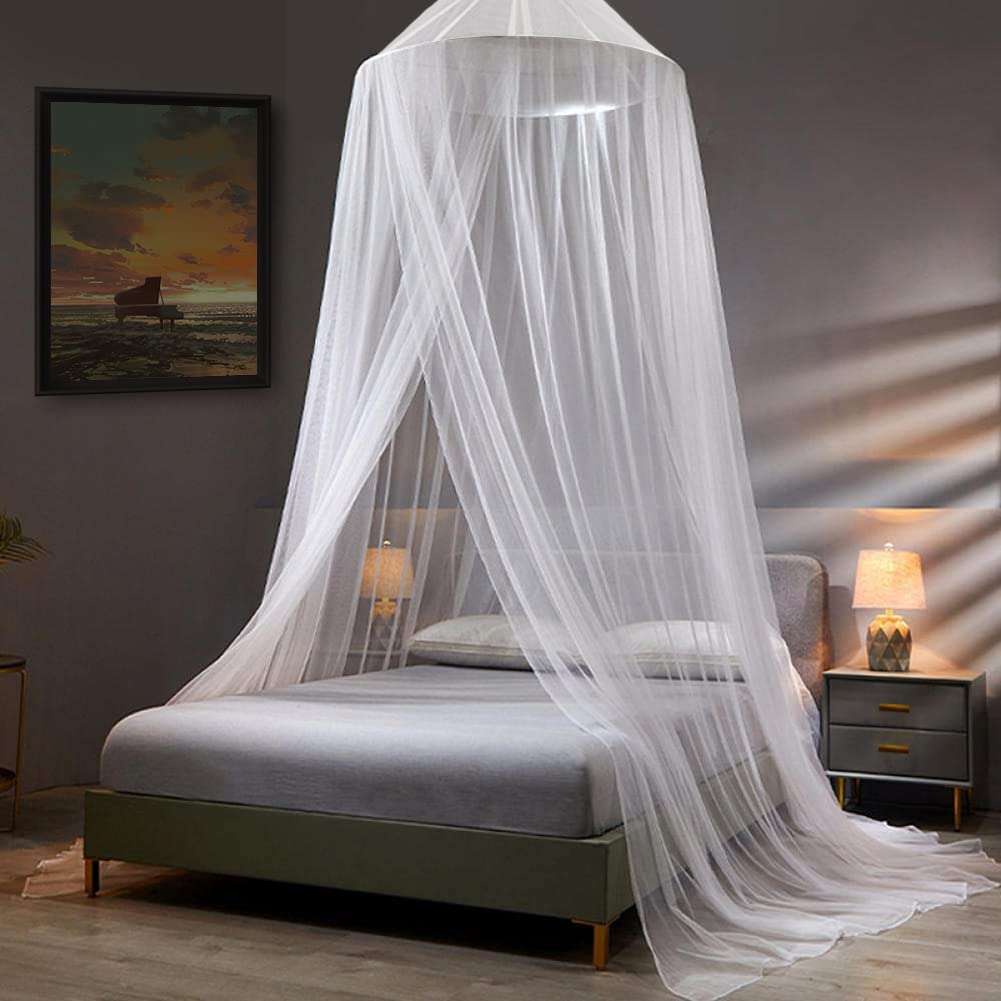
A simple hanging dome with fine mesh that blocks tiny insects while staying lightweight and portable.
Why I picked it: The very fine polyester mesh and included hanging hardware made it the easiest, most effective insect barrier I tested.
Best for: Anyone who needs a fast, portable mosquito net for beds or travel.
Budget-friendly option for reliable insect protection.
Pros
- Super-fine mesh blocks small insects
- Includes hook and tether
- Lightweight and portable
- Large coverage for taller beds
Cons
- Single-point hang can sway
- Not a privacy solution
My take
I hung this canopy from one ceiling point in seconds using the supplied hook and tether. The stainless-steel ring keeps the opening round, and the mesh is fine enough I could watch mosquitoes trying to get in but they couldn’t penetrate.
Because it’s polyester and very light, it breathes well—airflow remained excellent even in warm weather. The bottom pools decoratively on higher-ceiling rooms and can cover queen- to king-sized beds if you let the fabric drape.
Packing it for travel is effortless: it folds small and the storage bag keeps it tidy. If you need firm privacy or a rigid shelter, this won’t provide that, but for mosquito protection I found it hard to beat for value and portability.
3. VETHIN Princess Bed Canopy – Best for Princess Rooms
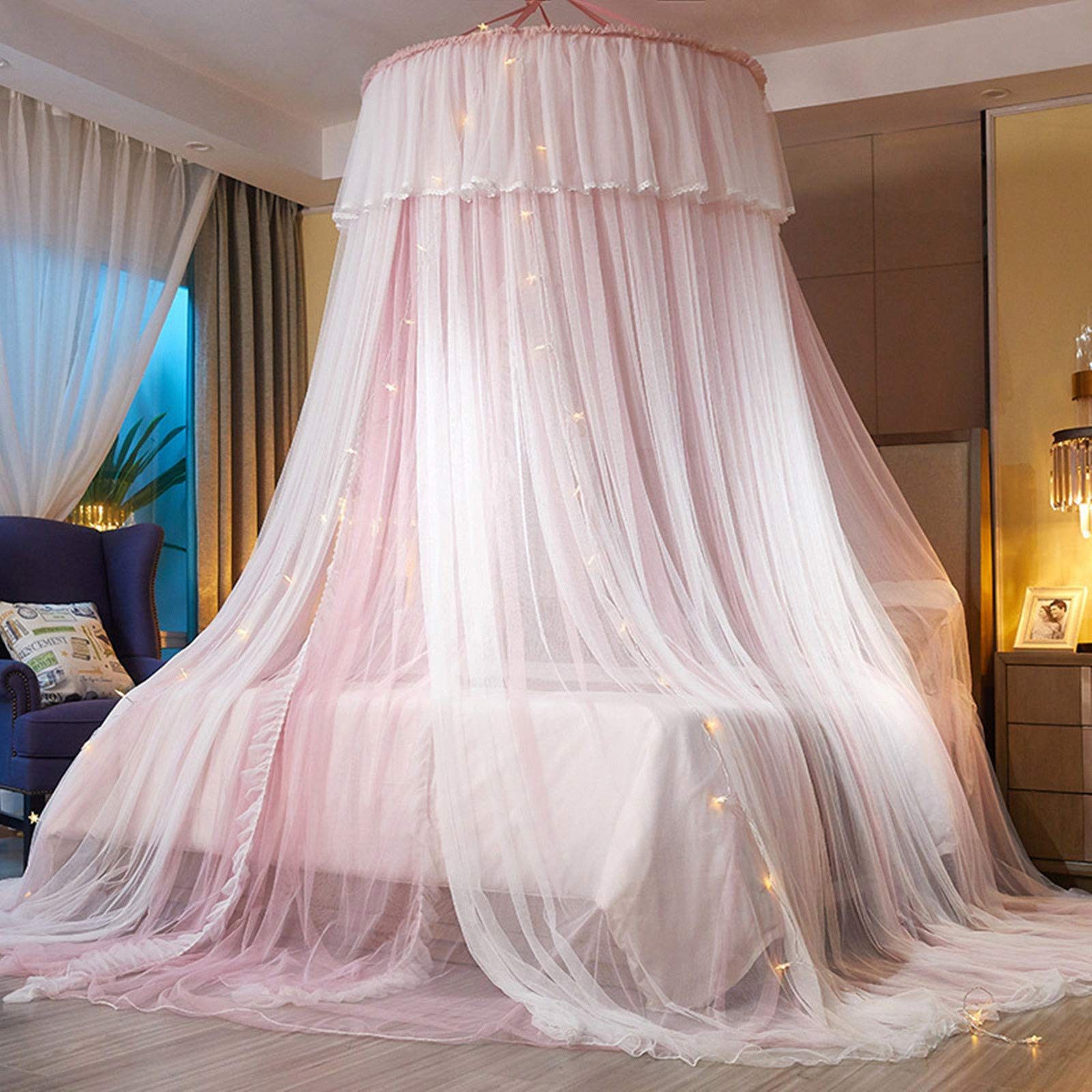
A double-layer lace and mesh canopy that delivers a princess look and lots of drape for any sized bed.
Why I picked it: I liked the double-layer design and lace detail that actually changes a room’s vibe while still offering insect protection.
Best for: Parents wanting a decorative, roomy canopy for a child’s bedroom.
Mid-range choice that emphasizes style and size.
Pros
- Double-layer decorative mesh
- Fits most bed sizes
- Easy ceiling installation
- Dramatic drape and height
Cons
- May smell until washed
- Adhesive hanging can be unreliable
My take
The VETHIN canopy transforms a room—double-layer mesh plus lace trims deliver the intended princess aesthetic in a big way. I hung it using the included sticky hook and it framed the bed beautifully, though I recommend testing the placement before relying on adhesive alone.
The top diameter and generous length mean it’ll pool around the floor on many beds; that makes it versatile for twin through king setups. I did notice a slight factory smell at first, so I gave it a gentle hand wash and that cleared it right away.
Installation is straightforward and the canopy is light, but if you need the hoop to sit higher than a standard ceiling mount allows, plan for a sturdier ceiling anchor. Overall, it’s a roomy, feminine choice that still lets air circulate.
4. Kertnic Kids Canopy Night Sky Ruffle – Best for Kids' Play Nooks
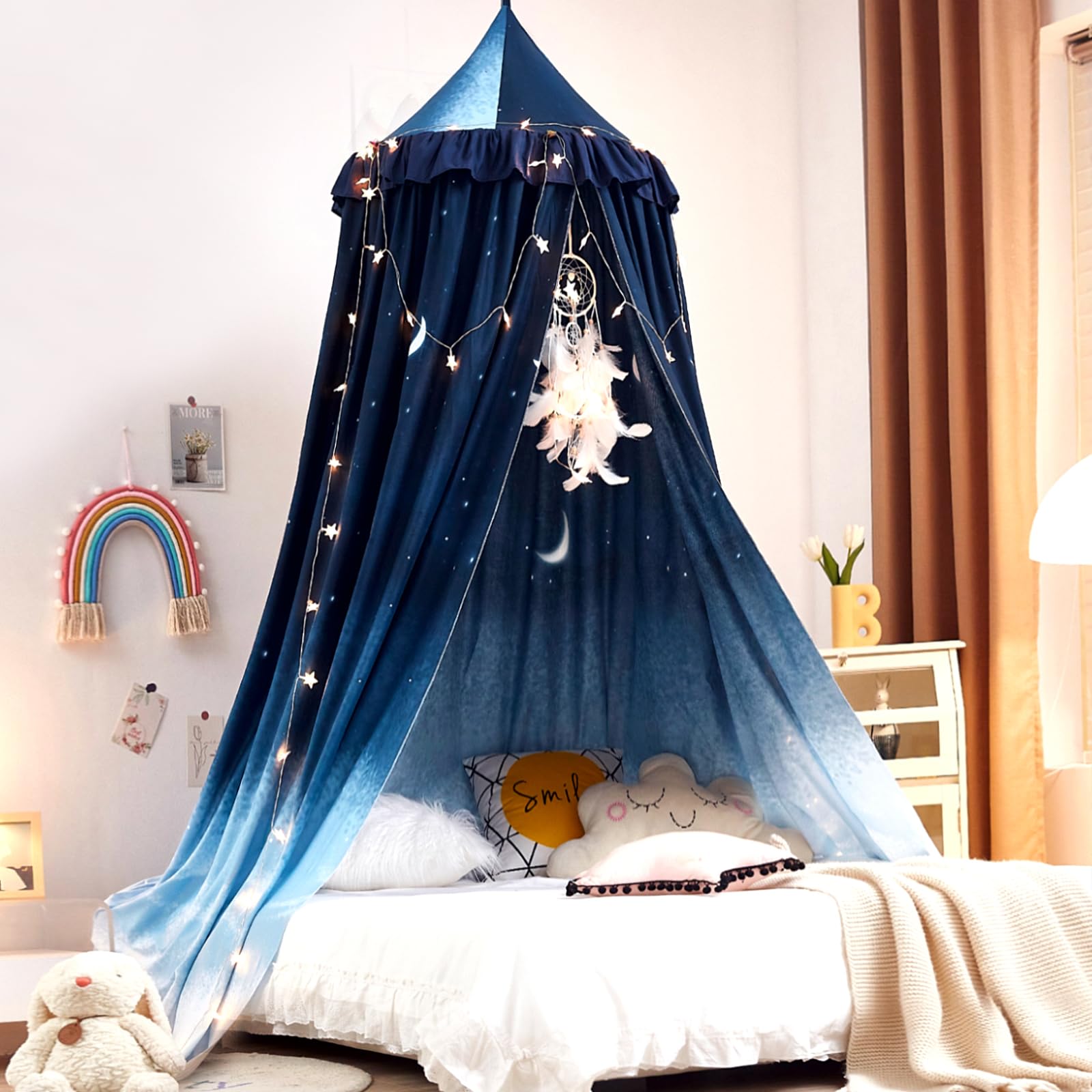
A soft polyester dome designed as a playful, roomy canopy for kids that doubles as a reading nook or cozy hideaway.
Why I picked it: It’s larger than many kids’ canopies, soft to the touch, and holds up well to daily use and play.
Best for: Families who want a durable, decorative canopy for play, reading, or quiet time.
Solid mid-range pick built for everyday use.
Pros
- Soft, skin-friendly polyester
- Larger-than-typical dimensions
- Easy 1-point install
- Machine- or hand-washable
Cons
- Adhesive hook can fail with heavy pulling
- May need a screw-in hook for long-term use
My take
I used this canopy over a child’s bed and turned a corner of the room into a cosy nook. The polyester is soft and lightweight, and the taller length gives plenty of headroom for sitting up with books or string lights.
Setup took a minute with the single suspension point; for peace of mind I eventually switched to a screwed-in ceiling hook because the adhesive medallion that ships with it can fail if pulled on repeatedly.
I washed the fabric without the metal hoop to remove shipping creases and it dried with minimal wrinkling. For families, the oversized fit and durable stitching make it an easy daily-use canopy that doesn’t feel fragile.
How I Choose Bed Tents and Canopies
Key things I check
I focus first on how the product mounts or integrates with a bed—pop-up frames, mattress-tucked floors, and single-point ceiling hangs behave very differently in daily use.
Material and mesh density determine comfort and function: denser mesh blocks insects better but can feel heavier; breathable fabric keeps air moving so you don’t overheat.
- Frame type: pop-up vs. rod-supported vs. hanging
- Coverage: full-floor, partial, or draped
- Ventilation: mesh panels and openings
- Care: can the fabric be washed without damage
Sizing & fit tips I use
Measure mattress height and ceiling clearance before buying. A canopy that looks roomy online can fall short in a low-ceiling bedroom.
For bed-tents that tuck under a mattress, test setup with your mattress weight in mind—very heavy memory-foam mattresses make teardown more difficult.
- Twin tents sized for standard twin mattresses
- Hanging domes work well for high ceilings
- Allow extra length if you want floor pooling or floor coverage
Installation & maintenance I recommend
I always plan for a sturdy anchor point. Adhesive hooks are fine for light use, but I use screw-in hooks when children or active play is involved.
Before laundering, remove poles or rings per the manufacturer’s instructions. I hand-wash delicate mesh or run a gentle cycle for more robust fabrics.
- Use ceiling anchors for long-term hanging
- Remove hardware before machine washing
- Air-dry delicate mesh to avoid shrinking
What to expect by canopy type
Pop-up bed tents give true privacy and light reduction, but they’re heavier and take up storage space when folded.
Hanging domes are ultralight and great for insect protection and decoration, but they won’t create a rigid private room.
Decorative princess canopies are primarily aesthetic—wash them before first use to remove any factory smell.
- Pop-up tents = privacy & warmth
- Dome nets = insect defense & portability
- Decorative canopies = room transformation
Frequently Asked Questions
Will a hanging canopy block mosquitoes?
Yes—if the mesh is fine and the canopy pools to the floor or tucks under the bed, it will block most mosquitoes. I look for fine-mesh polyester canopies and make sure gaps at the base are closed.
Can I wash these canopies in a machine?
Many of the fabrics are machine-washable if you first remove metal hoops or fiberglass rods. I usually use a gentle cycle or hand-wash delicate mesh, then air-dry to avoid shrinking.
Are adhesive hooks good enough for a child's canopy?
Adhesive hooks are fine for temporary installs, but for daily use or if kids will tug at the fabric I recommend a screw-in ceiling hook to avoid failures.
Final Take
I found each of these bed tents and canopies excels at a specific job: the Alvantor for full-bed privacy, VISATOR for mosquito defense, VETHIN for decorative princess rooms, and Kertnic for a durable kids’ nook.
If you want a true sleep pod that reduces light and creates privacy pick the pop-up tent. For travel or insect protection go with a dome net. And if room atmosphere matters most, the decorative canopies deliver the biggest visual impact.
Whichever route you take, plan the mount method and washing approach before buying so setup is smooth and the canopy lasts.
