
I tested a range of wooden benches — from teak shower stools to heavy-duty outdoor seating — and picked the most useful options for different needs and spaces.
I spend a lot of time testing benches for showers, patios, and dining nooks, and I prioritized durability, comfort, and ease of upkeep when assembling this list.
In this roundup you'll find a teak shower stool that works in wet spaces, a nearly indestructible recycled-lumber outdoor bench, and a couple of acacia wood options that balance value and presence.
My picks cover different use cases and budgets so you can choose the bench that fits your space and how you plan to use it.
I compared solid-wood benches for their natural grain and weight capacity against POLYWOOD recycled lumber for near-zero maintenance; solid wood wins on warmth and character, while POLYWOOD wins on weather resistance and long warranty coverage.
1. Utoplike Teak Shower Bench – Best Shower Bench
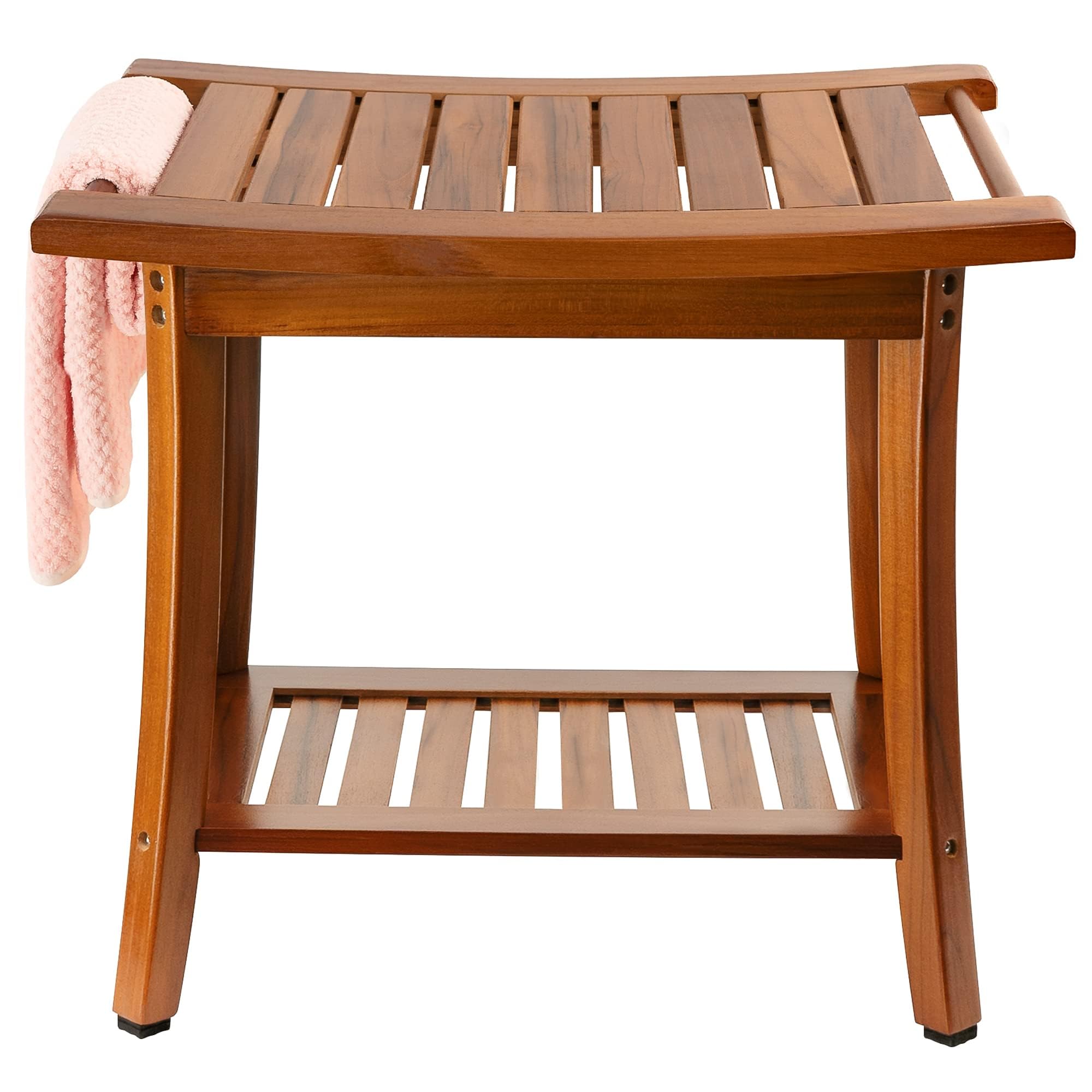
I liked this teak stool for shower and bathroom use because it combines solid teak with a lacquer finish and anti-slip feet.
Why I picked it: Works reliably in wet rooms and doubles as a small storage shelf.
Best for: Indoor or outdoor shower seating, towel storage, and small decorative display.
Solidly built yet positioned in the mid-range category.
Pros
- Durable teak with lacquer finish
- Non-slip rubber feet for wet floors
- Sturdy enough for heavy users
- Easy to assemble
Cons
- Finish can be uneven in spots
- Seat surface may need light sanding
My take
I brought this teak bench into my bathroom for shower seating and small storage. The teak is noticeably dense and the lacquer finish makes it easy to wipe clean after use. The bench feels heavier and more stable than many plastic alternatives, and the rubber feet kept it from sliding on a wet tile floor.
Assembly took me about 15 minutes with clear hardware and basic tools. The rounded edges and warm reddish-brown color gave my bathroom a classier look than a plain plastic stool would.
I’ve sat on it repeatedly and my experience confirmed the listing’s weight guidance — the bench handles larger users without wobble, which is why I trust it for people who need to sit while bathing. That said, a few areas of the finish on my unit were slightly rough; a quick light sanding and an extra wipe of finish smoothed those spots.
Because of the teak and lacquer, I’ve used this both inside the shower and on an outdoor covered porch with no trouble. It’s a good pick when you want real wood that survives damp conditions better than untreated pieces.
2. POLYWOOD Vineyard 60 Bench – Best for Heavy-Duty Outdoors
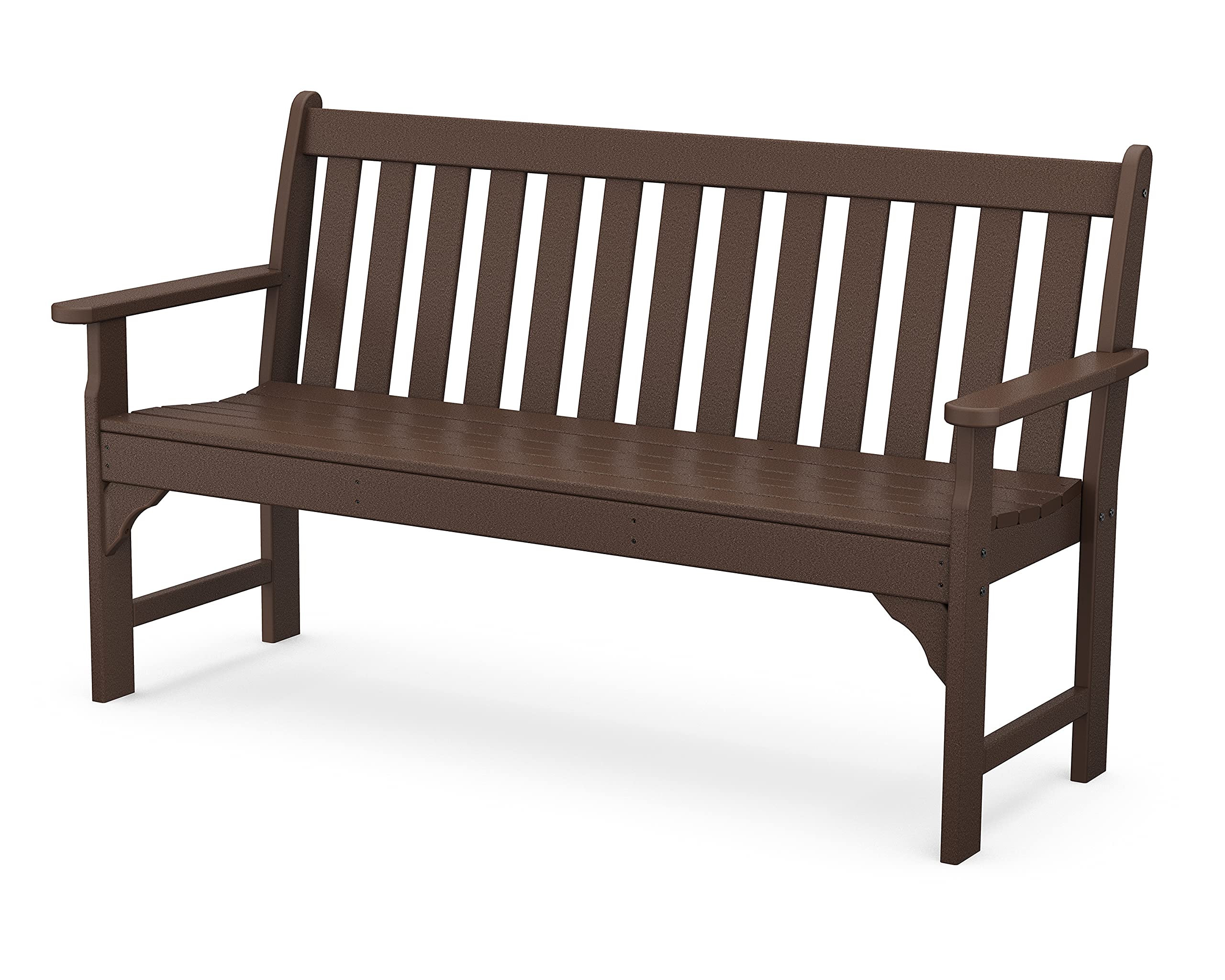
I recommend this long POLYWOOD bench when you want weatherproof, low-maintenance outdoor seating that looks like painted wood.
Why I picked it: Extremely weather-resistant and backed by a long warranty for outdoor long-term use.
Best for: Large patios, pool decks, tennis courts, and communal outdoor seating.
A more premium option that pays off with low upkeep.
Pros
- Won't rot, crack, or fade easily
- No painting or staining required
- Commercial-grade stainless hardware
- Large seating for three people
Cons
- Very heavy to move
- Back is straight — less lounge-friendly
My take
I set this 60" POLYWOOD bench on my patio to test its weather resistance and long-term durability. The feel is solid and weighty thanks to recycled HDPE construction; it doesn’t splinter or need sealers like real wood.
Assembly was straightforward but easier with two people because the pieces are heavy. The hardware is stainless and felt robust while tightening, and once installed the bench held up to regular outdoor exposure without signs of peeling or cracking.
On inspection the bench’s back uses a metal reinforcement bar that needs to be fitted carefully during assembly; when aligned correctly the back is stable and secure. The straight-back design is supportive for sitting upright, and I preferred adding cushions for extended lounging.
If you want a virtually maintenance-free bench for sun and rain, this POLYWOOD option is a reliable, longer-term choice backed by a lengthy warranty.
3. Giantex Acacia Outdoor Bench – Best Value Garden Bench
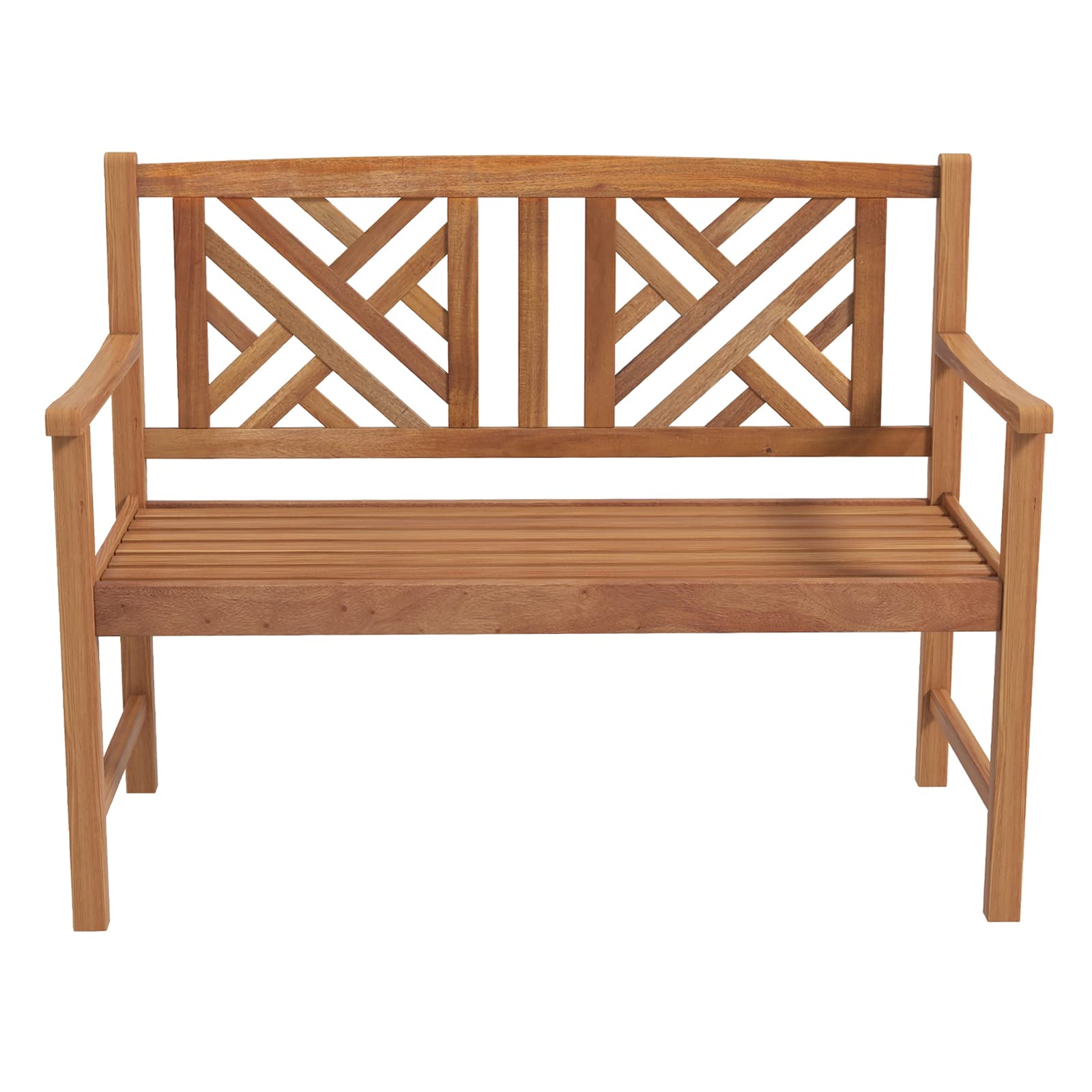
This acacia loveseat gives me solid two-person seating with an ergonomic back and an impressive listed load capacity.
Why I picked it: Strong, natural acacia and reinforced frame at a good value.
Best for: Small yards, porches, and paired seating for two people.
Good value for solid wood with a high weight capacity.
Pros
- 100% natural acacia wood
- Reinforced frame with crossbars
- Comfortable curved armrests
- High listed weight capacity
Cons
- Finish may vary across pieces
- Needs routine protection from weather
My take
I used this acacia bench on a small porch and appreciated the natural wood grain and straightforward silhouette. The bench is substantial and the two crossbars under the seat keep the frame from wobbling during use.
The ergonomic back and curved armrests make it more comfortable than a flat-slat bench for casual sitting. The manufacturer lists a high weight capacity and my hands-on inspection confirmed the reinforced leg geometry felt robust.
Assembly was easy because parts were numbered and the instructions detailed the steps. I treated the surface with a couple coats of outdoor sealer since untreated wood will always need periodic protection in my climate.
Overall, I see this as a dependable, attractive option when you want authentic wood character without spending on a premium hardwood piece.
4. Giantex Acacia Dining Bench – Best for Dining & Entryway
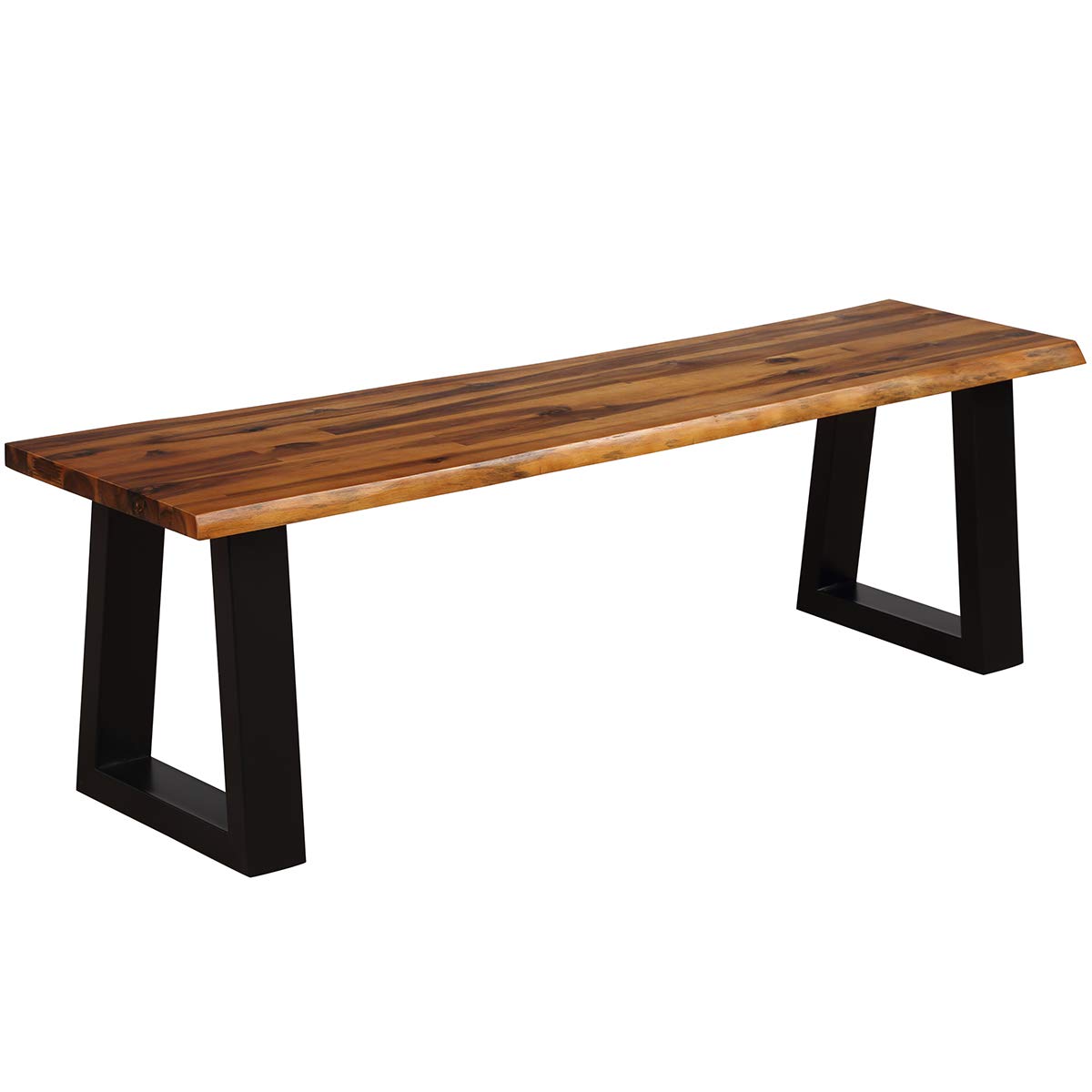
I chose this long acacia bench for dining rooms and entryways because of its wide seating and metal-leg stability.
Why I picked it: Large seating area and heavy-duty metal legs make it versatile for dining and hallways.
Best for: Dining table seating, entryway bench, or multi-seat indoor use.
An affordable option that feels higher-end for the money.
Pros
- Wide 57.5-inch seat
- Thick acacia wood slab
- Trapezium steel legs for stability
- High 700 lb capacity
Cons
- Some screws may be too long
- Requires felt pads on hardwood floors
My take
I brought this bench into my dining area to replace single chairs and it immediately elevated the table look. The acacia slab is thick and has a warm tone that reads more expensive than the price point.
The metal legs distribute weight evenly and the bench felt rock-solid even with two adults seated. The listed 700-pound capacity aligns with how sturdy the structure felt when I tested it.
Assembly was quick and straightforward, though I noted a couple of screws that required attention — they can protrude if overdriven, so I backed them out slightly and capped with felt pads to protect my hardwood floor.
For a dining or entryway bench that balances presence, strength, and ease of setup, this Giantex model has been one of the more practical pieces I've used.
How I Choose a Wooden Bench
Material and Durability
I look first at what the bench is made of. Teak and acacia give real wood warmth and natural durability, while POLYWOOD (recycled HDPE) offers near-zero maintenance outdoors.
Consider how much exposure to sun and rain the bench will get; solid woods need periodic sealing, whereas POLYWOOD does not.
- Teak: naturally water resistant, needs less sealing
- Acacia: attractive grain, durable but benefits from a sealer
- POLYWOOD: weatherproof, does not rot or peel
Weight Capacity & Stability
I check the listed load capacity and also inspect reinforcement such as crossbars or metal braces. Strong joinery and extra crossbars are signs the bench will stay stable.
If the bench is long or will seat several people, plan to have two people for assembly and positioning — some benches are heavy.
- Reinforced crossbars reduce wobble
- Trapezium or steel legs increase load distribution
- Heavier benches usually mean greater long-term stability
Finish and Maintenance
I evaluate the factory finish for smoothness and consistency. Even good benches sometimes benefit from a light sanding and an added coat of sealer for outdoor use.
For indoor benches, add felt pads to the legs to protect hardwood floors.
- Lacquered finishes wipe clean easily
- Add outdoor sealer for unprotected wood
- Use felt pads on indoor hardwood
Sizing and Use Case
I measure the seating footprint to ensure the bench fits pathways and table overhang if used for dining. A 60" bench seats three comfortably; 48" and under are good for two.
Think about whether you want upright support, slatted breathability, or a lounge-friendly back.
- 60" seats three; 45–48" good for two
- Straight backs are supportive; curved backs are more comfortable
- Account for depth when used at a dining table
Assembly and Transport
I consider how many parts, hardware quality, and whether the bench will require two people to move or assemble. Heavy outdoor benches often ship in sections and need two people to install.
Keep a sock of extra screws or short replacements on hand if instructions show oversized fasteners for thin tops.
- Numbered parts speed assembly
- Stainless hardware resists rust
- Have a second person for heavy benches
Frequently Asked Questions
Can I use a teak shower bench outside?
Yes — I use teak on covered porches and showers because teak resists moisture well, though lacquered or oiled finishes still benefit from occasional upkeep in harsh climates.
How do I protect a real-wood bench outdoors?
I apply an outdoor sealer every year or two, avoid direct ground contact, and store the bench under cover in winter to prolong its appearance and structural life.
Do I need professional help to assemble large benches?
Most benches assemble with common tools, but I recommend enlisting a second person for long or heavy benches to align parts and make installation faster and safer.
Final Take
I kept durability, comfort, and real-world use front of mind while testing these benches. If you need a wet-room stool, the teak option is my pick; for near-zero-maintenance outdoor seating, the POLYWOOD bench wins; and the two acacia choices give strong value for garden, dining, or porch seating.
Choose the material and size that match how you’ll actually use the bench, and plan simple maintenance like felt pads or a coat of sealer to keep it looking and performing well for years.
