
I tested a range of cordless and battery-powered pool vacuums — from compact spa cleaners to heavy-duty handhelds — and picked the best options for different needs. Here’s what I’d use depending on my pool size, debris,和
I’ve spent time using cordless pool vacuums across a range of pools — inflatable kiddie pools, hot tubs, above-ground circles and mid-size ingrounds. Battery-powered vacuums won’t replace a full pump-powered system or a high-end robot in every case, but they’re the fastest way I’ve found to tackle stairs, corners, leaves and quick cleanups without tangling hoses.
Below I break down the models I kept reaching for, what each one does best, and the trade-offs I noticed while actually cleaning my pools.
When I compare these vacuums I focus on suction flow (GPM), runtime, charge time, filtration fineness, pole reach and how easy the filter is to clean — the combination that matters most in real-world use.
1. Teguy V40 Plus Cordless Pool Vacuum – Best Overall
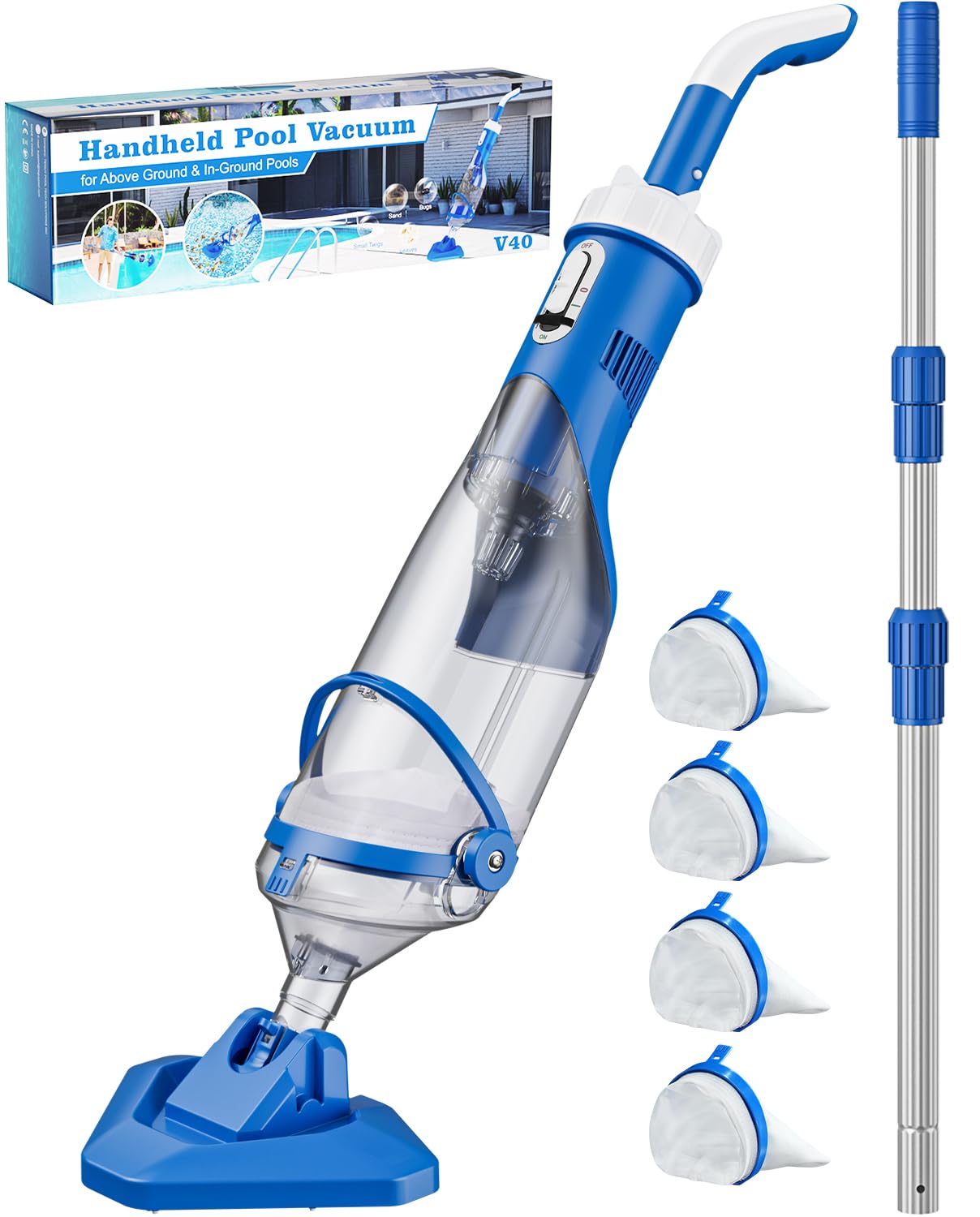
I rely on this as my go-to cordless vacuum for medium pools because it balances strong suction, fast charging and easy filtration.
Why I picked it: Fast 1.5-hour charge, strong suction and useful telescopic reach for most pools.
Best for: Medium inground and above-ground pools where I want a fast, cordless clean.
Affordable option with high-end features like quick charge.
Pros
- Powerful suction for a handheld unit
- Very fast 1.5-hour charging
- Up to 60 minutes runtime
- Includes multiple reusable filter bags
Cons
- Filter clogs with heavy algae
- Short starter handle — need pole for deep pools
My take
I liked how the Teguy V40 Plus freed me from hoses while still pulling sand, pebbles and leaves on a single charge. The 40W motor and the rated 18.5 GPM flow translated to noticeably better pickup than smaller spa vacs.
The Supercharge system is a real convenience: a full charge in about 1.5 hours gave me roughly an hour of run time, which was enough to do my medium pool without rushing. I appreciated the IPX8 waterproofing and the auto-shutoff that protects the motor when the unit isn’t submerged.
The four 500-mesh reusable filter bags are roomy and simple to rinse out. On the downside, when I tackled algae-heavy areas the bag plugged up faster and required frequent rinsing, but that’s a general trade-off for handheld filtration.
Overall I found this to be the most balanced cordless vacuum in my toolkit — strong enough for serious cleanups yet compact and easy to maneuver.
2. PoolMr Cordless Handheld Pool Vacuum – Best for Versatility
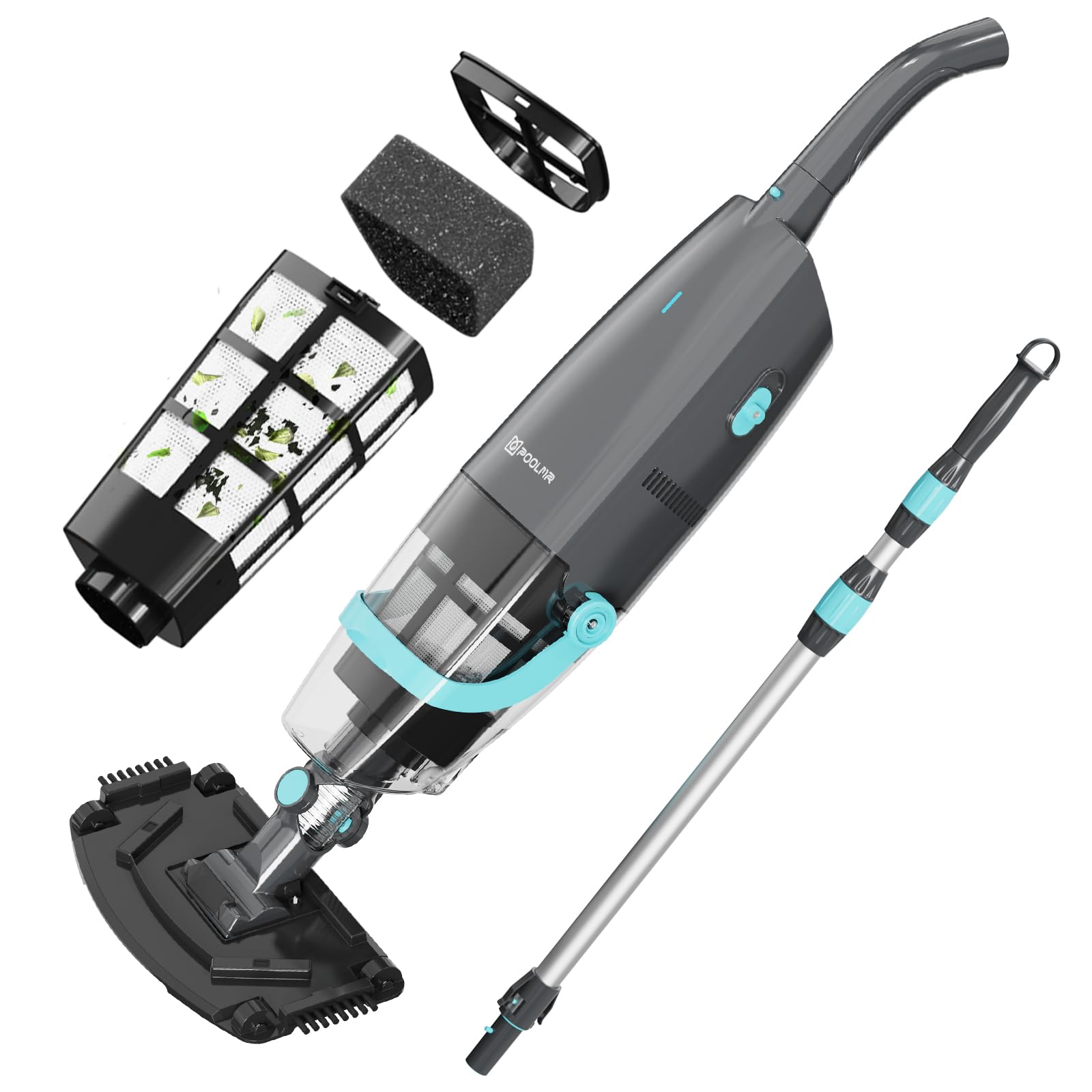
I turn to this model when I want adaptable cleaning heads and a two-stage filtration approach for mixed debris.
Why I picked it: Dual-phase filtering and swap‑out heads make it useful for different debris types.
Best for: Pools with a mix of leaves and fine sediment, plus stairs and corners.
Solid midrange choice with flexible attachments.
Pros
- Dual-phase filtration for large and fine debris
- Interchangeable brush and suction heads
- Sturdy aluminum telescopic pole
Cons
- Longer recharge time (4–5 hours)
- Pole may be short for very large pools
My take
I like the PoolMr for its dual-phase cleaning system: the coarse mesh traps bigger bits while the sponge handles silt and sand. That combo made quick work of mixed debris in my above-ground pool.
The 30W motor and the advertised 18.5 GPM flow delivered solid pickup. The 10.5-inch rectangular brush head made stairs and corners easy to clean, and the 65-inch aluminum pole felt durable in use.
Be aware the battery takes several hours to top off, so I keep it charged between uses. Taller users or very wide pools may need a longer pole for comfortable center access.
3. ENHULK PC15 Cordless Pool Vacuum – Best Coverage
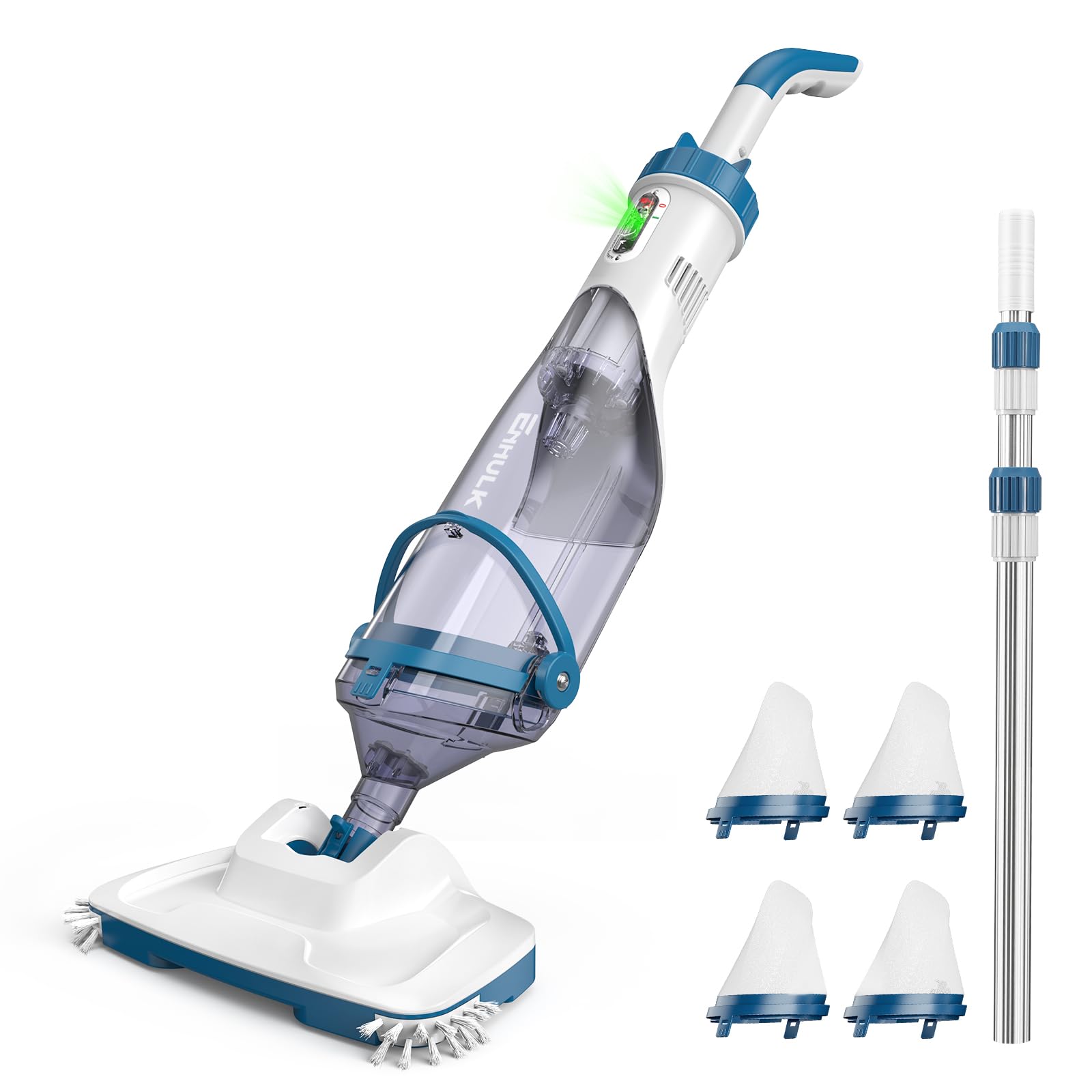
I recommend this when surface area coverage matters — the extra-wide head and side brushes speed up floor passes.
Why I picked it: 13.4-inch head and side brushes cover more ground per pass.
Best for: Larger pools where I want fewer passes per area.
A practical pick if you value wide-head efficiency.
Pros
- Extra-wide 13.4-inch head
- Side brushes for edge cleaning
- Fast 1.5-hour charging
Cons
- Requires slower passes for best pickup
- Included arm length varies by pack
My take
I appreciated the ENHULK PC15’s large cleaning head — it noticeably reduced the number of passes I needed on flat areas. The side brushes also helped dislodge debris along walls and steps.
The motor and hydrodynamic design produced the expected 18.5 GPM performance; it handled leaves and sand well, but I had to move deliberately to avoid missing fine sediment in one pass.
Quick charging and a useful telescopic pole (very long in the included spec) made setup simple. The unit’s safety auto-stop when out of water and the clog indicator are practical touches I used frequently.
4. Cordless Spa Hot Tub Vacuum – Best for Small Pools & Spas
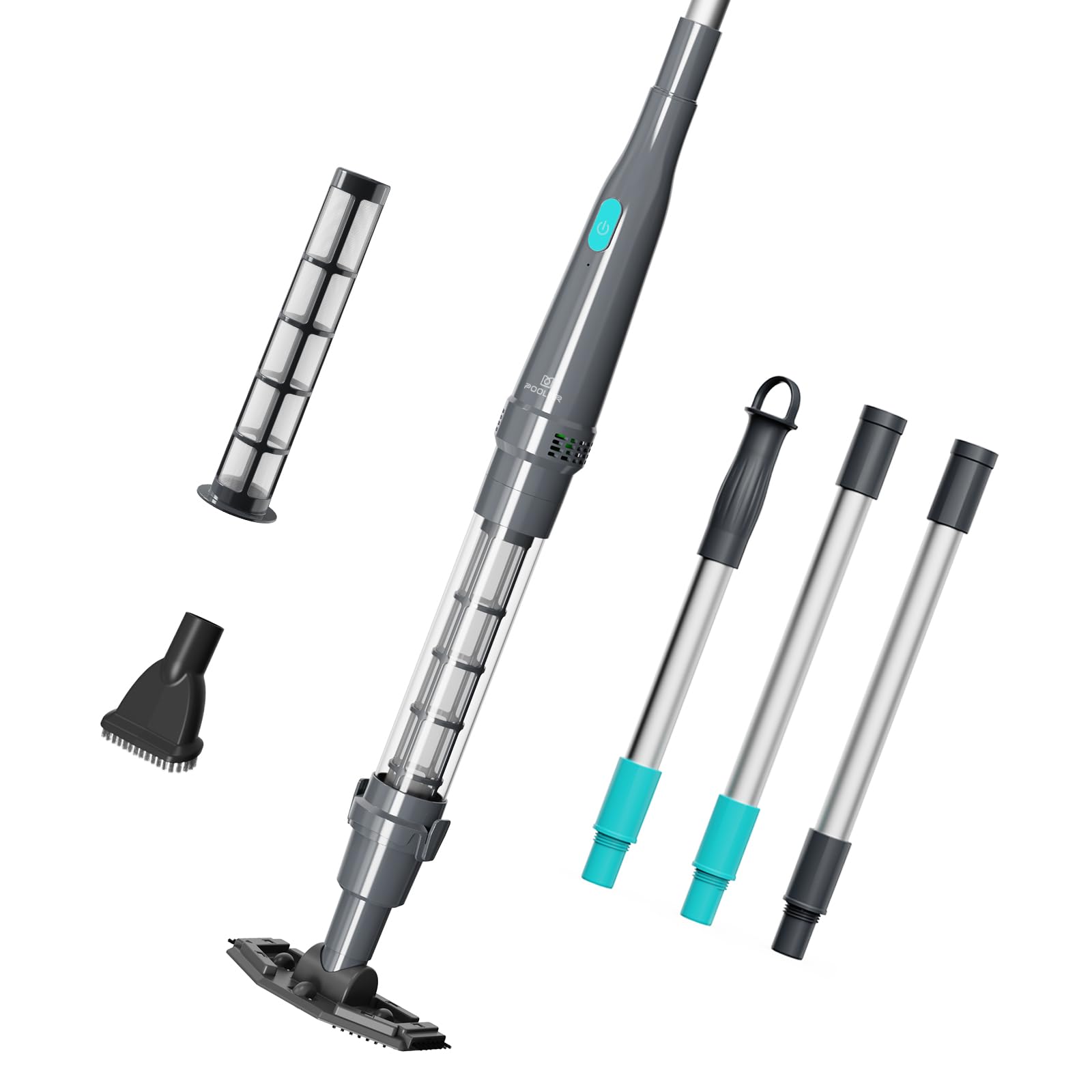
I keep this on hand for hot tubs, small inflatable pools and quick spot cleans thanks to long runtime and quiet operation.
Why I picked it: Long runtime and small‑pool friendly heads make it perfect for spas and kiddie pools.
Best for: Hot tubs, small above-ground pools, ponds and tight spaces.
Budget-friendly for small-area cleaning jobs.
Pros
- Up to 90 minutes runtime
- Quiet operation
- Two brush head options included
Cons
- Lower flow (12 GPM) than larger models
- Can splash in very shallow sections
My take
This little vacuum surprised me — the 2.5Ah battery delivered marathon runtime and the 20W motor pulled grit and leaves cleanly from my hot tub and small Intex pools.
I valued the two brush heads: the triangular brush reached corners and the regular head tackled floating debris. Emptying the trash can was quick and tidy.
It runs quietly, which makes maintenance less disruptive. I did notice some surface splashing when working very shallow lounge areas — not a deal-breaker, but worth knowing.
5. Lydsto S1 Lite Cordless Pool Vacuum – Best Lightweight
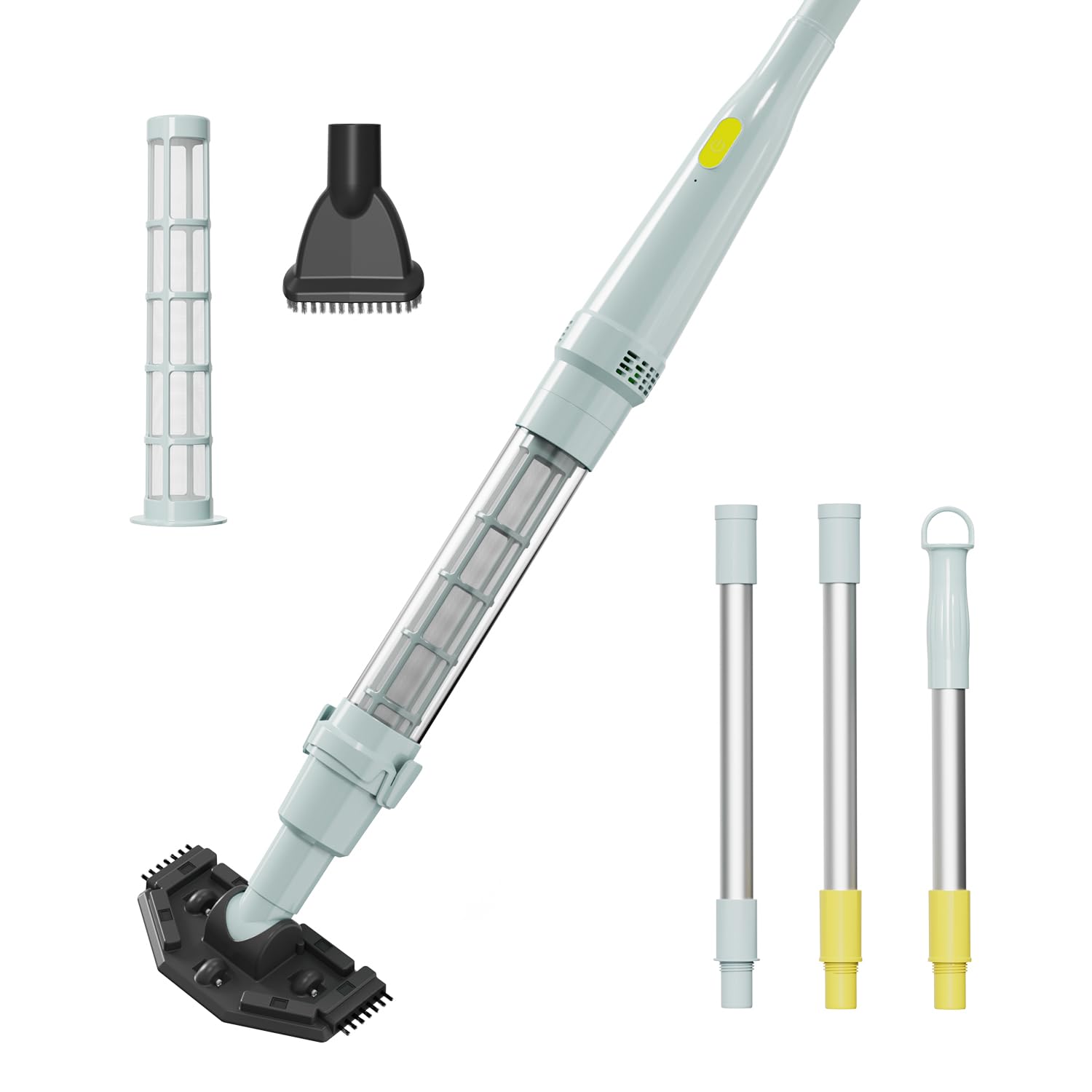
I recommend this when I want a lightweight, long‑runtime tool for spas and smaller pools that’s easy to handle.
Why I picked it: Lightweight design, long 90-minute runtime and fine 120-mesh filtration.
Best for: Hot tubs and portable use where weight matters.
Great value for customers wanting portability and runtime.
Pros
- Very lightweight and easy to handle
- Up to 90 minutes runtime
- Fine 120-mesh filtration
Cons
- Must stay fully submerged to maintain suction
- Pole reach limited to about 5.6 feet
My take
I reached for the Lydsto S1 Lite when I needed something easy to maneuver around steps and seating. The brushless 20W motor felt efficient and the 120-mesh screen captured fine sand reliably.
Its long battery life meant I could clean my spa multiple times between charges. The automatic shutoff when flow stops adds a measure of safety I appreciated.
The only caveat: it needs to remain submerged to keep prime. If the pump housing rises above water it loses suction, so I keep that in mind during angled cleaning.
6. Bestway Flowclear Angler Vacuum – Best Traditional (Pump-Powered)
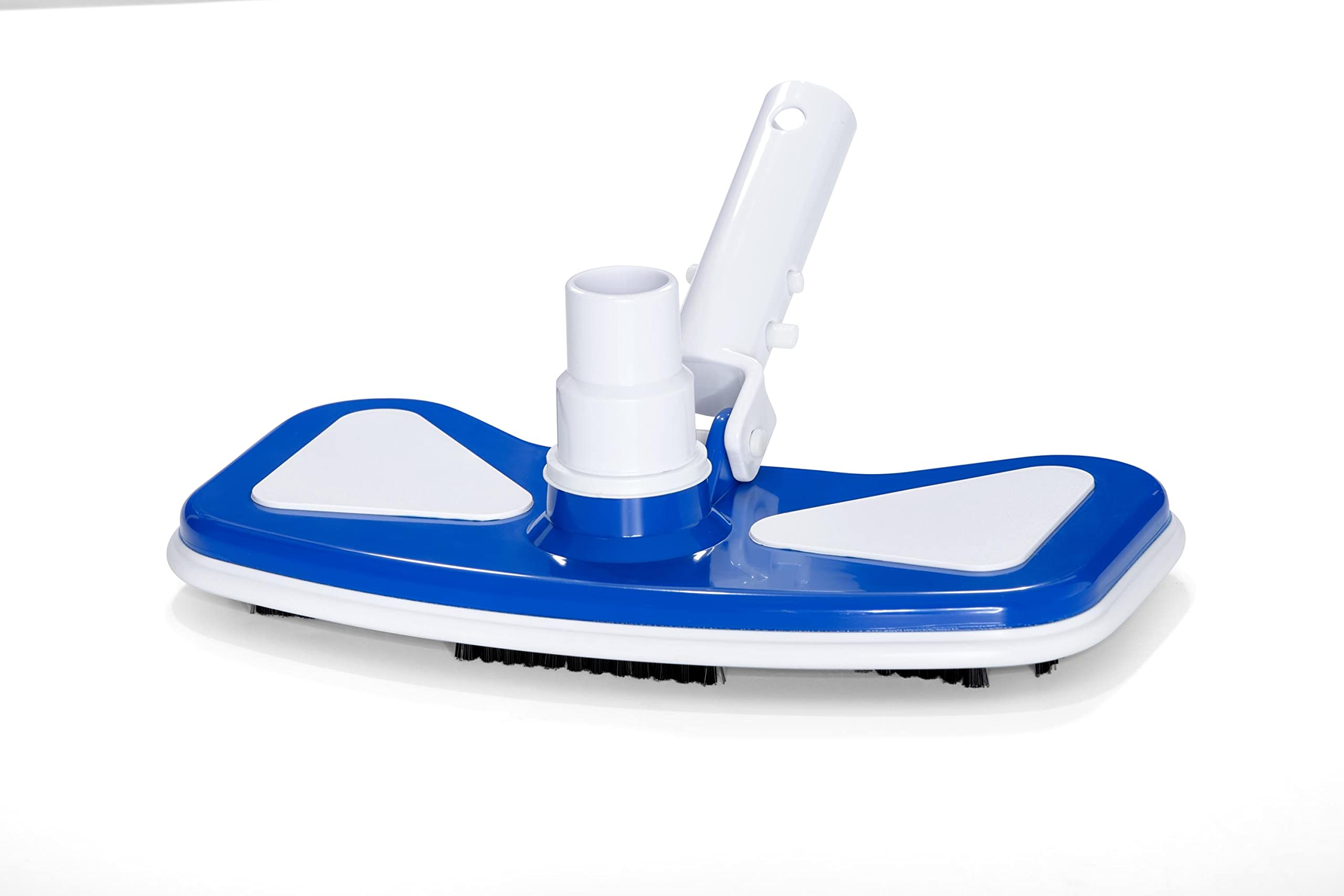
I use this when I want a no-frills, pump-powered cleaner for corners, steps and tight spaces the robot misses.
Why I picked it: Connects to the pool filter pump for continuous suction and durable performance.
Best for: Tight corners, steps and smaller pools that have a pump system.
Very budget-friendly classic pump-powered option.
Pros
- Works off your filter pump
- Small head reaches tight corners
- Brushes help scrub grime
Cons
- Brushes are not the most durable
- Requires a compatible pole and pump
My take
I keep a Flowclear Angler in my gear bag for step and hot tub work because it hooks to my existing pump and delivers steady suction without batteries.
Its compact head gets into corners my robot can’t reach, and the built-in brushes help remove grime as it suctions.
This is the simplest, most durable tool in the list — low tech but very effective for chores that don’t justify a rechargeable handheld.
7. Bestway Aquasurge Rechargeable Vacuum – Best for Small to Mid Pools
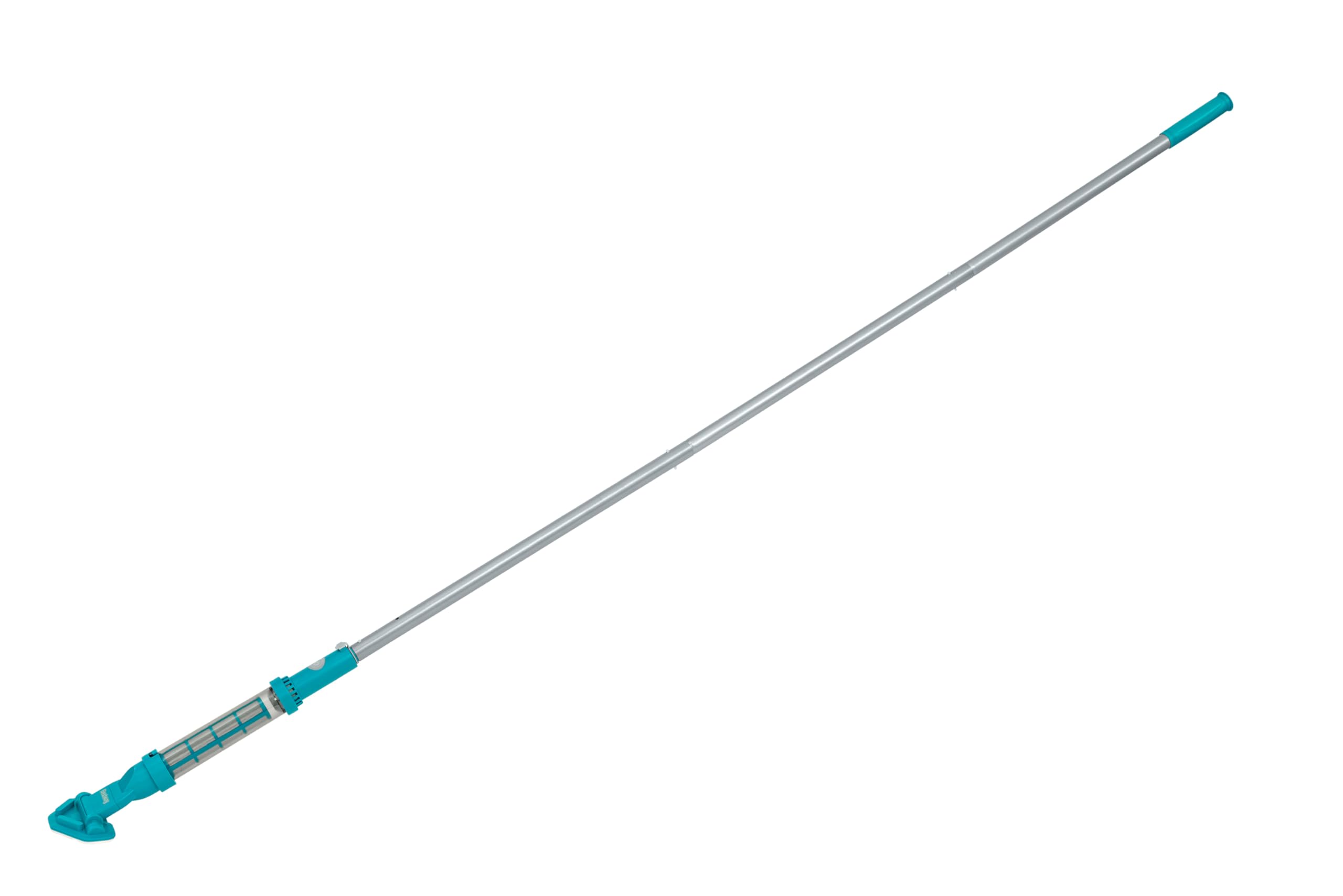
I grabbed this for small-to-mid pools when I wanted a rechargeable, easy-to-empty unit that handled sand and dust well.
Why I picked it: Clear debris tank and simple operation make quick cleanups painless.
Best for: Small pools and quick spot cleaning up to about 20-foot diameter rings.
Good midrange rechargeable option for smaller pools.
Pros
- Cordless freedom
- Clear, easy-to-empty debris tank
- Includes two suction heads
Cons
- Shorter runtime than some larger units
- Best suited to smaller pools
My take
I found the Aquasurge easy to use out of the box: charge it, drop it in and the clear debris container makes it quick to see when it’s full.
It handled sand and small debris in a small pool better than I expected, and the telescopic pole sections made depth adjustments easy.
If I need to clean a bigger pool I reach for a higher-flow handheld, but for quick jobs this one saves time.
8. AQUA FYSH AQ70 Cordless Pool Vacuum – Best for Fine Debris
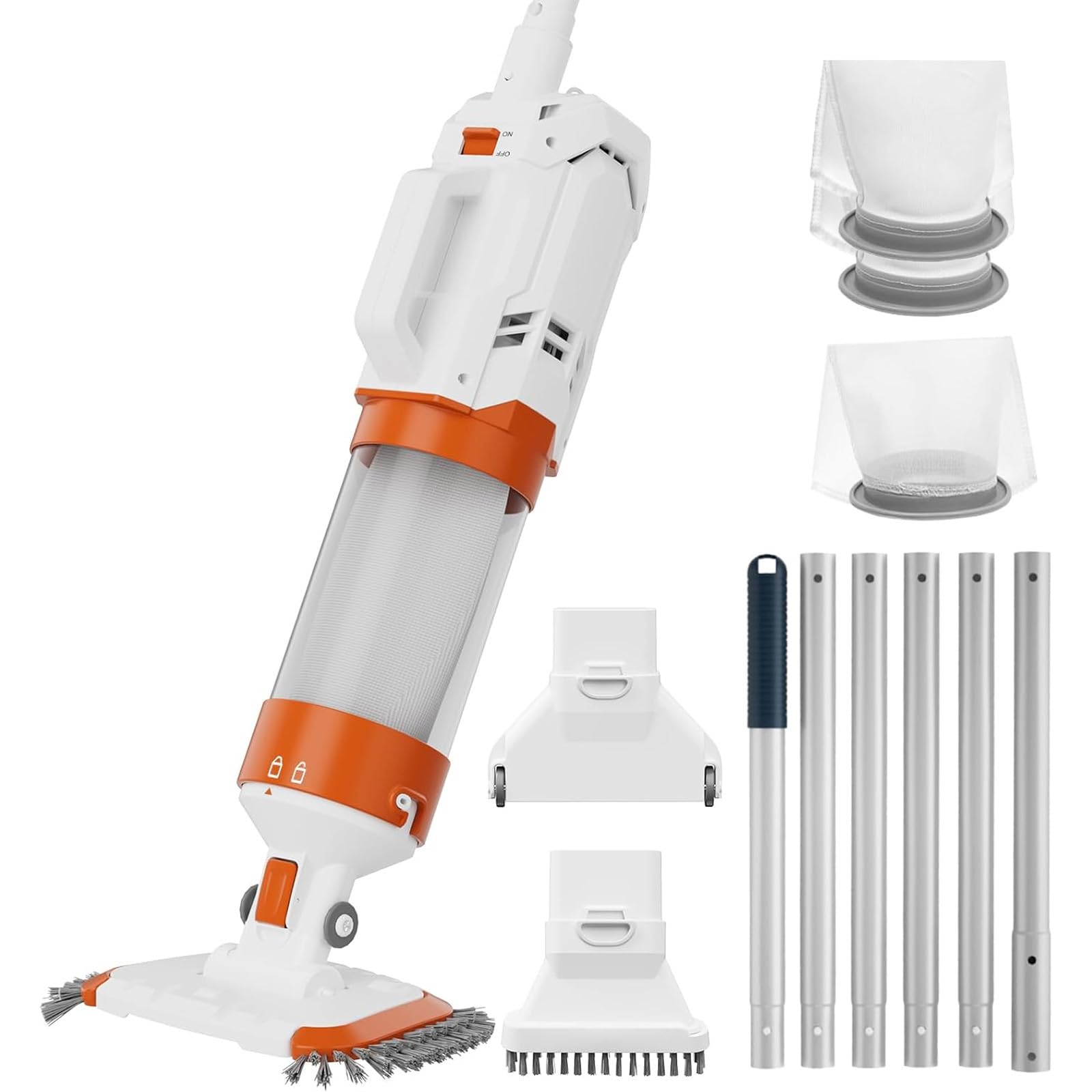
I choose this model when I want the finest filtration — the ultra-fine mesh options make it my pick for sand and smaller particles.
Why I picked it: 25µm ultra-fine mesh option and a magnet-drive for durability.
Best for: Pools with lots of fine sand, dust and small particulate debris.
Higher-end handheld with very fine filtration and durable drive.
Pros
- Ultra-fine 25µm mesh filters available
- Magnet‑drive system for longevity
- Multiple heads for different jobs
Cons
- Can struggle with very dusty pools
- Some users report mixed pickup on ultra-fine dirt
My take
I depend on the AQUA FYSH AQ70 when I need very fine filtration — the fluff ultra-fine 25µm bags trap particles standard filters will miss.
The magnet-drive system feels robust and reduces internal wear I’ve seen elsewhere, and the three head options make it easy to switch between wide-area and tight-space cleaning.
In very dusty environments I did notice some agitation of settled dust that required a second pass, but overall the AQ70’s filtration and ergonomic design make it a strong choice for detail cleaning.
How I Choose a Battery-Operated Pool Vacuum
Key features I test and why they matter
I focus on four practical specs: suction flow (GPM), runtime, filtration fineness and pole/reach. Together they determine whether the vacuum actually removes the debris you care about and how quickly you can finish the job.
Runtime and charge time determine whether a single charge covers your pool. A faster charge matters when you need back-to-back cleanups; longer runtime matters when you have a larger surface.
- Suction flow (GPM): higher flow equals better pickup of sand and silt.
- Runtime and charge time: balance longer run time with acceptable recharge times.
- Filter fineness: 25–120µm filters trap different particle sizes; finer filters catch sand.
- Pole length and attachments: telescopic poles and interchangeable heads reach stairs, walls and corners.
Real-world trade-offs I consider
I accept that handhelds trade continuous pump suction for portability. That means I expect to empty filters more often and to move more slowly over heavy deposits.
If I need a full deep-clean of a large inground pool, I’ll pair a cordless handheld for corners with a pump-based or robotic system for bulk floor work.
- Handhelds: best for spot cleaning, stairs and corners.
- Pump-powered heads: work continuously but require plumbing and hoses.
- Robots: great for full-floor automatic cleaning but may miss corners.
Maintenance tips I follow
I always rinse filter bags after each use and let components dry before storage to prevent odors and wear.
I watch seals and charging ports — a quick wipe and dry keeps waterproofing reliable. If a unit has an auto-shutoff when out of water, I test it early so I know how it behaves during cleaning.
- Rinse filters and let them dry between uses.
- Keep charging port dry and clean.
- Store batteries indoors in moderate temperatures.
Frequently Asked Questions
Can a battery-operated vacuum replace my pool pump vacuum or robot?
Not entirely. I use cordless handhelds to complement — they excel at stairs, corners and quick spot cleaning, but for full-floor jobs or heavy algae I still rely on a pump-powered system or a robot.
How long should I expect the battery to last in real use?
Expect 45–90 minutes depending on model and conditions. I usually plan sessions around the rated runtime and keep a quick charge window in mind for back-to-back cleans.
Which filtration fineness should I choose for sandy pools?
I prefer the finest mesh available (25µm or similar) if sand and fine sediment are the problem. Coarser meshes clog less quickly but let fine grit pass back into the water.
Final Take
After testing multiple battery‑operated vacuums I keep a handheld in my garage for quick cleanups and a pump‑powered head for heavy-duty scrubbing. My top overall pick handles the widest range of tasks, while the fine‑mesh and spa‑focused models are my go-tos for specific jobs.
Pick the model that best matches your pool size and the type of debris you deal with most often — that choice makes the biggest difference in how much time you save.
