
I tested a range of indoor plant stands to find the ones that hold heavy pots, fit tricky pot sizes, and actually look good in a living room. These four stood out for strength, finish, and how easy they were to live with
I live with a lot of large plants, so my priorities for a plant stand are simple: it must be stable, resistant to water and rust, and it must complement my decor. I tested metal and wood stands in real conditions — heavy ceramic pots, regular watering, and daily traffic.
In this roundup I focused on build quality, fit for common pot sizes, how each stand behaves with heavy loads, and how easy each one is to assemble and move. Below are the stands that worked best for me, with notes on where each one shines.
I compared these stands side-by-side by testing load stability, resistance to moisture, fit with common pot diameters, and everyday usability like assembly and floor protection.
1. Yimobra Patented Metal Plant Stand – Best Overall
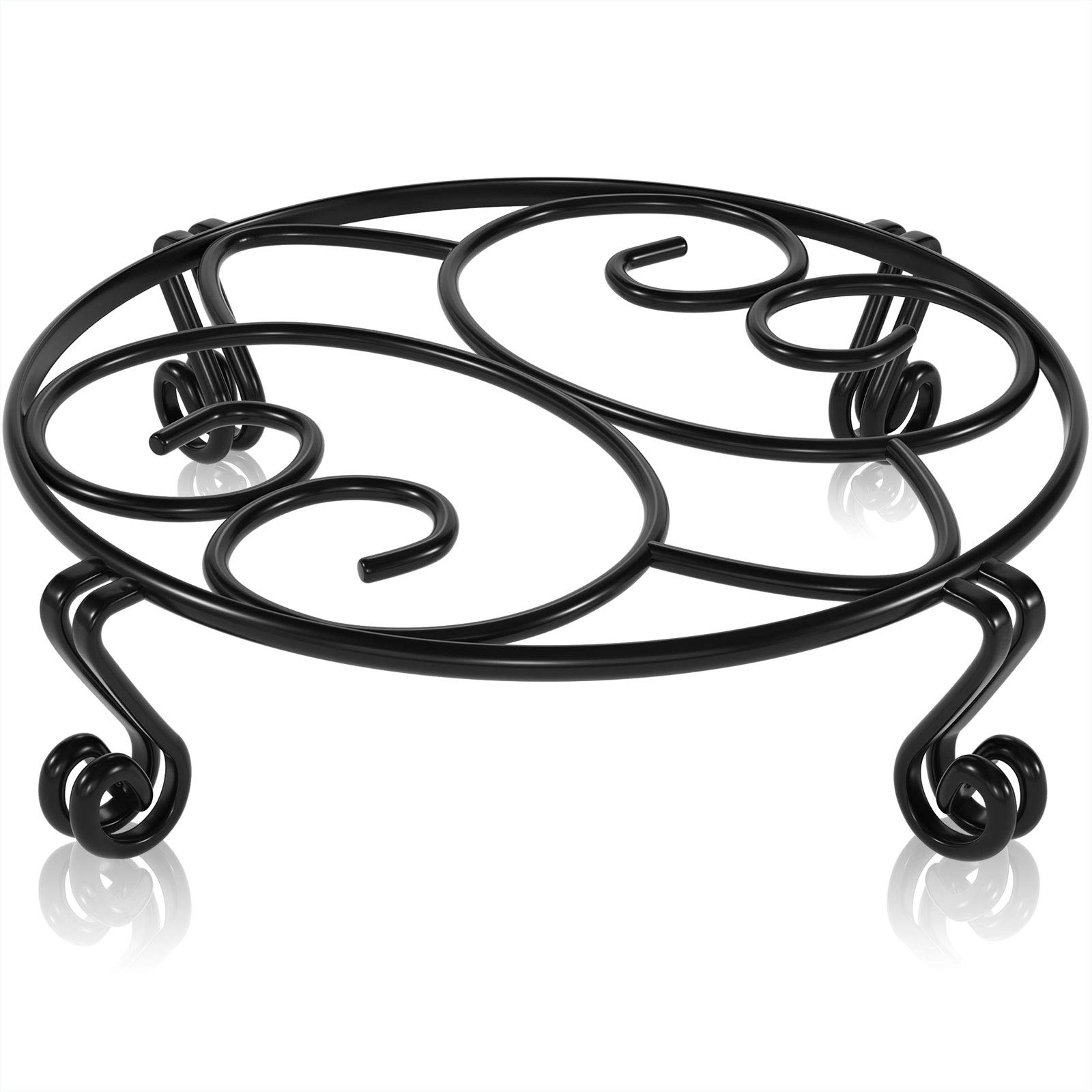
A rustproof, no-assembly metal ring that handles very heavy pots and protects floors.
Why I picked it: Exceptionally sturdy iron construction and a rustproof finish that held up under heavy ceramic pots.
Best for: Heavy pots and high-traffic areas where strength matters most.
Affordable option for a heavy-duty metal stand.
Pros
- Very high load capacity
- No assembly required
- Rustproof coating
- Floor-friendly curved feet
Cons
- Round opening limits very wide pots
- Simple design may feel utilitarian
My take
This Yimobra stand is the one I reach for when a planter is too heavy for plastic or flimsy wood. The high-strength iron feels like it was built to be left outside in rain and not corrode, and the rustproof coating really stood up after repeated waterings.
I appreciated that there’s no assembly — I placed the pot on the ring and it sat steady thanks to four equal-length support points. In everyday use I’ve used these under large ceramic pots, water crocks, and even heavy decorative vases without any sign of bending.
The floral outline adds a subtle decorative touch, and the smooth curved feet avoided scratching my floors when I moved pots around. If you need a stand that’s primarily about holding weight reliably, this one does the job well.
2. Mid-Century Acacia Wood Adjustable Plant Stand – Best Mid-Century Wood
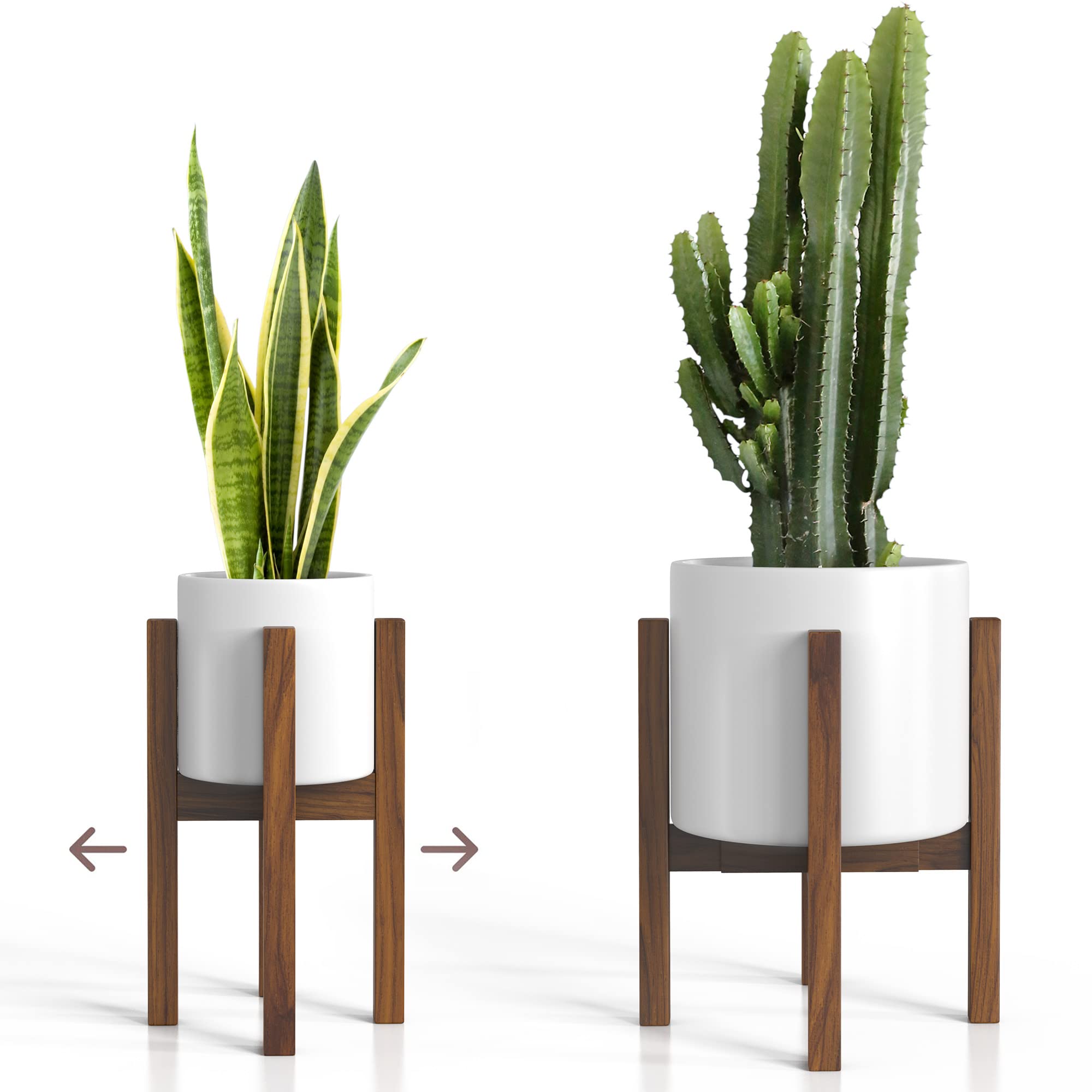
Handmade acacia stand with an adjustable ring — a premium wood option that looks like furniture.
Why I picked it: Solid acacia construction and a clever adjustable design that fits a range of pot widths.
Best for: People who want a warm, furniture-quality stand that adapts to different pots.
A more premium, furniture-like option.
Pros
- Handmade acacia wood
- Adjustable width 8–12 inches
- Simple one-screw assembly
- Feels like quality furniture
Cons
- Tight adjustment can require muscle
- Not ideal for outdoor constant moisture
My take
This acacia stand felt like bringing a small piece of furniture into my plant corner. The wood is thick and substantial, and the finish matched my mid-century inspired pieces better than any metal ring I tried.
Assembly is literally one screw, but expect to use a screwdriver and a little elbow grease to get the adjustable ring snug — that snugness is what makes it so stable once set. I moved a medium fiddle-leaf fig onto it and never worried about slippage.
Because it’s solid wood and handmade, I treat it as an indoor piece; it’s gorgeous in a living room or entryway, and the adjustable width saved me from hunting down an exact pot-size match.
3. FaithLand Metal Mid-Century Plant Stand – Best for Wide Pots
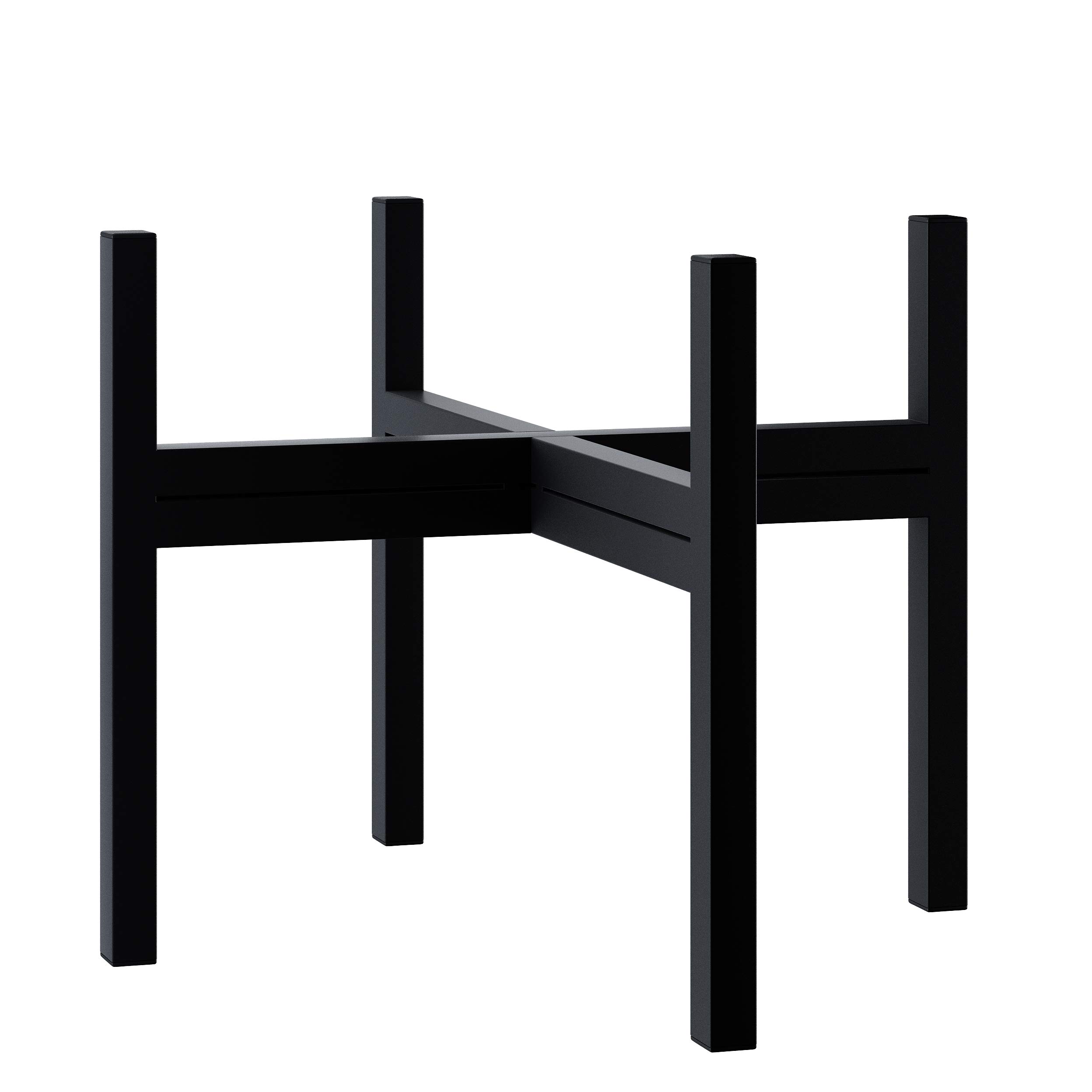
A matte-black metal stand that fits wider pots and assembles quickly with solid stability.
Why I picked it: Built to accept wider pots and made from thick steel, so wider planters sit confidently.
Best for: Medium to wide pots, and folks who want a modern black stand.
Mid-priced and well-finished metal option.
Pros
- Fits 13–14 inch pots
- Strong double-layer crossbar
- Weather-resistant powder coat
- Easy assembly with included hardware
Cons
- Needs a firm final bolt tightening
- Lower height may not suit tall plants
My take
I picked the FaithLand stand when I needed something that would accommodate wider pots without looking bulky. The interior diameter matches 13–14 inch planters closely, and the metal construction felt reassuringly heavy.
Assembly was straightforward — the parts are intuitive, the bolt goes in quickly, and they even include a small screwdriver and foam foot pads. Once I tightened the bolt down firmly the stand was rock-solid; I did notice a little wobble if I left it hand-tight, so I crank the screw the last bit and that fixes it.
The matte black finish is easy to clean and works well indoors and on covered patios. For plants that need a low, wide base, this is the most practical pick I tested.
4. Tall Solid Iron Plant Stand – Best Tall Metal Stand
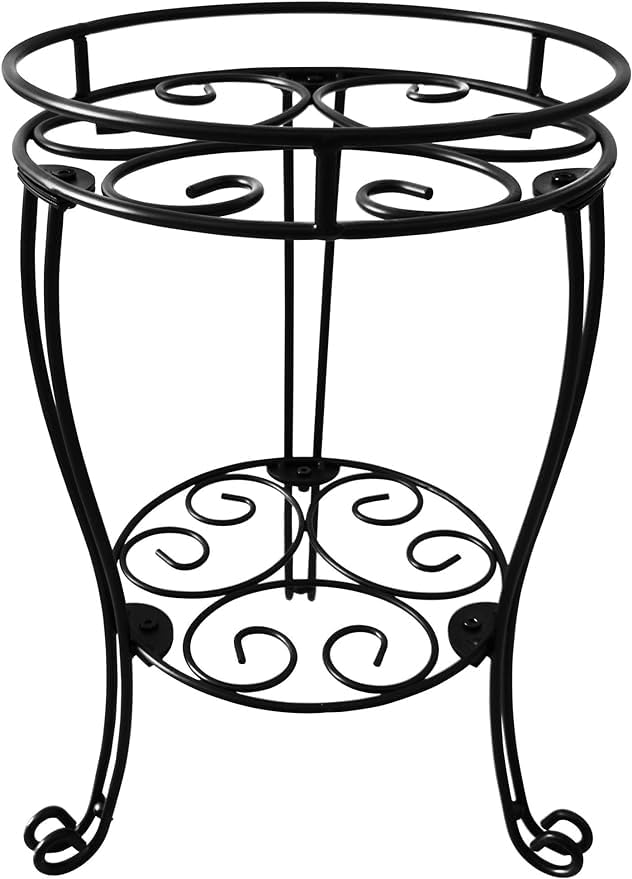
A taller wrought-iron stand built from solid material for elevated display and reliable support.
Why I picked it: Solid iron construction and taller profile that lifts plants for better presence and watering access.
Best for: Elevating medium to large pots where height and solidity matter.
A mid-range solid-iron option with heft and durability.
Pros
- Solid iron, not hollow piping
- Tall profile for display
- Stable triple-leg support
- Arc feet protect floors
Cons
- Heavier to move when loaded
- Matte finish limited color options
My take
When I wanted a taller presentation for a statement plant, this solid iron stand was the one I kept coming back to. It’s noticeably heavier than hollow-pipe stands and feels built to hold a full ceramic planter without flexing.
Assembly takes five minutes with the included wrench and screws. The three double-leg supports reduce wobble and the curved base gives a stable footprint that doesn’t gouge floors. I used it with a sizable peace lily and appreciated the extra working height for watering and pruning.
If you plan to move big pots around frequently, remember this stand adds weight — but that same heft is what makes it so steady in a busy home.
How I Choose Indoor Plant Stands
Match the Stand to Your Pot
I always measure the outer diameter of a pot before buying a stand. A ring-style stand needs to match the pot width, while adjustable or broad-ring stands give more flexibility.
If you have several pot sizes, I favor stands with adjustable rings or a little extra top diameter to avoid slipping.
- Measure pot outer diameter, not just the inner pot.
- Allow 0.5–1 inch of clearance for easy placement.
- Choose adjustable stands for changing pots.
Prioritize Material and Durability
For heavy ceramic pots I pick solid metal or thick-walled iron. Those materials resist bending and last through wet conditions.
If you want a warm, furniture-quality look, solid hardwood like acacia offers strength and a refined finish, but I keep wooden stands indoors to avoid moisture damage.
- Solid iron/steel = best for heavy planters.
- Powder-coated finishes resist rust in humid spots.
- Wood is stylish but best kept dry.
Think About Height and Access
I choose taller stands for easier watering and to give plants more presence. Short stands work well for floor clusters and low-slung pots.
Also consider how the height affects a plant’s light exposure — moving a pot up a foot can make a noticeable difference.
- Taller stands improve access for watering and pruning.
- Lower stands are more stable for top-heavy plants.
- Balance height with pot stability.
Assembly and Floor Protection
I prefer stands that either require no assembly or come with simple hardware and clear instructions. Small extras like foam pads or curved feet protect floors and are worth it.
When a stand requires a single screw or a small wrench, assembly is quick and it ends up more secure than lightweight snap-together designs.
- Look for included screws, wrench, or pads.
- Fitted feet reduce floor scratches and sliding.
- Tighten fasteners fully for wobble-free performance.
Frequently Asked Questions
Can these stands be used outdoors?
I use metal powder-coated stands on covered patios without issue; untreated wood I keep indoors. For full outdoor exposure I choose solid metal with a rustproof finish.
Will these stands fit my oddly sized pot?
I always measure the pot’s outer diameter first. Adjustable stands or ones with a slightly larger opening handle odd sizes best.
How do I protect my floors from scratches and water?
I add rubber or foam pads under the feet and set a water-catching tray or mat beneath planters when watering. Many stands include pads or have curved feet designed to reduce marking.
Final Take
After testing, I recommend the Yimobra if you need raw load capacity, the acacia stand if you want furniture-quality styling, the FaithLand for wider pots, and the tall iron stand when height and solidity are the priorities.
My final tip: pick the stand that fits your pot and your routine — a stable stand that protects your floors will make plant care easier and keep your room looking good.
