
I tested seven popular brush sets for detail work, travel, and beginner kits. Here are the ones I reached for again and again, and why each earns a spot in my kit.
I’ve spent time painting with every set in this roundup—working on miniatures, canvas pieces, rock painting, and quick travel studies. I focused on tip retention, feel, and how each brush handled different media.
Below I break down which sets I reach for when I need fine lines, a full starter kit, or a durable set that survives travel and repeated cleaning.
If you primarily paint miniatures and tiny details, the Golden Maple and Nicpro sets give me the control I need. For the most brushes per dollar, BOSOBO and the 24-piece wooden set are my go-to stash buys. If I’m teaching, traveling, or want an all-in-one starter kit, Benicci and ARTIFY cover tools and storage without fuss.
1. BOSOBO Round-Pointed Brush Set – Best Value
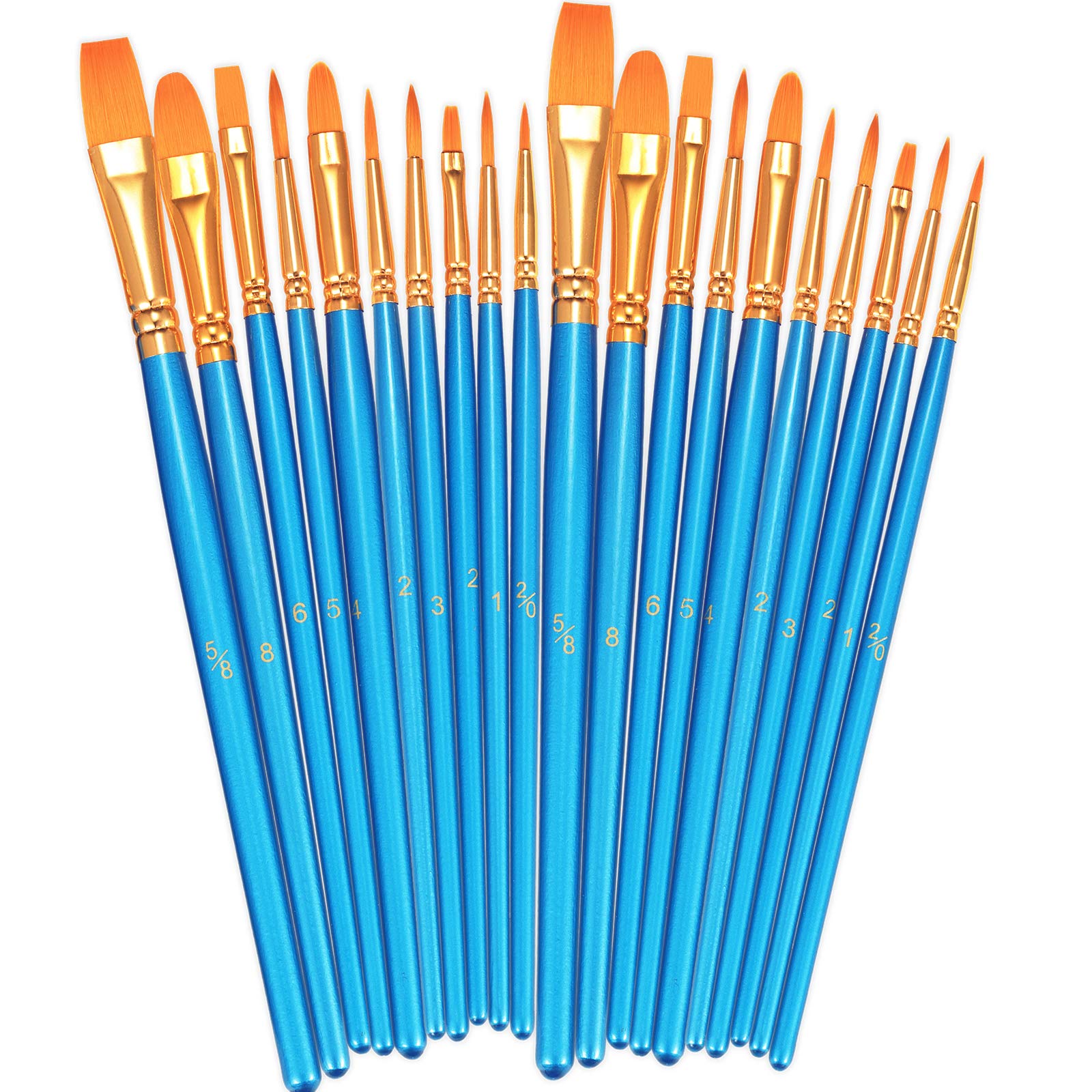
Two packs of 10 small round-pointed nylon brushes that I keep in my detail drawer for everyday fine work.
Why I picked it: Huge two-pack variety and surprisingly resilient nylon tips.
Best for: Hobbyists, students, and anyone needing lots of small brushes.
Extremely affordable two-pack value.
Pros
- Wide range of tiny sizes
- Nylon bristles spring back well
- Rust-proof nickel ferrules
- Comfortable wooden handles
Cons
- Shorter handles than pro brushes
- Not ideal for heavy-bodied oil work
My take
I keep this BOSOBO two-pack on my bench for detailed work and quick touch-ups. The round-pointed nylon tips hold a fine point and spring back nicely after cleaning, which makes them great for acrylics, watercolor, and miniature detailing.
Because you get two of each size, I rarely worry about losing a favorite brush mid-project. I clean them with warm soapy water, reshape the tips, and store them upright in their case; with that care I’ve seen minimal shedding.
These aren’t expensive natural-hair brushes, but for the money I rely on them for everyday detail, nail and face art, and practice sessions where I don’t want to risk my pricier brushes.
2. Golden Maple Detail Paint Brushes – Best for Miniatures
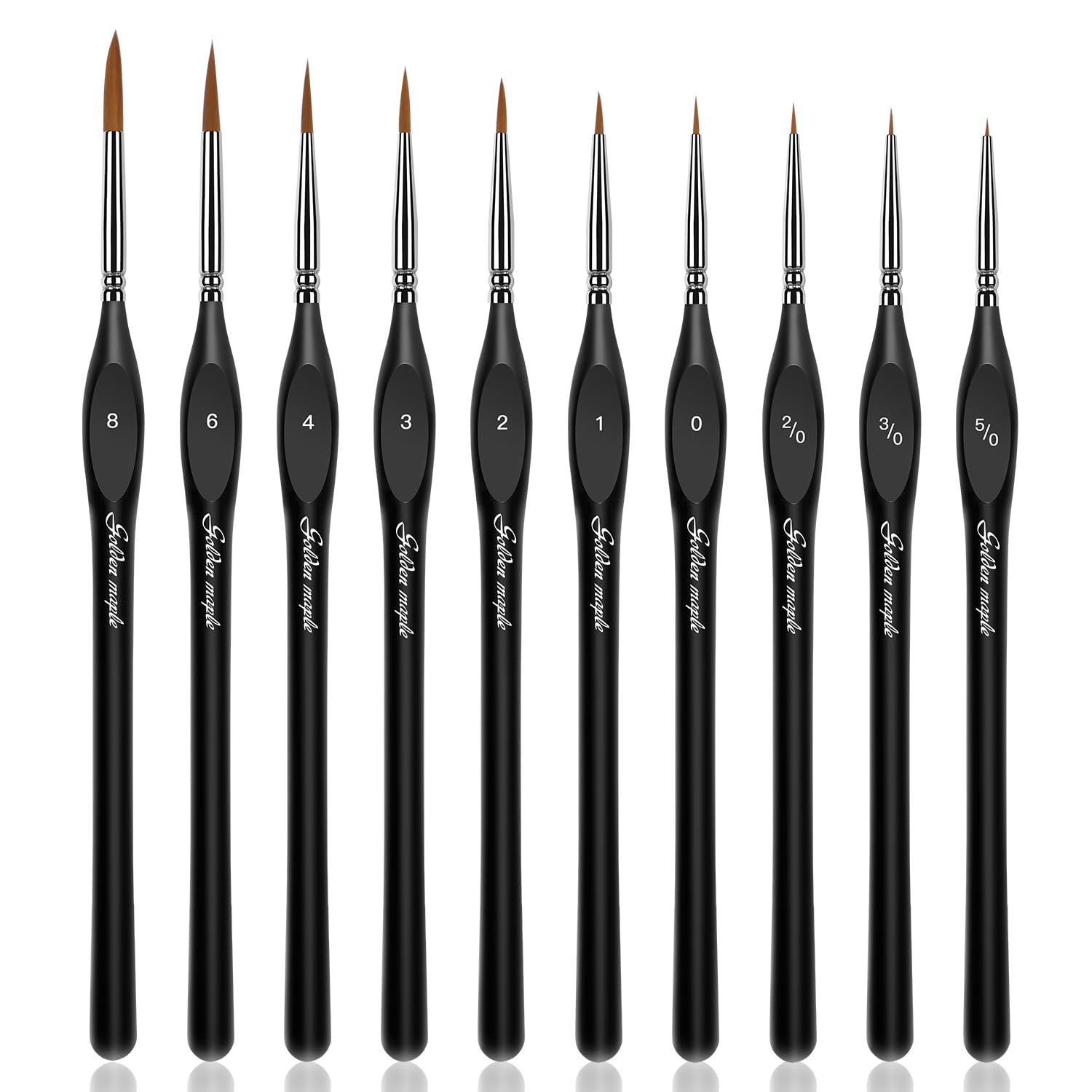
A compact 10‑piece detail set with sizes down to 5/0 and protective tubes I use for model work.
Why I picked it: True miniature sizes and comfy triangular handles for steady control.
Best for: Miniatures, models, nail art, and ultra-fine detail.
Mid-range detail set.
Pros
- Very small precision sizes
- Triangular easy-grip handles
- Protective tubes for storage
- Versatile across media
Cons
- No large brushes included
- Focused on detail, not broad work
My take
When I’m painting faces, armor details, or tiny features on models, this Golden Maple set is one of the first I reach for. The range from 5/0 up through larger sizes gives me the exact tip I need without hunting for a different kit.
The triangular handles make a real difference on long, fussy sessions; I find my hand cramps less and control improves. The protective tubes are handy for keeping tips safe between uses and when I travel to painting nights.
These brushes work well with acrylics, watercolors, and oils for miniature-scale work. They’re not meant to cover a whole canvas, but for intricate paint jobs they’re exactly what I want on my palette.
3. Nicpro Micro Fine Detail Brush Set – Best Micro Detail Pack
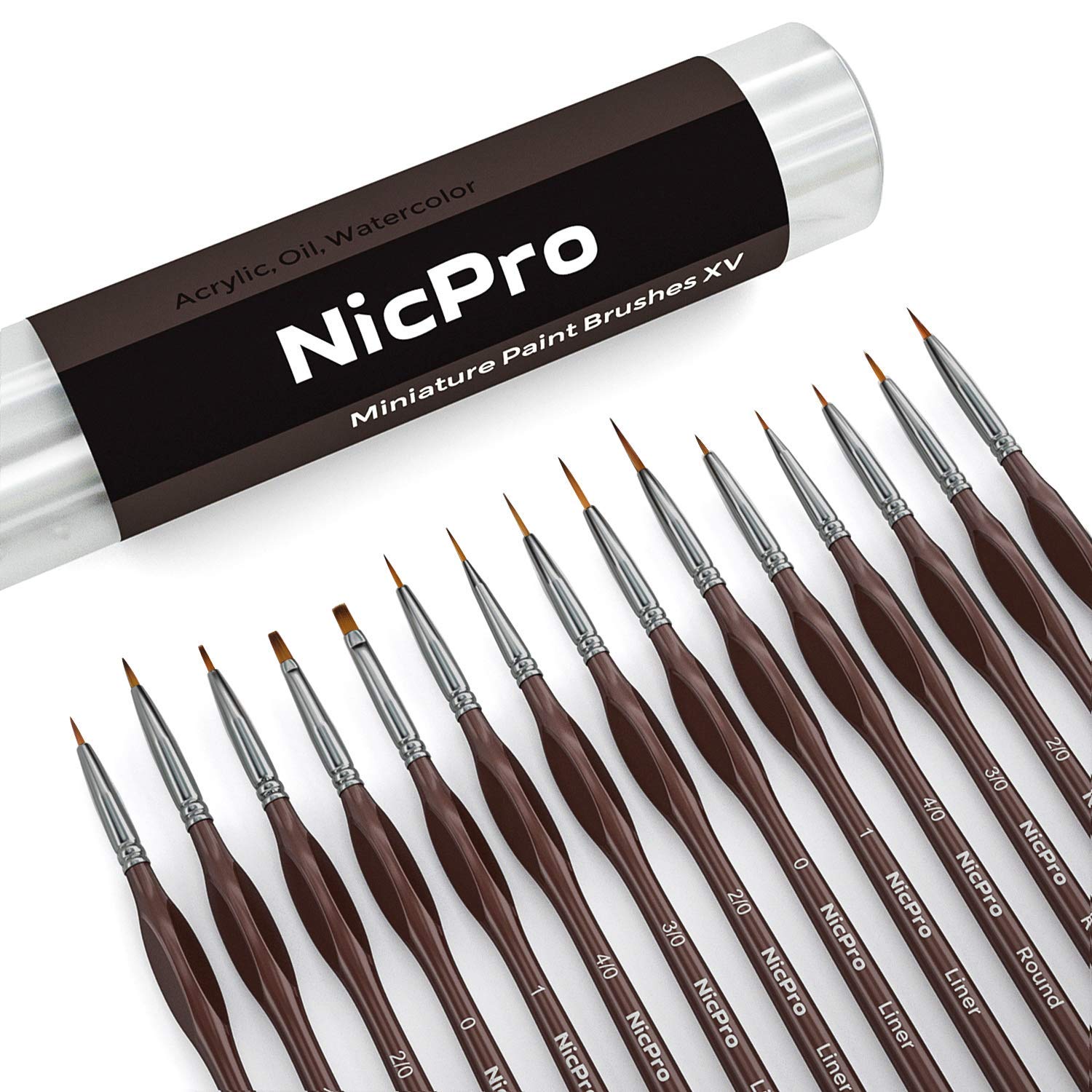
A comprehensive 15‑piece micro set with liners, rounds, flats, and a protective case I actually keep in my travel bag.
Why I picked it: Complete selection of liners and micro rounds with ergonomic handles.
Best for: Paint-by-numbers, miniatures, travel, and precision work.
Great mid-price option with protective case.
Pros
- Full liner and round selection
- Ergonomic triangular grips
- Individual plastic sleeves
- Velvet storage bag included
Cons
- Synthetic rather than natural hair
- Some flats feel less essential
My take
This Nicpro kit is the most complete micro set I own. Liners, very fine rounds, and a few flat/spot brushes cover everything from hair-by-hair strokes to tiny dots and highlights.
Packaging impressed me—each brush ships in its own plastic sleeve, then sits in a hard container inside a velvet bag. That level of protection matters when I toss brushes in a travel pouch.
The triangular, non-slip handles help me maintain control during long sessions, and the liners hold enough paint to pull long, consistent lines without constant reloading.
4. Benicci Premium Artist Brush Set – Best Starter Kit
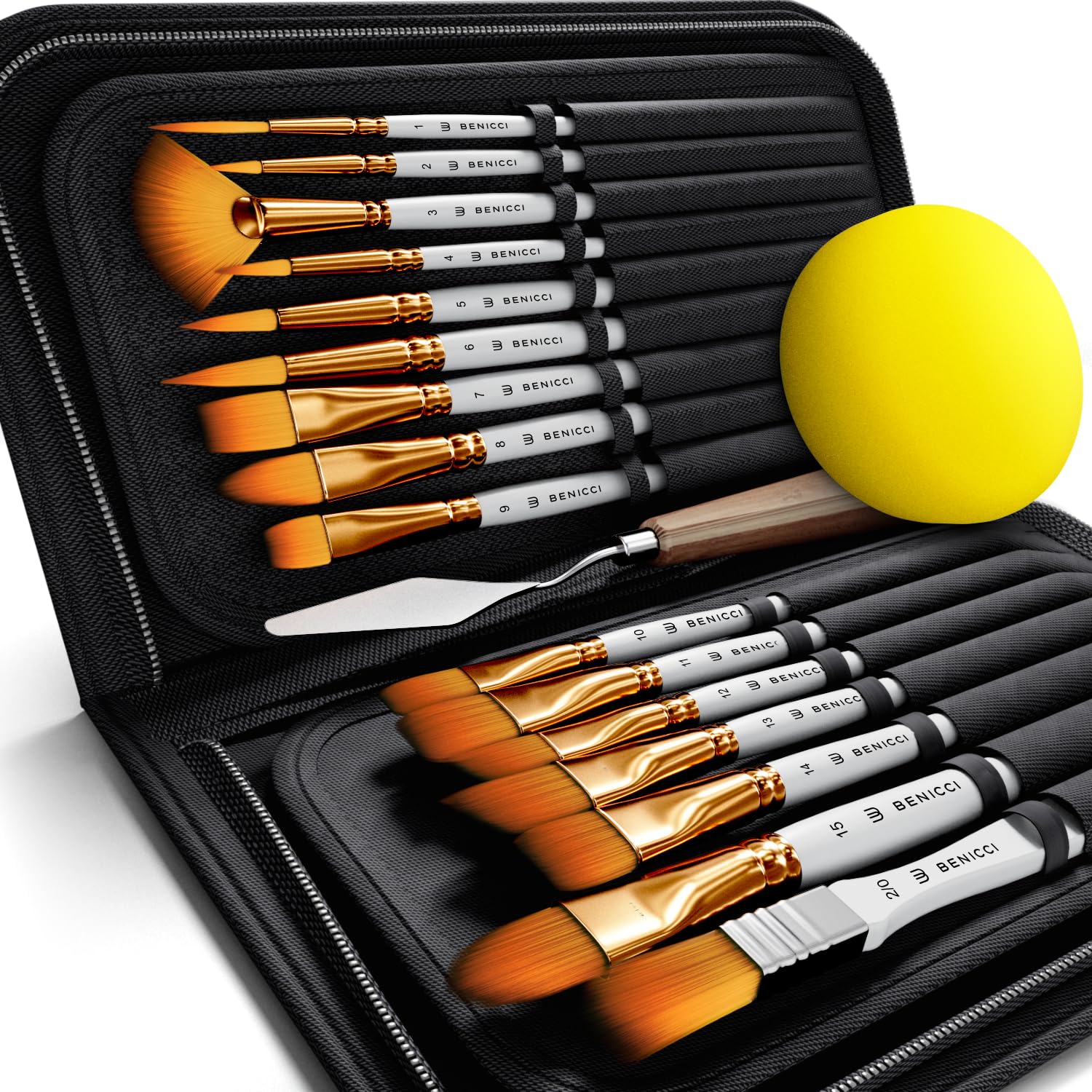
A broad beginner set with multiple shapes, a pop-up case, palette knife, and sponge—my classroom go-to.
Why I picked it: Wide shape selection plus a convenient pop-up case and extras.
Best for: Beginners, students, and portable painting setups.
Complete beginner kit at an accessible price.
Pros
- Variety of brush shapes
- Portable pop-up case
- Includes palette knife and sponge
- Handmade bristle stacks
Cons
- A couple brushes felt loose initially
- Not specialized for miniature detail
My take
I put this Benicci kit to work in an art class and found it covered nearly every basic need: flats, rounds, filberts, fans, and liners. The included palette knife and sponge are practical extras I actually use.
The pop-up case doubles as a small stand, which I appreciated on the go. A couple of brushes in my set felt a touch loose out of the box but tightened up after a few sessions and normal cleaning.
For students and hobbyists who want a ready-to-go kit without sourcing individual shapes, this set saves me time and keeps a neat workspace.
5. ARTIFY 18-Piece Brush Set – Best Durability
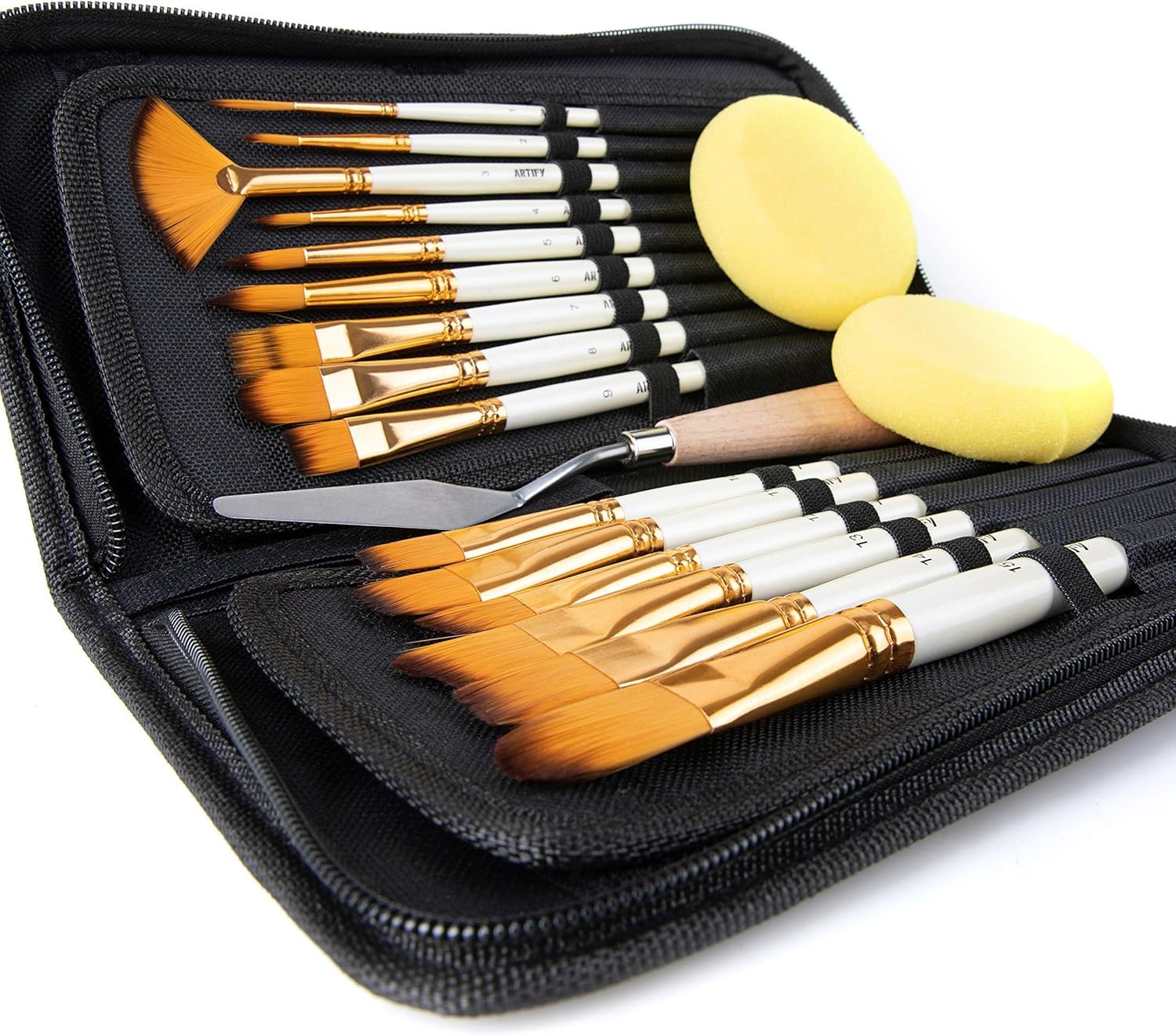
A reinforced set with water-resistant handles, a pop-up carrying case, and enough shapes for medium‑to‑detailed work.
Why I picked it: Reinforced ferrules and protective handle coating that withstand repeated cleaning.
Best for: Acrylics, mixed-media, and travel where durability matters.
Solid mid-range set with extra tools.
Pros
- Reinforced, water-resistant construction
- Pop-up carrying case
- Includes palette knife and sponges
- Holds paint well
Cons
- Feels a bit stiff at first use
- Fan brush can vary by batch
My take
I like the ARTIFY set when I want rugged brushes that survive travel and frequent washing. The triple-layer handle finish and heavier adhesive around the ferrule give me confidence when I work in wetter techniques.
The brushes are a little stiff the first time I use them, but they break in quickly and begin to hold and release paint more smoothly. The case converts into a pop-up stand that’s handy when I’m switching brushes rapidly.
For everyday acrylic work and mixed-media practice pieces I depend on this set for consistency and low-maintenance care.
6. 24-Piece Wooden Handle Brush Set – Best Variety Pack
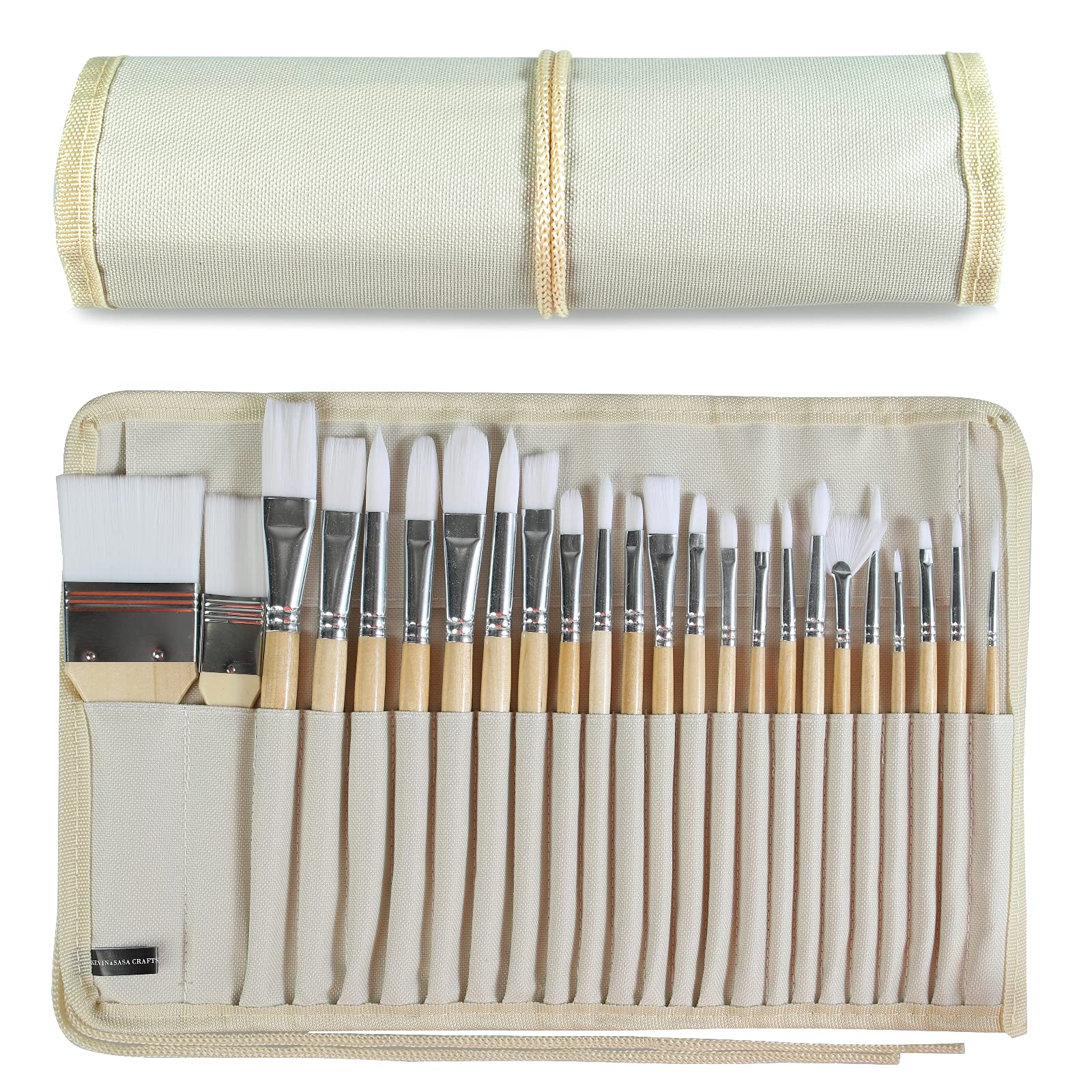
A large assortment in a canvas case that I stash for workshops and classroom sessions where I need every type of brush at hand.
Why I picked it: Extensive assortment and canvas case for organization.
Best for: Workshops, classrooms, and artists who want many brush types.
Excellent value for a large collection.
Pros
- Huge selection of brush types
- Canvas storage case
- Good for washes and backgrounds
- Natural wood handles
Cons
- Labeling uses types rather than numbers
- Not museum-grade materials
My take
I keep this 24-piece set where I teach because it covers fan brushes, riggers, mops, filberts, and angles—so students can experiment without hunting for tools.
One brush in the set became a surprising favorite for me: a large rigger that holds a lot of water and drops it predictably for wet-into-wet work. For blocking and backgrounds these brushes do the job.
The canvas case lays out nicely and keeps everything organized. These aren’t high-end natural-hair brushes, but for versatility and quantity they’re a smart addition to any shared kit.
7. Angelus 5-Piece Artist Brush Set – Best for Small Projects
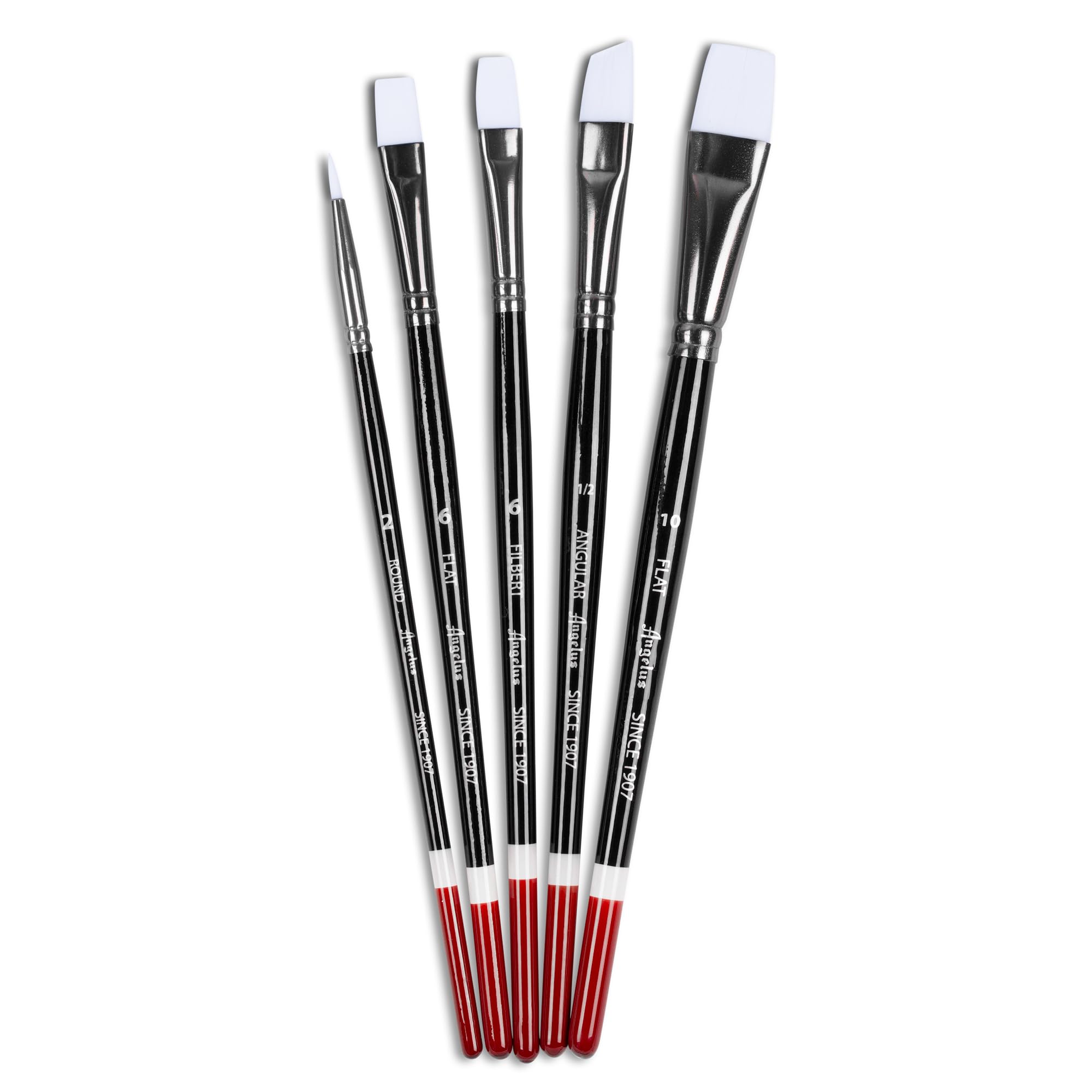
A compact five-piece set with flats, a filbert, and a small round that I use for shoe painting, leather touch-ups, and small craft jobs.
Why I picked it: Essential mix of sizes for craft and touch-up work.
Best for: Shoe paint, small crafts, and touch-up projects.
Compact, budget-friendly set.
Pros
- Right mix of basic sizes
- Synthetic fibers clean easily
- Good stiffness for edges
Cons
- Limited range for larger canvases
- Only five brushes included
My take
When I’m painting shoes, small props, or doing quick repairs, this Angelus set gives me the exact flats and a small round I need without extra bulk.
The synthetic bristles have the right amount of stiffness for crisp edges and they clean up easily after acrylic shoe paint. I also appreciate that the small round holds a fine point for detailing.
It’s not a full studio set, but for compact projects and craft kits this small collection covers the essentials well.
How I Choose Paint Brushes
Brush Types and What I Use Them For
I think about the shapes I use most: rounds for lines and detail, flats for edges and blocking, filberts for blending, fans for texture, and liners for hair-fine strokes.
If I’m doing miniatures I prioritize liners and micro rounds. For canvas work I keep a selection of flats and filberts handy.
- Round: versatile for lines and detail
- Flat: good for edges and filling
- Filbert: blends smoothly
- Fan: texture and dry-brushing
- Liner: long, continuous fine lines
Bristle Material and Performance
I choose nylon or synthetic brushes for acrylics and mixed media because they’re durable and easier to clean. Natural hair holds more paint, which I prefer for wet oils and glazing.
Many kits here use high-quality synthetic hair that mimics natural spring; that’s what I use for long practice sessions and travel.
- Synthetic: durable, easy to clean, great for acrylics
- Natural: better paint-holding for glazing and oils
- Mixed: a good compromise for varied media
Handles, Ferrules, and Construction
I inspect ferrules for tight crimps and rust-proof material. Handles should feel balanced—triangular grips help when I need precision.
A protective case or sleeves matter to me if I travel or store brushes frequently; packaging often predicts how well tips survive transport.
- Choose rust-proof ferrules for longevity
- Short handles for detail work, long handles for easel painting
- Protective sleeves or cases preserve tips
Care and Maintenance I Follow
I clean brushes immediately after use with warm soapy water for water-based media and appropriate cleaners for oils. I reshape tips, dry them horizontally or head-up, and avoid leaving them soaking.
With a little care I extend the life of even budget brushes and keep tips performing well.
- Clean promptly after each session
- Reshape tips and dry properly
- Store protected to avoid bent tips
Frequently Asked Questions
Can I use synthetic brushes with oil paint?
Yes. I use the synthetic kits in this guide with oils for detail and base work. Synthetic bristles handle oils fine, though natural-hair brushes will hold more paint for large glazing work.
How do I clean and store these brushes?
I wash water-based paints with warm soapy water, reshape the tip, and let brushes dry horizontally or head-up. For oil paint I use an appropriate solvent followed by soap and water. I store brushes in sleeves or a case to protect tips.
Which set should I pick for painting miniatures?
I recommend the Golden Maple or Nicpro sets for miniatures because I get very fine liners and micro rounds that make hair-by-hair and edge work much easier.
Final Take
I reached for different kits depending on the job: Golden Maple and Nicpro for precision, BOSOBO and the 24-piece set when I want quantity, and Benicci or ARTIFY when I need an all-in-one portable kit.
Pick the set that matches the shapes and construction you use most, and with a little care these brushes will serve you well across projects.
