
I tested a range of sewing boxes and craft organizers so you can find the right storage for tiny notions, bobbins, totes and larger craft kits. Below I explain what worked for me and which boxes I reach for most.
I live with craft supplies everywhere, so I’ve tried dozens of storage systems. This roundup collects the organizers I still pull out regularly — from slim locking compartment cases for beads to roomy removable-tray bins for bulky kits.
My goal was simple: find options that keep tiny pieces from mixing, make colors easy to identify, and travel without dumping everything on the floor. I tested lids, handles, tray layouts, and how each box fits into my regular workflow.
I grouped these picks by how I actually use them: locking micro-compartment boxes for beads and hardware, bobbin-specific cases for thread spools, tote-style bags for portable projects, and deep removable-tray bins for bulkier supplies.
1. Craft Mates 14-Compartment Locking Organizer – Best for Tiny Parts
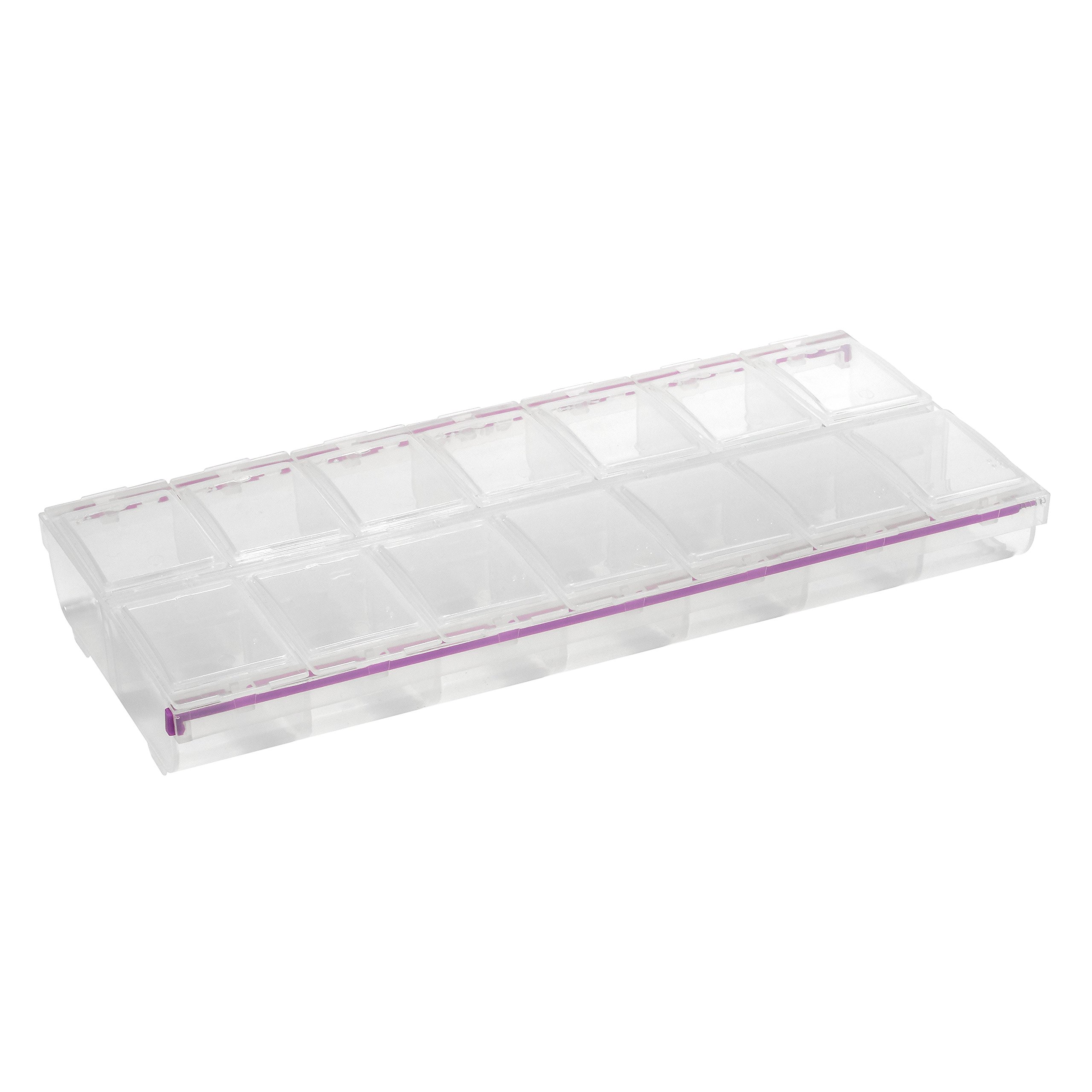
I keep my smallest findings and needles in this slim 14-compartment organizer because the patented lock-bar lets me open one section at a time without a spill.
Why I picked it: Patented lock-bar and clear lids for spill-free sorting.
Best for: Beads, buttons, needles, small findings and hardware.
Very affordable, excellent value for a dedicated small-parts organizer.
Pros
- Patented lock-bar prevents accidental spills
- Clear lids for instant visibility
- 14 separate compartments
- Slim and portable footprint
Cons
- Compartments are fixed size
- Not roomy enough for bulky items
My take
This is the box I reach for when I’m working with beads, sequins, or tiny findings. The clear lids make it quick to spot the color or size I need, and the lock-bar design actually works — I can open a single compartment without disturbing the rest.
I’ve bought multiples of this model for different workstations because it fits neatly in drawers and tote pockets. The plastic is lightweight but feels sturdy enough for frequent use, and the slim profile keeps my desktop uncluttered.
If you need adjustable dividers or space for larger spools, this isn’t the right fit, but for small notions it’s one of the most practical organizers I own.
2. Hobby Gift Medium Sewing Box with Handle – Best with Pin Cushion
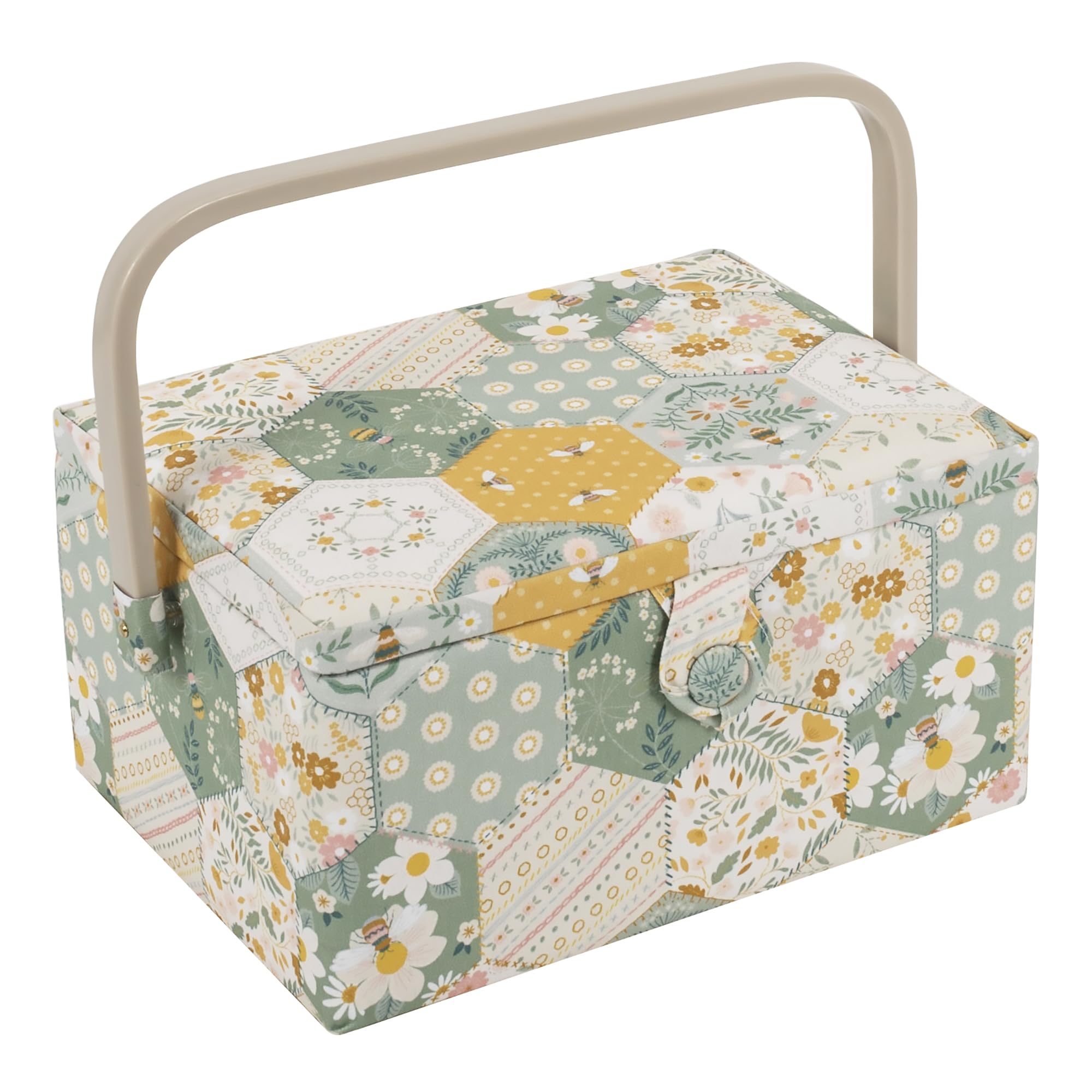
I use this medium sewing box when I want a compact, grab-and-go kit — the removable organizer tray, built-in pin cushion and internal pocket keep my small tools tidy.
Why I picked it: Removable tray, integrated pin cushion, and a carry handle for portability.
Best for: Home sewing kits, mending, and moving supplies between rooms.
A mid-range, practical option for everyday sewing needs.
Pros
- Removable accessories tray
- Built-in pin cushion inside the lid
- Sturdy carry handle
- Compact footprint
Cons
- Smaller than some expect
- Spot-clean fabric only
My take
I gifted this box to someone starting out and kept another for my own mending projects. The removable tray is the feature I use most — it separates bobbins, needles, and scissors so I can grab the tray and go.
The pin cushion inside the lid is a thoughtful touch; it saves me from digging for loose pins. The box is not oversized, so if you assemble large kits or collect many spools, you may need a bigger container.
For what it is — a tidy, portable sewing basket — it performs well and makes routine repairs and small projects easier to manage.
3. Everything Mary Deluxe Store & Tote (Medium) – Best Fabric Tote
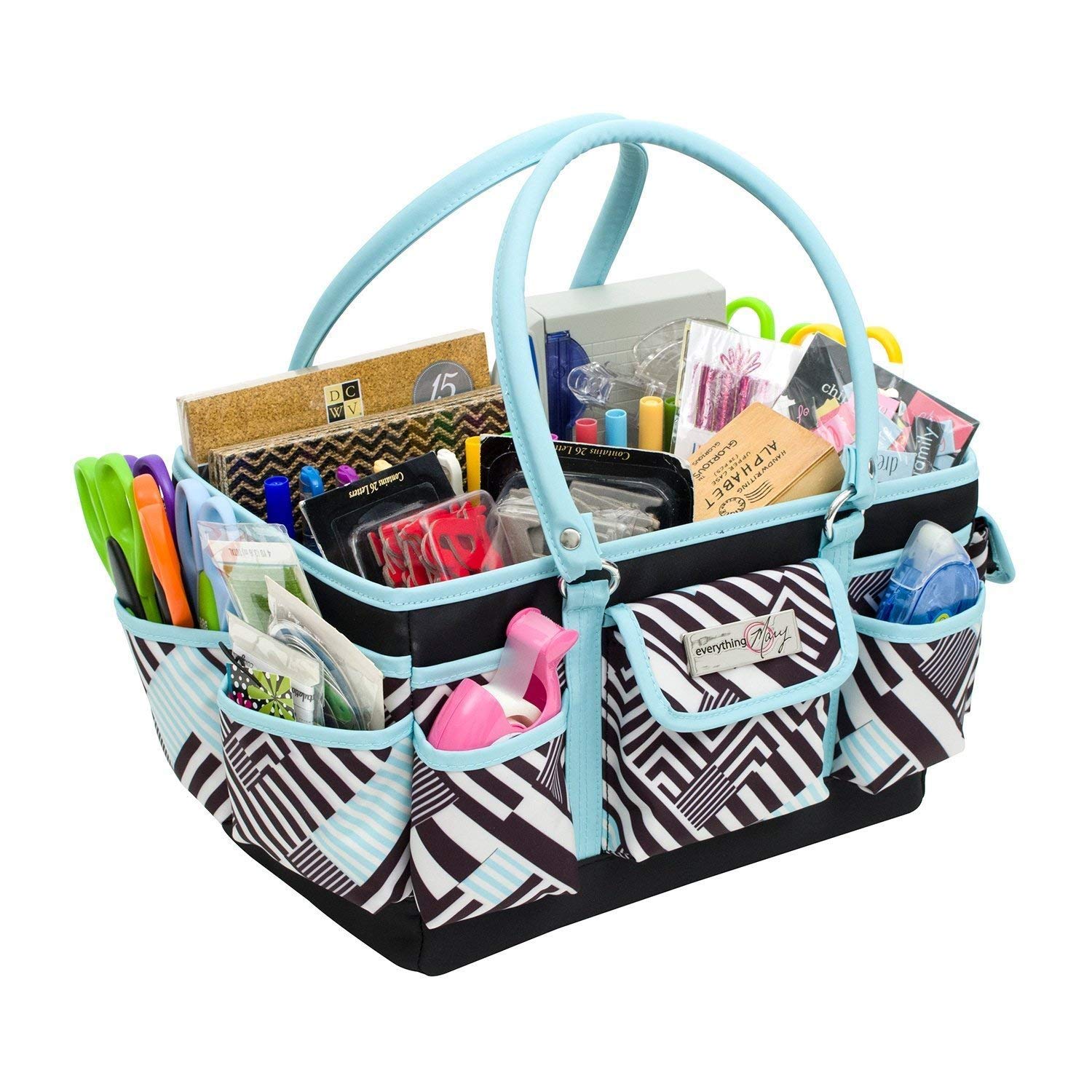
I reach for this padded tote when I want a soft-sided, pocket-rich solution for markers, journals and tools — it offers dozens of pockets and reinforced handles for carrying projects.
Why I picked it: High-pocket count and reinforced construction for travel and desktop use.
Best for: Portable craft kits, markers, journals, and supplies that benefit from many pockets.
A higher-end tote in the fabric organizer category.
Pros
- Durable 300-denier polyester
- Dozens of pockets and pen loops
- Reinforced handles for carrying
- Classy prints and hardware
Cons
- Not as rigid as plastic organizers
- Takes time to learn pocket layout
My take
When I want everything arranged by tool type — pens in loops, brushes in sleeves, journals in the main compartment — this tote delivers. The reinforced sides keep the shape, and the pockets mean I’m not digging through a single cavernous space.
I’ve used it for sketching supplies, skin-care kits, and even a travel nail kit. It holds a surprising amount without feeling bulky and the handles make short transports painless.
If you prefer hard-sided, compartmented boxes for tiny parts, this isn’t that; but for anyone who needs pocketed organization with style, it’s earned a permanent spot in my craft closet.
4. 25-Slot Bobbin Storage Box (2-Pack) – Best for Bobbins
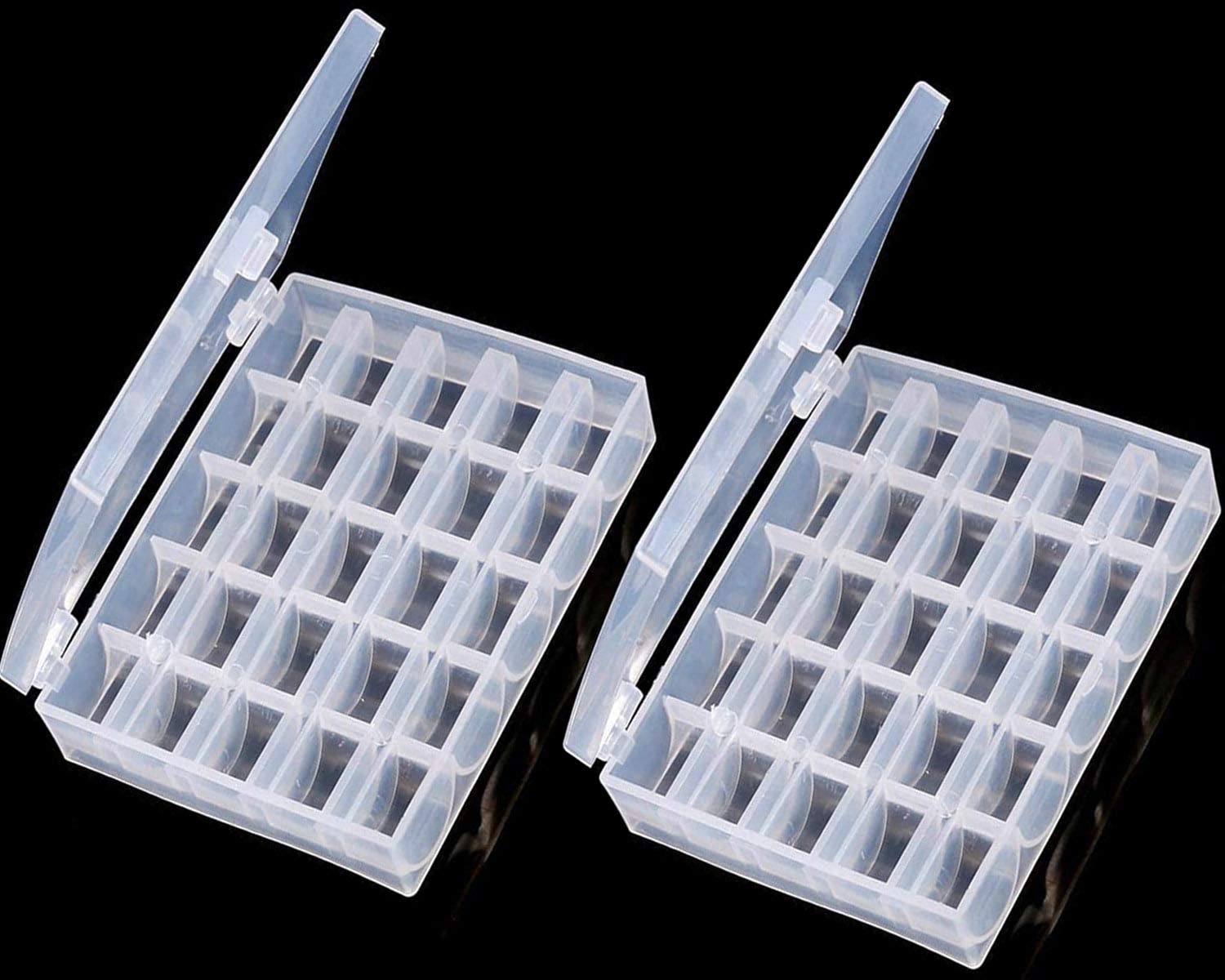
I keep wound bobbins tidy in these compact polypropylene boxes — each holds 25 bobbins, the clear lid helps me spot colors, and the snap closure keeps spools secure.
Why I picked it: Holds many machine bobbins with a clear window for quick selection.
Best for: Organizing standard-size machine bobbins and spare threads.
A low-cost, practical way to tame bobbin clutter.
Pros
- Holds 25 bobbins per box
- Transparent lid for quick color checks
- Compact and portable
- Durable polypropylene construction
Cons
- Bobbins not included
- Lid can flex on rough handling
My take
These are my go-to boxes for bobbins I use regularly. I store different colors separately and label cases by machine to avoid confusion. The fit is snug for most standard metal and plastic bobbins I use.
They stack neatly and the clear window saves time when I’m winding new thread. If you have oversized bobbins from specialty machines, double-check fit, but for standard bobbins these boxes do exactly what I need.
5. AKIRO 25-Slot Bobbin Boxes (2-Pack) – Best Value for Bobbins
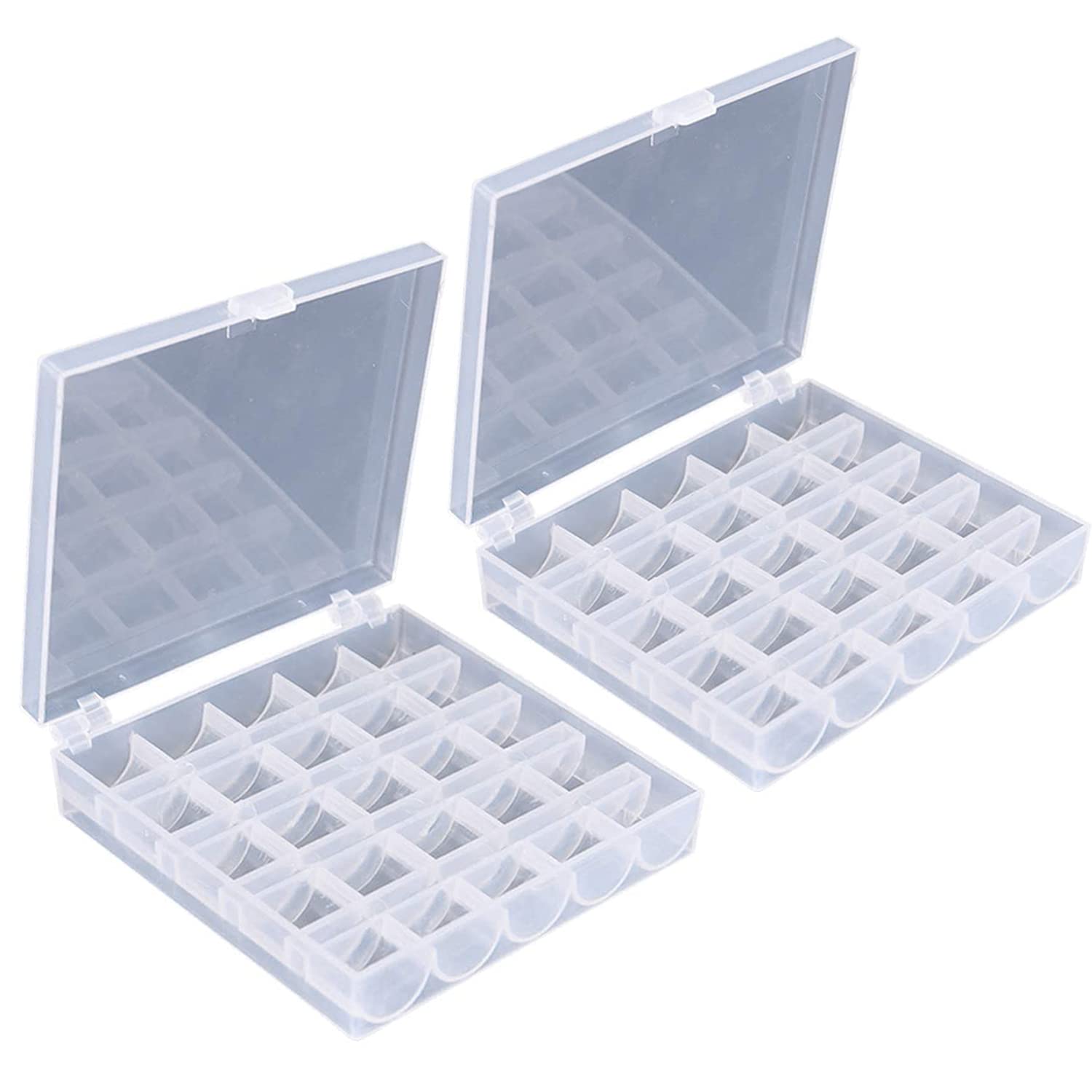
I keep a pair of these around for overflow bobbins and travel-ready thread sets — two clear cases let me separate projects and spot thread colors fast.
Why I picked it: Two clear, reusable boxes make bobbin organization easy and portable.
Best for: Home and travel use for machine bobbins.
A budget-friendly pick that still feels solid.
Pros
- Transparent, reusable plastic
- Two boxes included
- Good for travel storage
- Snap closure keeps bobbins secure
Cons
- May not fit larger specialty bobbins
- No bobbins provided
My take
I bought these to keep spares and project-specific bobbins separate. They’re well made for the price and the snap closure prevents bobbins from tumbling out in my bag.
One thing to note from my experience: very large industrial-style bobbins can be a tight fit, so I reserve these for household machine bobbins and smaller spools.
6. Citylife 17-Quart Storage Box with Removable Tray – Best Deep Storage
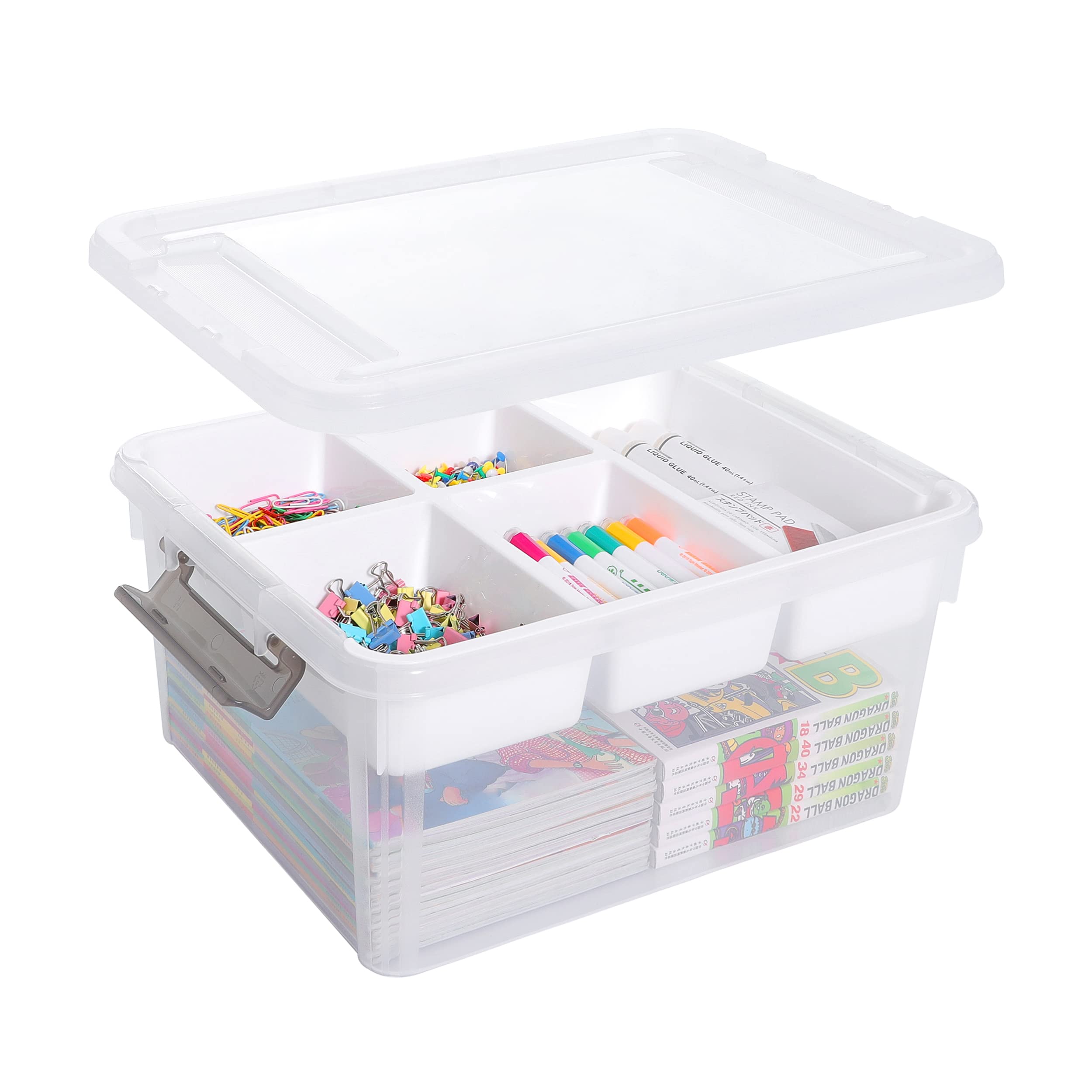
I use this 17-quart bin for projects that need depth — the removable top tray keeps small pieces accessible while the deeper base holds paints, larger tools, or multiple projects at once.
Why I picked it: Removable trays plus deep base for mixed-size supplies.
Best for: Acrylics, jewelry-making materials, and larger craft kits.
A mid-range container built for frequent use.
Pros
- Five partition trays for flexible separation
- Large 17-quart capacity
- Transparent base and lid for visibility
- Made of durable PP5 plastic
Cons
- Top tray doesn’t snap into place
- Lids can be damaged in shipping
My take
I keep a set of these for my paint tubes and jewelry tools. The removable top tray has deep sections that hold small bits during a project, and the bottom area swallows bulkier items.
The clear base makes it easy to see what’s inside when I’m grabbing a bin from a shelf, and the clasped lid keeps things secure for short transports.
I did encounter a cracked lid once in transit and had a good seller replacement experience, so inspect on arrival; otherwise I find this bin very reliable for hobby storage.
7. Citylife 17-Quart Storage Box with Removable Tray – Best for Kids' Crafts
I also use the same 17-quart bin specifically for kids’ kits — crayons, Play-Doh, and small building sets fit well and the top tray keeps tiny pieces from getting lost.
Why I picked it: Top tray separates tiny bits while the base holds bigger supplies.
Best for: Kids’ craft supplies, Lego sets, and classroom kits.
A practical option for family craft storage.
Pros
- Great capacity for kids’ supplies
- Top tray organizes the smallest pieces
- Transparent so kids can find items
- Sturdy construction and stackable
Cons
- Top tray only sits in rim, not locked
- Lid may arrive cracked if mishandled
My take
I use one of these as the designated kids’ craft box and it has been perfect for corralling markers, stickers, and Play-Doh tools. The tray keeps tiny parts in place when projects are paused.
Because it’s transparent, my kids can find what they want without me opening every container. It’s also roomy enough that I can store both art supplies and activity pieces in one place.
8. Vaessen Creative 3-Tier Storage Caddy – Best Multi-Tier Caddy
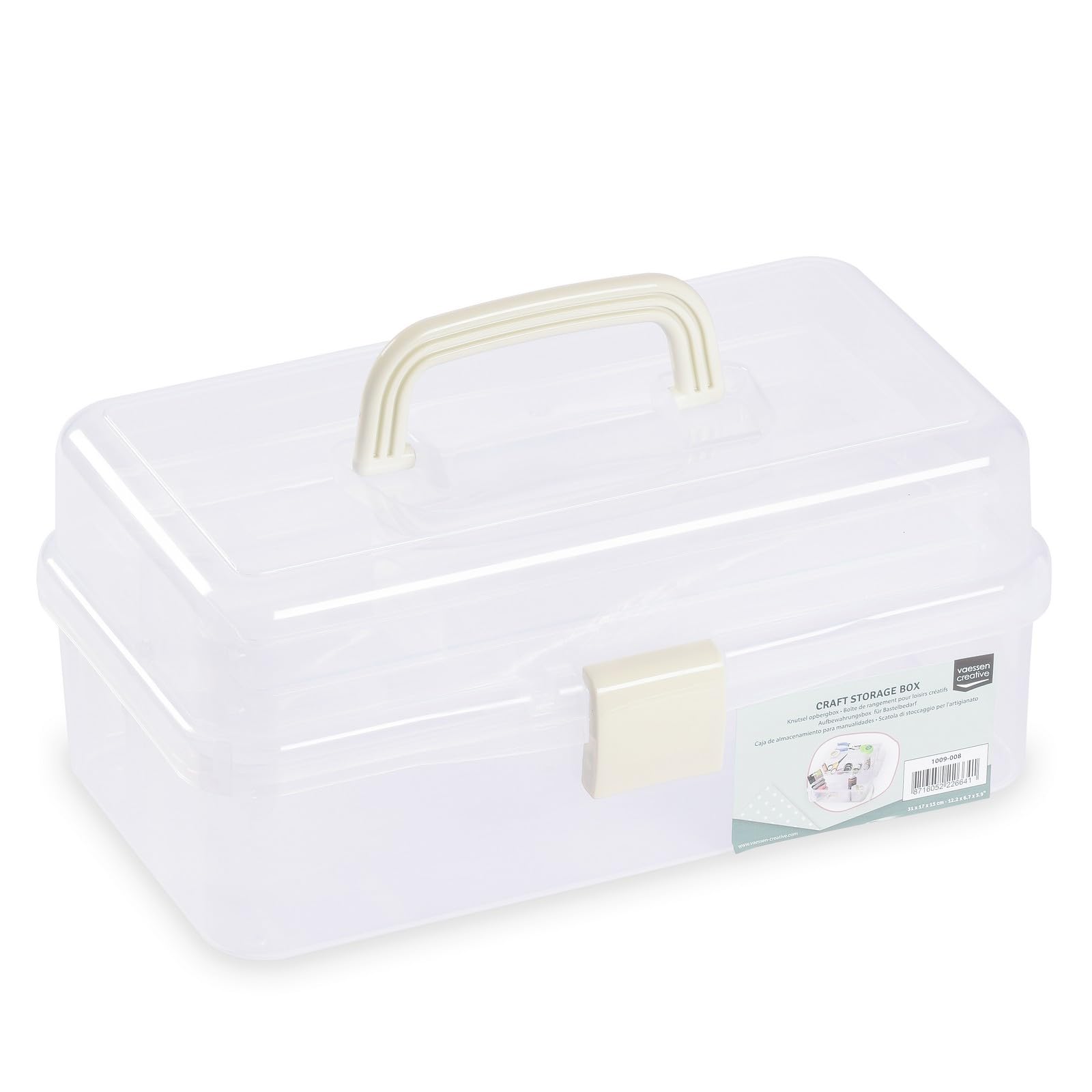
I reach for this three-tier carry case when I want a compact, layered solution — the layered trays and broad handle make it easy to transport mixed supplies without everything mixing together.
Why I picked it: Three tiers with varied compartment sizes and a broad handle.
Best for: Jewellery tools, small craft collections, and travel art supplies.
A slightly more premium plastic caddy with layered trays.
Pros
- Three tiers with varied compartments
- Transparent for quick content checks
- Broad handle for carrying
- Secure lid latch
Cons
- Partitions are fixed, not removable
- Long brushes or tools may not fit
My take
This caddy is the one I grab for multi-material projects where I need separate tiers: one tier for beads, another for ribbons, and a larger compartment for tools.
I like the translucent construction because it helps me find small items fast. The latch closes securely for short moves between rooms, and the handle sits comfortably in my hand.
It’s not perfect for long paintbrushes — some of my brushes don’t fit fully inside a tier — but for mixed small- and medium-sized supplies it’s one of the most functional caddies I own.
How I Choose a Sewing Box
Size and Capacity
I start by listing what I need to store: tiny findings, bobbins, full spools, or bulky tools. That determines whether I choose a slim compartment box or a deep removable-tray bin.
Measure the largest item you plan to store and compare it to the box dimensions — a compact bobbin case won’t be useful if your bobbins are oversized.
- Slim compartment boxes excel for beads and small notions.
- 17-quart or larger bins are better for paints and multiple projects.
- Tote-style fabric organizers suit portable, pocketed storage.
Compartment Types
Fixed compartments are great for consistent small items, while removable trays or adjustable dividers give flexibility for mixed supplies.
If you switch between projects, I prefer trays that separate in-use pieces from the bulk storage beneath.
- Patented lock-bar or single-opening lids prevent spills.
- Removable trays are ideal when you need both small and large storage.
Portability and Transport
I look at handles, latches and overall weight. A tote with reinforced handles or a plastic caddy with a broad handle makes moving projects painless.
For travel, snap-closed bobbin boxes and latching lids are the features I won’t compromise on.
- Ensure lids latch securely for transit.
- Choose lightweight materials if you plan to carry it often.
Materials and Durability
Hard plastic gives structure and visibility, while fabric totes provide pockets and cushioning. I pick PP plastics for long-lasting, odorless storage.
Inspect lids and trays on arrival; cracked lids do happen in shipping and are worth reporting or replacing.
- PP5 or 300-denier polyester are durable choices.
- Transparent materials speed up finding the right color or tool.
Special Features to Consider
Small features I look for: built-in pin cushions, removable trays, index windows, and dedicated bobbin slots. Those little touches save minutes every time I work.
Also consider whether compartments are fixed or adjustable depending on the range of items you use.
- Built-in pin cushions save drawer space.
- Index windows and clear lids speed project setup.
Frequently Asked Questions
Will these bobbin boxes fit my machine’s bobbins?
Most household machine bobbins fit these 25-slot boxes, but a few industrial or specialty bobbins can be larger. I check dimensions before committing and reserve these cases for standard home-machine bobbins.
Can I travel with the removable-tray storage boxes?
Yes — the removable tray system works for short trips. I recommend checking that the lid snaps firmly and using the clasp when transporting to prevent the top tray from shifting.
Are fabric totes as protective as hard boxes?
Fabric totes offer excellent pocketed organization and are easier to carry, but they don’t provide the rigid protection of hard plastic. I use totes for paper, markers and soft supplies, and hard boxes for tiny parts and fragile embellishments.
Final Take
After testing these organizers in real workflows, I pick based on what I’m storing: locking-compartment cases for tiny parts, bobbin boxes for thread management, and deep removable-tray bins for larger kits.
If you want one recommendation to start with, choose a locking compartment case if you mostly handle beads and findings, and a 17-quart removable-tray bin if you need depth and modular organization.
I rotate through these boxes depending on the project, and each has a place in my studio — pick the style that matches the size and mobility of your supplies and you’ll spend less time searching and more time creating.
