
I tested silicone gap fillers, burner caps, countertop covers, and stainless trim to stop crumbs, spills, and heat damage. Here are the stove guards I keep recommending for different kitchens and needs.
I spent time installing and using a variety of stove guards so I could stop food, grease, and crumbs from slipping into the gap or making my cooktop look messy.
In this guide I compare simple silicone gap covers, multiuse silicon mats, decorative burner caps, fixed stainless trim, and adjustable stainless solutions so you can match the guard to your stove and habits.
I focus on fit, heat resistance, ease of cleaning, and how each option changes daily kitchen maintenance.
I organized my picks by what they do best: silicone gap covers for flexible, inexpensive protection; silicone top mats when I need extra counter space and heat protection; burner caps when I want quick cosmetic fixes; and stainless solutions when I want a permanent, heatproof trim that matches a metal range.
1. Linda’s Essentials Silicone Stove Gap Cover – Best Overall
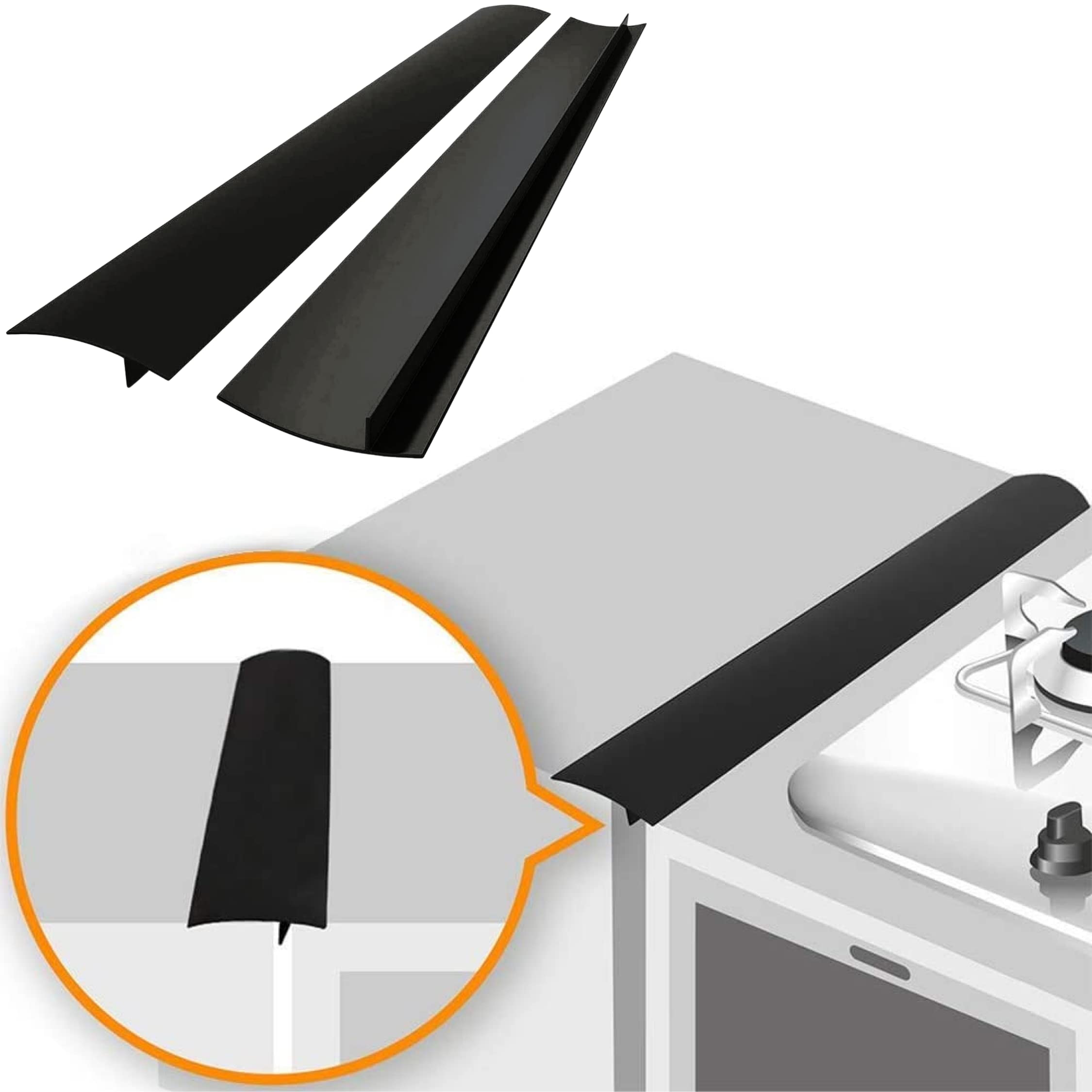
I rely on this flexible silicone gap cover to close the space between my stove and countertop; it’s heat resistant, easy to trim, and simple to clean.
Why I picked it: Flexible, heat-resistant silicone that trims to size and cleans easily.
Best for: Kitchens with small-to-medium stove gaps where quick installation and easy cleaning matter.
Affordable two-pack that I treat as a simple, replaceable solution.
Pros
- Flexible, easy to trim to fit
- Heat resistant food-grade silicone
- Non-slip and conforms to uneven edges
- Dishwasher safe and easy to wipe
Cons
- Matte finish isn’t a perfect match for every stove
- Can shift if not cut to correct length
My take
I installed the 21-inch silicone gap cover across the gap in my kitchen and it immediately stopped the steady trickle of crumbs and spills. The material is soft enough to bend into place and firm enough to stay put once trimmed to length.
Cooking heat hasn’t warped the piece; the food-grade silicone handled everyday stovetop temperatures and cleaned up with a quick run under the sink or a cycle in the dishwasher. I appreciated the matte black finish because it hides smudges better than shiny silicone.
If you have a slightly uneven gap the non-slip flexibility helps the cover sit flush, though I made sure to measure the gap width first — this size is best for gaps up to about 2.3 inches. For larger or irregular gaps I’d choose a different length or a more rigid trim.
2. XiFEO Silicone Stove Top Cover – Best Multiuse Top Cover
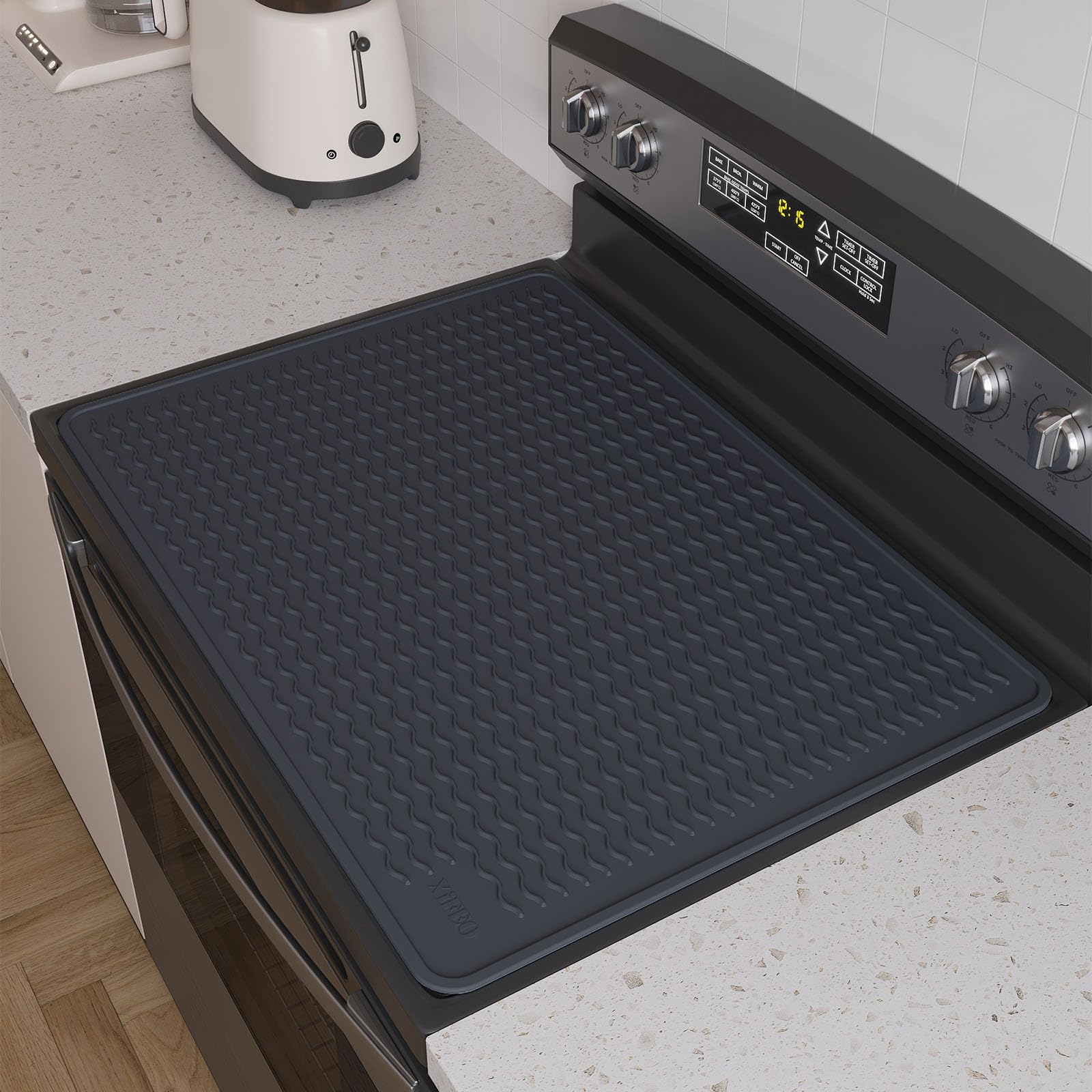
I use this thick silicone mat when I want extra counter space, a trivet, or a protective cover for a glass cooktop; the raised ridges help air-dry dishes and disperse heat.
Why I picked it: Thick, heat-resistant mat that doubles as a trivet and drying rack.
Best for: People who want a multiuse top cover for glass or induction cooktops.
Midrange option that replaces a wooden cover and adds utility.
Pros
- Large surface adds usable counter space
- Wave ridges improve ventilation and drying
- Heat-resistant up to 450°F for short-term use
- Versatile for many kitchen tasks
Cons
- Not for covering an active, very hot cooktop
- May be slightly smaller than some full-range surfaces
My take
I put the XiFEO mat over my glass cooktop to get extra prep space and immediately noticed how much neater the stove looked between cooking sessions. The ridged surface traps drips and helps air circulate when I dry dishes.
The mat is thicker than other silicone covers I’ve tried, so it feels stable when I set hot pans down briefly — within the stated temperature limit — and it doubles as a trivet or drying mat when the stove isn’t in use.
Because this piece is intended for glass and induction-style tops, I avoid placing it on a cooktop that has been running at very high temperatures. For everyday coverage, spill protection, and extra workspace it’s been one of the most useful items I added to my kitchen.
3. Electric Stove Burner Covers (Set of 4) – Best for Quick Cleanups
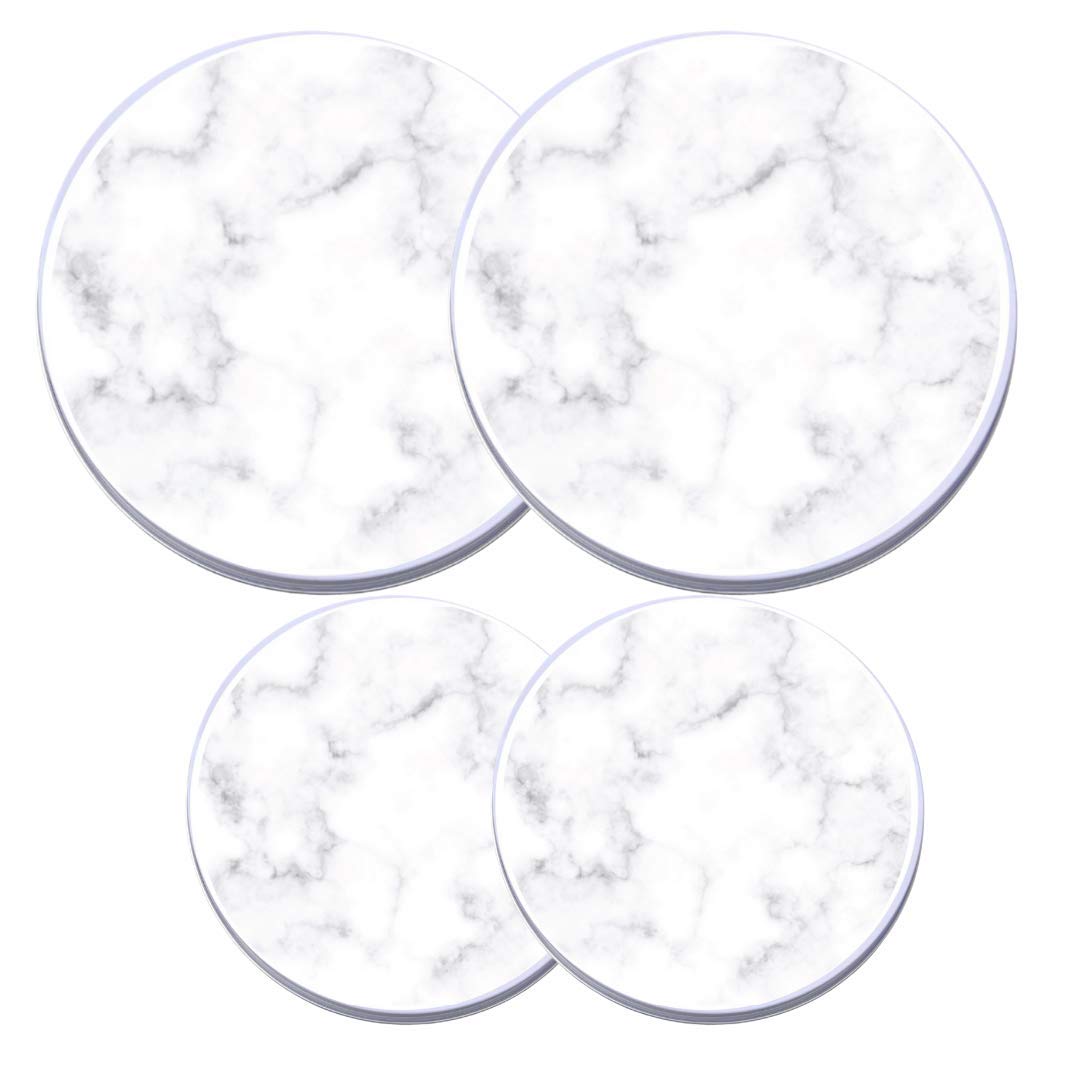
I keep a set of four burner covers on hand to hide spills and make my electric cooktop look tidy between uses; stainless-look finish is decorative and easy to remove.
Why I picked it: Simple, decorative burner caps that cover burners and clean up quickly.
Best for: Renters or anyone who wants a quick, removable cosmetic upgrade.
Budget-friendly way to tidy a cooktop without permanent changes.
Pros
- Covers small and large burners
- Easy on/off for cleaning
- Attractive marble/steel look
- Simple warm-soapy-water cleaning
Cons
- Decorative rather than heavy-duty steel
- Must remove before using burners or some ovens venting
My take
These burner covers are the easiest way I’ve found to make my electric stove look presentable in seconds. The set includes two larger and two smaller covers, which matched the layout of my burners.
They’re lightweight and clean up with a sponge, and they don’t trap grime under the burners when I remove them to cook. I pay attention to my oven’s venting and remove the caps if my oven exhausts heat through the burner area.
If you want a no-fuss, reversible cosmetic fix for a rental kitchen or an older appliance, these are a quick, inexpensive choice.
4. TrueGem 316 Stainless Steel Stove Gap Cover – Best Premium Stainless
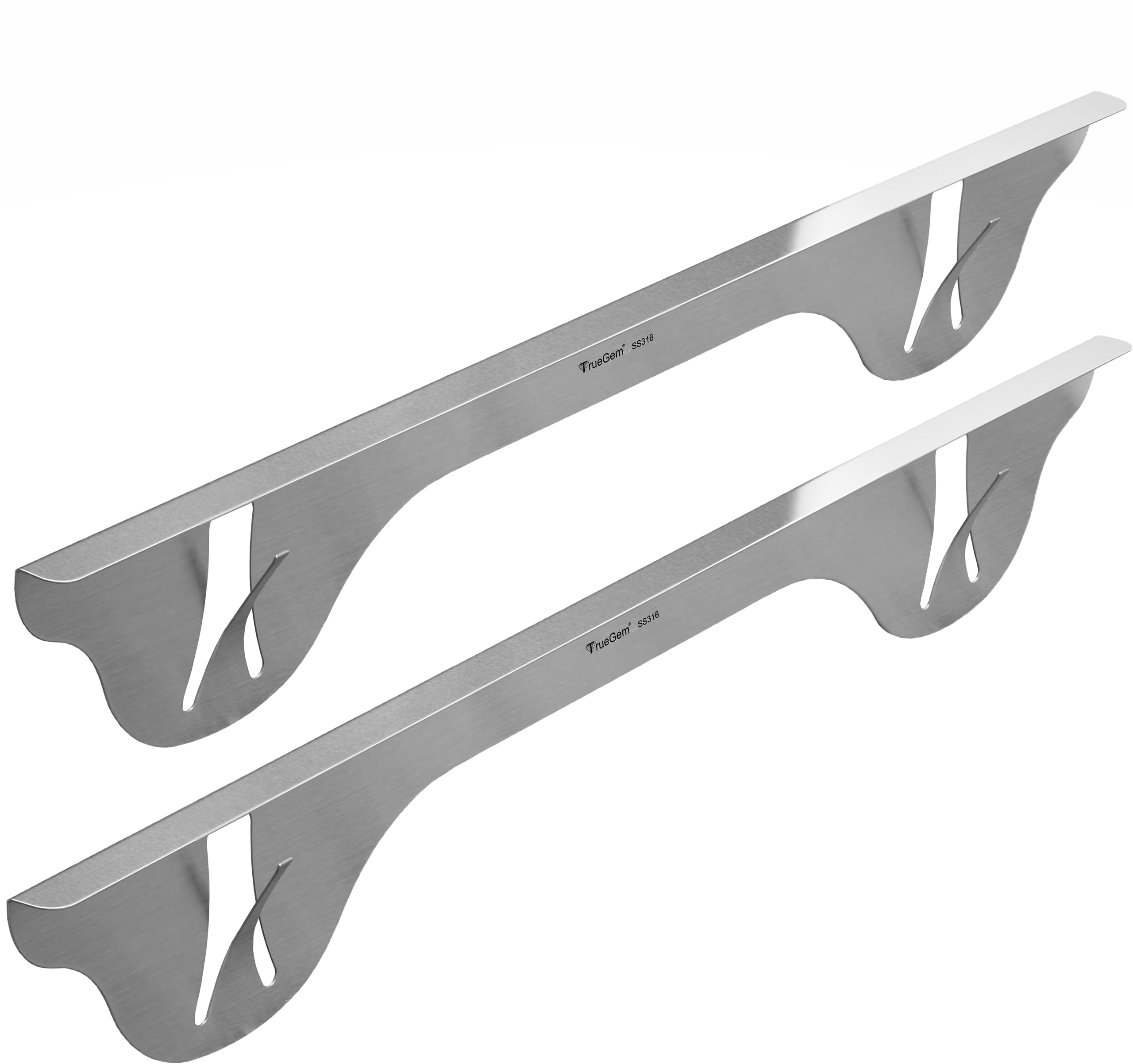
I installed the 316 marine-grade stainless trim when I wanted a permanent, corrosion-resistant solution that looks custom and wipes clean without melting or warping.
Why I picked it: 316 marine stainless for corrosion resistance and a finished, built-in look.
Best for: Home cooks with a stainless range who want a durable, permanent gap solution.
Premium build aimed at longevity and a finished kitchen look.
Pros
- 316 marine-grade stainless resists corrosion
- Rounded edges avoid sharp burrs
- Integrated springs keep it from sliding
- Looks like factory-installed trim
Cons
- Requires the correct length selection
- Less forgiving on very irregular gaps
My take
When I swapped in a new range I needed a trim that wouldn’t corrode and would blend with my stainless finish; the TrueGem piece delivered exactly that. The brushed surface looks built-in and hides fingerprints better than some high-gloss metals.
Installation was tool-free — the spring mechanism holds the trim snugly — and I appreciated that the top surface arrived clean and free of machining damage. Removing it for a wipe-down is easy because the tips are rounded and won’t scrape my countertops.
This is my go-to when I want a permanent, heatproof barrier that matches a stainless range and stands up to regular cooking without warping.
5. MOFINO Adjustable 316 Stainless Steel Gap Cover – Best Adjustable
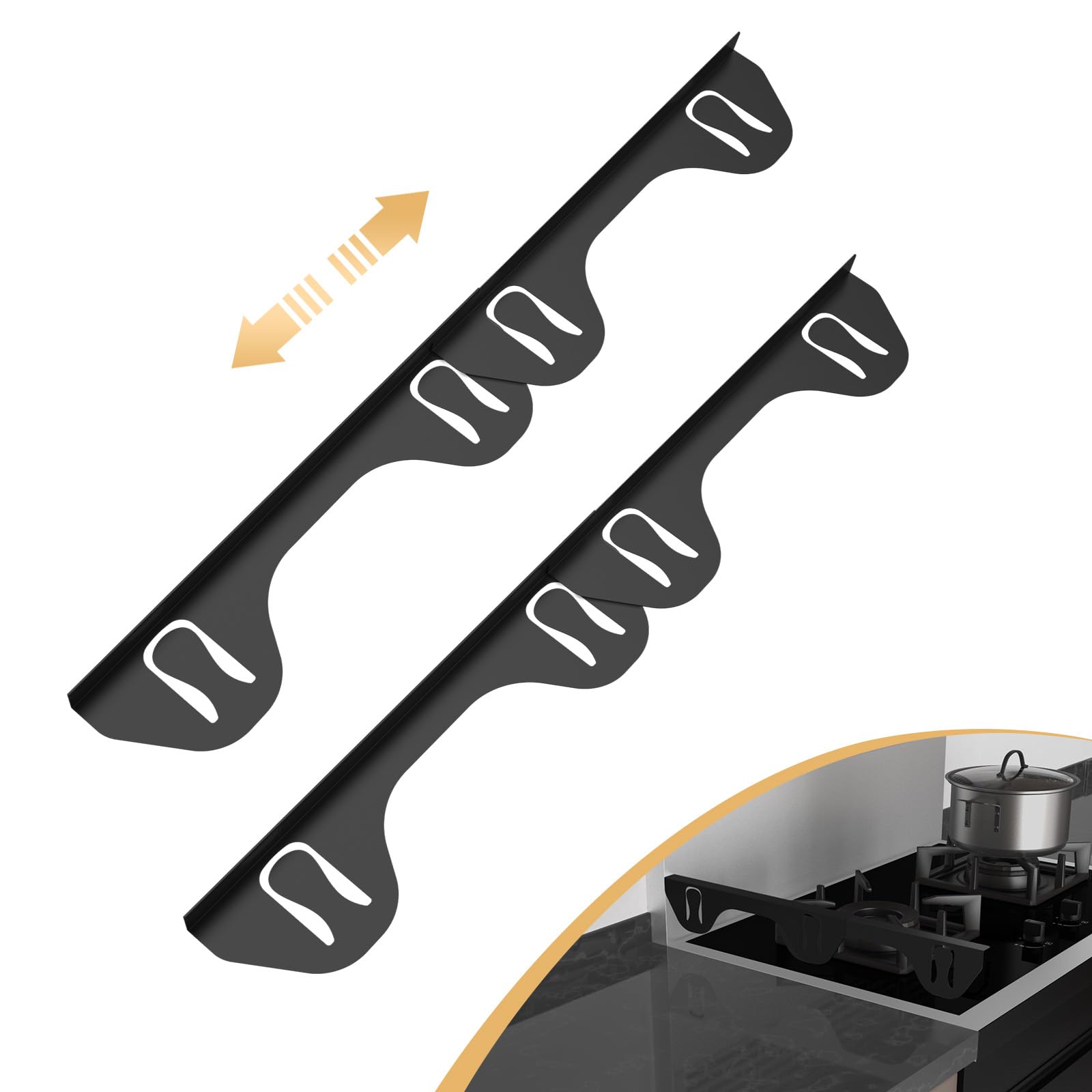
I rely on this adjustable stainless solution when I need a single product to fit a range of gap lengths; the spring tension and brushed finish make it both secure and discreet.
Why I picked it: Adjustable length and 316 stainless make it a flexible, durable fit.
Best for: Those who need one product to fit many stove widths and want corrosion resistance.
Good value for adjustable, heat-resistant stainless hardware.
Pros
- Adjusts to many stove widths
- 316 stainless won’t melt or corrode
- Quick tool-free installation
- Blends with stainless ranges
Cons
- Not ideal for very uneven gaps
- May need trimming tools for tight fits
My take
I used the MOFINO adjustable cover when I needed a single solution for an odd-length gap, and the telescoping action made fitting straightforward. The feel is sturdy, and it slid into place without tools.
Because it’s made from 316 stainless, I don’t worry about heat or corrosion the way I might with silicone. The adjustable tension holds the trim in place while I wipe the counters, and removal is equally simple for deeper cleaning.
If you have a relatively straight gap and want a one-size-fits-most stainless option, this is the cover I reach for.
How I Choose a Stove Guard
Materials and heat resistance
I always check the material first because it dictates where and how I can use the guard. Silicone is flexible and easy to trim, but stainless steel is more heatproof and permanent.
For a cooktop cover or trivet, I look for explicit temperature ratings so I don’t place a hot pan on something that will warp.
- Silicone: flexible, dishwasher-safe, good for gaps and mats.
- Thin stainless: decorative burner covers and quick fixes.
- 316 stainless: best for corrosion resistance and high-heat areas.
Fit and installation
I measure both the gap width and the seam length before buying. A snug fit prevents sliding and keeps debris out.
Adjustable trims save time if you’re not sure of exact length; silicone pieces usually require trimming with scissors for a custom fit.
- Measure gap width and total length before ordering.
- Consider adjustable or telescoping options for uncertain lengths.
- Check for integrated springs or non-slip backing to reduce shifting.
Cleaning and maintenance
I prefer items I can wipe clean or toss in the dishwasher. If something traps grease, it becomes harder to keep sanitary.
Removable pieces are ideal because I can lift them and clean underneath without tools.
- Dishwasher-safe silicone speeds up cleaning.
- Stainless pieces usually wipe clean; remove occasionally to clean the seam.
- Avoid abrasive cleaners that can dull finishes.
Frequently Asked Questions
Are silicone gap covers safe near a gas flame?
I use silicone gap covers around gas ranges only as a barrier between the counter and stove; I do not place them directly over open flames or active burners. High-quality, food-grade silicone resists everyday cooking heat, but I treat it as a barrier, not a flame shield.
Can I leave a top cover on while the oven is running?
I remove burner caps or top covers if my oven vents heat through the cooktop or if I know the cooktop will get hot from oven exhaust. For silicone mats rated to a specific temperature, I follow the stated limit and avoid covering active, very hot burners.
How should I measure my stove to pick the right guard?
I measure the total length of the seam I want to cover and the maximum gap width. For silicone gap covers I match the width capacity and cut to length; for stainless trim I choose the length closest to my seam or an adjustable model to avoid gaps.
Final Take
I keep multiple types of stove guards in my kitchen toolkit: silicone gap covers for a quick seal, a thick silicone top cover when I need workspace and heat protection, burner caps for cosmetic fixes, and stainless trim when I want a durable, built-in look.
Decide what problem you want to solve — crumbs, extra counter space, or a finished trim — and pick the material that solves that need. Each of the picks here has earned a place in my kitchen workflow.
