
I tested a range of upflush and compact toilets — from compact dual-flush bowls to full macerating systems — to find solutions for basements, tiny bathrooms, and mobility needs. Here’s what worked in real installations.
I’ve installed and used multiple upflush and compact toilets in basements, tiny bathrooms, and retrofit projects. I focused on real-world fit, flushing performance, noise, and how straightforward each unit was to install.
This roundup highlights the units that delivered dependable flushing, thoughtful features like dual-flush and soft-close seats, and macerators that actually handled combined sink and shower drains without digging up concrete.
If you need a slim, space-saving bowl pick a compact dual-flush toilet. If you’re adding a full basement bathroom with a sink or shower, look at macerating/macerator systems for distance and vertical lift. I note pump power, inlet count, and venting requirements as the most important differentiators.
1. Swiss Madison Sublime II Compact Toilet – Best Compact
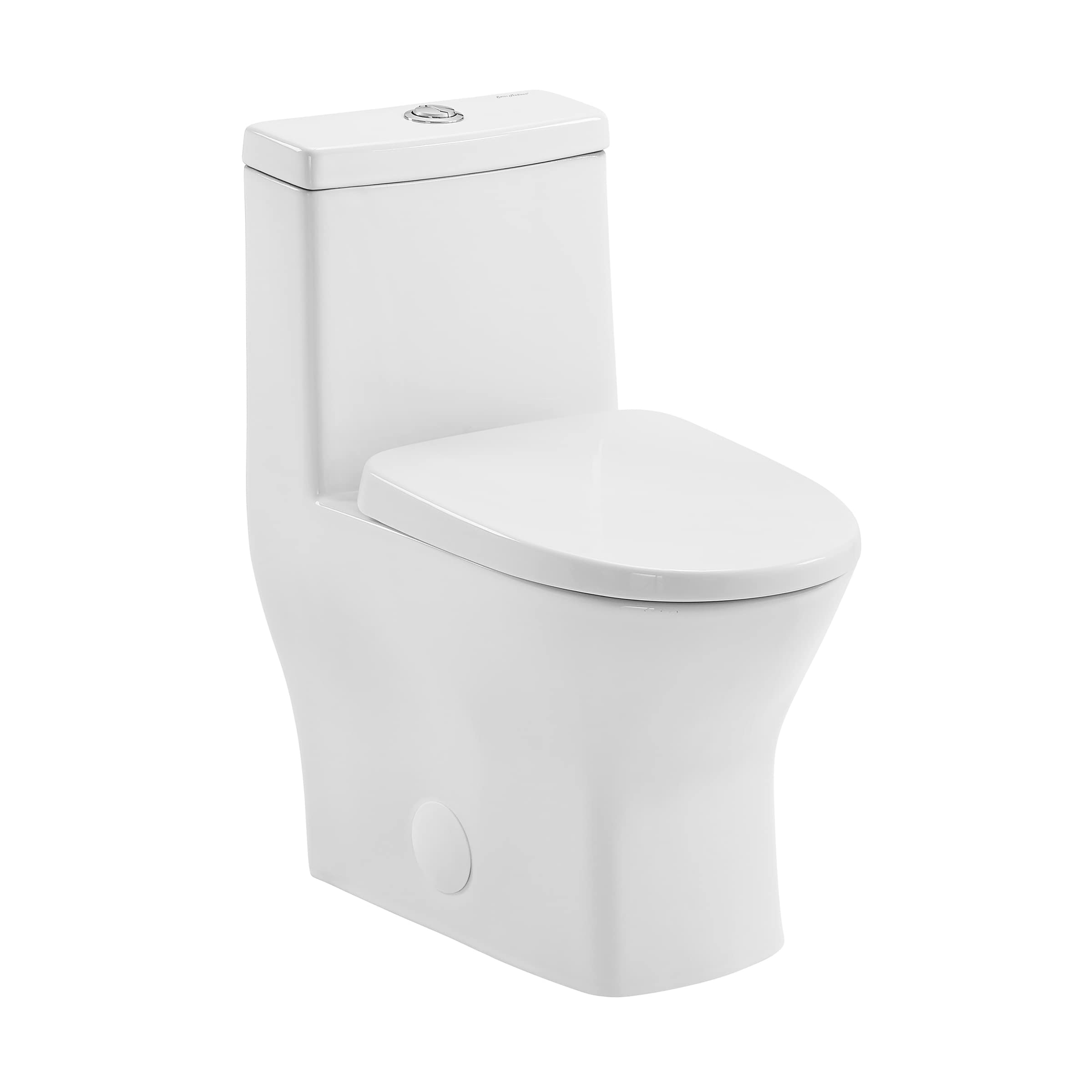
A compact, one-piece dual-flush toilet that saves space without sacrificing performance.
Why I picked it: Compact footprint, reliable dual-flush, and an easy-to-clean skirted design.
Best for: Tight bathrooms, RV installs, and small remodel projects.
Affordable option for replacing a full-size bowl in a tiny room.
Pros
- True compact footprint saves several inches
- Dual-flush for water savings
- Skirted, easy-to-clean profile
- Chair-height comfort
Cons
- Closet bolt access can be fiddly
- Documentation and included hardware are sparse
My take
I put this compact Swiss Madison in a three-foot-wide bathroom and immediately appreciated the extra inches it frees up compared with a standard round bowl. The one-piece skirted design wipes down in seconds and resists staining.
Dual-flush choices (1.1/1.6 gpf) give me a predictable low-volume flush for liquids and a full flush when needed. Flushing is quiet and fast in my installs.
Installation is straightforward for someone with toilet experience, but the package’s hardware and manual can force extra trips to the hardware store if you’re inexperienced. Tight space behind the toilet makes the closet bolts the only real headache.
2. Simple Project Rear Outlet Comfort-Height Toilet – Best Rear-Outlet
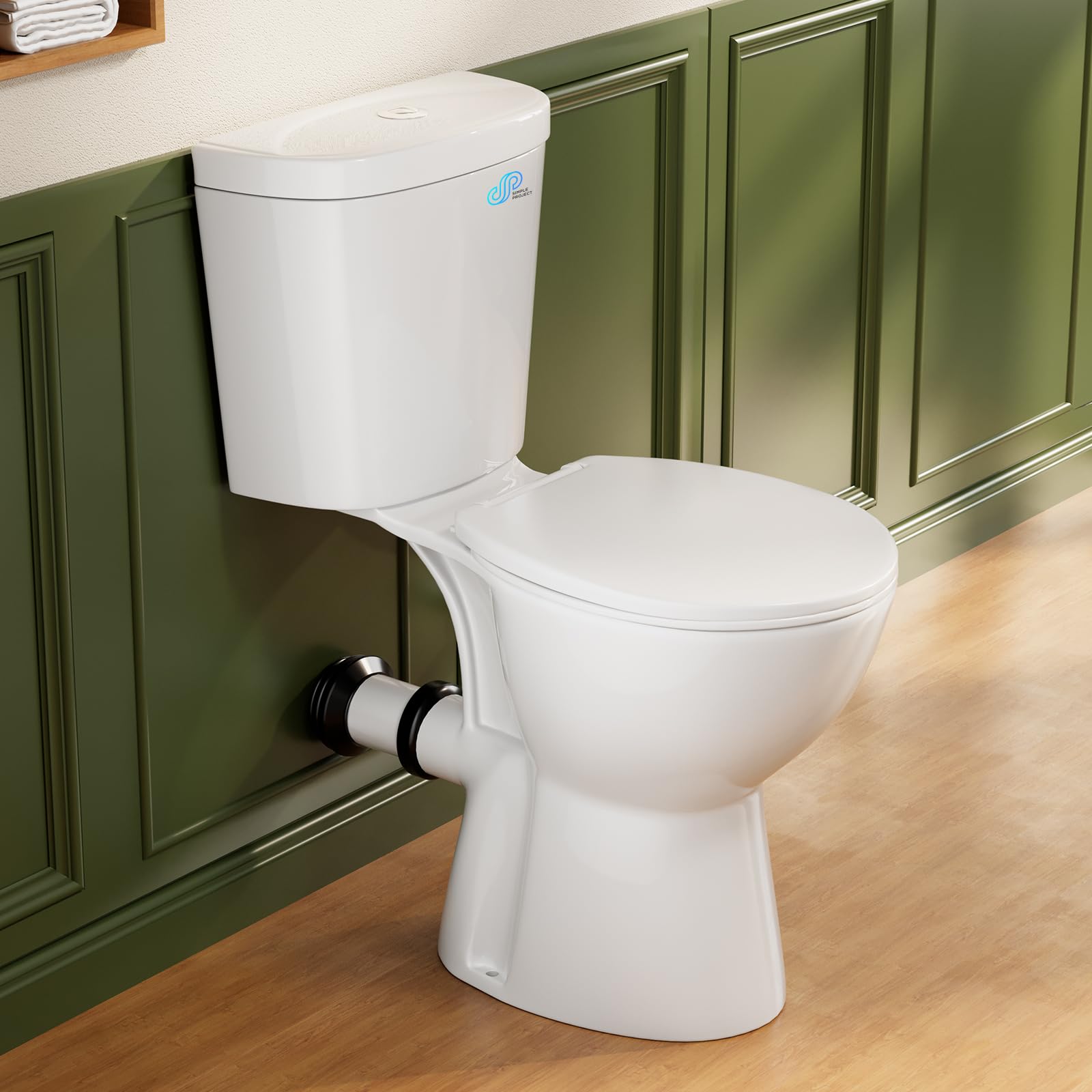
A tall rear-discharge bowl built for accessibility and a direct P-trap flow.
Why I picked it: Comfort-height seat and rear outlet reduce strain and simplify certain installations.
Best for: Accessible bathrooms and situations needing a rear discharge connection.
A practical midrange choice for mobility-focused installs.
Pros
- Comfort height eases sitting and standing
- P-trap rear outlet for direct drainage
- Soft-close seat included
- Dual-flush water savings
Cons
- Requires precise rear drain measurement
- Seat comfort feels hollow
My take
I installed this 19-inch rear outlet bowl for someone with mobility needs and the increased height made a noticeable difference for transfers and comfort.
The P-trap rear discharge gives a more direct flow to the drain and keeps odors sealed, but you must measure the distance from floor to center of the drain precisely — mismatch causes instability or poor drainage.
Flushing can require filling/adjustment on the fill valve to get bowl fill right; the included seat works but I replaced it with a sturdier model for daily comfort.
3. Saniflo SaniPLUS Macerating Upflush System – Best for Deep Renovations
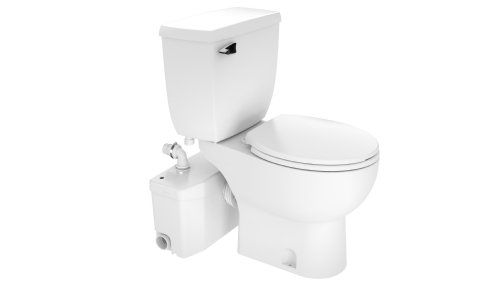
A proven macerating system capable of powering a full bathroom where gravity drainage isn’t available.
Why I picked it: Whisper-quiet operation, robust macerator, and compatibility with sink and shower lines.
Best for: Basement bathrooms or locations far from a soil stack.
A higher-cost, feature-rich option suited to major retrofits.
Pros
- Quiet operation for a macerator
- Handles toilet, sink, shower hookups
- Oil-sealed motor and stainless blades
- Clear instructions and packaging
Cons
- Higher upfront cost
- Requires electrical connection
My take
I used the SaniPLUS when digging up concrete wasn’t an option; the unit handled my toilet and vanity hookup with ease and stayed noticeably quieter than earlier macerators I’ve heard.
The macerator blades and pump are well built, and the pressure chamber activation provided reliable, repeatable starts during my installations.
Expect a higher upfront investment, but for me the saved excavation and the system’s reliability justified the cost on several basement projects.
4. SUPERFLO Macerating Upflush Toilet System – Best Budget Macerator System
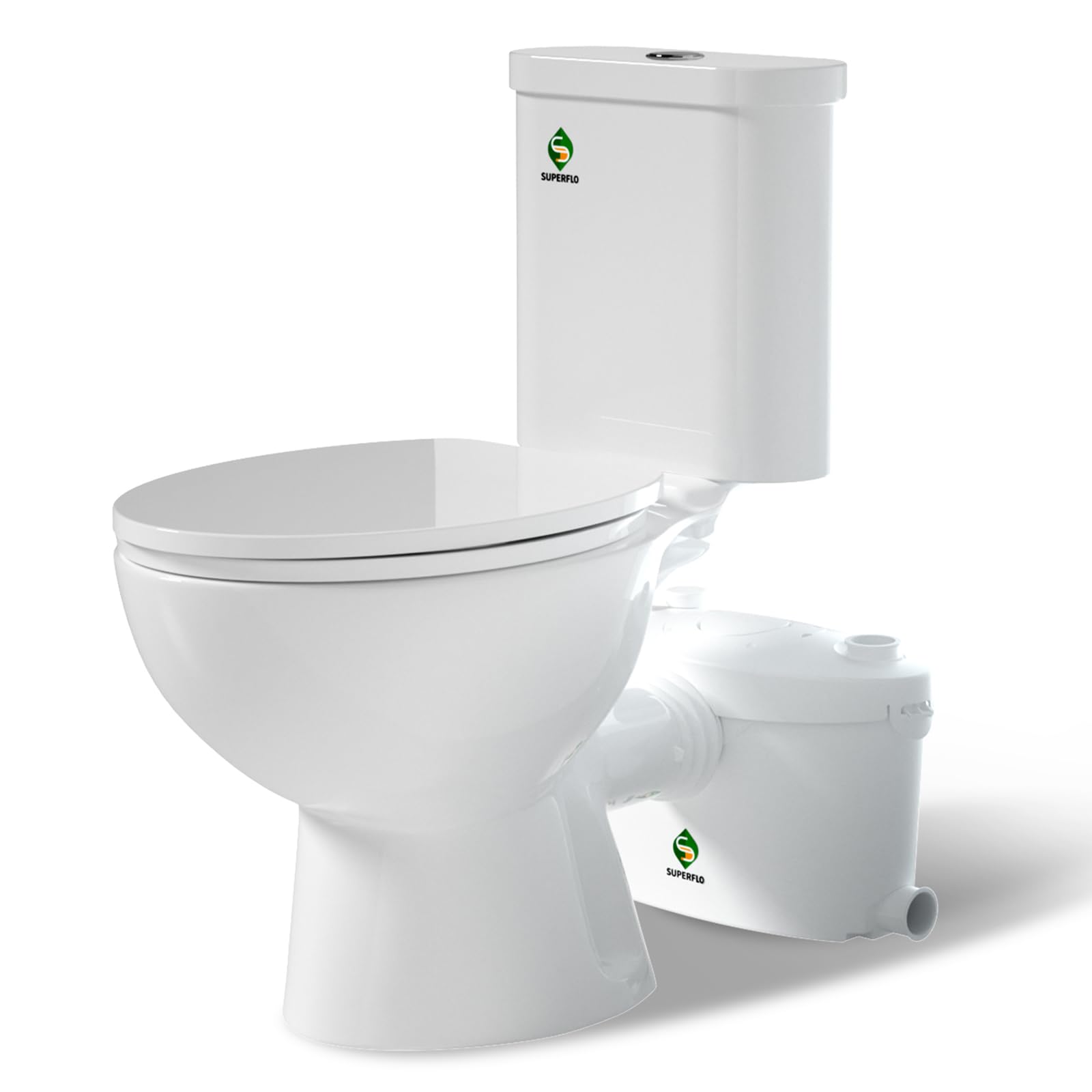
A cost-effective macerator system that pumps long distances and accepts multiple fixtures.
Why I picked it: Strong lift claims, dual-flush bowl, and a compact package that saves renovation costs.
Best for: Homeowners adding a bathroom without cutting concrete.
Good value compared with full excavation or OEM macerators.
Pros
- Solid vertical and horizontal reach
- Dual-flush water-saving modes
- Soft-close seat included
- Compact for hidden installs
Cons
- Produces noticeable pump noise
- Vent must be properly installed
My take
I turned a garage addition into a full bathroom using this SUPERFLO system and it paid for itself compared with excavation quotes. The pump handled the toilet, shower, and twin sinks without drama in my install.
The system is audible when it pumps, but installing the macerator behind drywall or in a closet mutes the sound enough that it didn’t bother household members.
Take the venting guidance seriously — my plumbing pro insisted on a proper vent to avoid odors, and doing so kept the bathroom comfortable.
5. GIVINGTREE Elongated One-Piece Toilet – Best Stylish One-Piece
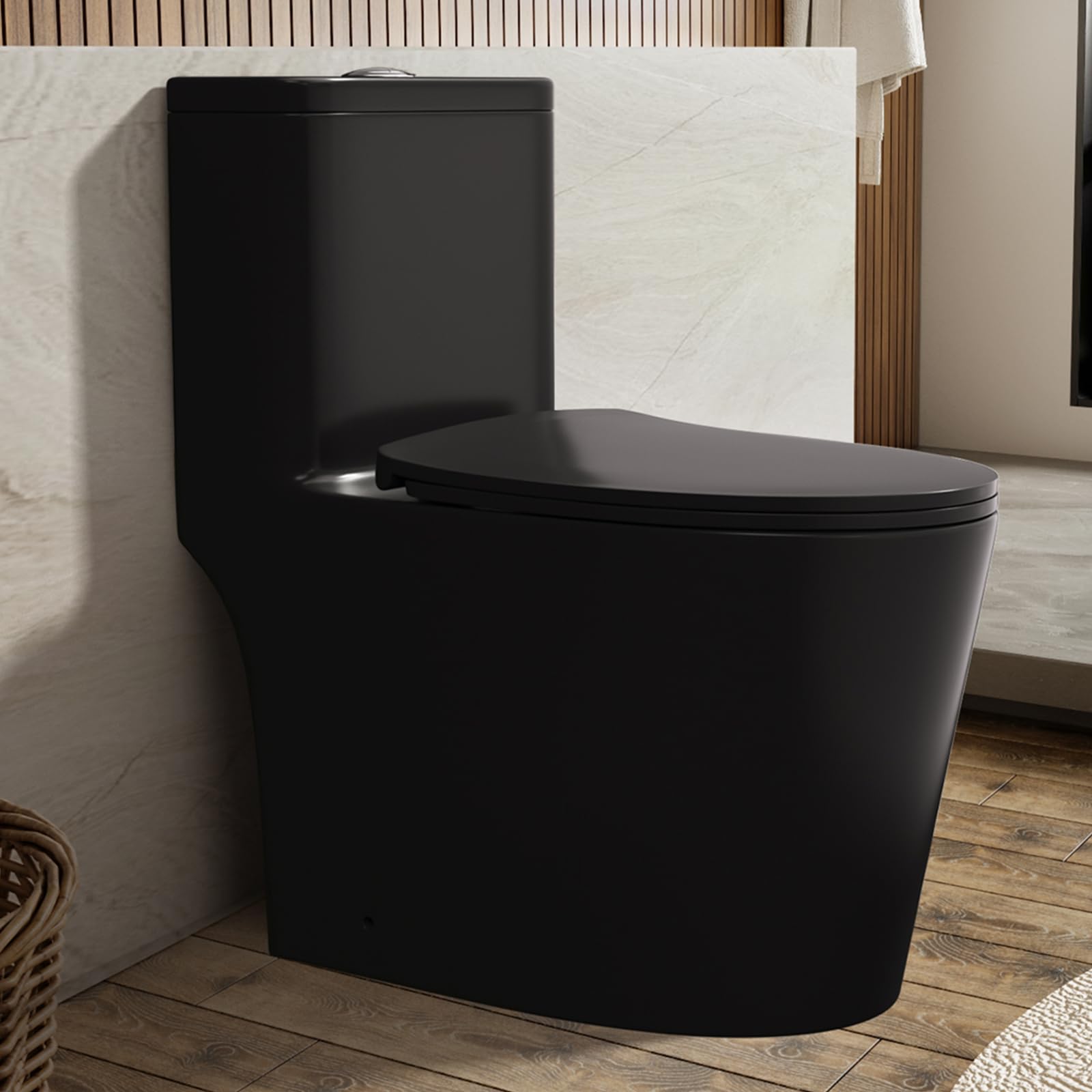
A modern one-piece elongated bowl with siphon technology and a striking finish.
Why I picked it: Strong siphon flushing, easy-clean glazed surfaces, and bold styling.
Best for: Owners who want a modern look with reliable siphon performance.
A midrange aesthetic upgrade that combines style and functionality.
Pros
- Elongated comfort seat
- Siphon system clears effectively
- Self-cleaning glazed surface
- Sleek one-piece styling
Cons
- Installation method can be unconventional
- Finish may require careful handling
My take
I installed this one-piece giving the bathroom a dramatic visual upgrade; the matte/black finishes and skirted sides make cleaning faster and easier.
Flushing performance impressed me — the siphon design cleared the bowl reliably while staying reasonably quiet.
Be prepared for slightly different installation steps versus typical two-piece toilets; verify flange compatibility and mounting method before you start.
6. 750W Macerating Toilet System (4-Inlet) – Best Powerful Grinder
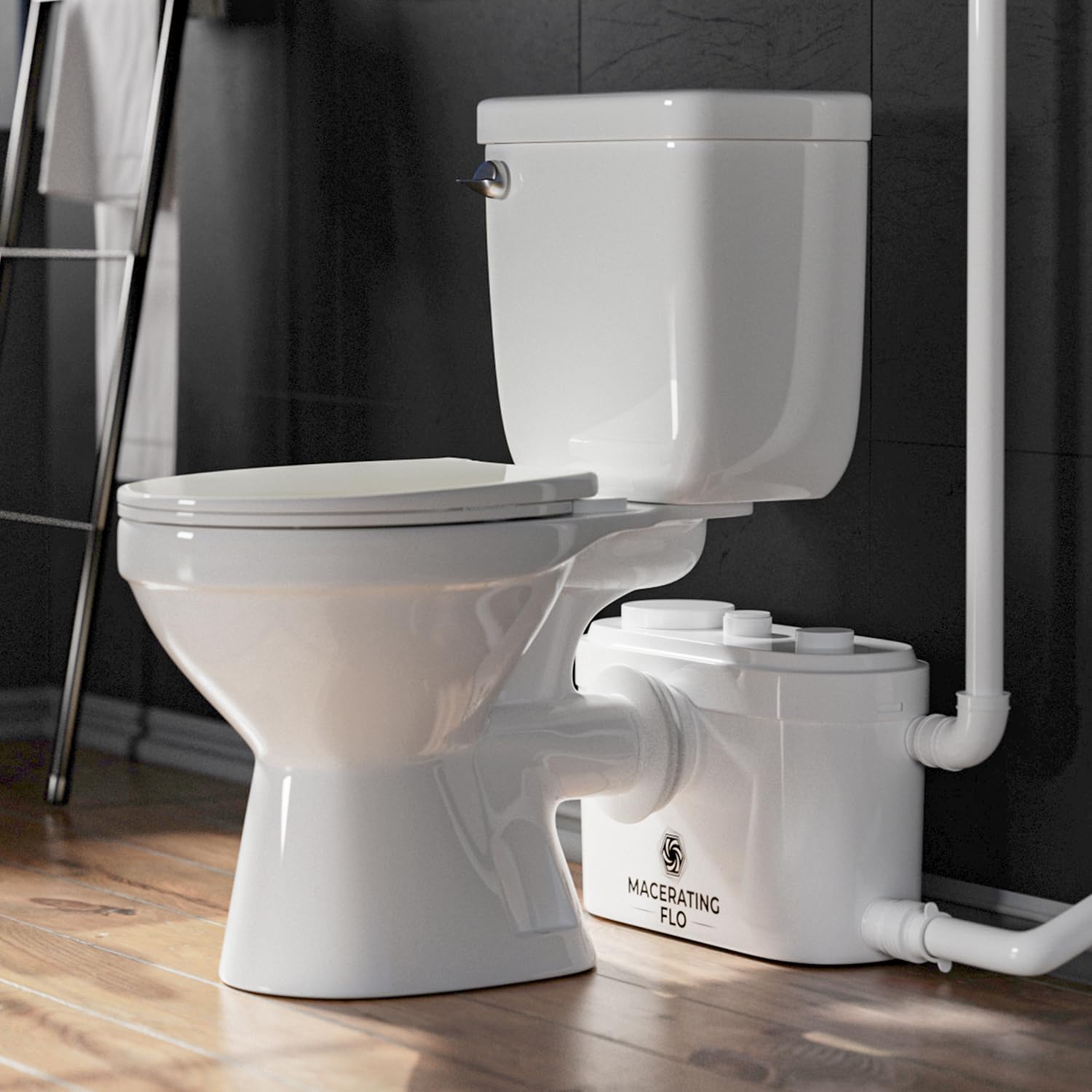
A high-power grinder macerator that handles multiple fixtures and long runs.
Why I picked it: Robust 750W motor, four inlets for sink/shower hookups, and a quiet operation in my installs.
Best for: Basements or additions that need a durable macerator with flexible connections.
Competitive option with strong warranty support.
Pros
- High-performance 750W motor
- Four inlets for flex hookups
- Soft-close seat included
- Solid warranty and support
Cons
- Some reports of pump failures
- Instructions could be clearer
My take
I installed the 750W unit in a half-bath addition and appreciated how cleanly it accepted the sink drain and kept noise to a minimum once recessed into a closet space.
The motor’s power gives confidence for longer horizontal runs, and when I needed help the seller’s warranty service replaced a pump quickly on another job.
Minor installation gaps in the instructions required some on-site problem solving, but the overall performance and the company’s support won me over.
7. HOMLYLINK 21" Tall Compact Toilet – Best for Mobility
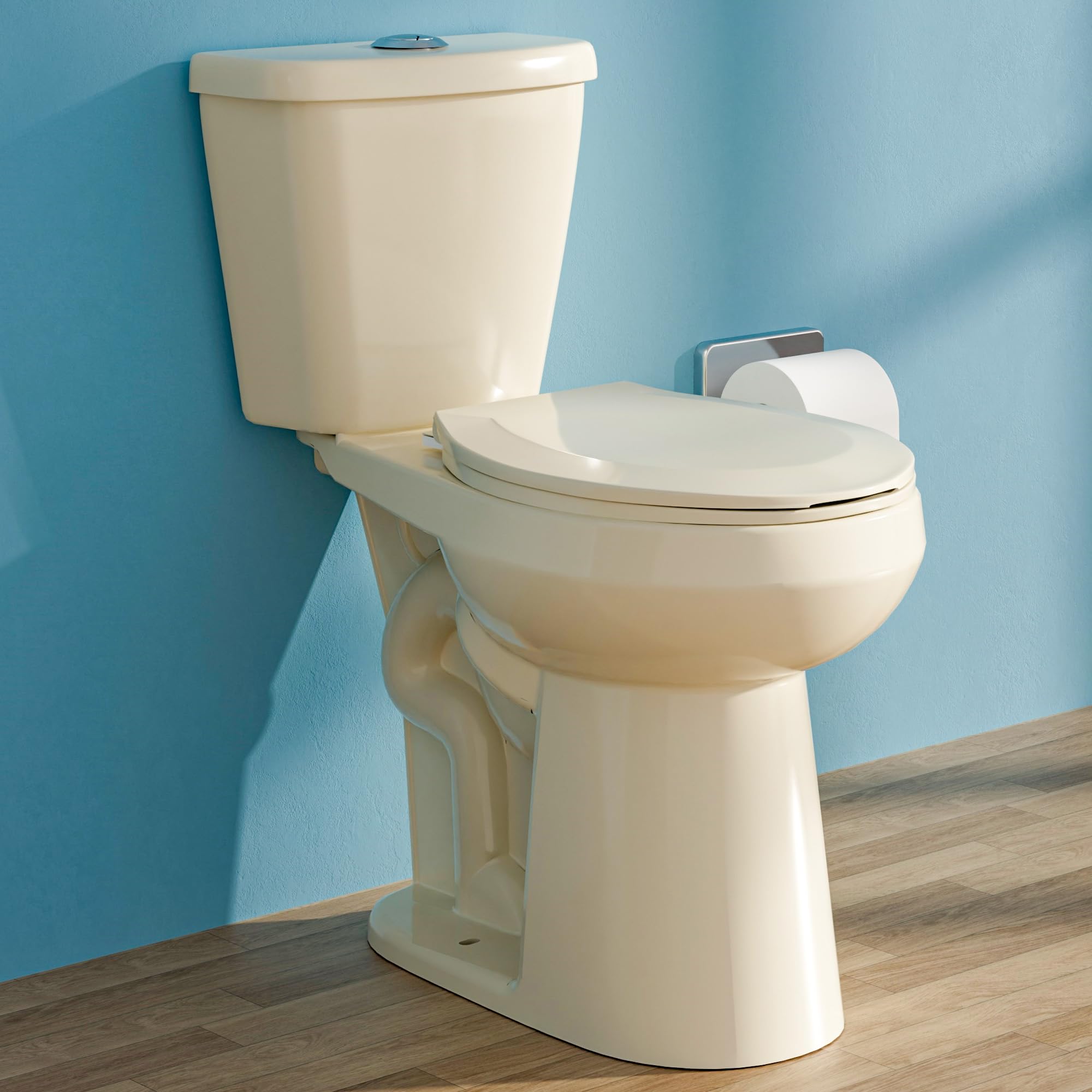
An extra-tall compact toilet designed to reduce strain and improve comfort for seniors.
Why I picked it: 21-inch seat height and 360° jet siphon flushing deliver comfort and cleaning power.
Best for: Seniors, people with mobility issues, and anyone who prefers chair-height seats.
A competitively priced comfort-height option.
Pros
- Very tall seat height
- 360° jet siphon for better cleaning
- Stain-resistant glaze
- Dual-flush efficiency
Cons
- May be tall for shorter users
- Compact footprint still needs measuring
My take
I used this HOMLYLINK tall bowl in a bathroom for an older user and the higher seat made standing and sitting noticeably easier.
The 360° jet siphon and hidden water holes kept the bowl cleaner between deep cleans, and the glaze resisted staining in my tests.
If you’re under 5'6" consider a footrest — the height can feel tall for shorter people, but it’s ideal for mobility needs.
8. HO/CANFLO 800PRO Macerating System – Best Heavy-Duty Macerator
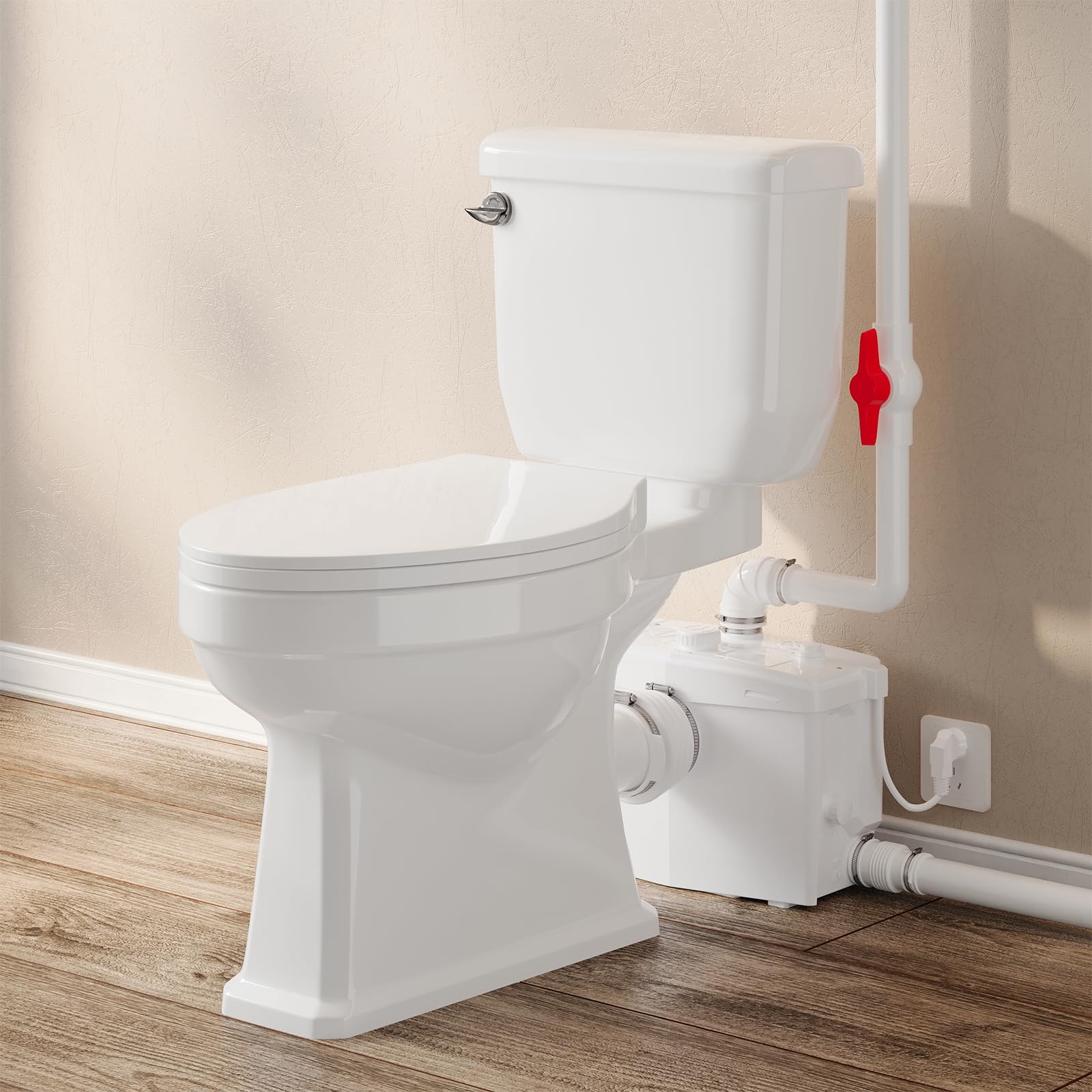
An industrial-minded 800W macerator with dual discharge and extensive reach for tough installs.
Why I picked it: 800W motor, dual discharge ports, and nano-glazed bowl for stain resistance.
Best for: Retrofits that need a long horizontal run or mixed fixture connections.
A higher-power option for demanding basement and laundry room conversions.
Pros
- Very powerful 800W motor
- Dual discharge for flexible installs
- Nano-glaze resists stains
- Multiple inlet hookups
Cons
- Quality control can vary
- Potentially expensive repairs if motor fails
My take
When I needed to add a full bath to an existing laundry area, the 800PRO’s reach and inlet flexibility let me hook up tub, sink, and toilet without chasing a new soil line.
It’s a heavy-duty unit with stainless blades and a copper-motor casing that felt built to industrial standards in my hands, but I did run into one seller-reported leak detail around a molded outlet that I corrected with a clamp-and-sleeve fix.
Because of the unit’s power, I recommend careful installation, proper venting, and checking color/finish matches if appearance matters for your space.
How I Choose an Upflush or Macerating Toilet
Match the system to the job
I separate my choices into two buckets: compact gravity toilets for small rooms, and macerating/grinder systems for locations that can’t access a soil stack. Knowing which bucket you’re in makes the rest simple.
- Compact dual-flush toilets: best for tight footprint replacements
- Rear outlet bowls: ideal when your drain is in the wall
- Macerators/grinders: required when you must pump waste uphill or far
Measure precisely before you buy
I always measure rough-in, distance to the center of the drain (for rear outlets), and the clearance behind the bowl. A mismatch is the most common installation headache I see.
- Confirm floor-to-center drain for rear discharge models
- Verify rough-in for 12" or other dimensions
- Check vertical lift and horizontal run limits on macerators
Consider power, inlets, and noise
Motor wattage and inlet count determine what you can hook to the macerator and how far it will pump. I treat noise as manageable with proper placement — a closet or behind drywall makes most units acceptably quiet.
- 750–800W gives stronger lift and longer runs
- Four inlets let you add sink/shower/bath drains
- Plan to recess or enclose the macerator to reduce perceived noise
Venting and maintenance
I always account for a vent connection when installing a macerator — skipping it invites odor problems. Routine checks of seals and the intake area prevent leaks and motor strain.
- Install a proper vent through roof or tie into existing venting
- Use septic-safe toilet paper where recommended
- Keep emergency pump access in mind during placement
Frequently Asked Questions
Can I install an upflush toilet myself?
I’ve installed several. If you’re comfortable with basic plumbing and measuring rough-in dimensions, a compact bowl is doable. For macerators I recommend at least a basic plumber’s help for reliable venting, secure electrical hookups, and leak-free connections.
How far can a macerator pump waste?
It depends on the model — many units are rated for roughly 12–36 feet vertical and dozens to hundreds of feet horizontally. I always size the pump for worst-case horizontal runs and confirm the manufacturer’s lift specs before buying.
Will an upflush handle shower and sink drains?
Many macerators accept multiple inlets for sinks and showers; I make sure the unit lists enough inlets and that pump capacity is sufficient for combined discharge before tying in extra fixtures.
Do these systems need special toilet paper?
Some manufacturers and installers recommend septic-safe or rapidly dissolving toilet paper to reduce load on the macerator. I use that paper in upflush installs to reduce the chance of clogs and extend pump life.
Final Take
I’ve found there’s no one-size-fits-all upflush solution — choose a compact dual-flush toilet when space is the priority, and opt for a macerator system when you need to pump waste uphill or away from a soil stack.
For major basement conversions I lean toward trusted macerators with higher wattage and multiple inlets. For tight bathrooms or accessibility needs, comfort-height and compact skirted bowls deliver the best day-to-day experience.
If you’d like, tell me your project (room size, drain location, and need for sink/shower hookups) and I’ll point you to the unit from this list that fits best.
