
I tested a range of steel and galvanized fire rings for durability, ease of assembly, portability, and cooking capability. Here are the ones I'd buy for different uses—from a heavy-duty backyard liner to a lightweight, t
I built, lit, and used each of these fire rings so I could recommend the right style for specific needs. I focused on steel gauge, finish, assembly, portability, and whether the ring worked well above- or in-ground.
If you want a long-lasting backyard liner, a galvanised option to resist rust, or a foldable ring to pack for camping, I explain where each ring shines and where it compromises.
I compared rings on four practical axes I care about when installing or carrying a fire ring: material and finish, effective burn area (inner diameter), how the pieces bolt or hinge together, and any extras like cooking grates or anchors.
1. Pleasant Hearth Solid Steel Fire Ring – Best Overall
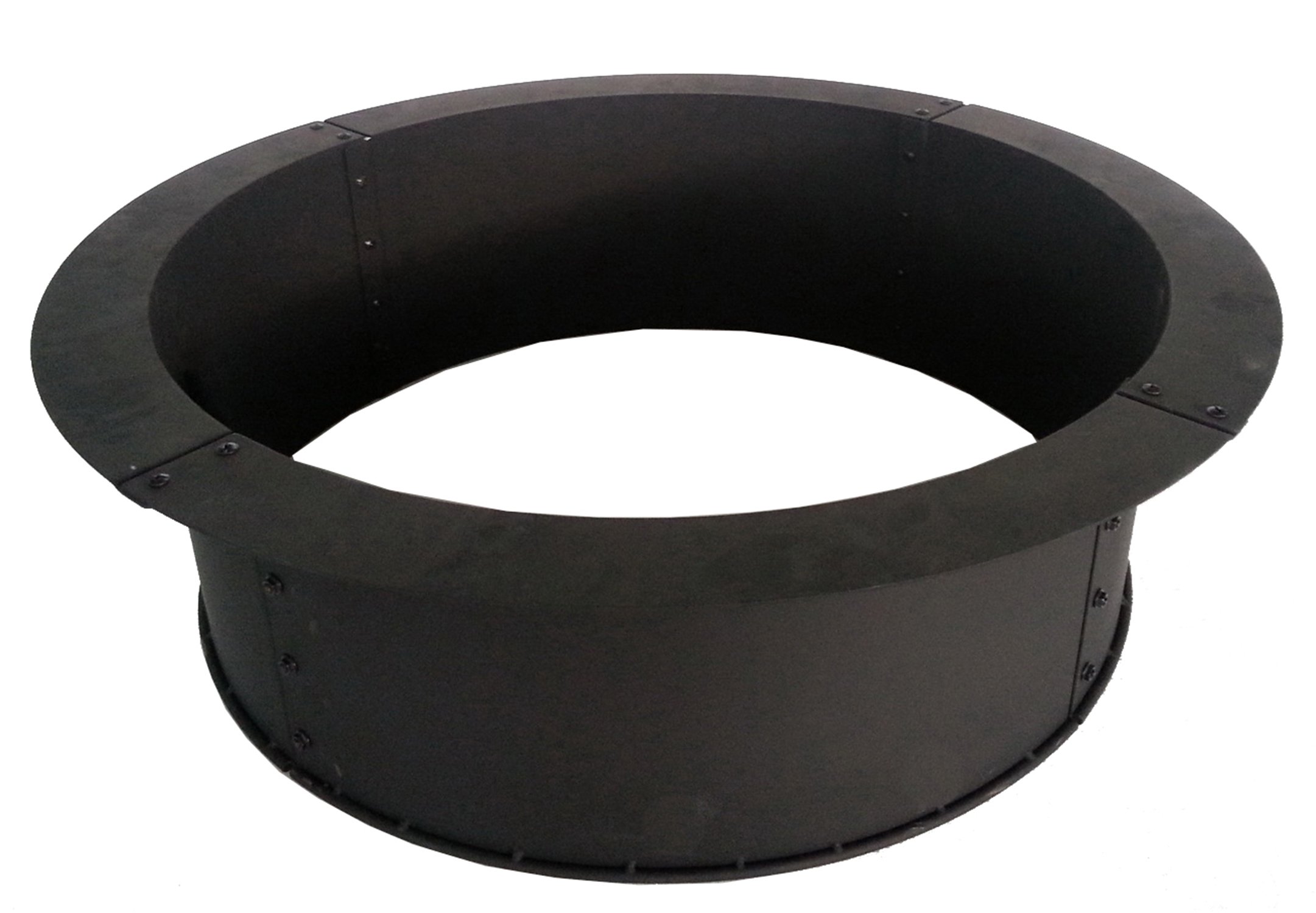
A heavy-gauge solid-steel ring that feels built to last and is ideal for a permanent backyard surround or brick insert.
Why I picked it: I chose it for its thick steel construction and robust, bolted seams that resist flexing.
Best for: Permanent backyard fire pits and brick surround inserts.
Solid, long-lasting build at a sensible cost for heavy steel.
Pros
- Very sturdy heavy-gauge steel
- Large wood capacity
- Thick curled bottom prevents flexing
Cons
- Finish can arrive scratched
- Coating is not premium
My take
This Pleasant Hearth ring impressed me with how solid it felt out of the box. The panels bolt together with overlapping seams and locking nuts, and the curled bottom edge gives the ring rigidity I rely on for a permanent installation.
I used it as an insert for a brick surround and the ring held its shape under multiple large wood fires. The interior measures right around the advertised 28-inch diameter, and the extra outer lip gives me room to stack logs without crowding the flame.
The finish arrived with a few surface scratches on my unit, so I touched up the paint after assembly. That minor cosmetic work didn’t affect the performance, and given the thickness of the steel I expect this ring to serve me for many seasons.
2. Pleasant Hearth Infinity Galvanized Fire Ring – Best Galvanized
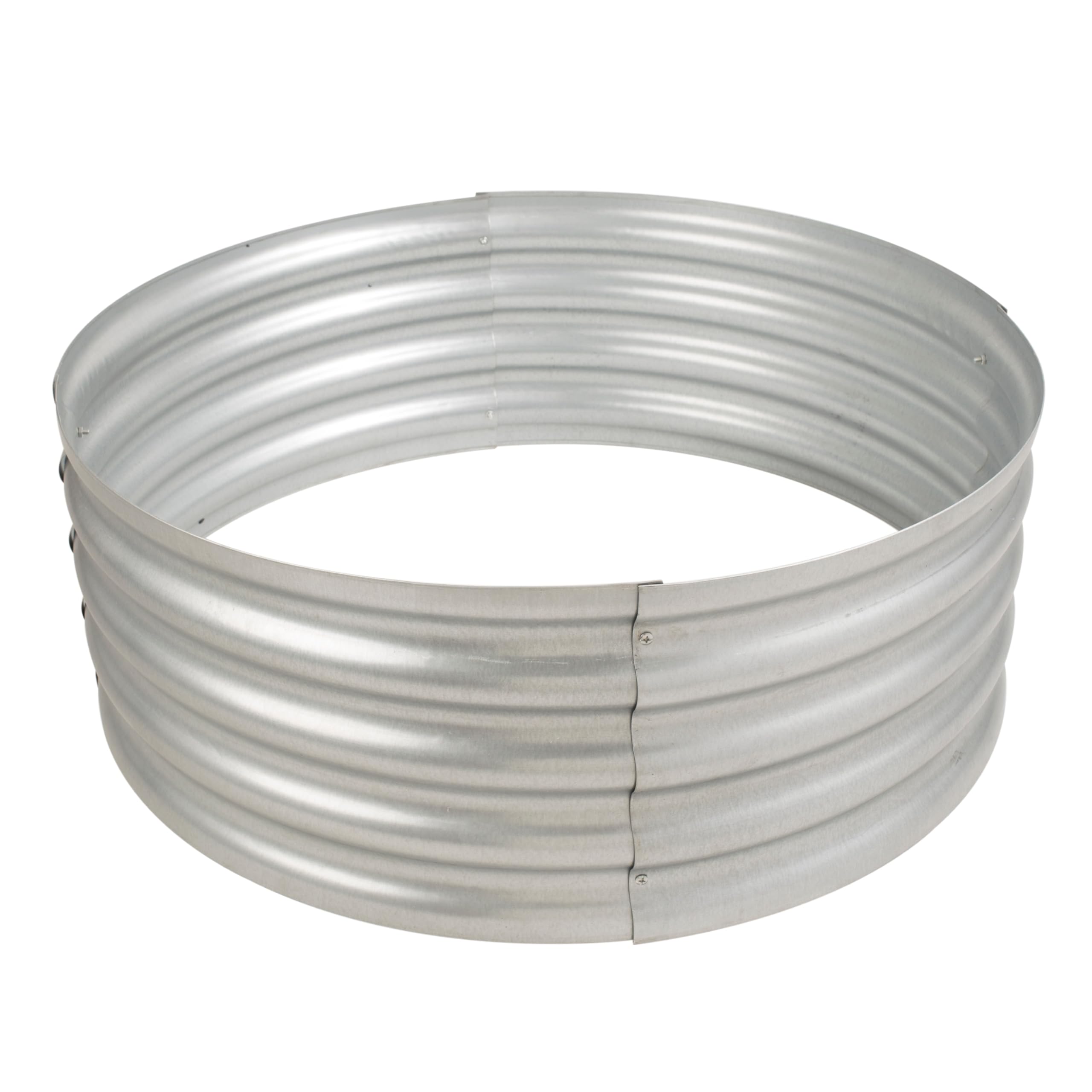
A large galvanized steel ring that resists rust and assembles quickly — great when corrosion resistance matters.
Why I picked it: I picked it for the galvanized finish and roomy 36-inch diameter that holds a lot of wood.
Best for: Campgrounds, beach setups, or pits where rust resistance matters.
An affordable way to get a rust-resistant, large-diameter ring.
Pros
- Galvanized to resist rust
- Large 36-inch diameter
- Quick three-piece assembly
Cons
- Basic appearance
- Not decorative or ornate
My take
The Infinity galvanized ring goes together in minutes with simple bolting, and its silver finish stands up to weather far better than painted steel in my experience.
I’ve used this ring for multiple campsite setups and backyard builds; its size comfortably handles bigger fires without feeling cramped. The wave-style edge is subtle and unobtrusive, which I appreciate when the look needs to blend with landscaping.
If you want low-maintenance performance and aren’t after a decorative face, this galvanized option is the one I reach for.
3. Sunnydaze Heavy-Duty Fire Pit Ring – Best for Entertaining
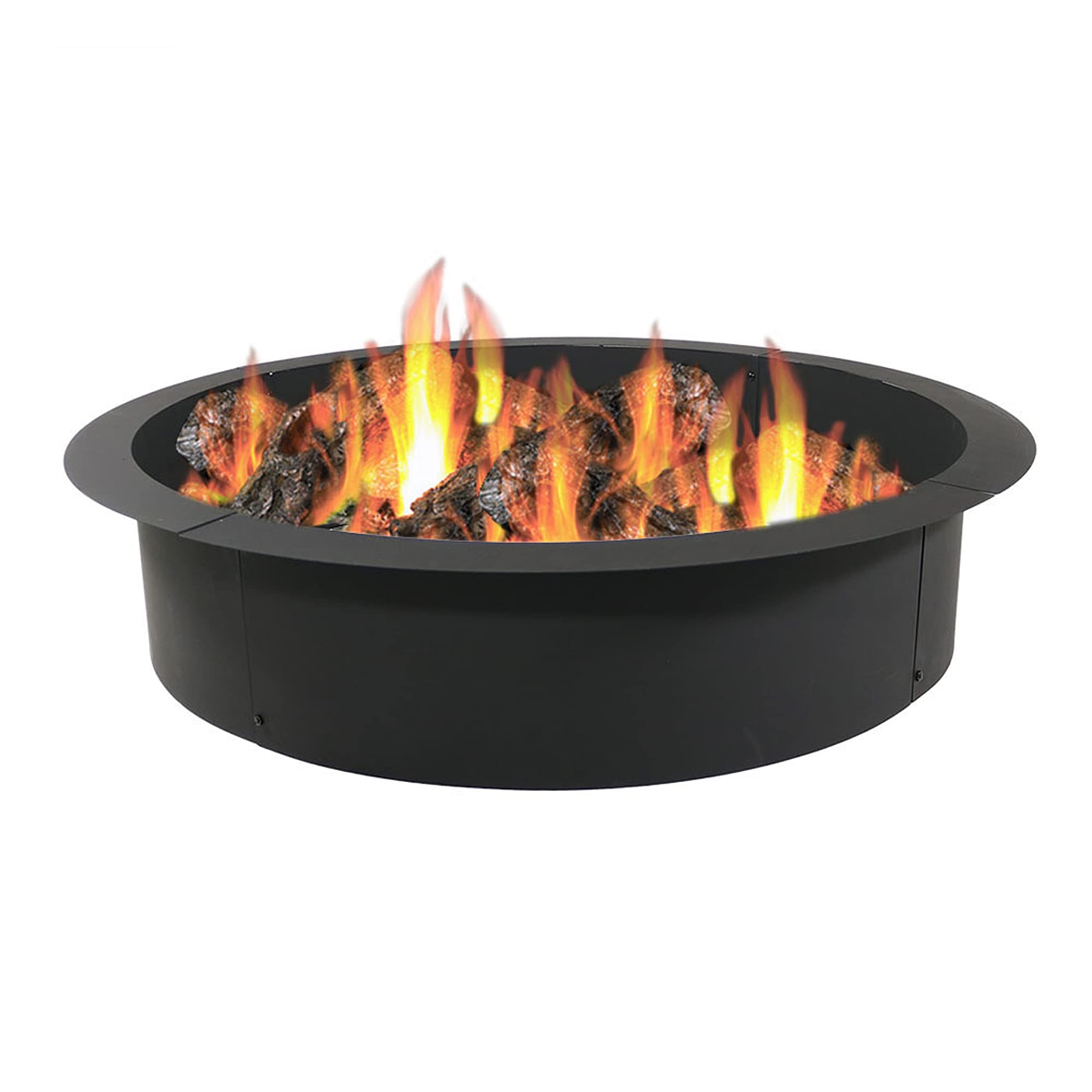
A thick 2mm-steel, four-piece liner that’s roomy, versatile for in-ground or above-ground use, and painted with high-temp finish.
Why I picked it: I liked the heavier 2mm steel, high-temp paint, and the flexible in-ground or above-ground use.
Best for: Backyard gatherings and DIY stone or brick fire pits.
A midrange option with durable materials for frequent use.
Pros
- Heavy 2mm steel
- High-temp paint resists bubbling
- Versatile above- or in-ground use
Cons
- May need touch-up paint
- Some fitting adjustments required
My take
This Sunnydaze ring felt heavier than I expected and provided a clean, wide burn area that made it easy to host groups. The four sections bolt together with included hardware, and the lack of a bottom is purposeful for both in-ground drainage and airflow.
I built a multi-layer block surround around it and found the ring a very solid template to work to; after a few fires I added a coat of high-temp paint in a couple of spots where bare metal showed.
The pieces weren’t perfectly identical in height on my unit, so I made small tweaks when seating the ring into the pit, but that’s a minor trade-off for the sturdy gauge and the large, convivial fire it produces.
4. Camco Portable Steel Campfire Ring – Best Portable
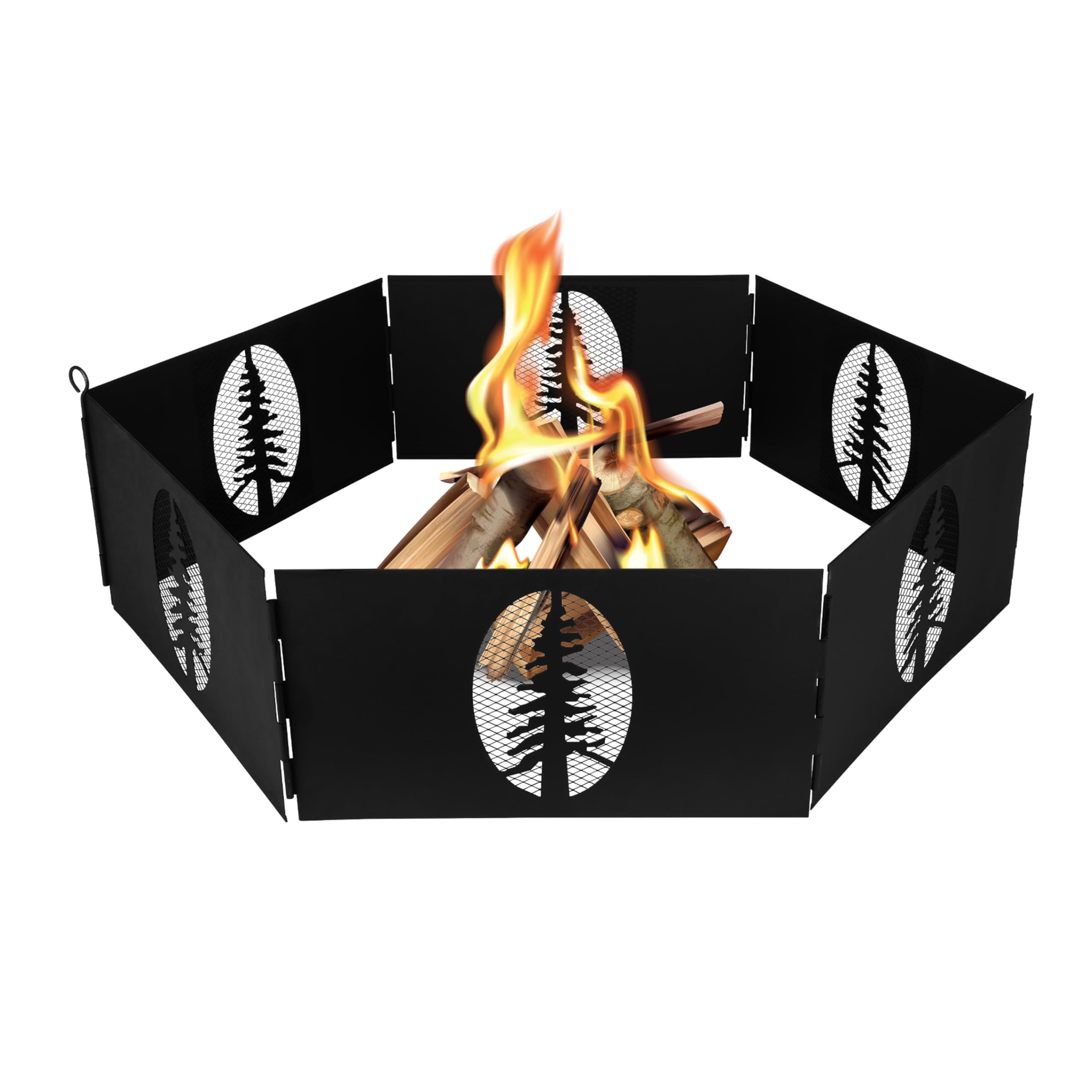
A hinged, collapsible ring that folds flat for travel and sets up without tools — ideal for camping or RV trips.
Why I picked it: I relied on it for quick setup and compact transport when camping.
Best for: Campers and people who need a collapsible, tool-free fire ring.
A very affordable, travel-ready option.
Pros
- Folds flat for travel
- Tool-free, sub-30s setup
- Includes storage bag
Cons
- Lower walls put out more heat
- Not intended as a permanent pit
My take
When I needed a quick, packable ring for a group campout, Camco’s hinged design was perfect — it unfolded and locked with a single pin in seconds and stowed flat in the included bag.
The tree cut-outs create pleasant flicker patterns and the ring radiates heat well because of its lower height. I used it at several sites where rings were not provided and it contained wood fires reliably.
Keep in mind this is built for portability, not for anchoring into a permanent landscape surround; for travel and occasional use it’s the most convenient piece I own.
5. Ash & Ember 33-inch Steel Fire Pit Liner – Best DIY Liner
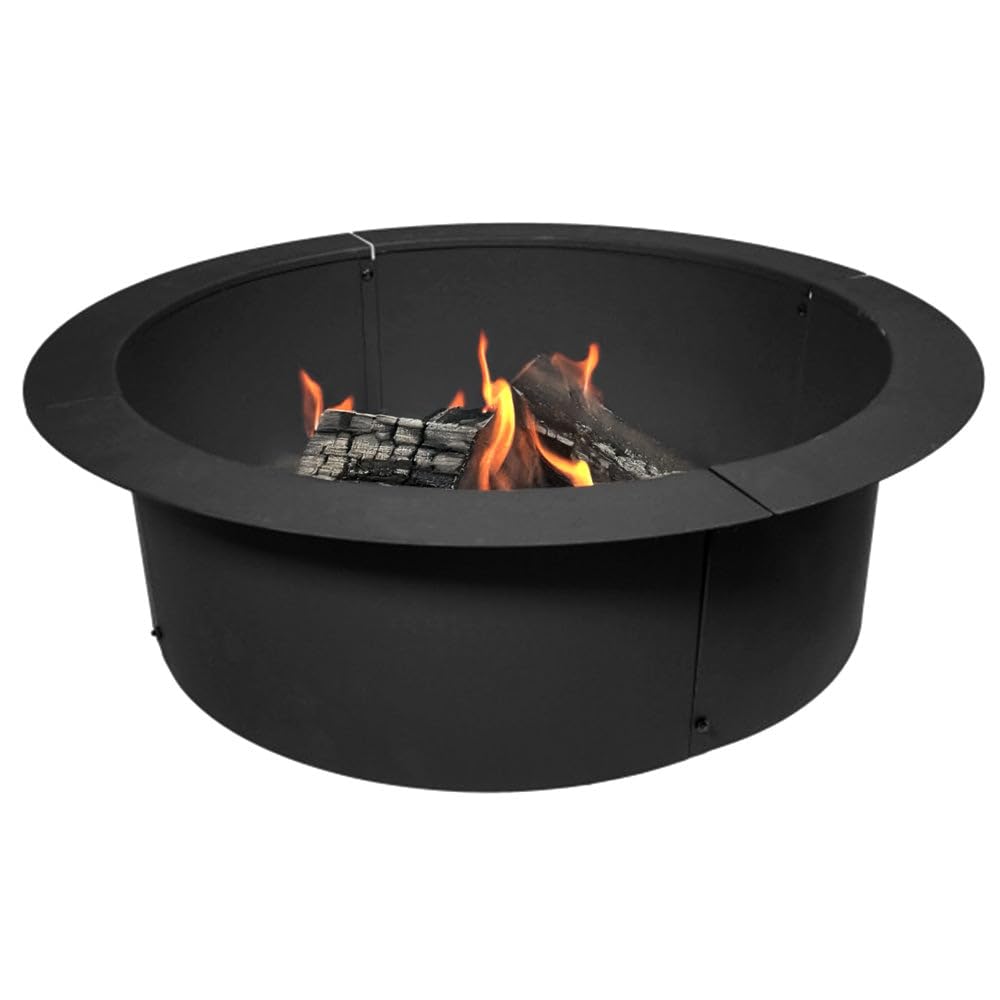
A thin-profile liner with a reinforced lip that makes building a stone or block fire ring easier and gives a finished interior edge.
Why I picked it: I used it as a template and protective liner when I built a stone pit.
Best for: DIY builders wanting an easy-to-use liner and top lip.
A reasonable value for a usable liner with a reinforced lip.
Pros
- Easy four-piece assembly
- Reinforced 3.125" lip
- Works as a building template
Cons
- Appears thin at first glance
- Limited paper instructions
My take
I set this Ash & Ember liner into a stone ring as a template and inner protector; the lip finished the top edge so I didn’t need separate capstones.
The pieces bolt together quickly and the TIG-style welds on my unit looked reassuringly solid even though the sheet metal feels light when first unpacked. It’s done its job protecting the inner walls and simplifying the build.
If you want a simple, effective liner to speed a DIY project, this is a smart, practical element to use.
6. 4ft Galvanized Camp Fire Ring – Best Large Capacity
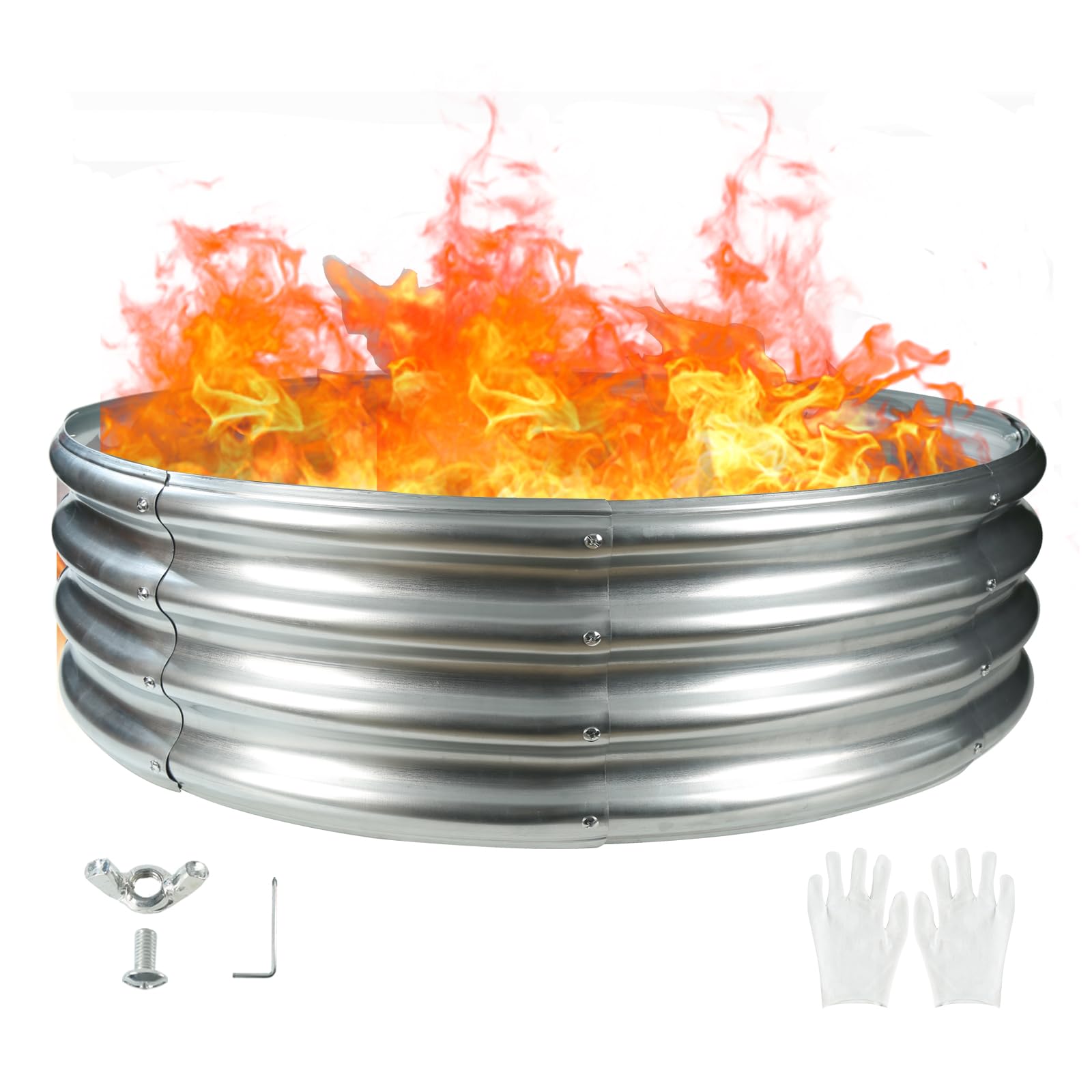
A large-diameter galvanized ring that gives plenty of burn area for big bonfires while offering corrosion resistance.
Why I picked it: I picked it for its large footprint and galvanized finish that keeps rust at bay.
Best for: Backyards and sites that need extra fire area for big gatherings.
A budget-friendly way to get a very large ring.
Pros
- Generous 4-foot diameter
- Galvanized for rust resistance
- Clean, simple appearance
Cons
- A fair amount of assembly
- Not the heaviest-duty option
My take
This 4-foot galvanized ring made a big visual and functional difference for our backyard bonfires — it feels roomy enough for large wood stacks and keeps the burn contained.
Assembly took time because of the panel fitting, but once in place the ring looked clean and performed well through several fires without any obvious corrosion.
If you want maximum burn area without a heavy industrial ring, this galvanized option is a sensible compromise.
7. 36-inch Foldable Galvanized Fire Ring – Best Foldable
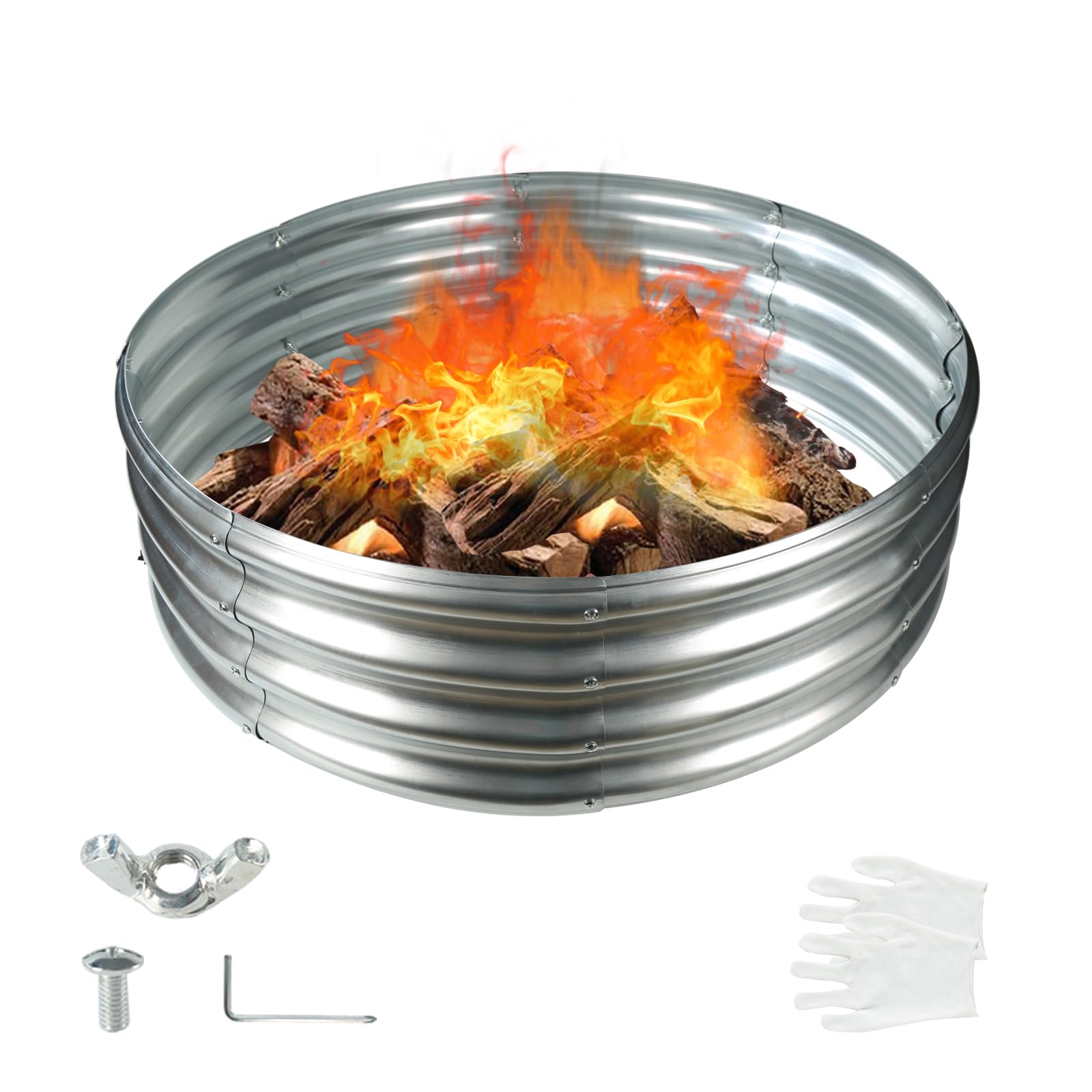
A foldable galvanized ring that balances portability with a larger diameter for social fires and multi-use setups.
Why I picked it: I appreciated the foldable design combined with a corrosion-resistant finish.
Best for: Situations that need a balance between portability and generous fire area.
A wallet-friendly foldable galvanized solution.
Pros
- Folds for storage
- Galvanized finish resists rust
- Good size for groups
Cons
- Thin metal on some units
- Paint or color may wear
My take
I used this ring for both backyard events and a few park gatherings; the ability to fold and transport it made setup far easier than moving a permanent liner.
The metal thickness reads light at 0.8mm, but in practice it has held up through dozens of fires and rain exposure on my patio. I did notice paint on a black version burned off quickly, so galvanized silver is the safer long-term aesthetic.
Overall, it’s a practical, portable ring when you want more diameter without committing to a heavy, fixed pit.
8. Ash & Ember Steel Fire Ring with Swivel Cooking Grate – Best for Cooking
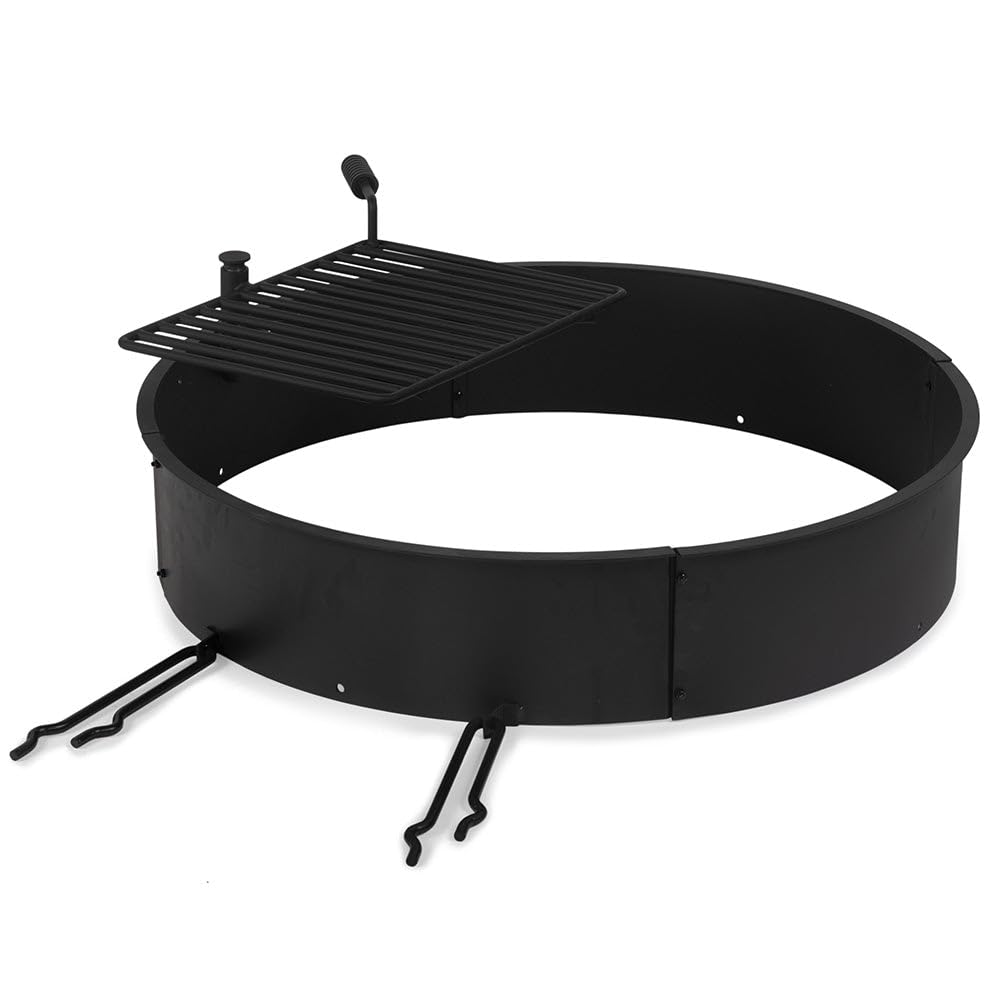
A heavy 10-gauge steel ring that includes a swivel cooking grate and drainage/draft holes — built for serious backyard cooking over wood.
Why I picked it: I chose it for the integrated swivel grate and the robust 10-ga steel construction.
Best for: People who want to cook over an open flame regularly.
A more expensive, heavy-duty choice for cooking and permanence.
Pros
- Swivel cooking grate included
- 10-gauge steel resists warping
- Draft holes improve burn and drainage
Cons
- Very heavy to handle
- Grate assembly can be fiddly
My take
This ring felt like the most purpose-built cooking option I tested: the swivel grate gives 300 square inches of cooking space and swings clear when I wanted to tend the fire.
The ring’s draft and drain holes keep water out and help the fire burn cleaner, and the 10-gauge steel with a one-inch top flange resists warping even after repeated high-heat use.
It is heavy and requires a firm foundation or anchors if you want it fixed in place, but for meals over open flame this is the unit I reach for when I plan to grill and roast.
How I Choose a Fire Ring
Size and Capacity
I always check the inner diameter first because that determines how much wood you can safely burn and how many people can gather around the fire.
For casual backyard use I prefer a 28–36 inch inner diameter; for larger bonfires I choose rings in the 36–48 inch range.
- 28–30 in: intimate, easy to contain
- 30–36 in: best for small groups and cooking
- 36+ in: large bonfires and party-sized fires
Material and Finish
I favor galvanized steel if the ring will stay exposed to rain or coastal air — the zinc coating slows rust.
For heavy-duty, long-life rings I lean toward thicker steel (2mm or 10-gauge) and a high-temp paint or finish to resist heat discoloration.
- Galvanized: best for corrosion resistance
- Thicker steel: resists warping and lasts longer
- High-temp paint: protects appearance under repeated fires
Assembly and Portability
If I need to move a ring or take it camping, hinged or foldable systems matter more than raw thickness.
For permanent pits I choose bolted four-piece liners that sit flush in a brick or stone surround.
- Hinged/foldable: fastest for travel
- 4-piece bolt-in liners: best for permanent builds
- Check included hardware and whether a storage bag is provided
Cooking and Extras
When I want to cook, I prioritize rings with a grate or the ability to accept a grill. A swivel grate is my preferred convenience feature.
Drainage and draft holes are small but meaningful improvements for easier tending and cleaner burns.
- Swivel grate: cook and access fire easily
- Draft holes: improve airflow and drainage
- Anchors: useful for permanent concrete installations
Safety and Placement
I position rings on level ground and keep at least a recommended clearance from structures and combustible landscaping.
I always prepare a noncombustible base (gravel, stone, or a concrete pad) and keep a water source or extinguisher nearby when burning.
- Maintain clearances per local codes
- Use noncombustible base materials
- Keep tools to tend the fire and extinguish it quickly
Frequently Asked Questions
Can I use a fire ring for cooking?
Yes — I cook on rings that include grates or accept a grate. A swivel grate is my favorite since it lets me move the grate away from the heat while I tend coals or add wood.
Do fire rings need a bottom?
Not always. I often use rings without bottoms for in-ground pits to allow drainage and airflow; for above-ground installations I make sure the base is noncombustible and level.
How do I prevent rust on a fire ring?
I choose galvanized finishes for long-term outdoor exposure and touch up high-temp paint spots after heavy use. Regularly cleaning ash and keeping the ring dry between uses helps a lot.
Are foldable rings safe to use camping?
I use foldable or hinged rings at camp frequently. They contain fires well and pack flat, but I treat them as temporary solutions and set them on noncombustible ground when possible.
Final Take
I’ve tried each of these rings in real setups: permanent backyards, DIY stone pits, and camp trips. The Pleasant Hearth solid-steel ring is my pick for a long-lasting backyard liner, while the Camco hinged ring is the most convenient for travel.
If cooking is a priority, the Ash & Ember ring with its swivel grate gives the best on-fire kitchen experience. Choose the ring that matches the way you plan to use it — size, finish, and portability make the biggest difference in real life.
