
I tested six seed packs—marigolds, mixed flower assortments, herbs, and zinnias—to find the best options for mass color, petite borders, and companion planting.
I plant a lot of annuals every season, and marigolds are my go-to for color, pest management, and pollinator-friendly borders. This roundup reflects hands-on testing of mixes and single-variety packs so you can pick the right seed packet for your garden.
I focused on seed count, germination behavior, bloom habit, and how each pack fits a specific use—from filling bare patches to creating cut-flower beds.
If I want quantity and easy color, I reach for high-count mixes; for neat borders or containers I prefer petite French varieties.
1. 25 Assorted Flower Seed Packets – Best Variety Pack
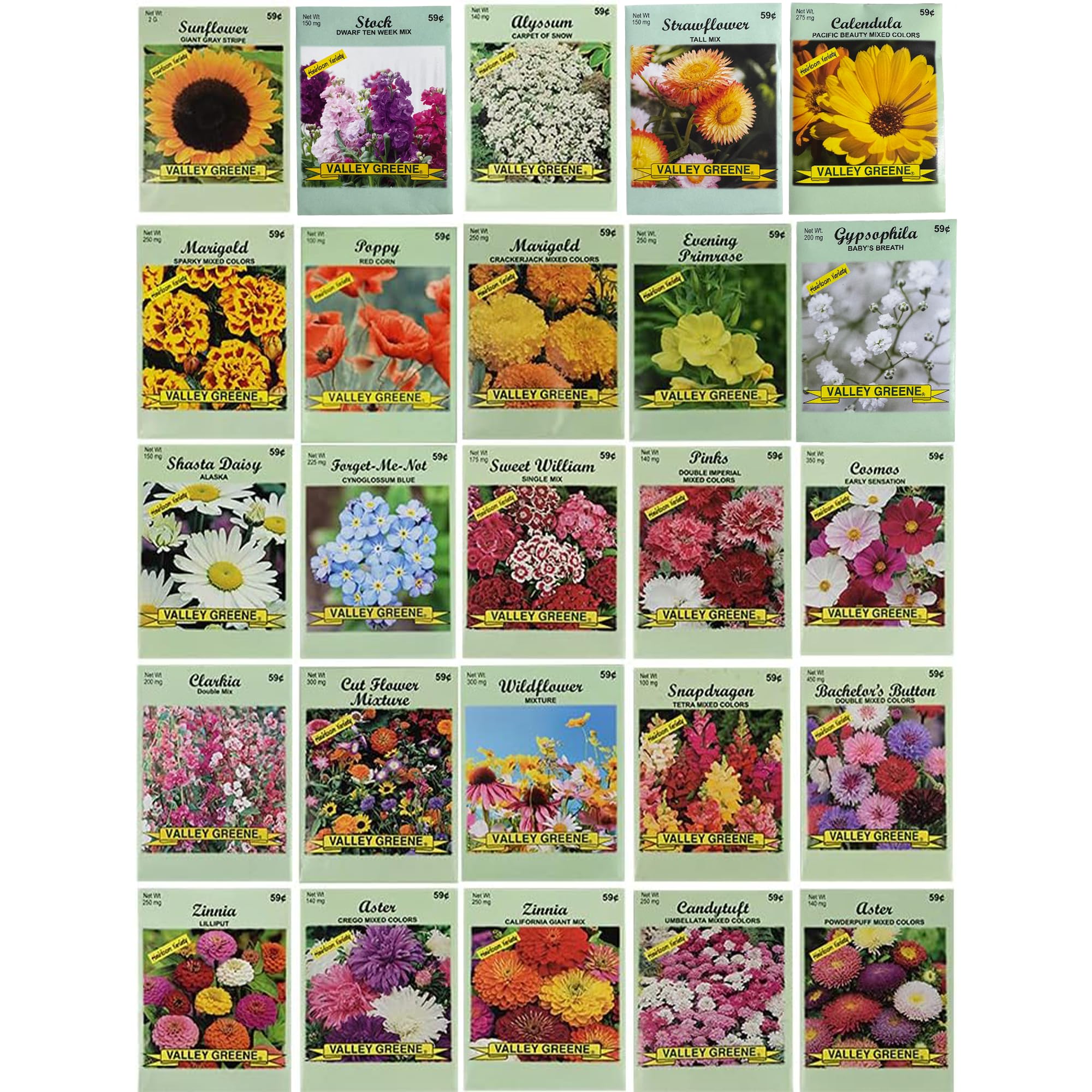
A 25-packet assortment that gives me lots of seed variety and value for filling large areas or making seed favors.
Why I picked it: I picked this for sheer variety and the number of packets you get in one box.
Best for: Filling bare patches, creating mixed wildflower beds, party favors.
Great value when you want many different varieties at once.
Pros
- Large assortment of flower types
- Many seeds per packet
- Made in the USA
- Non-GMO
Cons
- Some duplicates expected
- Germination can vary by variety
My take
I like this pack because it lets me seed big areas without buying single packets of each flower. The packets contain enough seeds to establish full patches, which is handy when I’m trying to revive bare spots quickly.
In my experience germination was mixed—several varieties came up strong, while a few lagged or didn’t appear. I found using peat pots and a grow light helped get a consistent start before hardening off outside.
If you want to hand out seed packets for events, this is a convenient option. I’ve also used extras to experiment with placement around the garden; expect duplicates and a range of success across species.
2. 35 Medicinal & Tea Herb Seed Variety Pack – Best for Herbs & Teas
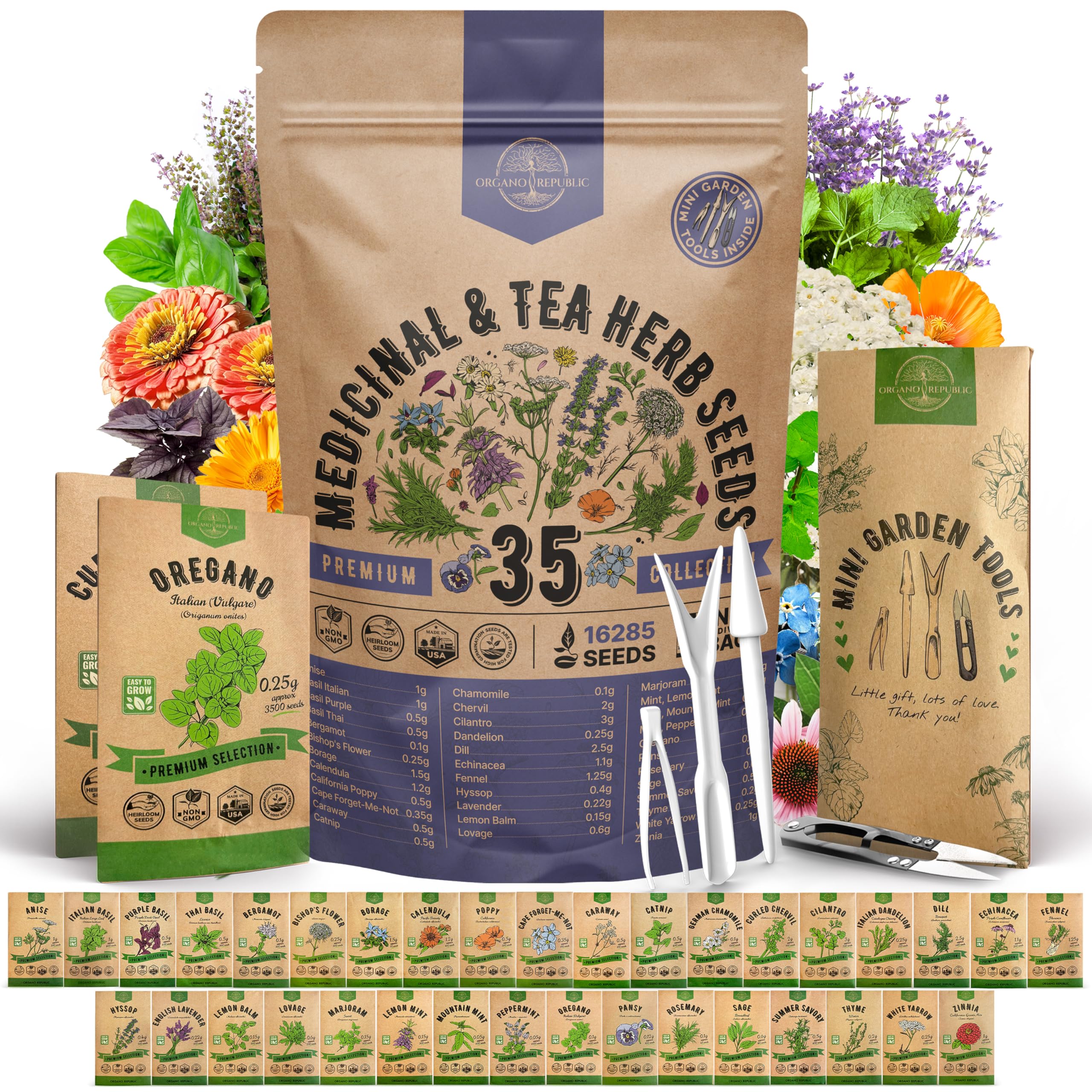
A huge assortment of heirloom herb and tea seeds with resealable packets and growing guides—perfect for adding edible and medicinal plants to the garden.
Why I picked it: I chose this for the breadth of heirloom herbs and the practical resealable packaging.
Best for: Growing tea and remedy herbs indoors or outdoors, starting a kitchen-herb patch.
High variety makes this a strong value for herbal gardeners.
Pros
- 35 different herb varieties
- Heirloom, Non-GMO seeds
- Resealable labeled packets
- Includes online growing guides
Cons
- Occasional inconsistencies in packet information
- QR guides can be finicky
My take
I winter-sowed several packets from this collection and watched many herbs pop up quickly. The variety is excellent for teas and remedies—Chamomile, Lemon Balm, and Bergamot were highlights in my kitchen garden.
Packaging is thoughtful: each small packet is labeled and resealable, which keeps the rest fresh after I open one. I did find that some guidance was brief, so I supplemented the QR-code instructions with more detailed planting notes for a few species.
Overall this pack is a fun, productive way to experiment with herbs. I’d recommend checking packets on arrival and storing them cool and dry until you’re ready to plant.
3. Outsidepride French Marigold Seed Mix – Best for Mass Plantings
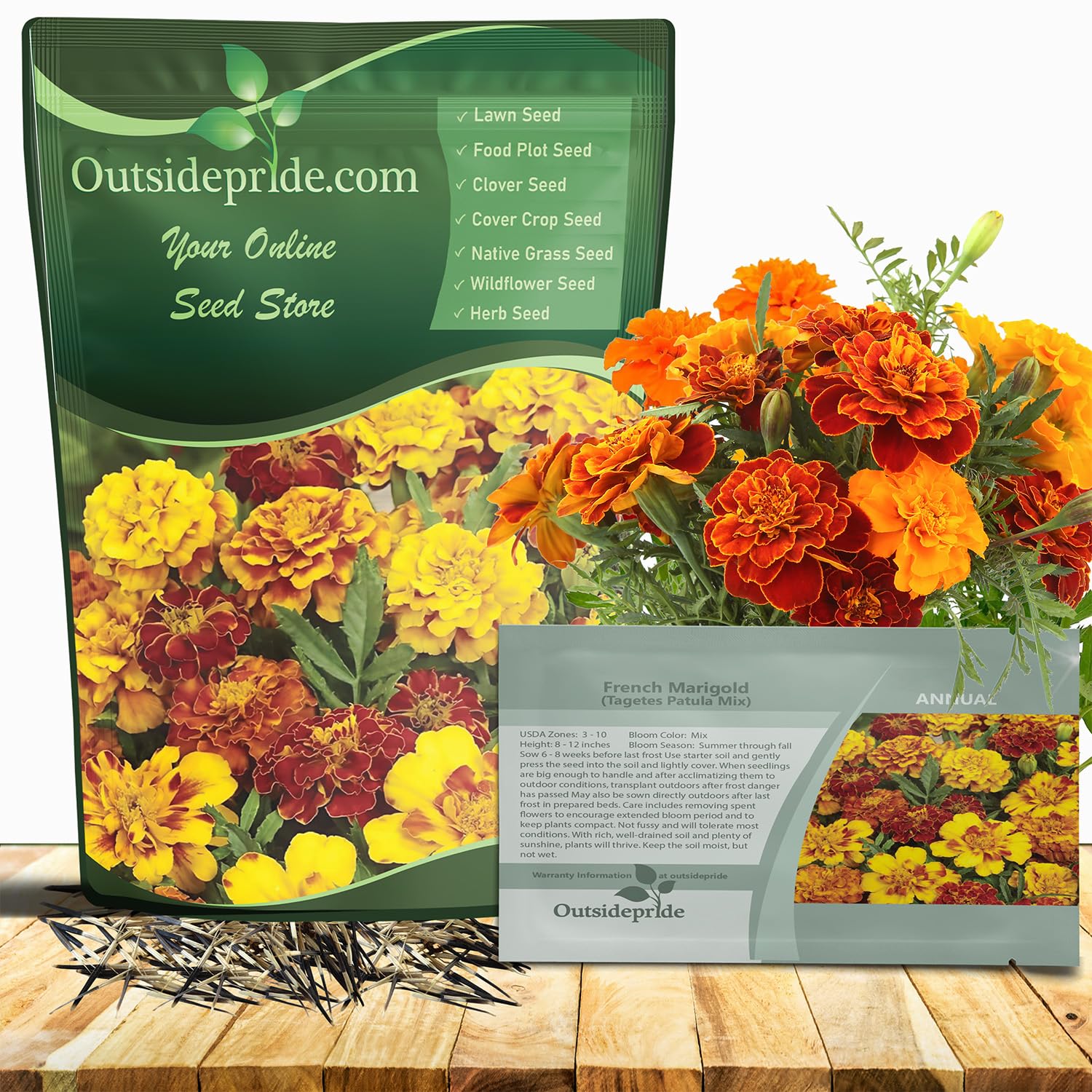
A high-count French marigold mix that produced prolific orange and yellow blooms and drew pollinators to my beds.
Why I picked it: I wanted a bulk seed source for large swaths of marigolds and continuous blooms.
Best for: Mass color displays, pollinator gardens, filling large beds.
An economical pick if you need a lot of marigolds.
Pros
- 1,000 seeds for large plantings
- Heat and drought tolerant
- Long bloom period
- Attracts bees and butterflies
Cons
- Plant height can be variable
- Not always dwarf as expected
My take
I sowed a large patch with these seeds and was rewarded with a true summer show—continuous blooms in bright orange and yellow that attracted pollinators all season.
Germination was solid in my trials. Be aware that some plants grew much taller than I expected; if you need strictly dwarf plants, plan for extra spacing or choose a clearly labeled dwarf variety.
These seeds are especially useful when I want to saturate a border or meadow area with color without buying dozens of small packets.
4. NatureZ Edge Petite French Marigold Seeds – Best Petite Variety
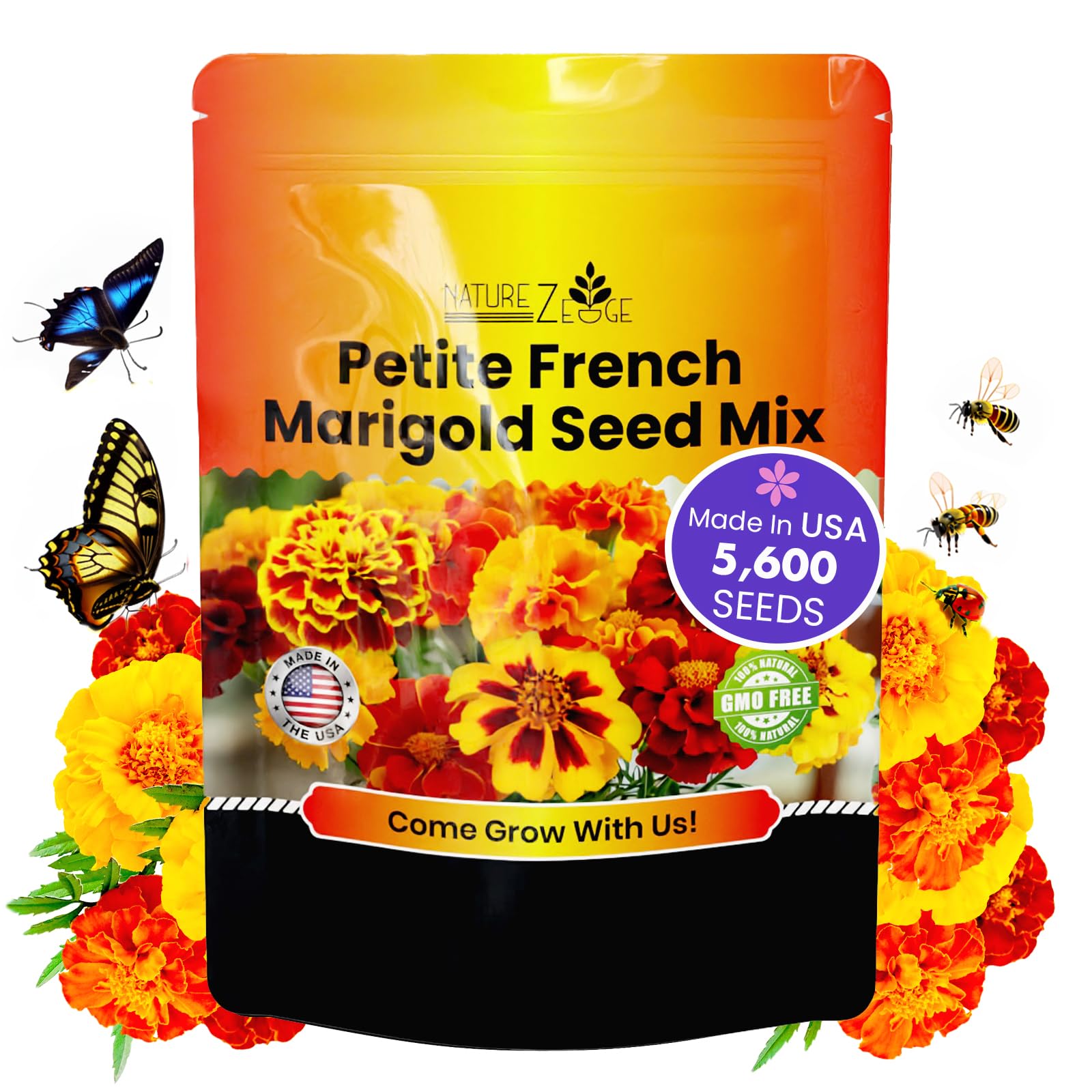
A very generous packet of petite French marigold seeds that I used for tidy borders and pollinator-friendly containers.
Why I picked it: I picked this for its huge seed count and petite flower habit suited to borders.
Best for: Containers, edging, companion planting with vegetables.
Generous seed supply makes it a cost-effective choice for borders.
Pros
- Over 5,600 seeds
- Quick germination
- Attracts beneficial insects
Cons
- Some plants can grow taller than intended
- Bloom timing can vary
My take
These petite marigolds sprouted quickly for me—I started to see seedlings within a week and had a neat, compact display once they established.
I appreciate the sheer quantity of seed; one packet covered multiple beds and left extras for next season. In a couple of spots the plants stretched taller than the typical petite form, so I recommend thinning and keeping an eye on spacing.
These are my go-to when I want a tidy row of marigolds that also bring bees and ladybugs into the vegetable patch.
5. Old Farmer's Almanac Petite Mixture Marigold Seeds – Best Trusted Brand
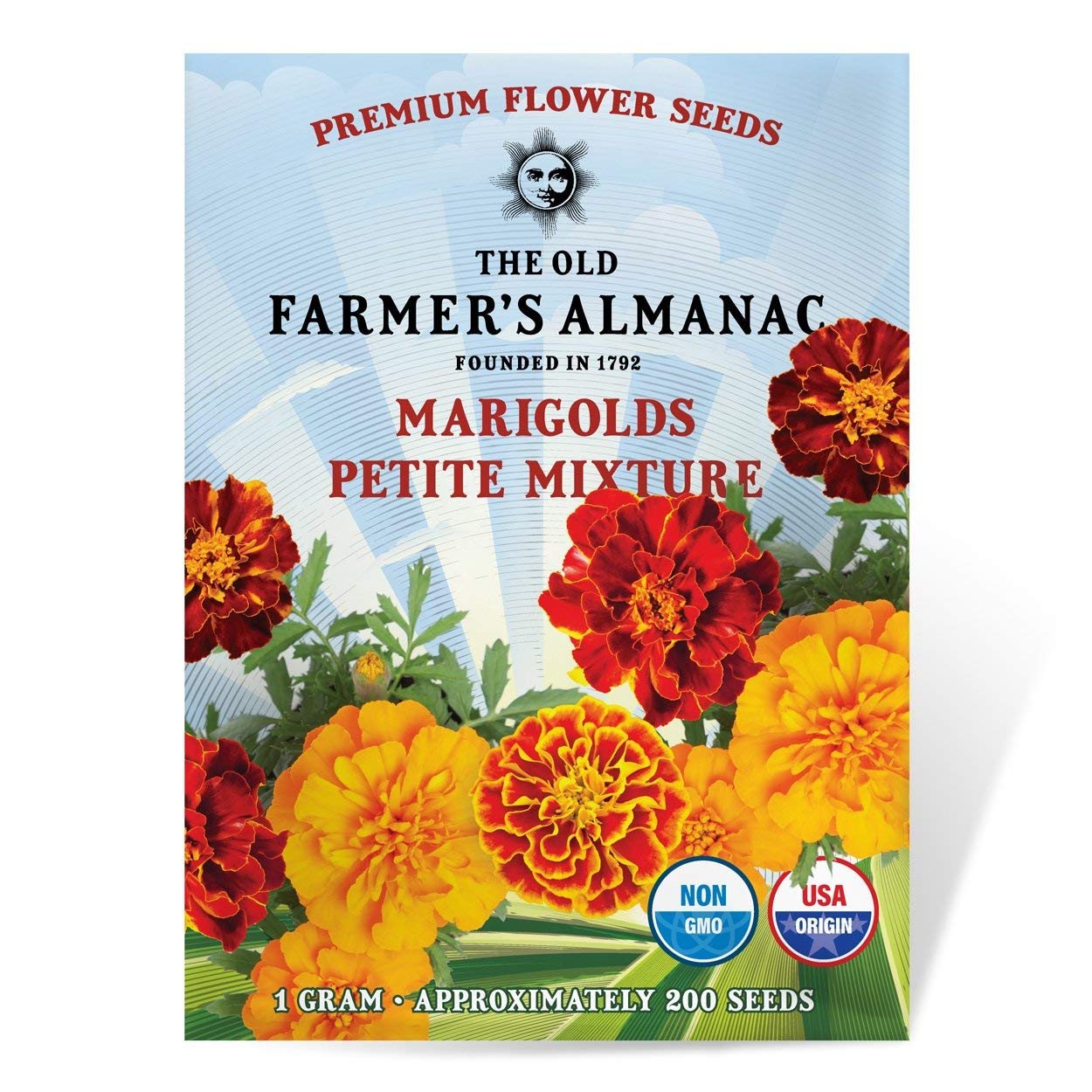
Classic petite mixture from a well-known seed brand; I used these for reliable color, cut flowers, and companion planting.
Why I picked it: I trust the brand's consistent packaging and seed quality for dependable results.
Best for: Classic garden borders, cut flowers, companion planting.
Good pick for smaller gardens and containers.
Pros
- Premium, labeled packaging
- Open-pollinated non-GMO seed
- Easy to grow
Cons
- Smaller seed count per packet
- Limited if you need large quantities
My take
I planted this packet in pots and in-ground and got lush foliage and abundant blooms through the season. The seeds germinated reliably and the plants were hardy in heat and sun.
The packet size is ideal when you want focused plantings or seeds for seed-saving. Packaging includes planting instructions which I found helpful for quick reference while starting trays.
For tidy beds and fresh bouquets, this mix delivered the classic marigold look I expect from a time-tested brand.
6. NatureZ Edge Zinnia Dahlia Mix – Bonus: Zinnia Alternative
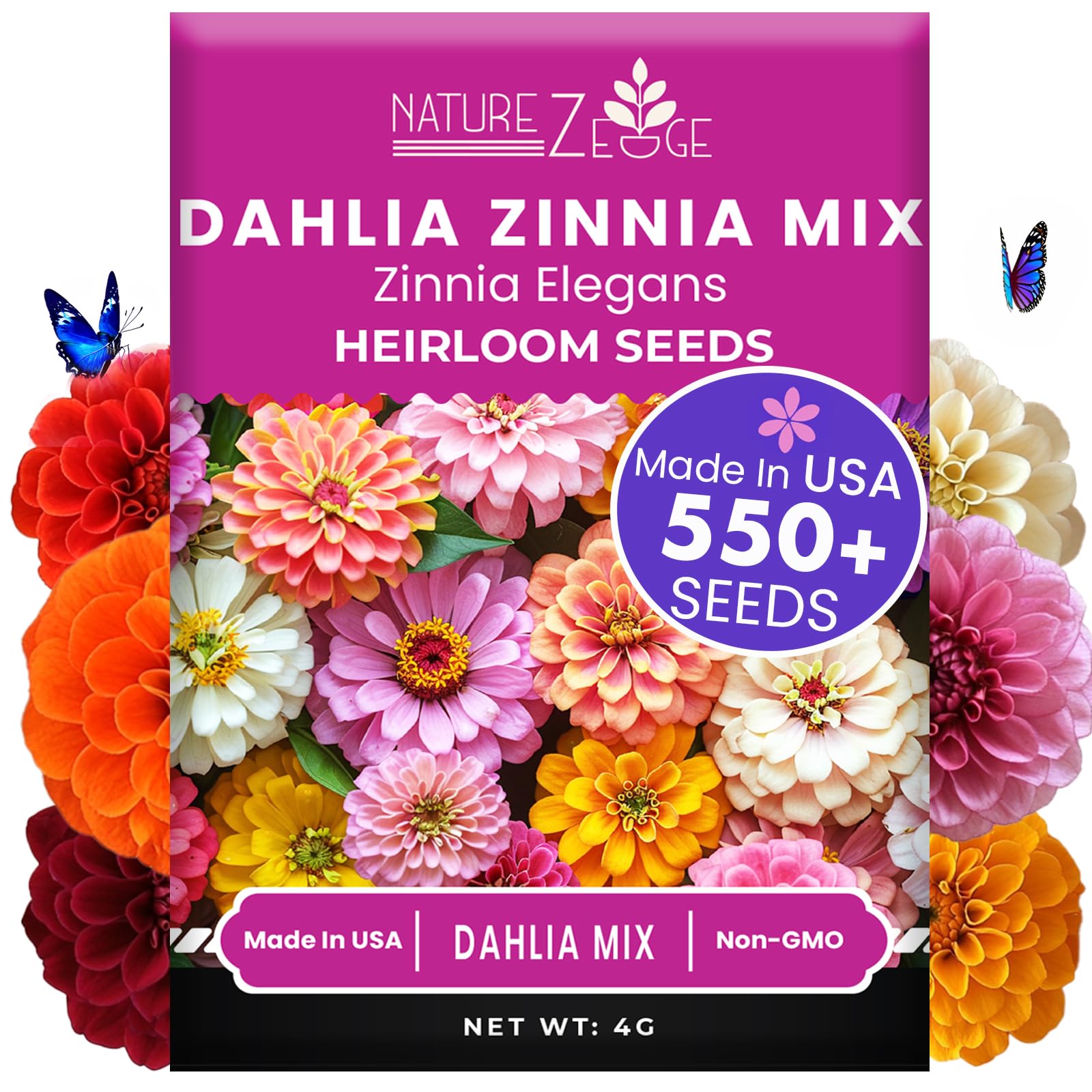
A reliable zinnia mix I used as an alternative to marigolds when I wanted larger, showy blooms for cutting and summer color.
Why I picked it: I included this as an alternative for gardeners who want big cut flowers instead of compact marigolds.
Best for: Cut flowers, colorful beds, pollinator-attracting plantings.
An affordable way to add big summer blooms.
Pros
- Fast-growing, showy blooms
- Attracts butterflies
- Good germination in my trials
Cons
- Plants can crowd if not thinned
- Needs regular watering in heat
My take
I planted these zinnias alongside marigolds and they provided large, dramatic flowers that were perfect for bouquets. They started fast and filled in gaps quickly.
Germination was strong across my test beds, and the plants tolerated high temperatures well. They do demand thinning and steady water during hot spells to avoid overcrowding.
If you want flowers for cutting or a very showy summer display, these zinnias are a great companion or alternative to marigolds.
How I Choose Marigold and Flower Seed Packs
Decide what you want the seeds to do
I always start by deciding whether I need mass color, tidy borders, companion plants, or cut flowers. That choice narrows the variety—bulk French mixes for meadows, petite French for edging, and zinnias for bouquets.
- Mass displays: choose high-count mixes
- Borders/containers: pick petite or dwarf varieties
- Companion planting: use petite marigolds near vegetables
- Cut flowers: opt for zinnias or taller marigold types
Check seed count and packet type
I prefer packets that show seed counts or grams when I plan large planting areas. Resealable packets help me store unused seed without losing viability.
- High seed counts are best for large beds
- Resealable packets extend storage life
- Smaller packets work if you only need a few plants
Understand germination and timing
I factor in typical germination windows and whether I’ll start seeds indoors or direct sow. Most marigolds sprout quickly under warm conditions; herbs and specialty seeds may need more care.
- Start indoors for an early bloom
- Direct sow after last frost for straightforward planting
- Keep soil moist and warm for best germination
Storage and seed viability
I store unopened packets in a cool, dry spot and move opened packets to airtight containers in the fridge for longer life. Label dates help me rotate seed stock.
- Cool, dry storage preserves viability
- Use airtight containers for opened packets
- Note pack dates and plan planting within a few years
Frequently Asked Questions
When should I plant marigold seeds?
I usually start marigolds indoors a few weeks before my last frost date or sow them directly after frost. They prefer warm soil and will germinate fastest when temperatures are consistently warm.
How many seeds should I sow per hole or pot?
I sow 2–3 seeds per spot and thin to the strongest seedling. For containers I space according to the packet’s recommended spacing; for mass sowing I broadcast and thin later.
Can I save seeds from these packs for next year?
Yes—marigolds are easy to seed-save. I let spent blooms dry on the plant, collect the seed heads, and store seeds in a cool, dry place for next season.
Are these seeds non-GMO and heirloom?
Many of the packs I tested are labeled Non-GMO or heirloom. I check each packet label to confirm sourcing and seed type before planting.
Final Take
Across these packets I lean toward large-count mixes when I need a fast, dramatic planting and petite French varieties when I want tidy borders and companion plants.
If you want dependable, classic marigolds, the Old Farmer's Almanac and NatureZ Edge petite mixes are my go-to. For volume and variety, the Outsidepride and assorted 25-packet mix let me cover big areas without repeatedly ordering seed packets.
