
I tested seven motorcycle covers across material, wind resistance, heat tolerance and fit. Here are the covers I’d buy for everyday outdoor storage, high-heat situations, trikes, heavy-duty protection and tight sportbike
I spent hands-on time with seven motorcycle covers to figure out which actually protect bikes outdoors and in storage. My testing focused on fit, fabric weight, water resistance, ventilation, security features like lock holes, and real-world handling—how easy each cover is to put on and take off.
Across these picks you’ll find lightweight, budget-friendly options that still block rain; heavier, multi-layer covers that survive years of sun and wind; and a heat-resistant model that lets me cover warm exhausts without waiting.
I compared each cover by testing fit on representative bikes, checking seam and vent design, trying the buckles and lock holes, and evaluating how the materials handled sun, rain and wind in my own outdoor storage situations.
1. Favoto Motorcycle Cover – Best Overall
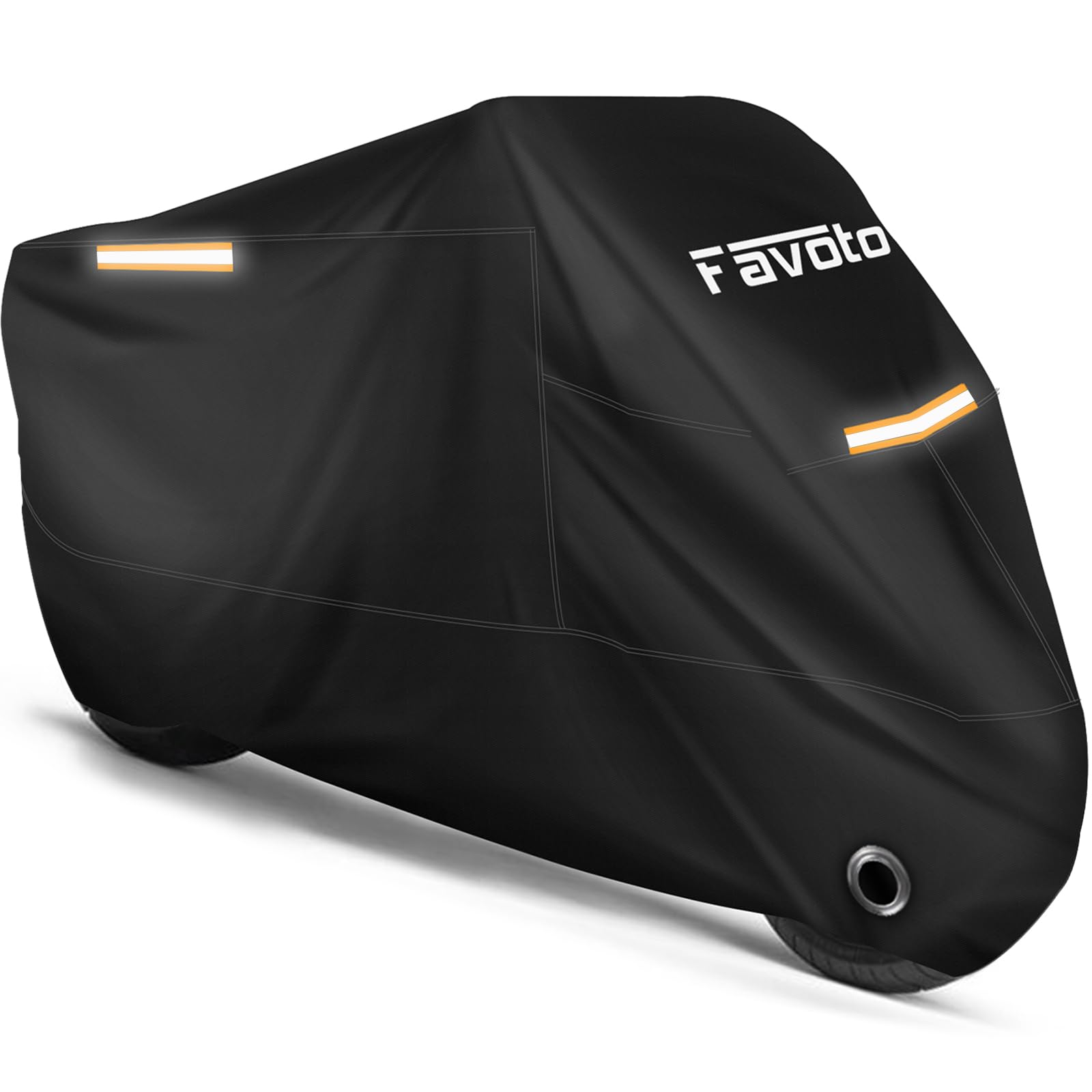
A lightweight, waterproof 300D Oxford cover with lock-holes, wind straps and reflective strips that delivers dependable everyday protection at an attractive price.
Why I picked it: Reliable waterproof fabric, windproof buckles and reflective safety details.
Best for: Street bikes, cruisers and scooters needing simple outdoor protection.
Very affordable option for routine outdoor storage.
Pros
- Waterproof 300D Oxford fabric
- Aluminum lock-holes included
- Windproof buckles front and rear
- Night reflective stripes
- Includes storage bag
Cons
- Can fit a bit loose on small bikes
- Rear buckle reach can be short
- Material thinner than premium covers
My take
I like this cover because it balances protection and value. The 300D Oxford feels sturdy and the inner silver coating blocks sun and helps keep water off paint.
Buckles at the front and rear, plus elastic hems and lock-holes, keep the cover from flapping in moderate wind. I did secure the rear clip through the rim on my sportbike since the rear strap didn’t reach quite as far as I’d like.
The reflective stripes make the bike easy to spot at night, and the included storage bag keeps the cover tidy when not in use. With regular outdoor exposure I’d expect to replace it sooner than a heavyweight tarp, but for the price I consider it a solid everyday choice.
2. VELMIA Heat-Resistant Motorcycle Cover – Best for Heat Resistance
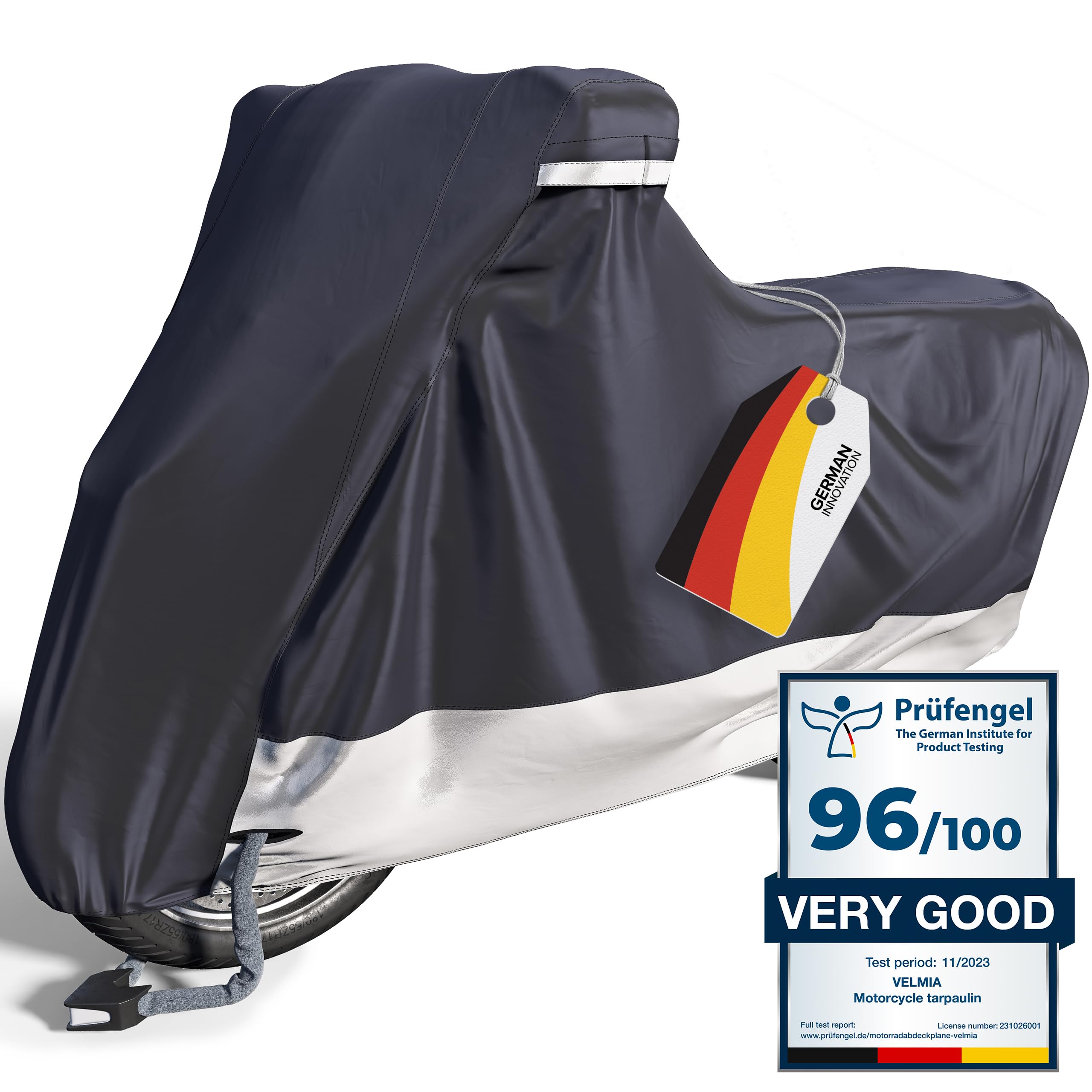
A premium, heat-resistant cover built to tolerate hot exhausts, with soft inner lining, vents and a license plate window for legal parking.
Why I picked it: Heat-resistant to cover warm exhausts; soft inner prevents scratches.
Best for: Bikes with hot pipes, top cases, or owners who want a longer-lasting premium cover.
A premium option worth the extra cost for durability and heat protection.
Pros
- Heat resistant to very high temperatures
- Soft fabric inner lining
- Double vents reduce condensation
- License plate window included
- Three securing straps
Cons
- Heavier to handle
- May fit loosely without a top case
- Higher-cost option
My take
This is one of the few covers I’ll put over warm exhausts without worry. The material handled hot pipes and I could cover the bike sooner after a ride than with a standard cover.
The soft inner layer gave me confidence that paint won’t get scratched when putting the cover on or taking it off, and the vents dramatically reduced trapped moisture during overnight outdoor storage.
I appreciated the clear license window when I needed to park legally, and the reinforced lock openings and reflective accents are useful extras. For a garage or premium outdoor setup, this is the cover I reach for when heat tolerance matters.
3. Tokept Trike Motorcycle Cover – Best for Trikes
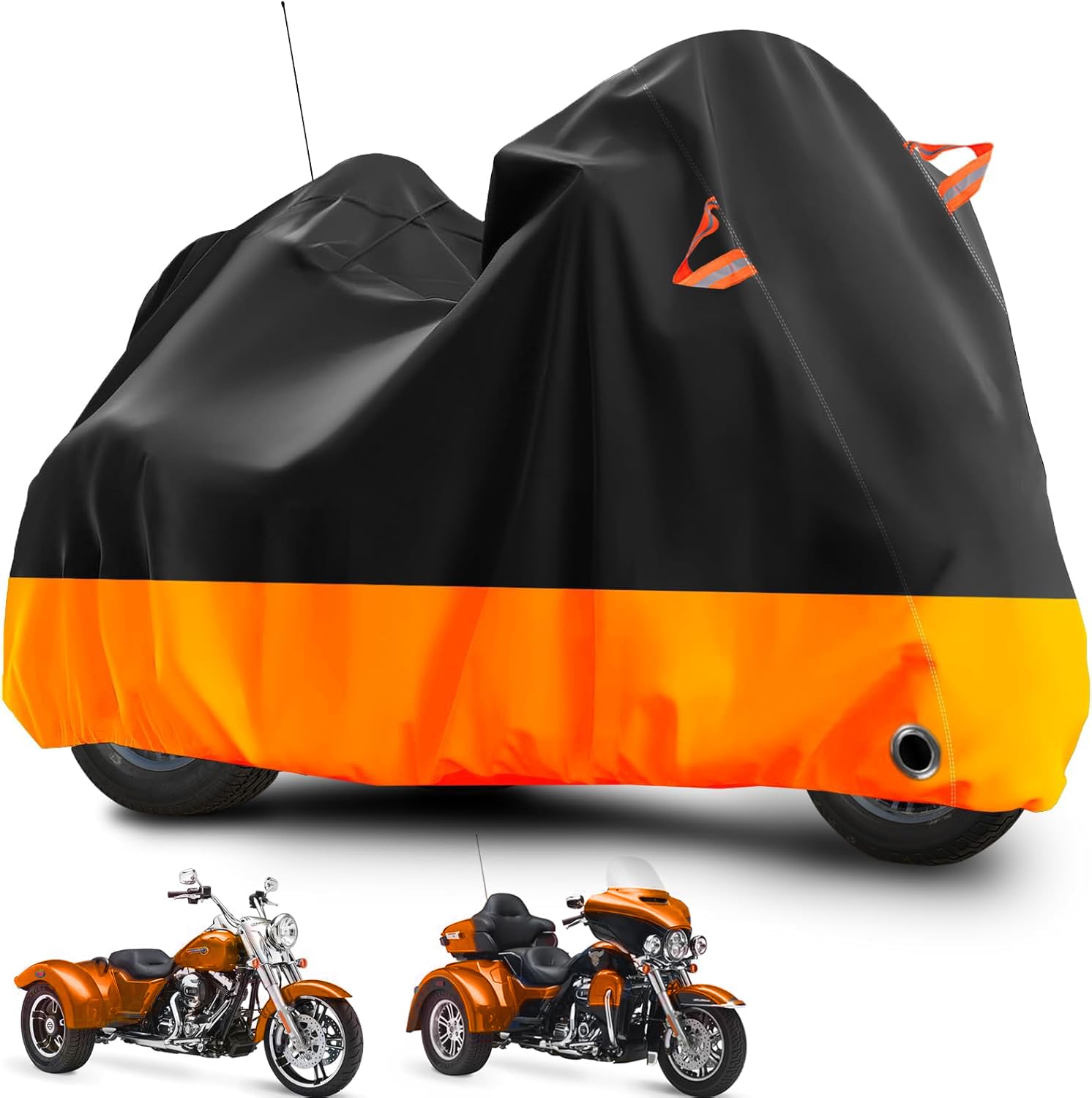
A large, purpose-built trike cover in 420D Oxford with dedicated lashings for three wheels, reflective accents and antenna zippers that make life easier for trike owners.
Why I picked it: Three-wheel lashings and trike-specific sizing for secure coverage.
Best for: Trike models like Goldwing trikes and Harley three-wheel conversions.
Good value for a trike-specific cover.
Pros
- Designed for three-wheel motorcycles
- 420D Oxford durable material
- Multiple windproof lashings
- Reflective carrying handle
- Rear zippers for antenna access
Cons
- Can bleach in strong sun over time
- Lighter weight than heavy-duty tarps
My take
If you ride a trike, this cover fits the bill. The three-wheel lashings and center buckle keep the cover secured even in windier conditions.
The reflective handle/strip at the front improves nighttime visibility and the rear zippers let me route an antenna without exposing the seat.
It’s lightweight enough that I can wrestle it on alone, and the orange/black color looks sharp on my Street Glide Trike. Expect some sun fading if you leave it in direct UV all season, but for daily use it’s practical and well sized.
4. Badass Moto Ultimate Cover – Best Heavy-Duty
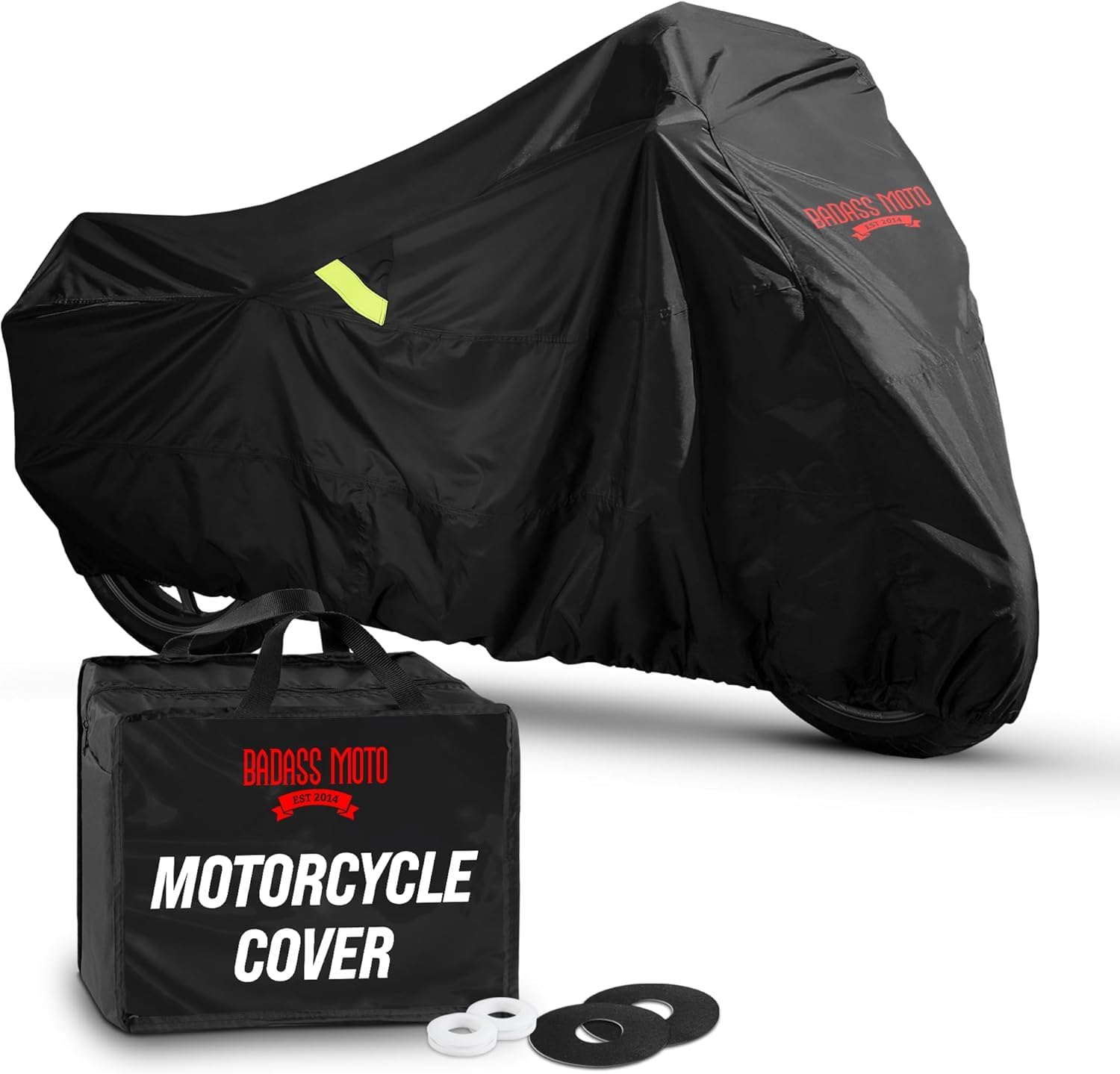
A true heavy-duty option with a multi-layer build, hidden lock pocket and reinforced features designed to survive years of harsh weather and frequent use.
Why I picked it: 12-layer construction and reinforced security features for maximum protection.
Best for: Riders who want the most durable long-term weather and security protection.
A more expensive cover, built for longevity and heavy use.
Pros
- 12 commercial-grade protective layers
- Hidden lock pocket
- Reflective safety accents
- Adjustable belly strap
- Heat-resistant design
Cons
- Bulky to handle
- Tight fit with added luggage
- Awkward to put on solo
My take
This cover is noticeably thicker and feels like a tarp built to last. The 12-layer construction gave me confidence during prolonged outdoor exposure.
I used the XL on a Vulcan with bags and windshield; it covered everything tightly and the under-strap buckles stay fastened in wind.
If you keep luggage or tall accessories on your bike, order a size up—this one runs snug. For long-term protection in sun, rain and wind, I treat this as the go-to heavy-duty option.
5. Nuzari Heavy Duty Cover – Best for Sportbikes
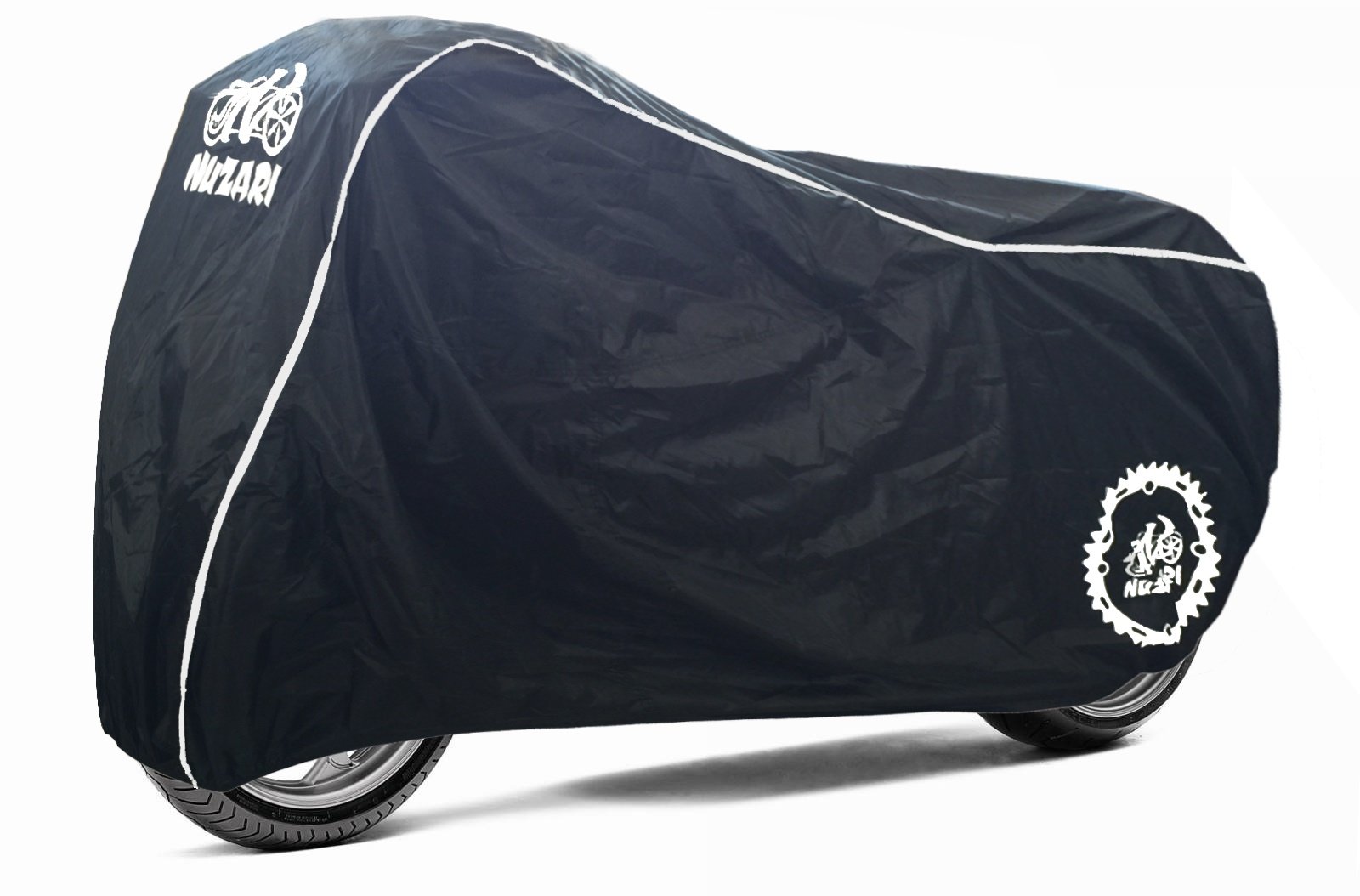
A canvas-like, midweight cover with soft windscreen protector, strong elastic skirt and interior heat shield that fits sportbikes and tighter silhouettes well.
Why I picked it: Soft inner protector and snug fit tailored for sportbikes.
Best for: Sportbikes and smaller bikes that need a close, protective fit.
Mid-range build quality with a canvas feel.
Pros
- Soft cotton windscreen protector
- Heavy-duty elastic bottom
- Interior heat shield
- Lockable grommet cutouts
- Feels thick and durable
Cons
- Heat rating limited to moderate temperatures
- Can fade after long sun exposure
- May need a bungee for extreme wind
My take
This is the cover I reached for on sportbikes. The soft windscreen protector and velvety inner surface make me comfortable sliding it over fairings without scratching.
Fit is snug on narrower machines like my Hayabusa and other sport models. Elastic hems and the luggage strap keep the cover from riding up in wind, though I sometimes add a front bungee for extra security during storms.
The fabric felt stronger than thin budget covers—the construction isn’t indestructible after years of blazing sun, but it’s a solid midweight option that protects finishes and keeps the bike clean.
6. Nuzari Premium Large Cover – Best for Large Bikes
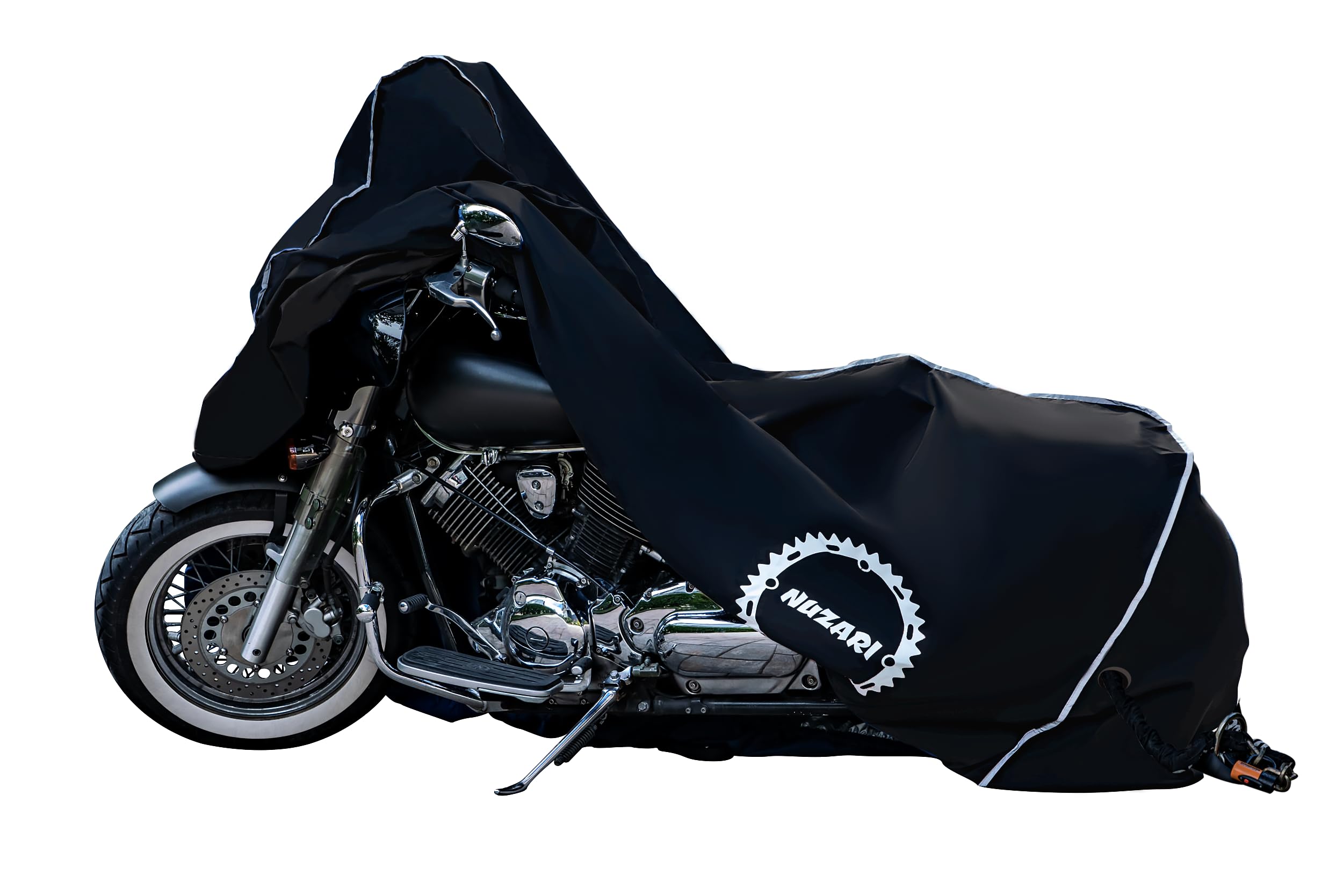
A large-format cover with full 360° elastic, luggage strap, lockable grommets and a limited lifetime warranty aimed at baggers and tall setups.
Why I picked it: 360° elastic and warranty make it ideal for big cruisers and baggers.
Best for: Large Harleys, baggers, tall bikes and setups with windshields or sissy bars.
Affordable large-bike option with warranty backing.
Pros
- 360° tight elastic hem
- Luggage strap secures cover
- Interior heat shield included
- Lockable grommet cutouts
- Limited lifetime warranty
Cons
- Heavier and bulky
- Can rip near pegs with abuse
- A little harder to put on
My take
I picked the large size to fit a tall setup and the 360° elastic plus luggage strap kept the cover from slipping off during windier days.
The inside velvety texture reassures me paint won’t get scratched while moving the cover, and the lock grommets let me thread a chain without exposing the bike.
Expect a bit more weight when handling it, and if you’re rough with installation or store outdoors constantly you should monitor seam wear. Overall, it’s the cover I recommend for baggers that need full coverage.
7. SRIMMIT 420D Motorcycle Cover – Best Value 420D
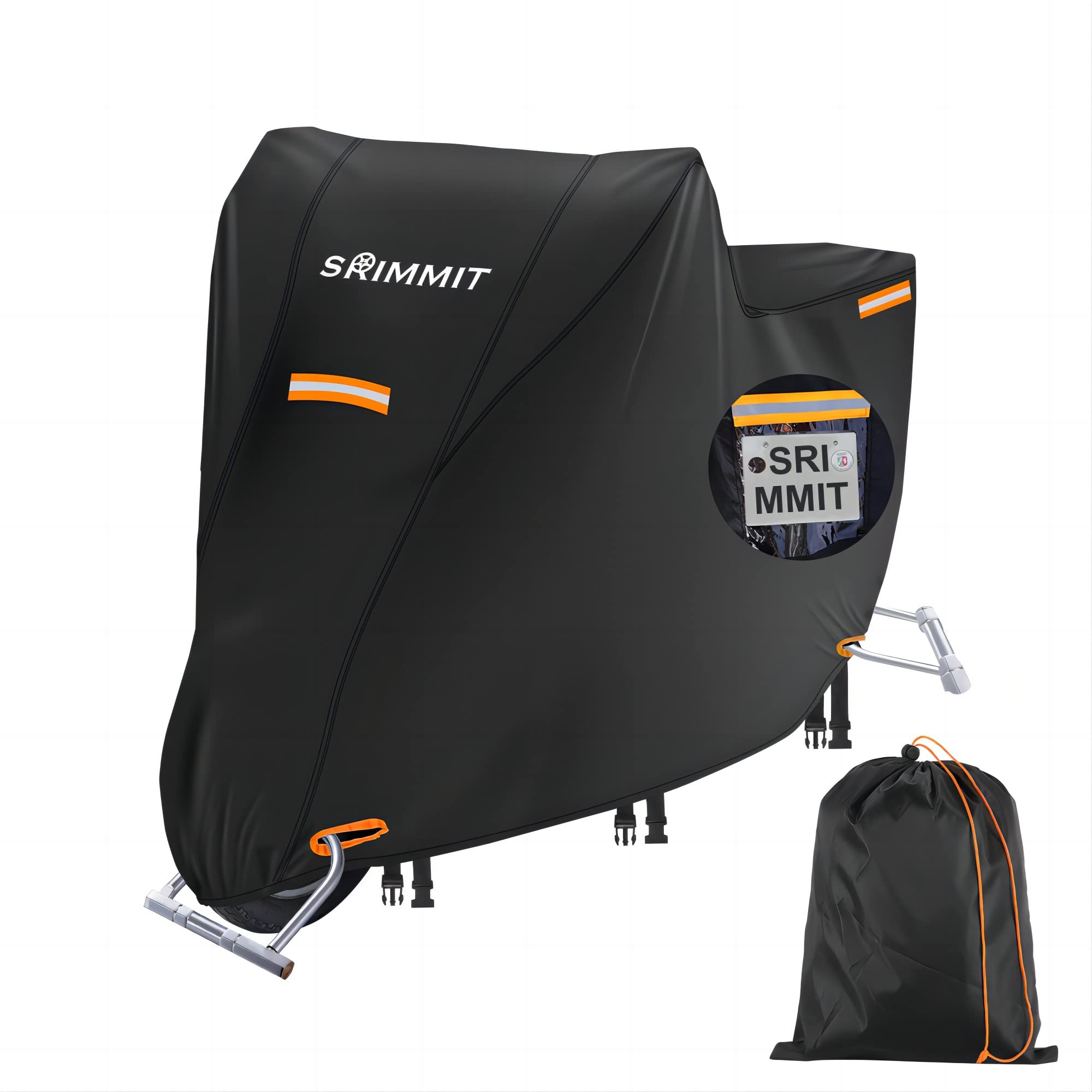
A thicker 420D oxford option with triple coating, high waterproof rating, license plate window and multiple windproof buckles—great value for frequent outdoor use.
Why I picked it: 420D fabric and high waterproof specs for everyday outdoor protection.
Best for: Routinely parked bikes exposed to sun and heavy rain.
Excellent value for a heavier 420D cover.
Pros
- 420D Oxford with triple coating
- High waterproof seam rating
- Transparent license window
- Four reflective strips
- Front/mid/rear buckles
Cons
- Inner silver may rub onto seats
- License window durability varies
- Some users report interior coating wear
My take
This thicker 420D cover felt like a step up from thinner budget options. The sealed seams and robust coating handled heavy rain without obvious seepage.
The license plate window is handy for legal parking and the reflective strips add visibility at night. I did notice the inner silver coating can rub if the cover moves in strong wind, so I shake it dry before long-term storage.
For routine outdoor protection when you want a heavier fabric without a premium price, this one earns a place in my rotation.
How I Choose a Motorcycle Cover
Measure and match fit
I always measure overall length, width with mirrors, and peak height (including windshields and sissy bars) before buying. A cover should be at least a few inches longer than your bike for a proper drape.
If you run luggage or a top case, account for that bulk—sometimes a size up is the right choice.
- Measure length, width (mirrors), and max height
- Choose a slightly larger size if you carry luggage or top cases
- Check if the cover lists specific fit for trikes, baggers or sportbikes
Material and weather protection
I look at fabric denier and coating: 300D is lightweight and waterproof; 420D is a tougher day-to-day choice; multi-layer or commercial-grade construction offers the best long-term resistance to sun and wind.
Sealed seams and waterproof seam tape make a real difference in heavy rain.
- 300D = lightweight and affordable
- 420D = thicker, more durable for long-term outdoor use
- Multi-layer covers = best for years of exposure
Heat tolerance and ventilation
If you need to cover a bike with hot exhausts, choose a heat-rated cover. I’ve tested covers that tolerate very high pipe temperatures and others that are safe only for cooled bikes.
Ventilation ports prevent trapped moisture—double vents are best to reduce condensation under the cover.
- Only use heat-rated covers over warm pipes
- Look for vents to minimize condensation
- Soft inner lining prevents scratches when covering warm surfaces
Security and wind protection
Lock holes, reinforced grommets and belly straps help secure the cover and deter opportunistic meddling. I find multiple buckles (front, middle, rear) and elastic hems keep covers anchored in wind.
Reflective strips are inexpensive but make the bike easier to spot at night.
- Use lock holes if you plan to secure the bike outdoors
- Elastic hems plus belly straps prevent wind lift
- Reflective accents improve night visibility
Care and storage
I store covers in their bag when not in use and air them out after heavy rain before folding to reduce mildew risk.
Inspect seams and coatings periodically—UV will degrade coatings over time, so rotating or replacing a cover every few years is normal for constant sun exposure.
- Air dry before folding to prevent mildew
- Store in the included bag to save space
- Replace if seams or coatings show wear
Frequently Asked Questions
How should I measure my bike for the right cover size?
I measure overall length, width including mirrors, and the tallest point (windshield or sissy bar). Then I choose a cover that lists dimensions at least a few inches larger—if I carry luggage or a top case I usually size up.
Can I put a cover on immediately after riding?
It depends. I only put covers on warm pipes if the cover is explicitly heat-rated. For most standard covers with heat ratings around moderate temperatures, I wait for things to cool. The VELMIA cover in this roundup tolerates very high exhaust heat so I can cover sooner.
What prevents condensation under a cover?
I look for covers with vents and breathable inner linings. Double ventilation ports and soft inner fabric let moisture escape and reduce condensation that can lead to corrosion.
How do I keep a cover from blowing off in wind?
In my experience, a combination of elastic hems, belly straps or luggage straps, and front/rear buckles works best. I sometimes add a small bungee or thread a chain through lock grommets for very exposed parking spots.
Final Take
I chose these seven covers because they each solve a specific problem I’ve faced: everyday waterproofing, heat tolerance, trike fit, heavy-duty longevity, snug sportbike coverage, big-bike fit and high-value 420D protection.
If you want one all-purpose option for budget outdoor use, the Favoto is a solid pick. For exhaust-after-ride coverage get the VELMIA. If you need maximum durability, the Badass Moto model is the cover I keep coming back to.
Measure your bike, decide which features matter most to you, and pick the cover that matches your storage conditions—I’ve tested these in real-world use and each earned its place for the reasons I described above.
