
I tested five very different rakes and heads so you can clear grass clippings fast without killing your back. From hand-held scoops for quick pickup to spring-steel tines that pull thatch, here are the best tools I used.
I spend a lot of time dealing with grass clippings — after mowing, along edges, and in tight beds — so I evaluated tools that actually make the task faster and less painful.
I looked for tools that move clippings without tearing turf, cut down on bending, and store easily. I prioritized real-world performance: wet and dry clippings, tight spaces, thatch, and repeated use.
Below I break down what worked for me and why, plus quick recommendations so you can pick the right tool for your yard and working style.
I found that hand scoops are unbeatable for quick pickup and mulching bins, spring-steel tined rakes excel at dethatching and pulling embedded debris, adjustable fans win for tight spaces, and combisystem heads give the most flexibility when paired with the right handle.
1. GARDEASE Leaf Scoops – Best for Quick Scooping
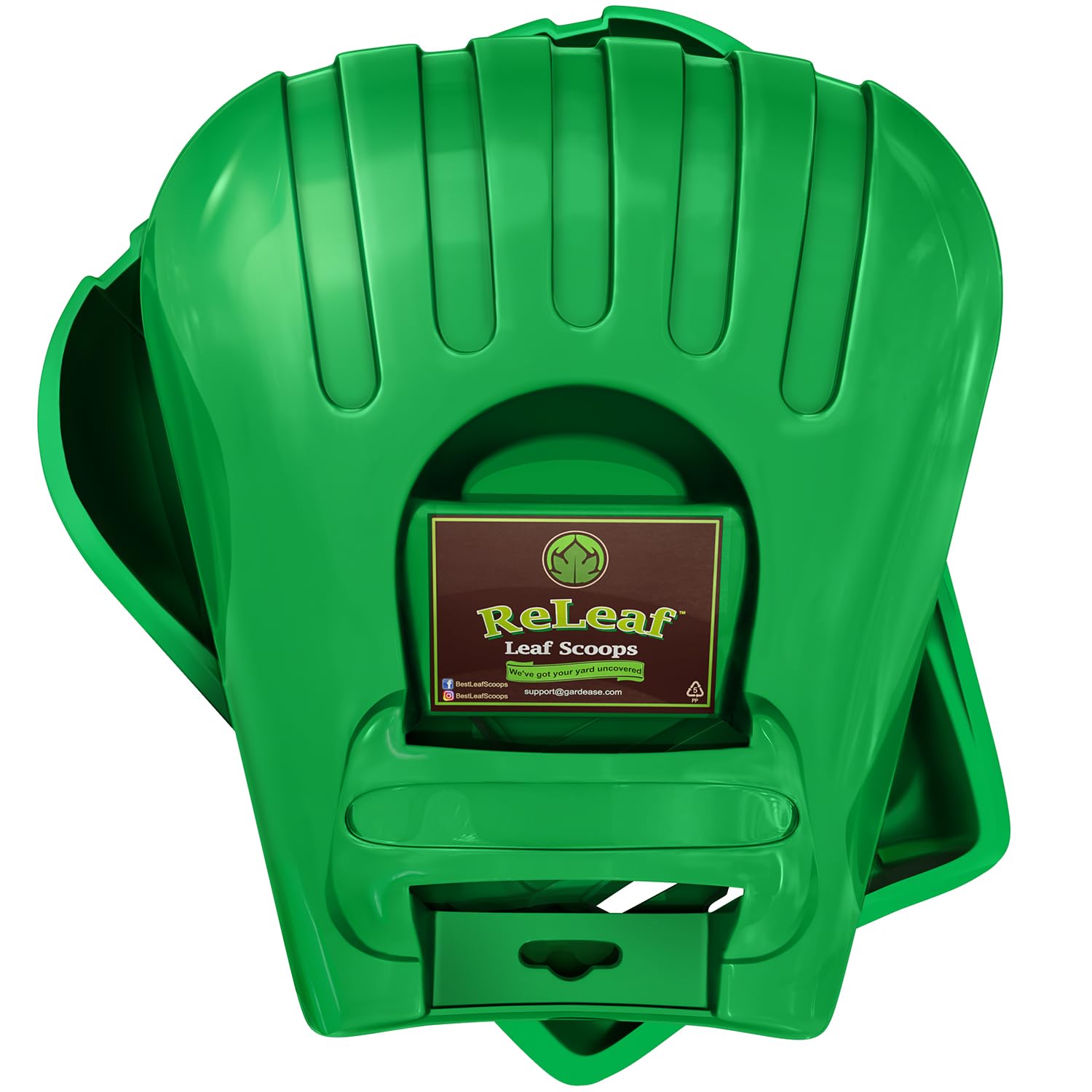
A pair of oversized hand claws that make scooping grass clippings and leaves fast while reducing bending.
Why I picked it: They act like extra hands — perfect for quickly gathering clippings and fruit without constant bending.
Best for: Rapid pickup, bagging clippings, wet or dry debris.
Affordable, good value for frequent use.
Pros
- Huge clamping surface
- Works on wet or dry debris
- Cuts down on bending
- Easy to clean and store
Cons
- Hand opening could be snug
- Not useful for large-area raking
My take
I use these leaf scoops whenever I need to transfer grass clippings from the mower line or pick debris off patios. They feel like an extra set of hands: I form a bowl, clamp, and drop into a bag or bucket in one motion.
The oversized claws hold wet clumps surprisingly well; I didn't have the spills I get with small hand rakes. They also created a useful barrier when working near thorny shrubs.
Storage is effortless because the pair nests together and hangs. The plastic cleans up with a hose and has stood up to repeated use in my yard.
If you have a large lawn, these won't replace a long rake, but for quick post-mow touchups and collecting piles they save me time and a lot of bending.
2. GroundsKeeper II Rake – Best for Thatch & Tough Jobs
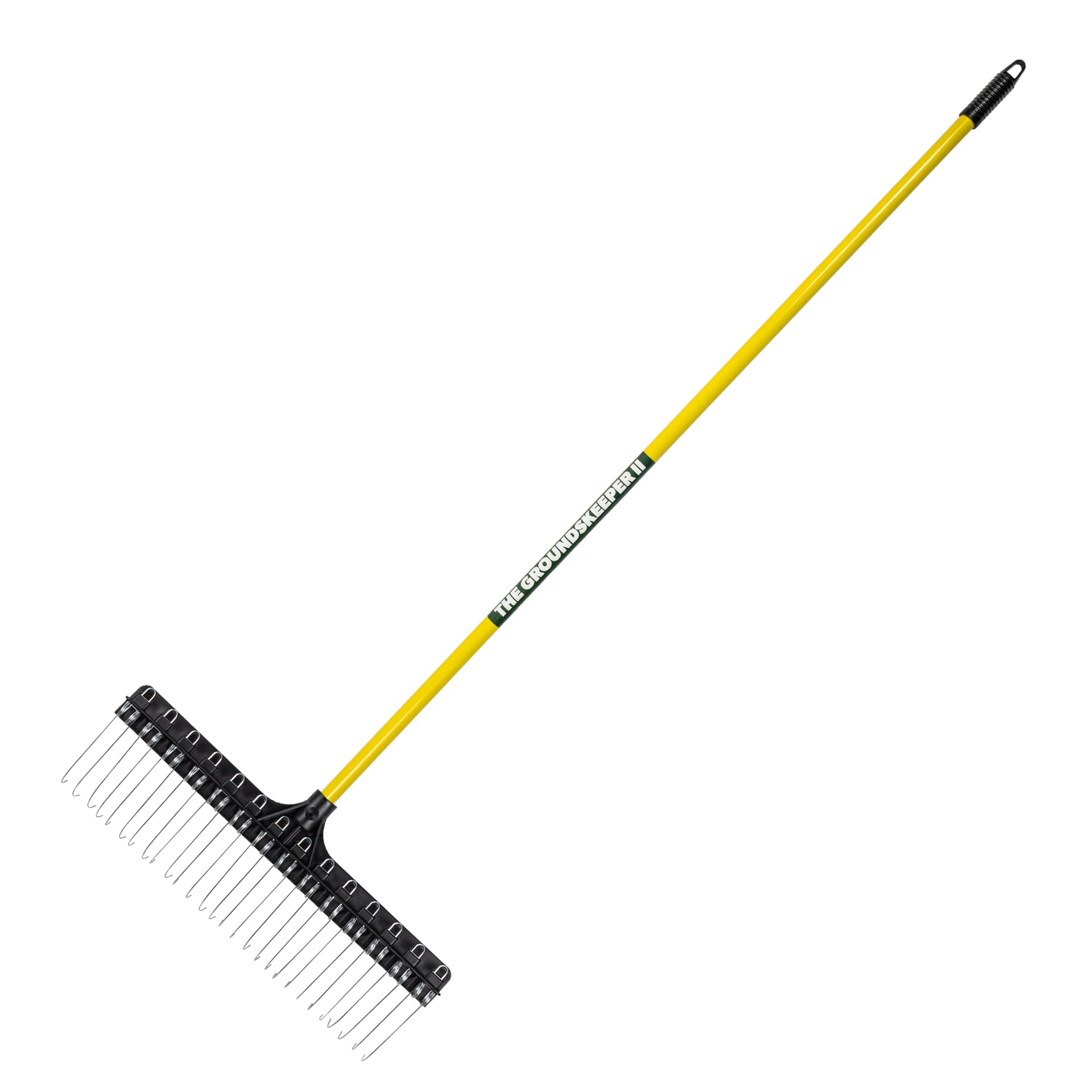
A spring-tine rake with hardened steel tines and a lightweight fiberglass handle that excels at dethatching and pulling embedded debris.
Why I picked it: Its spring-loaded steel tines dig in and pull out thatch and pine needles with minimal downward pressure.
Best for: Dethatching, pine needles, embedded sticks and gravel.
A more expensive, professional-grade option.
Pros
- Digging spring steel tines
- Very lightweight to use
- Self-cleans with a flip
- Replaceable tines available
Cons
- Can dig into soft ground
- Handle-head pin can wear
My take
I reach for the GroundsKeeper II when the lawn needs more than a cosmetic pass — it rips out thatch and embedded twigs without me leaning on it hard.
The spring action lets me rake standing up, which took strain off my lower back on long jobs. One pass flipped and pulled towards me usually clears tines of needles.
Assembly is straightforward and the fiberglass handle keeps the tool light. I did notice the handle-to-head pin area is a stress point on heavily used units, so I check that connection periodically.
For heavy-duty cleanup and dethatching I prefer this to a plastic leaf rake; it does a job that lighter rakes simply can't.
3. WOLF Garten UIMC Leaf Rake – Best Modular Head
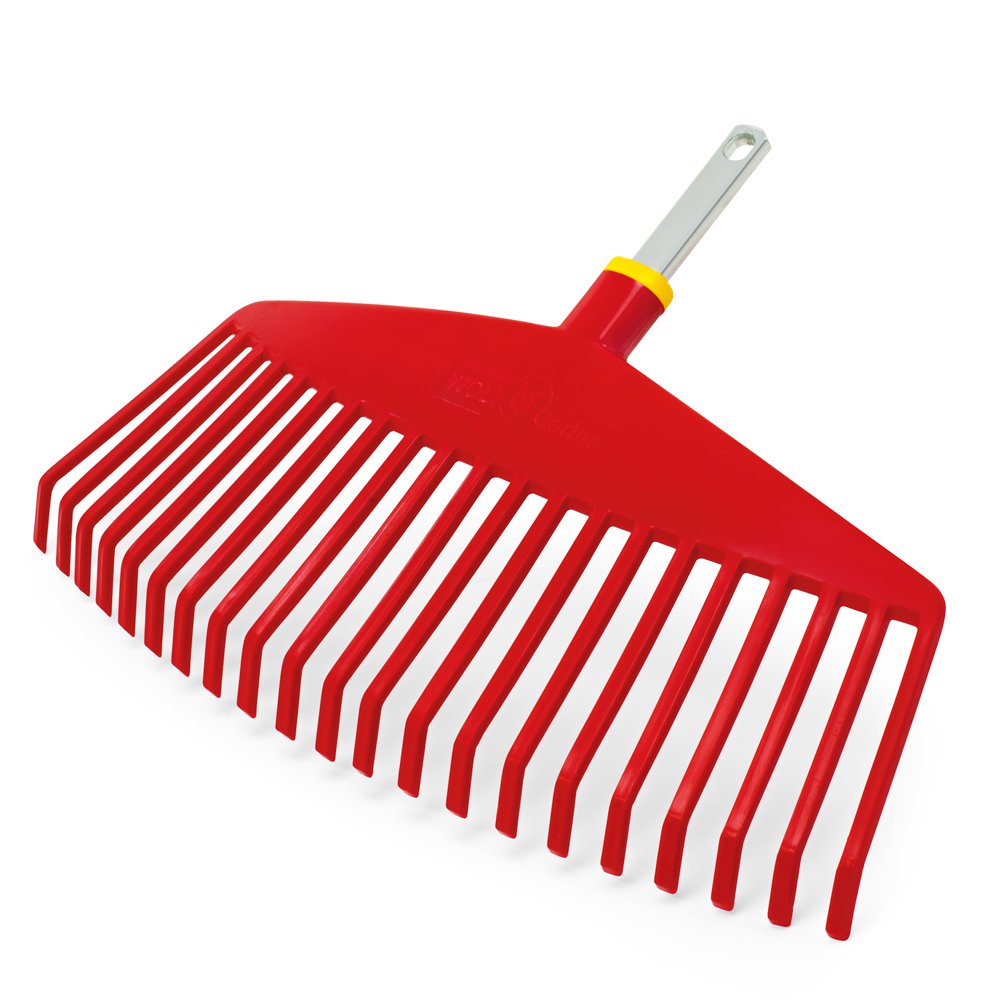
A compact, durable multi-change plastic tine head that integrates with Wolf Garten handles for a light, long-lasting tool.
Why I picked it: It’s a premium modular head — light, durable, and designed to be part of a multi-tool system.
Best for: Precision work, small lawns, and using with a quality handle.
Premium head that pairs with compatible handles.
Pros
- Lightweight and durable
- Good for hard ground
- Compact working width
- Long guarantee on head
Cons
- Head sold separately from handle
- Requires correct handle shape
My take
I appreciate the Wolf Garten head when I need a nimble tool for grass clippings along walkways and tight spots. The 42cm width hits a sweet spot between coverage and control.
Because it’s part of a modular system, I paired it with a sturdy handle I already owned and that setup felt balanced and comfortable for longer sessions.
The plastic tines are firm enough to gather clippings without gouging turf, and the head’s build quality has held up to repeated seasonal use in my experience.
Note that this is a head-only purchase — if you don’t already have a compatible handle the ergonomics won’t shine until you pair them correctly.
4. TABOR TOOLS Telescopic Adjustable Rake – Best Adjustable Rake
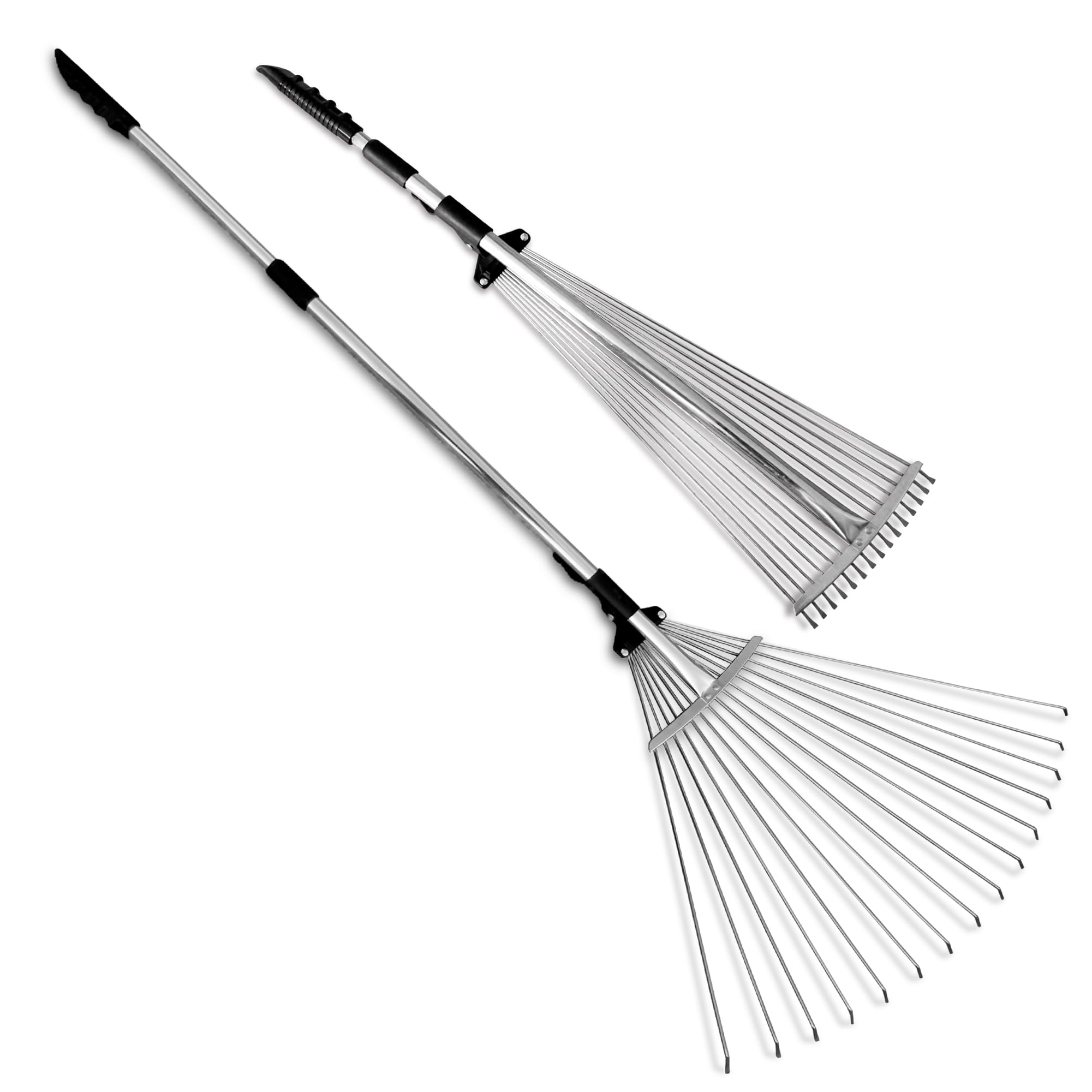
A collapsible, width-adjustable metal fan rake with a telescopic handle that adapts from tight spaces to wider sweeps.
Why I picked it: The variable-width fan and telescopic handle let me tackle narrow beds and wider patches without switching tools.
Best for: Edges, between shrubs, narrow beds, and variable-width jobs.
Midrange, versatile single-tool solution.
Pros
- Width adjusts 8–23 inches
- Collapses for compact storage
- Galvanized tines resist rust
- Lightweight telescopic handle
Cons
- Not meant for heavy surfaces
- Tines aren’t for cement work
My take
This adjustable rake became my go-to when I needed to work in flowerbeds and under hedges where a standard rake is too wide.
I like setting the fan narrow to pull clippings from between plants, then opening it up to move larger piles. The teeth lock securely and release cleanly so stuck leaves often fall out as I open the fan.
The telescopic handle is handy for storage and helps me find a comfortable posture without bringing a ladder of tools into the shed.
For heavy duty scraping on hard surfaces I reach for a sturdier tool, but for most yard clippings and edges this rake is my favorite for its flexibility.
5. Gardena combisystem Lawn Rake Head – Best Combisystem Head
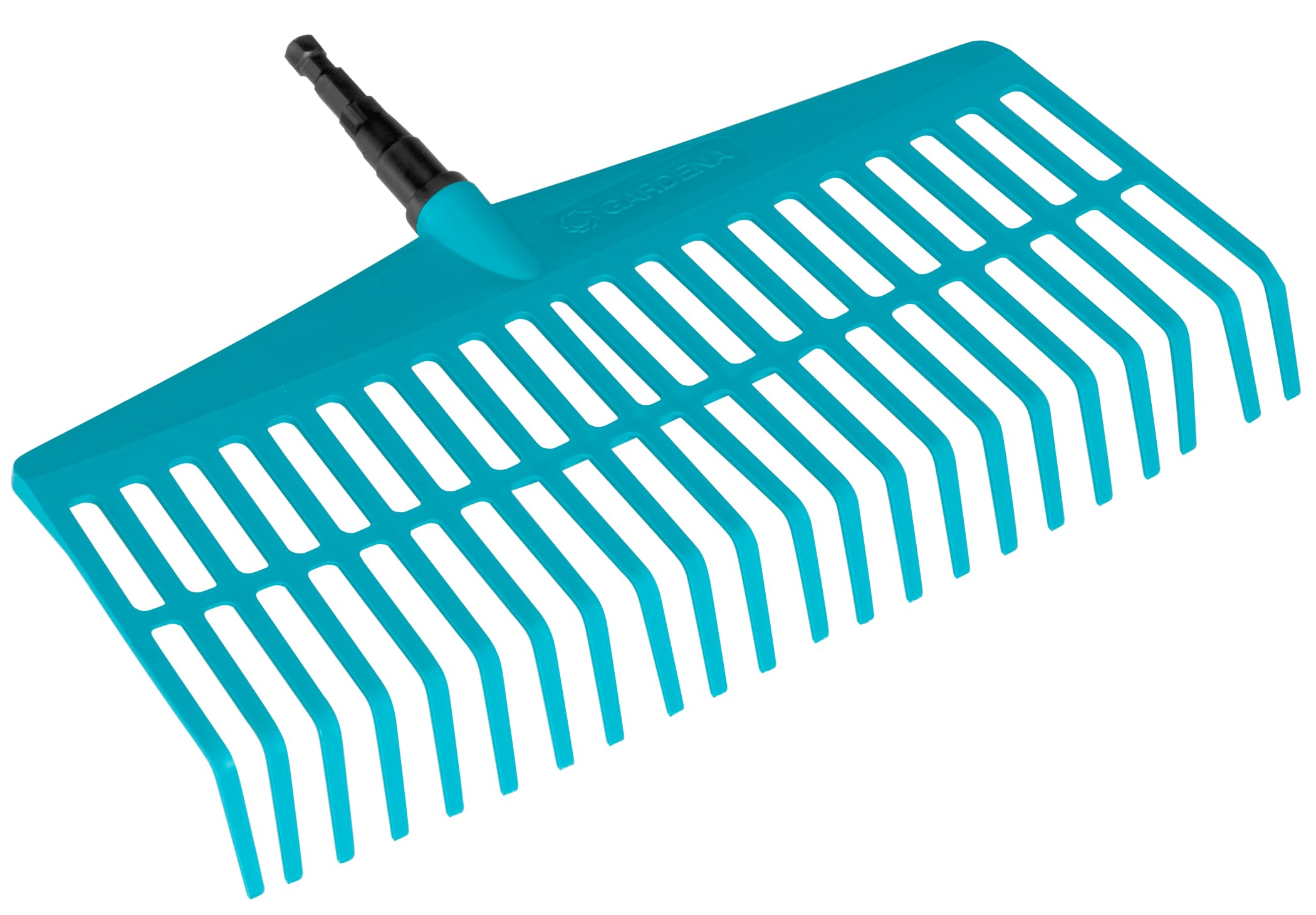
A lightweight plastic tine head made for the Gardena combisystem so you can swap handles and keep storage tidy.
Why I picked it: It’s a simple, gentle head that handles grass clippings without damaging turf and nests easily with other combisystem heads.
Best for: Small areas, gentle raking, and users who like modular tool systems.
Reasonably priced replacement head.
Pros
- Gentle on lawns
- Lightweight head-only design
- Good for tight spaces
- Fits combisystem handles
Cons
- Sold as head only
- Can feel less sturdy under heavy load
My take
I keep a Gardena combisystem head on a medium-length handle for quick post-mow touchups and patio edges. The plastic tines are firm but forgiving, so I clean clippings without tearing grass.
Because it’s part of a system, I swap it onto different handles depending on the job — that modularity saves me from owning multiple full rakes.
The head is lightweight and convenient to store nested with other attachments. It’s not for pulling embedded branches, but for regular clipping cleanup it does exactly what I need.
If you plan to use it heavily or on rock beds, I recommend pairing it with a robust handle and avoiding overly aggressive scraping.
How I Choose a Rake for Grass Clippings
Types and when I use them
I think about the task first: quick pickup, dethatching, edging, or general sweeping. Different tools excel at different jobs.
Hand scoops are my pick for immediate pickup and bagging. Spring-steel tines are best when thatch or embedded debris needs extraction. Adjustable fans are the most versatile for tight spaces.
- Hand scoops — fastest for small piles and wet clippings.
- Spring-steel rake — ideal for dethatching and rough cleanup.
- Adjustable/telescopic rakes — flexible for varied widths and storage.
- Combisystem heads — great if you already own compatible handles.
Materials and durability I watch for
I prefer steel tines for heavy jobs and durable plastics for turf-friendly raking. Fiberglass or solid wood handles balance weight and stiffness.
Watch the connection points: handle-to-head pins and sockets are common wear spots on tools I use heavily.
- Steel tines for pulling thatch and sticks.
- Plastic tines for gentle lawn work.
- Fiberglass handles for reduced weight and decent durability.
- Check replaceable parts and warranty for longevity.
Handle length and ergonomics I consider
I match handle length to my height so I can rake standing up and avoid bending. Telescopic handles help when storage space is tight.
Grip comfort matters on longer jobs — foam or shaped grips reduce fatigue in my experience.
- Choose handle length that lets you stand upright.
- Telescopic handles save storage space.
- Ergonomic grips reduce wrist strain.
Practical tips for using rakes with grass clippings
I rake when clippings are dry if I can; wet clippings clump but hand scoops handle them well. For thicker layers, multiple passes with a fan or spring rake works best.
If I need to move clippings into bags, I gather into a pile first and then use scoops or the rake head to transfer material cleanly.
- Dry clippings rake easier; use scoops for wet clumps.
- Make passes at different angles to avoid missed strips.
- Use a wide head for open lawns, narrow for beds and borders.
Frequently Asked Questions
Can these rakes handle wet grass clippings?
I found that hand scoops handle wet clumps best — they trap and transfer without much spillage. Plastic and metal fan rakes work better on dry clippings; spring-steel tines can pull wet material but may need more effort.
Do combisystem heads require a specific handle?
Yes — I used the Gardena and Wolf Garten heads with their respective system handles. The fit is what gives these heads balance and rigidity, so plan to buy a compatible handle if you don’t already have one.
Which rake works best for dethatching grass clippings and debris?
For thatch and embedded debris I reach for the GroundsKeeper II. Its spring-loaded steel tines dig in and pull material out in ways plastic rakes can’t, though I’m careful not to let it gouge very soft soil.
Are adjustable fan rakes worth it for small yards?
Absolutely — I like the TABOR adjustable rake for small yards because I can open it wide for a sweep or close it down to clear narrow spots and under shrubs, saving me from switching tools.
Final Take
I recommend hand scoops if you need fast post-mow pickup and want to avoid bending. For heavy cleanup and dethatching, the spring-steel GroundsKeeper II is the tool I reach for.
If you like a modular approach, Wolf Garten or Gardena combisystem heads give you flexibility when paired with a proper handle. For one-tool versatility and compact storage, the TABOR adjustable rake is my favorite.
Pick the style that matches your chores and yard size — that’s how I keep clipping cleanup quick and low-impact on my back.
