
I tested pantry staples and emergency rice options to find long-storing, tasty, and versatile choices—from aged basmati to pail-packed survival rice.
I organize my pantry and emergency storage around rice because it’s versatile, calorie-dense, and cook-friendly. Over months of cooking, storing, and rotating supplies I’ve learned which varieties hold up best in long-term storage and which I reach for daily.
In this roundup I compare everyday long-grain rice, seasoned mixes, specialty whole grains, and a purpose-built storage pail. I focused on aroma, texture after cooking, packaging for storage, shelf-life claims, and how easy each rice is to prepare when I’m short on time or planning meals for a crowd.
I contrasted aroma, cooked texture, packaging, and storage features so you can choose between a tasty everyday basmati, budget long-grain, convenient boxed mixes, and a true long-term storage pail.
1. Royal Basmati Rice – Best Overall
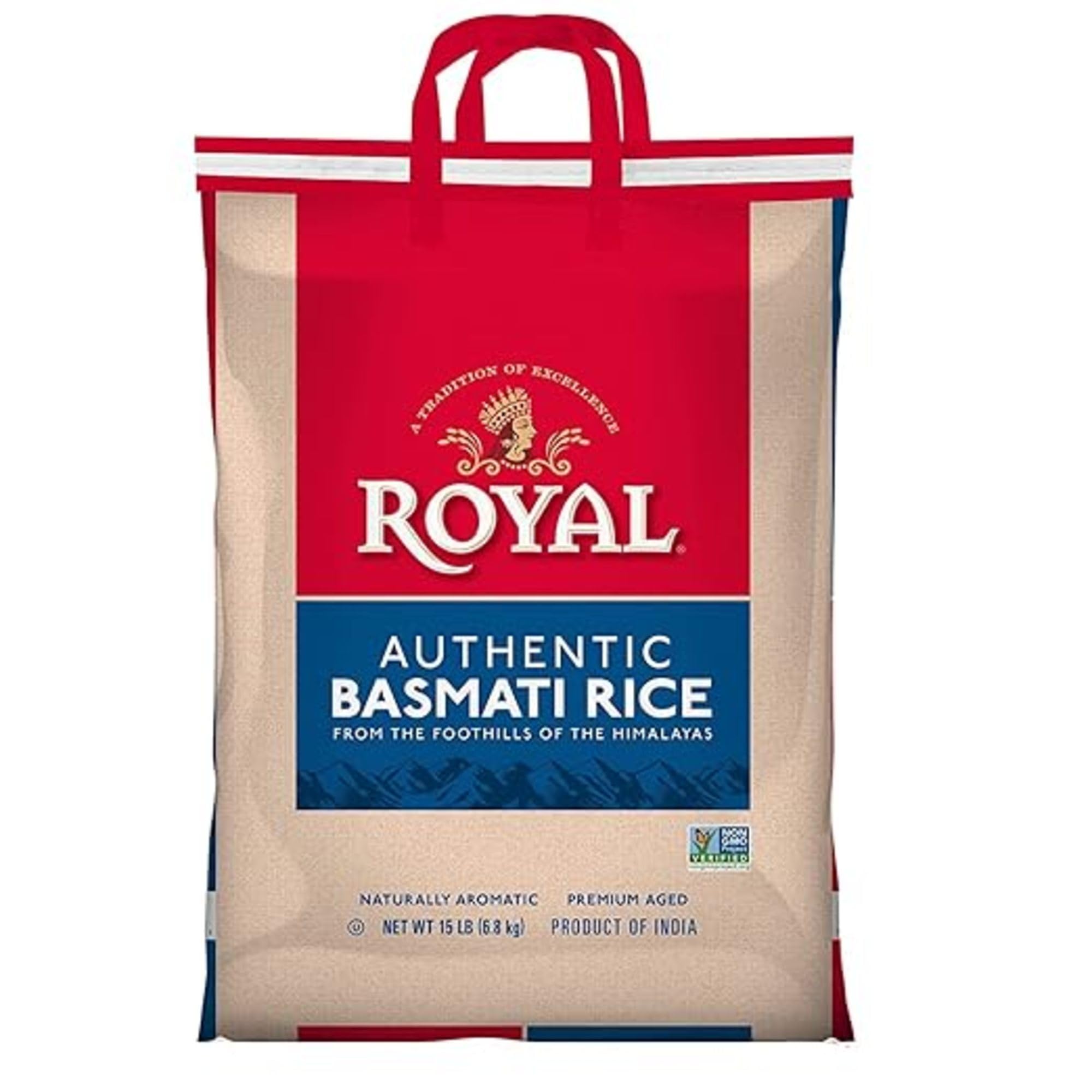
Aged Indian basmati with floral aroma, long fluffy grains, and non-sticky texture.
Why I picked it: I picked it for its authentic aged flavor and reliably separate grains.
Best for: Everyday meals and special dishes where basmati aroma matters.
Solid midrange option that balances quality and shelf quantity.
Pros
- Aromatic, long fluffy grains
- Aged for non-sticky texture
- Versatile across cuisines
Cons
- Larger bag requires proper storage
- Not a specialty whole grain
My take
I rely on Royal Basmati when I want rice that smells and tastes like basmati should. The grains come out long and separate, not clumpy, which I attribute to the brand’s aging process.
Cooking is straightforward — I’ve used a rice cooker and stovetop and consistently get a light, non-sticky plate in about 15–20 minutes. The aroma is noticeably floral and pairs especially well with curries and pilafs.
The packaging arrives in a durable bag with a seal, which is useful if I plan to transfer portions into my long-term containers. For pantry rotation I portion into smaller resealable bags or jars to keep the rest fresh.
2. Mahatma Extra-Long-Grain Rice – Best Budget
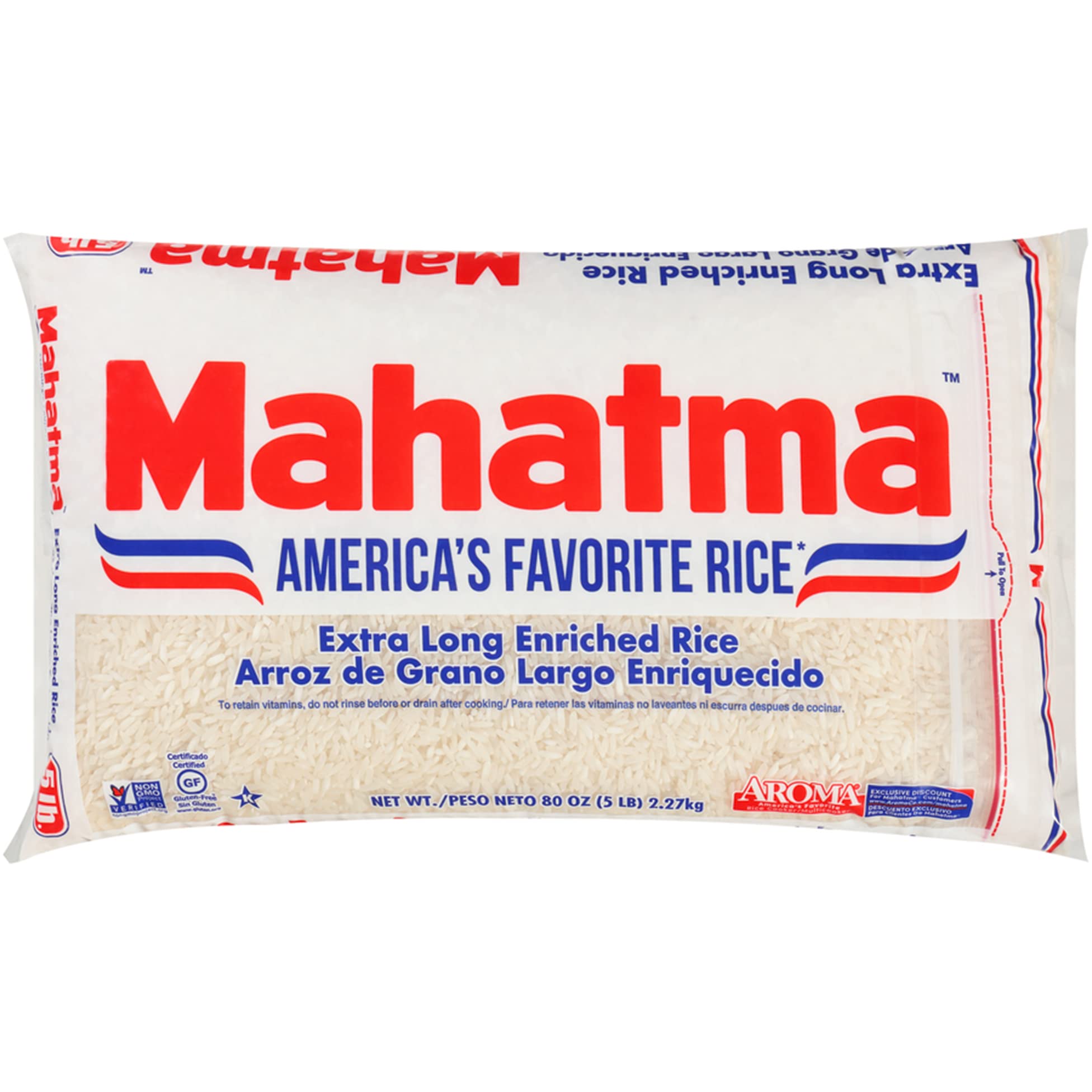
An affordable, dependable long-grain white rice that cooks light and fluffy.
Why I picked it: I chose it for everyday cooking and value-minded pantry stocking.
Best for: Large households, regular rice eaters, and budget-conscious bulk storage.
One of the most economical choices for routine pantry rotation.
Pros
- Light, fluffy texture
- Consistent cooking results
- Non-GMO and preservative-free
Cons
- Basic flavor profile
- Smaller-sack freshness advantage
My take
I keep Mahatma on my pantry shelf because it’s dependable and easy to cook in either a rice cooker or on the stove. The long grains separate nicely and suit everything from rice bowls to puddings.
To guard against pantry pests I freeze new bags for a few hours before storing, which has worked well for me. I also like buying smaller bags when I can — it helps keep the rice tasting fresher between rotations.
If you want a straightforward long-grain white rice that won’t complicate meal prep, this is the one I reach for when I need volume and reliability.
3. Rice-A-Roni Long Grain & Wild Rice – Best Quick Side
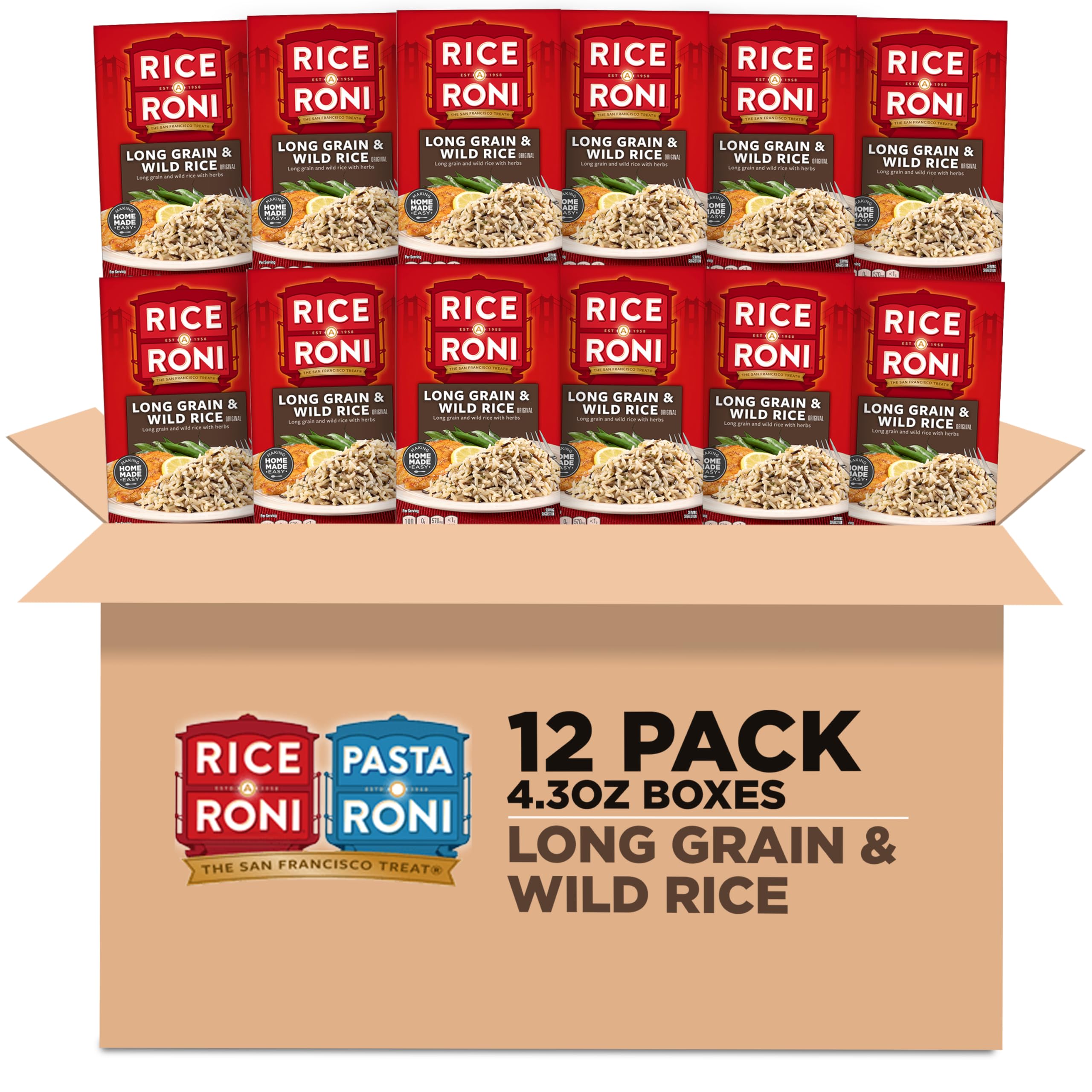
Herbed boxed rice mix that cooks quickly into a flavorful side.
Why I picked it: I picked it for fast, seasoned side dishes that need minimal effort.
Best for: Weeknight dinners, camping, and pantry-ready meals.
Convenience-oriented option that's great to stock in multiples.
Pros
- Quick to prepare
- Herb-forward flavor
- Adds variety to meals
Cons
- Processed boxed mix
- Less control over seasoning
My take
I use Rice-A-Roni when I want a tasty side without fuss. The herb blend lifts simple proteins like chicken, and it cooks in about 25 minutes depending on my stove.
This boxed mix is a pantry staple for trips or nights when I can’t spend time prepping. It’s not the same as from-scratch pilaf, but it consistently delivers a satisfying plate with minimal effort.
Portion-wise the individual boxes are handy for meal planning and for tucking into longer-term storage because they take up little space and stay usable for a long time in a cool pantry.
4. Augason Farms Long-Grain White Rice (Pail) – Best for Long-Term Storage
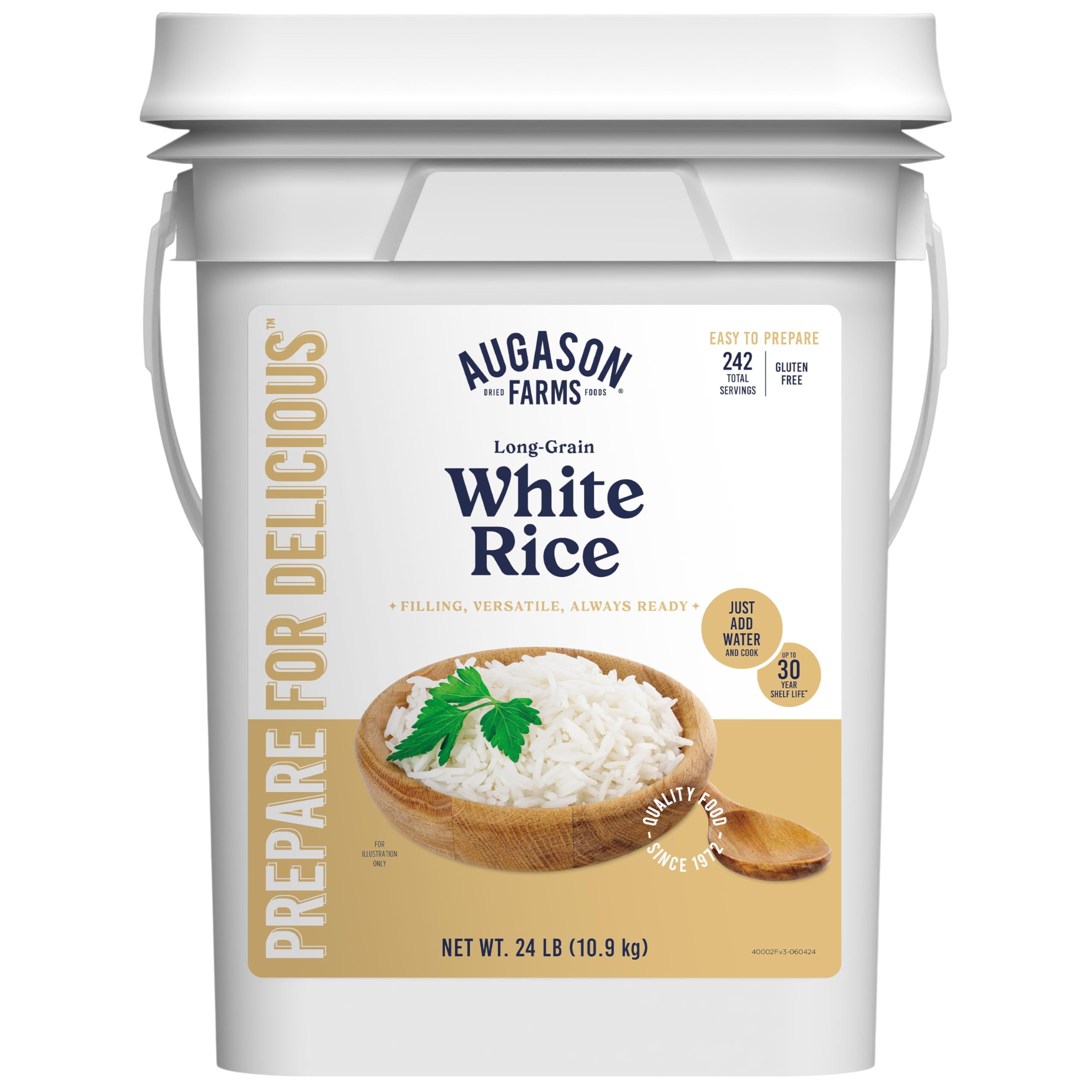
Pail-packed long-grain rice formulated for multi-decade shelf life and emergency storage.
Why I picked it: I chose it for its long shelf-life claim and storage-ready packaging.
Best for: Emergency food stores, camping caches, and long-term pantry reserves.
A purpose-built long-term option—more expensive per pound but storage-focused.
Pros
- Designed for long shelf life
- Comes in a resealable pail
- Includes oxygen absorbers
Cons
- Heavy pail is bulky to move
- Requires cool, dry storage for best life
My take
I added an Augason Farms pail to my emergency shelf and was impressed by the storage-focused packaging. When I opened mine the lid had a firm seal, and two oxygen absorber packets were tucked inside.
The rice smelled fresh when I checked it, and I found no signs of insect activity after transferring portions into vacuum bags. The pail’s rubber-gasketed lid keeps the contents secure in my cool, dark storage spot.
This is the rice I buy when shelf life and ease of storage are my primary concerns — it’s bulkier and heavier to handle, but it gives me confidence that I can rely on those calories years down the line.
5. Iberia Rice & Black Beans – Best Seasoned Mix
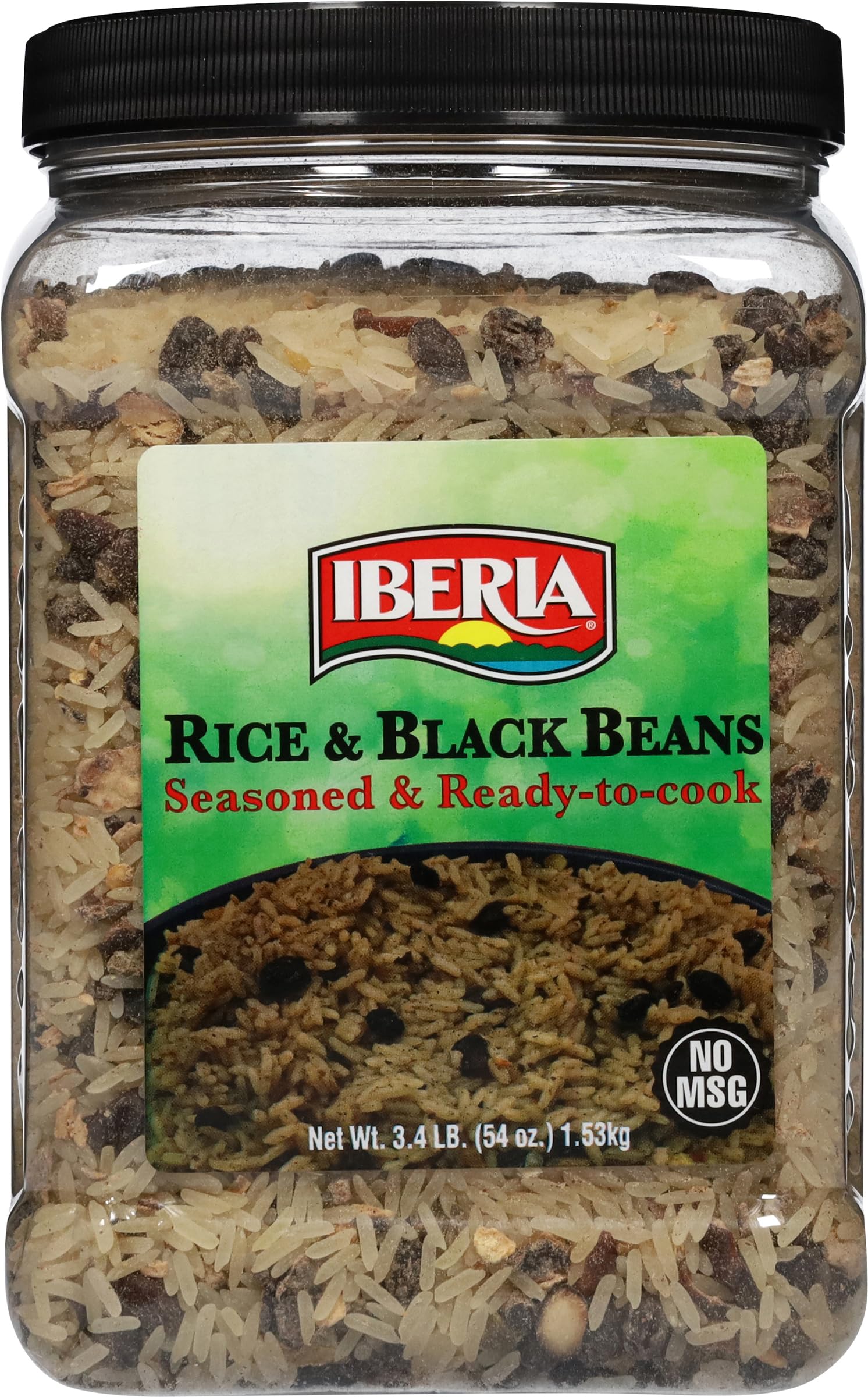
Ready-to-cook seasoned rice and black beans for a quick Creole-style dish.
Why I picked it: I picked it for convenience and its fill-and-serve format.
Best for: Quick complete sides, camping meals, and large gatherings.
A midrange, seasoned pantry staple that reduces prep time.
Pros
- Comes seasoned and ready to cook
- Comforting Creole flavor
- Feeds a crowd easily
Cons
- Can be a touch salty for my taste
- Less customizable than plain rice
My take
I turn to Iberia Rice & Black Beans when I want a ready-to-cook dish that feels like a whole side with minimal effort. It simmers to a hearty, filling result in under 30 minutes.
On my first batch I noticed the seasoning leans strong; I often moderate the salt by mixing it with plain cooked rice or adding extra vegetables to balance it.
This mix is great to toss into a pot for meals where convenience and volume matter — I’ve used it for church events and camping trips where prep time is limited.
6. Lotus Foods Forbidden Black Rice – Best Whole-Grain/Specialty
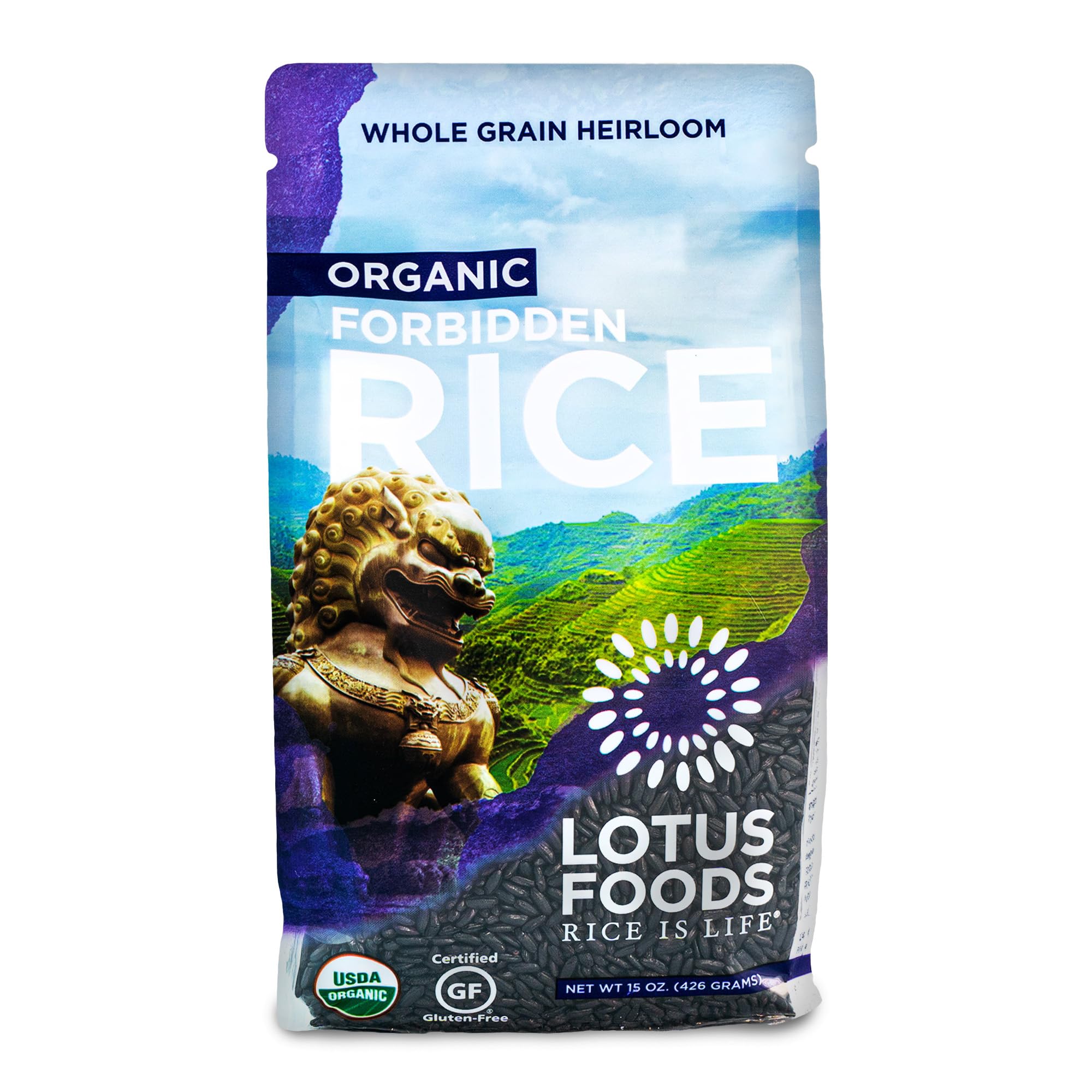
Organic black (forbidden) rice with a nutty flavor, whole-grain benefits, and striking dark color.
Why I picked it: I picked it for its nutrition profile and unique flavor and color.
Best for: Health-focused meals, salads, and dishes where a hearty whole grain is desired.
A specialty, organic option—more costly per serving but nutrient-dense.
Pros
- High in fiber and antioxidants
- Nutty, satisfying flavor
- USDA organic and non-GMO
Cons
- Different texture than white rice
- Smaller bag sizes for specialty rice
My take
I use Lotus Forbidden Black Rice when I want a whole-grain option that stands out visually and nutritionally. The deep purple-black kernels cook to a rich, nutty plate that holds up well in salads and stir-fries.
I’ve found it forgiving to cook in an Instant Pot on a 1:1 ratio and it pairs nicely with bold flavors. Because it’s a specialty grain, I store it separately from my white rice so I can rotate it into meals for variety and nutrition.
This is the rice I reach for when I want a healthier swap for white rice without sacrificing mouthfeel or flavor.
How I Choose Rice for Long-Term Storage
Key factors I consider
I focus on aroma, cooked texture, and packaging that supports long storage. For long-term caches I prioritize sealed containers, oxygen absorbers, and brands that explicitly package for shelf life.
For everyday pantry rice I weigh cost per serving, ease of cooking, and how the grain performs across dishes—from curries to fried rice.
- Shelf life: I prefer rice with storage packaging or pails that include oxygen absorbers for years of stability.
- Packaging: Resealable bags, vacuum-sealable portions, or gasketed pails make rotation easier.
- Grain type: Long-grain white rice stores longest and cooks fast; specialty grains like black rice add nutrition and variety.
- Pest prevention: I freeze newly purchased bags briefly or add bay leaves when storing in the pantry.
- Cooking flexibility: Rice that keeps its shape (non-sticky) is my go-to for diverse meals.
Storage and rotation tips I use
I label containers with date received and move older stock to the front. Regular rotation keeps even bulk purchases tasting fresh.
For emergency pails I store them in a cool, dark place and only open them when I plan to repackage portions into smaller containers for daily use.
- Keep rice cool and dry to maximize shelf life.
- Use oxygen absorbers or vacuum sealing for long-term storage.
- Divide bulk sacks into meal-sized, sealed containers for easier rotation.
Frequently Asked Questions
How long will rice last in long-term storage?
I treat properly stored white rice in a sealed pail with oxygen absorbers as a multi-decade staple; some manufacturers claim up to 30 years when stored cool and dry. For pantry bags I plan to rotate within a year or two for peak flavor.
How do I prevent bugs in stored rice?
I freeze new bags for a few days on arrival to kill eggs, then transfer rice into airtight containers or vacuum bags. I also sometimes tuck bay leaves into storage jars as a simple deterrent.
Can I use long-term storage rice in regular cooking?
Yes. I repackage a portion into my regular kitchen supplies and cook it like any other rice. Pail-packed rice often cooks just like standard long-grain white rice once it’s rehydrated and rinsed.
Are seasoned mixes good for emergency storage?
I keep a few seasoned mixes because they’re quick and morale-boosting during extended use. They’re less flexible than plain rice, so I pair them with plain rice and extra protein options for balanced meals.
Final Take
I keep different rice types on hand for different needs: Royal Basmati when I want aroma and texture, Mahatma for everyday volume, Rice-A-Roni for quick sides, Augason Farms for long-term emergency storage, Iberia for ready-to-cook convenience, and Lotus Forbidden for nutrition and variety.
Decide whether your priority is shelf life, daily value, or specialty nutrition, then store accordingly. I rotate regularly, freeze new sacks briefly, and use airtight containers to protect quality, and that approach has kept my pantry ready and my meals tasty.
