
I tested a mix of corded electric tillers and a manual twist tiller so you can pick the right tool for raised beds, big plots, or quick garden refreshes.
I use tillers for everything from prepping new beds to refreshing long-neglected patches of yard. For this roundup I focused on compact, walk-behind machines and one manual option that together cover raised beds, medium vegetable gardens, and larger yards.
My picks balance power, maneuverability, and ease of storage. I paid attention to cutting width, tine design, motor amps, and practical things like cord management and how easy each unit is to carry into raised beds.
I compared corded electric machines that emphasize power and width with a hand-powered twist tiller that offers precision and zero emissions. Expect electric models to cover more ground faster and the manual tool to excel at spot work and tight beds.
1. Sun Joe TJ604E Electric Tiller – Best Overall
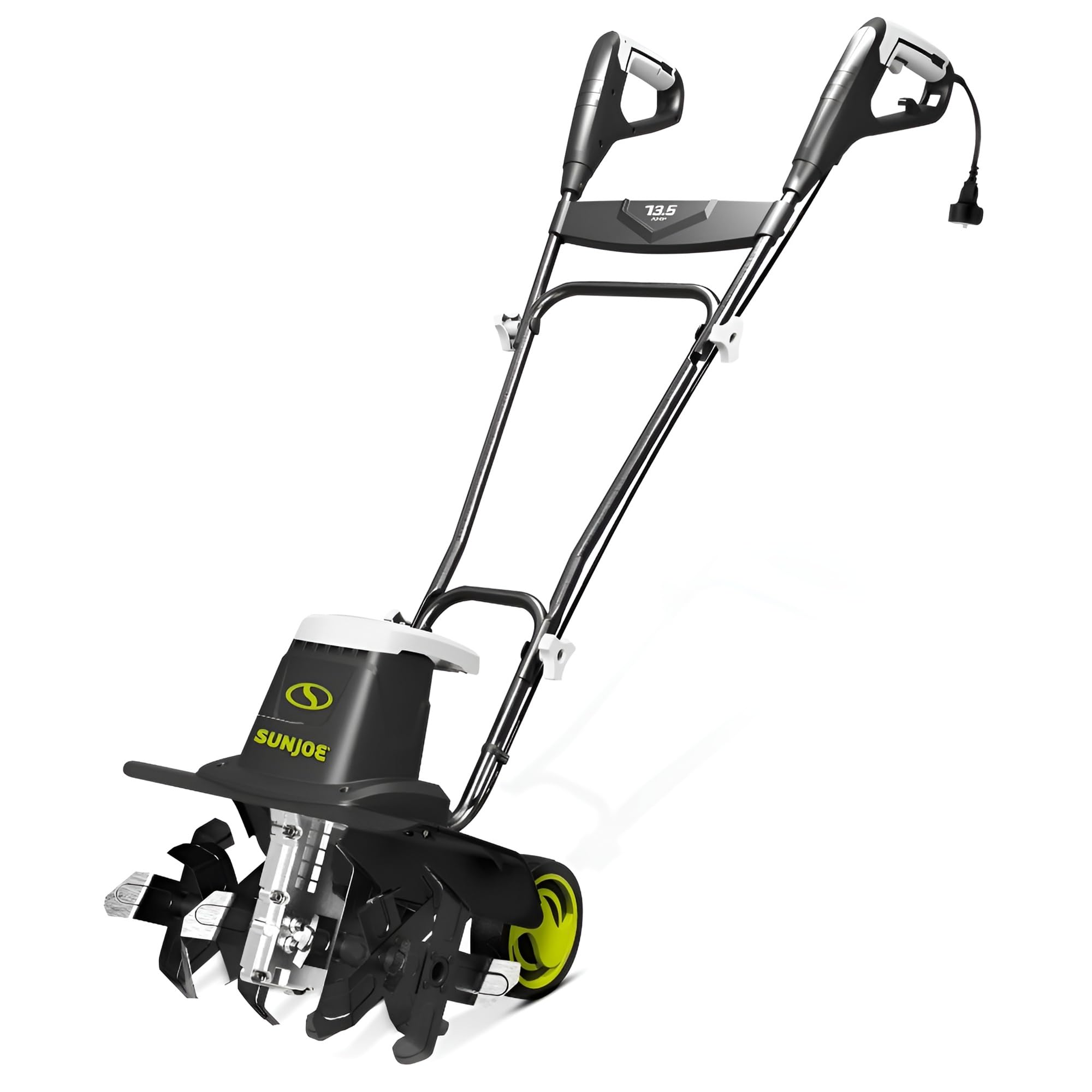
I relied on this 16-inch, 13.5-amp corded tiller for heavy garden chores; it delivers robust power, six steel angled tines, foldable handles, and adjustable wheels.
Why I picked it: Powerful for its size and versatile for many soil types while staying easy to maneuver.
Best for: Medium beds, weed control, breaking moderately compacted soil.
Solid midrange electric tiller value.
Pros
- Strong 13.5-amp motor
- 16-inch cutting width
- Six durable steel tines
- Foldable handle for storage
Cons
- Cord requires active management
- Tines can wrap roots occasionally
My take
I put this Sun Joe to work in clay-heavy North Carolina soil and it made short work of areas I expected to be a slog. The 13.5-amp motor keeps RPMs steady under load and the six angled steel tines dig down to the listed depth without bogging.
It covered ground quickly at a 16-inch width, which saved me passes compared with smaller units. Maneuvering around beds and lifting it into a raised bed is simple thanks to the folded-handle design and reasonable weight.
Be aware the unit is corded, so I stayed mindful of the power lead while working. When I hit roots left behind by old trees I paused, unplugged, and cleared the tines — normal for a tool in this class, not a product flaw.
Overall, I found it to be an excellent all-around electric tiller for gardeners who want solid power without the complexity of gas engines.
2. Sun Joe TJ603E Electric Tiller – Best for Raised Beds
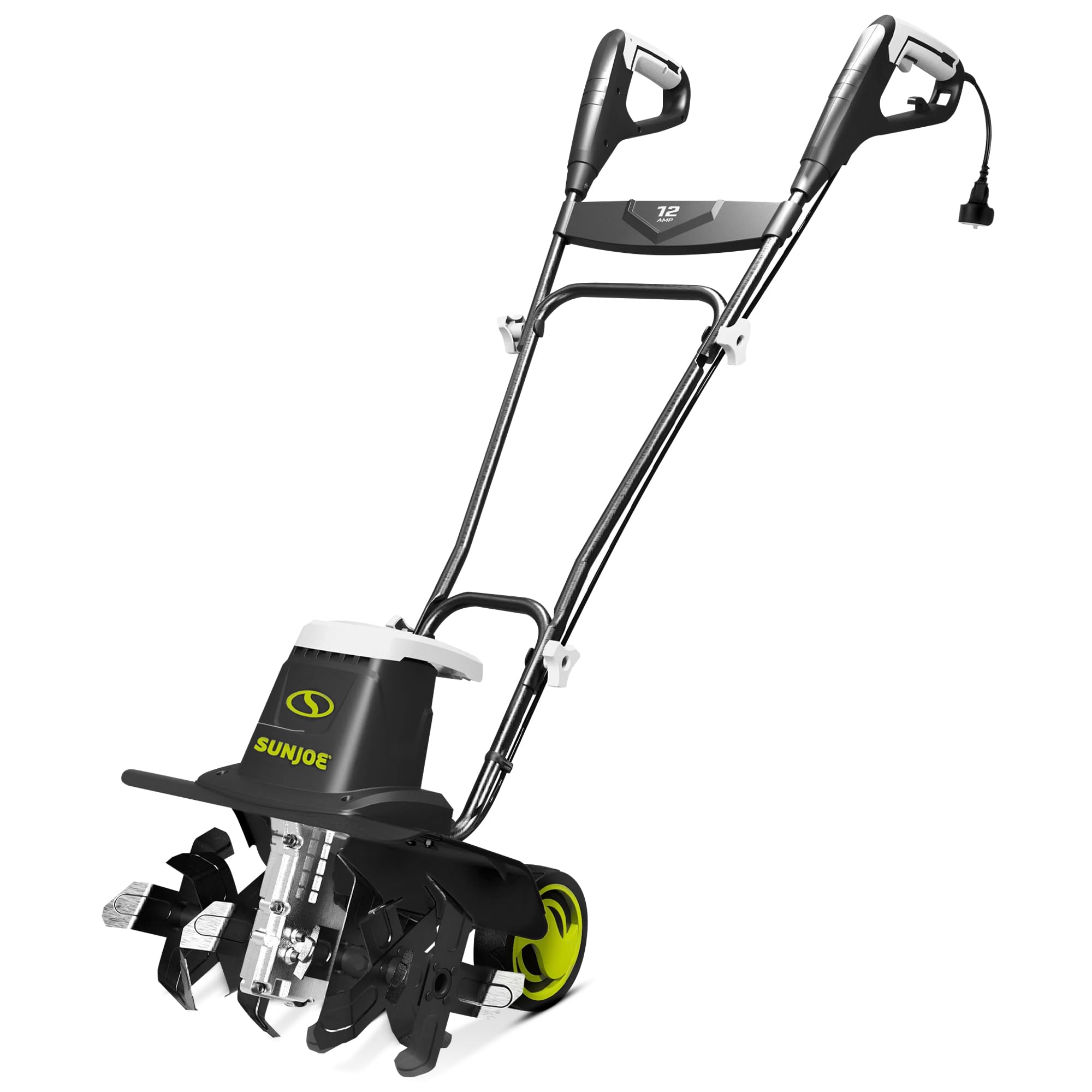
I used this lighter 12-amp, 16-inch tiller where access and portability mattered — it’s easy to lift into raised beds and still tills effectively.
Why I picked it: Lightweight handling plus adjustable wheels make it ideal for tight spaces and raised beds.
Best for: Raised beds, small gardens, lighter soil prep.
Budget-friendly corded choice.
Pros
- Light and easy to lift
- Three-position wheel depth
- Rust-resistant steel tines
- Quick assembly out of the box
Cons
- Less torque than larger motors
- Can stall on very hard clay
My take
I appreciate how manageable this Sun Joe is when moving between raised beds. The lower amperage keeps weight down and the handles make it simple to carry and position.
On tilled or loose soil it chewed through turf and mixed compost well; on extremely dry, compacted clay I had to use technique — pulling it backward and making multiple passes — but it still accomplished the job.
Assembly was straightforward and I liked that it runs quieter than gas options, so I could work without excessive noise. If you want something that won’t intimidate you physically but still turns soil effectively, this is a practical pick.
3. Yard Butler Twist Tiller – Best Manual Tool
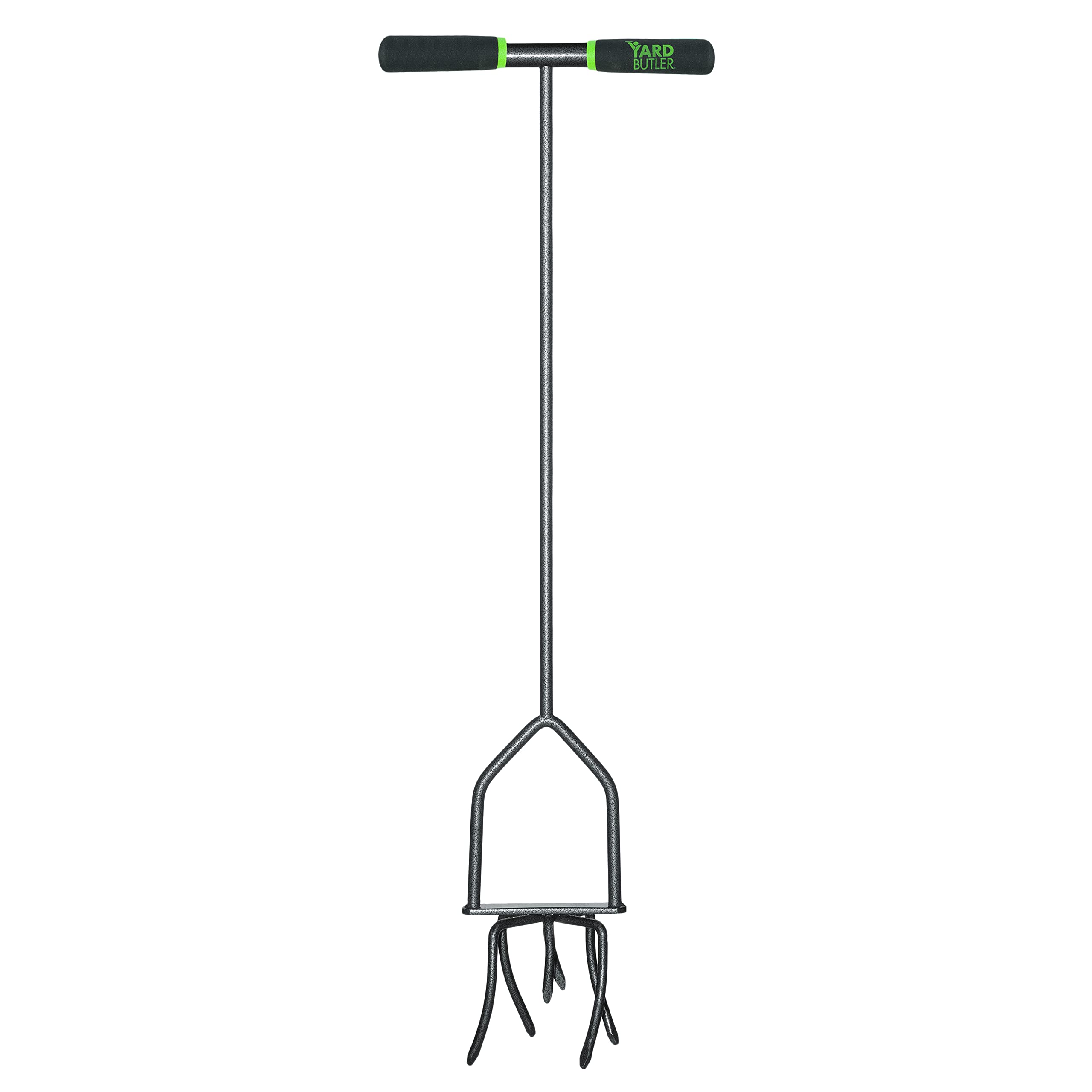
I keep this 36-inch twist tiller on hand for precision work: six claw spikes, a foot plate for leverage, and long handles make shallow aeration and weeding simple.
Why I picked it: No power required and excellent for spot work and maintenance in raised beds.
Best for: Raised beds, mixing amendments, removing deep weeds.
Very budget-friendly and durable manual option.
Pros
- No power required
- Long handles reduce bending
- Effective on loosened soil
- Comfortable padded grips
Cons
- Not for extremely compacted clay
- Requires physical effort
My take
I used the twist tiller to refresh long-neglected beds and was impressed by how quickly the prongs broke up surface soil and mixed in compost.
For spot weeding and roots it’s excellent — you step on the plate, rotate the handle, and the claws pry out deep-rooted plants with minimal fuss. It’s also the simplest tool to store and maintain.
That said, it’s a manual tool. I wouldn’t try to force it through heavy clay or large roots; for those jobs a powered tiller or a shovel is a better first step.
4. LawnMaster TE1318M Electric Tiller – Best for Large Areas
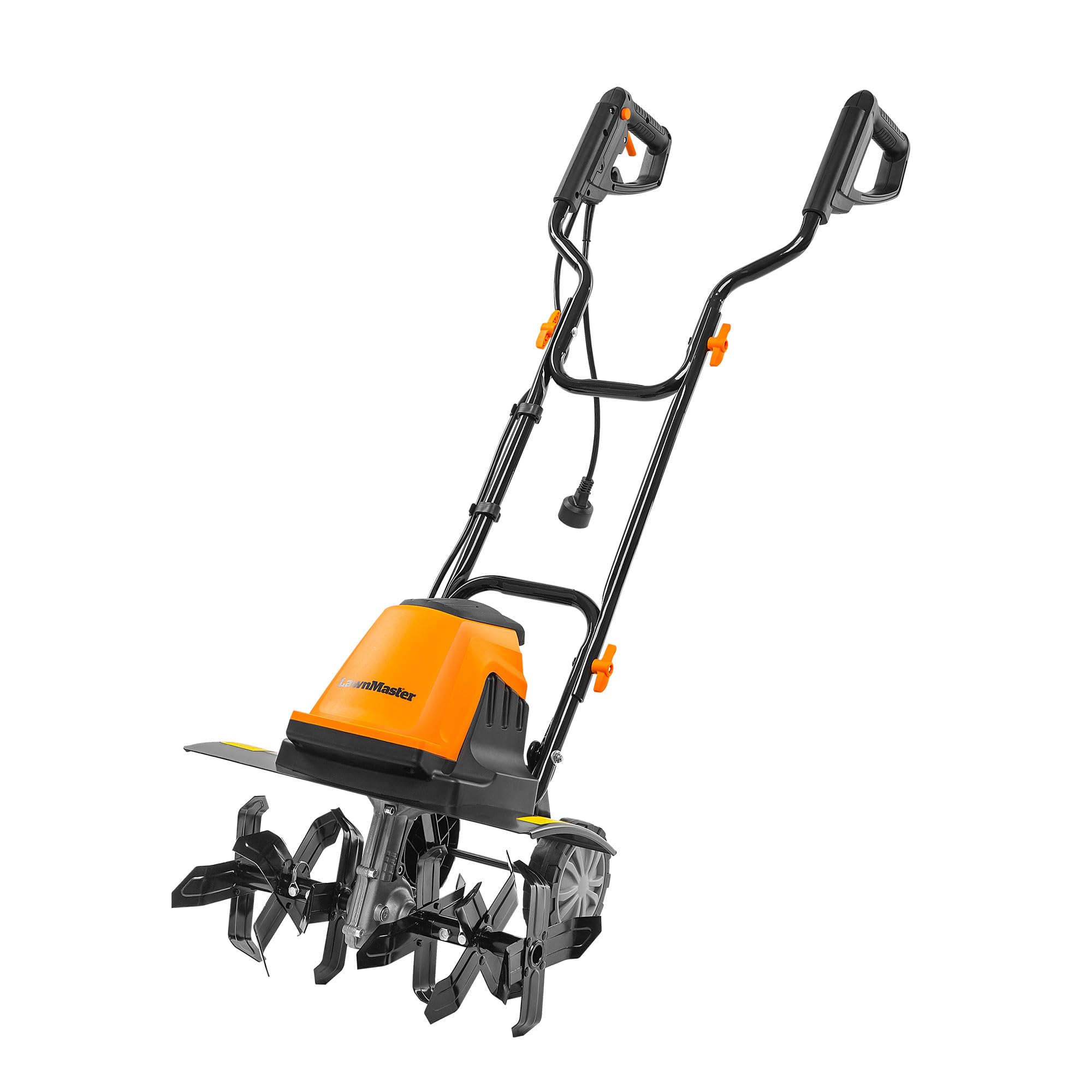
I chose this 18-inch, 13.5-amp tiller when I needed wide coverage and deeper tilling — it handles larger plots and tougher soil better than the smaller 16-inch units.
Why I picked it: Widest cutting width and deepest reach for bigger projects.
Best for: Larger gardens, prepping ground for landscaping projects.
Good value for tackling larger plots.
Pros
- 18-inch cutting width
- 9-inch tilling depth
- Mechanical overload protection
- Foldable handles
Cons
- One fixed speed
- Can throw debris back at operator
My take
When I needed to break ground for a new pool area and several garden beds, the LawnMaster’s 18-inch width noticeably reduced the time I spent making passes.
The 13.5-amp motor and deeper tine reach made it easier to chew through heavy clay and gravel-strewn ground. I did need to apply steady forward pressure to get full depth, and the machine sometimes threw loose dirt and small rocks toward me — I adapted my technique by pulling it back between passes and using eye protection.
The overload protection gave me confidence when I hit roots or foreign objects; the tiller simply stopped instead of straining. For anyone who has larger areas to prep, this model is the one I reach for first.
5. MZK 16-Inch Electric Tiller – Best Value
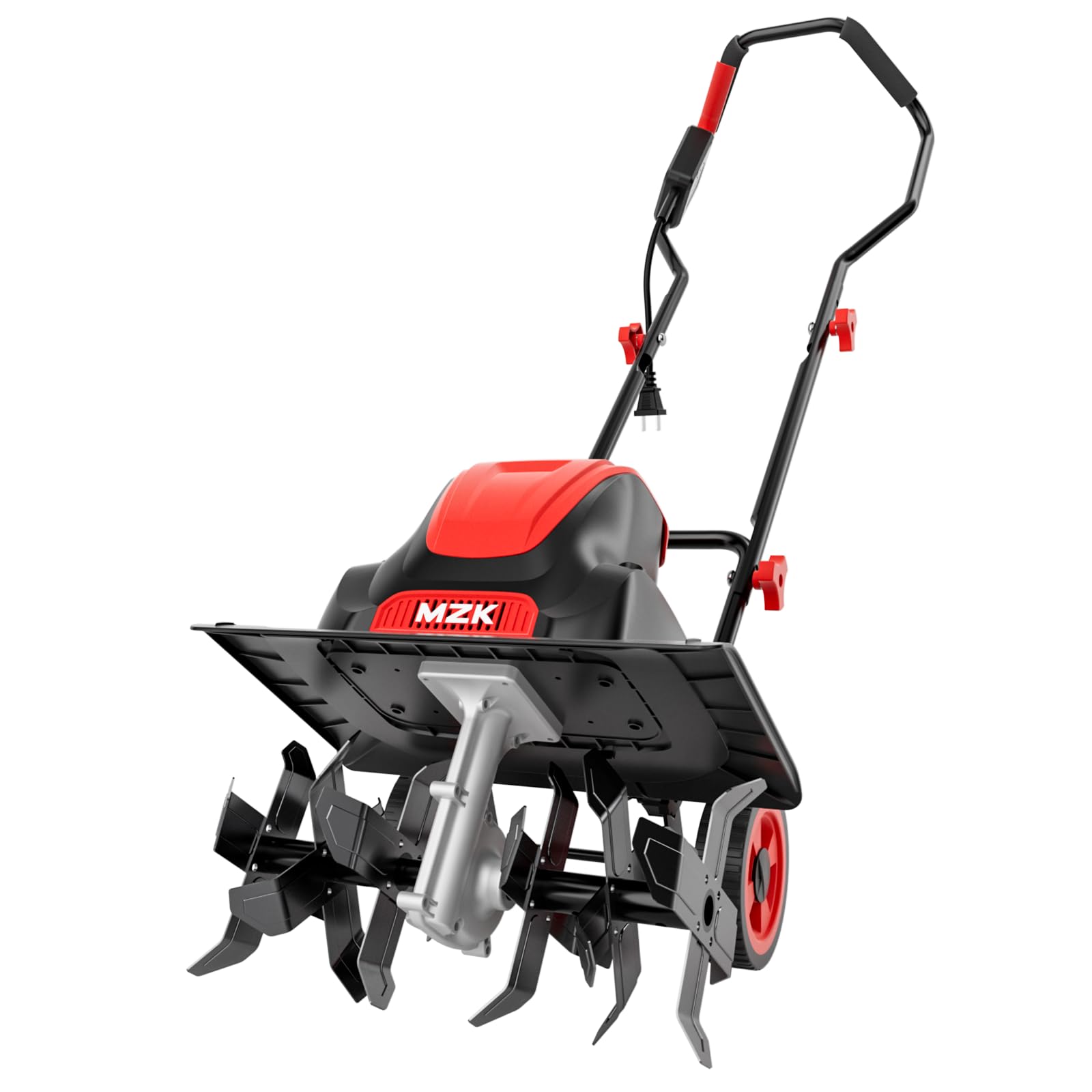
I found this 16-inch, 13.5-amp cultivator to be unexpectedly capable for its price point — decent power, multiple tines, and a lightweight design.
Why I picked it: Excellent performance-per-dollar and surprisingly durable tines.
Best for: Pre-tilled beds, aeration, gardeners who want value and power.
Low-cost option with strong performance.
Pros
- Good power for the price
- Eight-inch tilling depth
- Lightweight and easy to use
- Durable tines
Cons
- Requires extension cord
- Mobility and storage could improve
My take
I put the MZK through several sessions of bed prep and patch aeration and was impressed at how well it handled clumps and light compaction.
The unit starts easily and didn’t overheat in my runs; being corded means it’s limited by outlet access, but it also delivers continuous torque I didn’t need to babysit.
If you want a capable tiller without spending on top-tier models, this strikes a balance between power, simplicity, and price that worked well for my garden.
How I Picked and What I Consider When Choosing a Tiller
Power and Motor
I look first at motor amperage for corded models because it directly impacts how the tines behave under load. Higher amps translate to better torque when you hit roots, rocks, or dense clay.
For hand tools, motor considerations don’t apply, so I focus on leverage, tine geometry, and handle length.
- 12–13.5 amps is common for household corded tillers.
- Higher amp models handle tougher soil without stalling.
- Manual tools avoid motors but require more physical effort.
Tilling Width and Depth
I match width to the job: 16 inches is a great compromise for most lawns and beds; 18 inches speeds up larger plots. Depth matters when you’re breaking new ground—look for deeper reach if you’re turning turf or heavy clay.
For raised beds and precision work, a narrower tool or a manual tiller gives more control.
- 16-inch units cover ground efficiently for home gardens.
- 18-inch units save time on larger yards.
- 8–9 inch depth is useful for deeper soil preparation.
Tine Design and Durability
I favor steel, angled, or rust-resistant tines for long-term durability. More aggressive tine geometry breaks clods faster but can snag roots — plan to clear wrapped material occasionally.
Manual claws are excellent for loosening topsoil and extracting deep weeds without disturbing the entire bed.
- Steel, angled tines cut and mix soil well.
- Rust-resistant finishes extend service life.
- Manual claws are best for selective weeding and tight spots.
Corded vs Manual vs Gas
I picked corded electrics here because they offer continuous power without gas maintenance. The trade-off is cord management and outlet access.
Manual tools are ideal when emissions, noise, or storage space are concerns, and I use them for spot work. I avoid gas unless I need sustained heavy-duty power for large acreage.
- Corded: continuous torque, lower maintenance.
- Manual: precision, no fuel, great for raised beds.
- Gas: more power for farms, higher maintenance (not covered here).
Handling, Storage, and Safety
I consider how easy a unit is to lift into raised beds, fold for storage, and whether wheels or handle ergonomics reduce fatigue.
Safety practices I follow include disconnecting power before clearing tines, using eye protection, and watching for buried debris.
- Foldable handles save storage space.
- Adjustable transit wheels aid depth control.
- Always unplug before removing debris from tines.
Maintenance
I clean tines after each use, inspect for bent blades, and tighten fasteners. Corded tillers benefit from dry storage to avoid motor moisture issues.
Manual tools need occasional lubrication at the twist joint and inspection of the claw tips.
- Clean and dry tines after each use.
- Replace or straighten bent tines promptly.
- Store corded units indoors to protect the motor.
Frequently Asked Questions
Are corded electric tillers powerful enough for clay soil?
Yes. From my testing, 13.5-amp corded models handled clay and rocky patches well, though very compacted clay sometimes needed a shovel or multiple passes.
When should I use a manual twist tiller instead of a powered tiller?
I reach for a twist tiller when I need precision in raised beds, want zero emissions, or need to remove individual deep-rooted weeds without disturbing surrounding plants.
How do I prevent a corded tiller from running over the extension cord?
I route the cord behind me and use the shortest practical extension cord. Stopping to reposition the cord after a few passes is a small habit that prevents accidents.
Final Take
I chose these five tools because they each solve common garden problems: wide electric tillers for speed, compact electrics for raised beds, and a manual twist tiller for detail work.
If you want one machine to handle most chores, I’d recommend a 16–18 inch corded tiller with a 13.5-amp motor. For tight beds or light maintenance, keep a twist tiller handy.
Whichever you pick, follow safe practices, clear debris promptly, and match the tool to the soil conditions for the best results.
