
I tested six heavy‑duty clothes racks across capacity, stability, mobility, and real‑world use. These are the systems I reached for when I needed serious storage that actually lasts.
I’ve spent weeks assembling, loading, and living with different heavy‑duty clothes racks so I could recommend the ones that actually stand up to real use. I prioritized load capacity, build quality, flexibility, and how straightforward each unit was to install and adjust. Below are the racks I kept and relied on in my own closets, laundry room, and staging setups.
I compared footprint, rated capacity, shelving options, mobility, and installation style so you can pick the right combination of strength and convenience for your space.
1. VIPEK Classic V6 Garment Rack – Best Overall
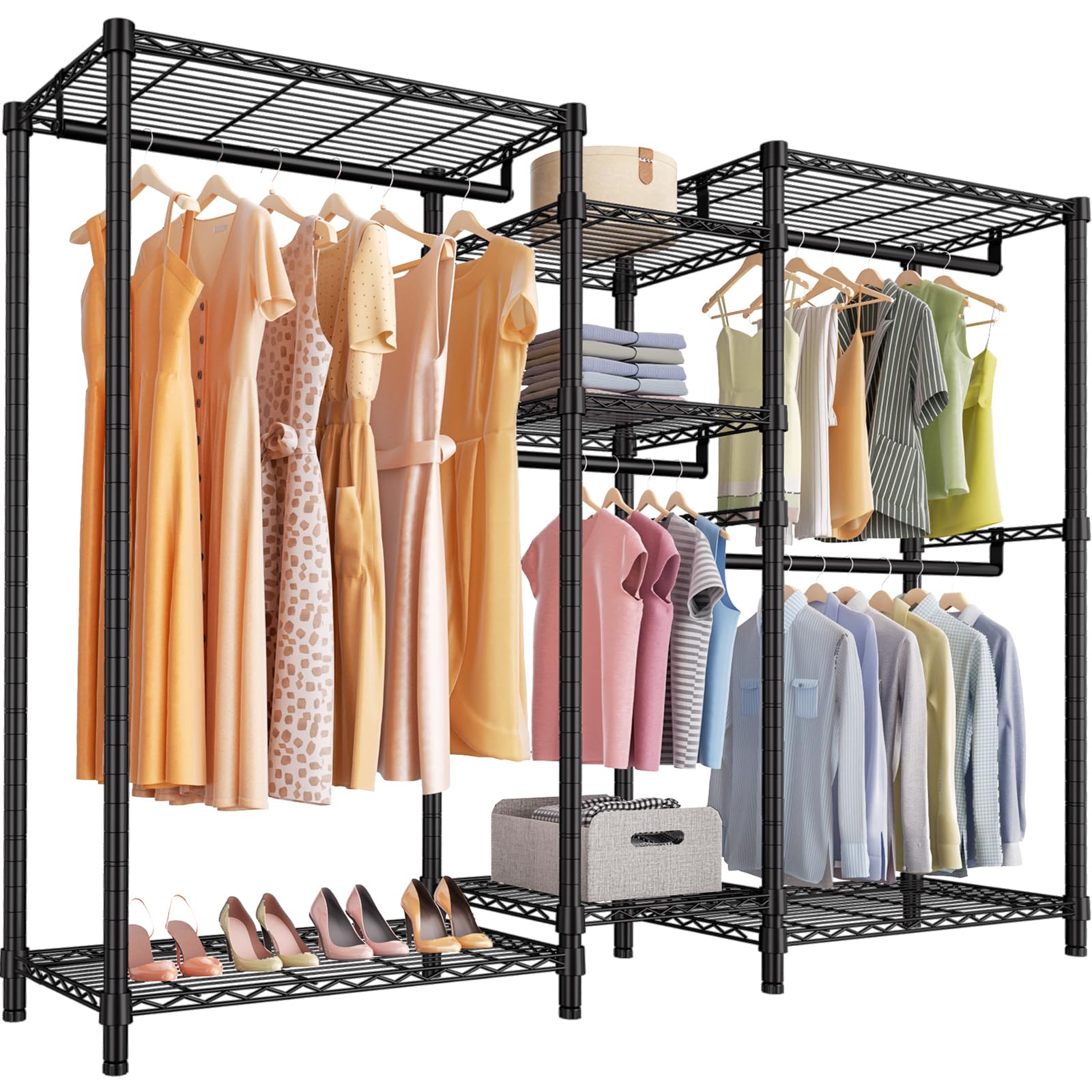
A versatile, room‑filling system with large capacity and configurable layout.
Why I picked it: Huge 850 lb capacity, adjustable shelves and rods, straight or L‑shape installs.
Best for: Converting spare rooms into boutique‑style wardrobes or high‑capacity closets.
A mid‑range investment for a heavy‑duty closet system.
Pros
- 850 lb rated capacity
- Multiple hanging rods and shelves
- Anti‑tip safety device
- Clean black finish
Cons
- No wheels for mobility
- Large footprint
My take
I put the VIPEK Classic V6 into service as the backbone of a spare‑room walk‑in and it immediately became the system I reached for when I needed maximum hanging and shelf space. The steel construction feels industrial and confident: once fully assembled the frame does not sway under heavy coats or packed hangers.
I appreciated the two installation styles. Building it straight gives a long continuous run, while the L‑shape made tidy use of a corner and created a boutique flow where garments are easier to see. The anti‑tip device added peace of mind for heavier loads.
Assembly was straightforward if time‑consuming; expect to spend an hour or two the first time. I like that the unit sacrifices wheels for rigidity—the lack of casters matters if you want immovable stability and a polished bedroom look. Overall, this is the most flexible heavy‑duty option I kept for large capacity storage.
2. Single Foldable Wall‑Mounted Clothes Rack – Best Space‑Saver
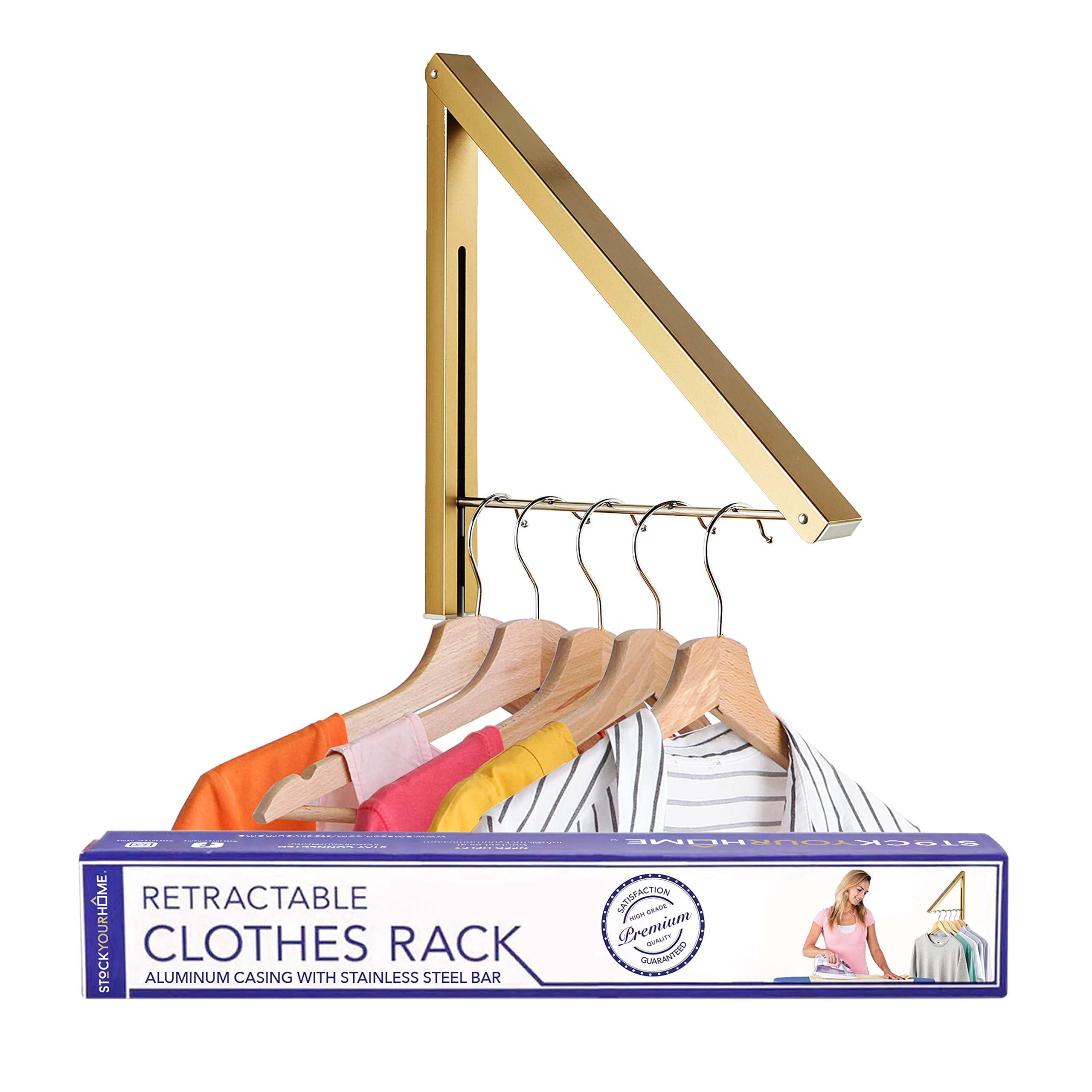
A compact, fold‑away hanger that creates instant drying or hanging space.
Why I picked it: Pull‑down stainless bar, folds flat, 60 lb capacity—perfect for tight spots.
Best for: Small laundry rooms, dorms, behind doors, or entryway squeeze areas.
A very budget‑friendly space‑saving solution.
Pros
- Folds flat when not in use
- Stainless steel bar
- Hardware included
- Rust resistant casing
Cons
- Requires secure wall mounting
- Backing could be wider for stability
My take
I installed this foldable rack in my narrow laundry alcove and it became my go‑to for wet jeans and odd items that won’t fit in the dryer. It pulls down easily, carries heavy wet pieces—up to the rated 60 lb bar—and folds back to an inch of profile when I’m done.
One important tip from my testing: mount to a stud or use longer screws into wood. The included anchors work for many surfaces, but for heavier wet loads I prefer screwing into solid backing. The rust‑resistant casing means I feel comfortable using it in laundry areas and covered outdoor spots, and its minimalist look disappears into the room when folded up.
3. SONGMICS Double‑Rod Garment Rack – Best Mobile Rack
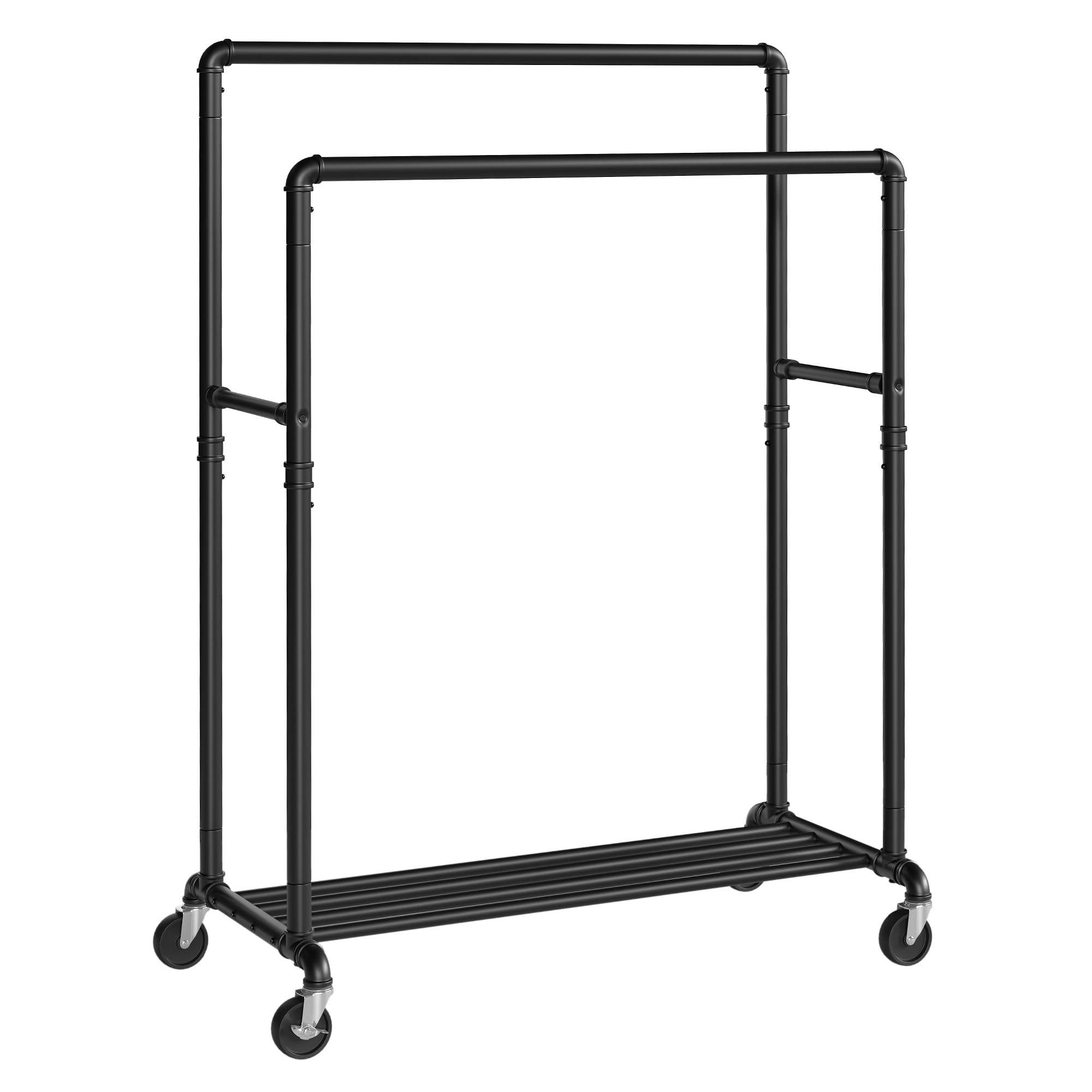
A sturdy, tall double‑rail rack on lockable casters for easy mobility.
Why I picked it: Two long rails, heavy casters (two locking), and a practical bottom shelf.
Best for: Moving clothes between rooms, staging, and mobile storage needs.
An affordable, mobile heavy‑duty option.
Pros
- Two long rails for broad hanging
- 4 casters, 2 lockable
- Solid steel tubing
- Easy assembly
Cons
- Tall—may be hard to fit through short doorways
- Lower weight limit than large industrial racks
My take
I used the SONGMICS double‑rod unit in several roles: a staging rack for a small photoshoot, a mobile overflow for seasonal rotation, and a drying rack for bulky gear. The 1 mm steel tubing feels robust and the casters roll smoothly; locking two wheels keeps the rack stationary when I need it to be.
The two full‑length rails give practical separation—top for jackets, bottom for shirts—so hangers don’t tangle. Assembly was quick thanks to labeled parts and the included multi‑tool. It’s not the highest capacity item in this roundup, but I valued its mobility and clean industrial look for day‑to‑day use.
4. HOKEEPER Heavy‑Duty Rolling Garment Rack – Best Heavy‑Duty Expandable
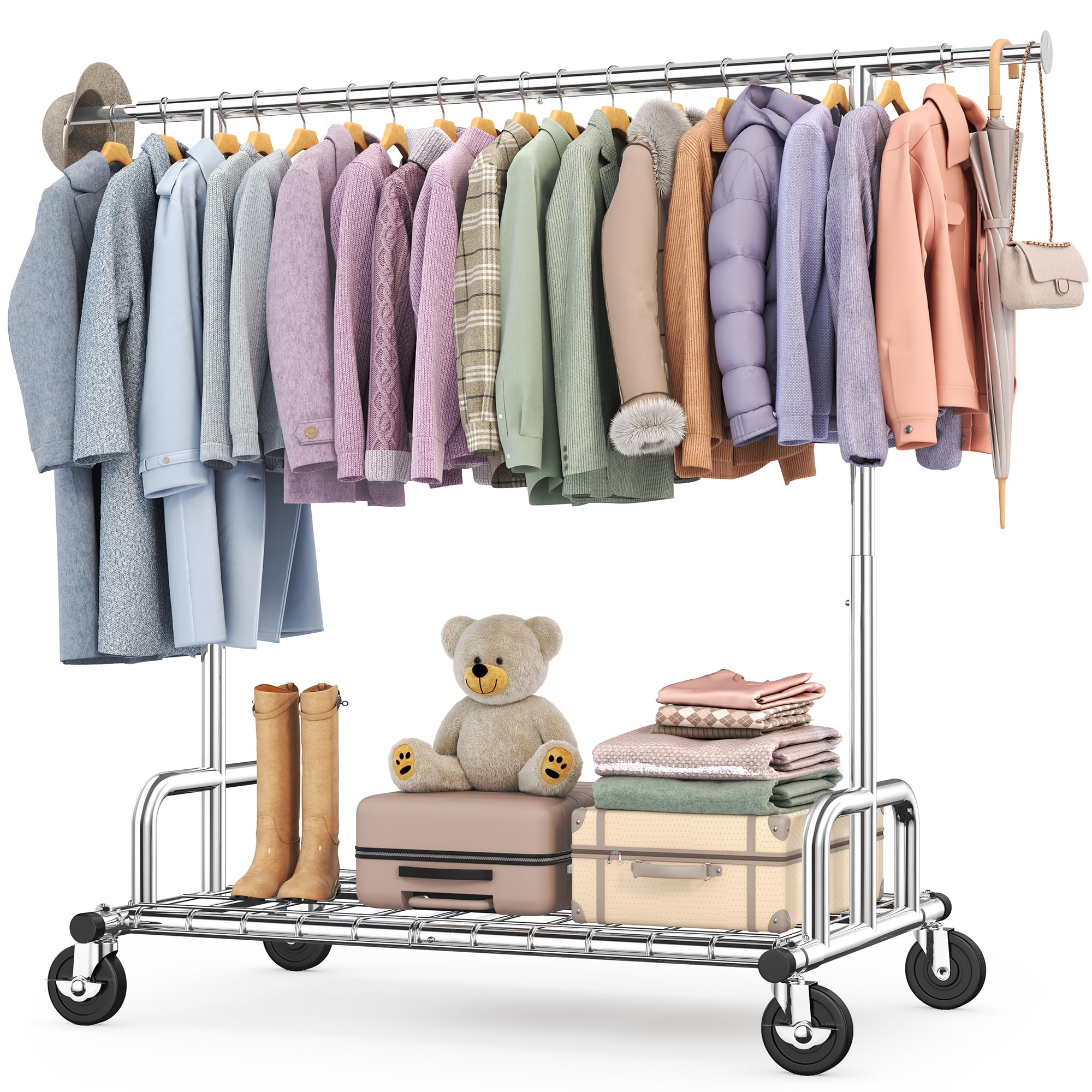
A commercial‑style, extensible rack with an E‑shape frame and high load rating.
Why I picked it: Extensible rod (51–75"), E‑shape support, and 525 lb rated capacity.
Best for: Heavy coats, commercial storage, and flexible length needs.
Strong value for a near‑commercial capacity rolling rack.
Pros
- Extensible hanging rod
- E‑shape structure for stability
- 4 omnidirectional casters
- Height adjustable
Cons
- Chrome finish may show wear
- Relatively wide footprint
My take
This HOKEEPER unit became my solution when I needed a heavy‑duty rack that can stretch to fit a wider span. I used the telescoping rod to adjust length between two rooms and appreciated how the E‑shape framing resists wobble even when loaded with winter coats.
The casters are a practical touch: they roll well across short carpet and hard floors, and the two lockable wheels keep the unit from drifting. The bottom shelf is handy for boxes or shoes and the whole assembly felt solid and commercial‑grade when I loaded it with suitcases and outerwear.
5. VIPEK V2 Clothes Rack – Best for Organization
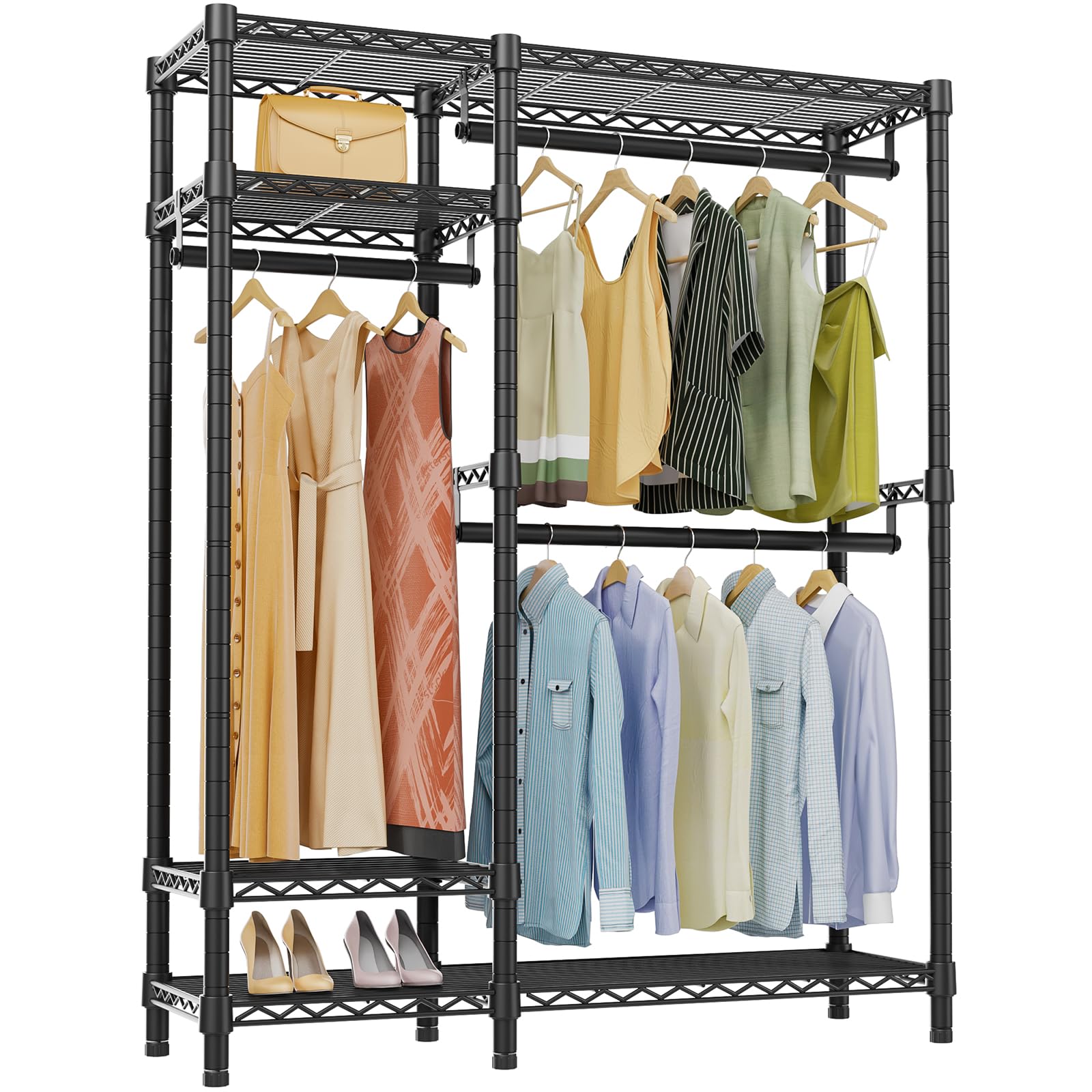
A compact organizer with double hanging rods and four adjustable shelves.
Why I picked it: Double rods, four tiers of shelving, and a 700 lb system capacity.
Best for: Tight closets where you need layered hanging and shelf storage.
Moderately priced for a well‑organized, durable unit.
Pros
- Double hanging rods
- Four adjustable wire shelves
- Tool‑free slip‑sleeve assembly
- Powder‑coated finish
Cons
- Depth may be large for some narrow closets
- Assembly can be fiddly in cramped spaces
My take
I kept the V2 in my main closet as an insert for shirts, trousers, and folded sweaters. The double rails let me separate suit shirts from casual tees, while the four wire shelves handled baskets and accessories with no visible sag.
Putting it together was simpler than I expected thanks to the slip‑sleeve locking system—no tools required—though working inside a small preexisting closet can make the process tighter. The powder coating has held up to repeated use, and I liked how modular the shelves feel when I reconfigure for different seasons.
6. VIPEK V40 Garment Rack – Best Capacity
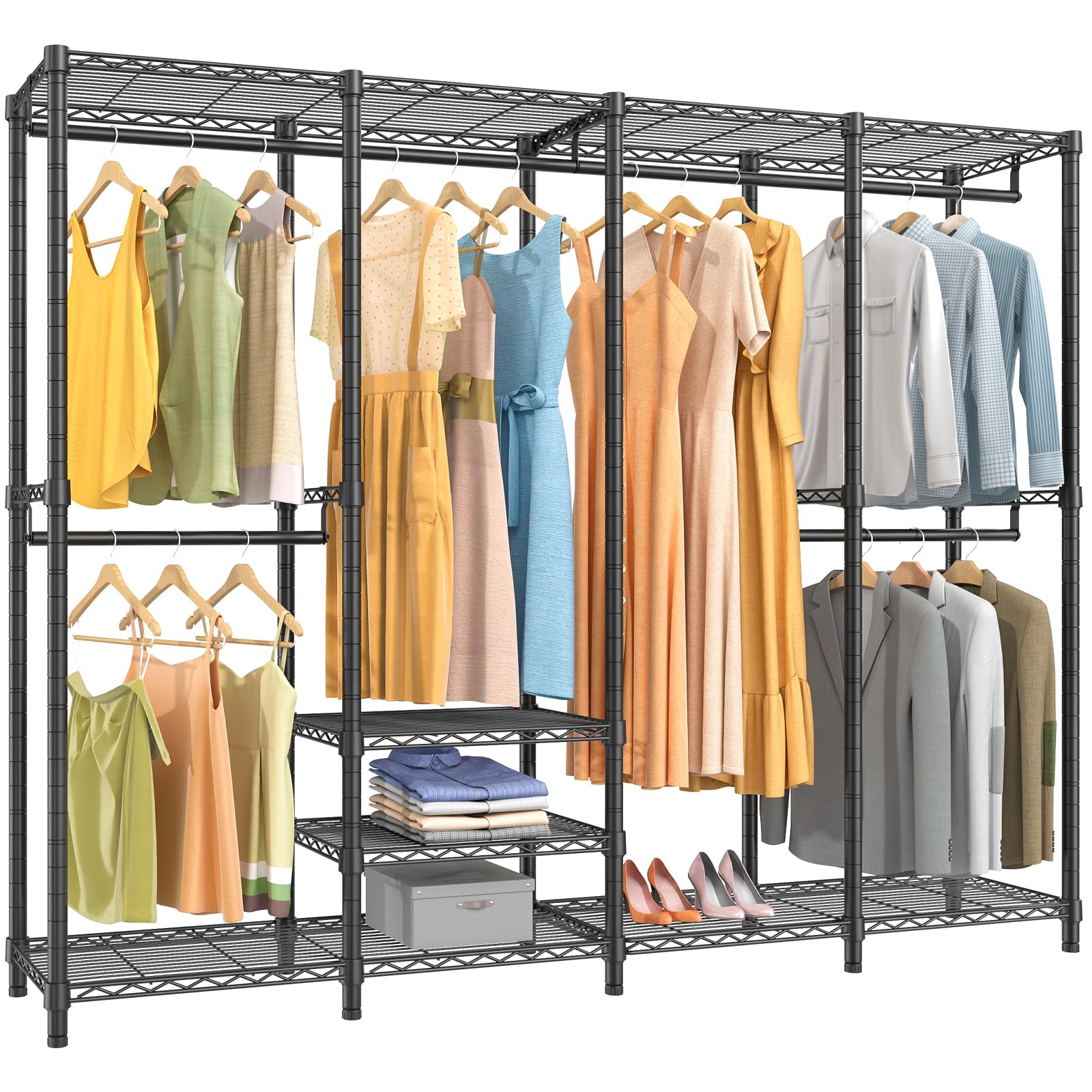
The largest‑capacity option here with flexible shelving and multiple hanging bars.
Why I picked it: Massive 1110 lb capacity, six adjustable shelves, and four detachable bars.
Best for: High‑volume storage, boutique layouts, and heavy winter gear.
A higher‑cost unit that delivers maximum capacity and flexibility.
Pros
- Up to 1110 lb capacity
- Multiple adjustable shelves
- Four detachable hanging bars
- L or straight installs
Cons
- Requires space and careful assembly
- Very heavy when fully loaded
My take
When I needed the absolute most hanging and shelf capacity, the V40 was the unit I turned to. The rated load is enormous and the build gives me confidence when storing bulky coats, handbags, and boxes of shoes.
The numerous configuration options—six shelves, four bars, and the ability to build L or straight layouts—let me design a storage flow that suited a long spare room. Assembly is manageable with the instructions, and once in place the rack became a permanent, heavy‑duty backbone for overflow storage.
How I choose and test heavy‑duty clothes racks
Key factors I test
I focus on real‑world load capacity, stability, adjustability, mobility, finish, and ease of assembly. A rack that lists a high weight capacity is only useful if the frame, joints, and mounting method actually hold up under regular use.
- Capacity: I hang heavy coats and packed hangers to validate rated loads.
- Stability: I check for wobble, tipping, and whether an anti‑tip or locking caster is present.
- Adjustability: Shelves and rod length should reconfigure without special tools.
- Mobility: I prefer lockable casters for units I move frequently.
- Materials and finish: Powder coating or chrome should resist rust and scratches.
Choosing by use case
Think about whether you need a permanent closet system, a fold‑away solution, or a mobile rack. I choose wall‑mounted foldables for tiny laundry rooms, wheeled racks for staging and rotating garments, and large wire systems for converting rooms into walk‑in closets.
- Small spaces: Wall‑mounted foldable racks or compact freestanding units.
- Mobile needs: Heavy casters with at least two locks.
- High capacity: Look for reinforced frames, wide bases, and E‑shape support.
Installation tips I use
I always read the manual and identify studs or solid backing for wall mounts. For heavy freestanding units, follow the order in the instructions for shelf placement—some shelves must go in a specific sequence to lock properly.
- Mount wall units to studs or use heavy‑duty anchors.
- Assemble on a soft surface to protect finish and to prevent missing small parts.
- Use longer screws into wood when carrying wet or very heavy items.
Frequently Asked Questions
How much weight can these racks actually hold?
I treat the listed capacity as a guideline and test by loading the frame evenly. Larger wire systems from VIPEK claim the highest capacities and feel rock solid when I load coats and boxes. For wall mounts I secure into studs and keep loads within the manufacturer’s recommendation.
Do I need to anchor a freestanding rack to the wall?
If you’re stacking heavy coats or will use a tall, narrow arrangement, I anchor it or use the anti‑tip device. For low, wide units with an E‑shape base I have skipped anchoring, but I always lock wheels or remove casters when I want permanent stability.
Can I move these racks across carpet or hardwood?
Wheeled racks roll well across most floors; I prefer omnidirectional casters for maneuvering. On thick carpet some casters feel stiffer, so I test them empty first and swap to tougher casters if I’ll be moving the unit frequently.
Final Take
I kept different racks for different roles: wall‑mounted for tight laundry spaces, wheeled units for staging and mobility, and large wire systems for full closet conversions. Decide whether you need mobility, maximal capacity, or a small footprint, then pick the rack that matches that need. After building and living with each of these, I can confidently say they’re the ones I’d buy again depending on the room and the load.
