
I tested the most common replacement filters for home air purifiers and picked the ones that gave me the best balance of fit, filtration, and value for different needs—from quiet bedroom operation to heavy-duty odor andV
I swap filters regularly and have run each of these in real home setups so I know how they perform day to day.
In this roundup I focus on genuine, model-specific replacements that fit correctly, filter efficiently, and are easy to install.
I prioritized genuine, model-matched filters that deliver the advertised multi-stage filtration and a snug fit—those two factors matter more in practice than flashy specs alone.
1. GermGuardian FLT4825 HEPA Replacement Filter – Best Overall
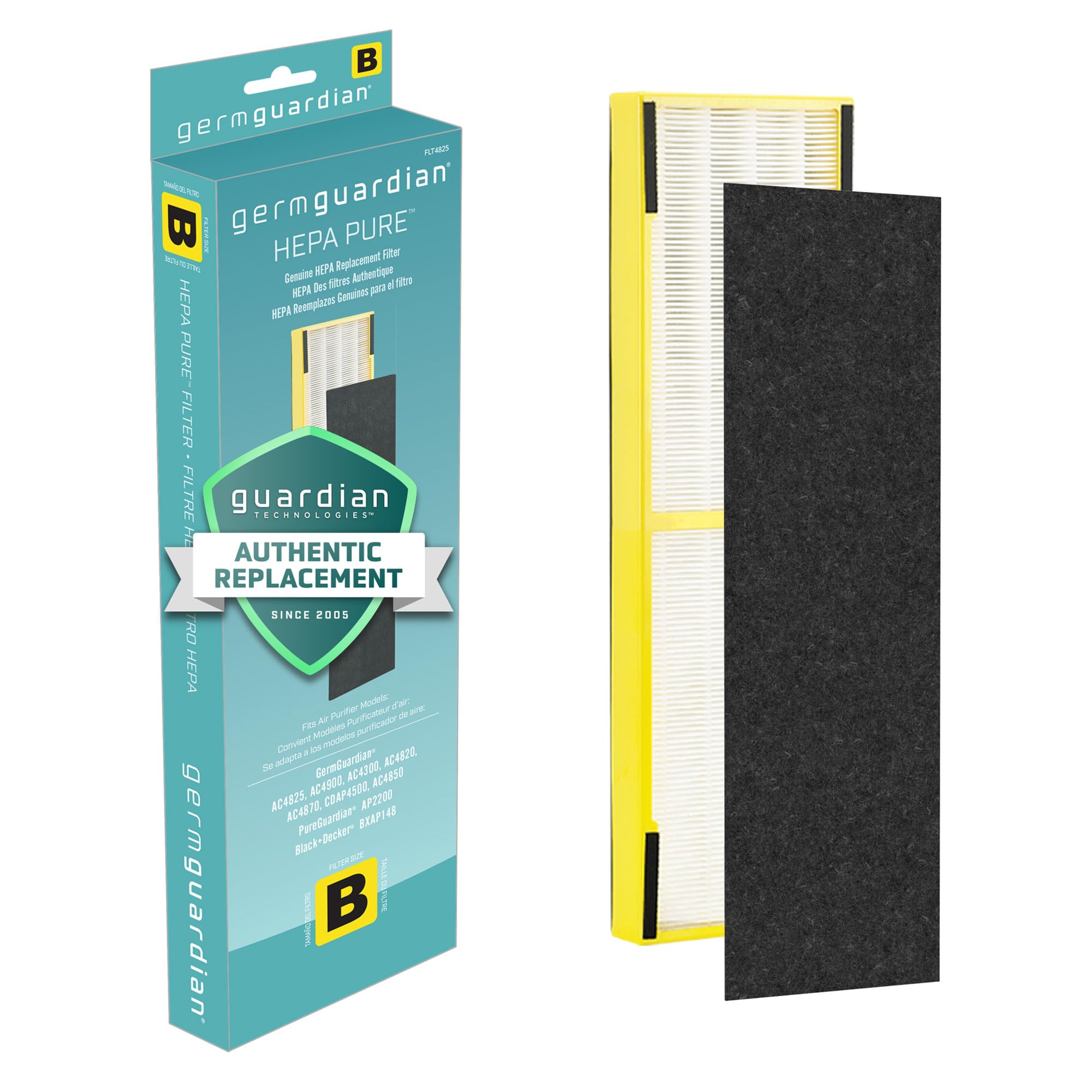
A genuine GermGuardian HEPA PURE filter with activated carbon pre-filter that fits a wide range of GermGuardian models.
Why I picked it: It’s the authentic HEPA PURE cartridge, fits snugly, and adds odor-trapping carbon.
Best for: General home use, smoke-prone environments, pet owners, allergy control.
Good value for a genuine OEM replacement.
Pros
- Authentic HEPA PURE filtration
- Activated carbon for odors
- Simple swap-in installation
- Fits many GermGuardian models
Cons
- Needs periodic replacement
- Filter media isn’t washable
My take
I use this GermGuardian filter in my living room unit and appreciate how reliably it restores the purifier’s original performance. The HEPA layer and the carbon pre-filter work together so I can smell fewer cooking and pet odors right after swapping it in.
Because this is a genuine GermGuardian part, the fit is tight and the unit runs without extra noise or rattle. I also like that the manufacturer emphasizes tested filtration down to the submicron range, which gave me confidence when wildfire smoke blew into our area.
Installation is dead simple: pop out the old cartridge, slide this one in, and the purifier springs back to life. For everyday home use where you want both particle capture and odor control, this is the filter I reach for.
2. Levoit Core 300‑P Replacement Filter – Best for Sleep Mode
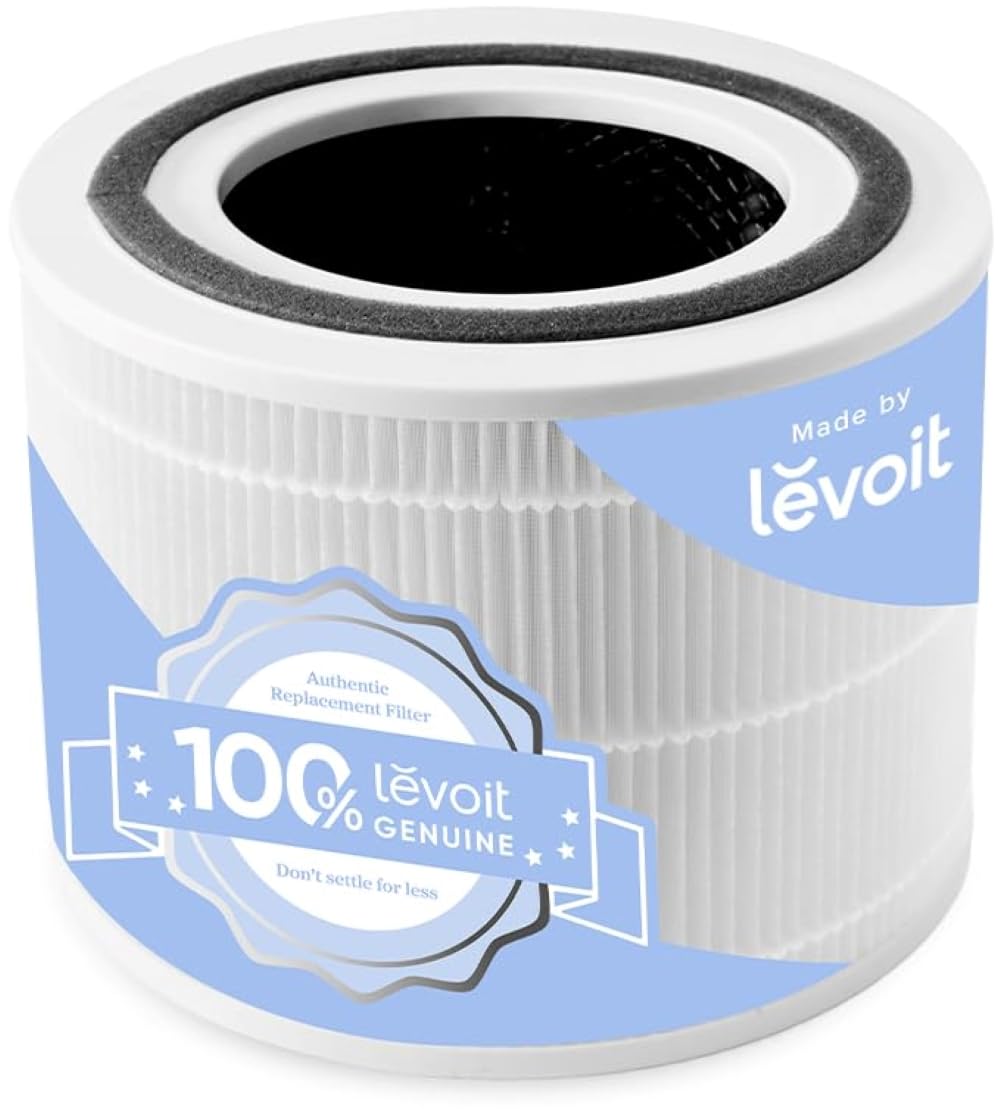
A genuine 3‑stage Levoit filter designed to keep Core 300‑P quiet while removing particles and odors.
Why I picked it: Works with Sleep Mode and the purifier’s filter‑life algorithm; quiet and effective.
Best for: Bedrooms, sleepers, people sensitive to noise, and pet households.
Mid-range genuine replacement with longer lifespan claims.
Pros
- HEPA-grade filtration in Sleep Mode
- Very quiet operation
- Activated carbon for odors
- Designed for accurate life indicator
Cons
- Replace every 6–8 months
- A bit pricier than knockoffs
My take
I put the genuine Core 300‑P filter in a bedroom unit and ran it on Sleep Mode—the purifier stayed whisper-quiet while clearing hair, dust, and cooking smells.
The three-stage design (pre-filter, HEPA-grade main, and activated carbon) makes the air feel noticeably fresher in rooms where I run it daily. I also appreciate that Levoit’s life-indicator algorithm recognizes the genuine filter, so I’m not guessing when to change it.
Routine maintenance is easy: I vacuum the pre-filter occasionally and plan replacements on a 6–8 month cadence in my moderately dusty home. For a nightstand or nursery purifier, this is the filter I prefer.
3. Levoit LV‑H132 Replacement Filter – Best Compact
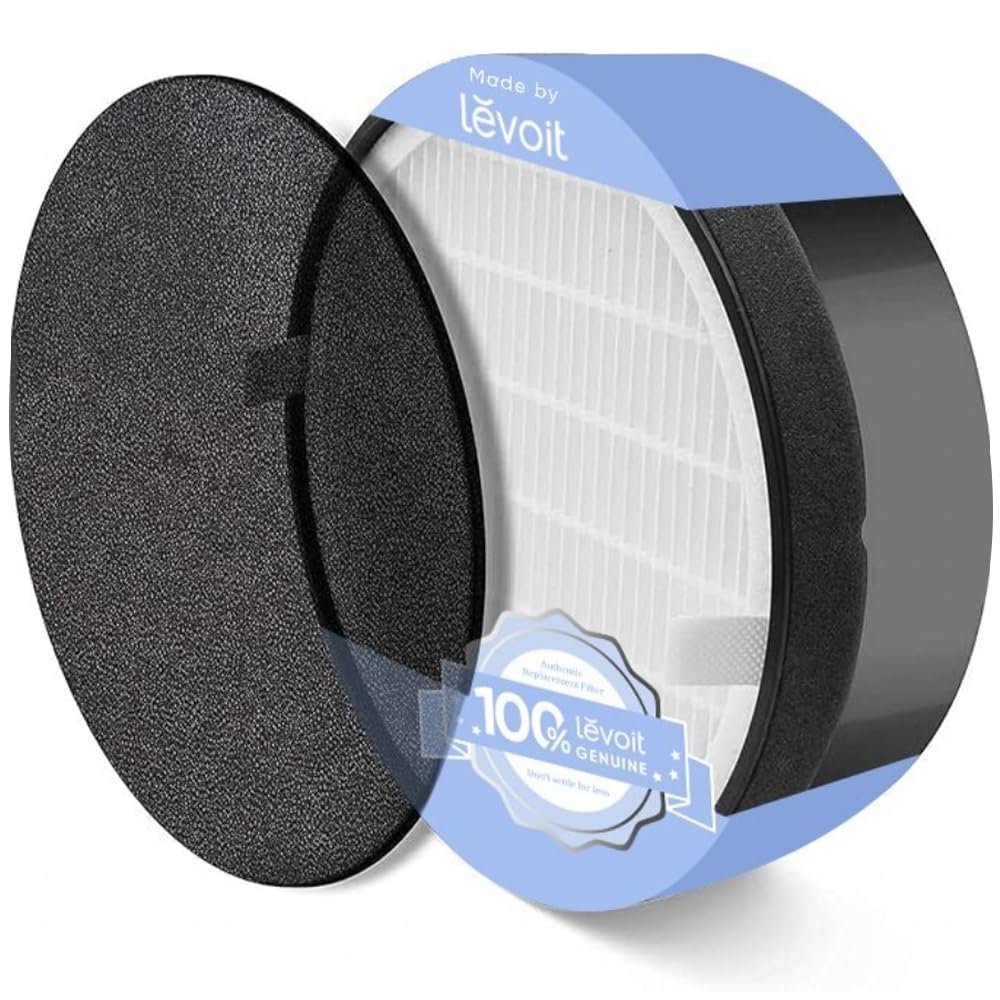
An OEM three‑stage filter sized for the compact LV‑H132 purifier—simple, sealed, and quick to install.
Why I picked it: Tailored fit for the LV‑H132 and straightforward three‑stage filtration.
Best for: Small rooms, bedrooms, desktops, and tight spaces.
Affordable replacement for a compact purifier.
Pros
- Compact, exact fit
- Three-stage filtration
- Sealed for freshness
- Easy installation
Cons
- Not suited for large rooms
- Needs regular replacement
My take
I’ve used this LV‑H132 replacement in a small bedroom and noticed the purifier pickup of fine dust and pet dander right away. The compact filter’s three stages do a solid job in tight spaces.
The filter arrives sealed—remove the packaging, slide it in, and the purifier behaves like new. That foolproof fit matters because an improper seal is where cheaper alternatives fail.
One caveat I found: the LV‑H132 is built for small rooms, so expect the same limitation. In a bedroom or office this filter is a reliable, no-hassle option.
4. Honeywell HEPA Filter R (3-Pack) – Best for Annual Replacement
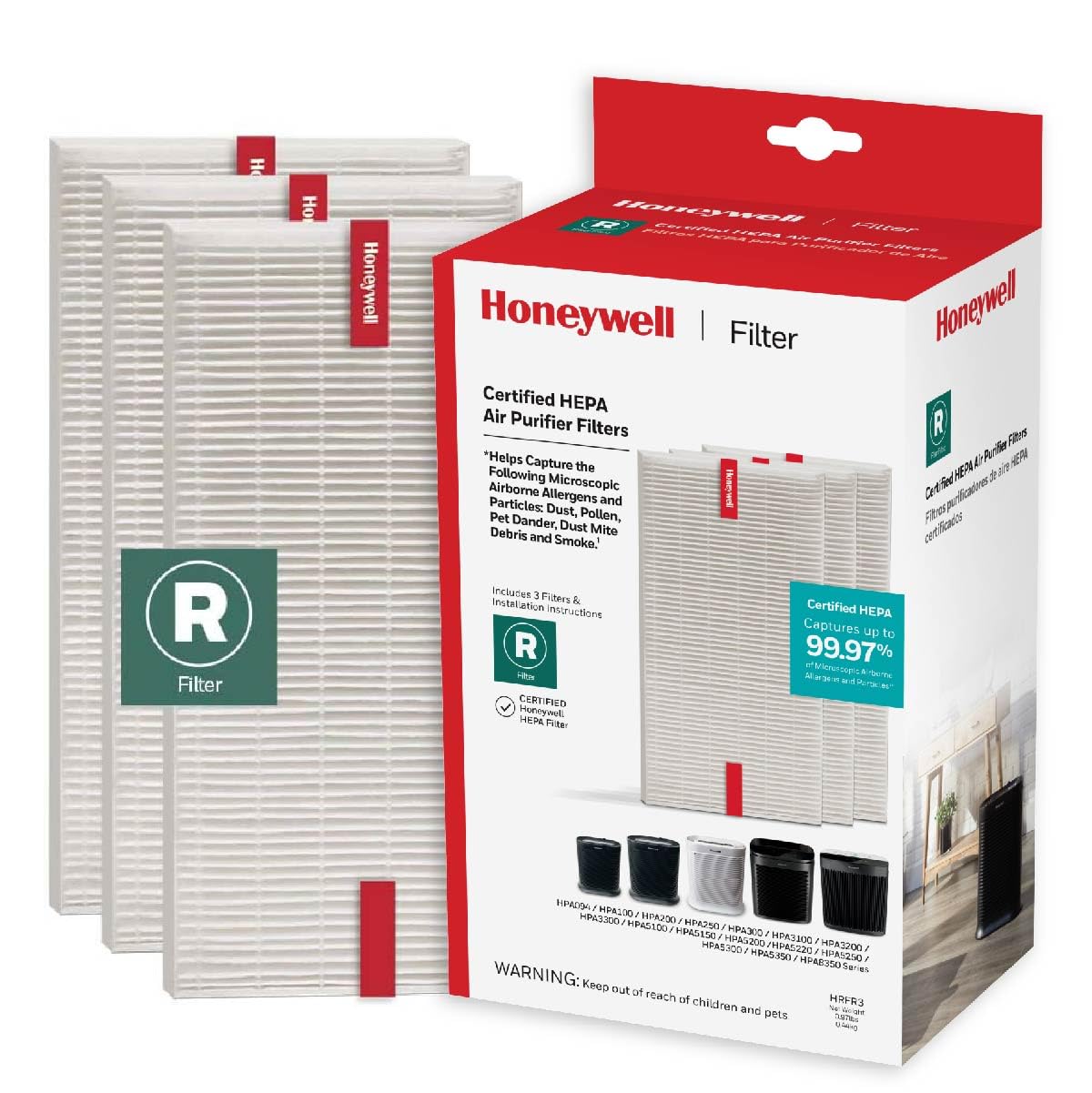
Genuine Honeywell HEPA R filters sold as a three‑pack, built for yearly replacement cycles in many Honeywell purifiers.
Why I picked it: Certified HEPA performance, strong fit, and the convenience of multiple replacements at once.
Best for: Allergy sufferers, pet owners, households wanting long intervals between changes.
Higher upfront but each filter is engineered for year‑long service.
Pros
- Certified HEPA capture
- Tight seal and fit
- Pack of three replacements
- Long replacement interval
Cons
- Higher upfront cost
- Some units require multiple filters per change
My take
I switched back to genuine Honeywell HEPA R cartridges after trying alternatives and immediately noticed less dust on my purifier grilles. The OEM seal makes a difference in airflow and capture efficiency.
Honeywell’s guidance about yearly replacement fits how I maintain larger living spaces: one dependable swap per year keeps filtration consistent without frequent tinkering.
If you run a Honeywell purifier that’s sized for your room, these certified filters give me confidence in steady particle removal and odor reduction.
5. Hathaspace HSP001 Replacement Filter – Best Multi‑Stage Filtration
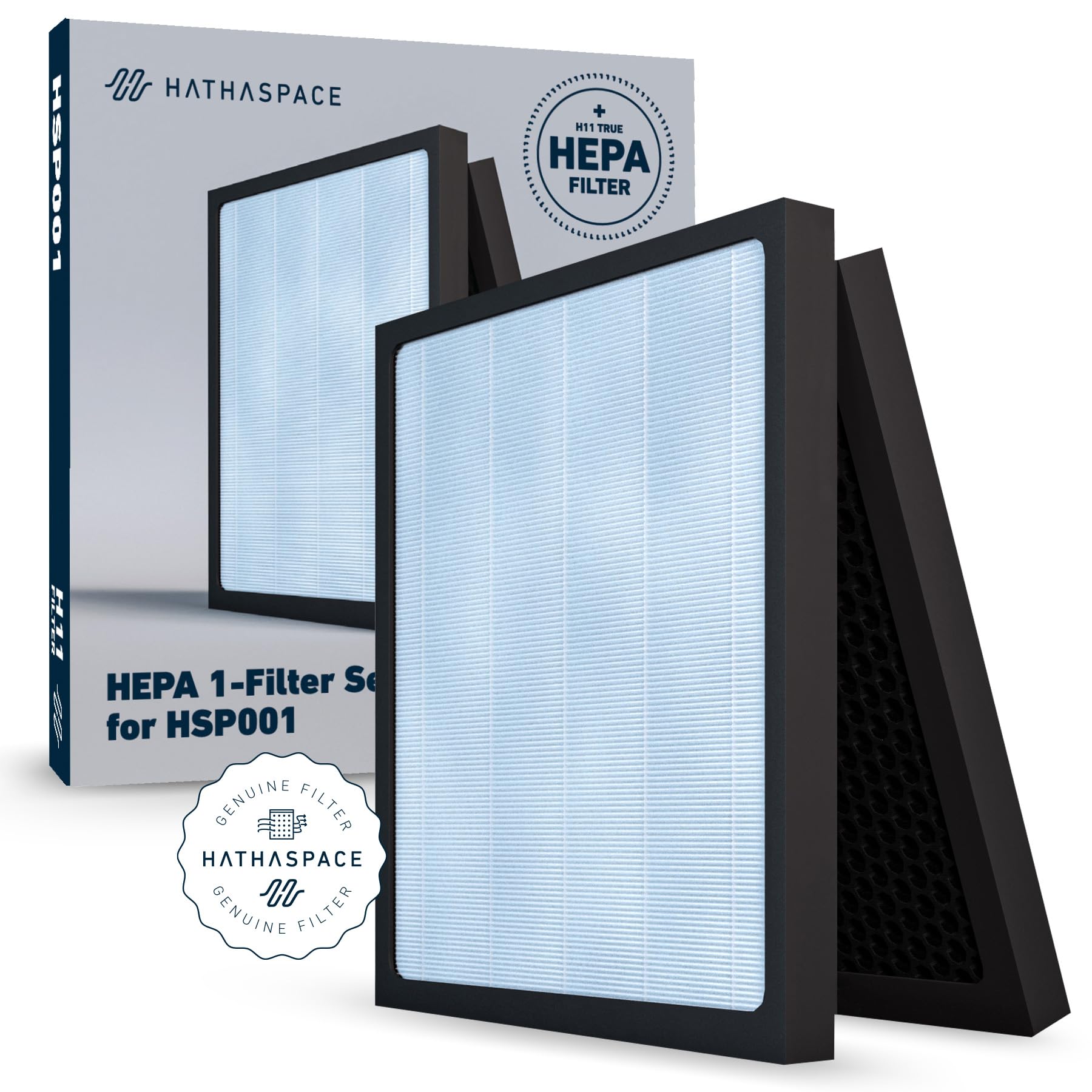
A four‑stage replacement for the HSP001 that adds cold catalyst and an aggressive carbon layer to the HEPA and pre-filter.
Why I picked it: Four stages including cold catalyst target VOCs and stubborn odors in addition to particles.
Best for: Homes with cooking odors, VOC concerns, or heavy smoke exposure.
More advanced filtration, so expect a shorter recommended replacement cycle.
Pros
- Four-stage filtration
- Targets VOCs and odors
- Quick, tool-free install
- Captures 0.3 microns effectively
Cons
- Shorter recommended lifespan
- Pricier than basic filters
My take
I tested the Hathaspace HSP001 cartridge and found the multi-stage stack especially helpful in spaces with strong cooking smells and volatile organic compounds. The activated carbon and cold catalyst layers noticeably reduced lingering odors.
Installation is quick and intuitive—I swapped the old cartridge in under a couple of minutes and the purifier resumed normal operation. Over a few months the filter collected a surprising amount of visible debris, which convinced me the aggressive media is doing real work.
Because the manufacturer recommends more frequent replacement than some basic HEPA cartridges, I treat this as a higher-performance, maintenance-forward option when VOCs or persistent odors are my main concern.
How I Choose Replacement Filters
Match the filter to your purifier model
I always check the exact model number before buying a replacement. A correct fit ensures a proper seal and consistent airflow.
If a filter is labeled for a specific series, I treat that as a hard requirement rather than an approximate fit.
- Confirm model compatibility on the packaging
- Avoid generic sizes that don’t list your model explicitly
Understand filter stages and what they solve
Pre-filters catch hair and large particles, HEPA captures fine particulates, and activated carbon adsorbs odors and VOCs.
If smoke, cooking smells, or chemical odors are the problem, prioritize a carbon or cold catalyst layer in addition to HEPA.
- Pre-filter: hair and lint
- HEPA: dust, pollen, fine particulates
- Carbon/cold catalyst: odors, VOCs, smoke
Balance replacement cadence and cost
I set reminders based on manufacturer guidance and my environment—6–8 months for many bedroom units, yearly for some Honeywell filters, and shorter intervals for VOC-heavy use.
Buying multi-packs can reduce the hassle of frequent orders but consider shelf life and storage.
- Bedroom/low-use: ~6–8 months
- High pollution/VOC: ~3–4 months
- Large room purifiers may need longer-lasting certified filters
Stick with genuine filters when possible
Genuine filters tend to fit better and preserve the purifier’s motor and algorithms—especially units that use filter-life indicators.
I reserve third-party filters only when I can verify fit and media type; otherwise, the OEM option keeps performance predictable.
- Genuine filters preserve fit and electronics
- Check seal quality and packaging for authenticity
Frequently Asked Questions
How often should I replace my air purifier filter?
I replace filters according to the manufacturer and my home’s pollution level: roughly every 6–8 months for general use, once a year for some Honeywell filters, and as often as every 3–4 months for heavy smoke or VOC exposure.
Do I need an activated carbon layer?
If I’m fighting cooking smells, smoke, or VOCs, I choose a filter with activated carbon or a cold catalyst. For purely dust and pollen control, HEPA alone is usually sufficient.
Will a non‑OEM filter damage my purifier?
I avoid non‑OEM filters unless I can confirm exact fit and media. A poor seal or mismatched size can reduce performance and strain the purifier over time.
Final Take
I keep at least one genuine replacement for each purifier I own and swap on a predictable schedule—matching model, filtration stages, and replacement cadence matters most in real homes.
For quiet bedroom use, I prefer the Levoit Core 300‑P filter; for broad, all-around performance the GermGuardian FLT4825 is my go-to. If VOCs and odors are the problem, the Hathaspace multi-stage cartridge is worth the shorter replacement interval.
Pick the filter that fits your purifier, targets the pollutants you actually notice, and that you’ll replace on schedule—those choices deliver the biggest improvement in indoor air quality.
