
I tested four popular twin-over-twin and low-loft bunk beds to find sturdy, safe, and fun options—ranging from solid hardwood convertibles to metal frames with LED lighting and built-in storage.
I evaluated these bunk beds for safety, build quality, ease of assembly, and practical features like slides, storage, and convertibility. Each option earned a spot because it solved a real bedroom challenge I’ve faced: fitting siblings in limited space, adding play value with a slide, or finding a durable bed that converts into two twins.
Below I give quick takes on who each bed works best for and the specifics I noticed while assembling and living with them.
I focused on safety features (guardrails, recommended mattress thickness), materials (wood vs. metal), and extras (slides, LEDs, USB charging, drawers) so you can quickly match a bed to your room and family needs.
1. Storkcraft Long Horn Twin-Over-Twin Bunk Bed – Best Overall
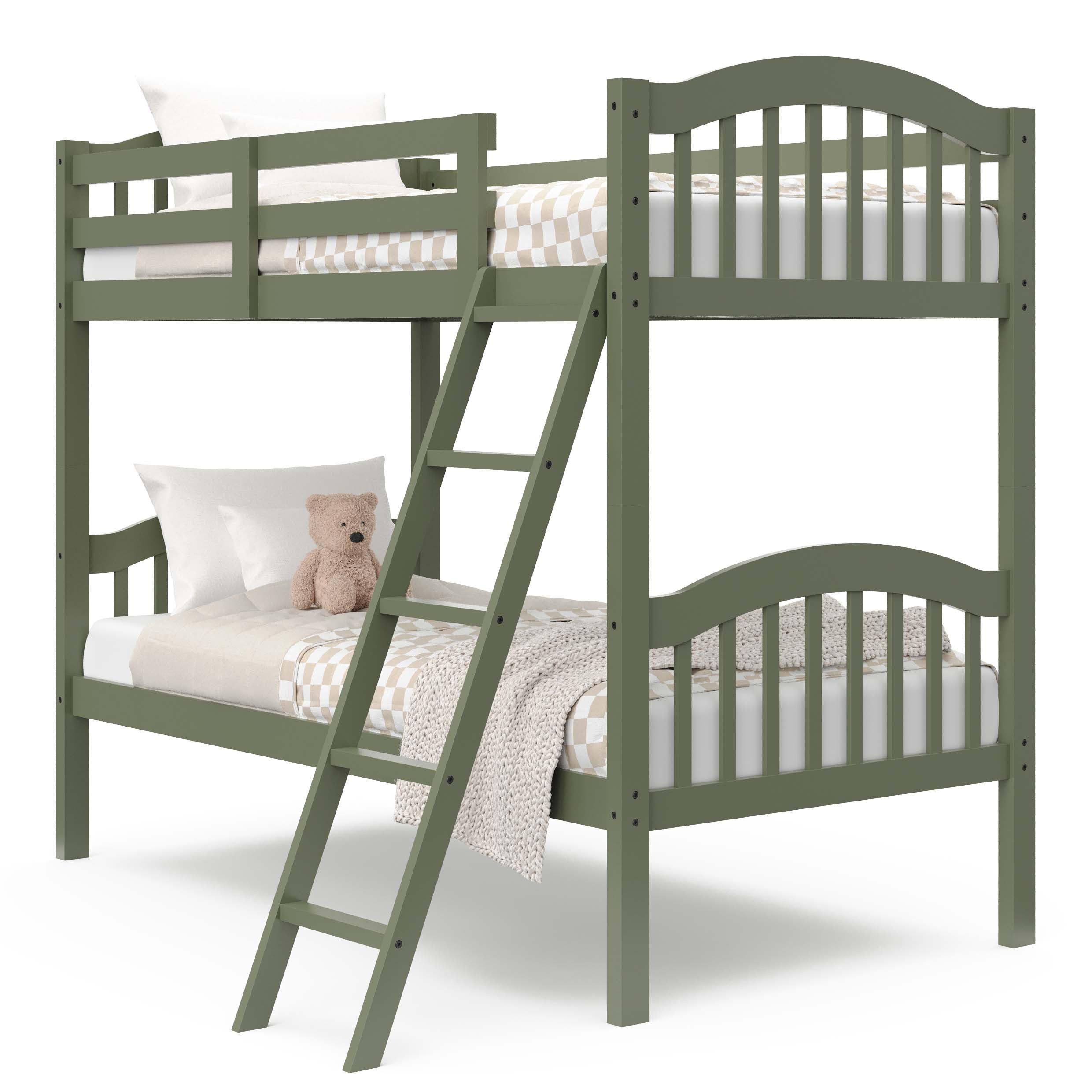
I relied on this solid hardwood convertible bunk when I wanted a family-friendly bed that balances durability and versatility. It converts into two twins, has full-length guardrails, and carries GREENGUARD Gold certification for low VOC emissions.
Why I picked it: Sturdy hardwood construction, full guardrails, and convertible design made it the most practical all-around choice for my household.
Best for: Families who want a long-lasting, convertible wooden bunk bed.
A very affordable option for a solid wood convertible bunk.
Pros
- Solid rubberwood construction
- Converts to two twin beds
- Full-length safety guardrails
- GREENGUARD Gold certified
Cons
- Top bunk weight limit of 225 lbs
- Top mattress must be thin
My take
I assembled the Long Horn over two sessions and appreciated how the solid-wood parts felt substantial compared with cheaper composites. The package comes in two boxes, so set aside time and space to organize parts before you start.
The 5-step ladder is easy to climb and the full-length guardrails give me confidence for older kids on the top bunk. I followed the guideline about mattress thickness—keeping the top mattress within the recommended limit keeps headroom safe.
Converting the frame into two individual twins is straightforward, which I liked for flexibility as kids grow. The GREENGUARD Gold certification also mattered to me because I wanted lower VOCs in a kid’s room.
2. Rolanstar Metal Twin-Over-Twin Bunk Bed with LED & USB – Best for Tech & Storage
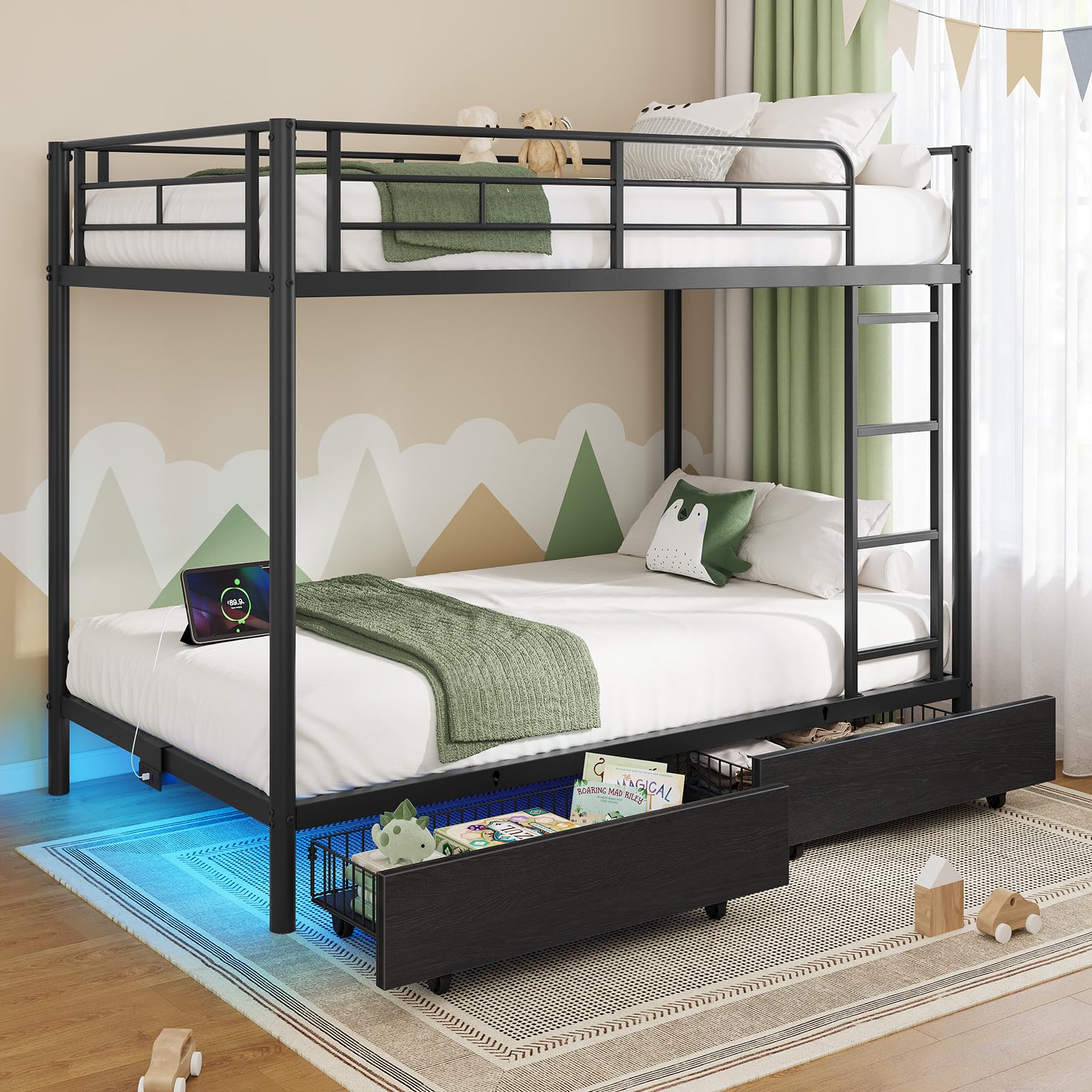
I picked this bed when I wanted a modern metal frame with built-in tech and storage. Its RGB LED strip, USB/USB-C charging, and two large under-bed drawers made nightly routines simpler for my kids.
Why I picked it: LED lighting plus USB-C and roomy drawers give real convenience for kids' rooms where devices and storage matter.
Best for: Tech-savvy kids and tight rooms that need extra storage.
A midrange metal option with integrated tech and drawers.
Pros
- Built-in USB and USB-C charging
- Remote-controlled RGB LED lighting
- Two large sliding drawers
- Reinforced full-length guardrails
Cons
- Top mattress thickness limited
- Ladder is straight, steeper climb
My take
Putting this metal bunk together took me about an hour and a half. The frame felt solid once tightened; the non-slip foot pads and rounded legs add stability and a safer feel when kids are bouncing around.
The LED strip with remote is a genuine hit—easy to cycle through colors and modes without fiddling with wiring. I also appreciated the USB-C port alongside USB-A; charging phones and tablets bedside is simple and tidy.
Storage drawers slide smoothly and offer usable space for clothes and toys. Keep in mind the recommended mattress thickness for the top bunk—thinner mattresses preserve the safety rail height.
3. LIKIMIO House-Style Metal Twin-Over-Twin Bunk Bed – Best for Small Rooms
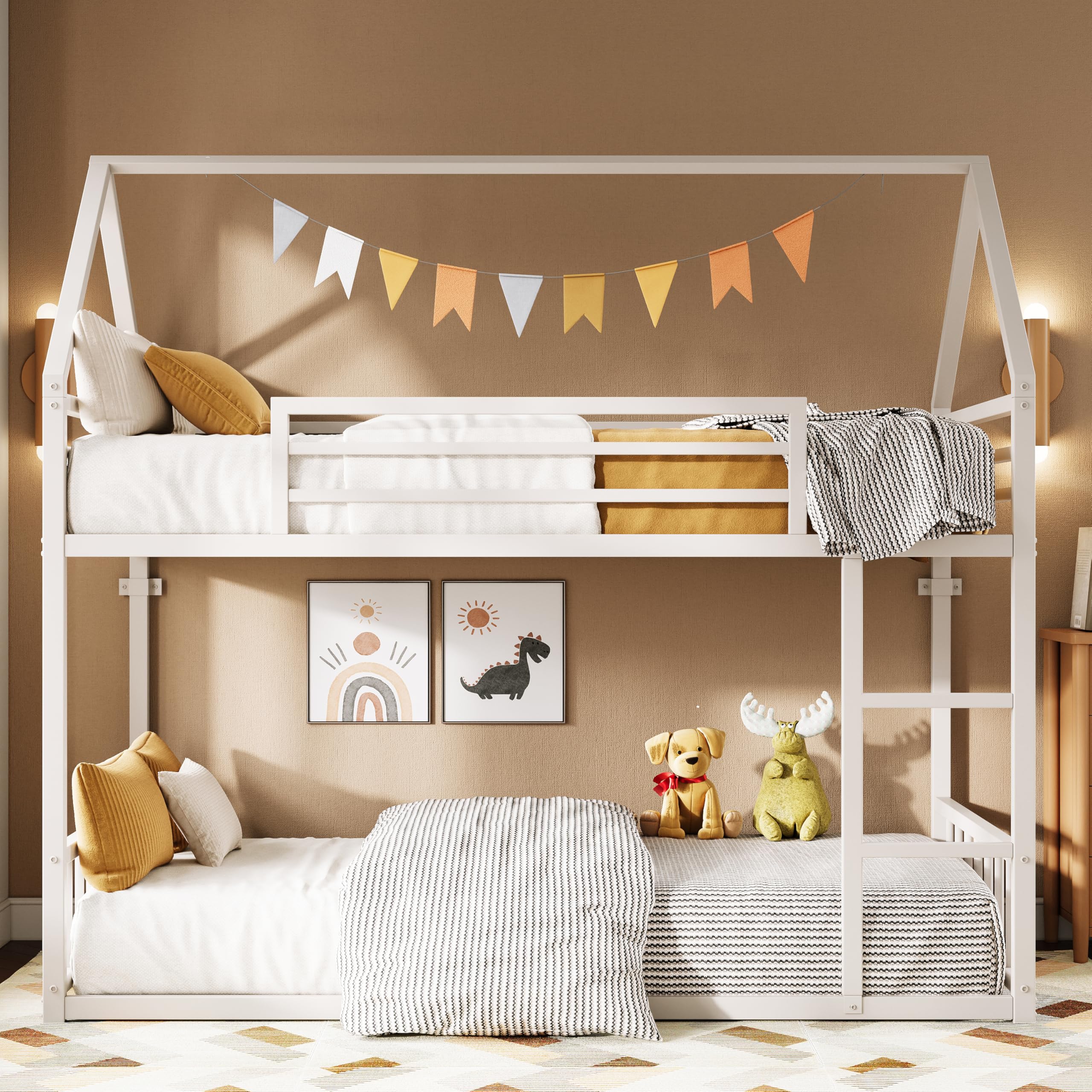
I chose this house-shaped metal bunk for compact rooms where a playful look and a lower footprint matter. Its tall guardrails and simple silhouette make it easy to dress up as a fort or themed nook.
Why I picked it: Compact dimensions and a whimsical house frame give maximum personality in a small footprint.
Best for: Small bedrooms, younger kids, and playful themed spaces.
A budget-friendly, stylish metal option for tight spaces.
Pros
- Space-saving compact footprint
- Playful house-shaped frame
- High guardrails on top bunk
- Simple assembly package
Cons
- Directions rely on pictures
- Less padding under slats
My take
The house-shaped frame is the reason I bought this for a smaller room—it occupies very little floor area while giving a distinct cozy vibe. My child loved turning the bottom into a hideaway with curtains.
Assembly was easier when I focused on the pictorial guide rather than the printed steps; all necessary hardware and tools came in the box. Once built, the frame felt stable and quiet—no creaks when kids moved around.
This is a great, inexpensive way to add character and sleeping space in compact rooms. I would pair it with slim-profile mattresses to keep guardrail effectiveness high.
4. OLEAD Low Loft Twin Bed with Slide – Best with Slide
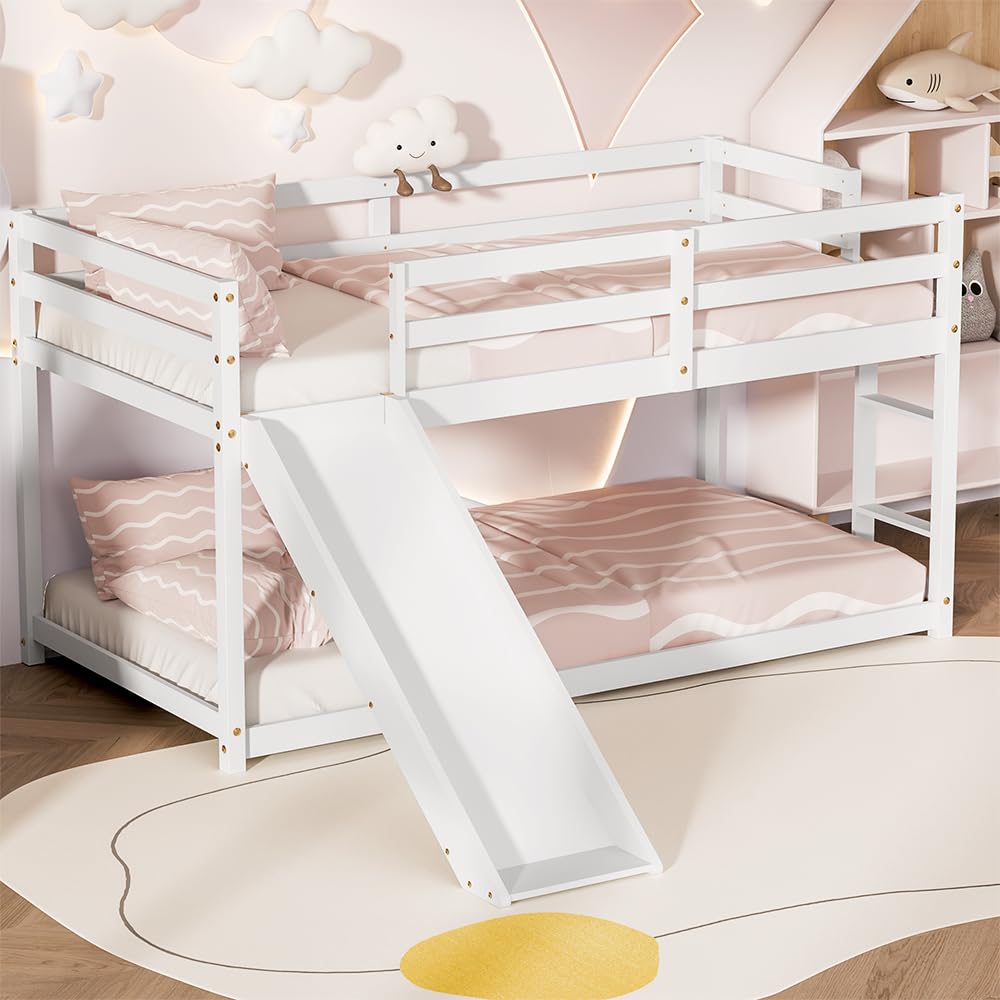
I chose this low loft when I wanted a slide that’s safe for toddlers plus useful under-bed storage and a lower overall height for low ceilings. The slide is interchangeable with a ladder for placement flexibility.
Why I picked it: Interchangeable slide and ladder plus roomy underspace make it a playful, practical choice for younger kids.
Best for: Toddlers and younger kids who will use a slide and play underneath.
Good value for a low loft with slide and storage.
Pros
- Interchangeable slide and ladder
- Low overall height for small rooms
- Generous under-bed storage space
- Full guardrails on top
Cons
- Slide material feels less durable
- Assembly instructions could be clearer
My take
This low loft became an instant favorite in our house—my toddler uses the slide daily and the low height makes me comfortable about falls and headroom. The ability to swap the slide and the ladder helped when we rearranged the room.
Underneath the bed I set up a play nook and storage bins; the space is surprisingly roomy and well-suited for toys and books. The wooden slat support feels sturdy for everyday sleep.
Assembly required patience—the instructions could be clearer and I had to tighten hardware after a few weeks. The slide itself is fun but felt a bit thin compared with the rest of the frame, so I kept an eye on the mounting points over time.
How I Choose a Bunk Bed with a Slide
Safety and Certifications
I put safety first—look for strong guardrails, a recommended mattress thickness, and any third-party certifications that indicate lower VOCs or structural testing.
If the manufacturer states a maximum top-bunk weight, plan your mattress and occupant selection around that limit.
- Full-length guardrails for top bunk increase protection
- Observe recommended maximum mattress thickness
- Check for safety standards or GREENGUARD/ASTM/SGS notes
Materials and Durability
I decide between wood for a warmer, classic look and metal for a lighter, often more configurable frame. Solid wood tends to feel heavier and more durable, while metal frames usually offer integrated features like drawers or LEDs.
Consider how aggressive your kids will be—rubberwood and solid frames tolerate wear differently than thin metal tubing.
- Solid hardwood for longevity and heft
- Metal frames for integrated features and slimmer profiles
- Check slat support—no box spring needed on many modern designs
Features that Matter to Me
Decide whether extras like slides, LEDs, USB ports, or drawers are must-haves. For me, a slide is great for toddlers, while USB ports and LEDs suit older kids.
Think about convertibility: beds that split into two twins extend usable life as kids grow.
- Slides vs. ladders: pick based on age and room layout
- Built-in storage saves floor space
- Convertible beds are better long-term investments
Assembly and Room Fit
I clear a large area before assembly and read through the parts list first. Some beds come in multiple boxes—plan accordingly.
Measure ceiling height and room layout: low lofts work well under lower ceilings, while taller bunks need extra headroom above the top bunk.
- Measure mattress depth and ceiling clearance
- Allow time and at least two people for assembly
- Keep tools and hardware organized during build
Frequently Asked Questions
What mattress thickness should I use on a top bunk?
I follow the manufacturer's mattress thickness recommendation—many of these beds ask for 6–7 inches maximum to keep guardrails effective and headroom safe.
Can I convert a bunk bed into two separate beds?
I like convertible frames because they often disassemble into two twin beds; the Storkcraft Long Horn explicitly converts and was straightforward to separate in my experience.
Is a slide safe for toddlers?
I prefer low lofts with short slides for toddlers because the lower height reduces fall risk. Always supervise play and ensure the slide is securely attached and regularly checked for wear.
Final Take
If I had to pick one all-purpose option for durability and flexibility, the Storkcraft Long Horn is the choice I returned to most often. For kids who want tech and storage, the Rolanstar brings useful extras. In compact rooms I gravitated to the LIKIMIO house-style frame, and for toddlers who will use it daily, the OLEAD low loft with slide added play value while keeping things low and safe.
I recommend matching the bed to your child’s age and your room constraints—prioritize guardrails, mattress limits, and assembly space. With the right fit, one of these beds will give you safe sleep and a lot of fun.