
I tested grass seed blends suited to Michigan’s cool-season climate and picked options for shade, high-traffic yards, quick establishment, and all-around performance.
I spent time matching blends to Michigan’s cool-season needs—cold winters, humid summers, and a mix of sun and shade around homes. My goal was to highlight seed mixes that actually establish in spring and fall, tolerate seasonal wetness, and repair worn areas.
I focused on seed composition, included nutrition, coverage, germination speed, and real-world durability. Below are four picks that cover most lawn scenarios I encounter in Michigan.
I chose these four because they target different priorities: balanced sun-and-shade performance, deep-green durability, rapid germination, and heavy-traffic resilience. Use the short summaries to match the mix to your lawn’s needs.
1. Scotts Turf Builder Sun & Shade Mix – Best for Mixed Sun & Shade
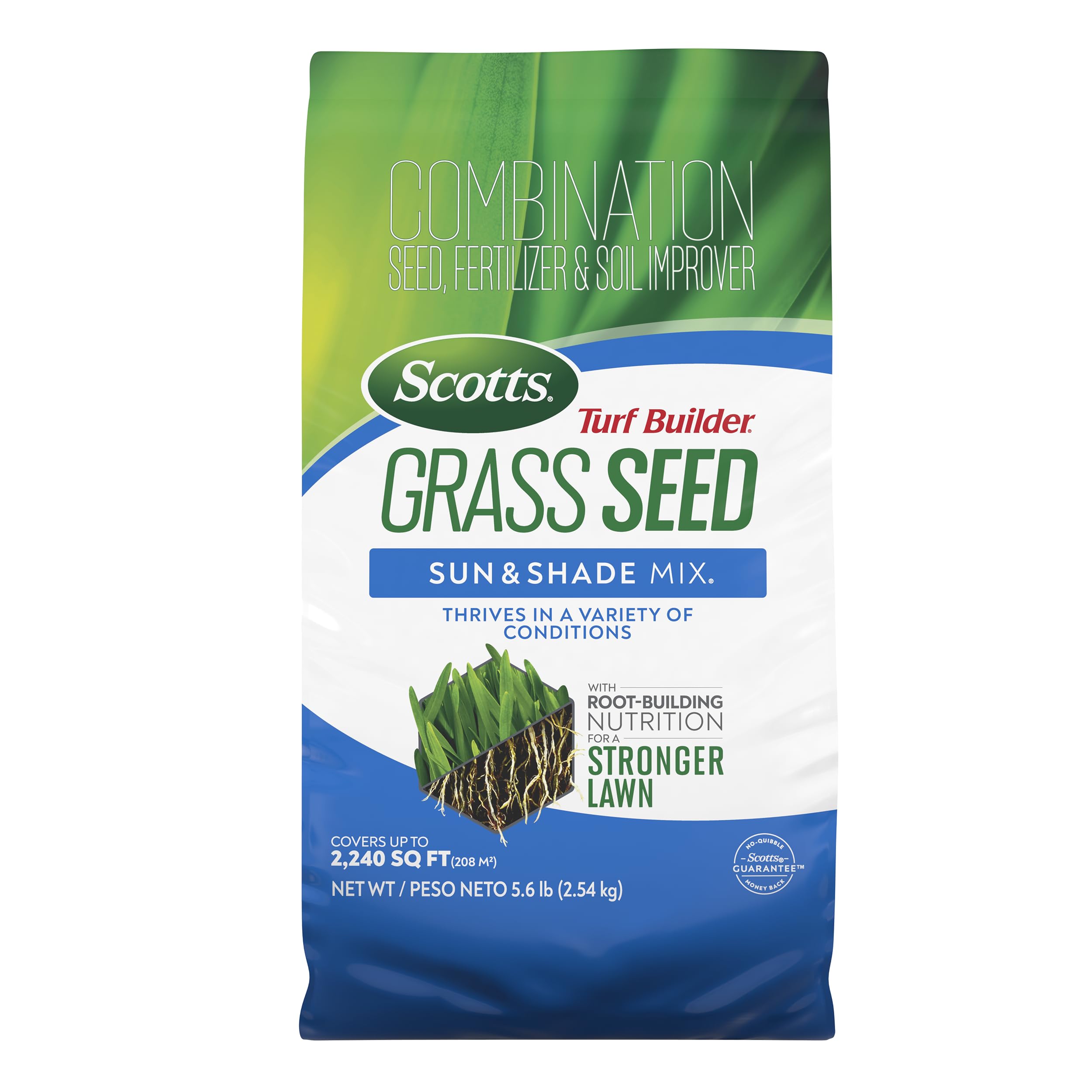
A combination seed, fertilizer, and soil improver designed for full sun and dense shade; built-in nutrition aims to establish deeper roots and decent overseed coverage.
Why I picked it: Includes fertilizer and soil improver to help seedlings establish in both sun and dense shade.
Best for: Lawns with a mix of sunny and heavily shaded areas and for overseeding thin turf.
Solid midrange value since it bundles seed, fertilizer, and soil improver.
Pros
- Includes fertilizer and soil improver
- Designed for sun and dense shade
- Root-building nutrition for deeper roots
- Generous overseeding coverage
Cons
- Medium drought resistance
- Can look thin until mature
My take
I used this Sun & Shade Mix where my yard transitions from open lawn into heavy tree canopy. The built-in fertilizer and soil improver saved me a step and helped seedlings take root faster than a seed-only product in the same area.
Application was straightforward with a spreader, and when I kept the soil surface consistently moist I saw reliable germination. Coverage numbers on the bag matched what I experienced for overseeding areas.
Two things to watch: it needs regular watering during the first two weeks, and some patches looked a bit finer and thinner until the grass matured. For a yard that has both bright sun and dense shade, this blend made the most sense to me because it handles that range without separate products.
2. Jonathan Green Black Beauty Ultra – Best for Deep Green, Durable Lawns
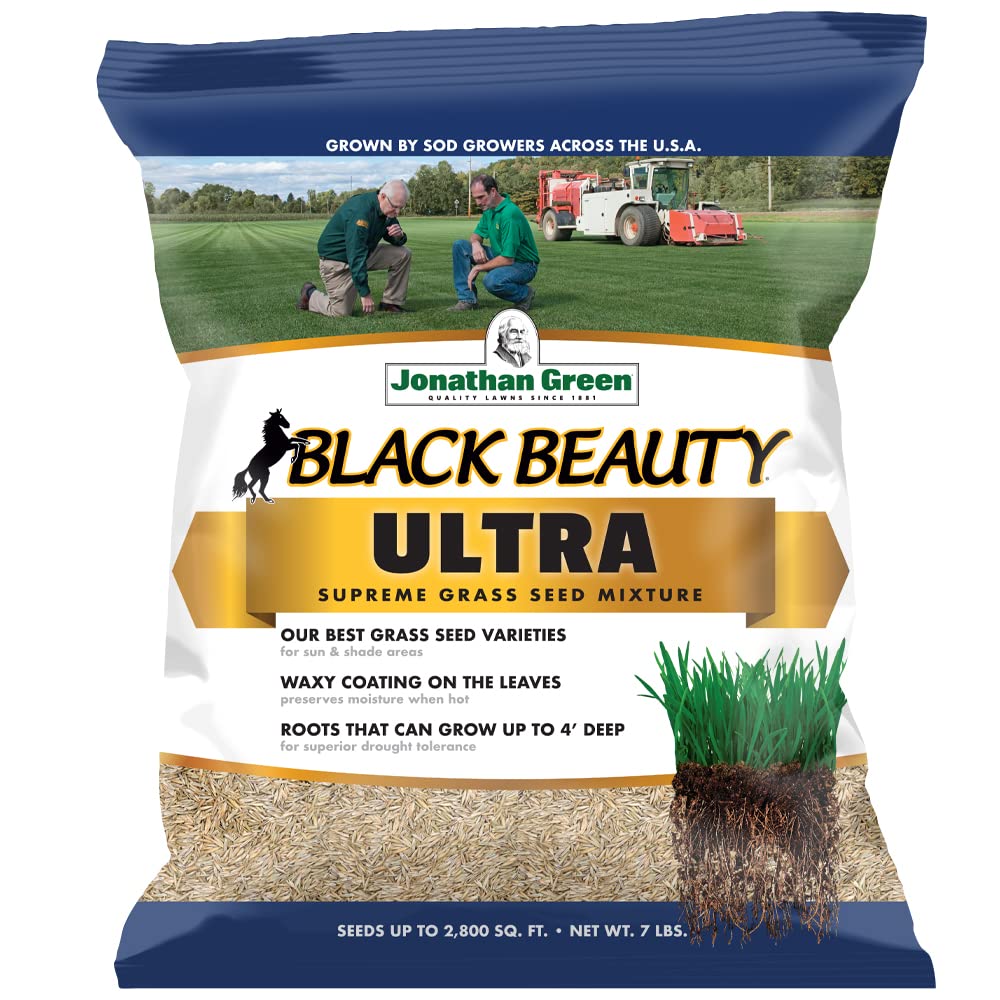
A premium cool-season mix of tall fescue, Kentucky bluegrass, and perennial ryegrass that emphasizes dark color, deep roots, and moisture retention.
Why I picked it: Produces a deep-green, durable turf with deep-root potential and strong moisture retention.
Best for: Homeowners who want a lush, dense lawn and can invest in soil prep and follow-up care.
A premium option that rewards proper prep and watering with superior color and durability.
Pros
- Deep green color
- Mix of resilient grasses
- Excellent moisture retention
- Rapid germination window
Cons
- Best with solid soil prep
- More of a premium investment
My take
I treat this as my go-to when I want a showy, long-lasting lawn. After loosening the topsoil and adding a thin layer of top dressing, germination began in about a week and continued strongly through week two.
The blend’s tall fescues and Kentucky bluegrass produced a noticeably deeper green than some other mixes I tested. I also liked how the mix held moisture—lawns seeded with this blend recovered better between waterings than some fast-germinating rye mixes.
Plan for a bit more upfront effort: I had the best results when I added topsoil and applied starter fertilizer. If you’re willing to invest that preparation, this mix rewarded me with a dense, resilient stand that tolerates foot traffic well.
3. Scotts Perennial Ryegrass Mix – Best for Fast Establishment
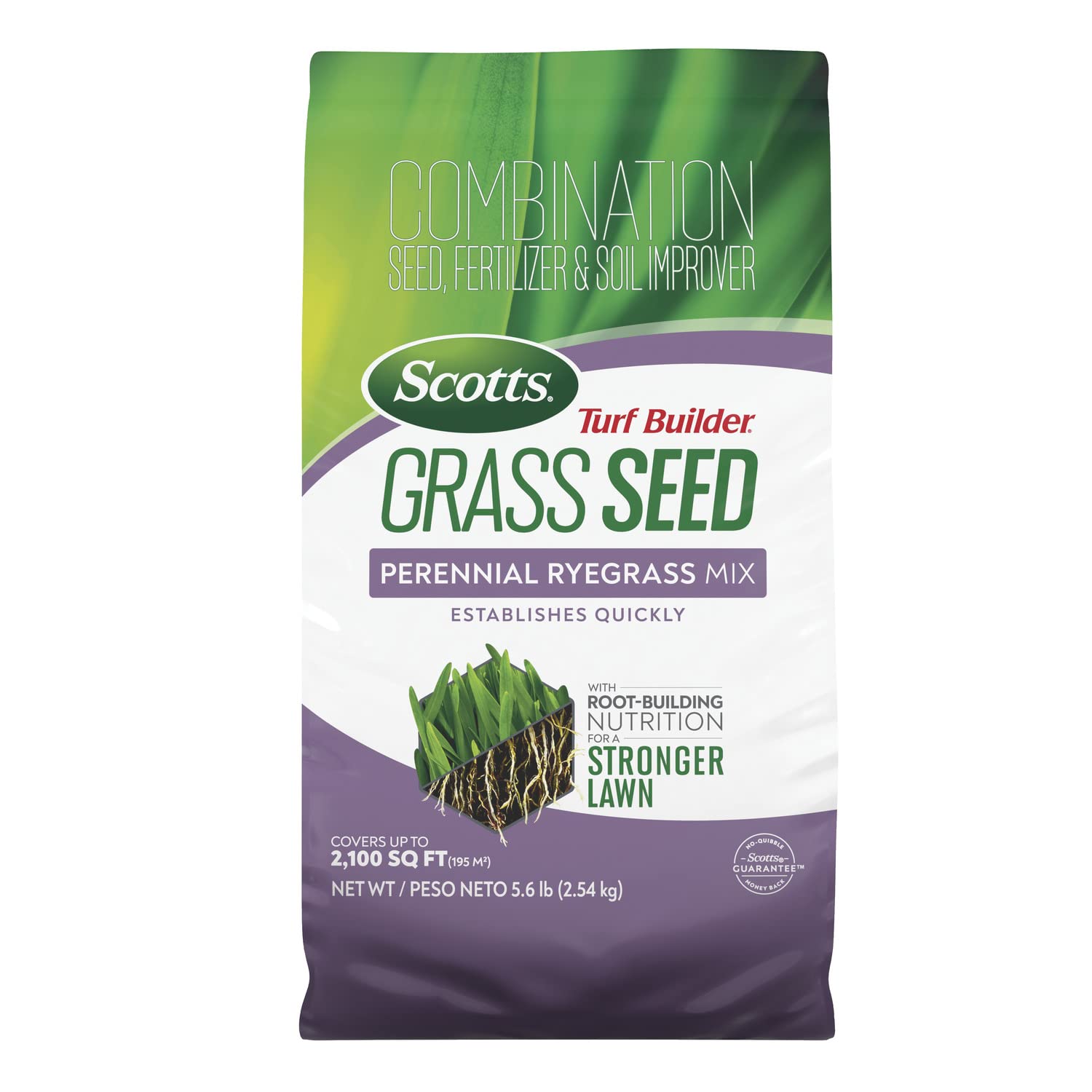
A perennial ryegrass blend formulated to establish quickly with root-building nutrition; ideal when you need fast cover and erosion control.
Why I picked it: Very fast germination and quick cover when moisture is consistently available.
Best for: Quick overseeding, erosion control, and short-term winter cover in Michigan’s cool seasons.
Good value for situations that require rapid establishment.
Pros
- Establishes very quickly
- Root-building nutrition included
- Great for overseeding
- Fast visible results
Cons
- Low drought resistance
- May need denser seeding to avoid bare spots
My take
When I needed quick green-up before a rainy period, this perennial rye blend delivered. Seedlings came up within days when I kept the seedbed moist and the area protected from foot traffic.
Because rye loves water, I ran frequent light waterings for the first 10–14 days and saw the lawn knit together faster than with slower-germinating mixes. That said, the trade-off is drought tolerance—if you can’t keep it irrigated during establishment, expect more stress.
I also found that birds and surface disturbance can create patchiness, so I protected newly seeded areas and, in a few thin spots, reseeded at a higher rate to get the uniform cover I wanted.
4. Scotts Turf Builder High Traffic Mix – Best for High-Traffic Lawns
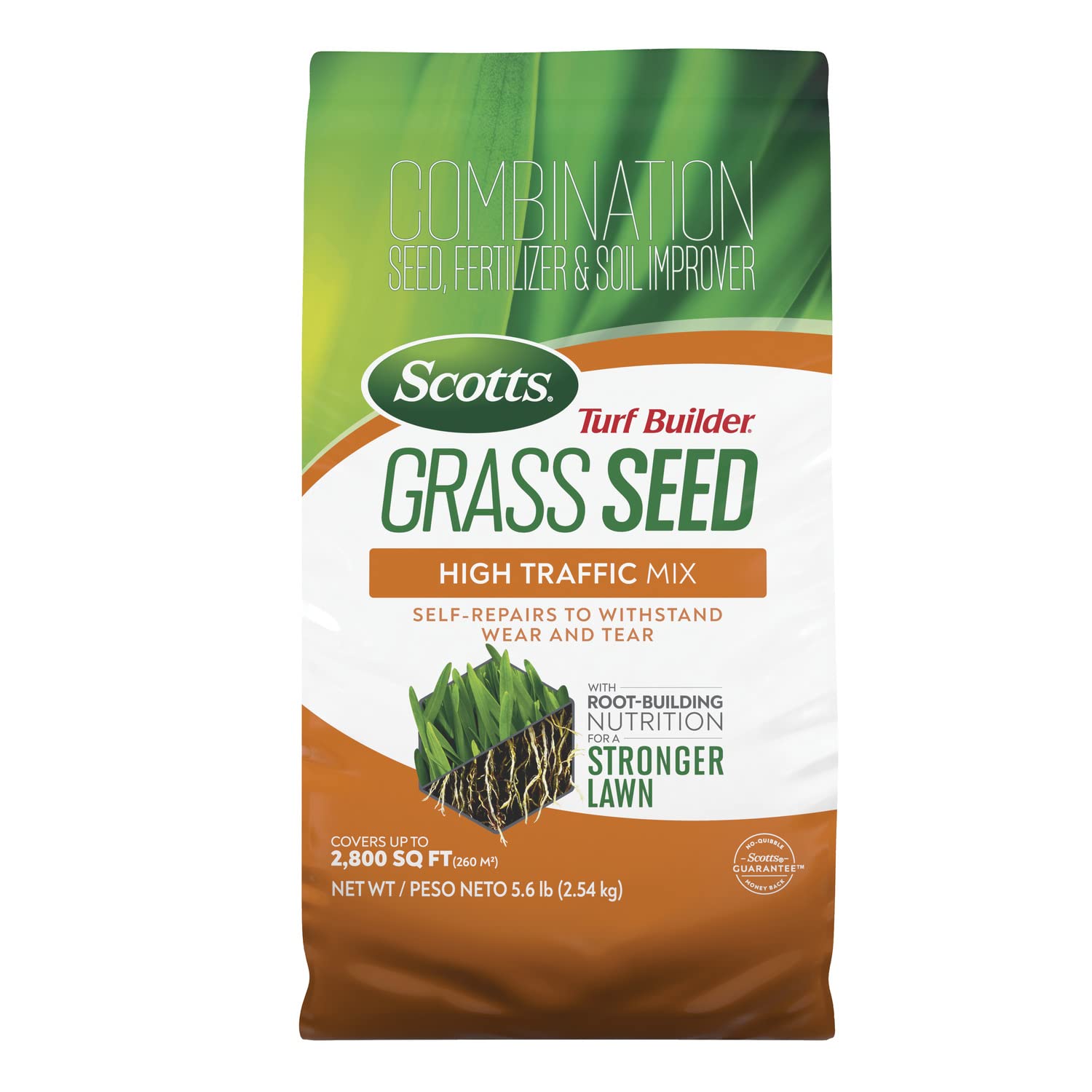
A high-durability mix with root-building nutrition and a self-repairing focus—designed to withstand wear from kids, pets, and regular activity.
Why I picked it: Formulated to self-repair and tolerate heavy wear while including nutrition to promote deeper roots.
Best for: Lawns used frequently for play, pets, or sport where durability matters most.
Midrange option that prioritizes durability and repair over drought tolerance.
Pros
- High durability and self-repair
- Coated seed aids germination
- Good coverage for patch repair
- Fast early germination
Cons
- Low drought resistance
- May need repeat seedings in very worn areas
My take
I relied on this High Traffic Mix for areas where dogs and kids run the most. The coated seed and durable grass types visibly filled in bare spots and produced a tougher turf than my previous attempts with generic mixes.
Germination was quick when I kept the soil surface consistently moist; in my experience, the coating helped the seed establish even with less-than-perfect prep. For the busiest zones I still did two passes of seeding across the season, and the lawn responded well.
If your yard sees constant wear, this is the blend I reach for first. Just plan for regular watering during establishment and occasional touch-ups in the highest-traffic patches.
How I Choose Grass Seed for Michigan
Key factors I consider
Michigan is a cool-season climate, so I prioritize mixes with tall fescue, Kentucky bluegrass, and perennial ryegrass. Those species handle spring and fall planting windows best.
Match the mix to the site: shade-heavy yards need seed rated for shade, busy yards need high-durability mixes, and bare-slope or quick-cover spots benefit from fast-germinating rye blends.
Prep and watering matter more than small ingredient differences. I see far better results when I scarify, add a light top dressing, use a spreader for even application, and water lightly but frequently during the first two weeks.
- Best planting windows: spring and fall when soil temps are ~55°F–70°F.
- Use a spreader and follow bag spreader settings for even coverage.
- Keep seedbed moist until seedlings reach about 2 inches tall.
- Seed with starter nutrition or mixes that include fertilizer for faster root establishment.
- Choose high-durability mixes for lawns with pets, kids, or frequent use.
Frequently Asked Questions
When should I seed in Michigan?
I seed in late summer to early fall and again in early spring when daily soil temperatures consistently sit between roughly 55°F and 70°F. Those windows give seedlings time to establish before summer heat or winter cold.
Which mix handles shade best?
I pick mixes labeled for sun-and-shade or those specifically calling out dense shade. The Scotts Sun & Shade option I tested worked well under heavy canopy when I kept watering consistent.
How long until I see results?
Expect to see perennial ryegrass in a few days with ideal moisture, and blends with fescue/bluegrass in 7–14 days. Full maturity and a dense turf usually take several weeks to a few months depending on care.
Final Take
For Michigan lawns I lean on purpose-built choices: pick a sun-and-shade mix for variable light, a durable mix for heavy use, a premium blend for deep green color, or rye for fast cover.
I recommend matching the seed to your site’s light and traffic conditions, preparing the seedbed, and committing to regular, light watering during establishment. Do that and you’ll get the most from whichever of these mixes you choose.
