
I tested a range of loft beds with desks to find space-saving, sturdy options for kids, students, and adults. These four models stood out for safety, workspace, and overall value.
I spent time assembling and using several loft beds with desks so I could recommend options that actually work in tight bedrooms, dorms, and shared rooms.
In this roundup I focused on safety features for kids, usable under‑bed clearance, sturdiness of frames and slats, and how usable the built-in desks are for homework or a laptop.
If you need a low profile for younger children, a solid wood frame, a full desk and shelves, or a loft that will work for an adult, I cover each use case below.
I compared each model’s under‑bed clearance, construction (metal vs. wood), guardrail height, and how the desk area performs for real work sessions before choosing the picks below.
1. DHP Jett Junior Twin Loft Bed – Best for Younger Kids
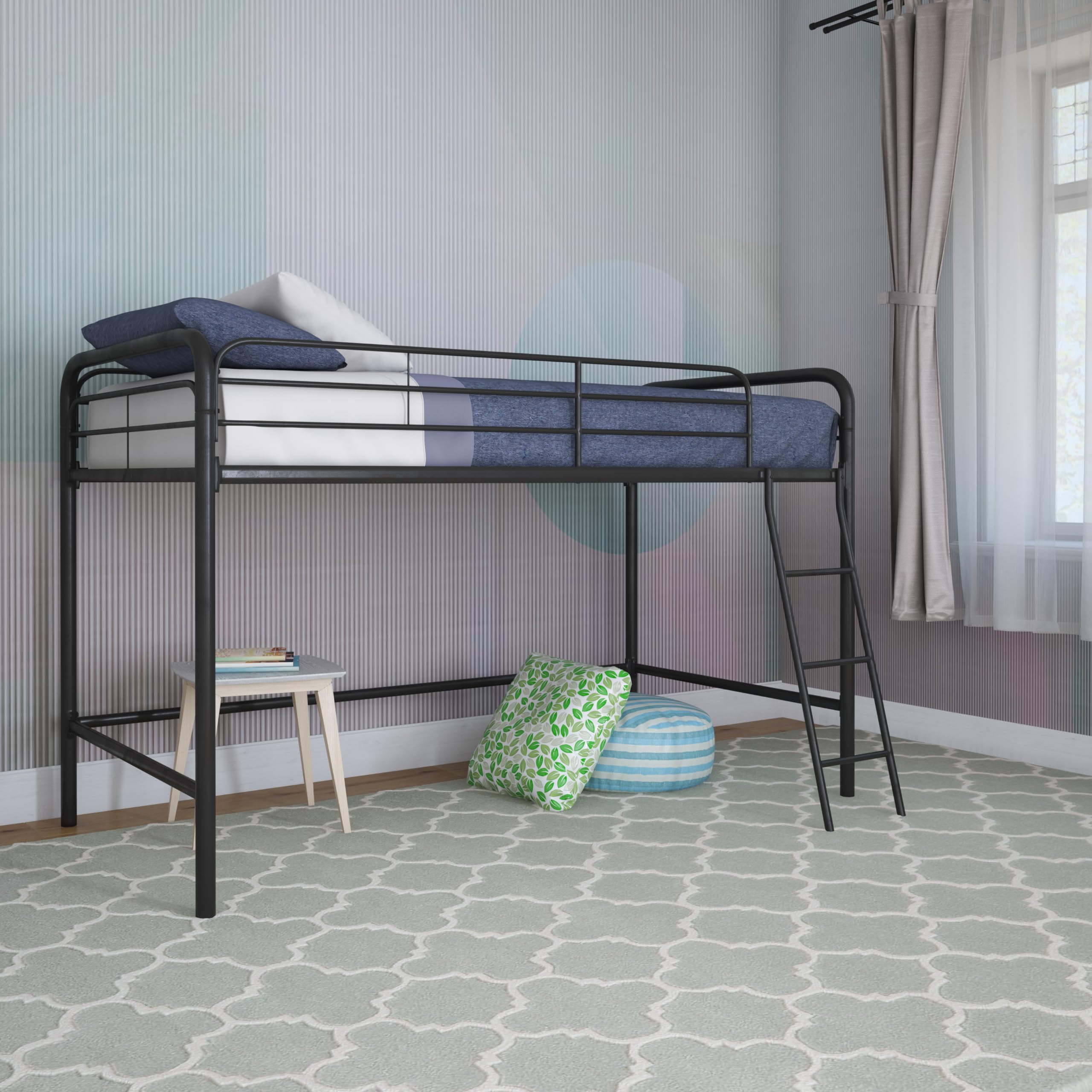
A lower-height metal junior loft that frees up floor space while keeping safety front‑and‑center for young children.
Why I picked it: Shorter overall height, full-length guardrails, and a decent 36.5" clearance make it safe and practical for younger kids.
Best for: Parents who want a safe, space‑saving bed for preschool and early elementary kids.
An affordable junior loft option that ships in one box.
Pros
- Lower height feels safer for little kids
- Full-length guardrails for added security
- 36.5" under-bed clearance for play or storage
- Sturdy metal frame
- Ships in one box for easier delivery
Cons
- Can creak when kids move around
- Fits a lower-profile twin mattress (6")
- Assembly requires a helper for some steps
My take
I put this junior loft in my daughter’s room to free up space for toys under the bed, and the lower overall height immediately eased my worry about falls. The full-length guardrails are reassuring and the built-in ladder is easy for a five‑year‑old to use.
Assembly was straightforward; my husband assembled it in under two hours with occasional help holding pieces. The metal slats lock into place, which I liked because the mattress stayed put without sliding.
The frame does make some creaking noises when my child moves around, but the sound hasn’t been excessive. The 36.5" clearance underneath gives a real play area, which is exactly why I chose it for a small bedroom.
2. DHP Milton Junior Twin Loft Bed – Best Low Profile
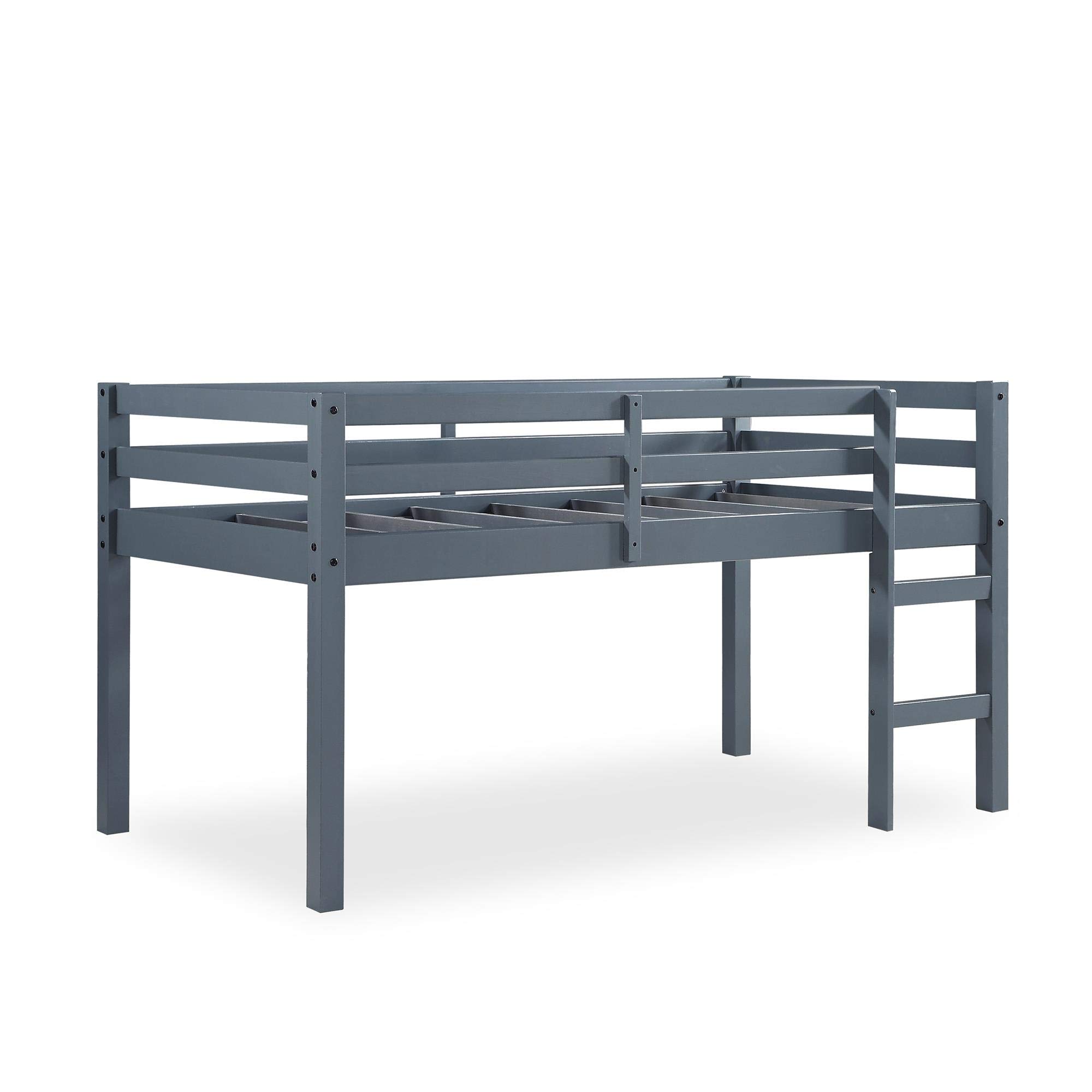
A solid pine, low‑profile loft that gives a roomy under‑bed area while keeping the mattress easy to reach.
Why I picked it: Solid pine construction and a 26.5" under‑bed height balance durability with a low profile that’s easy to climb.
Best for: Small rooms, kids who climb independently, or young adults in tight spaces.
A good-value wood option that removes the need for a box spring.
Pros
- Solid pine frame feels sturdy
- Low profile is easy to climb
- Wood slats support mattress without box spring
- Good under-bed space for storage
- Minimalist look fits many decors
Cons
- Assembly can be fiddly and time-consuming
- Edges are blunt—padding may be needed
- Top bunk max around 165 lb
My take
I used this bed in a compact studio-style room and appreciated how the low profile made getting in and out simple. The 26.5" clearance provides a useful nook underneath without towering over the room.
The solid pine frame feels more substantial than many metal junior lofts, and the secured slats meant I didn’t need a box spring. I also found the footprint comfortable enough for an adult in a pinch—perfect for dorms or small apartments.
Putting it together took longer than expected and some of the fasteners didn’t line up perfectly, so plan for an afternoon of assembly. Once built, the bed has held up well and provides reliable under‑bed storage and play space.
3. Novogratz Maxwell Loft Bed with Desk – Best with Built-In Desk
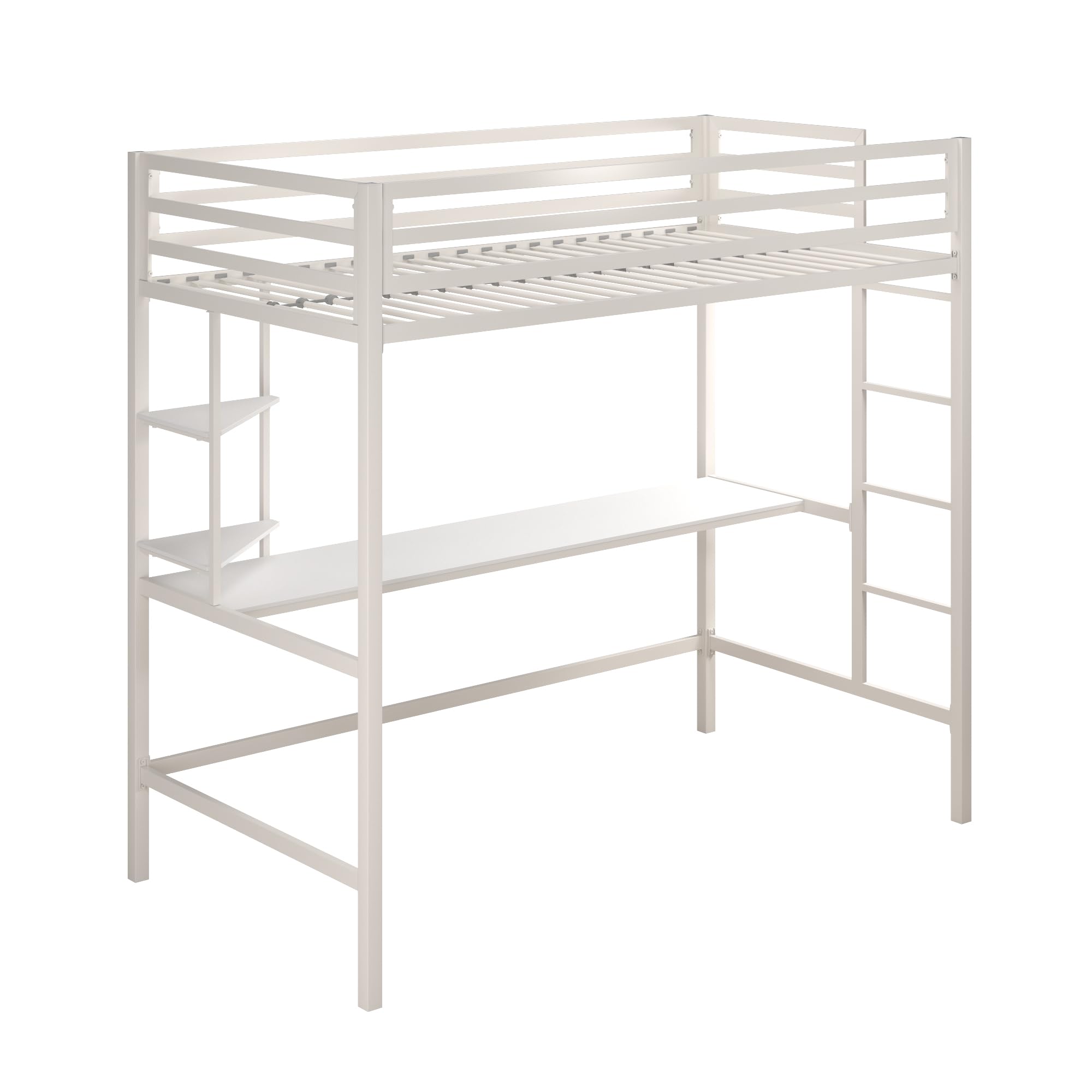
A tall loft with a full-length desk and corner shelves — designed for kids or students who need a proper workspace under their bed.
Why I picked it: The integrated full-length desk and generous under‑bed clearance make it a true work-ready loft.
Best for: Students who need a full desk and shelving inside a compact bedroom footprint.
A pricier choice but offers a real built-in workspace and higher clearance.
Pros
- Full-length wood desk for real work
- Two corner shelves for supplies
- High under-bed clearance (about 58")
- Sturdy metal frame with secured slats
- Clear assembly instructions
Cons
- Longer, more complex assembly
- Heavy box and many parts
- Some shaking if you climb in quickly
My take
I wanted a loft that would actually function as a study area, and the Maxwell delivered with a long wood desk and two shelves that keep supplies organized. The desk holds a laptop and books comfortably.
Assembly is the biggest commitment — parts are well labeled and instructions are clear, but expect several hours and at least one helper for the larger steps. Once assembled the frame felt solid; I did notice a little shake if I climbed in quickly, so I get in and out more carefully.
The generous under-bed clearance makes sitting at the desk comfortable for adults and teens, and the bed’s weight limits are generous enough for typical use. For a dedicated workspace in a small room, this was my favorite.
4. DHP Abode Twin Loft Bed with Desk – Best for Dorms & Adults
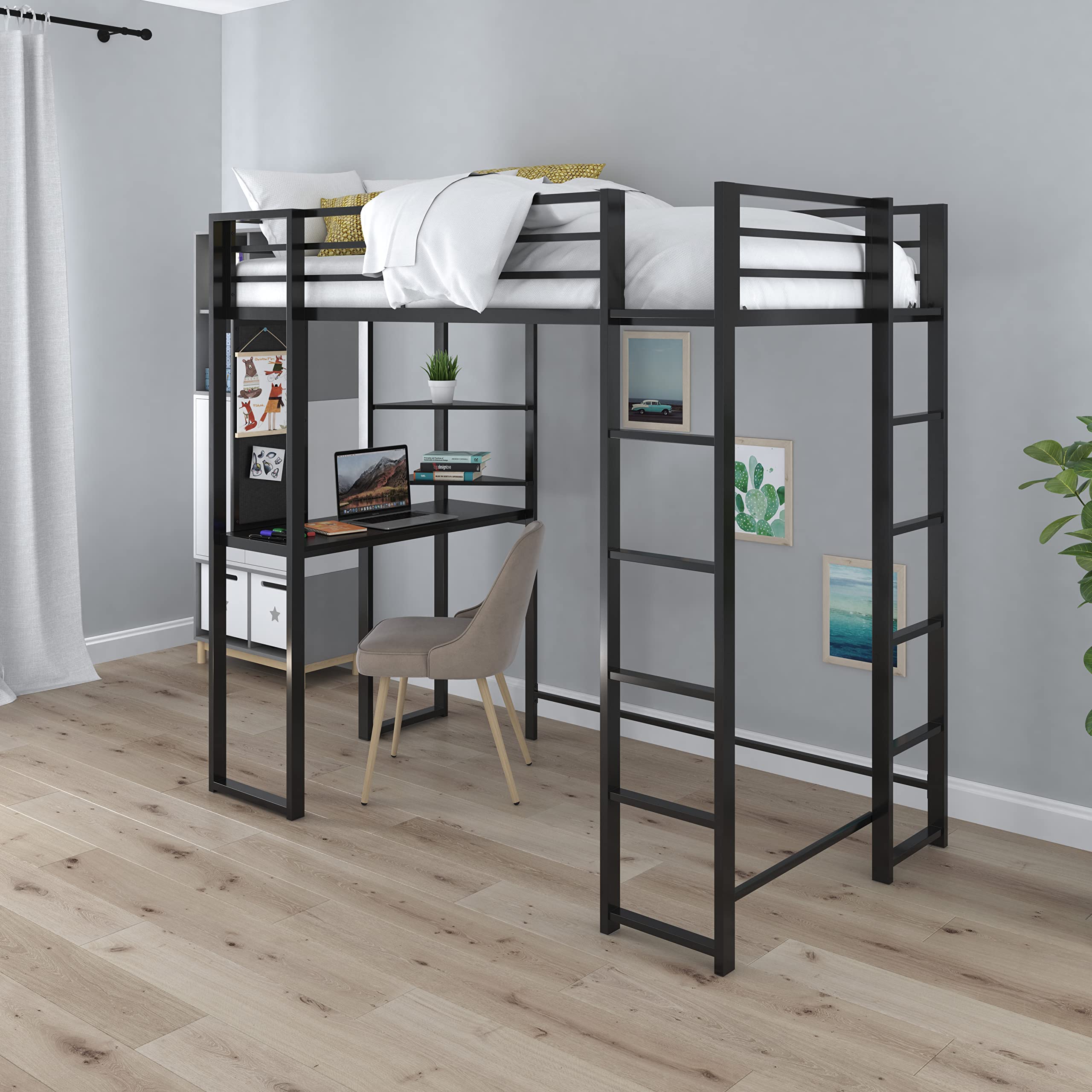
A practical metal loft with a desk that’s sized and rated to work for older teens and many adults in dorm or small apartments.
Why I picked it: Industrial metal frame with a desk and two ladders provides versatility for both kids and adults.
Best for: Dorm rooms and adults up to average heights who want a compact sleep-and-study setup.
A solid mid-range metal loft with a usable desk area.
Pros
- Designed to support adults (up to ~200 lb)
- Built-in desk for study or laptop
- Two ladders for flexible access
- Ships in one box, fairly straightforward assembly
- Industrial look fits modern rooms
Cons
- Can wobble—anchoring may help
- Desk weight limit is modest
- Some users report minor scuffs from shipping
My take
I used this in a guest/dorm setup and liked that the frame felt more adult-capable than typical kids’ lofts. The twin loft supports up to 200 lb and the desk is perfectly adequate for a laptop and paperwork.
Assembly was easier than I anticipated and the packaging protected parts well; a couple of small scuffs from transit were the only issues I noted. The bed does have a little wiggle when climbing the ladder energetically, so I recommend anchoring it to a wall if you want the absolute sturdiest feel.
Overall it provides a compact sleep-and-study combo that suits dorms and small apartments. The two-ladder option is handy for room layout flexibility.
How I Choose a Loft Bed with Desk
Key features I check first
I focus on construction material, under‑bed clearance, guardrail height, and desk usability when comparing loft beds.
Those four things determine whether a loft will be genuinely useful every day or just a cramped, shaky platform.
- Material: metal is lighter and usually less expensive; solid wood feels warmer and can be more durable.
- Under-bed clearance: choose 36"+ if you want a true desk or seating area; 24"–30" works for storage and play.
- Guardrails: full-length rails are non-negotiable for young children.
- Desk size and weight rating: confirm the desk will hold your laptop, monitor, or supplies.
Safety and mattress fit
I always match mattress thickness to the manufacturer’s recommendation so guardrails remain effective.
For kids I prefer lower lofts or junior models with full-length rails to reduce fall risk.
- Typical recommended mattress height is 6" for many loft frames — check before buying.
- If you have a restless sleeper, choose a lower loft or a model with higher guardrails.
Assembly and tools
I account for assembly time and whether I’ll need a helper. Larger lofts with desks usually require two people for safe alignment.
Keep basic tools and a rubber mallet handy; wearing gloves can save your hands during long builds.
- Expect 1–4 hours depending on complexity and box size.
- Securely tighten fasteners but avoid over-torquing metal screws to prevent stripping.
Stability tips I use
If a loft wiggles on arrival I anchor it to the wall or add felt pads where metal meets floor to reduce noise.
For extra peace of mind, check all connections after the first week of use and re-tighten hardware.
- Wall anchors can reduce rocking for taller metal lofts.
- Check slat locks and mattress fit periodically to prevent shifting.
Frequently Asked Questions
What mattress thickness should I use on these loft beds?
I follow each manufacturer’s guidance; many of these lofts are designed for a mattress up to about 6" to keep guardrails effective and maintain recommended clearances.
How long does assembly typically take?
From my experience, junior lofts can take around 1–2 hours with two people, while lofts with desks often need 3–4 hours and at least one helper for larger steps.
Should I anchor the loft bed to the wall?
If you notice wobble or the loft will be used by an older child or adult, I recommend anchoring it to the wall for added stability and peace of mind.
Can an adult use these lofts?
Some metal lofts and the solid‑wood Milton have top-bunk weight limits suitable for many adults; check the listed top-bunk limit and choose frames rated around 200 lb when you need adult use.
Final Take
After assembling and using each model, I can say there’s no one-size-fits-all loft: choose the junior DHP Jett for younger kids, the Milton if you want solid wood and a low profile, the Novogratz Maxwell if a real desk is your priority, and the DHP Abode if you need an adult-capable loft for dorm or apartment life.
I recommend measuring your ceiling height and planned mattress before buying, and setting aside time and a helper for assembly so the loft performs well for years.
If you tell me your room height and who will use the loft, I’ll help you narrow the list to the best fit.
