
I tested four popular 9×12 sketchbooks to find options that handle graphite, charcoal, colored pencil, and light marker work. Here are the pads I keep in my bag and studio.
I work across quick studies, figure drawing, and ink experiments, so I look for sketchbooks that balance paper weight, tooth, and binding. These four 9×12 pads each solve a different problem: archival paper, portable spiral pads, and budget poly-covered options.
In the sections below I explain what each sketchbook does best, how the paper performs with common dry media, and when I’d avoid using certain wet tools. I also include a compact buying guide so you can match a pad to your workflow.
If I want a reliable, fine-tooth sheet for graphite and charcoal I reach for the Strathmore 400. For a top-flip spiral that survives travel, I prefer the Fuxi pad. The UCreate poly-cover book is my go-to when I need a durable, inexpensive surface for everyday sketches.
1. Strathmore 400 Series Sketch Pad (9 x 12) – Best Overall
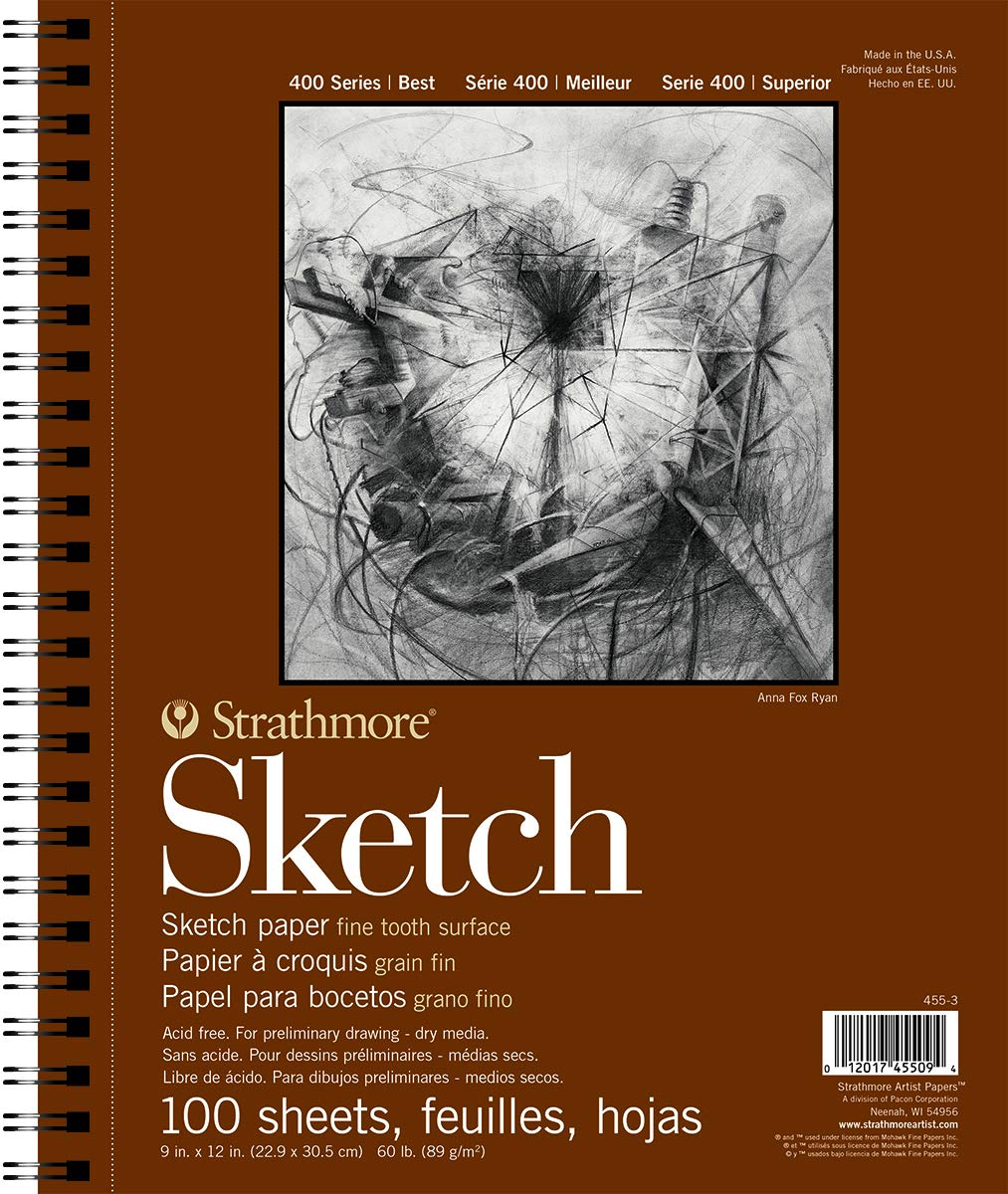
I rely on Strathmore 400 for heavyweight, fine-tooth sketching that handles graphite, charcoal, and pastel cleanly across 100 micro-perforated sheets.
Why I picked it: Fine tooth and heavyweight stock that grips dry media; micro-perf keeps sheets true-to-size.
Best for: Figure studies, graphite and charcoal work, classroom and practice sessions.
A solid midrange choice for artists who want dependable paper and lots of pages.
Pros
- Fine-tooth surface grips pigment well
- Micro-perforated sheets remove cleanly
- Sturdy wire binding and chipboard back
- 100 sheets for long practice runs
Cons
- Not suitable for heavy washes
- Paper thinner than watercolor paper
My take
This Strathmore pad is the one I reach for when I want predictable pencil and charcoal behavior. The 400 Series paper has a fine tooth that holds graphite and charcoal without smudging into a muddy mass, and shading retains crisp edges.
The micro-perforation is useful when I want to tear out a drawing for framing or scanning—the sheets come away true-to-size. The spiral binding and chipboard back make it comfortable to sketch outdoors or on a lap.
I don’t use this for heavy wet media unless I add gesso first; the sheets will soak through with wet washes. For dry-media work and life drawing, though, it’s consistently reliable and worth keeping in rotation.
2. Fuxi 9 x 12 Top Spiral Sketch Book – Best for Portability
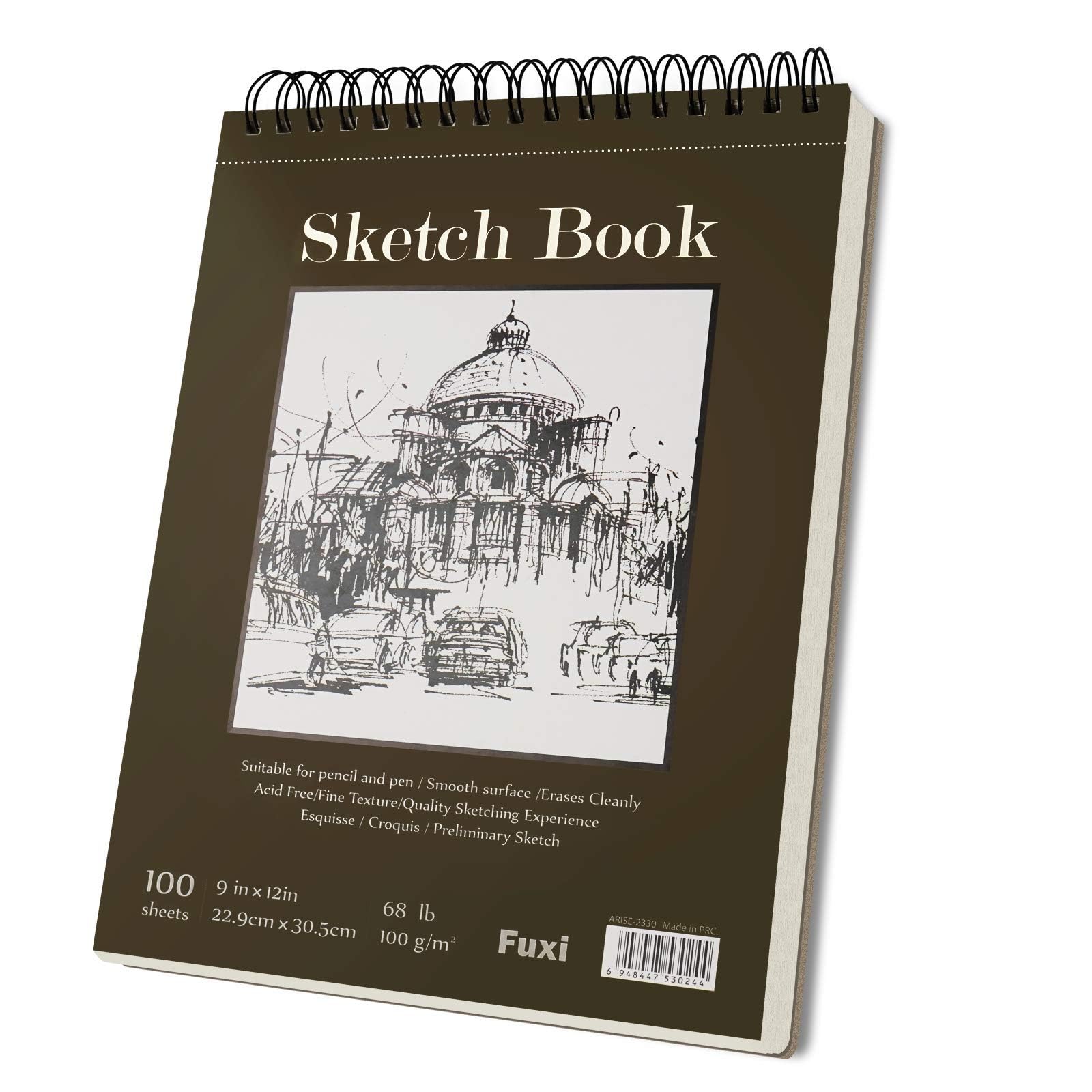
I use the Fuxi top-spiral pad when I’m drawing on the go—100gsm, top-bound, and perforated for true-to-size removal with a protective cover that keeps pages clean.
Why I picked it: Top spiral and 100gsm paper create a portable, tear-away pad that handles heavy erasing well.
Best for: Sketching outdoors, students, and quick studies with pencils, charcoal, and gel pens.
An affordable, travel-friendly option with lots of sheets.
Pros
- Durable 100gsm paper resists erasing damage
- Top spiral for unobstructed page use
- Perforated for clean removal
- Acid-free, recyclable sheets
Cons
- Manufacturer advises against markers
- Binding can misalign on occasion
My take
The top-bound design is the main reason I grab this Fuxi pad for field sketches. Flipping pages over the top keeps my wrist free of spirals and makes gesture drawing easier.
The paper feels tougher than typical student pads: I erase aggressively and don’t see pilling or surface damage. The perforation gives true paper dimensions once torn out, which I appreciate for scans or handing work off.
Fuxi positions the pad for dry media, and that’s reflected in my use: pencils, charcoal, and pastels work well. Marker and watercolor performance can be inconsistent; I reserve this pad for dry techniques unless I’m deliberately layering water-based markers and testing results first.
3. Fuxi 9 x 12 Top Spiral Sketch Book (Alternate) – Best Versatile Spiral Option
I keep a second Fuxi sketchbook for mixed experiments—same 100gsm stock, but I use it when I want to try heavier pen and marker layers carefully.
Why I picked it: Same sturdy 100gsm paper, good perforation and a protective cover for experimenting.
Best for: Artists testing marker layering, mixed-media experiments with a cautious approach.
A budget-friendly way to try a heavier sketch paper without committing to specialty sheets.
Pros
- Two-sided cold-press texture on many sheets
- Comes with plastic divider/protector
- True-to-size perforated pages
Cons
- Marker tolerance varies by brand
- Some units show spiral alignment issues
My take
Because I’ve had mixed outcomes with markers on this paper, I keep a dedicated Fuxi pad for experiments. When I use pigment markers carefully and test the marker family first, the sheets can hold several layers without shredding.
The addition of a plastic divider in some packs is genuinely helpful: I slip it under the working page to prevent pressure marks and reduce bleed-through to the next sheet.
If you depend on aggressive alcohol markers or wet washes, this isn’t a guaranteed multimedia solution, but for pencils, pens, and moderate marker use it’s an economical and surprisingly capable spiral pad.
4. UCreate 9 x 12 Poly Cover Sketch Book – Best Budget Durable Option
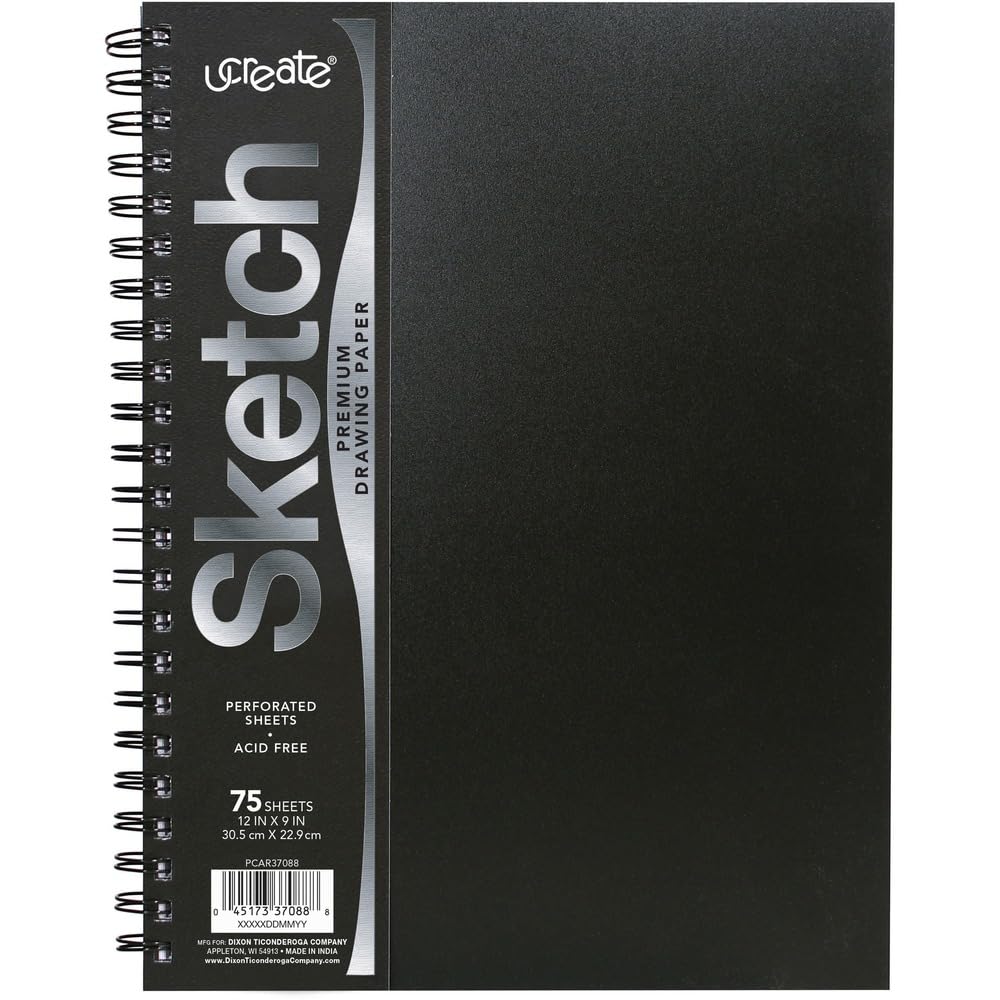
I use the UCreate book when I need a no-fuss, durable pad with a sleek poly cover and 75 heavyweight, perforated sheets for everyday sketching.
Why I picked it: Sturdy poly cover and heavyweight paper make it a dependable, low-cost go-to.
Best for: Daily sketching, student work, and quick studies where durability matters.
A lower-cost pick that still offers heavyweight pages and a protective cover.
Pros
- Durable poly front and back cover
- 75 heavyweight, acid-free sheets
- Spiral binding lies flat
- Perforated pages for clean removal
Cons
- Not ideal for heavy marker use
- Binding may come apart with rough handling
My take
This UCreate pad is the one I hand to people who need a tough, portable sketchbook. The poly cover protects the paper in a tote or backpack better than a simple cardstock cover.
Paper weight is comfortable for pencil, colored pencil, and light ink. It lies flat, which helps when I draw across the spread, and the perforations tear cleanly for finished pieces.
I don’t rely on this for wet media or heavy marker layers; the sheet will sometimes buckle or show bleed with aggressive inks. For everyday sketching and classroom-style use, though, it’s an efficient, affordable option.
How I Choose a Sketchbook
Paper weight and tooth
I prioritize paper weight (gsm) and surface tooth based on the media I plan to use. Heavier sheets (around 100gsm and up) survive erasing and light wet work better, while fine-tooth paper is ideal for graphite and charcoal detail.
- Pencil and charcoal: medium-to-fine tooth for grip
- Markers and pens: test a small area first; look for higher gsm
- Watercolor/washes: use watercolor-specific paper or prime the surface
Binding and format
Binding affects how you work. Top-bound spirals are great for gesture drawing and travel, side spirals can get in the way of your wrist when working on the left edge, and glued pads or hardbacks can be steadier for studio work.
- Top spiral: unobstructed drawing area
- Side spiral: good for layered work when you remove pages
- Hardback or chipboard: useful on the go without a drawing board
Perforation and sheet removal
If you plan to scan, frame, or share sketches, perforated sheets that tear true-to-size save a lot of trimming time. I always check whether the perforation is clean or leaves ragged edges.
- True-to-size perforation for neat removal
- Micro-perf versus standard perf: micro-perf tends to be cleaner
- Consider whether backing and binding will hold up when sheets are removed
Intended media
Match the pad to the media. Many sketchbooks are designed for dry media only. If you want to use markers, inks, or light washes, verify manufacturer guidance and test specific tools before committing whole sketches.
- Dry media: graphite, charcoal, pastel—most sketchbooks perform well
- Markers: test bleed-through and layering first
- Wet media: use watercolor or mixed-media paper, or prime the sheet
Frequently Asked Questions
Can I use alcohol markers on a 100gsm sketchbook?
I wouldn’t assume consistent results. Some 100gsm papers tolerate light marker layers, but heavy alcohol markers often bleed through. I test the marker brand on a corner page before working on a full piece.
Is micro-perforation really worth it?
Yes. I value micro-perf because it lets me remove pages cleanly at true size, which saves trimming time and keeps edges tidy for scanning or framing.
Which binding type is best for life drawing?
I prefer top-bound spirals for life drawing because the spiral sits behind my hand and doesn’t interfere with wrist movement during quick gestures.
Final Take
I keep at least two of these pads in my kit: the Strathmore 400 for serious graphite and charcoal work, and a Fuxi spiral for fast studies and travel. The UCreate is my affordable spare for everyday sketches.
Match the pad to the media you use most, test unfamiliar tools on a corner page, and you’ll have a sketchbook that supports the way you draw rather than limiting it.
