
I tested a range of compostable plates so you can skip plastic without compromising strength, function, or appearance. These four options cover bulk everyday use, divided plates for meals on the go, crisp white eventware
I've spent time using compostable plates at backyard barbecues, holiday dinners, camping trips, and weekday meals. My goal was to find options that actually hold up to real food—sauces, grease, and heavy portions—while still returning to the soil responsibly.
In this roundup I focus on durability, material (bagasse, bamboo, wheat-stalk fiber), microwave performance, and how quickly each plate will break down in commercial or home composting. I also note any practical quirks I ran into, like plates sticking together or how the color affects presentation.
For everyday bulk use I favored heavy-duty bagasse plates; for portion control the three-compartment bamboo option won; for events where appearance matters the white sugarcane plates stood out; and for large spreads the oval platters were my go-to.
1. Bagasse 9-inch Compostable Plates – Best Overall
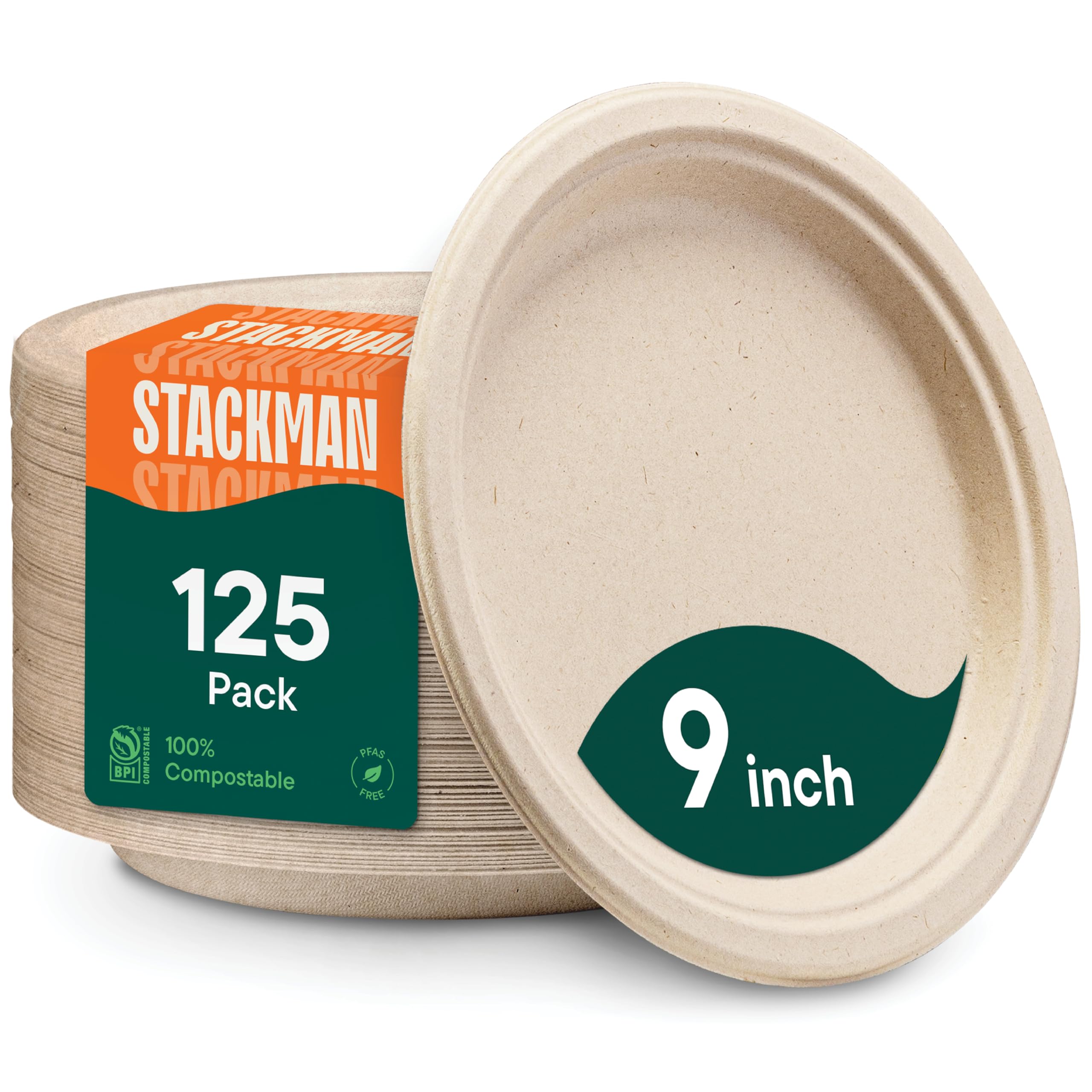
I relied on these thick bagasse plates when I needed a sturdy, all-purpose disposable that truly handled saucy and heavy meals.
Why I picked it: Most reliable strength and true commercial compostability.
Best for: Daily use, camping, BBQs, and messy dinners.
Good value for a large bulk pack.
Pros
- Very heavy-duty construction
- BPI-certified for commercial composting
- Microwave-safe for hot foods
- PFAS-free, no wax or plastic lining
Cons
- Natural brown look is rustic, not formal
- Fastest breakdown requires commercial composting
My take
I used this 125-pack as my go-to plates for several family meals and a camping weekend. The thickness felt noticeably heavier than standard paper disposables and I could load plates with saucy pasta and barbecue without worrying about bending or leaks.
Heat performance was solid — I reheated things in the microwave and the plates held their shape. Because they’re uncoated and PFAS-free, I felt comfortable using them with oily foods without worrying about hidden plastic layers.
On the sustainability side, these are BPI-certified and are meant to break down quickly at commercial compost facilities. If you compost at home, expect a longer timeline, but the materials are the same plant-based fiber I prefer for low-waste meals.
2. 10-inch 3-Compartment Compostable Plates – Best for Divided Meals
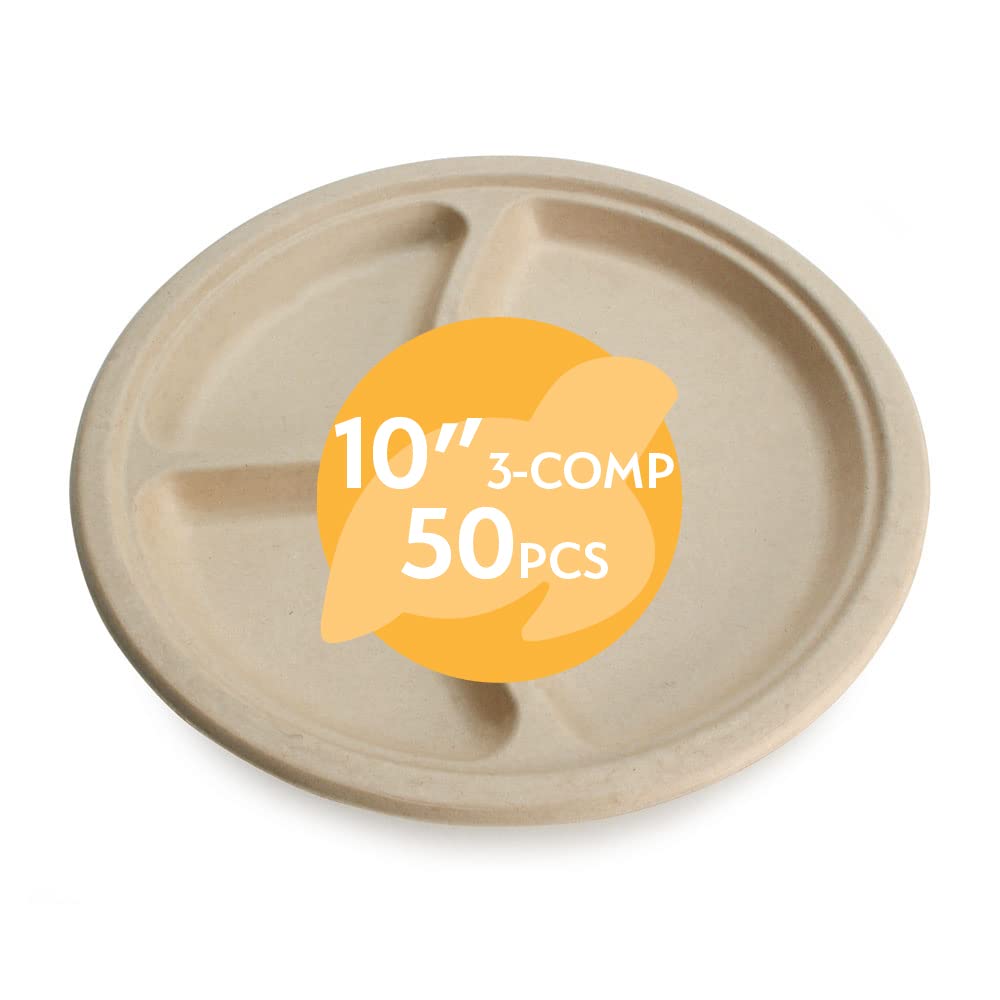
I picked these when I needed plates that keep mains and sides separate without sacrificing strength.
Why I picked it: Built-in compartments for portioning and mess control.
Best for: Cafeterias, kids' meals, buffets, and outdoor events.
Practical and budget-friendly for large gatherings.
Pros
- Three compartments for neat portioning
- Microwave-safe up to high temperatures
- Unbleached, dye-free natural finish
- Oil- and cut-resistant
Cons
- Plates can stick together in stacks
- Tan color is less formal than white
My take
I used these 3-compartment plates at a backyard BBQ and appreciated how neatly they separated main courses from sides. They handled hefty servings—sandwiches, baked beans, and salad—without sagging.
One practical snag: stacks sometimes stuck together, so guests occasionally grabbed two plates. For place settings I separated stacks in advance and that eliminated the issue.
Composting performance varies: industrial facilities take a few months, while home composting can be slower. I liked that these plates are heat-safe to the temperatures listed, which made warming up sides straightforward.
3. GUSTO 9-inch White Compostable Plates – Best White Dinner Plate
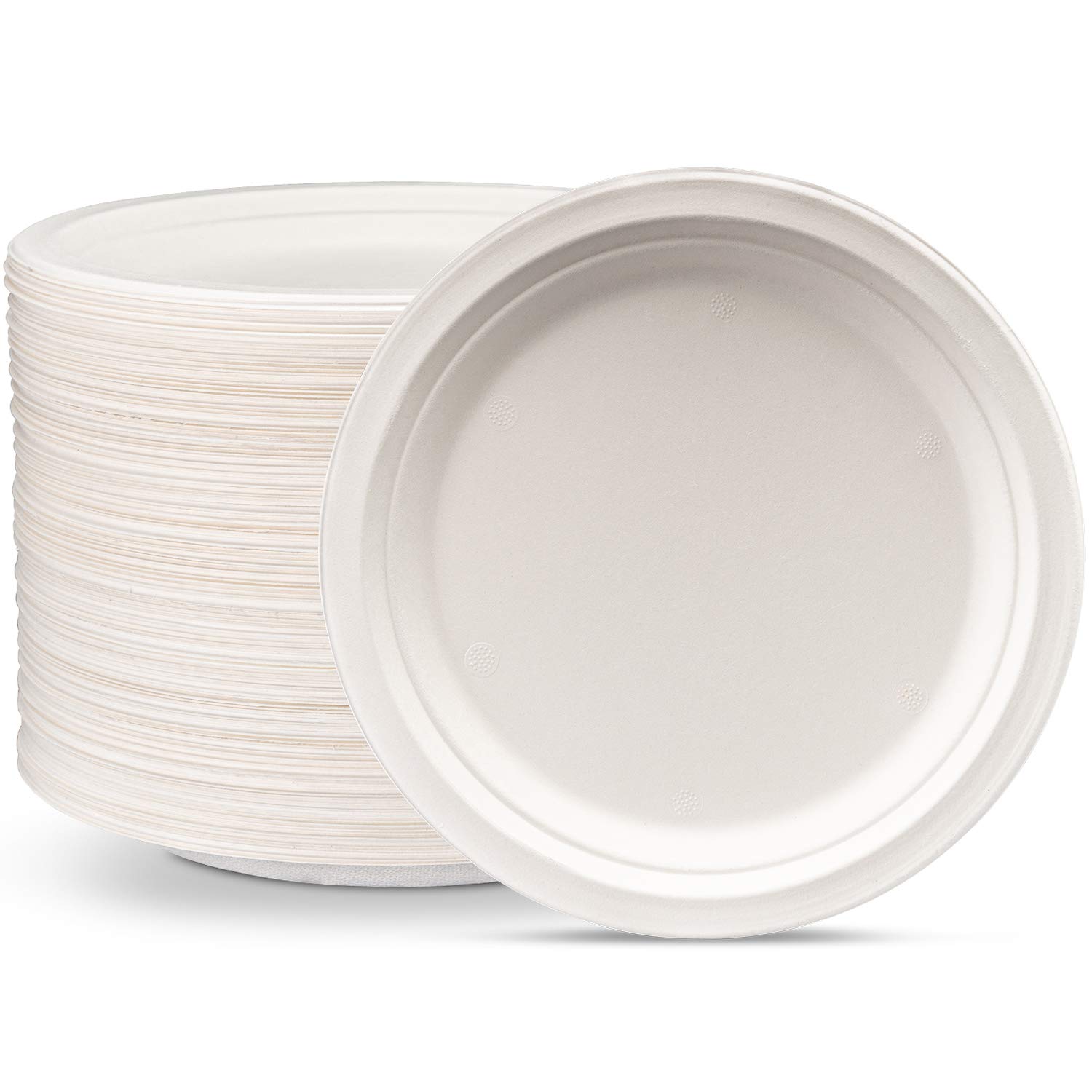
When I wanted disposable plates that looked nice on the table without plastic lining, this bright white option delivered.
Why I picked it: Clean white finish with a wide rim for saucy foods.
Best for: Parties, events, and occasions where presentation matters.
Midrange option that balances look and performance.
Pros
- Bright white for a clean presentation
- Wide rim reduces spill risk
- Heavy-duty and leak-resistant
- No plastic or wax lining
Cons
- Smaller than some large dinner plates
- Designed for single-use convenience
My take
I brought these white plates to a dinner party because I wanted the disposable convenience without the paper-plate look. The white color improved the presentation, and the wide rim kept saucy dishes contained.
Functionally they felt sturdier than thin paper plates I’ve used in the past. I served gravies and heavier entrees and didn’t experience bending or leaking.
If you prefer a crisp, formal appearance but still want compostable disposables, these hit that sweet spot for me.
4. Bagasse 12.5-inch Oval Compostable Platters – Best for Large Gatherings
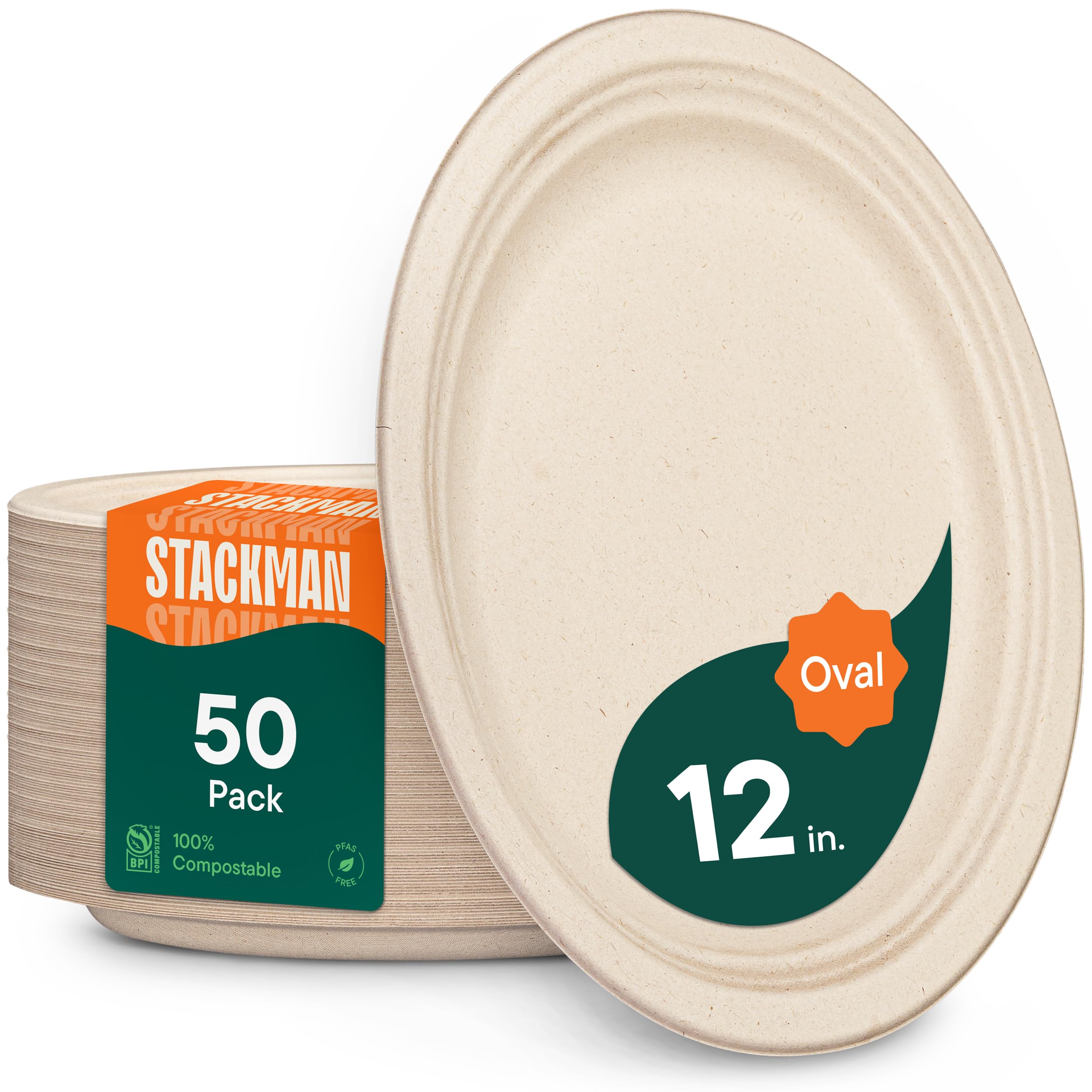
I reached for these oversized oval platters when I needed a single-use solution for big spreads that still composts responsibly.
Why I picked it: Large surface area and heavy-duty construction for big meals.
Best for: Holiday dinners, buffets, and catering events.
More of a premium choice for special occasions.
Pros
- Generous 12.5-inch serving area
- Sturdy under heavy loads
- PFAS-free and compostable
- Microwave-safe for reheating
Cons
- Natural color may not fit formal tables
- Takes up more storage space
My take
I used the oval platters on Thanksgiving to carry carved turkey and multiple sides. They were large enough to hold a full spread without collapsing and made serving simple.
Because they’re made from bagasse and are PFAS-free, I felt good about using them for a single big event rather than plastic or foil. Reheating portions on the platters worked fine in my microwave when needed.
These are my pick when I want disposable convenience but don’t want to sacrifice the ability to compost afterward.
How I Choose Compostable Plates
Materials and composting
I prioritize plates made from bagasse, bamboo, or wheat-stalk fiber because those plant-based fibers break down naturally. I look for certifications or clear guidance about commercial versus home composting timelines.
If rapid breakdown at scale matters to you, I favor products that cite commercial composting performance.
- Bagasse and bamboo are sturdy, plant-based options.
- Commercial composting is faster; home composting takes longer.
- PFAS-free and uncoated plates eliminate hidden plastics.
Strength and food types
I test plates with heavy, saucy, and oily foods before recommending them. Wide rims and thicker construction matter when you serve pasta, BBQ, or things with gravy.
For buffet or catering use, larger platters and heavy-duty construction are non-negotiable in my book.
- Choose heavy-duty bagasse for BBQs and camping.
- Pick divided plates for portion control and kids.
- Use wide-rim plates for saucy dishes.
Appearance and event fit
If presentation is important I choose clean white compostable plates. For rustic or casual events, unbleached tan or brown plates look right and perform similarly.
Consider storage and stacking behavior—some plates stick together in shipment and need separation before use.
- White plates for formal events.
- Natural tan/brown for casual gatherings.
- Check for plates sticking together in stacks.
Frequently Asked Questions
Can I microwave these compostable plates?
Yes — in my tests most bagasse and bamboo plates handled microwave reheating for hot foods. I avoid extreme, prolonged exposure and check product guidance for temperature limits.
Will these plates compost in my backyard pile?
I found that industrial composting breaks them down faster; at home you can compost them but expect a longer timeline. Heat, moisture, and regular turning speed up home decomposition.
Do compostable plates resist oily or saucy foods?
The heavy-duty bagasse and bamboo plates I used resisted oil and sogginess well. Wide rims and thicker profiles helped prevent spills with saucy dishes.
Final Take
After testing these four options across meals and events, I’m confident you can skip plastic without losing function. Pick bagasse 9-inch plates for everyday durability, the 3-compartment plates for portioned meals, the white GUSTO plates for nicer tables, and the 12.5-inch oval platters for big holiday spreads.
I use different plates depending on the occasion, and each of these has earned a spot in my rotation when I want compostable convenience that actually works.