
I tested a range of tagines — handmade clay, enameled cast iron, and flame ceramic — so you can pick the one that fits your cooking style, stove, and entertaining needs.
I’ve cooked in clay, cast iron, and flame ceramic tagines to see how they handle slow-simmered stews, braised chicken, and vegetable dishes.
In this guide I compare build, stove compatibility, care, and the kinds of results each pot delivers so you can choose the right tagine for everyday cooking or special meals.
If you want authentic, slow-braised Moroccan flavors go clay; if you need induction compatibility and low maintenance choose enameled cast iron; pick Emile Henry flame ceramic if you want French-made durability with guaranteed slow-simmer performance.
1. Kamsah Large Handmade Ceramic Tagine – Best Handmade Clay Tagine
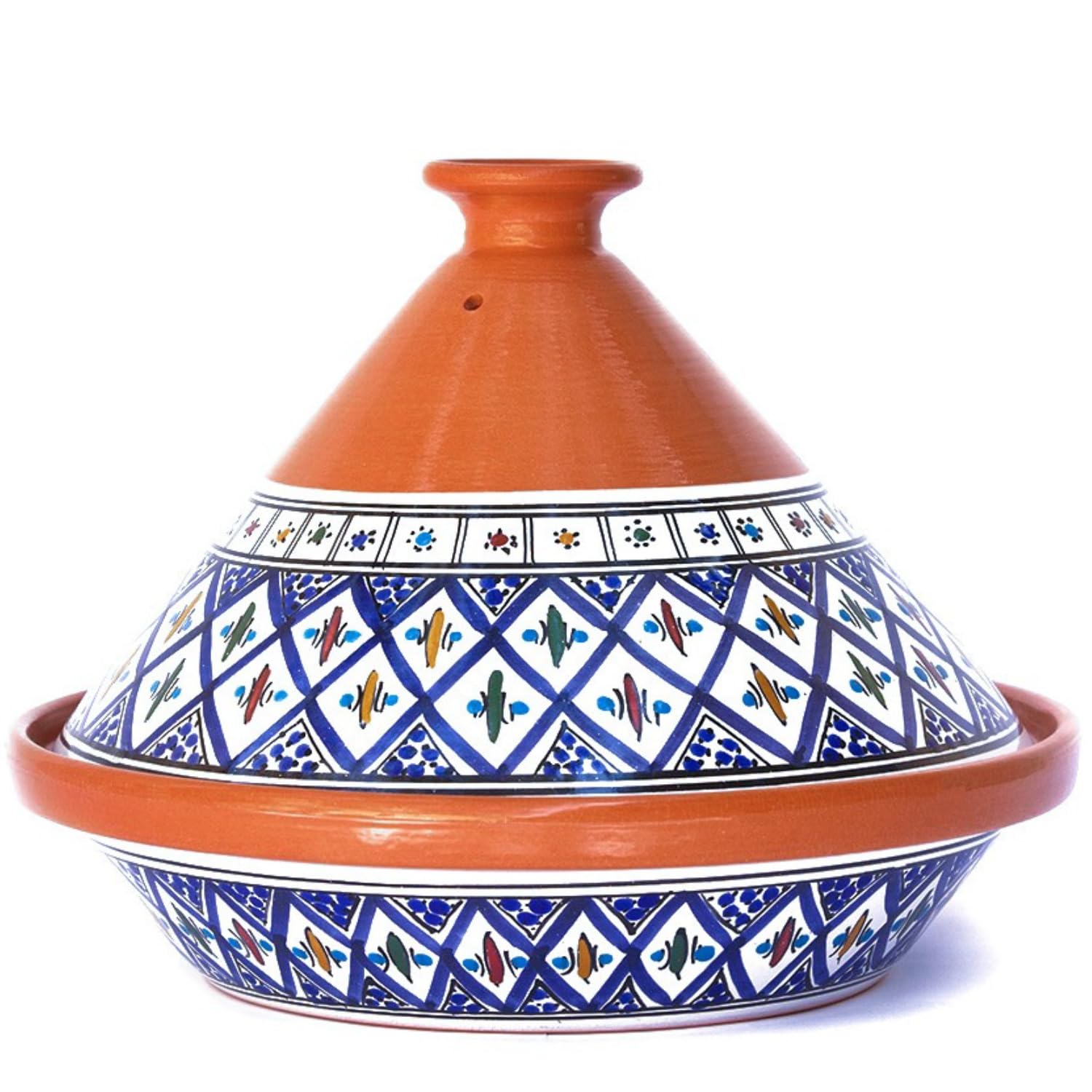
A large, fair-trade, handmade clay tagine that enhances steam-basting and looks beautiful on the table.
Why I picked it: I chose it for authentic steam-circulation, artisan construction, and large serving capacity.
Best for: Home cooks who want true North African-style tagine cooking and a showpiece for the table.
Premium artisan piece — more costly than basic models but handcrafted.
Pros
- Authentic steam-circulating shape
- Handmade by Tunisian artisans
- Lead-free, non-stick ceramic finish
- Generous capacity for family meals
- Attractive enough to serve in
Cons
- Requires pre-seasoning
- Fragile compared to cast iron
- May need a heat diffuser on gas
My take
This clay tagine delivers the kind of slow-basted moisture and melding of spices I seek when I want an authentic North African result. The conical lid really does circulate steam so meat comes out tender without needing much added fat.
Because it’s handmade by artisans, the piece has a distinctive look that doubles as a serving vessel. I’ve brought it straight from stove to table and enjoyed the warmth-retaining benefit while everyone ate.
Expect to prep the pot before first use: I soaked, oiled, and baked mine to stabilize it, and that process made cleanup and performance much better. On a gas stove I used a heat diffuser to prevent hotspots. If you want a true clay experience and don’t mind the extra care, this is a rewarding choice.
2. KooK Enameled Cast Iron Tagine – Best for Induction & Easy Care
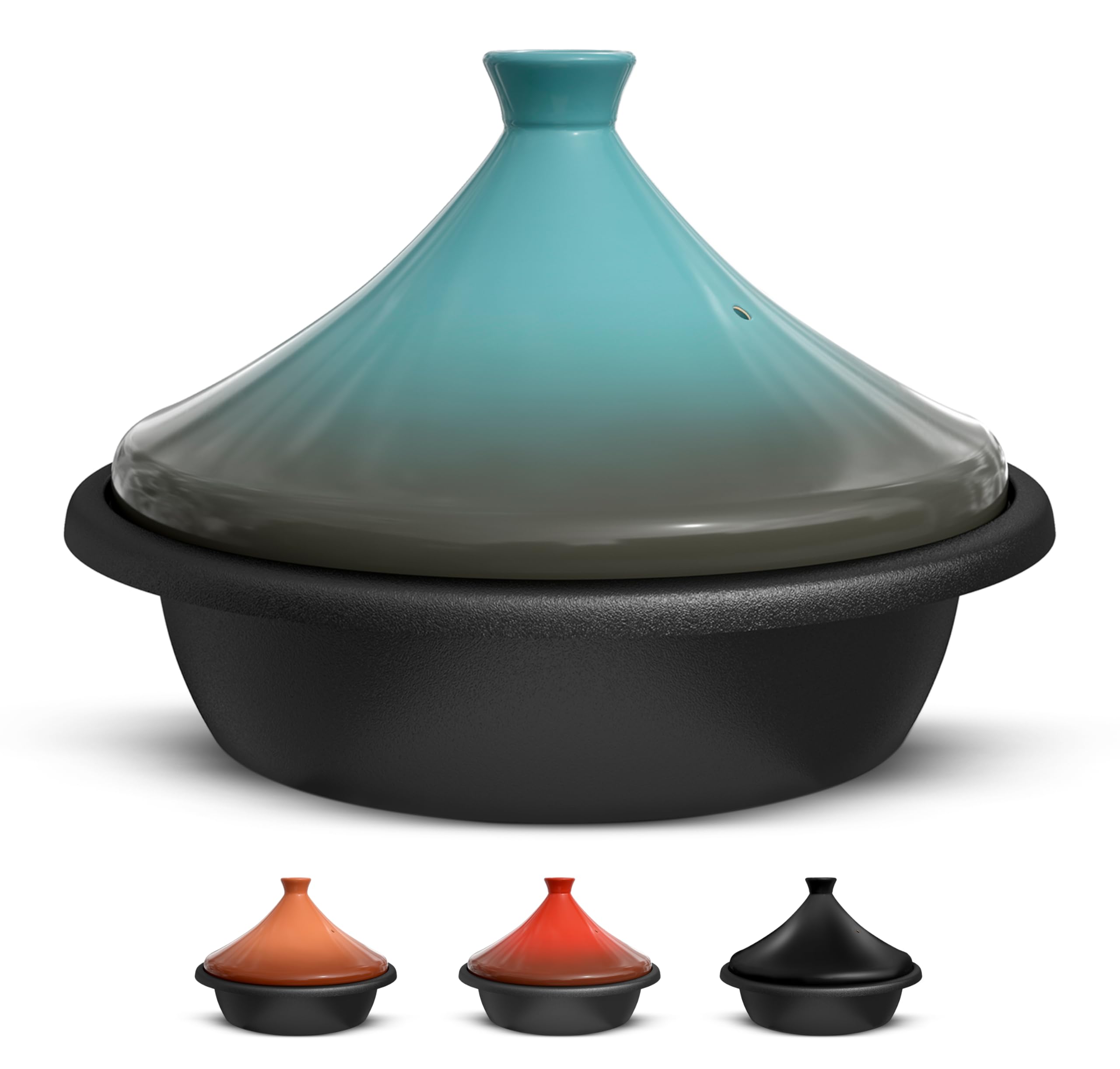
An enameled cast-iron tagine that’s heavy-duty, induction-compatible, and low maintenance.
Why I picked it: I picked it for stovetop versatility, induction use, and no-seasoning convenience.
Best for: Cooks who need durable, easy-to-clean cookware that also serves at the table.
Midrange option with great versatility for everyday cooking.
Pros
- Works on induction and gas
- No seasoning required
- Easily transfers from stove to oven
- Lid seals steam well
- Simple to clean
Cons
- Heavier than clay versions
- Smaller capacity for large groups
My take
This enameled cast-iron tagine gave me consistently moist stews with very little added water because the lid traps and recirculates steam. I found it especially handy for weeknight braises.
I used it on induction and in the oven without fuss; the enamel finish made cleanup quick and I didn’t worry about seasoning or lead concerns. It’s also a handsome serving piece that kept food warm at the table.
The pot is substantial and feels durable. If you want one tagine that handles modern hobs and still produces that slow-simmered profile, this is my go-to.
3. Emile Henry Flame Ceramic Tagine (3.7 qt) – Best French-Made Flame Ceramic (Smaller)
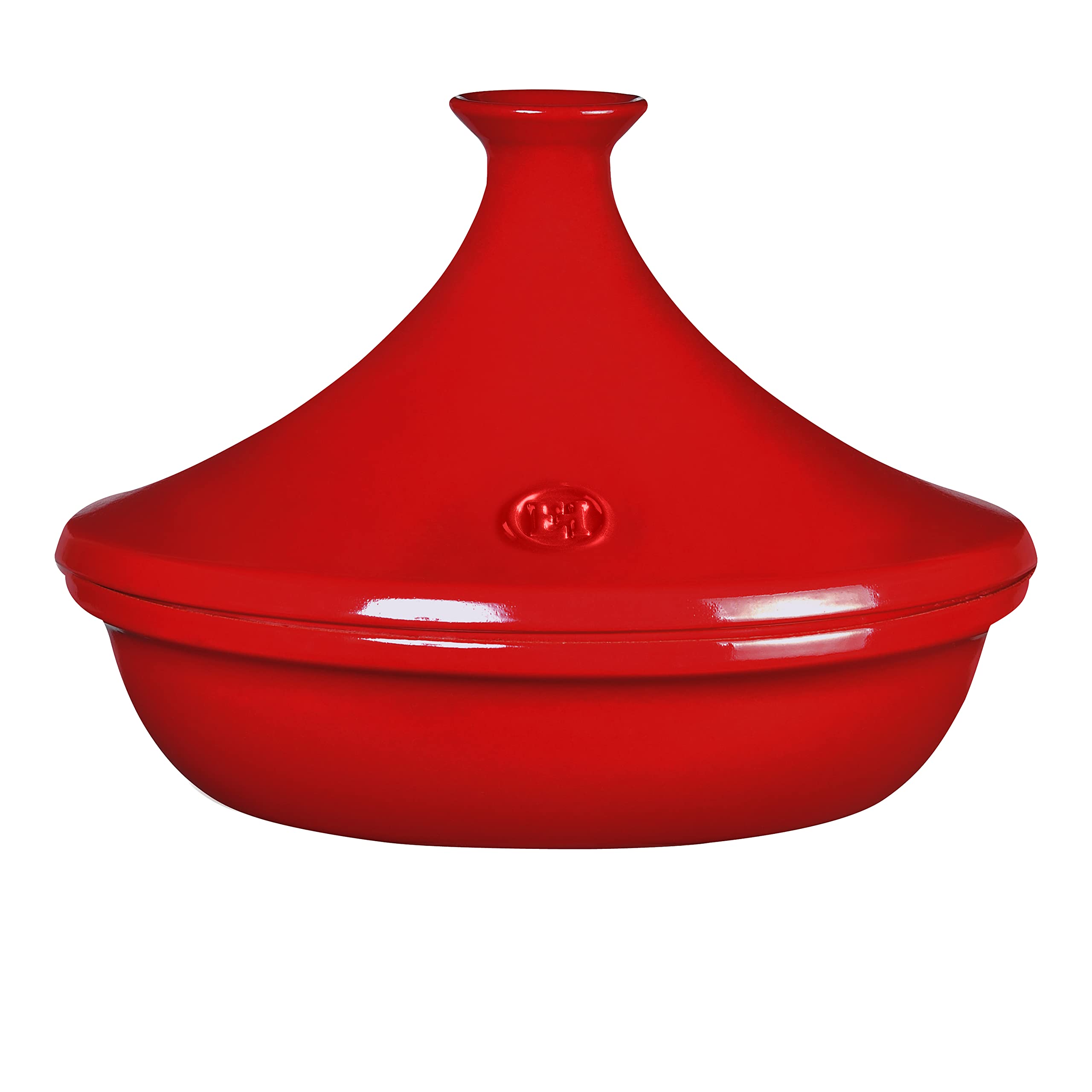
A French-made flame ceramic tagine built for direct-heat slow simmering and long-term use.
Why I picked it: I picked it for Flame Ceramic construction, slow-simmer design, and the brand’s long guarantee.
Best for: People who want durable, oven-and-stovetop ceramic engineered for simmering and serving.
A higher-end ceramic with a long guarantee and French manufacturing pedigree.
Pros
- Flame Ceramic suited to slow simmering
- Safe for direct heat and oven
- Designed for even steam circulation
- Made in France with a warranty
Cons
- Higher-end cost bracket
- May require an induction disk for induction hobs
My take
The Emile Henry flame ceramic tagine felt exceptionally solid and engineered for slow, gentle cooking. I used it on a gas burner (and with an induction disk when needed) and found it excels at coaxing flavors out during long simmers.
The lid’s shape encourages steam circulation so vegetables stay tender and meat bastes itself. The finish is sturdy and the company backs the product with a lengthy guarantee, which gave me confidence in its longevity.
If you want a ceramic tagine that’s built and warranted to perform for years, this is the one I reach for when I’m focusing on technique and consistency.
4. Emile Henry Tagine (27cm) – Best Versatile Ceramic Tagine
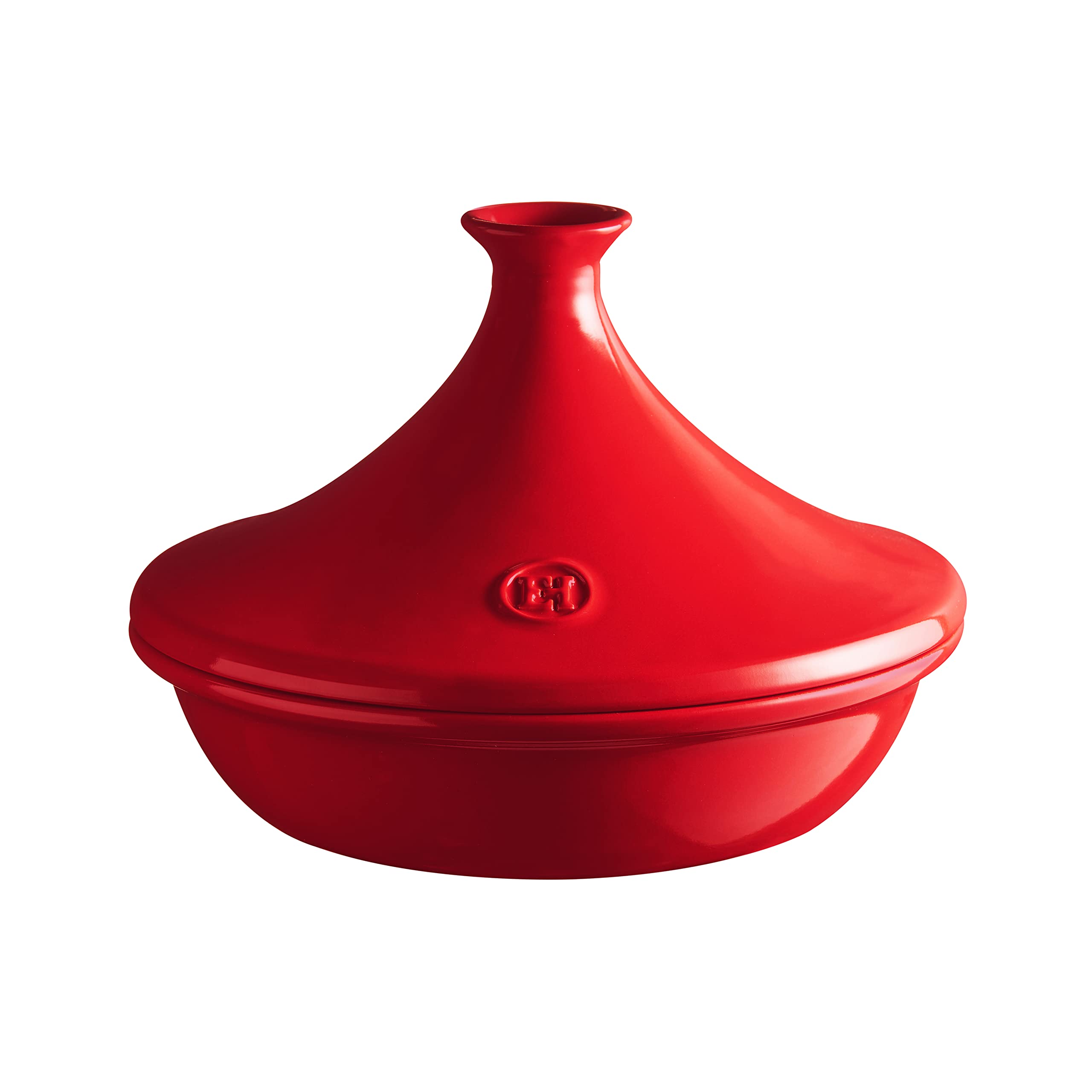
A versatile Emile Henry tagine sized for small groups that’s dishwasher-safe and oven-friendly.
Why I picked it: I picked it for stove-to-oven flexibility, dishwasher compatibility, and reliable slow-simmer results.
Best for: Home cooks who want easy care and consistent braising for smaller gatherings.
Premium build and convenience-focused features justify the investment for regular use.
Pros
- Use on stove, oven, microwave
- Dishwasher-safe
- Built for slow, gentle simmering
- Compact size for smaller meals
Cons
- May be overkill for single cooks
- Requires induction disk for induction tops
My take
This 27cm tagine from Emile Henry is the most convenient ceramic option I cooked with. It goes from stovetop to oven and even survives the dishwasher, which saved me time after entertaining.
I appreciated how predictably it simmers — the cone-shaped lid keeps steam moving and ingredients tender. The compact size is perfect for family dinners without producing excess leftovers.
For cooks who want ceramic performance with modern convenience, this tagine hits the sweet spot between functionality and easy care.
How I Choose the Right Tagine
Tagine material matters
I start by deciding material because it determines stove compatibility and care. Clay delivers the most traditional steam-basting but needs seasoning and careful heat management. Enameled cast iron needs no seasoning, works on induction, and is easy to clean. Flame ceramic from makers like Emile Henry balances direct-heat use with durable ceramic construction.
If I want authentic texture and don’t mind extra upkeep, I reach for clay. If I need everyday convenience and induction compatibility, I choose enameled cast iron.
Size and serving intent
I match tagine size to how I cook: smaller models are perfect for 2–4 servings and everyday use; larger tagines work for family meals or when I want leftovers to feed a crowd.
Consider the capacity you need before you buy so you’re not struggling to fit a whole bird or a large batch of vegetables.
Seasoning and first-use prep
I always prep new clay tagines by soaking, oiling, and slowly heating them, which seals pores and reduces cracking. Enameled and flame-ceramic options typically require no seasoning, so they’re faster to put into service.
When I use a clay tagine on gas, I place a heat diffuser underneath to prevent thermal shock and uneven hotspots.
Stove compatibility and accessories
I check whether a tagine works on induction or needs an induction disk. For gas stoves, a diffuser helps; for induction, enameled cast iron or flame ceramic with a disk are reliable choices.
Think about how you’ll serve: some tagines are decorative enough to go straight to the table, which I appreciate when entertaining.
Care and longevity
I consider how much time I want to spend on maintenance. Clay needs gentle handling and occasional seasoning; enamel resists stains and is simpler to clean. A long manufacturer guarantee, like Emile Henry’s, matters to me when I invest in higher-end ceramic.
Frequently Asked Questions
How do I season a clay tagine before first use?
I soak the base overnight, dry it, rub a thin layer of olive oil, then heat it slowly in the oven for a couple of hours to stabilize the clay.
Can I use a tagine on induction?
I use enameled cast iron directly on induction. For ceramic or clay, I place an induction disk under the tagine to transfer heat safely.
Do I need a heat diffuser for gas stoves?
Yes — I place a diffuser under clay or ceramic tagines on gas to prevent hotspots and reduce the risk of cracking.
Which tagine is easiest to clean?
The enameled cast-iron tagine is the easiest — it requires no seasoning and washes quickly; some flame-ceramic models are also dishwasher-safe for added convenience.
Final Take
After cooking across these styles, I pick the material that matches how I cook: clay for the most authentic steam-basted results, enameled cast iron for induction-friendly low maintenance, and flame ceramic for durable, guaranteed slow-simmer performance.
Whatever tagine you choose, expect slow cooking to reward you with deeper flavors — and don’t forget the heat diffuser and proper prep for clay pieces.
