
I tested the most popular silicone baby spoons so you can pick the right one for first feeds, temperature checks, travel, or learning independence.
I spent hands-on time with several silicone spoons while introducing solids and teaching self-feeding. My goal was to find spoons that are safe on gums, easy to scoop with, and simple to clean.
In this roundup I compare options that focus on baby-led weaning, temperature sensing, value packs, and developmentally thoughtful design so you can choose whichever meets your priorities.
I compared these spoons by material safety, tip softness, scoop shape, handle length and any special features like temperature sensing or sensory bumps.
1. Olababy Silicone Soft-Tip Training Spoon (2-pack) – Best for Baby-Led Weaning
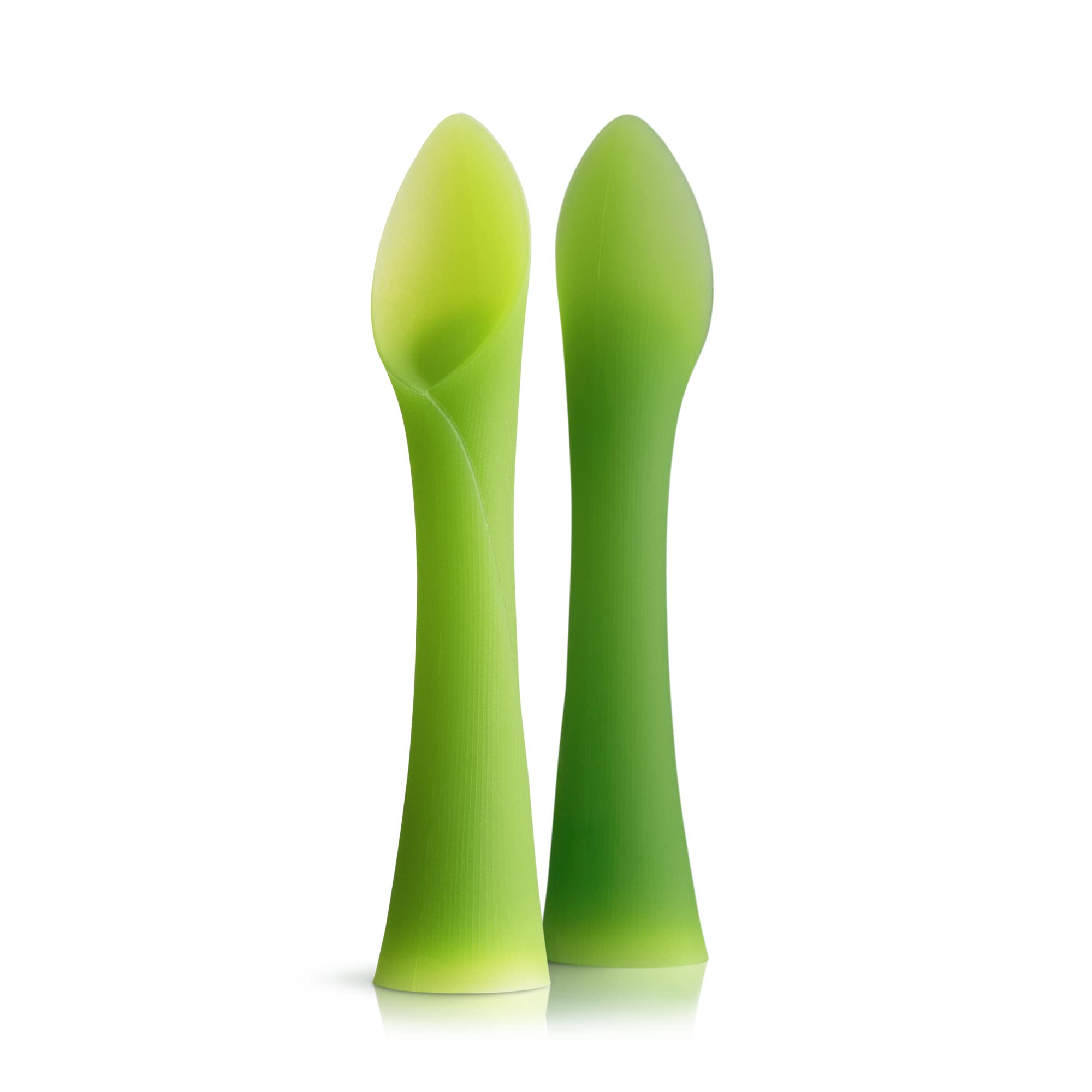
I like this leafy, flexible spoon for first self-feeding because it combines a soft gum-friendly tip with a textured stem that tiny hands can hold.
Why I picked it: Soft, fully silicone design built to encourage scooping and cutting during first feeds.
Best for: Babies starting solids and practicing self-feeding.
Affordable two-pack for trying a baby-led weaning tool.
Pros
- 100% soft, food-grade silicone
- Leaf-shaped flexible tip for scooping and cutting
- Ribbed stem improves baby grip
- Dishwasher safe
Cons
- Not ideal for very thin liquids
- Some colors can fade over time
My take
I introduced these spoons as my baby’s first self-feeding utensil and they worked exactly as designed. The spoon tip is soft enough that it didn’t bother gums or emerging teeth, yet flexible enough to scoop, slice and scrape food from bowls and jars.
The sprout-inspired shape matters: the leaf tip flexes when my baby chewed, which reduced resistance and kept her engaged. The ribbed stem gave her a secure hold when she reached for the spoon, and I liked that I could also use it from the parent side without worrying about hard plastic edges.
For me the only limitations were that the shape holds thicker purees and yogurt better than runny broths, and the palest colors showed wear faster. Overall, this is my go-to for teaching scooping and encouraging independence.
2. Dr. Brown's TempCheck Silicone Spoons (4-pack) – Best for Temperature Checking
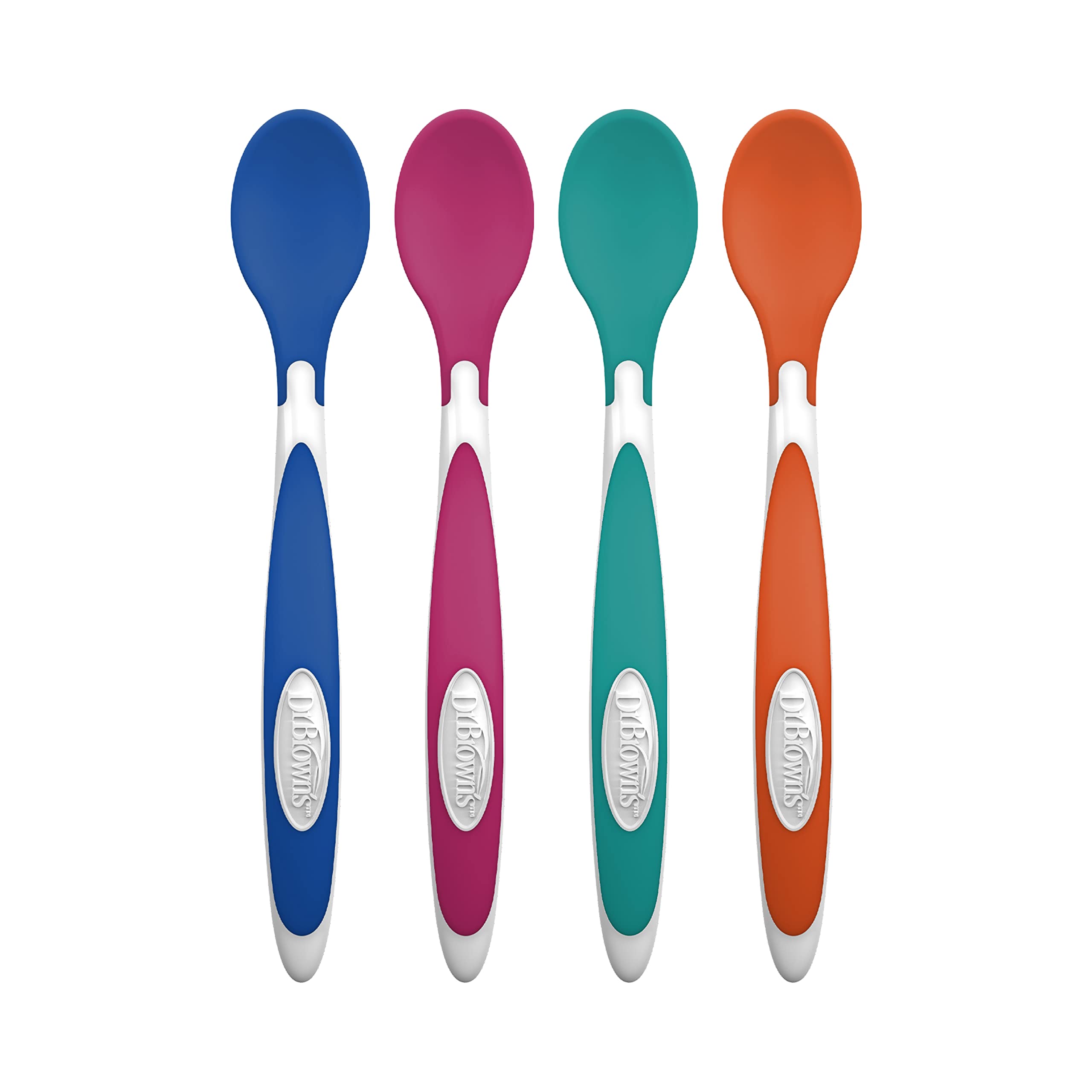
I value the color-changing tip on these spoons because it gives an immediate visual cue when food is too hot, and the long handle is great for jars and deep bowls.
Why I picked it: Built-in temp indicator plus long handle and elevated rest for less mess.
Best for: Feeding from jars and checking food temperature quickly.
Budget-friendly multipack with a safety-focused feature.
Pros
- Color-change tip warns when food is too hot
- Soft silicone protects tender gums
- Long handle reaches deep jars
- Elevated rest reduces tabletop mess
Cons
- Spoon can tip due to uneven weight
- Shallow scoop holds less food
My take
I used these spoons every time I fed jars or warmed purees. The color-change tip reliably became clear when the food was too hot, which saved me from testing temperatures with my finger.
The long handle made it easy to reach down into jars and get the last bite, and the elevated spoon rest kept surfaces cleaner between feeds. The silicone is gentle for teething mouths and dishwasher-safe, which I appreciated on busy days.
Two practical caveats I noticed: the scoop is fairly shallow, so I had to spoon more frequently, and the handle can make the spoon tip-heavy, causing it to tip if I left it in a bowl. Even so, the temperature feature is the reason I keep a set on hand.
3. PandaEar Silicone Baby Spoons (6-pack) – Best Value Pack
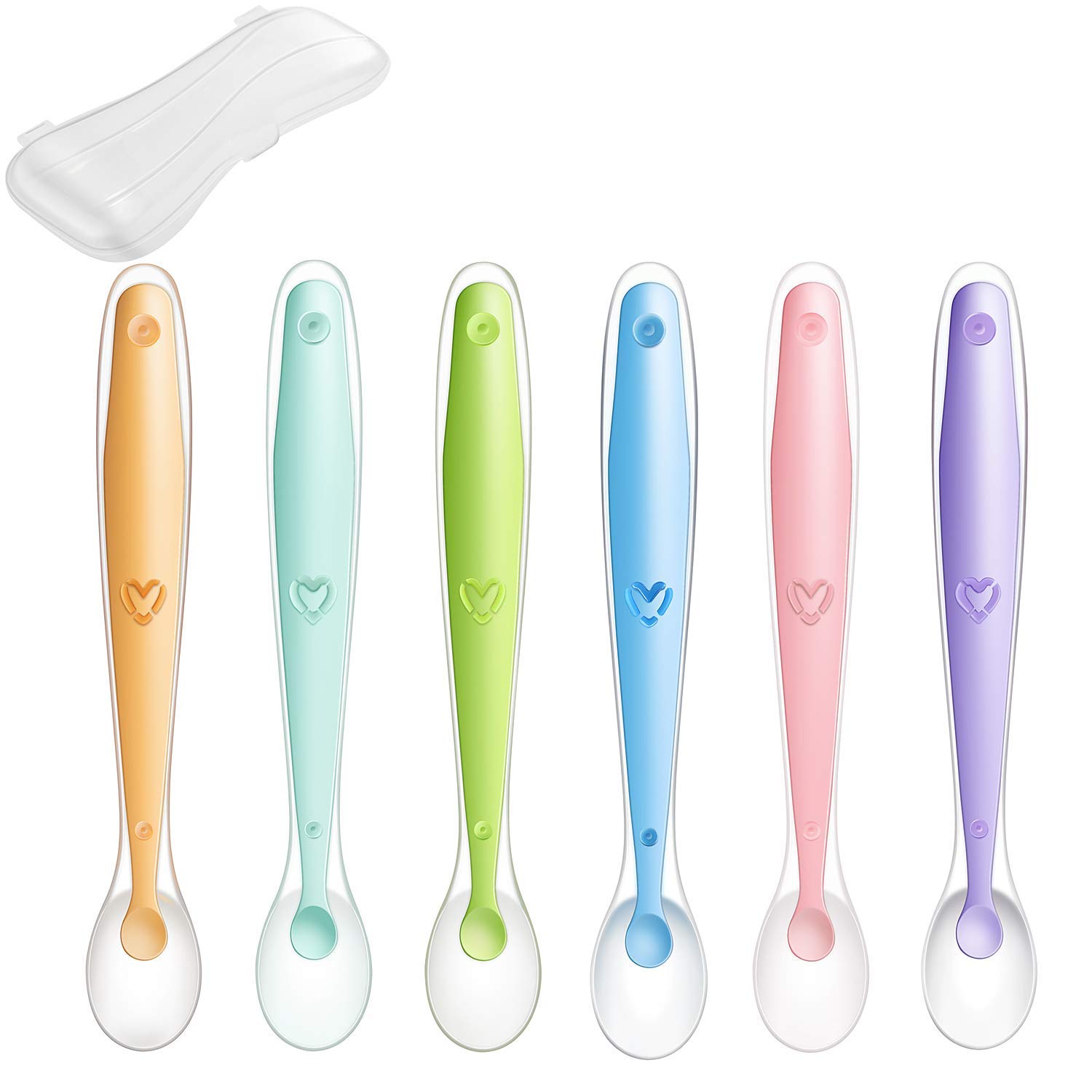
I recommend this six-pack when you want soft, gum-friendly spoons for every bag, diaper caddy, and travel case without worrying about losing one.
Why I picked it: Generous set of soft, food-grade silicone spoons that hold up to chewing and travel.
Best for: Families who want extras for travel, daycare, or backup options.
Great value with extra spoons and travel convenience.
Pros
- Large six-pack supply
- Soft, gum-friendly silicone
- Flexible for scraping jars clean
- Includes travel container
Cons
- Spoons can stain with certain foods
- Shallow bowls limit scoop size
My take
I kept a few of these sets stashed across my diaper bag, kitchen drawer and stroller, and they proved useful everywhere. The silicone is pleasantly soft for teething babies and flexible enough to reach the corners of jars.
My child frequently chewed on the handles and the material stood up to that wear; occasional staining from bright foods was reversible with a soak or the dishwasher. I appreciated the travel case included in some sets—it made tossing a clean spoon into my bag quick and hygienic.
If you want a practical, low-fuss supply of spoons that won’t break the bank, this pack is the one I reach for first.
4. ezpz Tiny Spoon (2-pack) – Best for Learning Independence
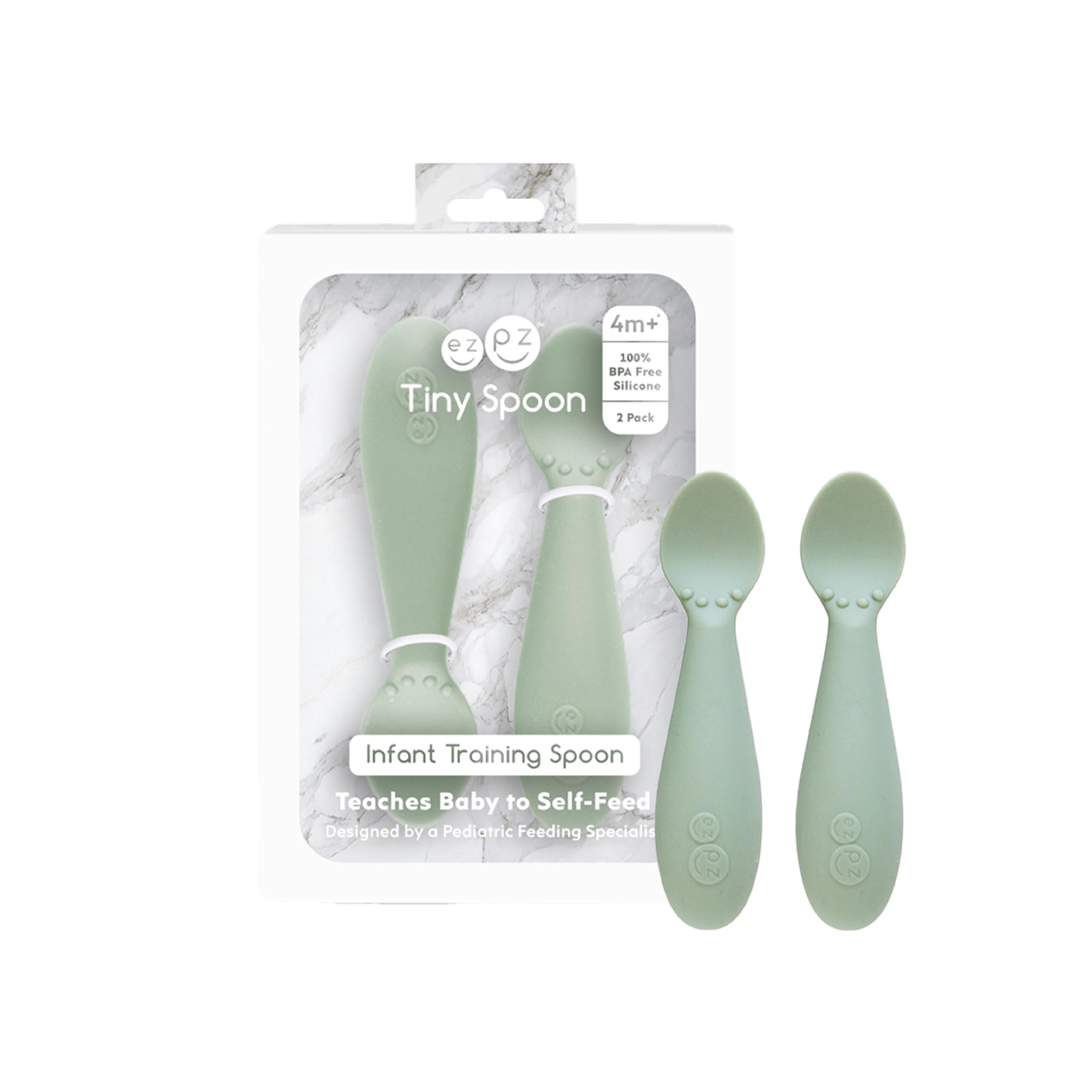
I picked this spoon for its pediatric-fed design: a slight arc, narrow bowl, and sensory bumps that make scooping and self-feeding easier and safer.
Why I picked it: Pediatric feeding specialist design that helps babies scoop independently.
Best for: Babies learning to self-feed and those doing baby-led weaning.
Premium design aimed at developmental milestones.
Pros
- Designed by a pediatric feeding specialist
- Arc makes dipping and scooping easier
- Sensory bumps to reduce gagging
- Soft, safe silicone
Cons
- Smaller capacity than regular spoons
- Pricier than basic spoons
My take
I introduced the Tiny Spoon around six months and watched how the arc encouraged my baby to dip into food instead of shove the spoon straight in. The narrow, shallow bowl fits small mouths well and feels intentional for early feeds.
Those tiny sensory bumps aren’t just a gimmick—they seemed to help my baby sense texture and slow down, which reduced choke reflexes during early attempts. The spoon is easy to clean and durable, and while it carries less food per scoop, the trade-off for safer, more effective learning was worth it.
If you want a spoon designed specifically to help meet feeding milestones, this is the one I recommend.
How I Choose the Right Silicone Spoon
Material and safety
I always check that the spoon is made from food-grade silicone and explicitly free of BPA, PVC, lead and phthalates. Soft, one-piece silicone eliminates hard edges and reduces the chance of parts breaking off.
If a product mentions pediatric design or FDA-grade silicone, that’s an important signal I weigh heavily.
- I prefer 100% food-grade silicone for full soft-tip protection.
- I avoid spoons with glued tips or hard plastic joins.
Shape and function
I match spoon shape to the feeding stage: shallow, narrow bowls for first-stage purees and small mouths; slightly deeper scoops for older babies who can handle larger bites.
For baby-led weaning I look for flexible tips and textured handles that encourage grasping and scooping.
- I choose narrow bowls for tiny mouths and shallow bowls to prevent overfeeding.
- I like handles with texture or shape that little hands can grip.
Special features I value
Temperature indicators can save a lot of guesswork when heating jars or purees. I use color-change tips to avoid burning my baby’s mouth.
Sensory bumps or an arc in the spoon bowl help reduce gagging and teach better scooping mechanics, which I find useful for learning independence.
- I consider color-change tips for heated food safety.
- I favor ergonomic or pediatric-designed spoons for learning milestones.
Cleaning and durability
I prefer dishwasher-safe silicone since I run utensils through sanitizing cycles often. Stain resistance matters: some bright foods can leave marks, but many spoons bleach or wash clean.
Multipacks and travel cases make it easy for me to always have a clean spoon on hand.
- I choose dishwasher- and sterilizer-safe models for convenience.
- I keep spare spoons in the bag for travel and daycare.
Frequently Asked Questions
Are silicone spoons safe for teething babies?
Yes — I find 100% food-grade silicone spoons to be gentle on tender gums and safe for chewing, provided they’re a single piece without detachable parts.
Will silicone spoons stain, and can I remove stains?
Some bright foods can stain. I usually soak stained spoons or run them through the dishwasher; occasional bleaching or longer soaks remove most discoloration.
Do temperature-sensing spoons really work?
In my experience the color-change tips reliably indicate when food is too hot, and I use them as a quick safety check before feeding.
Final Take
After trying these options, I keep different spoons for different jobs: a temp-check spoon for warmed jars, an Olababy or ezpz spoon for learning scooping, and a multipack like PandaEar for travel and backups.
Pick the spoon that matches your feeding style—safety features for warmed food, pediatric design for milestones, or a large pack if you need extras—and you’ll make mealtime simpler.
