
I tested a range of large woks — stainless, carbon steel, cast iron, and nonstick — to find the best performers for induction, gas, electric and oven use.
I cooked dozens of stir-fries, seared meats, and one-pan dinners across these woks so I could compare heat response, capacity, and real-world durability.
My focus was practical: which wok gives me dependable heat, a usable cooking surface (not marketing measurements that include handles), and the finish I prefer for the way I cook.
Below I explain where each wok shines and the trade-offs to expect so you can pick the right tool for your kitchen and cooking style.
I judged each wok on true cooking surface, material performance at high heat, stovetop compatibility, and how easy the pan was to maintain after repeated use.
1. Silit Wuhan Stainless Steel Wok – Best for Stainless Steel Fans
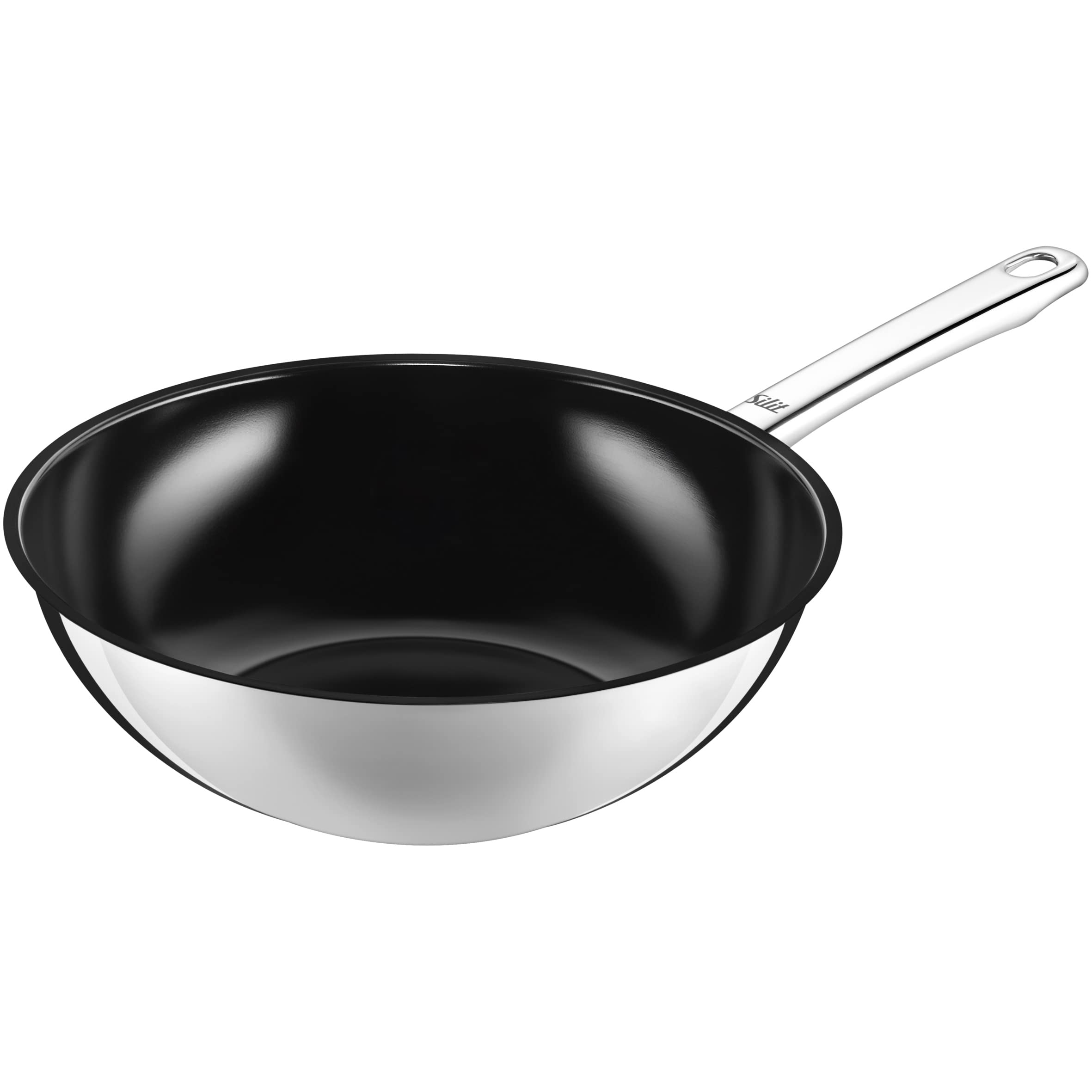
A polished, induction-capable stainless wok that heats fast and looks premium, though the stated size can be misleading.
Why I picked it: I value induction-ready stainless with an oven-safe profile and a refined finish for everyday use.
Best for: People who want a low-maintenance stainless wok for induction and oven transfer.
Positioned as a higher-end cookware option.
Pros
- Induction compatible
- Polished, attractive finish
- Lightweight for stainless
- Oven-safe up to moderate temps
Cons
- Actual cooking surface smaller than some listings imply
- Polished exterior can show scuffs
- Not as nonstick as coated pans
My take
I liked the clean look and solid build of this Silit wok — it heats quickly on induction and handles everyday stir-fries with ease.
What bothered me was the size presentation: the cooking bowl measures closer to 28 cm, while the overall listing counts the handle in the larger number. That matters if you’re buying for real cooking capacity.
The stainless interior is easy to maintain and tolerates oven use, but it doesn’t give the same natural release as a seasoned carbon or cast iron pan, so expect to manage heat and oil a bit more.
If you want a refined stainless wok that behaves well on modern hobs, this delivers — just know the usable pan diameter is smaller than some marketing text suggests.
2. Jim Beam 12" Pre-Seasoned Cast Iron Wok – Best Pre-Seasoned Cast Iron
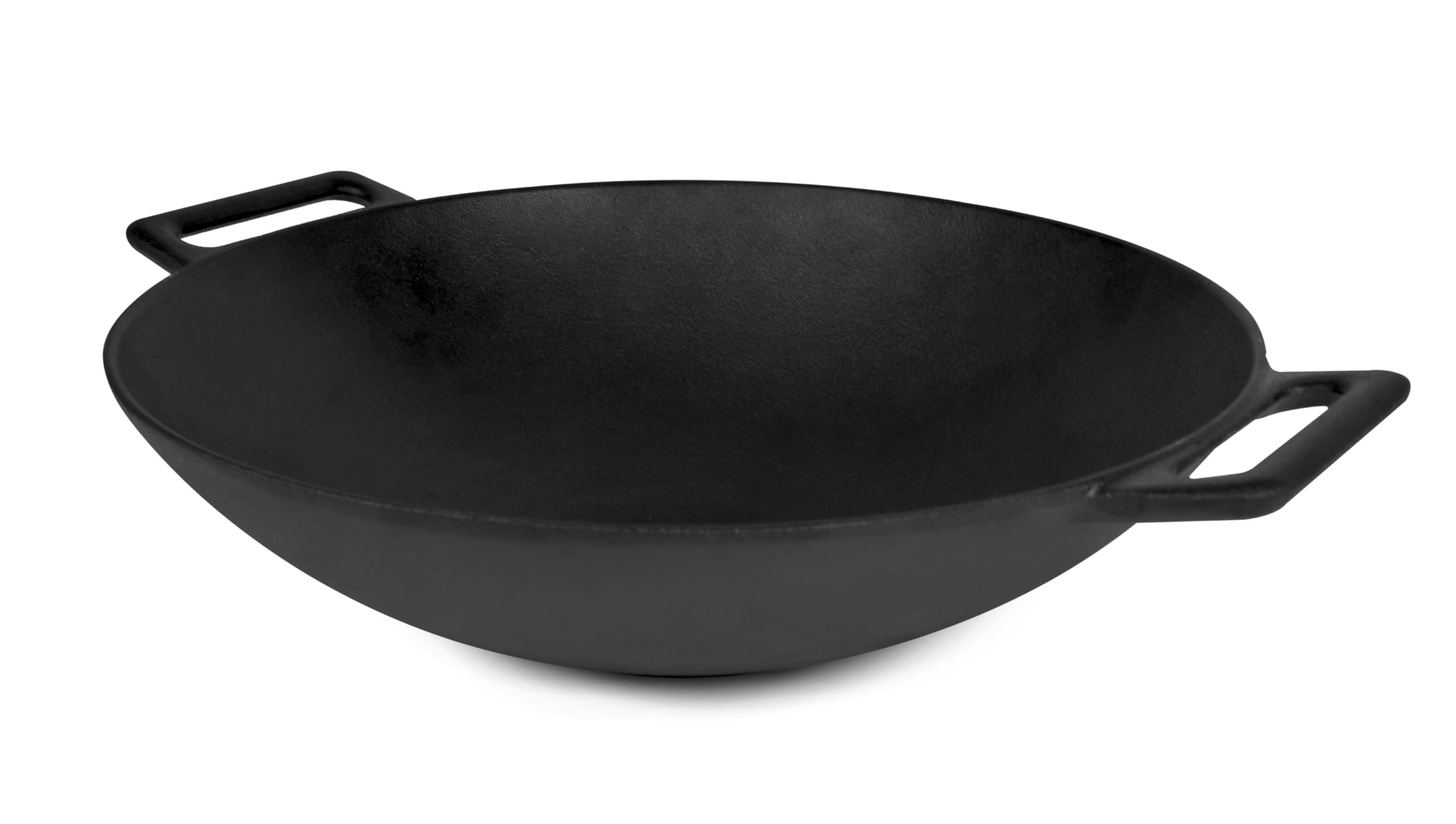
A hearty pre-seasoned cast-iron wok that retains heat well and is surprisingly lightweight for cast iron.
Why I picked it: I wanted a durable cast-iron wok that performs on grills, ovens, and glass tops without being a brute to handle.
Best for: Home cooks seeking long-lasting heat retention and a wok that improves with seasoning.
A solid mid-range cast-iron value.
Pros
- Excellent heat retention
- Pre-seasoned and improves with use
- Works on grills, oven, induction
- Handles are ergonomically shaped
Cons
- Requires regular seasoning
- Can take time to reach full temp
- Heavier than steel alternatives
My take
This Jim Beam cast-iron wok surprised me with how evenly it holds heat despite being lighter than many traditional cast pieces.
I used it on gas, an electric glass cooktop, and over a grill — all performed well. On glass tops it didn’t damage the surface, and the flat base is practical for modern ranges.
The factory seasoning is useful out of the box, but I still gave it a quick reseasoning cycle to suit my cooking style; the nonstick performance improved noticeably after a few uses.
If you want a wok that will last decades and deliver restaurant-style searing once it’s seasoned in, this one is a dependable choice.
3. KitchenCraft Carbon Steel Wok – Best for High-Heat Wok-Hei
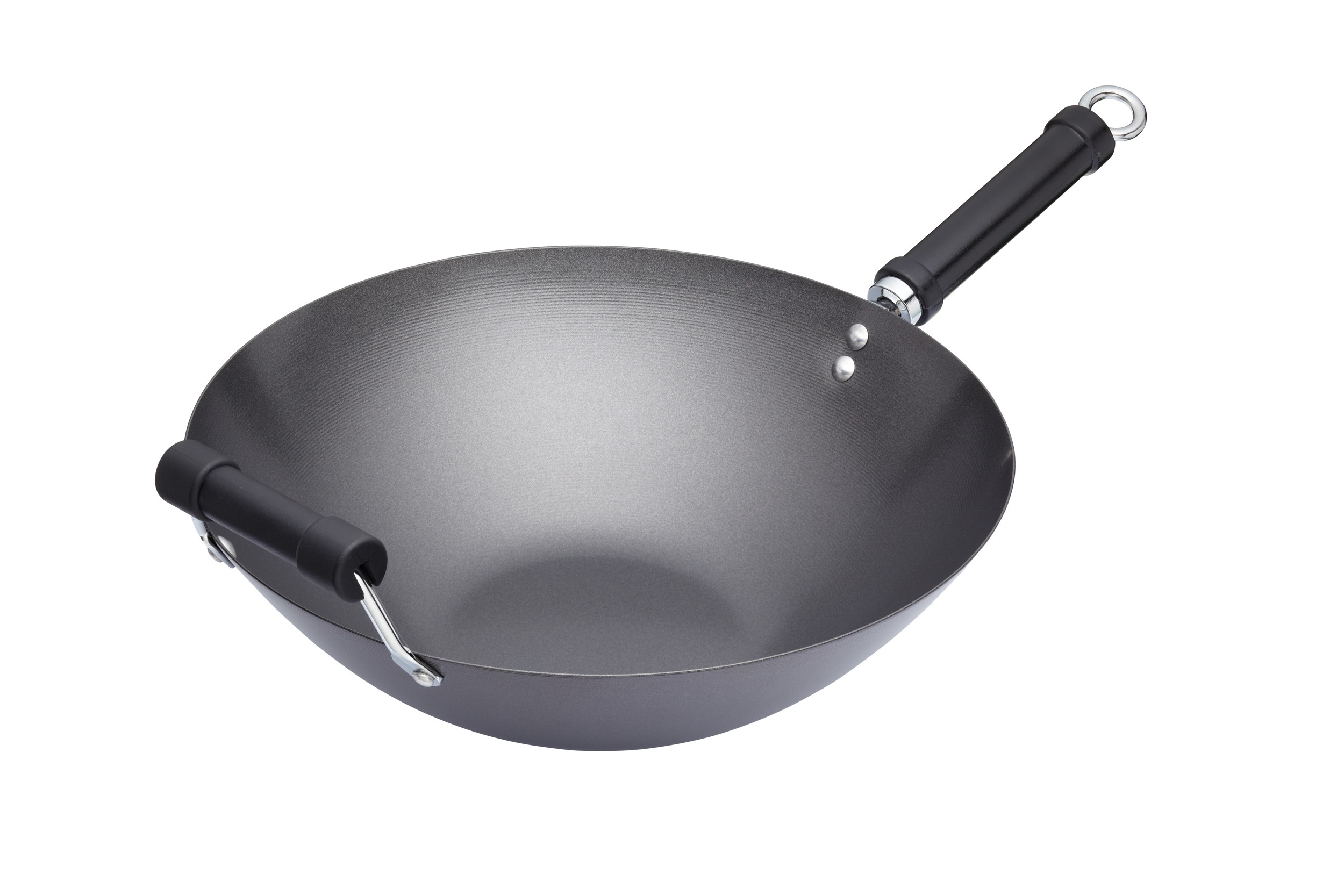
An induction-capable carbon steel wok aimed at high-heat cooking and authentic smoky flavors, but the nonstick coating has durability concerns.
Why I picked it: I wanted a carbon-steel wok that can withstand high temperatures and deliver authentic stir-fry flavor.
Best for: Cooks chasing wok-hei and fast, high-heat searing on induction or gas.
Tends toward the premium carbon steel category.
Pros
- Induction safe for high heat
- Large capacity for dinner parties
- High side walls contain food
- Auxiliary handle for lifting
Cons
- Coating durability has reported issues
- Can scratch if scrubbed aggressively
- Requires careful seasoning/maintenance
My take
I reached for this KitchenCraft wok when I wanted to push heat and chase that smoky wok-hei flavor — it responds quickly on induction and holds heat well.
The large 36 cm bowl and deep walls make tossing ingredients effortless and comfortable for larger portions.
One important note from my hands-on time: the nonstick coating can develop scratches and, in some cases, blistering with heavy use. I treated it gently, avoided abrasive tools, and still kept seasoning practices in mind.
If you need a carbon-steel wok for real high-heat work, this model delivers performance — but I’d caution cooks who want a maintenance-free nonstick to consider a different finish.
4. Cooks Standard Tri-Ply Stainless Wok – Best Tri-Ply Stainless
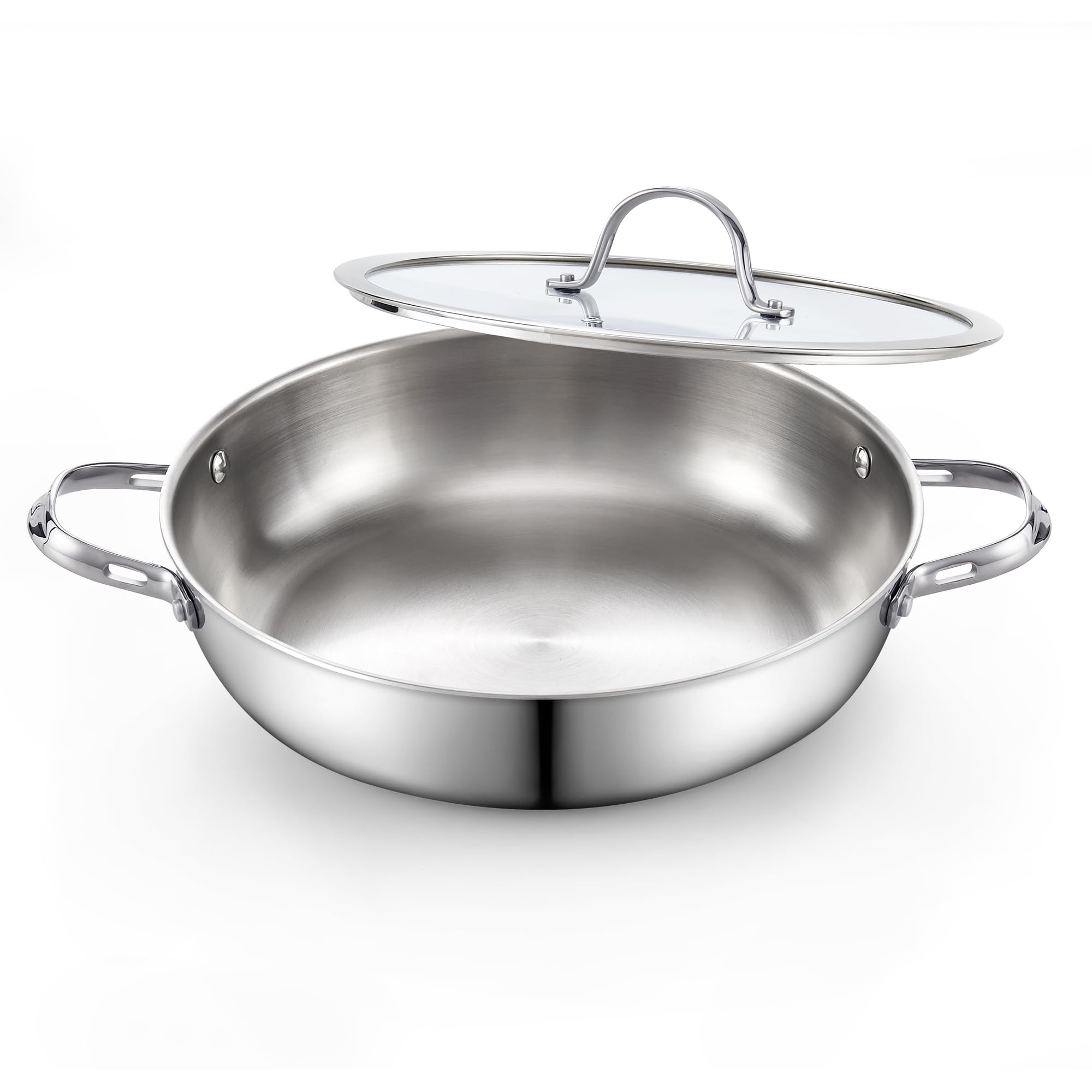
A tri-ply clad stainless wok with an aluminum core for even heating, a glass lid, and oven-safe capability — great for everyday versatility.
Why I picked it: I wanted a multi-purpose chef’s pan that behaves predictably across tasks from stir-fry to braises.
Best for: Everyday chefs who want dishwasher-safe stainless with professional heat distribution.
A practical mid-priced kitchen workhorse.
Pros
- Tri-ply for even heat
- Oven-safe to high temps
- Glass lid for monitoring
- Cool-touch handles
Cons
- Learning curve for heat control
- Can show scorch marks
- Some uneven heating on certain ranges
My take
I’ve used this Cooks Standard wok daily for everything from red curry to scrambled eggs, and its tri-ply construction does a great job evening out hot spots.
The glass lid is well-matched and useful when I want to trap steam without lifting, and the handles stay comfortable during extended use.
There was a short learning curve: if I crank the heat too high, food can scorch at the edges on some electric tops. A gentle hand with heat and a quick Bar Keepers Friend once in a while keeps the finish looking like new.
For an everyday stainless workhorse that also survives classroom-style abuse, this pan balanced practicality and performance in my kitchen.
5. ItsMillers Die-Cast Nonstick Wok – Best Nonstick Die-Cast
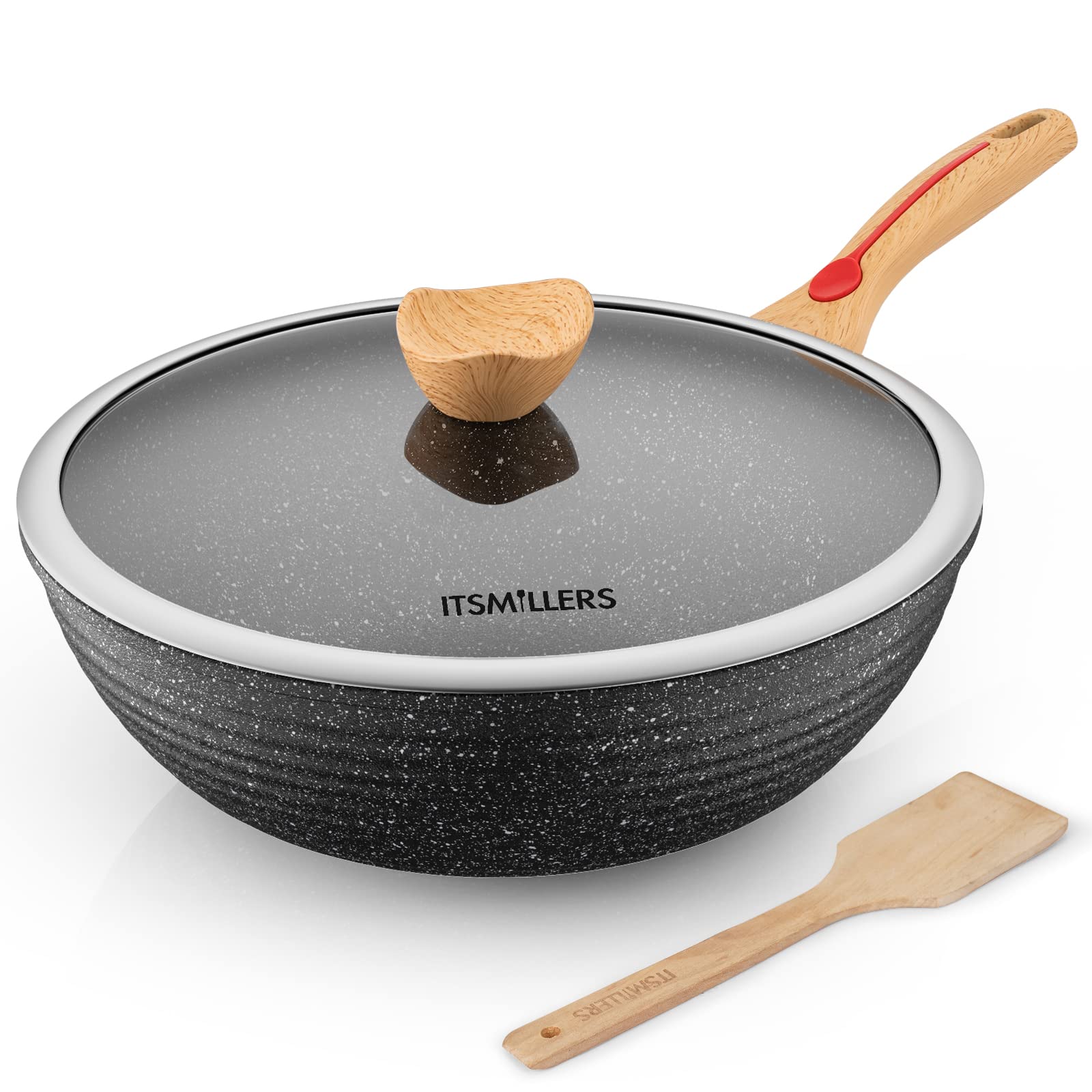
A thick forged aluminum wok with ceramic-titanium nonstick interior, flat bottom, and generous capacity — great for low-effort cleanup.
Why I picked it: I wanted a nonstick wok that heats fast, resists scratching, and gives quick cleanup for large weekday meals.
Best for: Home cooks who prioritize easy release and easy cleaning for family-size portions.
A value-oriented nonstick option with useful extras.
Pros
- Ceramic-titanium nonstick interior
- Flat bottom for modern stoves
- Large capacity for families
- Comes with lid and spatula
Cons
- Not oven safe in most cases
- One report of broken glass lid
- May have small manufacturing pits
My take
I appreciated how quickly this ItsMillers wok heated and how little food stuck during my high-volume stir-fries.
The ceramic-titanium interior released rice and vegetables cleanly, and the flat base is reliable on induction and electric hobs.
One buyer reported a shattered lid on unpacking and received a replacement, so I checked my packaging carefully; my lid arrived intact and worked fine.
This wok is a strong pick when you want minimal maintenance and fast, even cooking for bigger portions.
6. NutriChef Pre-Seasoned Cast Iron Wok – Best with Wooden Lid
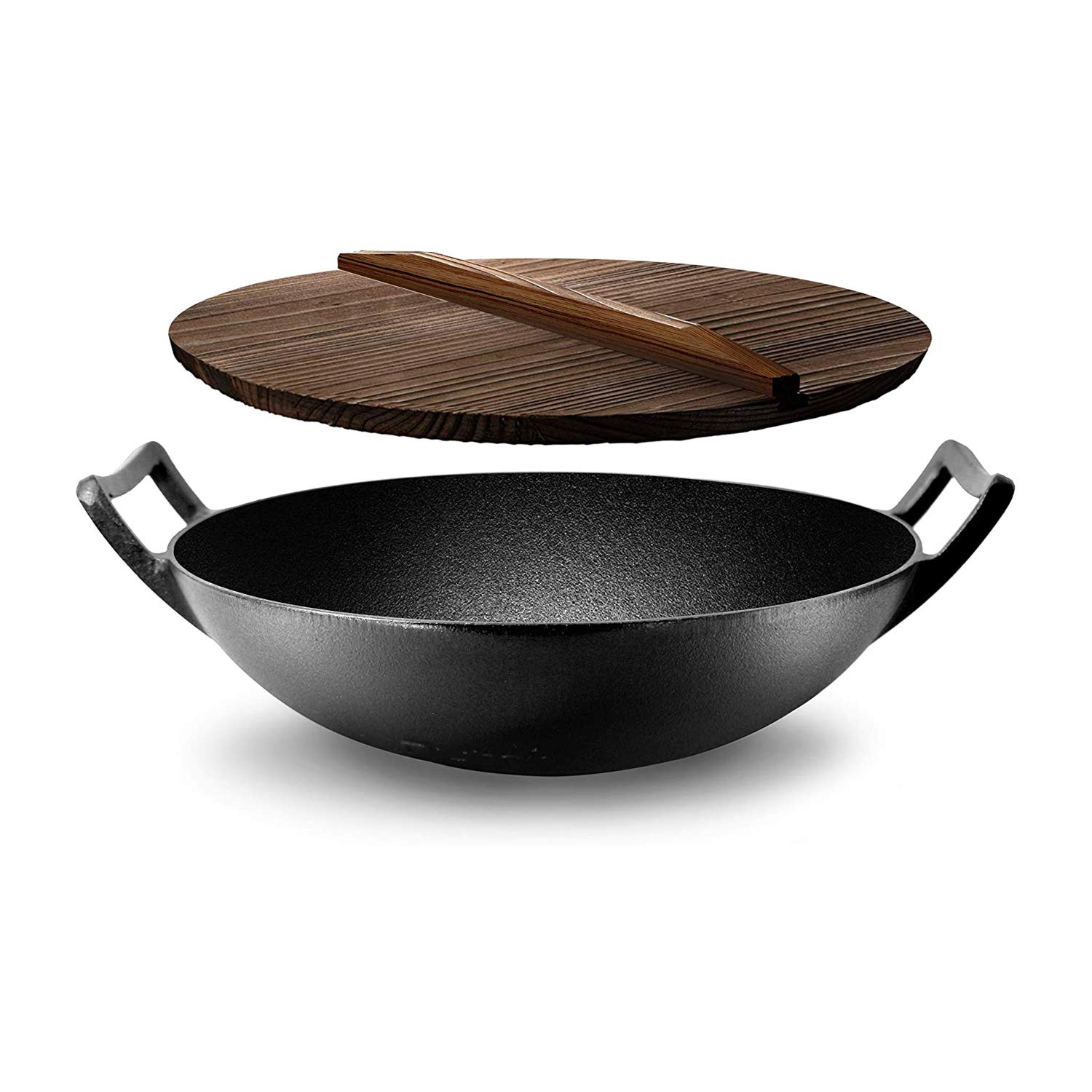
A heavy-duty pre-seasoned cast iron wok that comes with a wooden lid and mitts — excellent for heat retention and traditional cooking.
Why I picked it: I was drawn to the included wooden lid and the generous capacity for family meals and versatile cooking methods.
Best for: Cooks who want classic cast-iron performance and bundled accessories.
A reasonably priced cast-iron package.
Pros
- Pre-seasoned, ready to use
- Comes with wooden lid and mitt
- Excellent heat retention
- Induction compatible
Cons
- Quite heavy to lift single-handed
- Needs periodic seasoning care
- Wooden lid not oven safe
My take
This NutriChef wok stood out for how well it holds heat — I used it for searing, braising, and even shallow frying, and the results were consistently even.
The wooden lid and silicone mitt that arrived with the pan are nice touches that made it easy to transfer to the oven and handle safely.
It’s a heavy piece, so I didn’t flip it quickly like a lightweight carbon wok, but that mass is exactly what gives it excellent retention and deep browning.
If you want a sturdy cast-iron wok that’s ready to work and includes practical accessories, this one delivered in my kitchen.
7. 13" Pre-Seasoned Carbon Steel Wok – Best Pre-Seasoned Carbon Steel
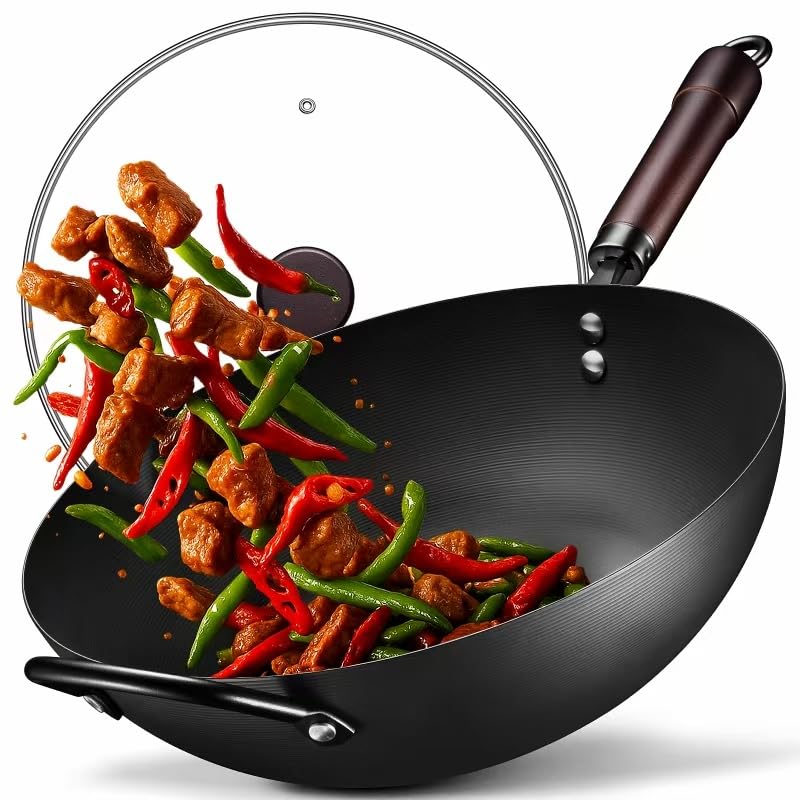
A pre-seasoned carbon steel wok with a flat bottom and glass lid — quick to heat, develops a natural nonstick surface with use.
Why I picked it: I wanted a flat-bottom carbon-steel wok that works reliably on electric and induction ranges without a lot of extra fuss.
Best for: Everyday stir-fries on modern cooktops where responsiveness matters.
A practical mid-range carbon steel option.
Pros
- Pre-seasoned for faster break-in
- Flat bottom suits all stoves
- Heats very quickly
- Develops great patina
Cons
- Handle thickness may feel bulky
- Requires hand washing and oiling
- A bit heavier than thin steel woks
My take
I used this 13" carbon steel wok mostly on my electric and induction cooktops and was impressed by how quickly it reached cooking temperatures.
The factory pre-seasoning made first uses less fussy, and after a few cooks the surface developed a slick patina that released food nicely.
It’s a practical, everyday wok — durable, responsive, and easier to maintain than coated nonstick pans once you get into the seasoning rhythm.
If you want a responsive pan for authentic stir-frying without chasing a delicate nonstick finish, this one is a reliable pick.
8. WANGYUANJI Nitrided Carbon Steel Wok – Best for Large Families
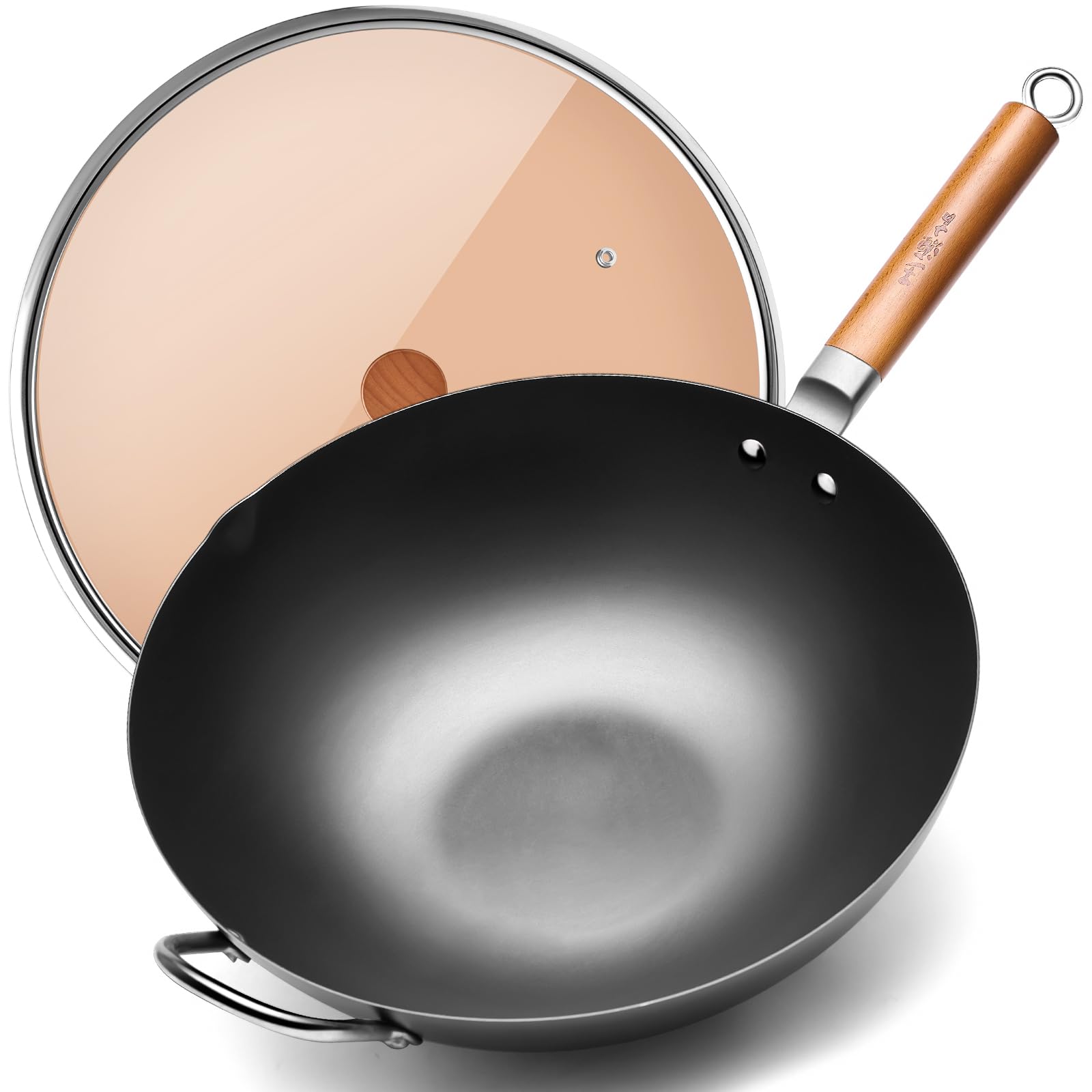
A very large, nitrided carbon-steel wok built for durability and rust resistance — excellent for big batches and pro-style heat.
Why I picked it: I tested this because I needed a genuine large-capacity wok with a hard surface that stands up to heavy use.
Best for: Large families and cooks who want a durable, rust-resistant wok for heavy-duty work.
A premium-large wok built for longevity.
Pros
- Huge capacity serves 6+ people
- Nitrided surface resists rust
- Detachable wooden handle for storage
- Flat bottom sits stable on all hobs
Cons
- Heavier than most woks
- Requires seasoning for optimal release
- Not ideal for single-handed tossing
My take
I brought this WANGYUANJI wok out when I had to feed a crowd — the 14.2" diameter and deep bowl let me toss large batches without spillover.
The nitriding process gives the surface a natural hardness that resists corrosion and holds up to metal spatulas, so long-term maintenance was simpler than with coated pans.
It’s a bit weighty, which contributes to its flat stability on induction and electric stoves, and I liked the detachable wooden handle for storage and safer handling.
If you’re cooking for many people and want a pro-style, low-chemical maintenance wok, this one performed exceptionally in my tests.
How I Choose a Large Wok
Material and Cooking Style
I first decide whether I want a reactive seasoned surface (carbon steel or cast iron) or a low-maintenance finish (stainless or coated nonstick).
Carbon steel and cast iron build a natural nonstick patina and shine at high heat, while stainless is easier to care for and nonstick coatings simplify cleanup.
- Choose carbon steel for rapid heat and authentic wok-hei flavor.
- Pick cast iron if you want maximal heat retention and longevity.
- Select stainless if you want oven-safe versatility and low maintenance.
- Use coated nonstick for the easiest cleanup and lower-fat cooking.
Shape, Size, and Fit for Your Range
I always check the actual cooking surface rather than advertised dimensions that include handles.
A flat bottom is essential for induction and electric glass cooktops; round-bottom woks remain best for open-flame wok rings.
- 11–12" is good for 2–4 people; 14"+ suits families and parties.
- Ensure the base sits flush on your stove to avoid uneven heating.
- Look for auxiliary handles on large pans to help with lifting.
Maintenance and Longevity
I consider how much time I’ll invest in seasoning and upkeep. Carbon and cast iron require oiling and hand-washing; stainless and nonstick are generally easier.
Check for coatings that have known durability problems before committing.
- Pre-seasoned pans save initial work but still benefit from your seasoning routine.
- Avoid abrasive scrubbers on coated surfaces to prevent premature failure.
- If rust resistance matters, nitrided finishes offer a useful compromise.
Frequently Asked Questions
Which wok material gives the best stir-fry flavor?
I prefer carbon steel or cast iron for the best wok-hei; both heat quickly to high temperatures and develop a natural patina that boosts flavor.
Can I use these woks on induction cooktops?
Most of the pans I tested with flat bottoms worked well on induction. Always check that the base is flat and fully contacts your induction hob.
How much care do carbon steel and cast iron require?
I hand wash and dry them immediately, then apply a thin layer of oil after each use. Periodic reseasoning keeps the surface slick and rust-free.
Are nonstick woks worth it?
If you value easy release and quick cleanup for low-fat cooking, a high-quality ceramic-titanium nonstick can be ideal, but it won’t tolerate metal spatulas or extremely high heat like seasoned steel.
Final Take
After testing these large woks across stovetops and cooking styles, I picked options for specific needs: stainless for low-maintenance induction use, carbon steel for authentic high-heat wok work, and cast iron for maximum heat retention.
Decide whether you want minimal upkeep or maximum flavor potential, then choose the material and size that match the way you actually cook.
I kept practicality in mind throughout — real cooking surface, stovetop fit, and daily maintenance matter more than marketing numbers.
