
I tested six accessible oil paints and starter sets to find options that are forgiving for new painters but still deliver professional results.
I spend a lot of studio time testing oil colors across portraits, landscapes, and loose studies. For beginners I look for paints that are easy to mix, forgiving in handling, and good value so you can practice without wasting supplies.
In this roundup I chose single tubes and starter sets that cover traditional oils, water-mixable options, and a skin-tone focused palette so you can pick what fits your workflow and workspace.
I compared these paints by mixing, layering, and using them with common mediums and cleanup methods to highlight how each performs for beginners.
1. Winsor & Newton Winton Oil Colour — Prussian Blue – Best Single Color
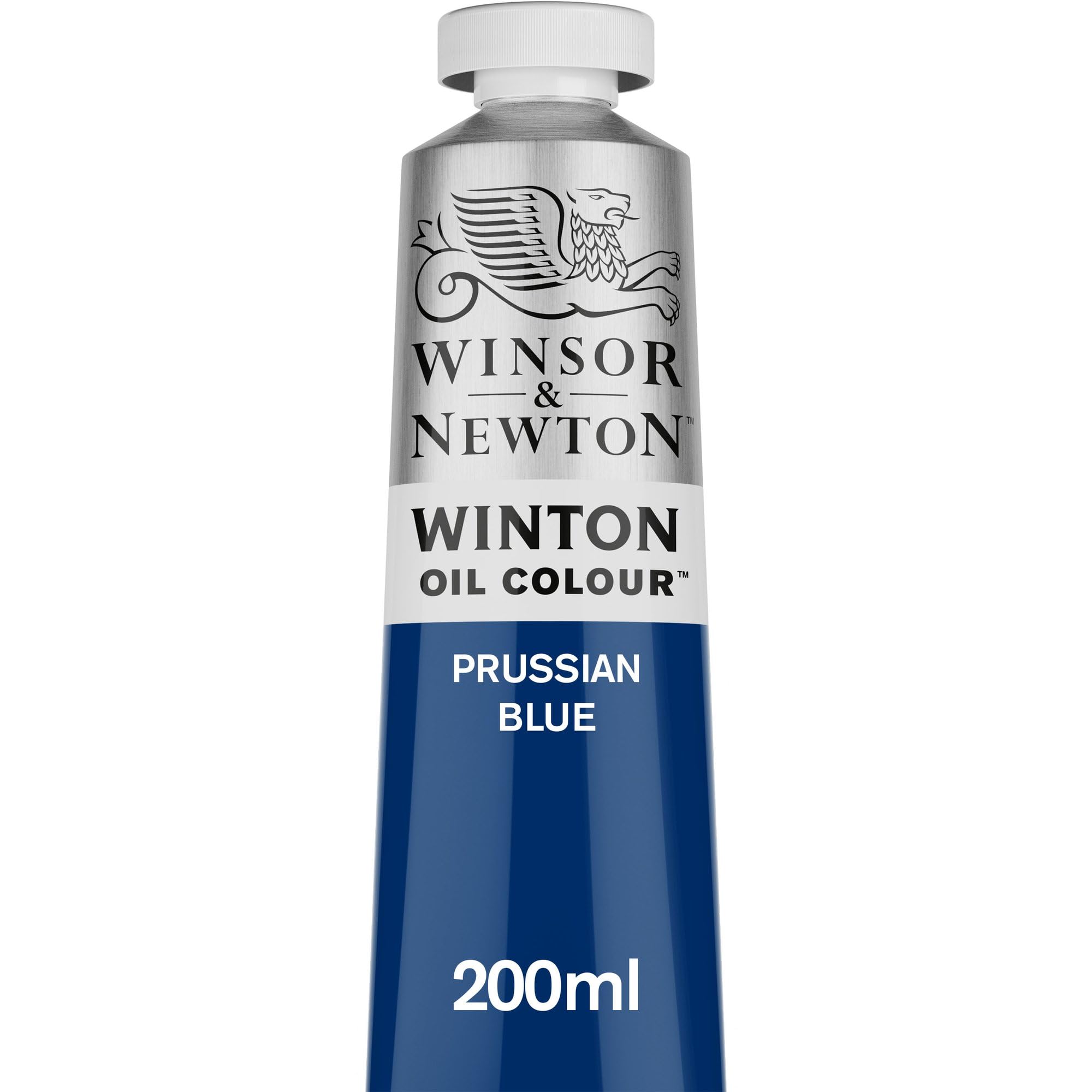
A dependable student-line Prussian blue that gives deep, permanent color without breaking the bank.
Why I picked it: Trusted permanence and consistent performance from a studio-focused Winsor & Newton line.
Best for: Beginners who want a reliable, permanent blue for mixing and larger pieces.
Affordable student-grade option with professional pedigree.
Pros
- Permanence rating A
- Good pigment load for the price
- Consistent, smooth handling
- Great for mixing deep shadows
Cons
- Less concentrated than artist-grade tubes
- Student line can be slightly stiffer
My take
I reach for this Winton Prussian Blue when I need a trustworthy, deep blue that mixes cleanly. It lays down with a slightly stiffer body than artist-grade oils, which helps me retain brush and knife marks when I want texture.
In mixed work it held its chroma well and behaved predictably with linseed and walnut oil. For exercises where I use a lot of paint—blocking in large shapes or glazing after scumbling—the tube size and price make it easy to practice without worrying about wasting premium pigment.
2. Pébéo Fine Oil XL — Ultramarine Blue – Best Quick-Drying
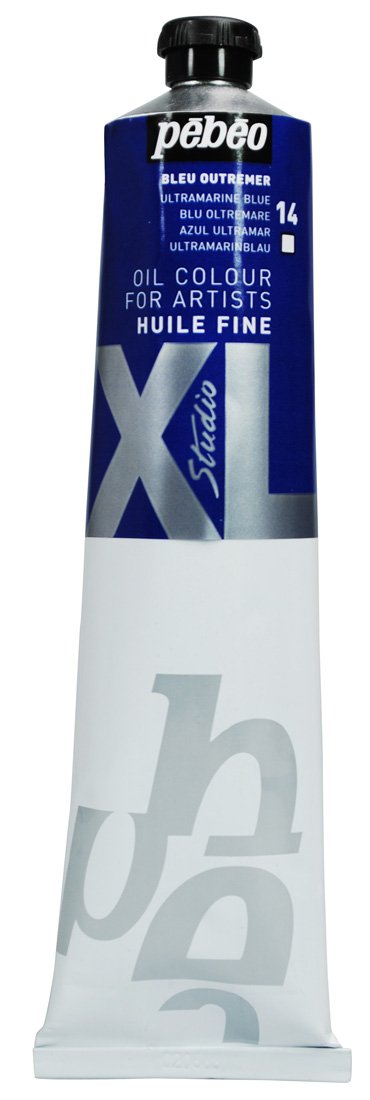
A high-volume, quick-drying ultramarine that’s versatile on many surfaces and good for heavy work.
Why I picked it: Quick drying and substantial tube sizes make it great for large or impasto work.
Best for: Painters who work alla prima or need faster rework times.
Great price-quality for studio work and large formats.
Pros
- Dries faster than many oils
- Works on multiple surfaces
- Rich color when applied thick
- Large tube sizes
Cons
- Medium lightfastness
- Some colors are less pigmented
My take
I used the Pébéo Ultramarine for a few large abstracts and appreciated how quickly I could recoat — the paint accepted another layer in a few days when applied reasonably thick.
The body is well suited to impasto and palette-knife textures, and I liked that it didn’t feel 'oily' coming from the tube. On smaller, tight studies I noticed the pigment strength can be variable versus premium artist lines, but for everyday practice and big canvases it’s a solid, economical workhorse.
3. Winsor & Newton Winton 20-Color Set – Best Starter Set
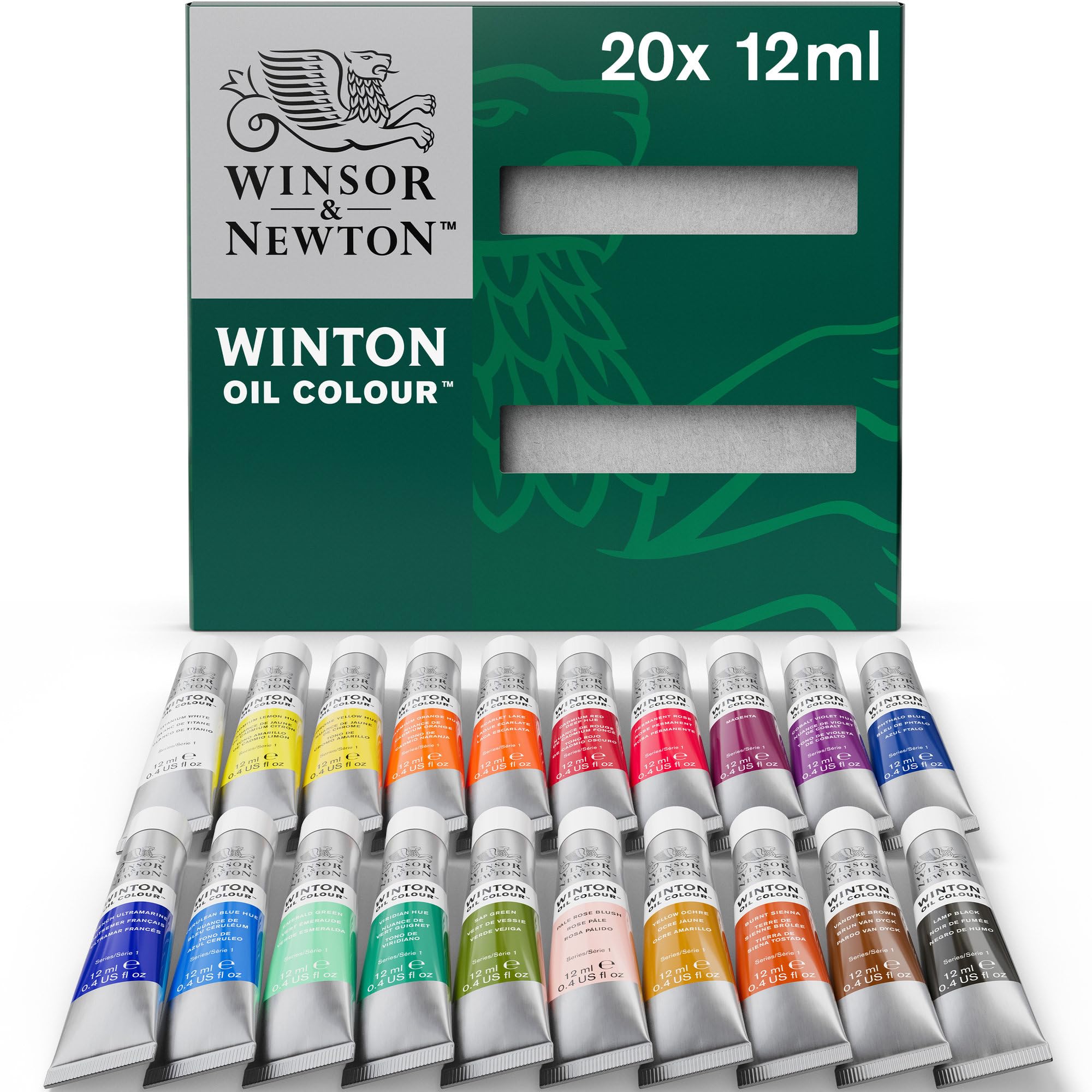
A compact 20-color starter palette with uniform consistency that covers most beginner needs.
Why I picked it: Covers a full beginner palette with consistent handling across colors.
Best for: Beginners who want a ready-to-paint range without mixing every color from scratch.
Good value starter set for learning mixing and color relationships.
Pros
- Twenty essential colors
- Uniform, slightly stiffer consistency
- Great pigment load for a student set
- Good coverage and retention
Cons
- Small tube sizes (12ml)
- Some shades less saturated than pro lines
My take
I keep this Winton 20 set in my teaching kit because it gives students a reliable, balanced palette right away. The paints share a consistent stiffness that makes transitioning between colors predictable.
For finished pieces I sometimes reach for larger, artist-grade tubes, but for studies, color mixing practice, and figuring out palette ratios these tubes are ideal. Be aware the small 12ml tubes will run out if you do a lot of large-format work.
4. Winsor & Newton Artists' Oil Colour — Gold Ochre – Best Artist Grade Single Pigment
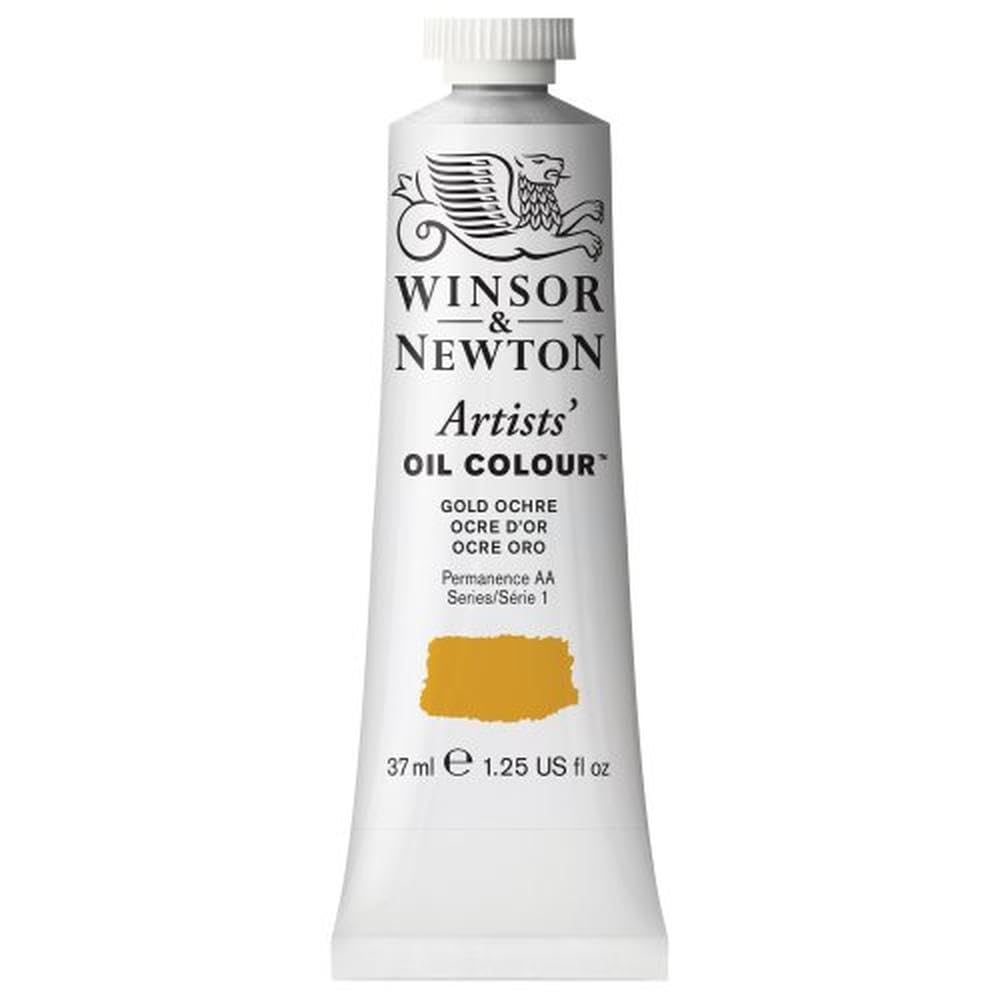
A true artist-grade gold ochre with single-pigment formulation and richly creamy handling.
Why I picked it: Artist-grade stability and single-pigment purity for clean, reliable mixes.
Best for: Painters who want premium handling and predictable mixing behavior.
Premium, professional-grade option for durable results.
Pros
- Artist-grade, single pigment
- Creamy, juicy consistency
- Excellent tinting strength
- Stable, non-separating tubes
Cons
- Higher-cost, premium option
- Less accessible in brick-and-mortar stores
My take
I use the Artists' Gold Ochre when I need a warm earth that mixes cleanly and keeps color relationships stable. The single-pigment formulation makes it easy to predict how it will alter mixtures—no unexpected shifts.
Handling is noticeably creamier than student ranges, and the paint stays workable on the palette without separating. If you’re building a permanent collection of colors for polished work, this kind of tube is worth investing in.
5. Winsor & Newton Artisan Water Mixable — Naples Yellow Hue – Best for Safer Studios
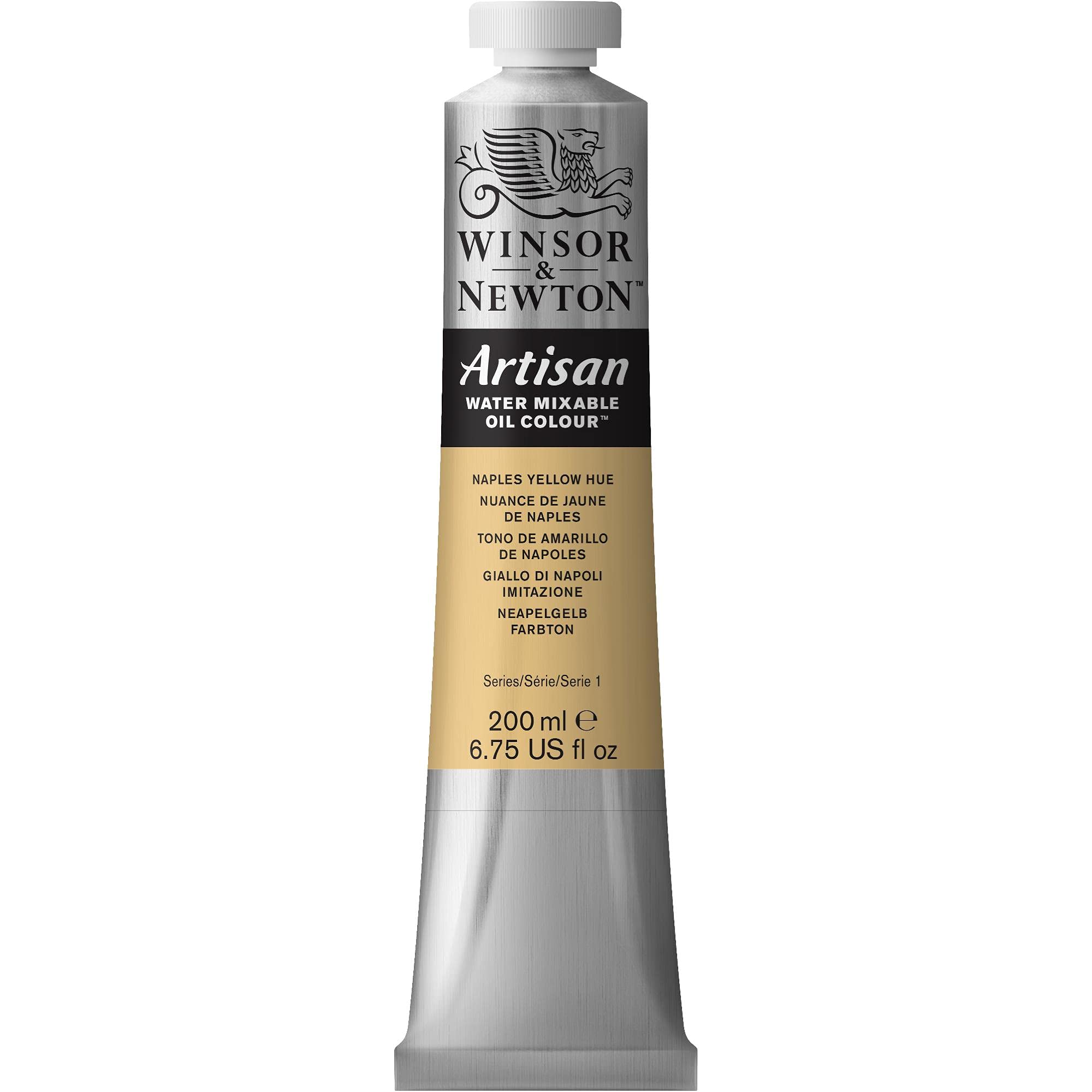
A genuine oil that thins and cleans with water, ideal for home studios and classrooms.
Why I picked it: Water cleanup and oil-like feel reduce solvent exposure in shared spaces.
Best for: Artists who want oil handling without solvent fumes.
A convenient, safer alternative to conventional oils.
Pros
- Cleans with water
- Genuine oil feel
- Opaque, warm hue
- Conforms to ASTM D4236
Cons
- Different handling than conventional oils
- Water-thinned paint can stay tacky
My take
I switch to Artisan when I’m working at home or teaching workshops because cleaning brushes with water is a huge convenience and removes the need for turpentine in small spaces.
The paint behaves like oil for the most part, though it feels slightly less buttery than classic linseed formulations. I recommend using the brand’s water-mixable thinners rather than plain water for major thinning—water-thinned films can remain tacky if overused.
6. ZenART Portrait Palette Oil Set – Best for Portraits
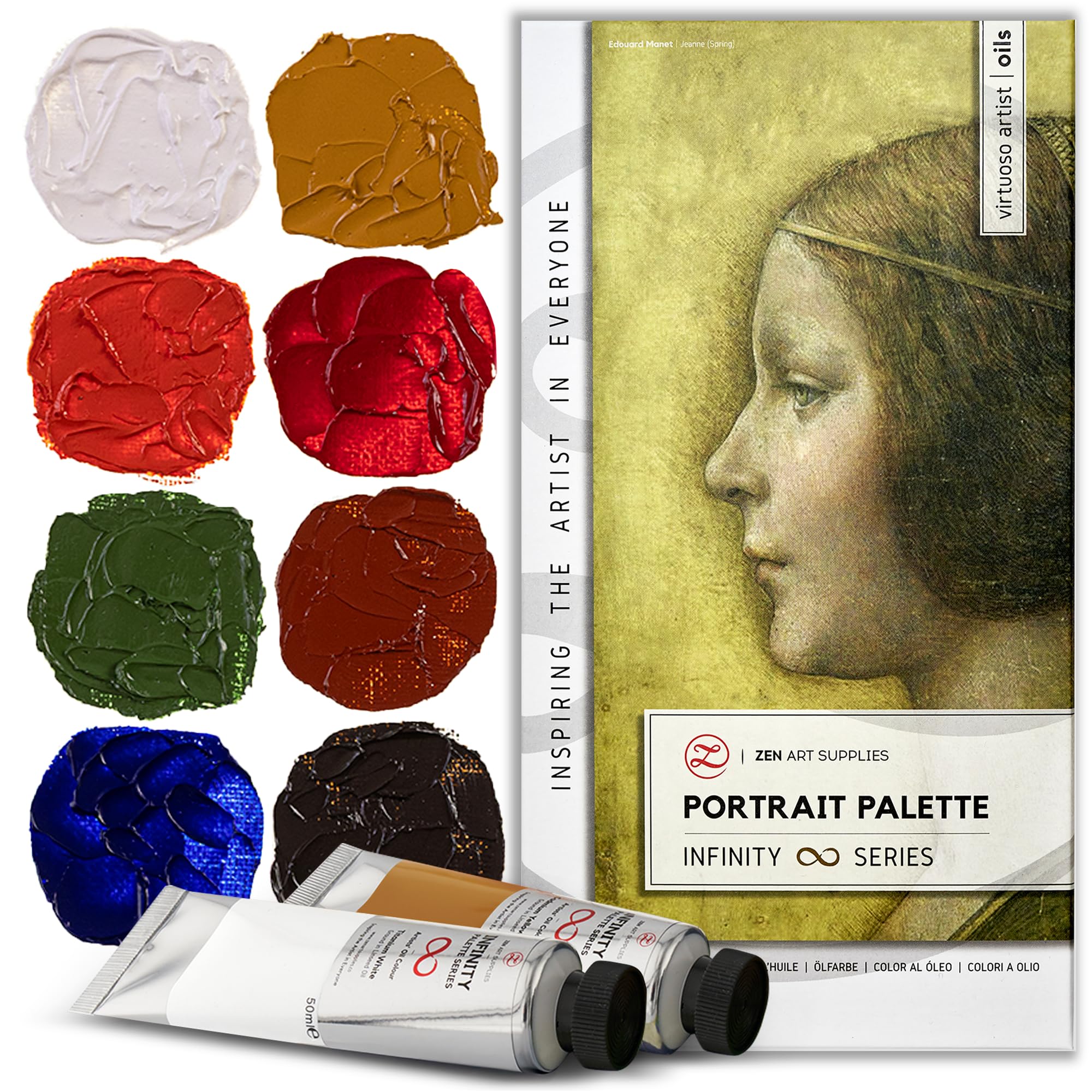
An eight-color, skin-tone–focused set that’s vegan, non-toxic, and built for portrait and figure work.
Why I picked it: Palette inspired by Old Masters, optimized for realistic skin mixes.
Best for: Beginners and eco-conscious painters focusing on portraits and earth-toned work.
Good-value starter set with large tubes and eco credentials.
Pros
- Skin-tone focused palette
- Large 50ml tubes
- Non-toxic and vegan
- Creamy, easy-to-mix consistency
Cons
- May need more paint for opacity
- Not water-mixable
My take
I used the ZenART Portrait Palette for a series of head studies and appreciated how the limited, earth-focused set forces you to learn mixing skin tones quickly.
The tubes are generously sized and the colors are buttery straight from the tube. I did find I often reached for slightly more paint than with some premium brands to get the same coverage, but the non-toxic, low-odor formulation made long sessions comfortable.
How I Choose Oil Paints for Beginners
Key things I consider
I focus on handling, pigment strength, and safety for beginners. Those three factors determine whether a paint is pleasant to use and forgiving while you learn.
Tube size and value matter too—bigger tubes let you practice mixing and losing fewer supplies to waste.
- Handling: buttery vs. stiff affects texture and brush marks.
- Pigment load: stronger pigments cover more area and mix predictably.
- Permanence/lightfastness: look for A/AA permanence for archival work.
- Cleanup: water-mixable vs. solvent cleanup affects studio setup.
Starter sets vs single tubes
I recommend a starter set if you want to learn mixing or need a ready palette for studies.
Single tubes are better when you’ve identified a color you use a lot and want consistent pigment quality.
- Sets: great for learning color relationships.
- Singles: better value for colors you use daily.
Water-mixable oils
I find water-mixables invaluable in shared spaces or for health-conscious painters because they eliminate solvent fumes.
They behave slightly differently, so expect a learning curve around thinning and drying.
- Use brand-compatible thinners for best drying and film integrity.
- Avoid over-thinning with plain water to prevent tacky films.
When to step up to artist-grade
I step up when I want cleaner mixes and higher pigment concentration—artist-grade paints make it easier to achieve luminosity in finished pieces.
For practice, student and mid-range lines give most of the learning benefits at lower cost.
- Artist-grade: higher pigment, better permanence.
- Student-grade: consistent behavior and lower cost for exercises.
Frequently Asked Questions
Are water-mixable oils good for beginners?
Yes — I recommend them for beginners who want oil-like handling without solvent fumes. They clean with water and are easier to use in shared spaces, though they require careful thinning to avoid tacky drying.
Do I need artist-grade paints as a beginner?
Not necessarily. I learn most color and mixing fundamentals with student or mid-range lines; I upgrade to artist-grade when I need stronger tinting power or archival permanence for finished work.
How long do oil paints take to dry?
Drying depends on pigment, layer thickness, and medium. I typically wait days to a week for surface drying on thin layers, and months for thick impasto to cure fully before varnishing.
Final Take
If you’re starting out, pick one set or a few single tubes that match your preferred subjects—landscapes, portraits, or quick studies—and spend time learning mixing and medium control.
For safer home studios choose water-mixable options; for long-term finished work invest in a few artist-grade tubes. I keep a mix of student and artist tubes in my kit to balance practice and polished pieces.
