
I tested four popular lumbar cushions across office chairs, cars, and gaming rigs to find comfortable, breathable support that actually stays put.
I spend long hours at a desk and in a car, so a good lumbar cushion isn’t a luxury for me—it’s essential. I tested these cushions across workdays, commutes, and gaming sessions to evaluate support, fit, and daily wearability.
In this roundup I focused on foam quality, strap stability, breathability, and how each shape interacts with different seats. Below I explain what worked for me and why I kept reaching for certain cushions over others.
I compared each pillow on density and contour, strap system and fit on different seats, cover breathability and ease of cleaning, and portability. The Everlasting Comfort felt like the most balanced all‑around option; the QUTOOL leans firmer with upgraded straps; the Samsonite is compact and travel‑friendly; and the Niceeday offers taller, fuller coverage for bigger sloped chairs.
1. Everlasting Comfort Lumbar Support Pillow – Best Overall
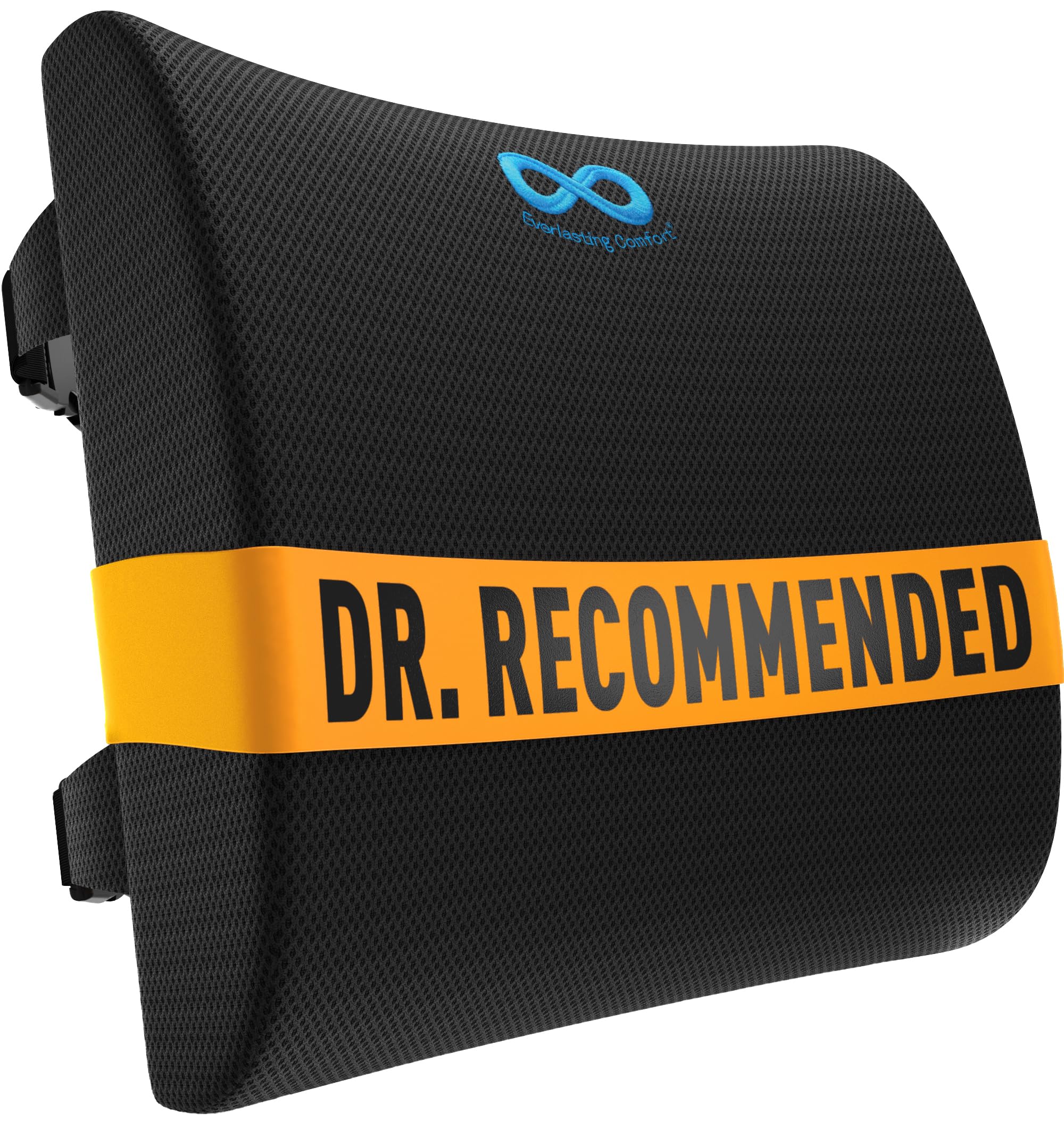
I found the Everlasting Comfort pillow balances firm memory foam with a breathable mesh cover and strong straps that hold on wide seats.
Why I picked it: Balanced high-density memory foam and wide adjustable straps.
Best for: People who move a cushion between car, office, and couch.
Midrange value with durable construction.
Pros
- Dense memory foam that keeps shape
- Dual adjustable straps with extenders
- Removable, machine-washable mesh cover
- Portable and lightweight
Cons
- A bit wide for tight bucket seats
- Not the thinnest profile for low-clearance chairs
My take
I used this cushion for long drives and at my desk and immediately noticed steadier posture. The high-density memory foam provides firm support without feeling rock‑hard, and it resisted collapsing after extended sessions.
The dual straps, plus extension pieces, made it simple to secure the pillow across everything from my office chair to my SUV seat. It stayed put during long commutes and didn’t require constant re-adjustment.
The mesh cover breathes well and comes off for machine washing, which I appreciated after sweating during a warm afternoon drive. Because the cushion is slightly wider, I opted to use it on most chairs rather than the narrow side bolsters of some car seats.
2. QUTOOL Lumbar Support Pillow – Best Value
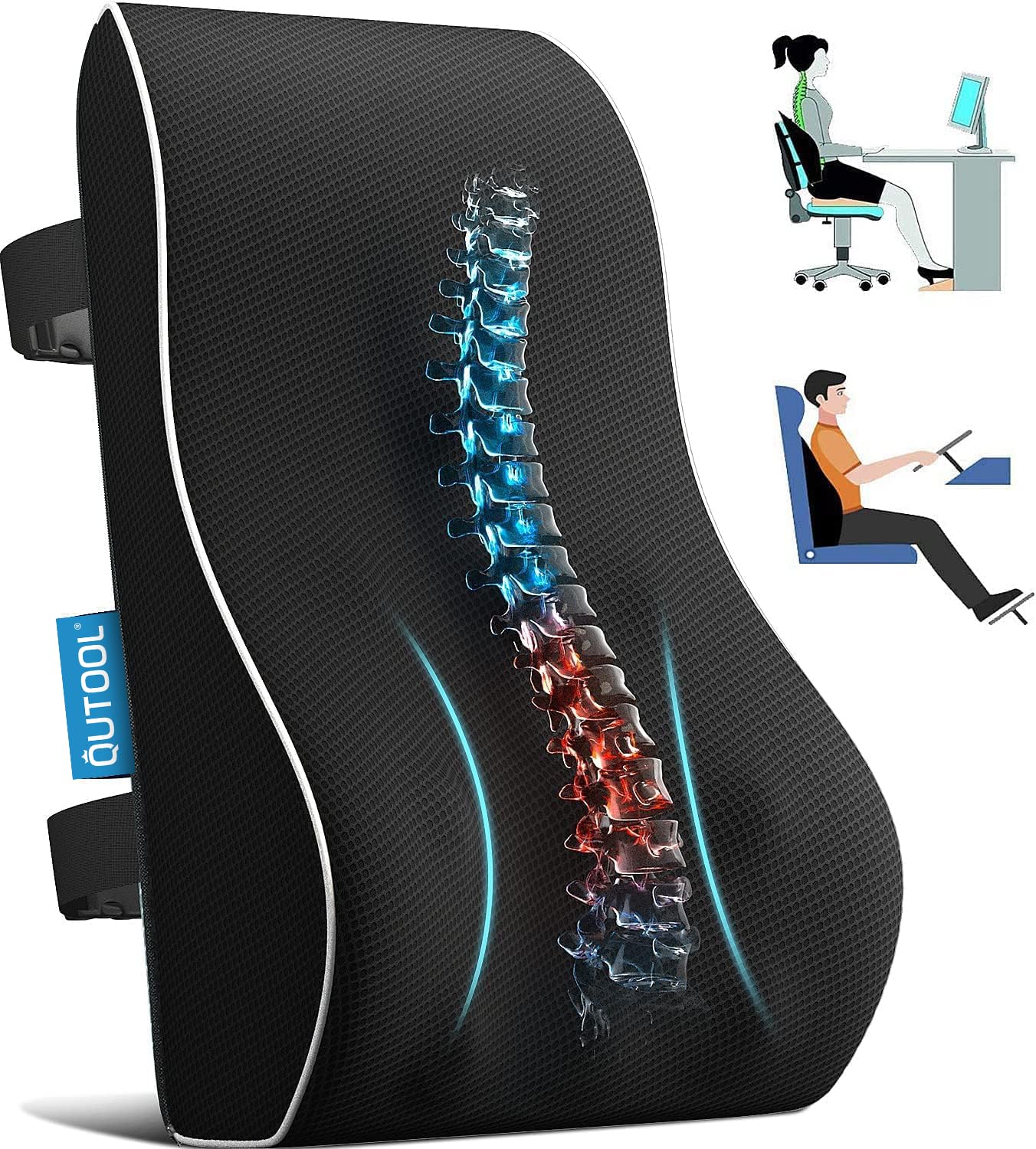
This pillow delivers firm, molded memory foam and longer factory straps, making it a reliable, budget-friendly support option for desk and car use.
Why I picked it: Upgraded long straps and firm, molded memory foam.
Best for: Anyone wanting firm lumbar support on a budget.
Affordable option with durable materials.
Pros
- Firm molded memory foam
- Long, upgraded straps
- Removable 3D mesh cover
- Compact and easy to move
Cons
- May feel too firm for all-day use
- Not ideal for very small sofas or tightly bolstered seats
My take
I appreciated how the QUTOOL maintains its shape; the molded memory foam delivers consistent support and didn’t flatten after hours of sitting. That firmness is helpful when I need a clear reminder to hold better posture.
The upgraded straps are noticeably longer than many competitors’ and held the cushion steady on my office chair and car seat without extenders. I was able to flip the pillow to target upper or lower lumbar support as needed.
The mesh cover keeps air moving and cleans easily in the machine. If you prefer a softer, cloudlike cushion, this one leans toward the firm side, which I consider ideal for posture work but not everyone’s pick for lounging.
3. Samsonite Memory Foam Lumbar Pillow – Best for Travel
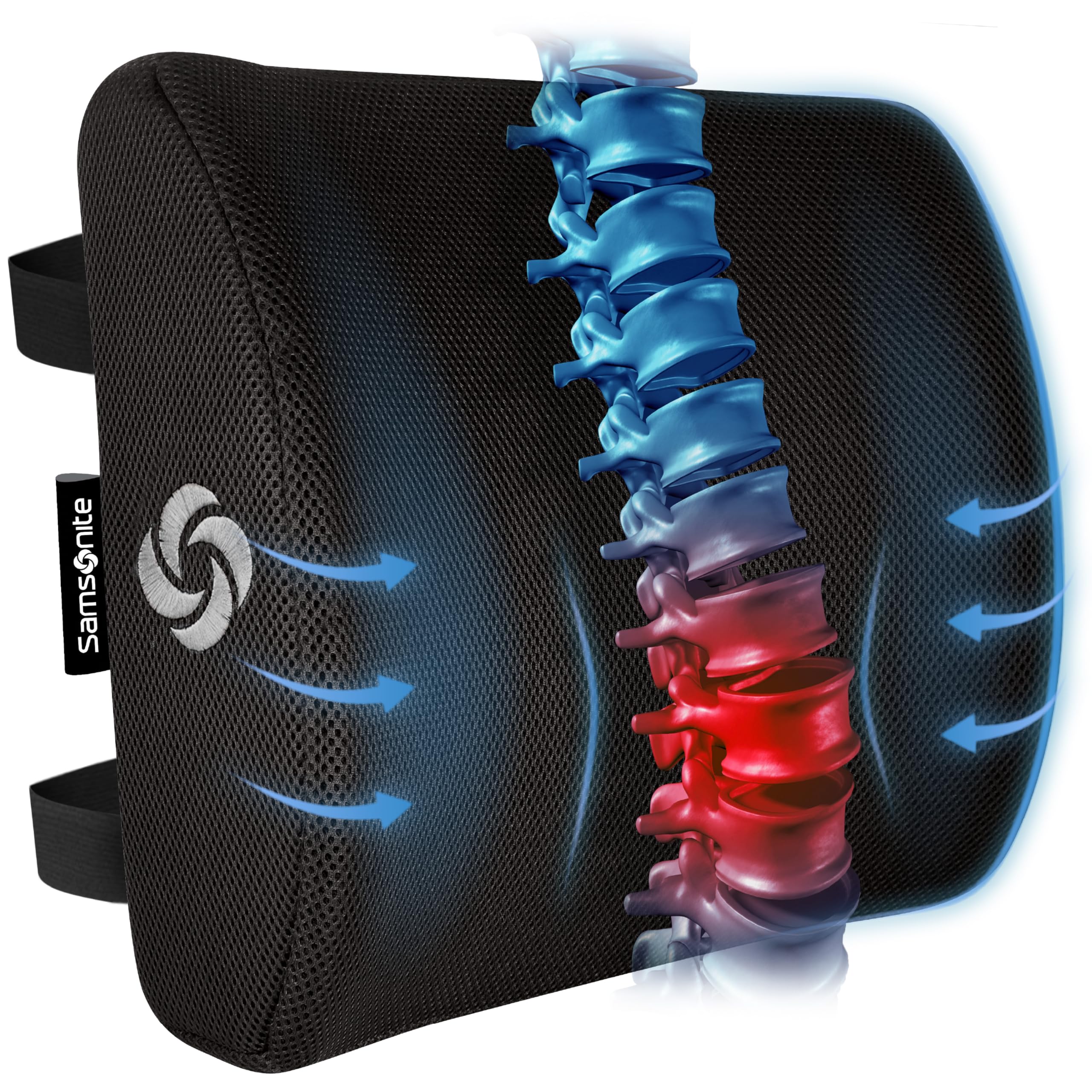
Samsonite’s compact profile and high-grade memory foam make it my go‑to when I need portable, targeted lumbar support for travel or multi‑chair setups.
Why I picked it: Compact, high-grade foam and slim travel-friendly shape.
Best for: Frequent travelers and people who switch seats often.
Practical, travel-oriented choice.
Pros
- High-grade memory foam contouring
- Slim, portable silhouette
- Ventilated mesh cover
- Easy to reposition
Cons
- Slightly firmer than plush cushions
- Smaller footprint may suit some chairs less
My take
I packed the Samsonite pillow in my carry bag for work trips and found it transformed rental car seats and airport benches. The foam contours to my lumbar curve and feels intentionally firm to keep my spine neutral.
The adjustable strap is easy to set and keeps the cushion from sliding during long drives. I liked being able to move it up and down to find the sweet spot for different chairs.
Because the design is slim, it slips into backpacks and under carry items without bulking up my bag. The breathable mesh cover kept me cooler during warm commutes and was simple to remove for cleaning.
4. Niceeday Lumbar Support Pillow – Best for Full Coverage
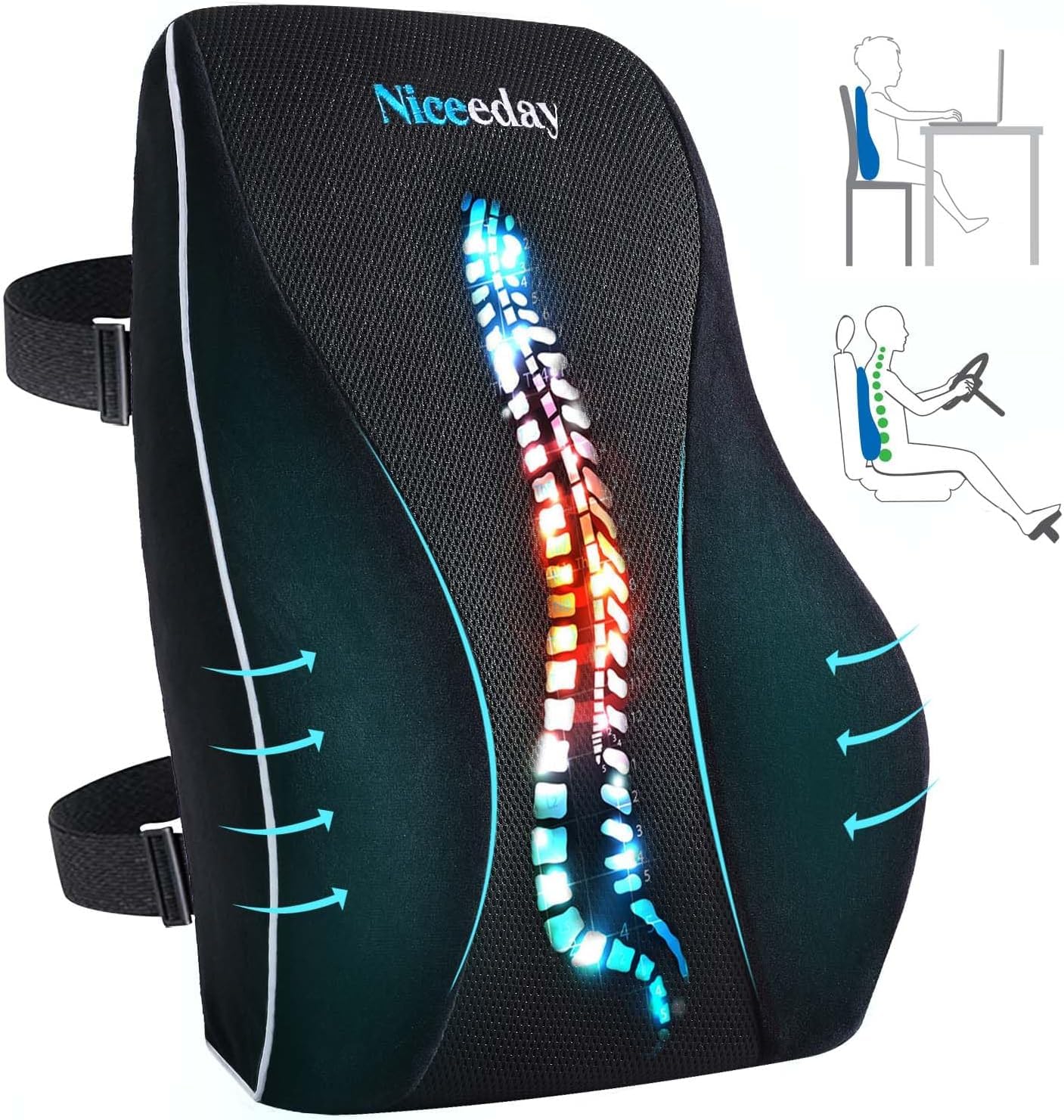
The Niceeday stands out for taller, thicker coverage that cradles a larger portion of the mid‑ and lower‑back—useful for deep or sloped chair backs.
Why I picked it: Extra tall and thick design for more surface contact.
Best for: People who need broader mid‑ and lower‑back support.
Feature-rich option with full‑back coverage.
Pros
- Taller, wider profile for more coverage
- 3D breathable mesh and suede backing
- Machine-washable cover
- Adjustable straps with long range
Cons
- Can be too thick for tight car seats
- Bulky for minimal seat clearance
My take
I reached for the Niceeday when I wanted support that covered more of my back rather than a narrow lumbar roll. The taller contour hugged my lumbar and mid‑back and improved how my spine aligned when I sat upright.
Because it’s thicker, I found it especially helpful in recliners and larger office chairs that otherwise lack support. In smaller cars the cushion pushed me forward, so I avoided it on tightly bolstered seats.
The straps adjust across a wide range and kept the pillow in place while I switched chairs. The 3D mesh cover breathed well, and the memory foam retained shape after repeated use.
How I Picked and Tested These Lumbar Cushions
Key factors I tested
I focused on foam density and contour to judge how well each pillow supports the natural lumbar curve without collapsing over time.
I evaluated strap systems for adjustability and whether the cushion stayed put during normal movement and driving.
Breathability and cover care matter for daily use, so I checked mesh ventilation and how easily covers remove for washing.
- Foam density: firmer for posture, softer for lounging.
- Profile and coverage: narrow roll vs. full mid‑back support.
- Straps: length, adjustability, and whether extenders were included.
- Cover: removable, machine‑washable, and breathable materials.
- Portability: slim shapes fit travel bags; thicker ones are better for home chairs.
Practical tips from my tests
Measure how much space you have between seat back bolsters and the seat—thicker pillows can push you forward in tight car bucket seats.
Position the pillow at the small of your back; I fine‑tuned placement by moving it a few inches up or down until my lower back felt supported without leaning forward.
If you alternate chairs, choose a pillow with a strap range that covers both office and vehicle seats so you don’t need extenders.
- Try a firmer pillow for posture training and a softer one for long lounging sessions.
- Look for removable covers if you sweat or travel frequently.
- Bring a compact pillow when flying or renting cars to retain consistent support.
Frequently Asked Questions
How do I position a lumbar cushion for best support?
I place the cushion so its deepest curve sits at the small of my back (around the beltline). I then adjust height in small increments until my lower back feels cradled but not pushed forward.
Will a lumbar cushion fit my car seat?
I check the seat’s bolsters and available depth first—thicker cushions can be too proud for tight bucket seats. Compact or slim profiles work best for narrow car seats; taller designs suit larger SUVs and recliners.
How firm should a lumbar support be?
I prefer firmer foam for posture support during focused work, and slightly softer foam for long lounging. If you want posture correction, choose molded or high‑density memory foam.
Final Take
After testing, I kept different cushions for different roles: a balanced option for day‑to‑day use, a compact one for travel, and a taller pillow for full mid‑back coverage at home.
I recommend choosing based on where you’ll use the cushion most—office, car, or travel—and matching foam firmness and profile to that use. Each pillow here earned a place in my rotation because it solved a specific seating problem I encounter regularly.
