
I tested a range of cotton candy machines from countertop retro kits to commercial machines and accessories. This roundup highlights which models I’d pick for families, parties, and events based on performance, ease of‑g
I spent time spinning sugar with a handful of tabletop machines and a few commercial units so I could recommend the right cotton candy maker for different needs. I focused on how reliably each machine heats and spins sugar or hard candy, how easy the unit is to clean and operate, and whether the included accessories made parties simpler.
Across these machines I looked for a stable base, a secure rim or dome to control mess, clear instructions for consistent results, and the ability to use both flossing sugar and crushed hard candy. Below are the machines I kept coming back to after hands‑on testing and why I’d pick each for a specific use case.
I prioritized real-world performance: heat-up time, output consistency, ease of cleaning, accessory quality, and whether the unit handled both floss sugar and hard candy without making a mess.
1. Nostalgia Retro Cotton Candy Machine (Red) – Best Overall
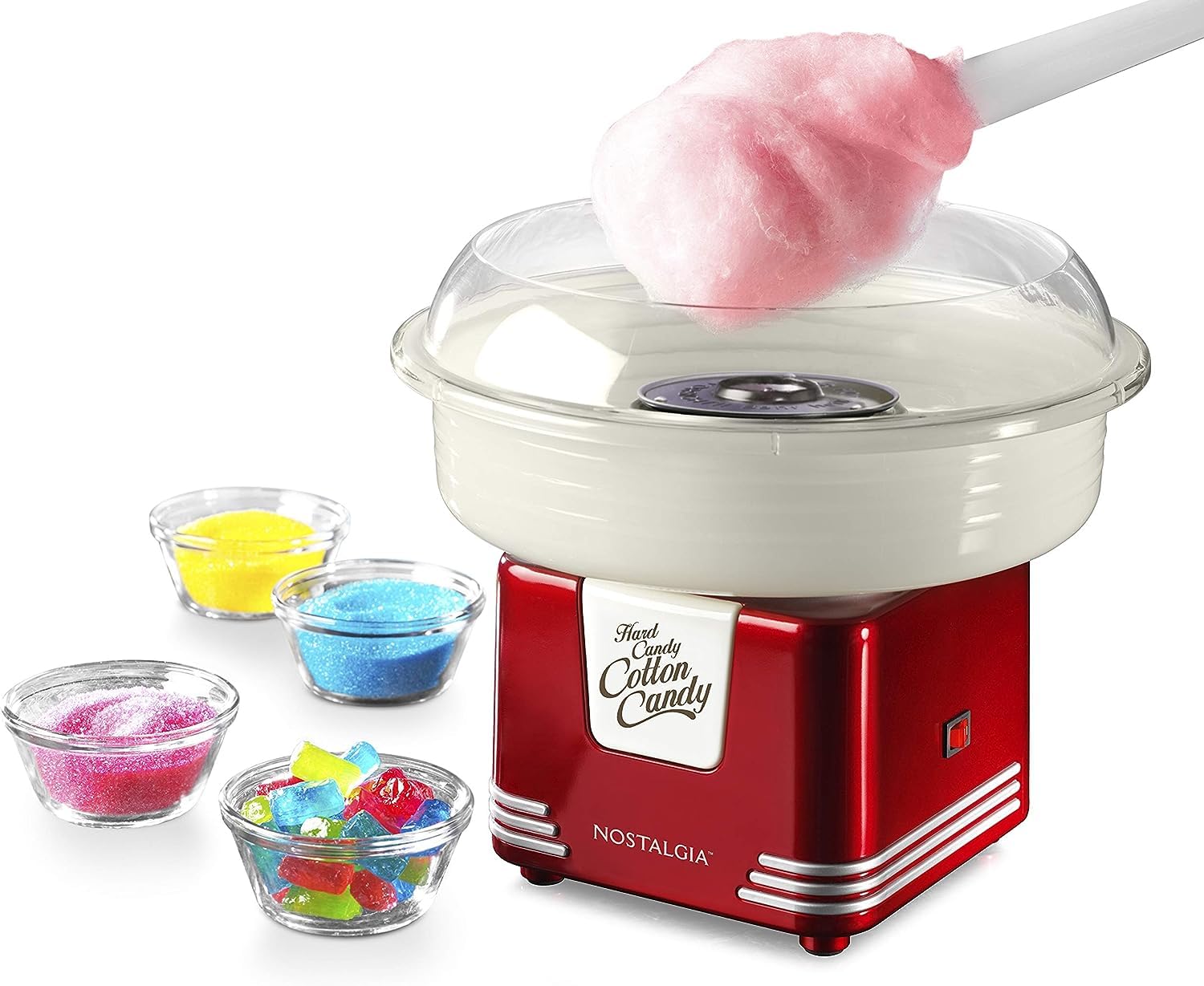
I found this retro Nostalgia unit to be the most reliable all‑around tabletop cotton candy maker for families who want fun flavors and simple operation.
Why I picked it: Consistent fluffy results with either floss sugar or crushed hard candy, plus useful accessories.
Best for: Home parties and flavor experimentation with kids.
An affordable family‑friendly machine.
Pros
- Works with floss sugar or crushed hard candies
- Clear rim guard for safe viewing
- Includes reusable cones and scoop
- Retro styling that looks great on a counter
Cons
- Takes several minutes to warm up
- Makes relatively small cones per batch
My take
I liked how this Nostalgia machine handled both flossing sugar and properly crushed hard candy. In my runs I crushed candies in a zip bag and blended them with a bit of table sugar; after a 10–12 minute warm‑up the unit produced light, fluffy strands that gathered easily on a cone.
The clear rim is helpful: it keeps the floss contained while letting me watch the process so I can time the scoops and twirling. Included accessories — two reusable cones, a sugar scoop, and an extractor head — meant I could start spinning right away.
Clean‑up was straightforward using warm water, and I learned that letting the unit reach full heat (10–15 minutes in my routine) avoids brittle, crunchy results. For family use and flavor‑play, this is the model I kept coming back to.
2. Nostalgia Vintage Cotton Candy Maker (Pink) – Best for Beginners
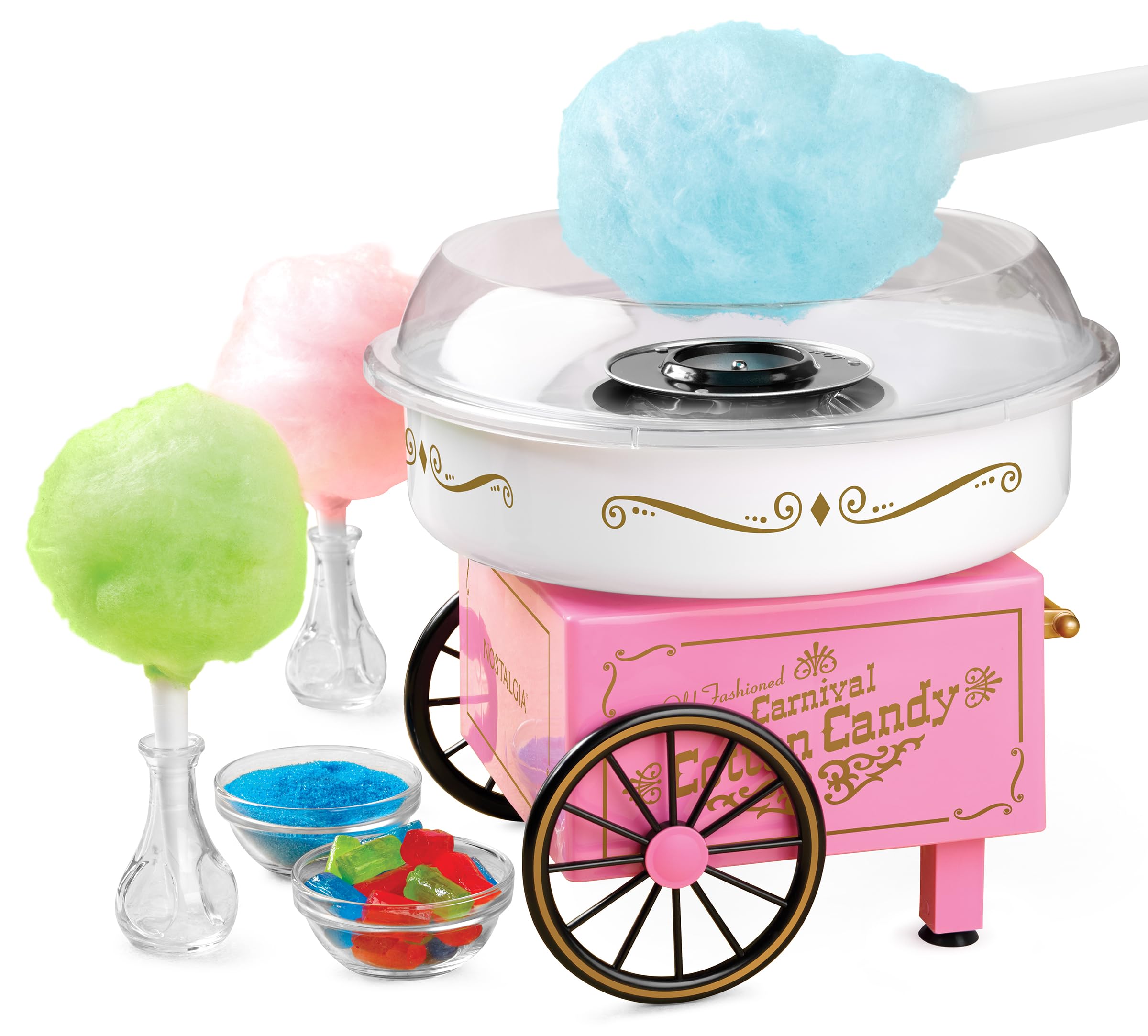
I recommend this compact Nostalgia model when I want a friendly, easy start—clear instructions and a stable base helped me get consistent results quickly.
Why I picked it: Simple setup, compact footprint, and a protective rim make it forgiving for first‑time users.
Best for: Parents who want a toy‑safe, counter‑top cotton candy maker.
A sensible, budget‑minded beginner pick.
Pros
- Compact design fits small counters
- Clear rim guard for containment
- Comes with cones and sugar scoop
- Suction feet add stability
Cons
- Requires full warm‑up to avoid brittle floss
- Some units can be sensitive to assembly
My take
I appreciated how complete the instructions were; following them made a big difference in performance. After a 10–15 minute warm‑up I was able to produce fluffy cotton candy without the sugar falling into the heating element.
The unit’s suction‑cup feet kept it steady while I spun cones, and disassembly is simple for fast cleaning. During my testing I also handled a separate unit that had a severe overheating problem, which reminded me how important careful filling and correct assembly are with these small centrifuges—I always keep the machine clean and never let sugar contact the sides of the extractor head.
For a first machine, the combination of straightforward operation and useful accessories made this the easiest model for me to teach kids how to make cotton candy safely.
3. The Candery Cotton Candy Machine – Best with Extra Supplies
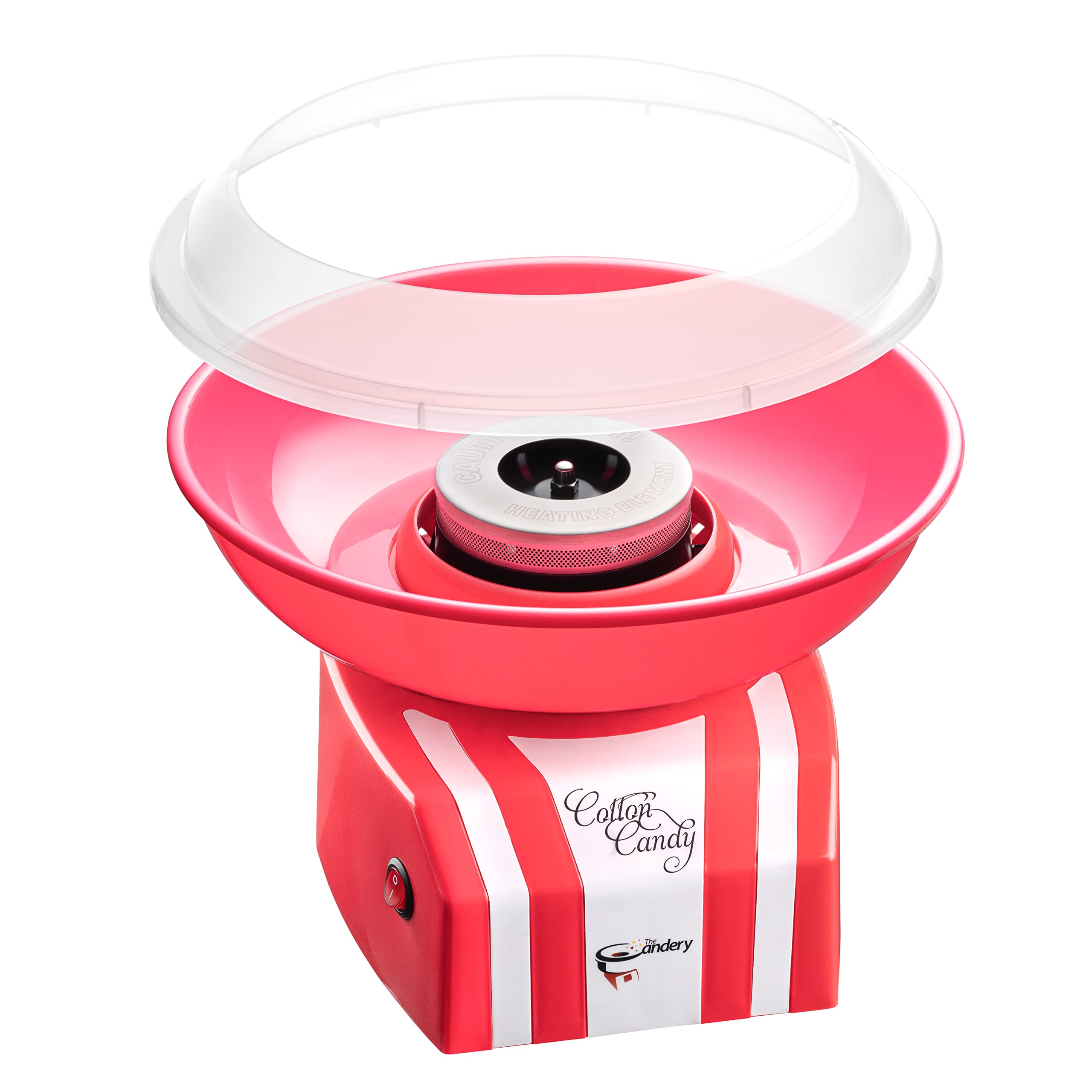
I liked that this Candery kit comes with plenty of cones and a scoop so parties can keep rolling without constant resupply.
Why I picked it: Includes 10 paper cones and a scoop; quick fluffing motor.
Best for: Small gatherings where I want to serve several guests in short order.
A low‑cost option that includes extra supplies.
Pros
- Ten cones included
- Fast motor forms floss quickly
- Reinforced bowl base for stability
- Protective shield to contain floss
Cons
- Can be noisy during operation
- Best used outdoors in humid climates
My take
The Candery machine impressed me with how quickly it gathered sugar into a puffy cone — often in 30 seconds after the head started producing webs. The reinforced bowl base and suction pads kept the unit anchored while I spun multiple cones back‑to‑back.
I appreciated the box of ten paper cones in the kit; that small touch made hosting a kids’ party easier because I didn’t have to wash cones between servings. The shield helps contain stray sugar, and the motor warmed up fast enough that I spent more time spinning than waiting.
I do note that I prefer to run this model outdoors on humid days. In dry conditions it works beautifully and the kids could operate it with supervision.
4. VIVO Cotton Candy Machine (20-inch Bowl) – Best Small Commercial
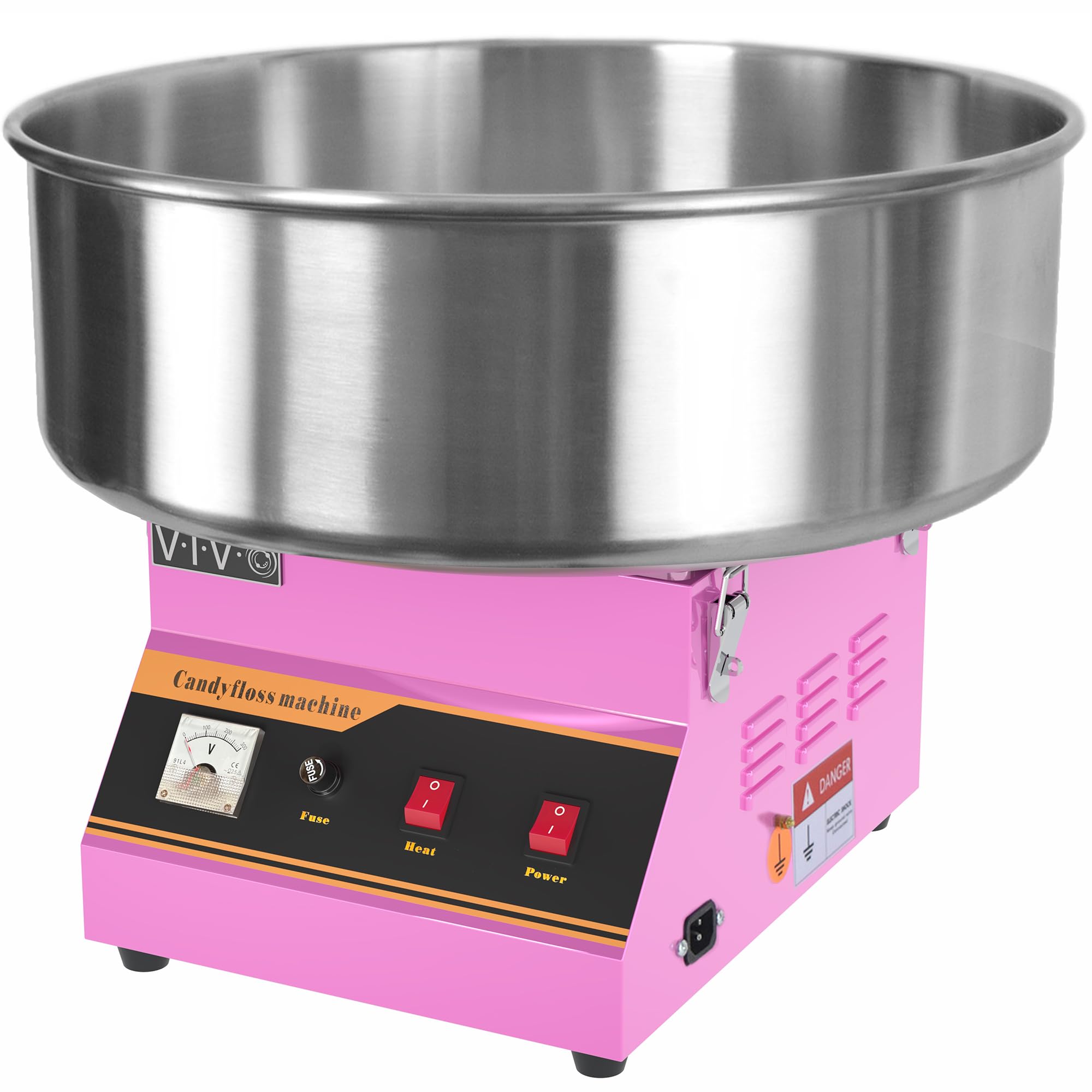
When I wanted professional‑style output without a full commercial tower, this VIVO unit delivered fast throughput and a big stainless bowl that makes large cones easy.
Why I picked it: High wattage and large stainless bowl for rapid output.
Best for: Neighborhood events and frequent parties where speed matters.
A higher‑powered investment for regular use.
Pros
- High wattage for quick production
- Large stainless steel bowl
- Disassembles for cleaning
- Included long‑handle sugar scoop
Cons
- Larger footprint needs more storage space
- Can be heavy to move
My take
I ran this VIVO machine for several sessions and found it makes cotton candy fast — I routinely produced multiple large cones in minutes. The 20‑inch stainless bowl gives me room to build up a big fluffy ball without losing lots of floss to flyaway.
Because the unit disassembles easily, cleaning and maintenance fit into my routine; I used warm water and mild soap for the bowl and a careful approach on the heater head to avoid damage. The included long sugar scoop makes filling straightforward and keeps me a step away from the hot head.
For small event use I liked its speed and consistent output; if I want full carnival scale I’d look at larger commercial rigs, but this model hit the sweet spot for neighborhood parties and fundraisers.
5. The Candery Cotton Candy Machine Kit – Best Bundle
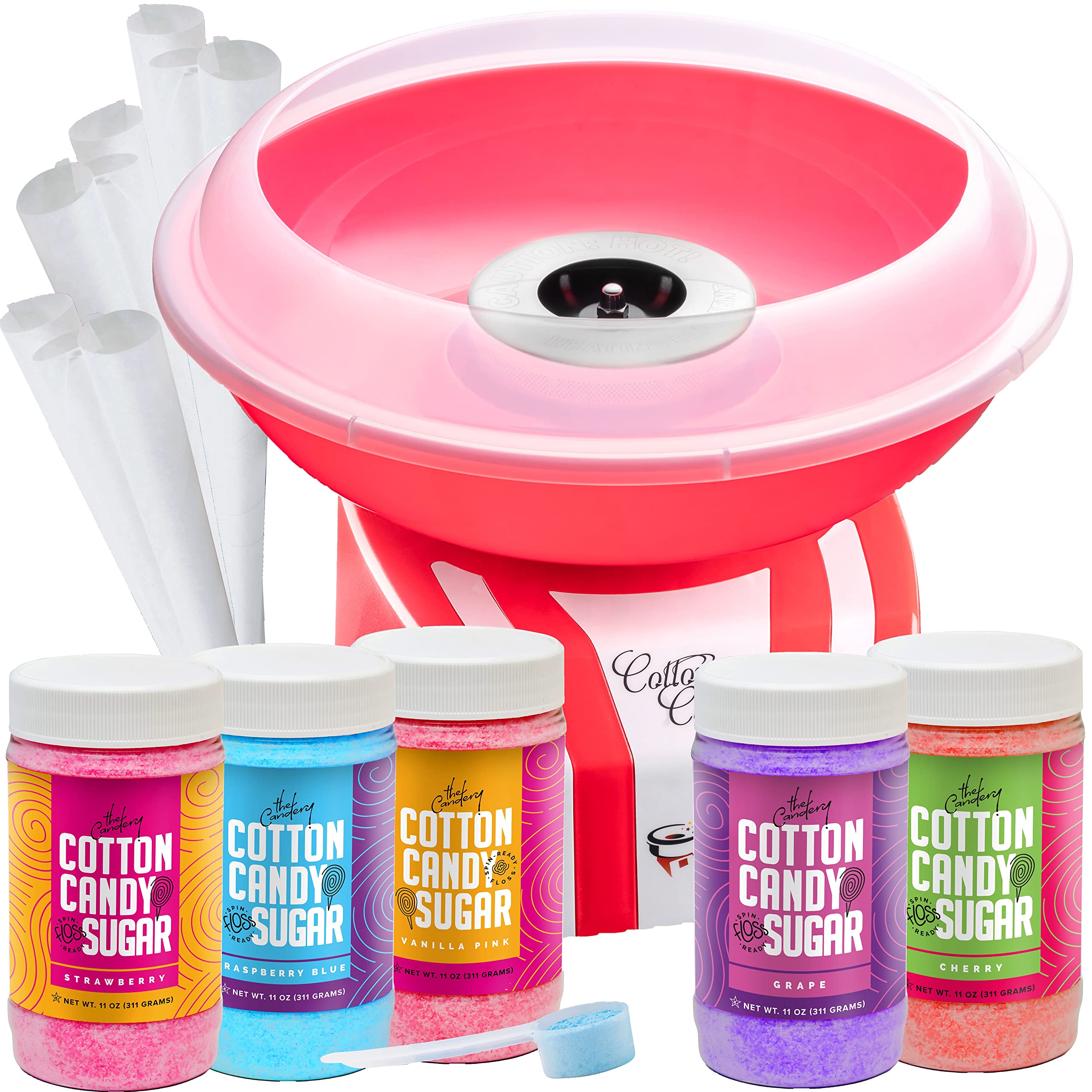
I recommend this kit when I want a machine plus a ready supply of flavored floss sugar and cones—handy for gifting or hosting without hunting down extras.
Why I picked it: Machine + jars of floss sugar and many cones included.
Best for: Gift buyers and hosts who want an out‑of‑the‑box party kit.
A convenient all‑in‑one option with midrange cost.
Pros
- Includes flavored floss sugar jars
- Supplied paper cones (large quantity)
- Lightweight and quiet
- Easy for kids to operate
Cons
- Some units showed early failure
- May make small cones per scoop
My take
I enjoyed the idea of a plug‑and‑play kit: the Candery bundle includes flavored sugar jars and a stack of cones so I could run straight into party mode without sourcing extras. The machine is lightweight and lived on my counter for a few weekends of use.
Operationally, I let the unit heat for about five minutes before adding sugar and found it produced light, fluffy cones when used as directed. Cleaning was reasonable — the bowl pops off and the rim wipes clean — but I was cautious around the heater element because the head can be sharp.
This kit is especially useful when I want the convenience of ready flavors and lots of cones; for heavy daily duty I’d choose a more commercial model, but for repeated home use the bundle kept me organized and serving quickly.
6. Olde Midway SPIN 2000 Cotton Candy Machine – Best for Events
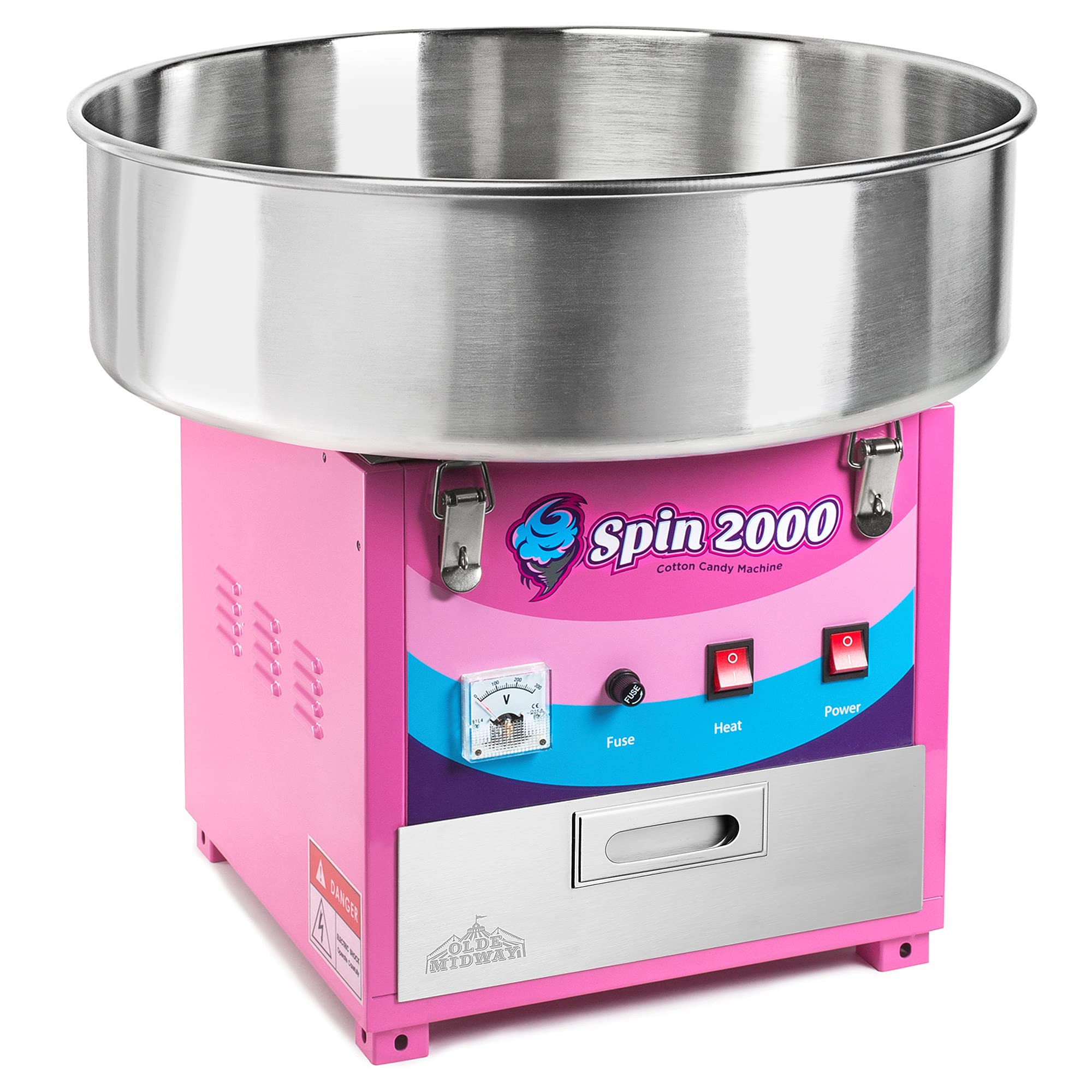
I turned to the Olde Midway SPIN 2000 when I needed fast, professional performance — it behaves like a small pro machine and kept up during a busy fundraiser I staffed.
Why I picked it: Commercial design, 20‑inch bowl, and fast 30–40 second output.
Best for: Fundraisers, school events, and high‑volume nights.
A pro‑level investment for frequent, high‑output use.
Pros
- Commercial build quality
- Very fast output per cone
- Includes spare belts and accessories
- Large 20-inch stainless bowl
Cons
- Heater head can be tricky to clean
- No dome included with base model
My take
I used the SPIN 2000 at a neighborhood fundraiser and the machine produced cones rapidly — one large cone every 30–40 seconds once warmed. The high‑performance motor and 20‑inch bowl give this unit the kind of throughput I expect from a professional setup.
The machine came with helpful extras I actually used: spare drive belts, a sugar scoop, and a small storage drawer for cones. Cleaning the bowl was quick; the heater head needs careful attention to remove baked on sugar, but vinegar and warm water did the trick for me.
If I’m running a multi‑hour event, this is the unit I pick for dependable output and the ability to keep a line moving without frequent cooldowns.
7. VEVOR Electric Cotton Candy Machine (1000W) – Best Commercial Alternate
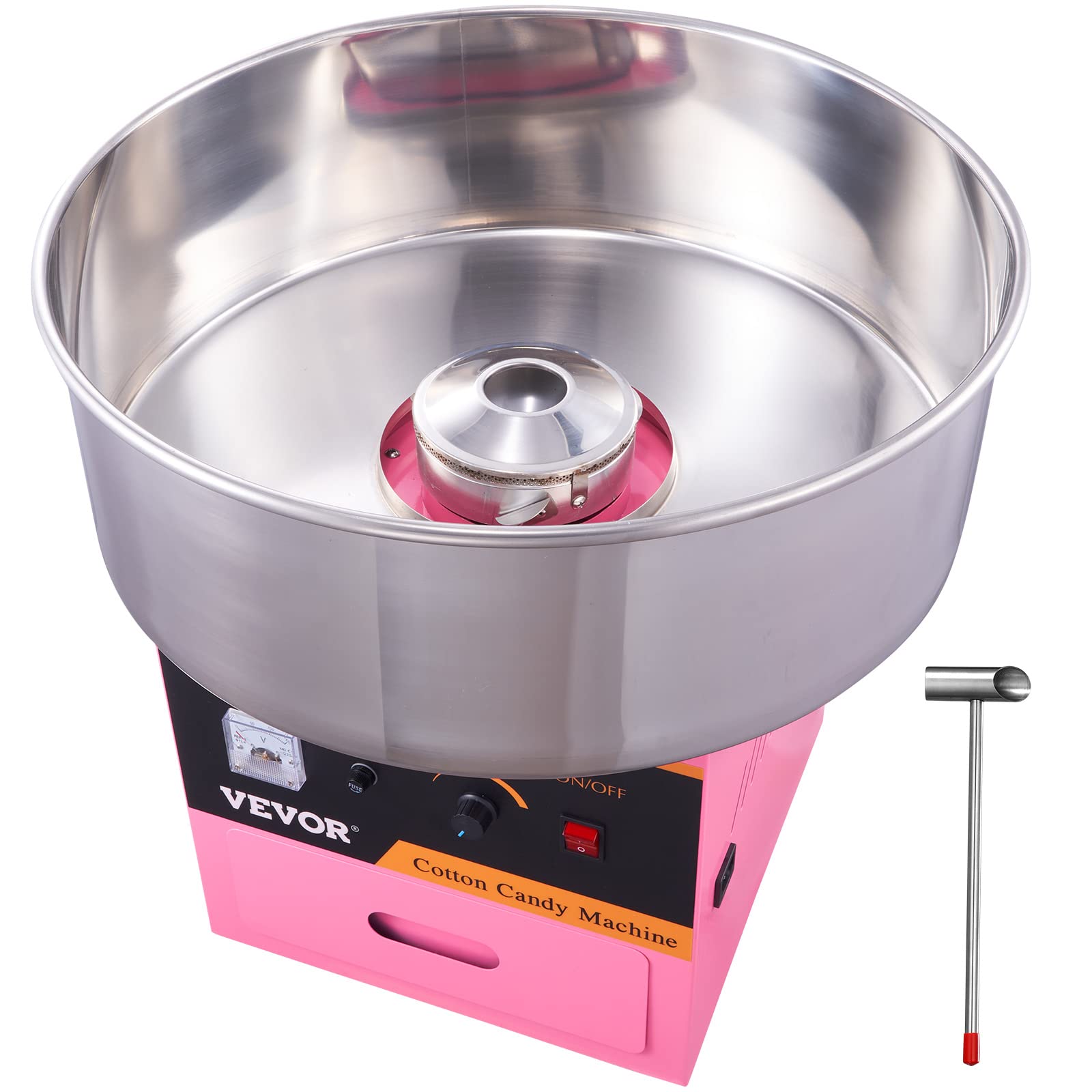
I relied on the VEVOR when I needed a robust, adjustable commercial‑style machine that ran continuously and handled a range of sugar types.
Why I picked it: Voltage/temp control, storage drawer, and ability to run long sessions.
Best for: Small business use, frequent events, and cooks who want temperature control.
Mid‑to‑high price for commercial capability.
Pros
- 1000W power for high output
- Voltage/temp control knob
- Candy box storage and sugar scoop
- Capable of sustained operation
Cons
- Not ideal in high humidity
- Heavier than toy models
My take
I appreciated the VEVOR’s voltage meter and temp control knob — being able to dial in temperature helped me test different sugar types, from flossing sugar to milk or fruit sugars. The unit warmed quickly and kept spinning for long sessions without clogging.
The added storage drawer and included scoop are practical touches I used during events to keep cones and packs handy. Build quality felt robust; I’ve run this machine for a couple of hours at charity events without interruptions.
If I need a reliable machine that’s a step up from toy units but I’m not buying full commercial gear, the VEVOR is the model I reach for.
8. VBENLEM Cotton Candy Machine Dome Cover – Best Accessory
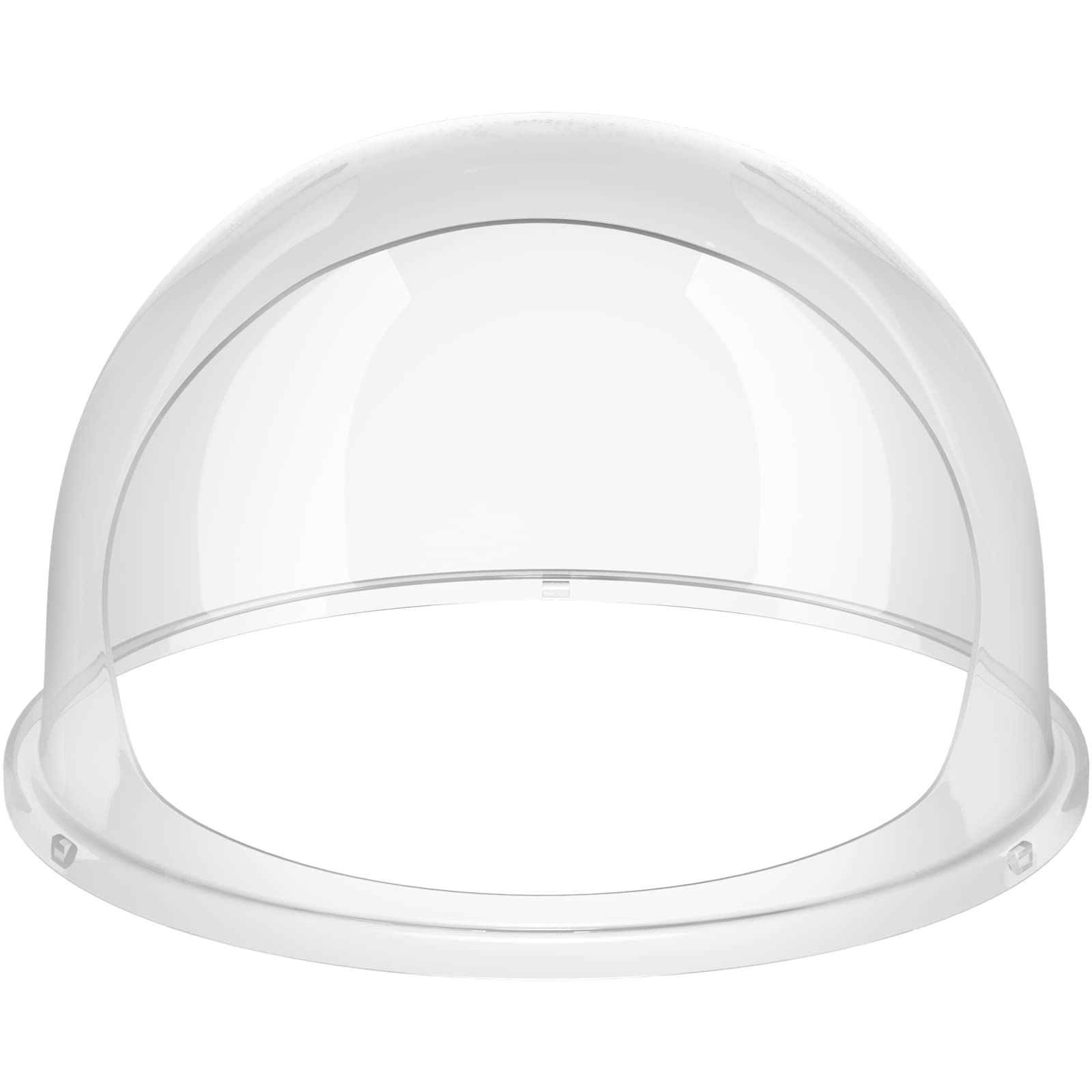
I consider the dome cover essential if I want to keep sugar contained and protect curious hands during a run — it made my outdoor events much tidier.
Why I picked it: Thick acrylic, cut‑out serving window, and easy one‑hand operation.
Best for: Anyone using a 20‑inch bowl machine who wants less mess.
A worthwhile add‑on for cleaner serving.
Pros
- Fits most 19.7–21" bowls
- Thick acrylic resists cracks
- Serving cut‑out for easy access
- One‑hand installation
Cons
- Not universal on odd‑shaped bowls
- Adds storage bulk
My take
Adding the VBENLEM dome to my setup made a clear difference: sugar stayed contained, and I didn’t have 'floss clouds' all over the yard. The front serving cut‑out is smart — it lets me spin and remove cones without lifting the whole dome.
Construction feels solid and cleans easily; I was able to pop it on and off with one hand which kept service smooth when I had a line. If I’m running larger machines at events I always bring a dome to keep the area tidy and safe around kids.
How I Choose a Cotton Candy Machine
Key features I test
I prioritize heat‑up time, output consistency, and whether the machine accepts both flossing sugar and crushed hard candy. Those three items determine whether I’ll reach for a unit for home use or an event.
I also consider cleaning and safety features — a removable bowl, a clear rim or dome, and stable feet make the difference between a quick setup and a sticky cleanup.
- Power and output: Higher wattage and a larger bowl speed production.
- Compatibility: I prefer machines that handle floss sugar and crushed hard candy.
- Safety: Clear rim or dome and suction feet improve control.
- Accessories: Extra cones, a proper sugar scoop, and spare belts matter for events.
- Maintenance: Easy disassembly and simple heater‑head cleaning save time.
What I recommend by use case
For family fun and flavor experiments, I pick compact Nostalgia or Candery kits that include cones and scoops. They’re affordable and easy to operate.
For fundraisers or frequent events I choose a 20‑inch bowl commercial‑style machine with higher wattage and spare parts included.
If mess control is important, I always add a dome cover — it keeps sugar contained and protects small hands.
- Family use: Small Nostalgia or Candery models.
- Events/fundraisers: Olde Midway, VIVO, or VEVOR commercial units.
- Accessories: Buy a dome cover for cleaner service.
Safety and upkeep tips I follow
I never add sugar while the head is exposed or let sugar fall into the side gaps near the heater. That’s a quick way to cause overheating.
I let machines fully warm before adding sugar and clean the head after each session with warm water (and vinegar for baked‑on sugar) once the unit has cooled.
- Warm 8–15 minutes depending on model before first scoop.
- Use a long handle scoop and keep hands away from the spinning head.
- Store domes and cones dry to prevent stickiness between events.
Frequently Asked Questions
Can I use hard candy as well as flossing sugar?
I regularly use both. Machines with a dedicated extractor head or higher wattage handled crushed hard candy best in my tests, though I often add a bit of granulated sugar to help the texture.
How long does a machine take to warm up?
I typically warm consumer machines for 8–15 minutes and commercial units for 2–5 minutes. Waiting for a consistent stream of sugar threads before scooping gave me the fluffiest results.
How do I clean the heater head and bowl safely?
I unplug and let the unit cool, then remove the bowl and wash with warm soapy water. For baked‑on sugar I use a vinegar solution and a soft brush; I avoid submerging electrical parts and clean them carefully with a damp cloth.
Do I need a dome or bubble cover?
I always bring a dome for larger bowls or when I’m indoors. The cover kept sugar contained in my runs and protected curious hands during service, making service cleaner and safer.
Final Take
I tested machines across budgets and needs and kept returning to different winners depending on use: Nostalgia and Candery models for family fun, VIVO/VEVOR/Olde Midway for event throughput, and a dome to control mess.
If I had to pick a single starter machine for casual use, I’d choose the Nostalgia Retro model for its balance of simplicity and consistent results. For frequent events, I reach for the VIVO or Olde Midway models for the speed and durability they provide.
Whichever path I choose, following proper warm‑up, safe filling, and careful cleaning makes the experience enjoyable and keeps the machines running well.
