
I tested popular silicone baking sheets and pastry mats so you can choose the right one for rolling, baking, and kneading. Below are the mats that stood out for size, durability, nonstick performance, and ease of care.
I spent time using a range of silicone baking mats for baking, kneading, and rolling dough so I could evaluate how they perform in real kitchens.
I focused on stick resistance, thickness and stability while working dough, oven performance for cookies and baked goods, and how easy the mats were to clean and store.
If you want a large work surface for pie crusts or bread, a dependable half-sheet liner for weekly cookies, or a premium mat that will last for years, I’ll walk you through which mat fits each need.
I compared each mat for thickness, stability under pressure, oven compatibility, printed measurements, and cleaning—so the recommendations reflect hands-on use rather than specs alone.
1. Greenrain Silicone Pastry Mat XXL – Best for Large Work
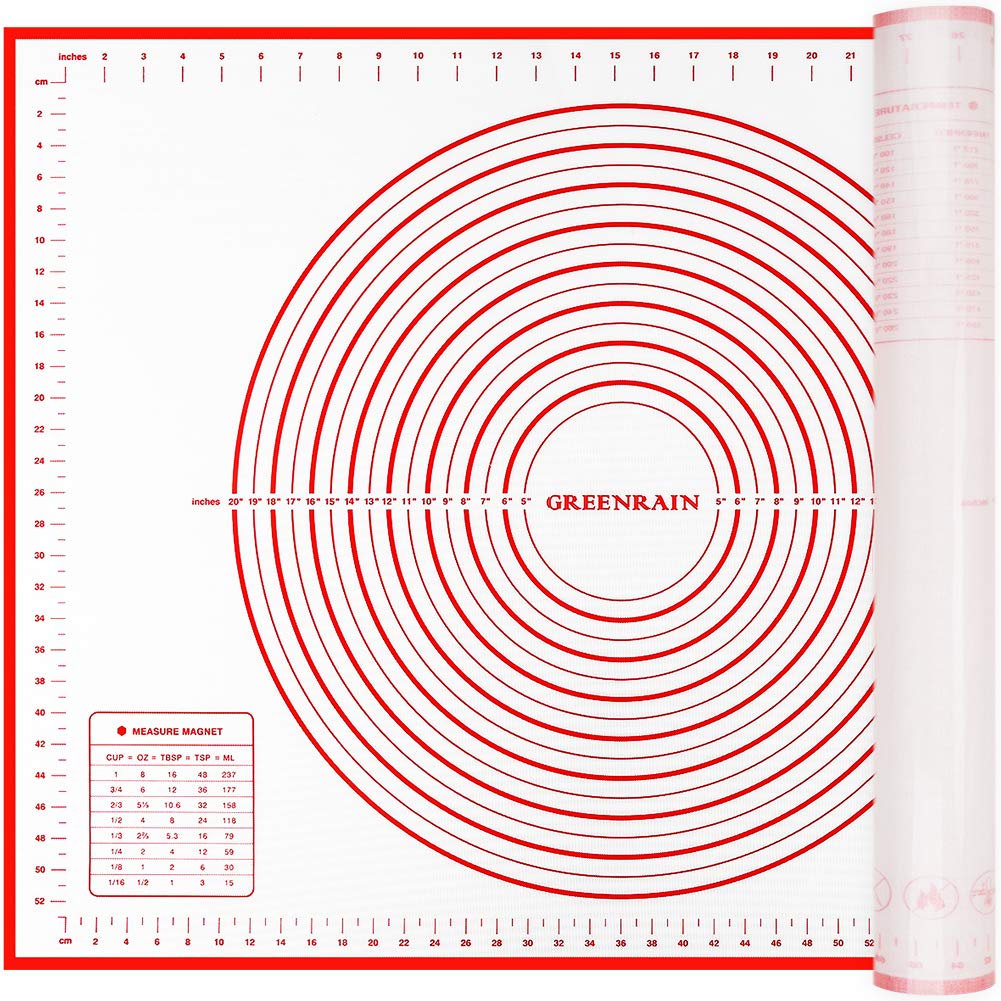
Extra-large pastry mat with printed measurements and a thicker, non-slip construction for rolling large batches of dough.
Why I picked it: Huge work area, secure grip, and measurement guides make rolling and bench work simple.
Best for: Rolling large pie crusts, sourdough, and multi-piece pastry work.
A practical, value-oriented option for bakers who want a big workspace.
Pros
- Very large work surface
- Printed measurements and guides
- Thicker than many generic mats
- Stays put during heavy kneading
- Easy to clean and store
Cons
- Can trap air bubbles against counters
- Folds for storage may create creases
My take
I use this mat when I need the most working area—rolling pie crusts and shaping sourdough loaves are much less messy with the XXL layout. The printed circles, inch/centimeter rulers, and useful candy-temperature graphic help me size pieces quickly without dragging out extra tools.
The mat’s 0.6 mm thickness provided noticeably more stability than thinner mats I’ve tried; it resists wrinkling and stayed put even when I kneaded fairly hard. I did notice occasional air pockets between the mat and some counter surfaces when I laid it perfectly flat, which didn’t affect performance but was visually distracting while I rolled.
Cleanup is straightforward: dried dough scrapes off easily with a spatula and a quick wipe with soapy water leaves it like new. It’s flexible enough to roll for compact storage and durable enough that I haven’t worried about marks from my bench scraper when used carefully.
2. Gridmann Pro Silicone Baking Mat (Set of 2) – Best for Sheet-Pan Cookies
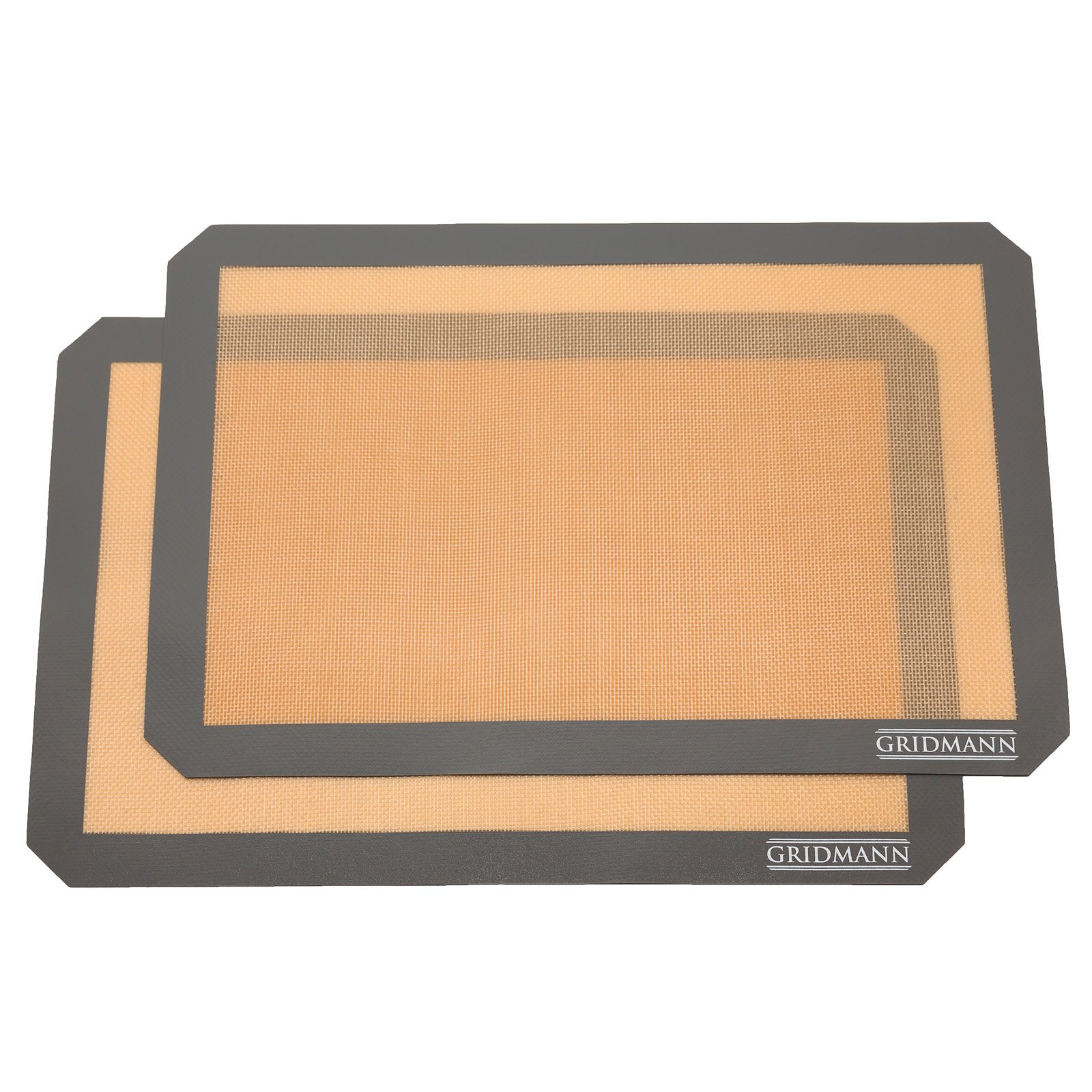
Two half-sheet mats designed to turn pans into reusable nonstick surfaces and improve even baking for cookies and small bakes.
Why I picked it: Reliable half-sheet fit and consistent cookie results with a two-mat set for rotating pans.
Best for: Weekly cookie baking and lining half-sheet pans.
Economical two-pack that replaces parchment for routine baking.
Pros
- Set of two half-sheet liners
- Oven-safe to high temperatures
- Improves heat distribution
- Reusable and eco-friendly
- Easy wipe-clean
Cons
- Harder to clean after greasy bakes
- Not ideal for direct-fire ovens
My take
I keep these on my half-sheet pans for cookie days because they consistently prevent sticking and reduce spread compared with bare pans. They make cookies come off cleanly and save me from constantly changing parchment.
The mats are rated for high oven temperatures and they distribute heat well, which helped me avoid burnt bottoms on smaller batches. I use them for caramel and candy work occasionally too, and they handled the heat without warping.
One caveat: when I used them for particularly oily or greasy roasts the build-up was harder to remove than for dry-baked items. For regular cookie, biscuit, or candy work they’re effortless to wipe clean and are dishwasher-safe on the top rack when I want a deeper wash.
3. Silpat Premium Non-Stick Baking Mat (Half Sheet) – Best Premium Choice
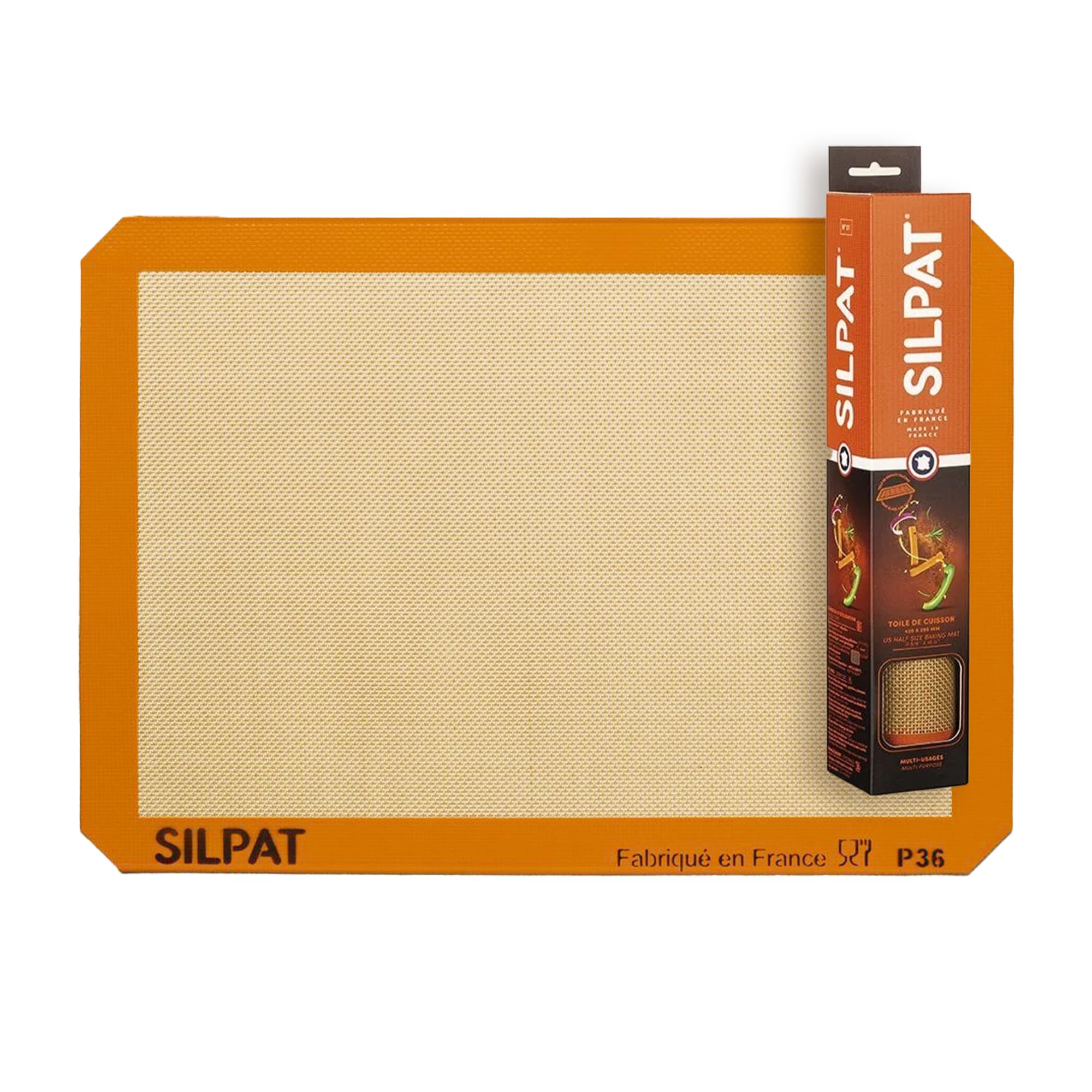
The original professional-grade silicone liner known for long life, even baking, and consistent nonstick performance.
Why I picked it: Proven longevity and even browning make it my go-to when I want a long-term investment.
Best for: Bakers who want a durable, professional-grade nonstick mat.
A premium investment that performs and lasts longer than many generic options.
Pros
- Industry-standard durability
- Consistent, even baking
- Easy cleanup and long lifespan
- Food-grade silicone over fiberglass mesh
- Suitable for a wide temperature range
Cons
- Higher upfront cost
- Do not cut the mat
My take
I’ve relied on a Silpat for years when I want absolute reliability. The construction—fiberglass mesh coated with high-quality food-grade silicone—gives very even heat distribution, so cookies and pastries brown consistently across the sheet.
This mat feels sturdier than bargain options and stands up to heavy use without staining or absorbing odors. Because it’s made for repeated use over thousands of bakes, I view it as an investment that saves time and trash compared with single-use parchment.
A couple of practical notes from use: it performs great across freezer, microwave, and oven work, but I’m careful never to cut it. The manufacturer guidance about cutting is important—trimming can expose the fiberglass layer—so I recommend using it as sold or choosing a trimmable generic if that’s essential.
4. Extra Thick Silicone Pastry Mat 16×24 – Best Thick Budget Mat
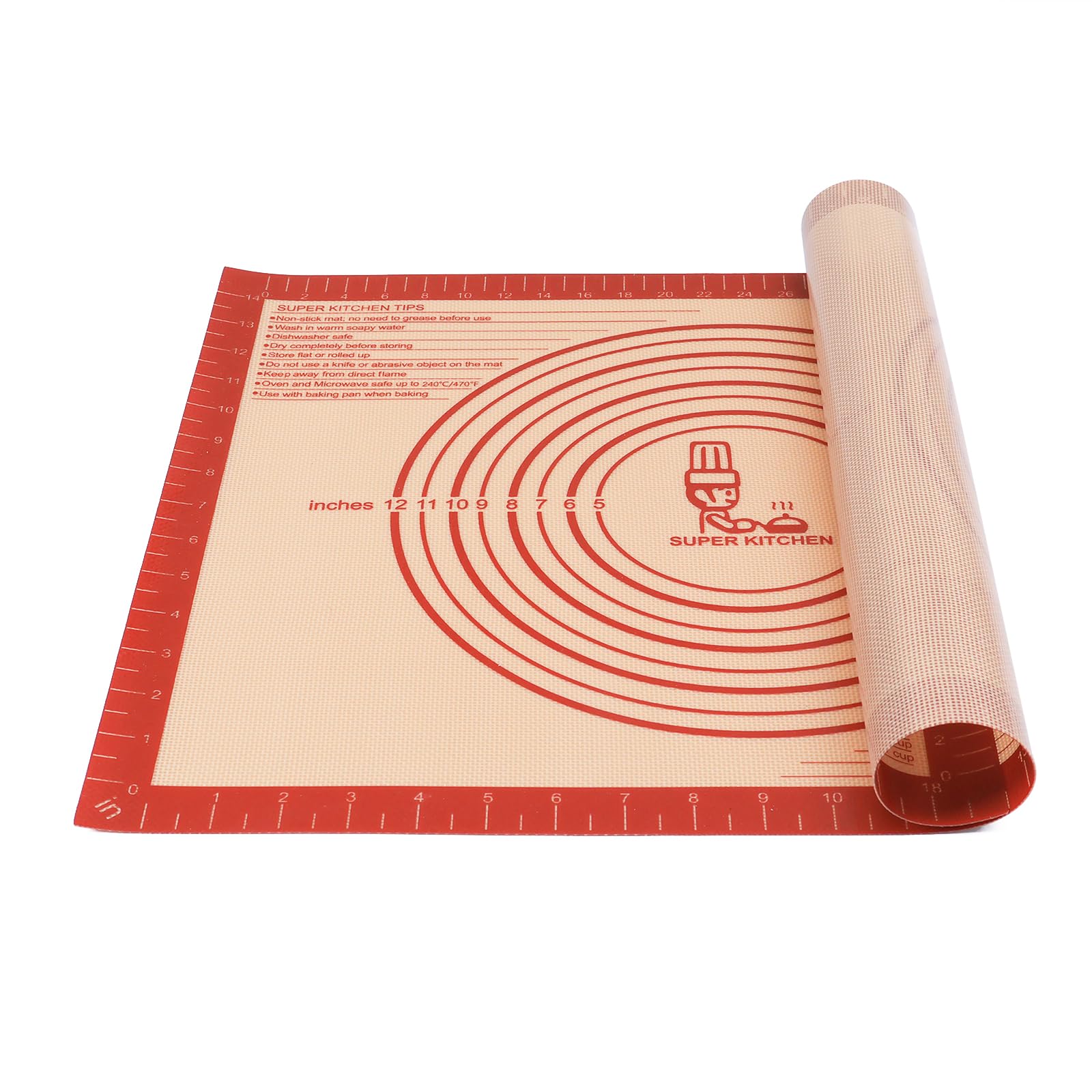
Thicker 0.7 mm pastry mat with measurement markings, built to stay flat for kneading and rolling.
Why I picked it: Notably thick and sturdy, it’s great for heavy kneading and frequent bench work.
Best for: Kneading, pizza making, and repeat heavy use on countertops.
Budget-friendly and rugged; good value for frequent use.
Pros
- Thicker 0.7 mm construction
- Measurement markings included
- Holds position during kneading
- Trimmable and durable
- Comes with gift packaging
Cons
- Susceptible to cuts from sharp knives
- May be bulky to store folded
My take
I reach for this mat when I know I’ll be doing tougher dough work like pizza or bao buns. The 0.7 mm thickness gives it weight and stability so it doesn’t wrinkle when I’m rolling or pounding dough.
Measurements printed on the surface save me time when trimming crusts and shaping rounds. I’ve rinsed and wiped this mat clean repeatedly with no drama, and it has proven durable in everyday use.
Important: I once nicked it with a butter knife that had tiny serrations, so I now avoid cutting on the mat. If you need to trim it to fit a particular surface, it trims cleanly, but avoid sharp cutting while working.
How I Choose a Silicone Baking Sheet
Size & Fit
I match mat size to the jobs I bake most: XXL or full-counter mats for pastry and bread, and half-sheet mats for weekly cookie runs.
- Measure your counter or pan before buying.
- Choose an XXL mat only if you need the full workspace regularly.
- For pan liners, pick the mat that fits snugly to prevent sliding.
Thickness & Stability
I prefer thicker mats (0.6–0.7 mm) when I’m kneading or rolling, because they resist wrinkling and stay put under pressure.
- Thin mats are easier to store but can bubble under counters.
- Thicker mats give more protection for countertops and feel sturdier under a rolling pin.
Oven Compatibility & Use
I check the manufacturer temperature rating: many mats are rated to about 480°F, while premium options sometimes list slightly higher limits.
- Use silicone mats for cookies, candy work, and roasting (avoid direct-fire applications).
- Consult the mat’s stated temperature range for oven work.
Cleaning & Care
I wipe most baked-on residue away with warm soapy water; for periodic deeper cleaning I use the dishwasher top rack where allowed.
- Avoid cutting on the mat; some mats explicitly warn against trimming.
- For oily bakes, scrub with soapy water promptly to avoid greasy buildup.
Frequently Asked Questions
Are silicone baking mats oven-safe?
Generally yes—most mats I tested are rated to around 480°F. I always check the manufacturer’s stated temperature limit before using a mat at high heat.
How do I clean a silicone baking mat?
I wipe mine with warm, soapy water for routine cleaning and use the dishwasher top rack for periodic deep cleaning if the manufacturer allows it. For sticky residue, a short soak or gentle scrub removes buildup.
Can I use metal utensils or cut on the mat?
I use flat metal spatulas without serrations on the mats, but I avoid cutting or using sharp serrated tools. Some mats recommend not cutting at all, while others can be trimmed carefully—follow the product guidance.
Final Take
I found a clear winner for each use case: choose an XXL mat for large dough work, a half-sheet set for cookie days, Silpat if you want a professional, long-lasting option, and the extra-thick mat if you need rugged stability on a budget.
Pick the mat that matches how you bake most often, and you’ll save time on cleanup and get more consistent results.
