
I tested fuel domes, gaskets, and controllers to find the parts that make a kamado or kettle sing. Here are the accessories I keep returning to for better seals, hotter sears, and tighter temp control.
I spend a lot of time cooking on kamados and kettle grills, and small upgrades make the biggest differences. Over the last season I tried fuel domes, several gasket materials and a Wi‑Fi controller so I could judge what actually improves heat retention, fuel efficiency, and sear power.
This roundup focuses on the practical parts I use to get consistent low‑and‑slow temps, reliable seals, and an intense sear zone when I want it. I explain where each item fits in my workflow and how I install and maintain them.
If you want more searing power and fuel efficiency, grab the whirlpool fuel dome. If you need a tight, heat‑resistant seal, the Big Green Egg gasket or the UNCO wire mesh options are what I install. For automation and overnight cooks I use the SMOBOT — it’s the priciest but the most fuel‑efficient controller I’ve relied on.
1. Whirlpool Charcoal Fuel Dome – Best for Searing
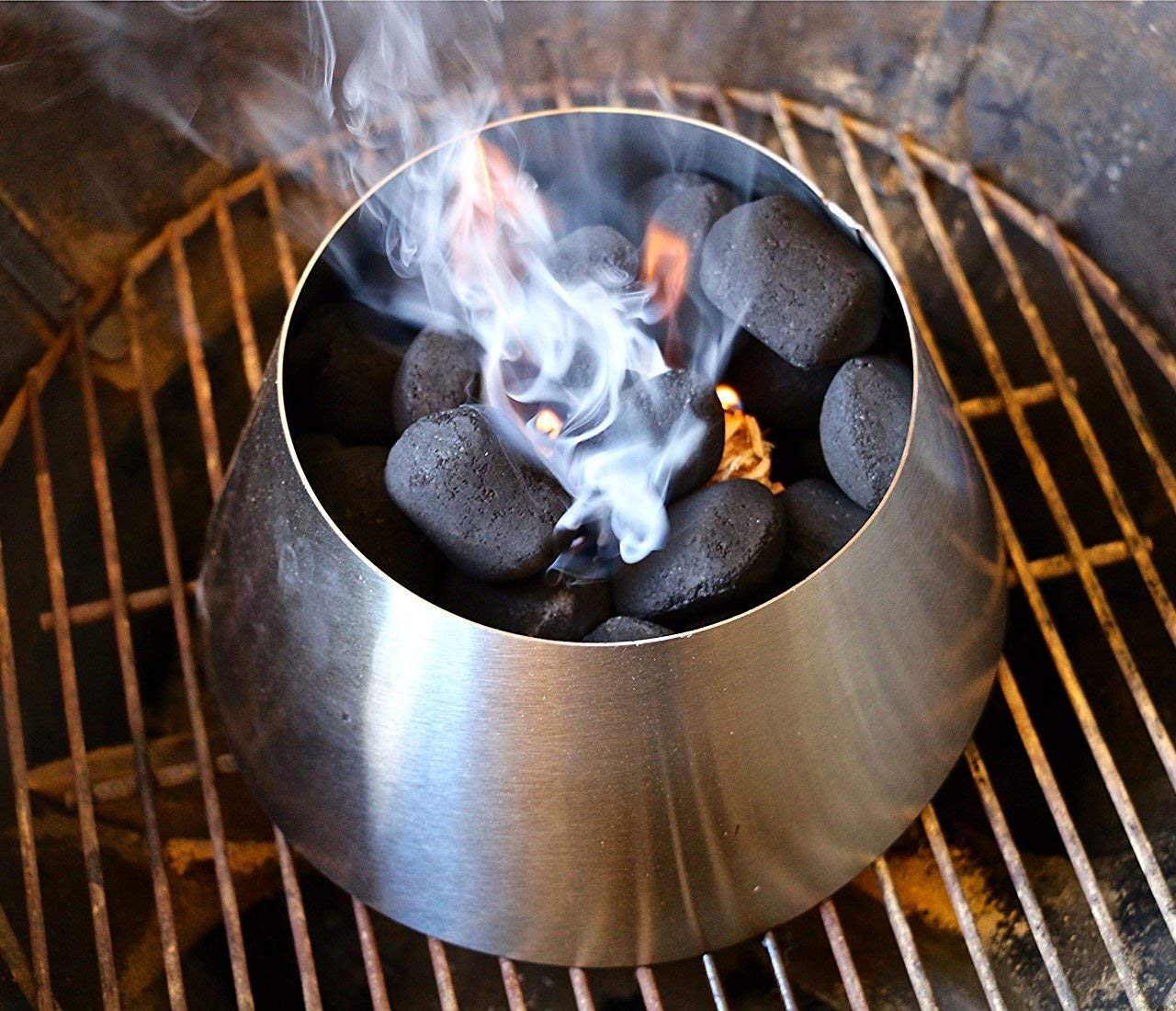
I use this stainless steel fuel dome when I want a blast‑furnace sear zone or a concentrated indirect heat source without flareups.
Why I picked it: Creates a concentrated hot zone for searing while improving charcoal efficiency.
Best for: Grill owners who want a dedicated sear area and versatile cooking modes.
Very affordable upgrade for kettle and kamado grills.
Pros
- Produces intense searing heat
- Stainless steel resists rust
- Works for indirect smoking too
- Saves charcoal compared with open lays
Cons
- Must measure grate spacing to ensure fit
- Can throw off heat distribution if mispositioned
My take
I fitted this stainless whirlpool into a 22" kettle and immediately noticed a dramatic change in how the coals behave. The funnel concentrates heat into a small area, so I can get blistering sears without dumping extra charcoal across the entire bed.
Because it directs heat like a little volcano, I get four practical ways to cook: low‑and‑slow smoking around the dome, high‑heat indirect for roasts, intense searing over the center, and strong radiant heat when I pile coals. I’ve used it for steaks and wings where a fast crust is essential and for reverse‑sear cooks where I want the interior gently smoked.
The stainless construction has held up to repeated use and hasn’t warped or rusted in my experience. My only installation tip is to check grate spacing carefully—this unit needs clearance between grates, so measure before you order.
2. Kaidun Big Green Egg Replacement Gasket – Best Replacement Gasket
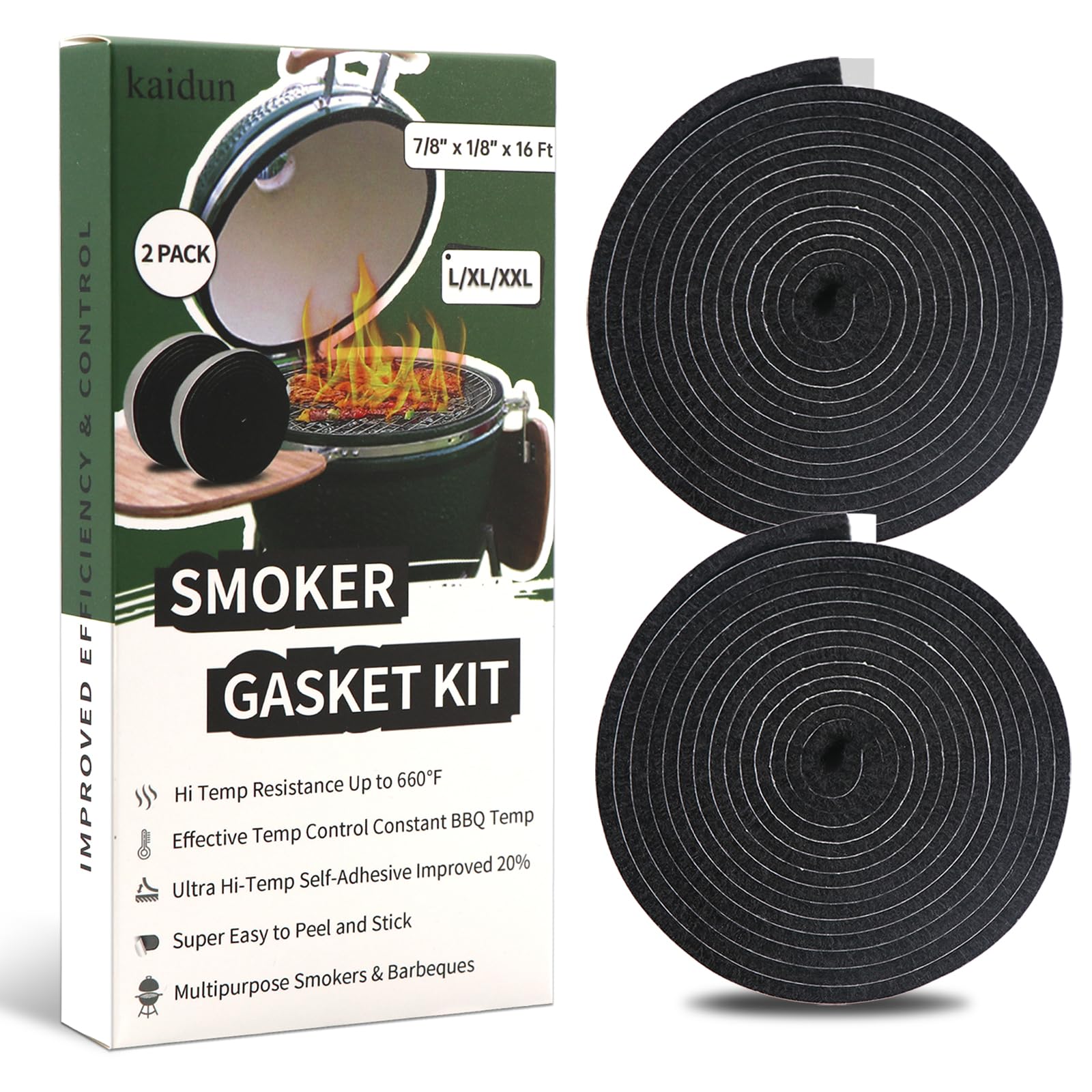
I replaced worn ceramic seals with this 16‑foot self‑adhesive gasket and regained much tighter smoke control and temperature stability.
Why I picked it: Long length plus high‑temp material built for Big Green Egg sizes.
Best for: Owners of Big Green Egg L/XL/XXL who need a full top-and-bottom gasket replacement.
Affordable, straightforward replacement part.
Pros
- High temp resistance to 660°F
- Enough length for top and base
- Self‑adhesive for faster install
- Peels off easily for application
Cons
- Adhesive needs a very clean surface
- Takes patience to install without bubbles
My take
When my Egg started leaking smoke and my cooks wandered in temperature, I swapped both top and bottom seals for this Kaidun gasket. The felt‑style material is rated for very high temps and, once properly installed, gave me noticeably better heat retention.
Installation is straightforward but must be done carefully: scrape the old gasket, degrease the ceramic with alcohol, and apply the new gasket in short sections so the adhesive bonds cleanly. I left a little extra at the ends and used the included overlap technique to make a neat joint.
After installation I saw steadier temps during long smokes and less charcoal waste. The adhesive is strong, so take your time lining it up, and be prepared with a scuff pad and solvent to prep the surface.
3. SMOBOT WiFi Kamado Controller – Best for Automation
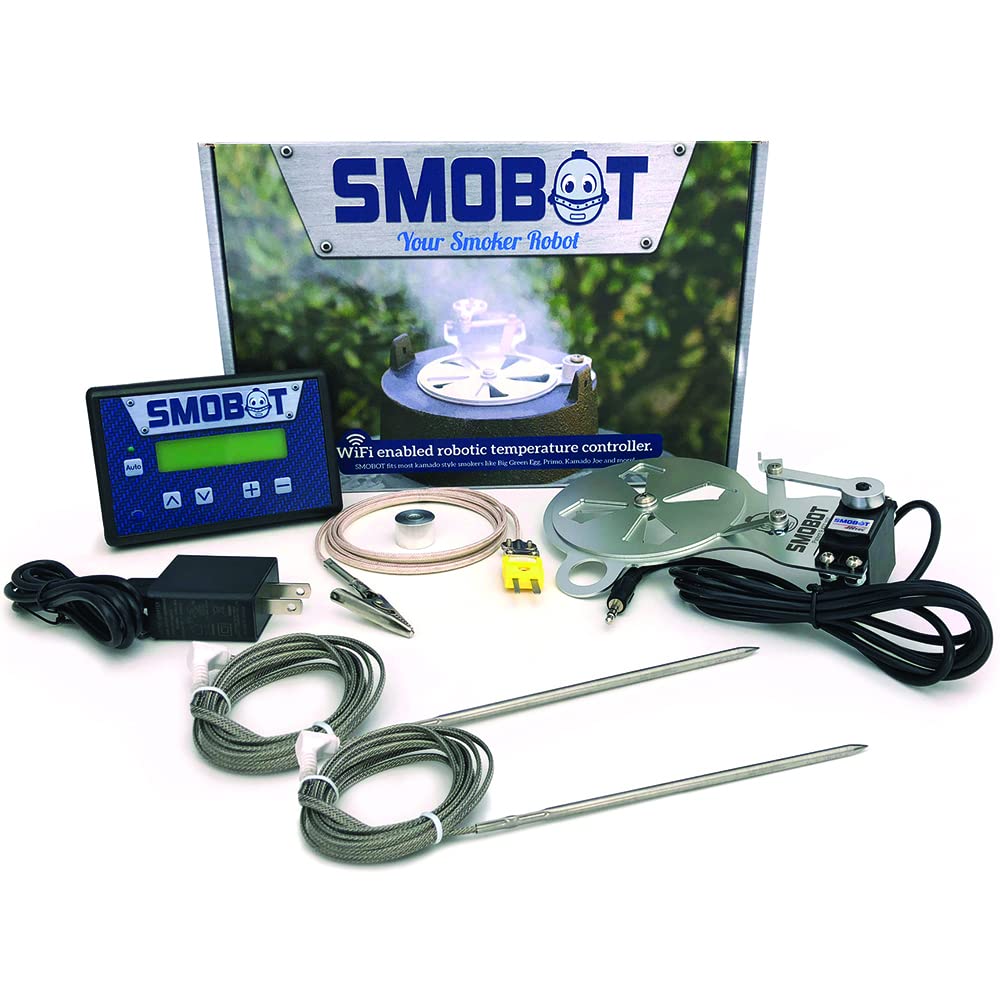
I rely on this Wi‑Fi controller when I need ultra‑efficient overnight low‑and‑slow cooks and remote temperature control.
Why I picked it: Exceptional fuel efficiency and simple set‑and‑forget operation for kamados.
Best for: Pitmasters who want remote control and reduced charcoal consumption on long cooks.
Premium investment but pays off on long cooks through fuel savings.
Pros
- Very fuel‑efficient on long cooks
- Uses kamado venting for control
- Simple, minimalist design
- Responsive customer support
Cons
- Higher cost than basic controllers
- Some units can be slow to adapt
My take
I use SMOBOT for multi‑hour overnight cooks because it adjusts the top vent continually instead of blasting air constantly. In practice that means I burn a lot less charcoal over a 12–14 hour smoke compared with controllers that force air.
Setup is straightforward and the interface is minimal — I set my target temperature, let it learn the cook, and check progress from my phone. The efficiency gains are real: I noticed markedly lower charcoal use on identical cooks after switching to SMOBOT.
A caveat: some cooks revealed that the unit can react slowly to sudden swings, so I treat it as best for steady low‑and‑slow sessions rather than rapid temp changes. For me the fuel savings and peace of mind on overnight cooks justify the higher cost.
4. UNCO Wire Mesh Gasket — 180 in – Best Long Seal (180 in)
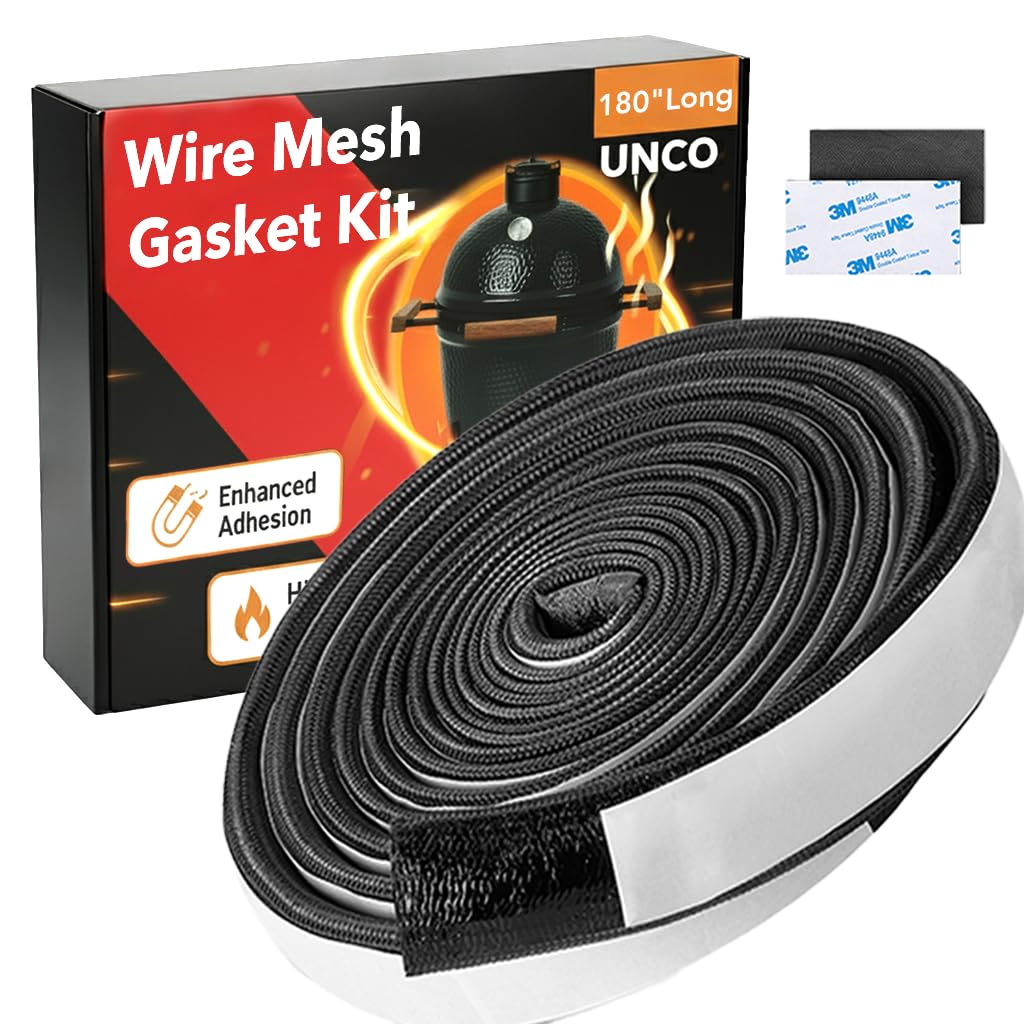
I picked this long wire‑mesh gasket when I needed a heavy‑duty seal for larger kamados and commercial gear.
Why I picked it: Extra long length and wire mesh build for durable, high‑heat sealing.
Best for: Large kamados, rotisserie smokers, or anyone wanting a longer gasket kit.
Competitive price for a long, heavy‑duty gasket kit.
Pros
- Durable fiberglass with wire mesh
- Very long length for big rigs
- Improves heat and smoke retention
- Includes jointing tape for clean joins
Cons
- Cutting and fitting takes patience
- Edges can fray if not sealed carefully
My take
I used the 180‑inch UNCO gasket on a commercial rotisserie and on a larger kamado; the wire mesh encasing gives the gasket durability that feels more robust than plain felt. Once installed it tightened up smoke control and kept temps more consistent.
Installation requires time — cutting clean ends and using the included joint tape makes the difference between a tidy seal and a frayed mess. In exchange you get better fuel efficiency and fewer temperature swings on long cooks.
If you plan to retrofit a big or oddly shaped cooker, the length and build quality here made the job practical where shorter kits wouldn’t have sufficed.
5. UNCO Wire Mesh Gasket — 150 in – Best Value Seal (150 in)
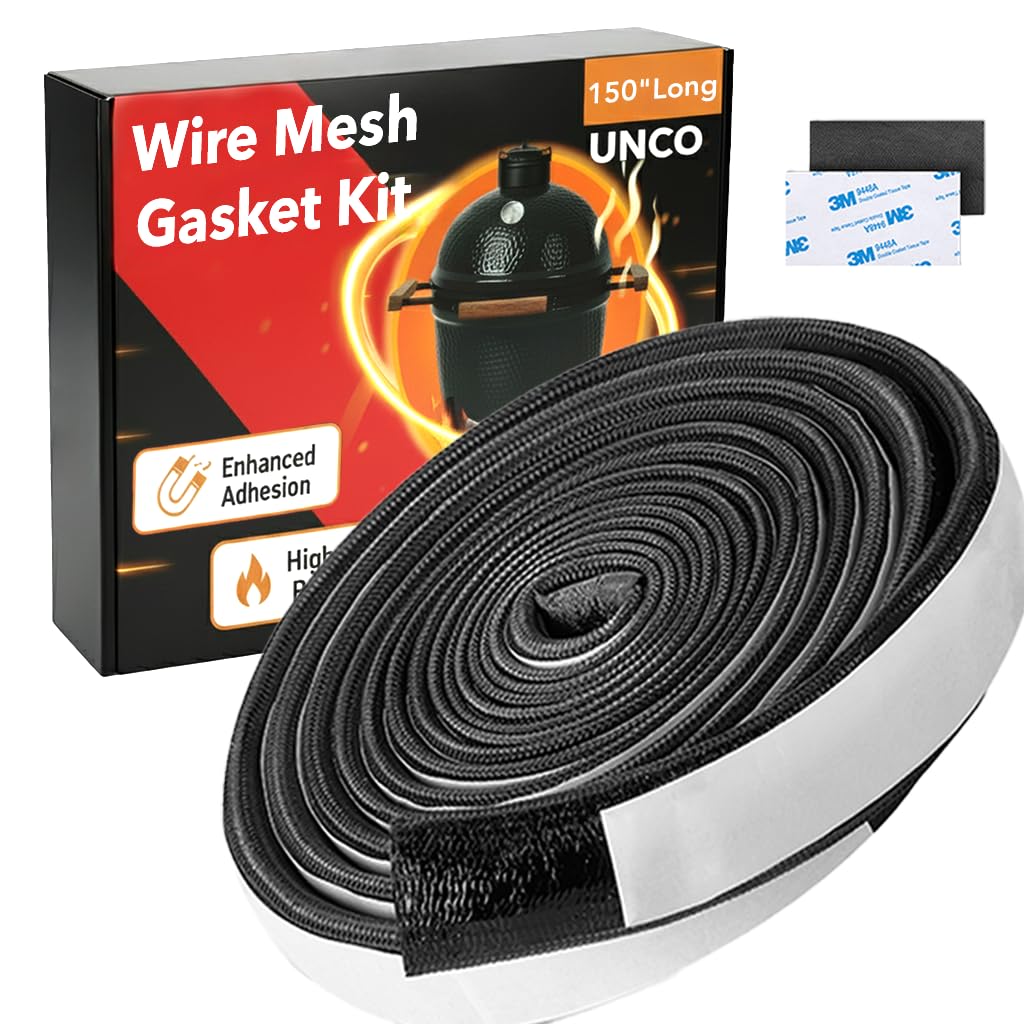
I keep this 150‑inch UNCO gasket as a budget‑friendly, heat‑resistant option that still delivers a solid seal for most kamados.
Why I picked it: Good balance of length, durability, and price for typical backyard kamados.
Best for: Home users who want a robust, affordable gasket replacement.
Budget‑friendly and effective for everyday use.
Pros
- Good heat resistance
- Easy to trim and shape
- Comes with jointing tape
- Affordable for the length
Cons
- Adhesive can struggle under extreme firebox heat
- May need re‑securing after very hot sessions
My take
I installed the 150‑inch UNCO gasket on my kamado and appreciated how easy it was to shape around the lid. The fiberglass core with wire mesh holds up well to typical smoking temps and noticeably reduced leaks.
One thing to watch: the adhesive bond performs best when the mating surface is spotless. In a couple of heavier firebox applications I re‑checked the adhesion and pressed joints back into place after the first hot cycle.
For routine backyard smoking and grilling this gasket delivers a professional‑grade seal without the premium price tag.
6. Richard Glaesser Bunny Mushroom Smoker – Best Decorative Smoker

I keep this hand‑crafted German mushroom smoker as a decorative piece and conversation starter when hosting seasonal gatherings.
Why I picked it: Charming German craftsmanship and small, giftable size.
Best for: People who want a traditional, decorative smoker for Easter or mantel display.
Midrange novelty item with collectible appeal.
Pros
- Lovely German craftsmanship
- Compact and giftable
- Easy to assemble
- Distinctive seasonal charm
Cons
- Not a practical cooking smoker
- Limited to decorative use
My take
This little mushroom smoker is pure charm — handcrafted feel, nice paint details, and a compact footprint that fits on a shelf or holiday table. I use it as a seasonal accent and it draws compliments every time I bring it out.
Assembly is simple and the build feels solid for a decorative piece. It’s not intended for real grilling or smoking, but as a collectible or gift it’s a nice, tactile item to have around.
How I Choose Egg Smoker Parts
Match the part to the job
I always start by deciding what problem I’m trying to solve: more searing power, better temperature stability, or automation. A fuel dome transforms an open coal bed into a sear furnace; gaskets stop smoke leaks and stabilize temps; controllers automate venting for long cooks.
Measure twice. For fuel domes and gaskets, ensure the physical dimensions match your grate spacing and lid circumference before ordering.
- For searing and quick high heat: choose a stainless whirlpool/fuel dome.
- For tighter smoke control: pick a gasket sized for your model and prep surfaces thoroughly.
- For overnight low‑and‑slow cooks: invest in a controller that prioritizes efficiency.
Gasket material and installation tips
I favor high‑temp fiberglass or felt gasket material encased in mesh for durability. Heat‑rated adhesives (or mechanical attachment for older smokers) keep the seal reliable.
Preparation is everything. Remove the old gasket, clean with an alcohol solvent, and apply new gasket in short sections so the adhesive grabs properly.
- Always degrease and scuff the mating surface.
- Trim ends cleanly and use included joint tape to prevent fraying.
- Allow a break‑in cook and recheck adhesion after the first hot cycle.
Controllers and fuel efficiency
A controller that works with your kamado’s venting can dramatically reduce charcoal usage. I look for controllers that modulate the top vent rather than continuously blasting air.
Be realistic about expectations: controllers excel at steady low cooks but can be slower to react to abrupt temperature swings.
- Use a controller for long unattended smokes to save fuel.
- Monitor the first few cooks to understand how it behaves with your charcoal and vents.
- Keep a backup plan (manually adjustable damper) for rapid adjustments.
Frequently Asked Questions
How do I know which gasket length I need?
I measure the full circumference of my lid and base and add a little extra for overlaps. Kits come in standard lengths, so pick one that covers both top and bottom or be prepared to order two pieces.
Will a whirlpool fuel dome fit my kamado?
I check the diameter between my grates before installing. Whirlpools are designed for kettles and kamados of certain sizes, so measure grate spacing and clearance to confirm compatibility.
Do wire mesh gaskets tolerate high temperatures?
In my experience, fiberglass gaskets with wire mesh withstand typical smoking temps well. Adhesive performance can vary—prepare the surface and expect to re‑press joints after the first intense heat cycle.
Is a Wi‑Fi controller worth the investment?
If I do frequent overnight cooks or want to cut charcoal consumption, a controller like the SMOBOT pays off by improving efficiency and letting me monitor temps remotely. It’s a premium purchase but useful for hands‑off cooking.
Final Take
I’ve found that small upgrades—an effective gasket, a reliable fuel dome, or a thoughtful controller—change the way a kamado performs more than any single accessory. Pick the item that fixes your biggest pain point first.
If you want the sharpest sear, start with the whirlpool. If you’re chasing tighter smoke and steadier temps, replace the gasket. For hands‑off, fuel‑efficient overnight cooks, the SMOBOT is the tool I reach for.
