
I tested six horticultural oils and neem concentrates across roses, fruit trees, houseplants, and vegetables. Here are the products I reach for when I need proven pest control, fungicide action, or a gentle organic tool.
I’ve been mixing, spraying, and spot-treating everything from potted monsteras to full landscape roses for years, so I know which oils actually work in the field. This roundup focuses on horticultural oils, neem concentrates, and ready-to-use fungicides that I use regularly to stop pests, suppress fungal disease, and protect new growth.
I tested each product for ease of use, effectiveness against common pests and diseases, and how forgiving it is around sensitive plants. I also considered how concentrated a product is (and how long a bottle lasts) versus the convenience of ready-to-use sprays.
Below I explain when I reach for each product, how I use it, and what to watch out for when applying them in your garden.
If I need a ready-to-use systemic for quick, long-lasting insect and disease control I go with the 3-in-1 ready spray. For organic, hands-on pest control I prefer cold-pressed neem concentrates. Dormant and horticultural mineral oils are my go-to for overwintering eggs and scale.
1. Neem Bliss Pure Neem Oil Concentrate – Best Pure Neem
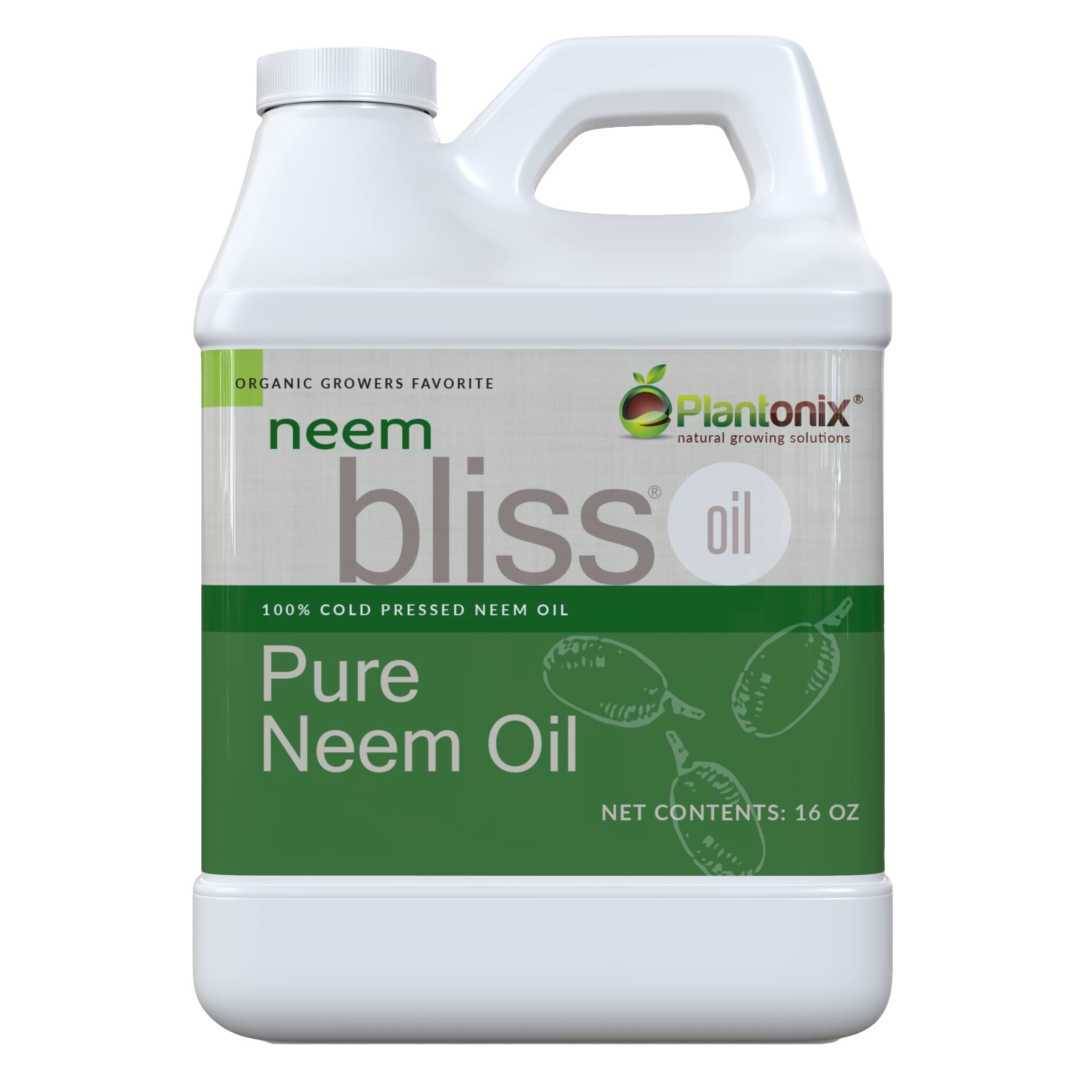
A 100% cold-pressed, unrefined neem oil I use when I want a potent, natural concentrate for spray mixes and soil soaks.
Why I picked it: Because it’s genuinely pure and potent—works in heavy infestations when used correctly.
Best for: Treating heavy aphid, mite, and slug pressure on roses and shrubs.
Concentrated product that stretches when diluted; good value for potency.
Pros
- 100% cold-pressed neem
- Very concentrated—long-lasting
- Versatile for soil and foliar use
- Preserves natural compounds
Cons
- Strong, lingering smell
- Thick consistency can be hard to pour
- May solidify in cold weather
My take
I use this Neem Bliss bottle when I need raw neem power. It’s genuinely unrefined and thick—I soak it in warm water to thin it if it’s solidified in winter. Because it’s so concentrated one bottle goes a long way when I dilute it for foliar sprays or soil soaks.
On a late-season infestation in my landscape—50 Knockout roses overloaded with aphids and rose slugs—I mixed this neem with Castile soap for a soil soak and repeat foliar spray. After three treatments the plants cleared up and new growth returned. I also stopped a spotted lanternfly invasion on a fig tree with weekly sprays.
Be mindful of application: the oil leaves a slight oily residue and has a funky, persistent scent for a day or two. The bottle would benefit from a drip-control top; I’ve spilled while filling sprayers. Overall, when I need a strong, natural neem option this is my go-to concentrate.
2. BioAdvanced 3‑in‑1 Insect Disease & Mite Control – Best Ready-to-Use Systemic
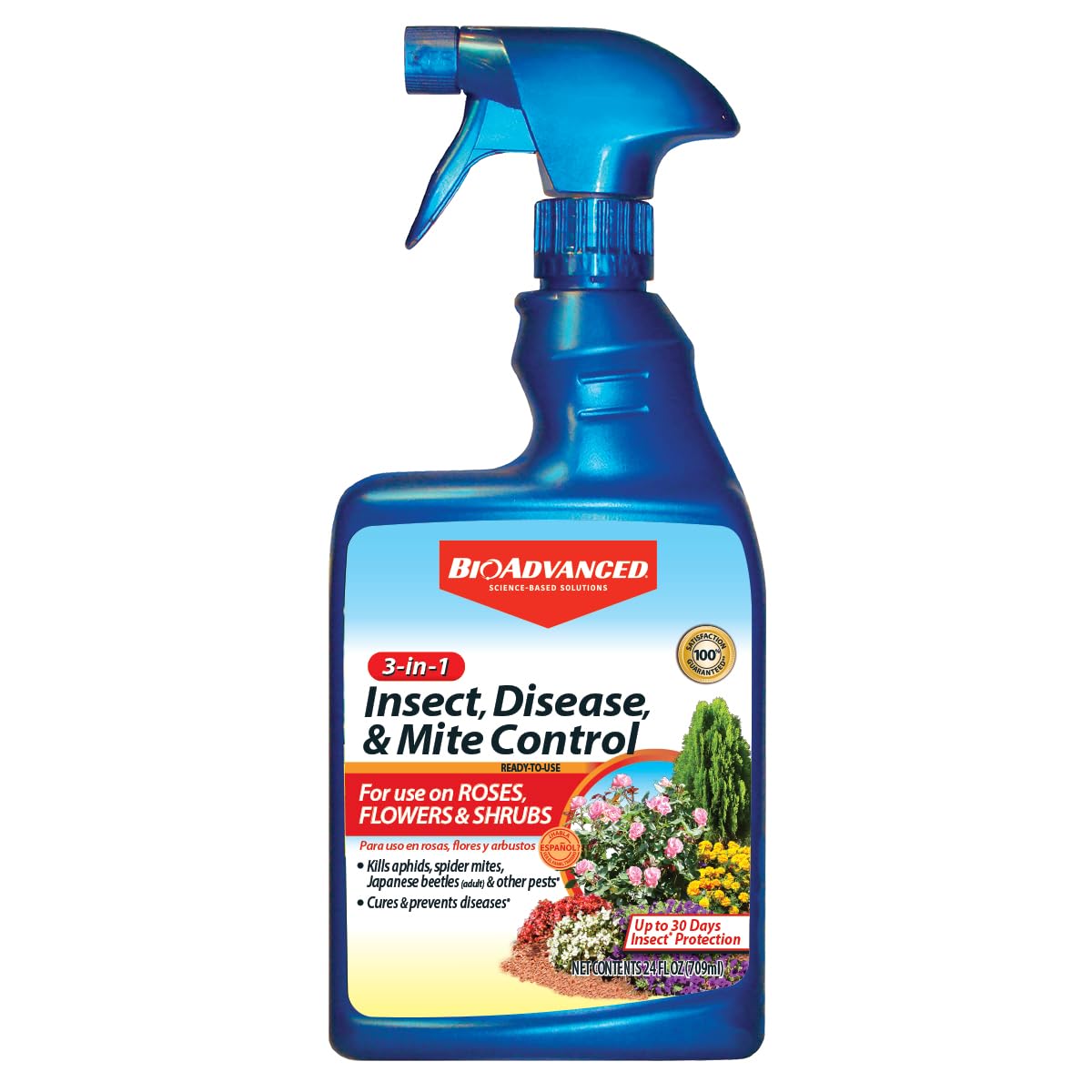
A convenient ready-to-use systemic spray that gives me long-lasting, rainproof protection and tackles insects, mites, and common fungal diseases.
Why I picked it: I reach for it when I want quick, wide coverage with systemic, rainproof protection.
Best for: Preventing insect damage and common fungal diseases on roses, shrubs, and trees.
Ready-to-use convenience saves time compared with mixing concentrates.
Pros
- Ready-to-use convenience
- Systemic, rainproof protection
- Controls insects and fungal disease
- Covers many plant types
Cons
- Contains synthetic active ingredients
- Not suitable for growers seeking only organic inputs
- May require application timing care
My take
When I need broad, low-effort protection across multiple shrubs and roses I use this BioAdvanced 3‑in‑1. The systemic actives absorb into plants and gave me noticeable control of chewing and sucking insects and helped reduce powdery mildew on preventive sprays.
I noticed healthier blooms on treated roses within a week, and the formulation held up through light rain. Because it’s ready-to-use I can get a hedgerow treated in a single session without mixing tanks.
This is a tool I rely on when I need robust, long-lasting control. It’s not a pure organic option, so I reserve it for situations where I want immediate, lasting suppression rather than repeated lightweight organic sprays.
3. Harris Concentrated Neem Oil – Best Concentrated Neem
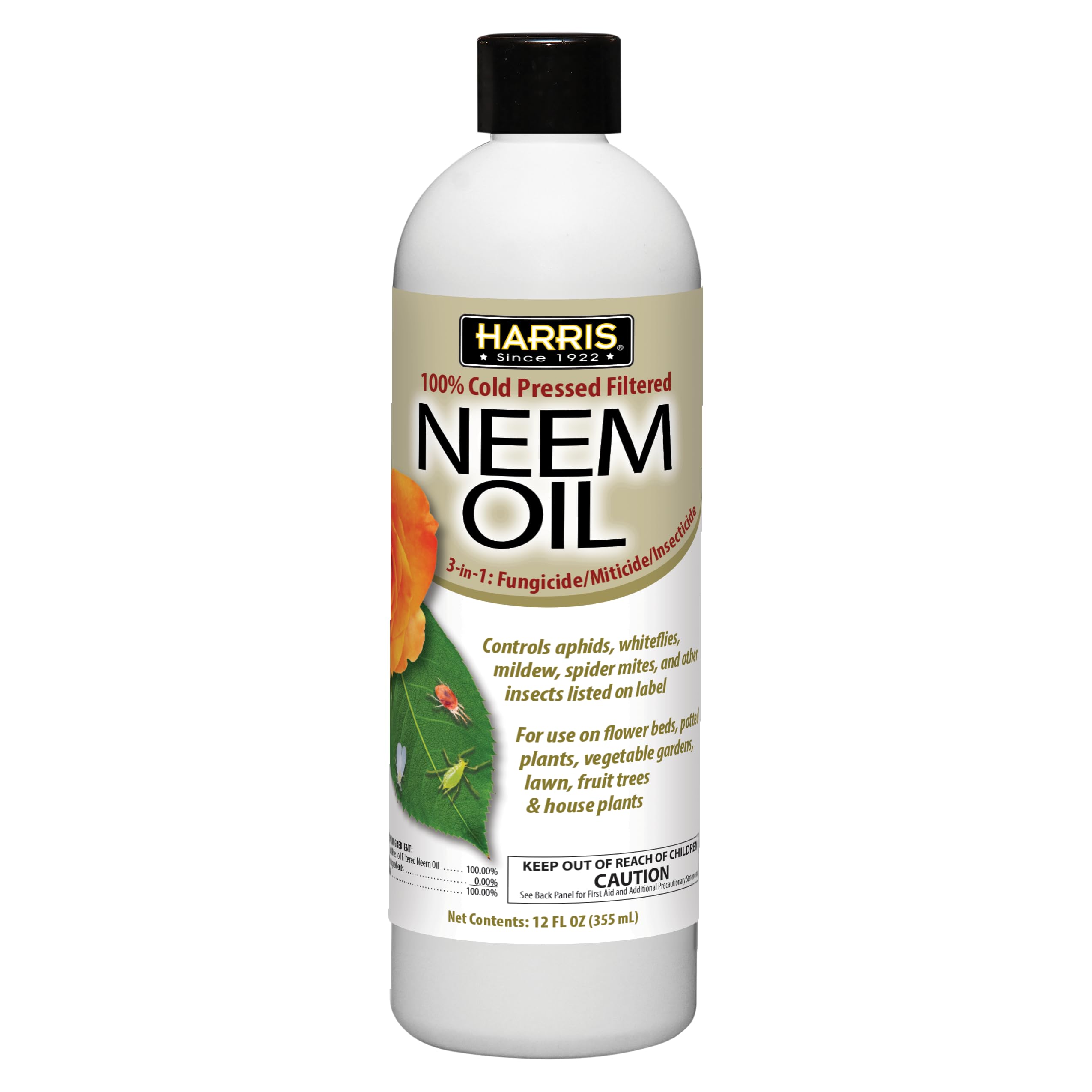
A filtered, cold-pressed neem concentrate I use for daily pest prevention and spot treatments indoors and out.
Why I picked it: Pure, EPA‑registered neem that’s easy to mix and very effective on mealybugs and gnats.
Best for: Indoor houseplants, potted tropicals, and targeted outdoor spot treatments.
Concentrated formula—small amounts go a long way for maintenance use.
Pros
- 100% cold-pressed neem
- EPA registered
- Cosmetic-grade finish
- Effective in small doses
Cons
- Strong odor
- Can cause leaf burn in full sun
- No built-in pouring nozzle
My take
I keep a bottle of Harris neem in my plant room for gnat and mealybug flare-ups. A few drops in a spray bottle with a bit of soap and the infestation subsides within a week of daily applications, then I move to maintenance spray every 7–10 days.
It’s clearly potent—one reviewer-style account that matches my experience is that it took longer daily applications to fully clear heavy infestations, but the bottle lasted a long time. The scent is strong and some plants with fresh new growth can show sensitivity if I spray them and then put them in intense sun—so I avoid sun-exposed leaves immediately after treatment.
All in all, Harris is my dependable concentrated neem when I want a low-chemical, effective option that I can control by adjusting dilution and frequency.
4. Bonide Captain Jack's Copper Fungicide RTU – Best Copper Fungicide
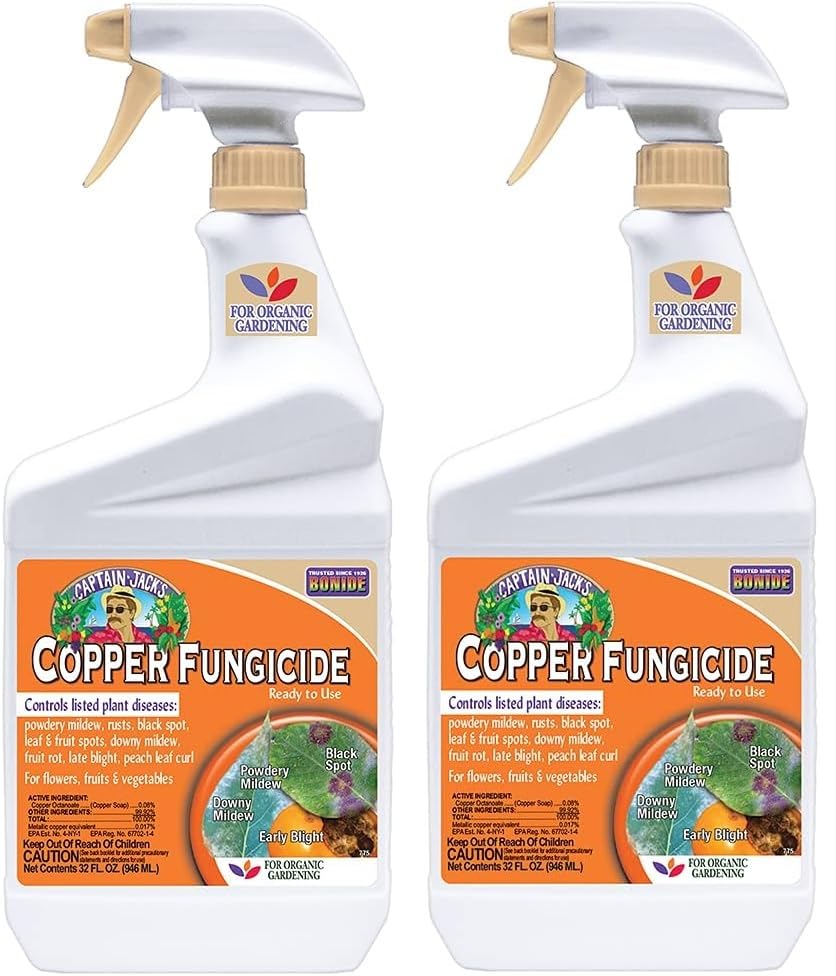
A ready-to-use copper fungicide I use to prevent and control leaf spots, blight, and powdery mildew on edibles and ornamentals.
Why I picked it: Ready-to-use organic-approved copper I trust for stubborn fungal problems on fruit trees and tomatoes.
Best for: Controlling blight, black spot, powdery mildew on vegetables, fruit trees, and ornamentals.
Ready-to-use convenience; good for gardeners who want turnkey fungal control.
Pros
- Ready-to-use trigger bottle
- Approved for organic gardening
- Can be used up to harvest
- Effective on many fungal diseases
Cons
- Requires repeated applications
- Needs consistent timing for best results
- May leave visible residue
My take
When a peach tree or tomato crop develops persistent leaf spots I reach for this copper fungicide. It’s straightforward to apply—shake and spray—and I appreciate that it’s approved for organic gardens and usable up to the day of harvest.
On a stubborn red fungus on a peach I applied the product as directed and removed affected leaves; after a few applications the infection receded and the tree produced healthier growth the following season. I’ve also cleared black spots on citrus and prevented early blight on tomatoes with regular applications.
This isn’t a one-and-done cure; I use it predictably on a schedule and as part of a sanitation plan. For organic disease control it’s one of the most reliable ready-to-use tools I keep in my shed.
5. Bonide Captain Jack's Neem Oil Concentrate – Best Organic Neem Concentrate
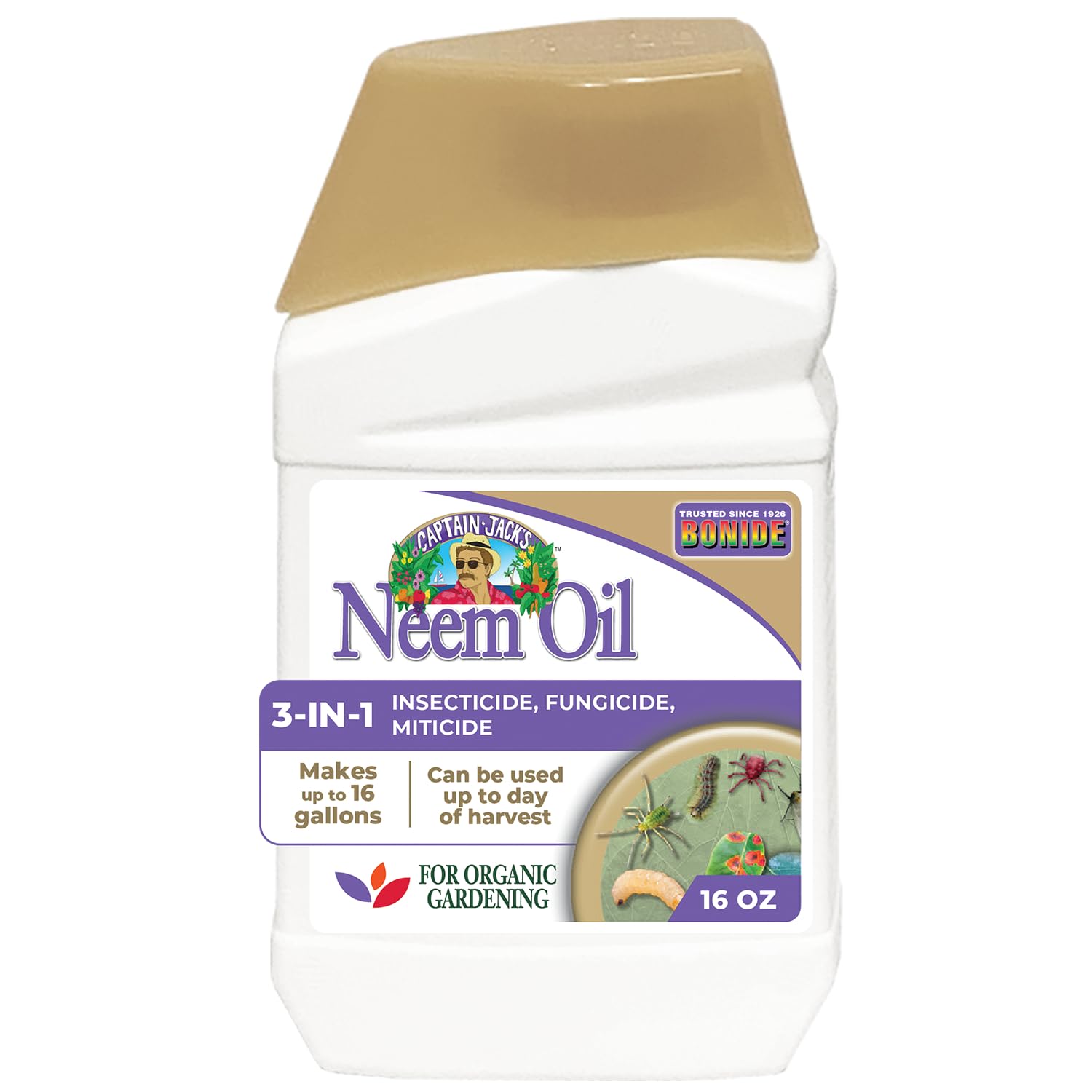
A multi-purpose neem concentrate I reach for when I want an organic, all-stage insecticide and fungicide for vegetable and ornamental beds.
Why I picked it: Versatile concentrate that kills eggs through adults and works across many plant types.
Best for: Vegetable gardens, ornamentals, and dormant sprays on fruit trees.
Concentrate that mixes for broad coverage—good longevity per bottle.
Pros
- Multi-purpose: insecticide and fungicide
- Kills eggs, larvae, adults
- Safe for many plants
- Good for dormant use
Cons
- Needs mixing before use
- Wash-off after heavy rain
- Not always effective on persistent pests
My take
I use Bonide’s neem concentrate across my vegetable beds and on ornamentals because it’s flexible—I can apply it as a preventative, a treatment, or as a dormant spray in late winter.
In my hydroponic strawberry tent and outdoor vegetable rows the mixture has reduced feeding damage and helped limit mildew when used consistently. It will wash off in heavy rain, so I schedule sprays when I expect dry weather for at least a day.
While neem is broadly effective, I’ve seen persistent whitefly pockets that needed frequent reapplication. Still, this product is one of my primary organic tools because of its multi-stage action and compatibility with a variety of plants.
6. Bonide All Seasons Horticultural & Dormant Spray Oil – Best Dormant & Horticultural Oil
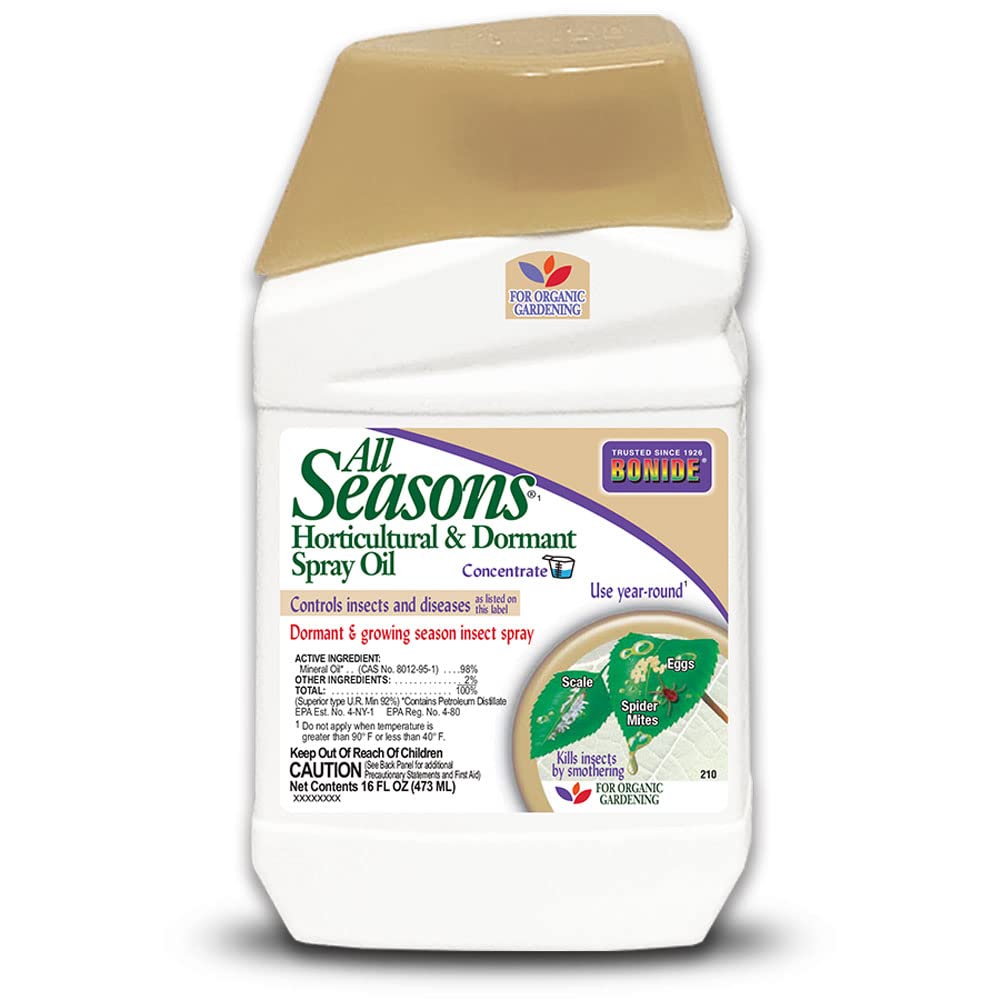
A refined mineral oil concentrate I use for year-round smothering of overwintering eggs, scale, and soft-bodied insects.
Why I picked it: Versatile oil I rely on for dormant sprays and summer applications when applied correctly.
Best for: Fruit trees, shade trees, shrubs, and ornamentals for overwintering egg control.
Concentrate provides economical coverage for large landscapes.
Pros
- Works as dormant and growing-season spray
- Approved for organic gardening
- Kills overwintering eggs
- Self-emulsifying concentrate
Cons
- Temperature and timing sensitive
- Requires proper mixing
- Not for immediate use without dilution
My take
For overwintering pests and scale I often mix this All Seasons oil for dormant sprays. It’s a paraffinic mineral oil that smothers eggs, mites, and scale when applied at the right time.
I’ve had good results on fruit trees—less overwintering damage and healthier spring growth—when I applied it during the recommended dormant window and avoided rain for 24 hours. The key with this product is timing and temperature: apply too hot or right before rain and you’ll see reduced effectiveness or plant stress.
It’s an economical way to protect large trees and hedgerows, but it does demand attention to label directions and weather timing for best results.
How I Choose a Horticultural Oil or Neem Product
Key factors I consider
I choose products based on pest pressure, plant sensitivity, and how much effort I’m willing to put into mixing and repeat applications.
For heavy infestations I prefer concentrated neem or a systemic ready-to-use. For disease prevention on edibles I use copper or frequent neem applications. For overwintering pests I use horticultural mineral oil at dormant timing.
- Concentrate vs. Ready‑to‑Use: Concentrates stretch further but require mixing; RTU is fast and convenient.
- Active ingredients: Neem and mineral oils work by smothering; systemic products are absorbed and give longer protection.
- Plant sensitivity: Avoid spraying leaves that will see harsh sun immediately after application to prevent burn.
- Weather window: Don’t apply before heavy rain; many treatments need at least a day of dry weather.
- Timing: Use dormant oils in their recommended window for egg and scale control; use neem and fungicides preventatively and at the first sign of pests/disease.
Application tips I use
I always test a single branch or plant before broad application to check for phytotoxicity.
Mixing: I add a mild surfactant (like Castile soap) when using neem to help it emulsify and cling to leaves.
- Spray in the cool part of the day—early morning or evening.
- Hit undersides of leaves where pests hide.
- Reapply after heavy rain if using non-systemic products.
Frequently Asked Questions
Can I mix neem oil with other garden products?
I mix neem with mild soap to emulsify it, and I avoid combining it with other pesticides unless the labels explicitly allow tank mixes. When in doubt, I test a small area first.
Will horticultural oils harm beneficial insects?
Broadly speaking, oils that smother pests can affect beneficials if they’re directly sprayed. I avoid spraying blooms and apply in the evening to reduce impact on pollinators.
How often should I reapply neem or horticultural oil?
For preventative or maintenance I usually spray every 7–14 days. For heavy infestations I treat more frequently, then switch to weekly maintenance until the issue is resolved.
Final Take
I keep a mix of products in my shed: a concentrated neem for targeted infestations, a reliable ready-to-use systemic for quick broad protection, a copper fungicide for persistent disease, and a dormant mineral oil for overwintering eggs.
Choosing the right product comes down to the pest or disease, the plant’s sensitivity, and whether you prefer organic tools or systemic convenience. Use the tips above, follow label directions, and you’ll have a much easier season managing pests and disease.
