
I tested five practical water test kits—liquid drop kits, pool chemistry kits, and multi-parameter strips—to find tools that give dependable results for ponds, water features, and freshwater tanks.
I evaluated a mix of aquarium liquid kits, pool chemistry kits, and multi-parameter test strips to find options that work well for backyard ponds and freshwater setups.
Across these products I focused on what I use most: which parameters each kit measures, how straightforward the testing steps are, how long the reagents last, and how easy it is to read results outside.
If you want precise, weekly tracking of ammonia, nitrite and pH, I favor liquid drop kits. If you maintain a pond with chlorinated water or a large pool, pool kits that include alkalinity and acid demand are useful. For quick, frequent checks across many parameters I reach for test strips.
I compared these kits by the parameters they cover (ammonia, pH, nitrite, nitrate, GH/KH, chlorine), testing method (drop tests vs strips), kit capacity, and how practical they were to use at the pond edge.
1. API Freshwater Master Test Kit – Best Overall
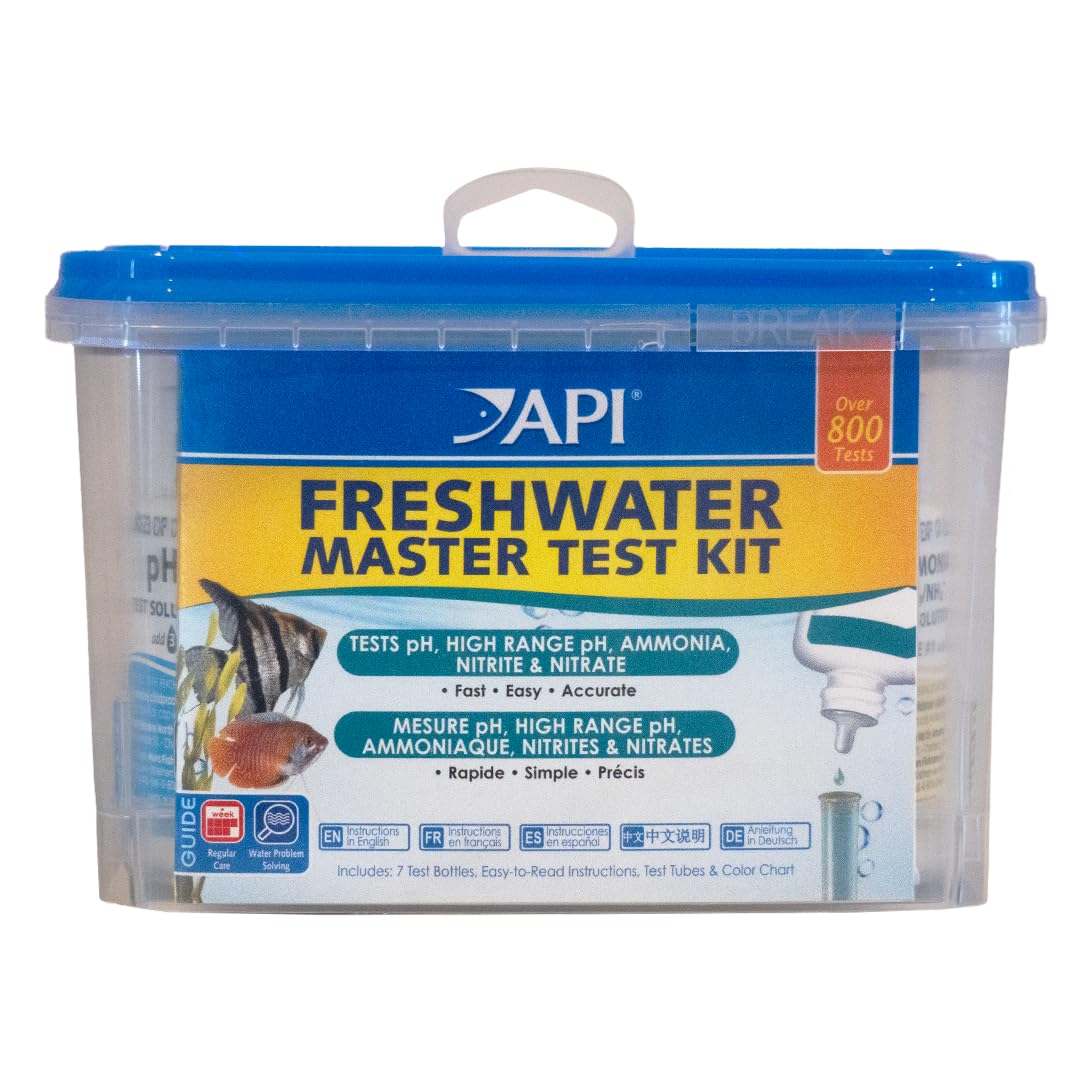
A long-lasting liquid drop kit that measures ammonia, nitrite, nitrate, pH and high-range pH with a laminated color card and multiple reagent bottles.
Why I picked it: Liquid drop chemistry gives me more consistent readings than strips, and this kit includes plenty of reagent for ongoing testing.
Best for: Weekly monitoring of freshwater tanks and small backyard ponds where ammonia and nitrite tracking matters.
A midrange, long-lasting investment that will serve frequent testers for a long time.
Pros
- Liquid tests for core parameters
- Large reagent supply for many tests
- Laminated color card for outdoor use
- More accurate than strips for me
Cons
- Plastic test tubes stain over time
- Designed for freshwater aquariums (not saltwater)
My take
I reach for this kit when I want clear, repeatable readings for the parameters that matter most to fish and pond life. The drop-method chemistry takes a little more time than strips, but the results are more tangible—especially for ammonia and nitrite.
The kit arrived with seven reagent bottles, four tubes, a tray, and a laminated color card that’s easy to read outside. I liked that the reagents are calibrated and that the supply will last me many months of weekly checks.
Two practical notes from use: the kit used to ship with glass tubes and the newer plastic tubes stain more easily, and the manufacturer specifies freshwater aquarium use. I still use it on small freshwater ponds but I take care to follow the instructions and watch reagent expiration dates.
2. Poolmaster 5-Way Test Kit – Best for Pools & Large Ponds
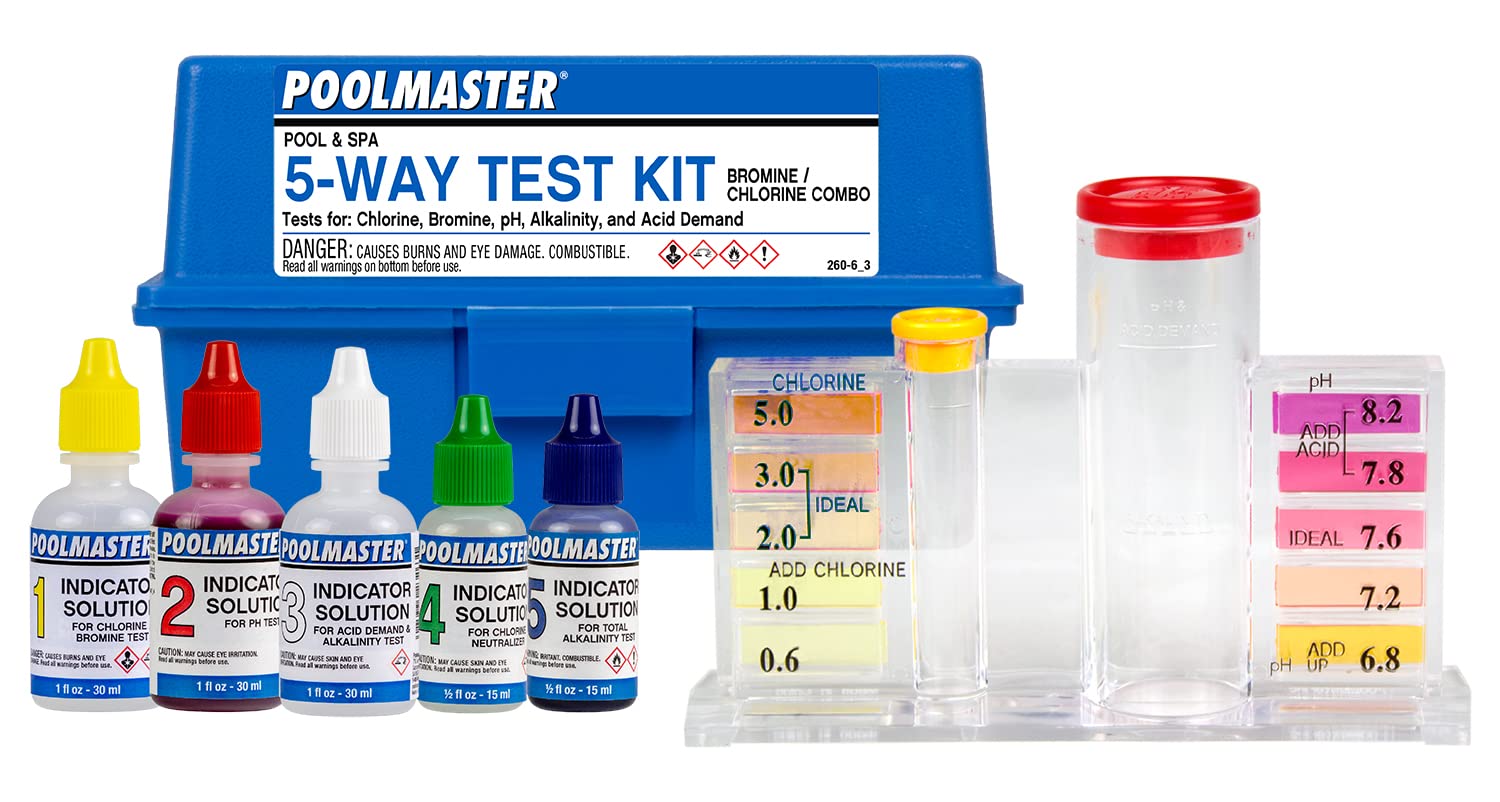
A compact pool chemistry kit that tests chlorine/bromine, pH, acid demand and total alkalinity with a hard case and clear-view test block.
Why I picked it: It covers alkalinity and acid demand, which I find essential for larger bodies of water and chlorinated ponds.
Best for: Pools, spas, and ponds where chlorine or bromine and alkalinity control are priorities.
A practical, no-frills option for managing pool-style chemistry.
Pros
- Tests alkalinity and acid demand
- Clear-view acrylic test block
- Durable storage case
Cons
- Small reagent bottles require careful handling
- Doesn’t include a FAS-DPD chlorine test
My take
When I need to manage chlorine and alkalinity in larger volumes of water, this Poolmaster kit is what I grab. The acrylic test block is easy to align with the color chips, and the hard case protects everything when I’m moving around the yard.
The kit includes labeled, travel-safe bottles and a concise instruction set. I appreciate that it tells me acid demand and total alkalinity—measurements that are easy to overlook but that control pH stability in larger systems.
If you expect laboratory precision for free chlorine measurement, note that basic pool kits like this use OTO/indicator methods rather than the FAS-DPD titration. For routine maintenance and correction guidance, this kit works well in my experience.
3. WWD Pool 2-Way Test Kit – Best Simple Two-Parameter Kit
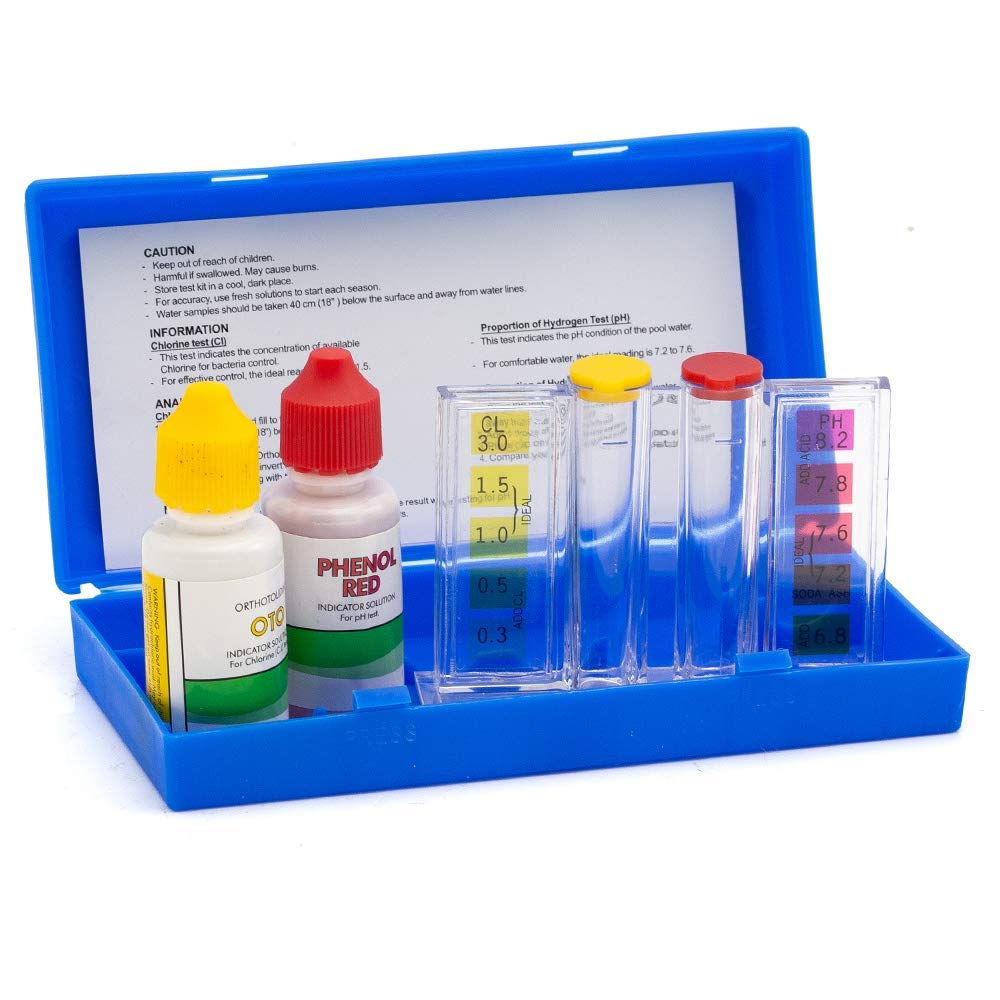
A compact, budget-friendly tester for chlorine (OTO) and pH with two small reagent bottles and a plastic tester block.
Why I picked it: Fast, portable checks of pH and chlorine when I only need the basics.
Best for: Quick spot checks of chlorine and pH in pools, spas, and small ponds.
An inexpensive, grab-and-go choice for basic monitoring.
Pros
- Very compact and portable
- Simple two-parameter testing
- Easy to use
Cons
- Color scales can fade over time
- Mixed accuracy reported
My take
This is the kit I keep in my shed for fast chlorine and pH checks. It’s straightforward—fill the tubes, add drops, cap, shake, and compare the colors.
I’ve found it convenient for routine checks, but I’ve also seen the color scales fade if the tester sits in a hot, sunny spot. When I use it frequently and store it protected from sunlight, it holds up well.
Accuracy can vary; I use this as a quick screen and then follow up with a more complete kit if something looks off.
4. API GH & KH Test Kit – Best for Hardness
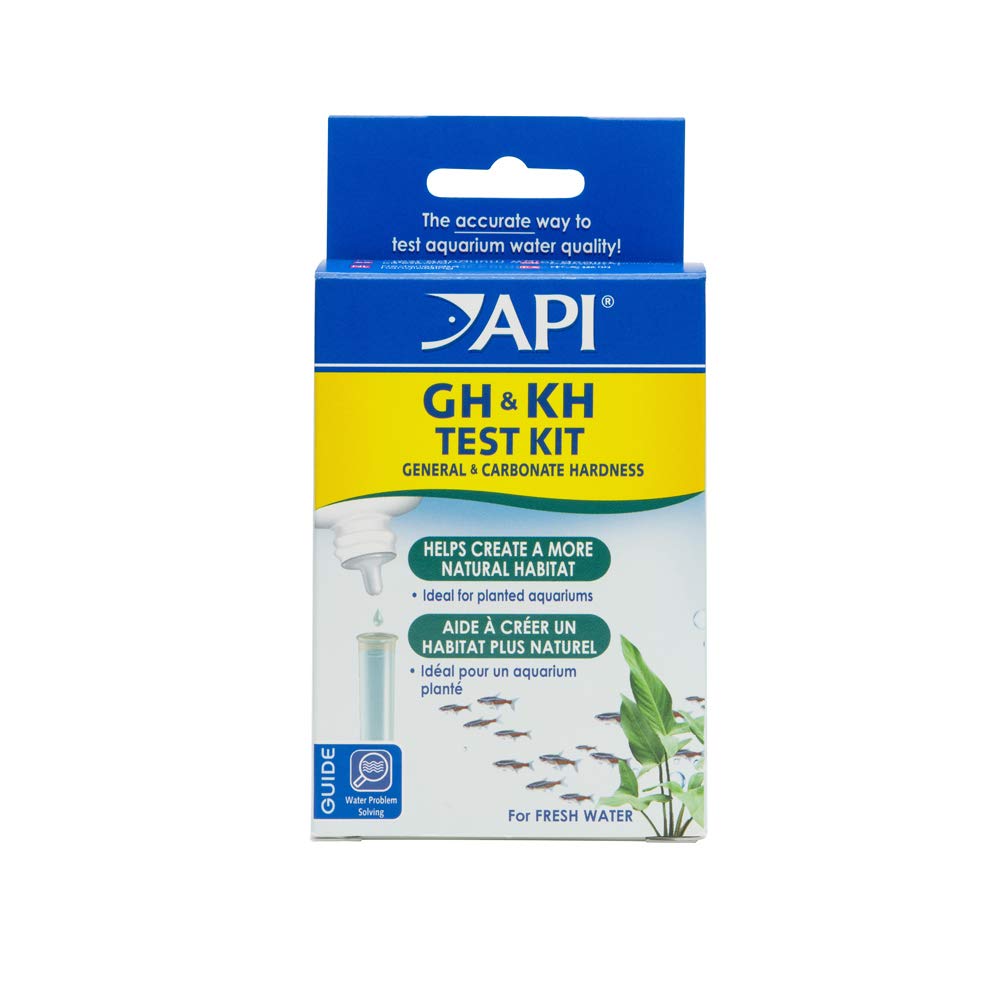
A focused kit that measures general hardness (GH) and carbonate hardness (KH) to help prevent pH swings and keep invertebrates healthy.
Why I picked it: GH and KH matter for pH stability and sensitive species; this kit provides those two readings affordably.
Best for: Pond keepers who need to track hardness and carbonate buffering for plants, shrimp, and sensitive fish.
An affordable specialty kit to pair with a broader master kit.
Pros
- Measures both GH and KH
- Small, focused reagent set
- Useful for buffering insights
Cons
- Endpoint drop-counting takes practice
- Plastic tubes can be hard to read
My take
I added this kit to my toolbox when I started keeping invertebrates and noticed pH swings. The GH/KH method uses drop counting to an endpoint instead of matching a color card, so it takes a few runs to get comfortable with the technique.
Once I practiced the drop counts, the results helped me make targeted adjustments and better understand the buffering capacity of my water. The bottles are a good size and last a long time.
My only nitpick: the plastic tubes are less clear than the old glass tubes I used to own, so I sometimes have to double-check the 5 ml line under good light.
5. 11-in-1 Aquarium Test Strips (150) – Best for Convenience
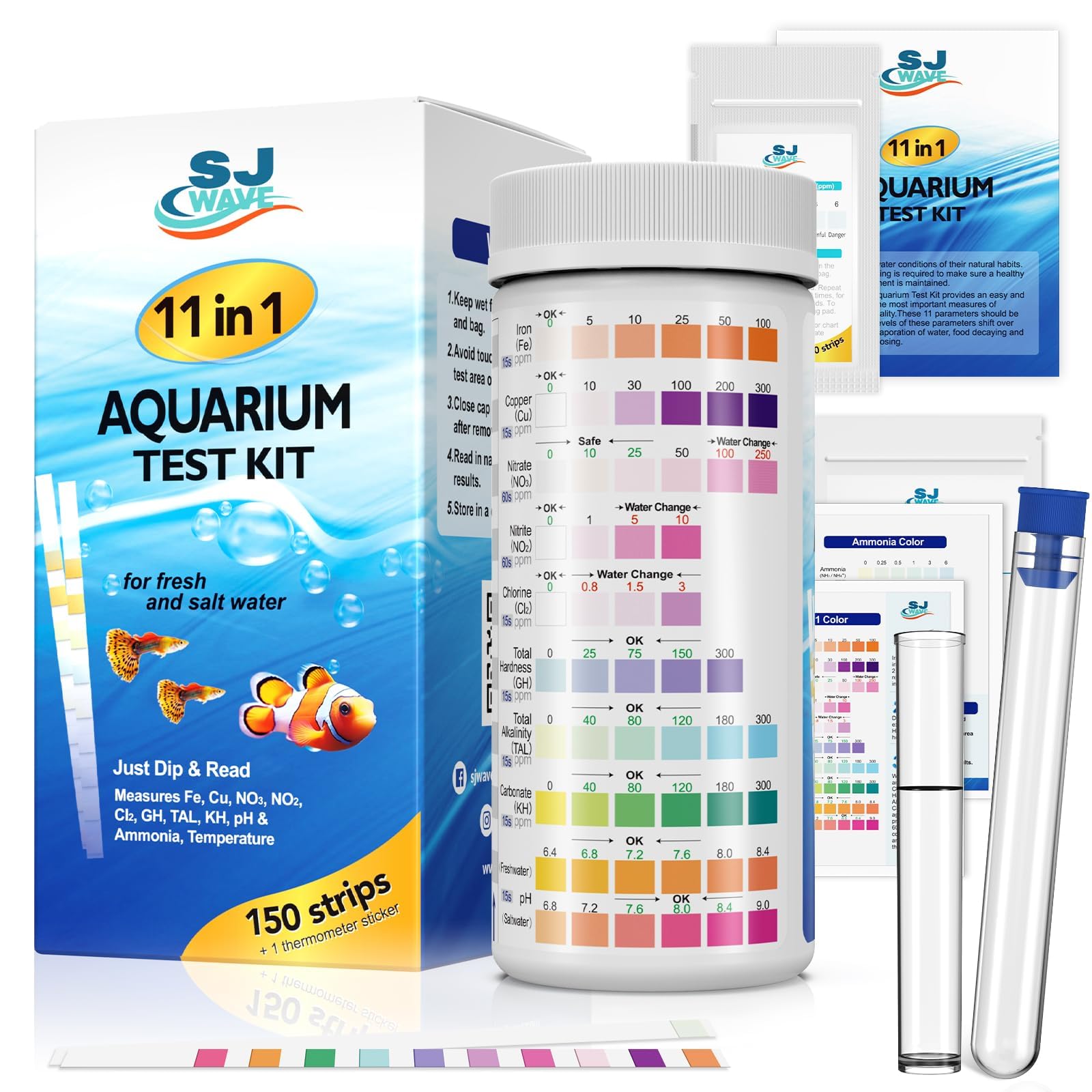
A high-count strip kit that checks 11 parameters, including ammonia, nitrate, nitrite, GH, KH, copper, and temperature, with refill packs and a small thermometer.
Why I picked it: I use these when I want quick, broad coverage across many parameters and lots of tests for routine monitoring.
Best for: Frequent spot checks across many parameters and long-term affordability where instant results matter.
Highly cost-effective per test when you need lots of checks.
Pros
- Covers 11 parameters
- 150 tests with sealed refills
- Includes small thermometer
Cons
- Less precise than liquid drops
- Occasional sponge bits detach
My take
When I want an instant read across many parameters, I reach for these strips. They’re fast—dip, wait, match to the chart—and the kit ships with a sealed 50-count bottle plus extra sealed bags, which helps preserve freshness.
The color chart is detailed and I like having GH, KH, copper, and temperature on the same strip when I’m troubleshooting a pond that’s been refilling from different water sources.
For critical diagnostics I still confirm with a liquid drop kit, but for routine, frequent checks these strips save time and are very economical.
How I Choose a Pond Water Test Kit
Parameters to Prioritize
I decide which kit to buy based on the parameters I need to control. Ammonia, nitrite and nitrate are must-tests for fish health. pH and high-range pH matter if your pond has variable alkalinity. For larger, chlorinated systems I add free chlorine/bromine and total alkalinity to the list.
- Ammonia, nitrite, nitrate — essential for fish and pond life
- pH and high-range pH — track daily swings
- GH/KH — important for buffering and sensitive species
- Chlorine/Bromine and alkalinity — key for pools and chlorinated ponds
Liquid Drop Kits vs Test Strips
I rely on liquid drop kits when I want more repeatable, fine-grained results for problems like trace ammonia or nitrite. Test strips are my go-to for fast, broad checks across many parameters and when I need large test counts.
Both approaches have a place: liquid kits for diagnosis and precision, strips for convenience and regular monitoring.
- Drops = better for pinpointing ammonia/nitrite issues
- Strips = fast, many parameters, good for frequent checks
- Store reagents protected from heat and inspect expiration dates
Practical Tips for Reliable Results
I always check reagent expiration dates and keep kits out of direct sun. When testing outdoors I use a laminated color card or hold the sample against white paper to reduce reading errors.
If a strip or color scale looks faded, I replace it. For crucial decisions—like chemical treatment—I'll double-check with a liquid kit.
- Protect kits from sunlight and heat
- Use a white background when comparing colors
- Store sealed refills and use within recommended time
Frequently Asked Questions
Can I use aquarium test kits for a backyard pond?
Yes — if your pond is freshwater, aquarium kits can accurately measure ammonia, nitrite, nitrate, GH/KH and pH. I note that some kits are labeled specifically for aquariums, so for chlorinated or very large bodies of water I prefer pool-style kits that include alkalinity and acid demand.
How often should I test pond water?
I test weekly as a baseline and increase the frequency after heavy rain, new fish additions, or if I spot stressed fish. Immediate checks are essential when I suspect ammonia or nitrite spikes.
Are test strips accurate enough for serious issues?
Test strips are great for fast screening and finding trends, but for diagnosis of critical issues I confirm with a liquid drop kit. I rely on drops when I need to pinpoint ammonia or nitrite at low concentrations.
What should I do if ammonia is high?
If I find elevated ammonia, I increase aeration, reduce feeding, and perform partial water changes while testing daily. I also use buffering products or biological treatments as appropriate, but I base action on repeatable test results from a liquid kit.
How long do reagents last?
In my experience reagents last a long time if stored cool and sealed. Kits often include expiration dates on bottles; I rotate reagents out when they reach those dates and keep backups sealed until needed.
Final Take
For precise control and problem-solving, I prefer liquid drop kits like the API Freshwater Master. For larger chlorinated systems, the Poolmaster five-way kit gives the alkalinity and acid demand measurements I need.
When I want quick, broad coverage or lots of routine checks, the 11-in-1 strips are my time-saving option. I recommend keeping one precise liquid kit and one strip-based kit so you can screen frequently and diagnose accurately when needed.
