
I tested popular watercolor brush pens and fineliners to find sets that blend well, travel cleanly, and hold up to mixed-media work. Here are the ones I keep reaching for.
I spend a lot of time testing brush pens and fineliners in sketchbooks, mixed-media pieces, and travel kits. For this roundup I focused on color range, blendability, tip control, portability, and how the inks behave when layered or reactivated with water.
You’ll find large color collections for illustration and journaling, compact sets that live in my daily carry, and a few black fineliner packs I use for final inking. I explain when each set shines and what to watch for so you can pick the right kit for your workflow.
I compared pigment behavior, tip variety, water reactivation, and case/portability to recommend sets for different use cases.
1. ARTEZA Real Brush Pens (96) – Best Overall
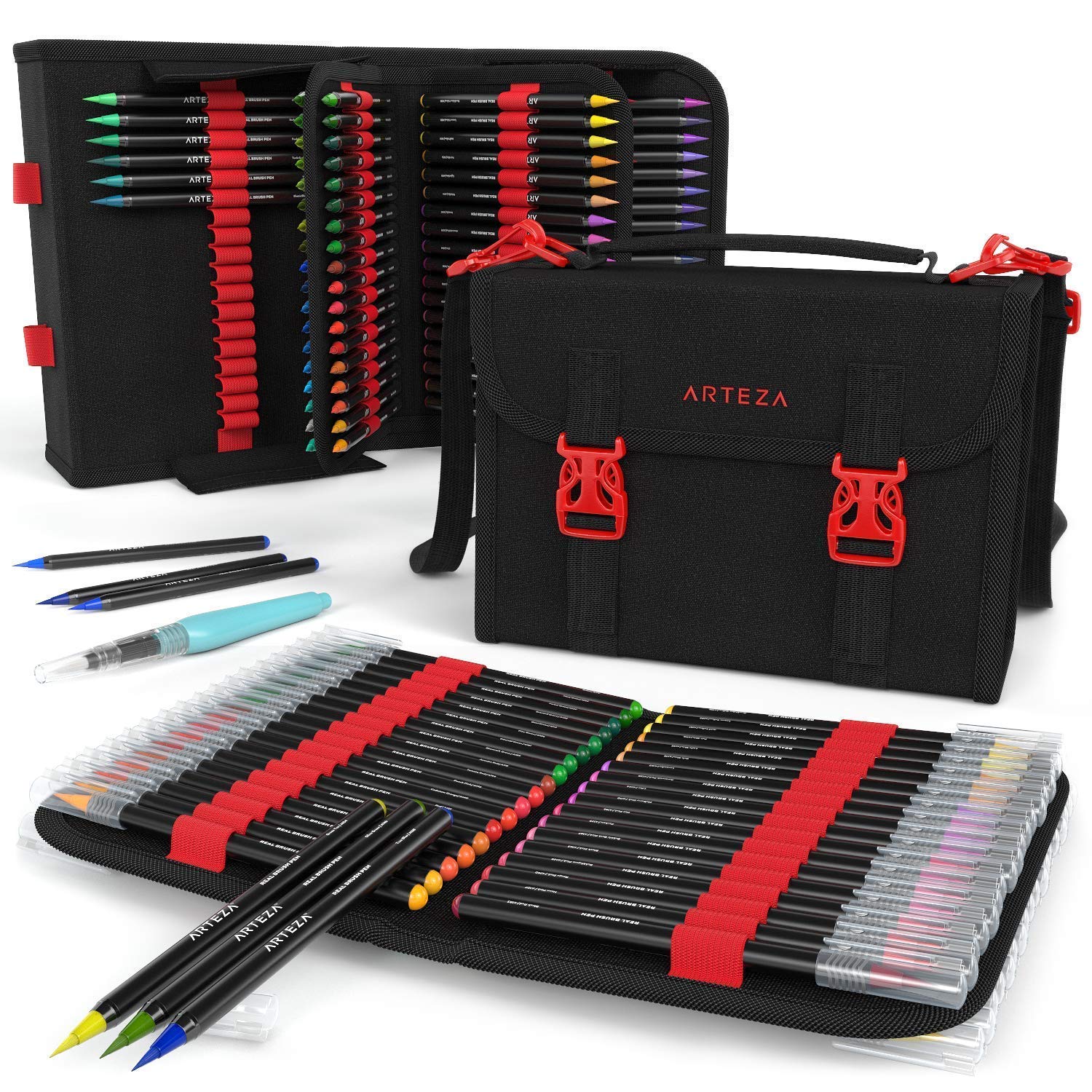
A massive 96-color kit with a 108-slot travel case and a self‑moistening water brush—great for wide palettes and on-the-go painting.
Why I picked it: Unmatched color range plus a rugged organizer and included water brush for travel.
Best for: Artists who want a huge color selection and a portable paint kit.
Excellent value for a large, travel-ready artist set.
Pros
- Very wide color selection
- Includes self-moistening water brush
- Rigid 108‑slot carrying case
- Colors match pen caps accurately
- Good long-term nib durability
Cons
- Brush tips need some getting used to
- Performs best on smooth paper
- Don't dip the tip in water
My take
I keep the 96 set in my studio and reach for it when I want near-infinite color choices without switching mediums. The pens arrive in a zip case with 108 elastic slots—plenty of room for the pens plus a few pencils or fineliners.
Color accuracy impressed me: the shades printed on the barrel match what comes out of the tip, which makes selecting hues fast when I’m sketching from life. The dye-based pigments lay down smoothly, cover large areas quickly, and react predictably when I add water.
A few practical notes from using them: the self-moistening water brush is handy for blending on the go, and I prefer applying water to the laid pigment rather than dunking a tip into a puddle—dipping can drain pigment from the brush tip and slow you down.
Bleed is minimal when I work on smooth, heavyweight sketchbook paper; on thinner or textured paper I take care with layering. Overall, this set is the workhorse I pack when I need color variety and portability.
2. Muchcute Micro Fineliner Set (12) – Best for Inking
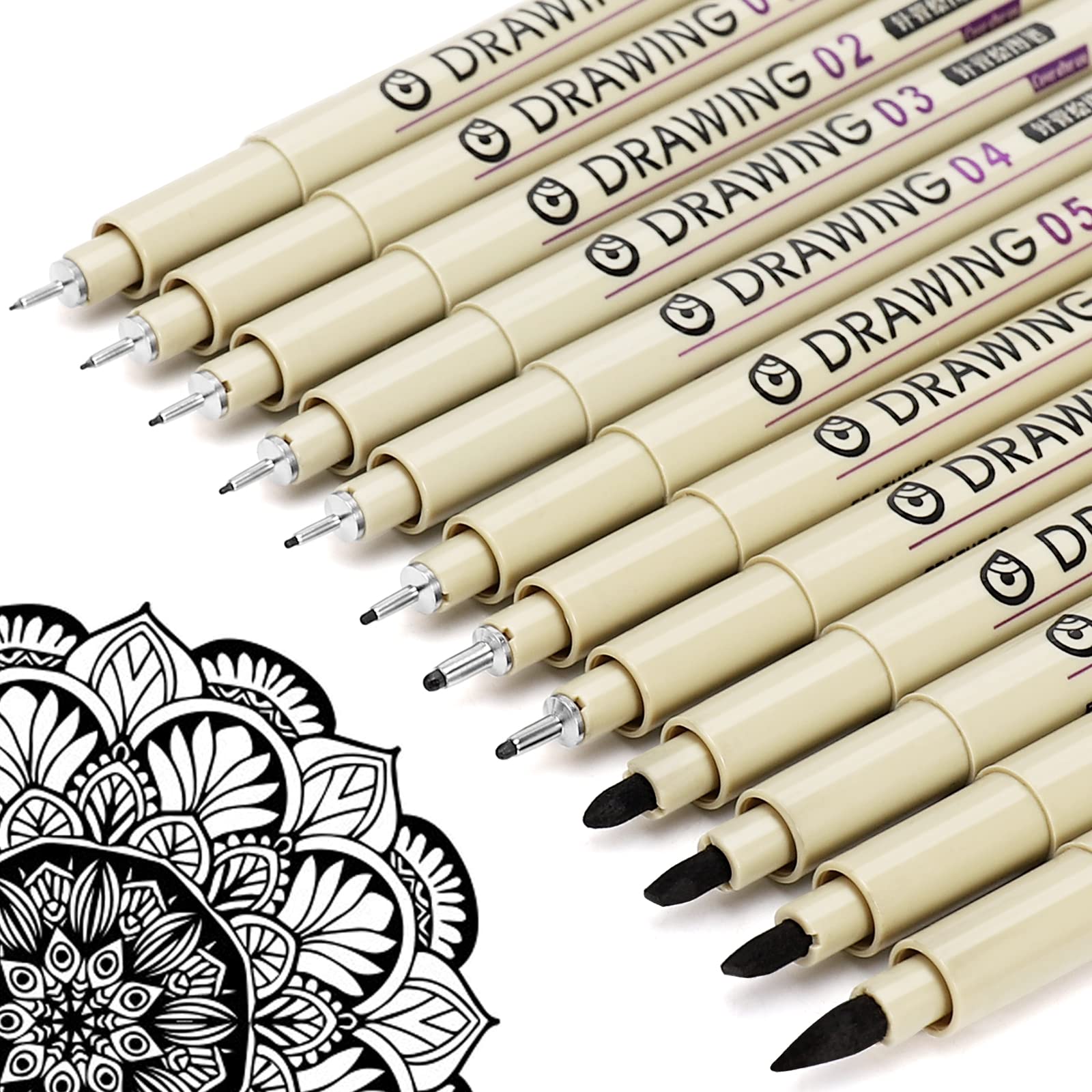
A 12-pen black fineliner set with tips from extra-fine to 3.0mm plus a brush tip—waterproof, archival ink that dries quickly.
Why I picked it: Versatile tip range and archival waterproof ink at a very accessible price.
Best for: Inking, comics, technical drawing, bullet journals, and mixed-media outlines.
A budget-friendly inking set with professional features.
Pros
- Wide tip-size spread
- Waterproof archival ink
- Smooth, skip-free nylon nibs
- Includes a brush tip
- Quick drying
Cons
- Extra-fine tips can be fragile
- Water resistance requires full drying
My take
I use this Muchcute set as my everyday inking pack when I need a variety of line weights without swapping brands. The sizes cover hairlines through bold outlines and the brush tip is great for expressive strokes.
The ink goes down dark and dries fast; once fully dry it resists water so I can safely layer watercolor washes over my lines. I do take care not to press too hard on the extra-fine tips—treat them gently and they deliver very clean, consistent lines.
For the price and performance I found these pens to be an excellent all-purpose inking solution that pairs well with watercolor markers and mixed-media pages.
3. TWOHANDS Fineliner Set (16) – Best for Detail Work
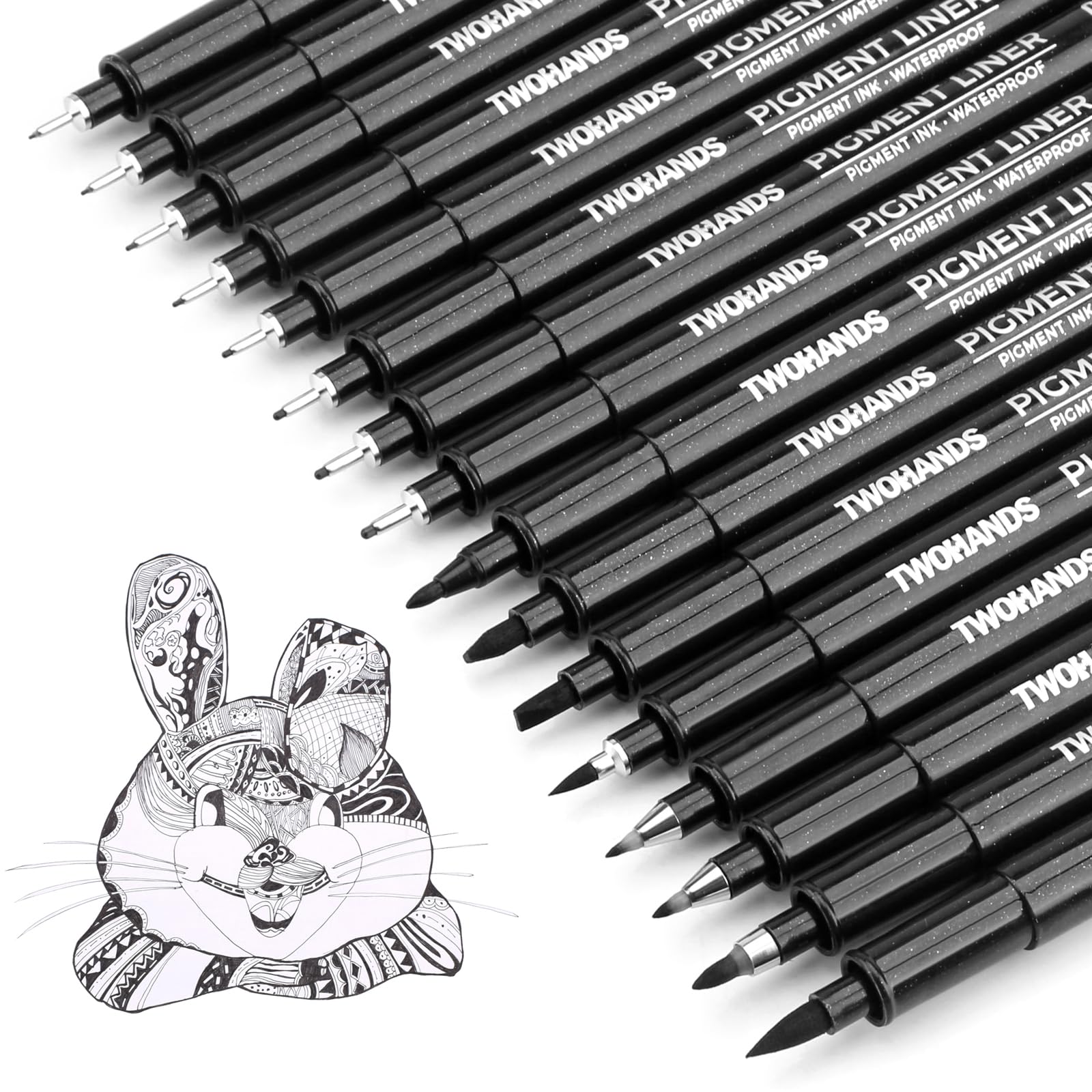
Sixteen fineliners from 0.05mm to 3.0mm with archival, waterproof ink and labeled caps—ideal when precision matters.
Why I picked it: Extremely fine sizes down to 0.05mm for precise technical and illustration work.
Best for: Stippling, technical drawing, manga line work, and ultra-fine detail.
A solid mid-range choice for artists needing many tip sizes.
Pros
- Tiny 0.05mm tip available
- Archival waterproof ink
- Labeled caps for quick access
- Comes with storage pouch
Cons
- Ink may not last heavy users
- Some pens aren't the deepest black
My take
When I need painstaking detail I reach for the TWOHANDS set. The assortment down to 0.05mm lets me do incredibly fine cross-hatching and tiny lettering that larger pens just can't achieve.
Caps are clearly labeled, which saves time during longer sessions, and the ink survived intentional water exposure in my tests—lines stayed put even when the paper got wet. That said, if you ink constantly you may want spare packs; a few users and my own heavier sessions suggested ink life can be limited under heavy use.
Overall, these are dependable precision tools that I keep in my technical drawer alongside my drafting tools.
4. CHROMATEK Watercolor Pens (54) – Best for Learning
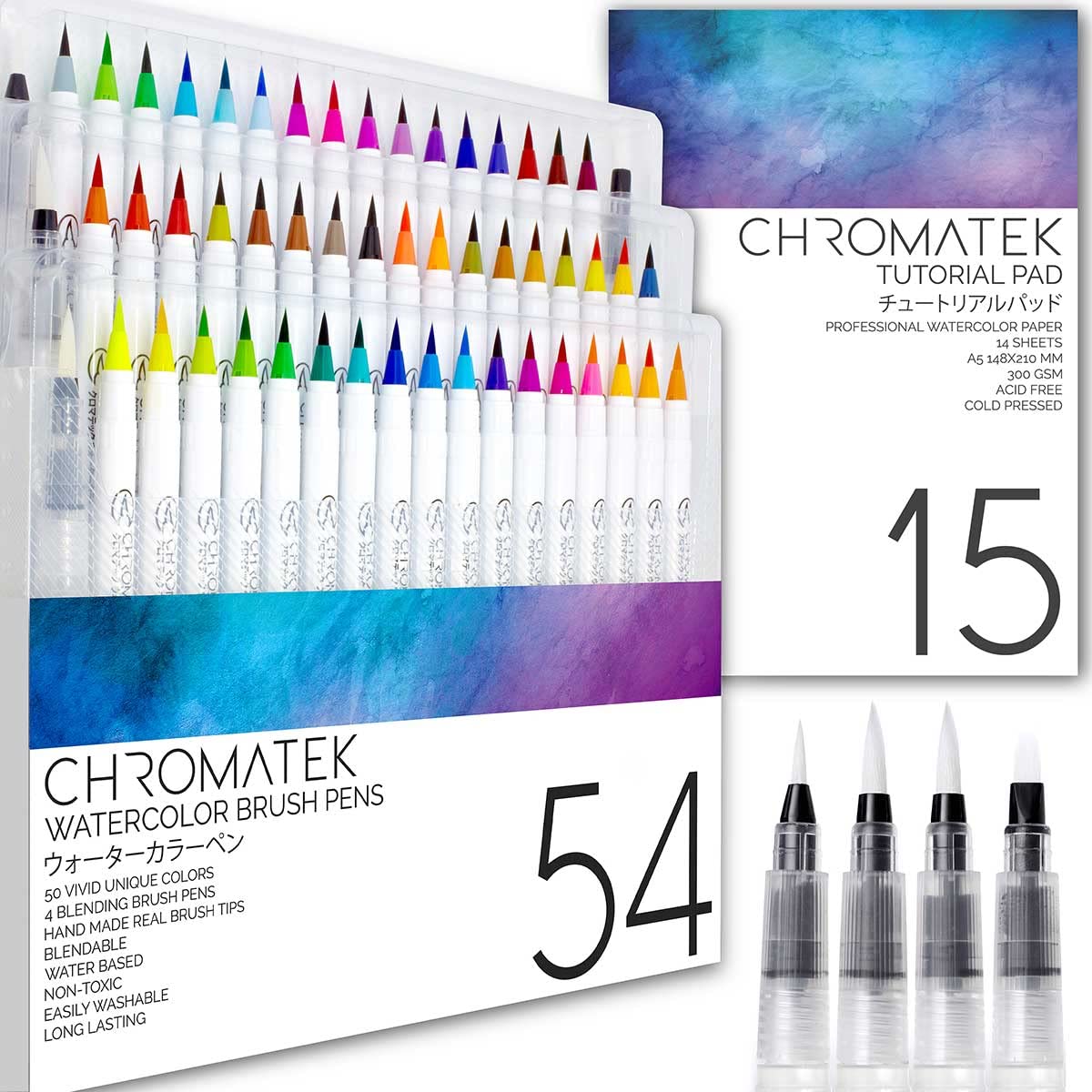
A 54-piece kit with numbered brush tips, a 300gsm tutorial pad, online lessons, and four refillable aqua brushes for guided practice.
Why I picked it: Structured video tutorials plus a tutorial pad make this ideal for learning watercolor techniques.
Best for: Beginners who want guided lessons and a quality watercolor pad.
A premium-feeling kit built around education and workflow.
Pros
- Numbered pens for neat swatching
- Includes tutorial watercolor pad
- Four refillable aqua brushes
- Bright, blendable colors
Cons
- Not pigment-based permanence
- Occasional dried pens reported
My take
I recommend the Chromatek set when someone wants to learn watercolor techniques without hunting for resources. The bundled 15‑page 300gsm pad and structured video series accelerated my baseline techniques and kept practice focused.
The pens are all numbered which makes swatching and following tutorials straightforward. Colors blend beautifully on real watercolor paper and the aqua brushes are genuinely useful for on-the-go glazing and washes.
A couple of sets I tested had an occasional dried pen, but the color payoff, blendability, and the learning materials made this one of the best starter-plus kits I've used.
5. Mr. Pen Multiliners (10) – Best Budget Multiliner
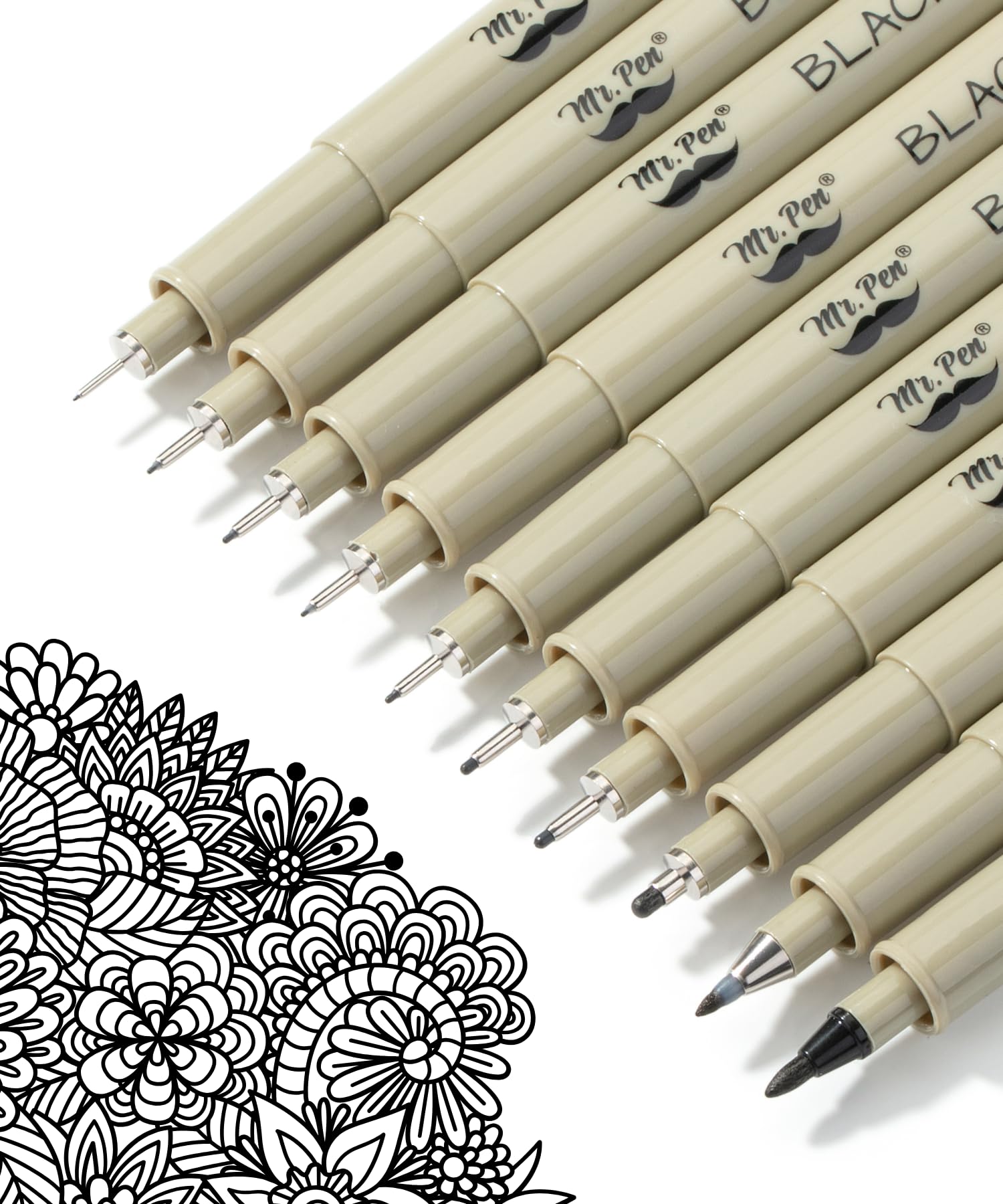
Ten black multiliners from 0.15mm to 0.7mm with archival, waterproof ink and a comfortable uniform design.
Why I picked it: Affordable alternative to pricier multiliners with surprisingly reliable waterproof performance.
Best for: Students, beginners, and architectural or drafting sketches.
Very budget-friendly without major compromises.
Pros
- Reliable waterproof ink
- Comfortable, uniform design
- Good spread of tip sizes
- No leakage or dryness on arrival
Cons
- Thicker tips can show through thin paper
- Not as luxurious as premium multiliners
My take
I bought these when I couldn’t justify higher-end multiliners and they’ve been my go-to for routine line work. On standard computer paper I had no leakages or dry pens and the ink resisted smudging even with light alcohol marker overlap.
The set won’t replace museum-grade pigment pens, but for drafting, outlining, and everyday sketching it delivers dependable performance. If you work on very thin paper, expect some show-through from broader tips.
6. ARTEZA Real Brush Pens (12) – Best Starter Set
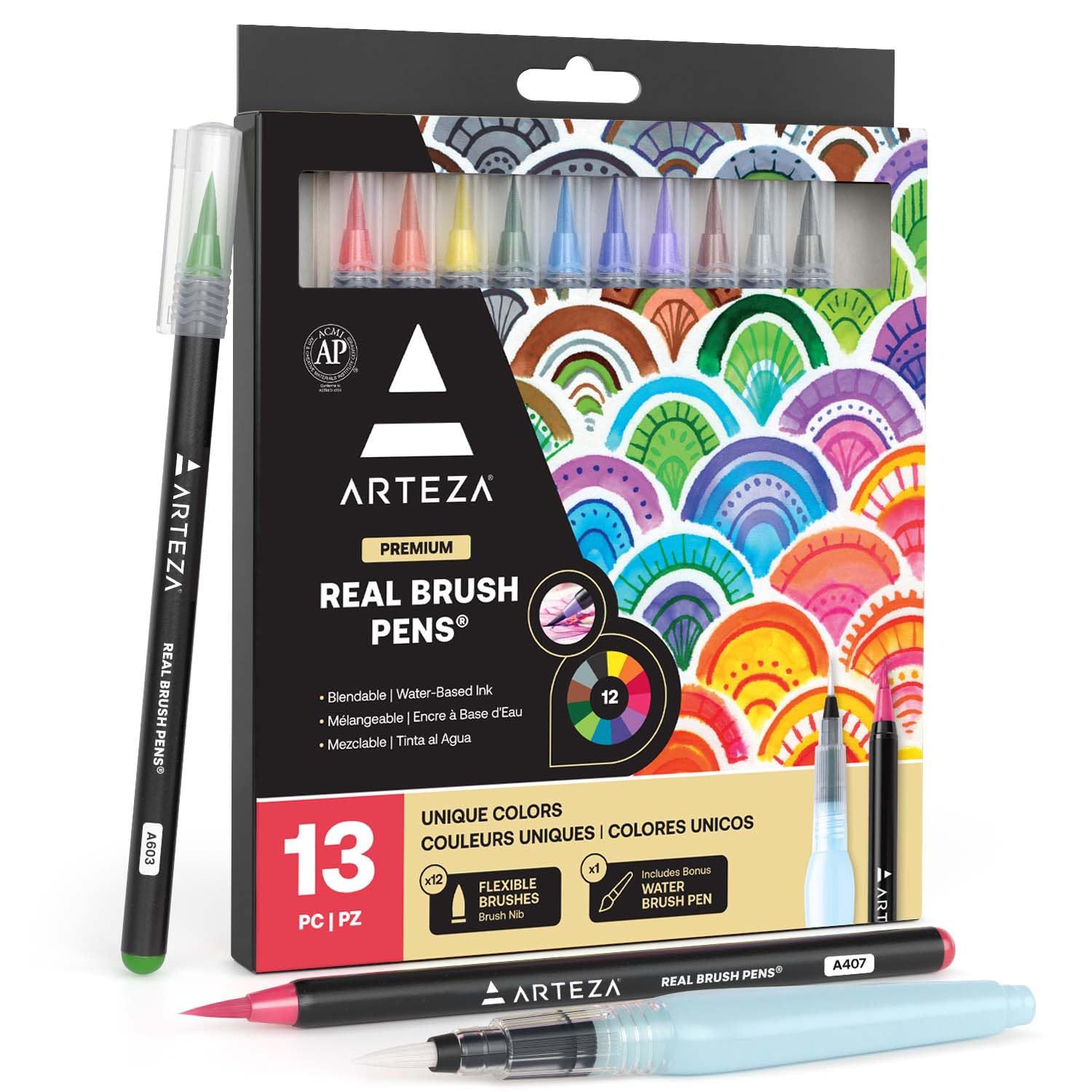
A compact 12-color brush pen set with flexible tips that give real brush-like control—great for journaling and small paintings.
Why I picked it: Compact, versatile, and brush-like tips that feel like a real brush.
Best for: Beginners, journaling, small studies, and calligraphy practice.
A great entry-level set with strong color payoff.
Pros
- Brush-like flexible tips
- Vibrant, clear colors
- Very fine tip control
- Easy blending when wet
Cons
- Limited color range
- Less rewettable once ink sets
My take
I keep the 12-piece Arteza set in my everyday sketch bag for quick color studies and lettering practice. The tips genuinely feel like a brush and allow hairline strokes as well as broader washes when I flatten the nib.
Colors are vibrant and blend nicely if I work while the ink is still wet; after a day the lines set and resist reactivation, which I sometimes prefer for layered mixed-media work.
Occasionally I’ve received a single pen with a defect, but Arteza’s customer service replaced it quickly in my experience. For those who want a compact, fun set, this one hits the sweet spot.
How I Choose Watercolor Pens
Key factors I test
Tip type: I decide between real brush tips for painterly strokes and nylon/fineliner tips for precise lines.
Ink behavior: I look for how the ink reactivates with water, how well it layers, and whether it resists water once dry.
Paper compatibility: Heavy, smooth watercolor paper behaves very differently than thin sketchbook pages—plan for the papers you’ll use most.
- Color range: More colors reduce the need to mix.
- Blendability: Test by laying pigment and applying water.
- Durability: Treat extra-fine tips gently to avoid damage.
- Portability: Cases and aqua brushes matter if you travel.
- Archival properties: Dye-based colors are vibrant but not always lightfast; fineliners can be archival and waterproof.
Practical tips I follow
Always swatch new pens on the paper you plan to use to check bleed, reactivation, and true color.
For clean mixes, I usually apply water to pigment on the paper rather than dunking the pen tip in water.
Keep spare pens of your most-used sizes if you ink a lot—some sets wear faster under heavy use.
- Use heavier paper (200–300gsm) for extensive wet work.
- Let fineliner ink fully dry before applying water.
- Store brush tips horizontally to prolong life.
Frequently Asked Questions
Are watercolor brush pens waterproof after drying?
It depends. In my tests dye-based watercolor brush pens often reactivate with water and are not waterproof once wet; many black fineliners and some archival inks become water-resistant after they are fully dry. I always let ink dry completely before adding washes if I want line integrity.
How do I blend colors with brush pens?
I lay down color while it's still wet and then use a water brush or a damp brush to pull and mix nearby colors. Alternatively, applying water to pigment already on the paper gives predictable glazing and layering results.
What paper should I use with these pens?
For heavy blending and wet techniques I prefer 300gsm cold-pressed watercolor paper. For quick sketches and journaling, a smooth heavyweight sketchbook works fine but expect more show-through and less reactivation.
Final Take
I picked these sets because each fills a specific role in a creative workflow: huge color ranges for illustration, compact brush packs for travel, and reliable fineliners for inking.
Choose based on how you work—if you want tutorials and a pad, go for the Chromatek; if you need the widest palette and portability, the ARTEZA 96 set is my go-to; for precise inking, the Muchcute or TWOHANDS options are dependable companions.
