
I tested five popular fabric storage bin sets to find options that actually hold their shape, fit common cube shelving, and make daily access easier. Here are my top picks for different needs—from budget multipacks to st
I live with limited shelving and a rotating stream of clothes, toys, and linens, so I tested multiple fabric storage bin sets to see which ones actually solve clutter and which just look nice on a product page.
My testing focused on three things: how well a bin holds its shape (base/side structure), how easy it is to pull in and out of cubbies (handles and fit), and how the material and color hold up under everyday use. I also paid attention to pack size and whether the bins collapse cleanly for storage.
Below I break down the best options I used and explain which situations each one works best for.
These bins vary most by cube size, internal support (chipboard vs soft base), handle style (sewn-in fabric vs grommeted), and decorative finish. I matched each pick to the shelf size and usage I tested it for.
1. Amazon Basics Collapsible Fabric Storage Cube (13-inch) – Best Overall
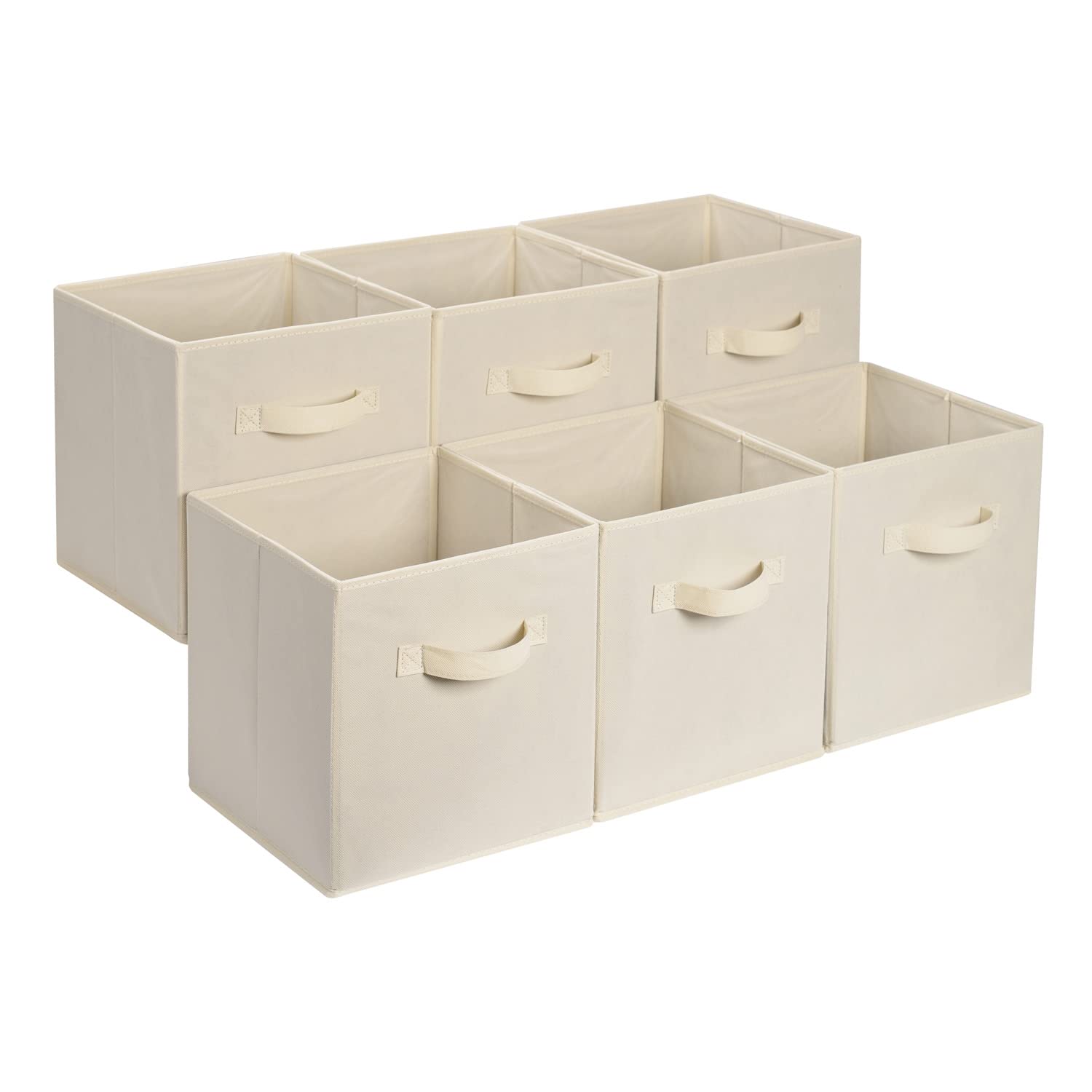
A six‑pack of roomy, collapsible 13-inch cubes that balance sturdiness and portability for general home use.
Why I picked it: I relied on these when I needed a multipack that fits large cube shelves and won’t flop when filled.
Best for: Large cubby shelves, laundry room bins, storing bulkier items.
Budget-friendly multipack that stretches across rooms.
Pros
- Roomy 13-inch capacity
- Sewn-in fabric handles for easy carrying
- Collapses flat for storage
- Lightweight yet sturdy feel
- Breathable fabric
Cons
- Neutral beige may look plain
- Material can feel thin up close
My take
I used this six-pack as my go-to when I needed bigger cubes for a laundry closet and a living-room shelving unit. The 13-inch size swallowed folded towels and bulky sweats without sagging.
The sewn-in fabric handles make it simple to pull a full bin out of a shelf and walk it across a room. I appreciated that the fabric stays breathable, so linens stored for a while didn’t feel musty.
Setting them up is fast — the bottoms snap in and the cubes stand firm enough that I can carry them when filled without the sides collapsing. When they’re not needed I fold them flat and tuck them away.
If you want something very decorative, these are plain beige, but I preferred the neutral look for hiding clutter. Overall, they struck the best balance of size, utility, and simple construction for everyday home organization.
2. Amazon Basics Collapsible Cube Storage Bin (10.5-inch) – Best for Modular Shelves
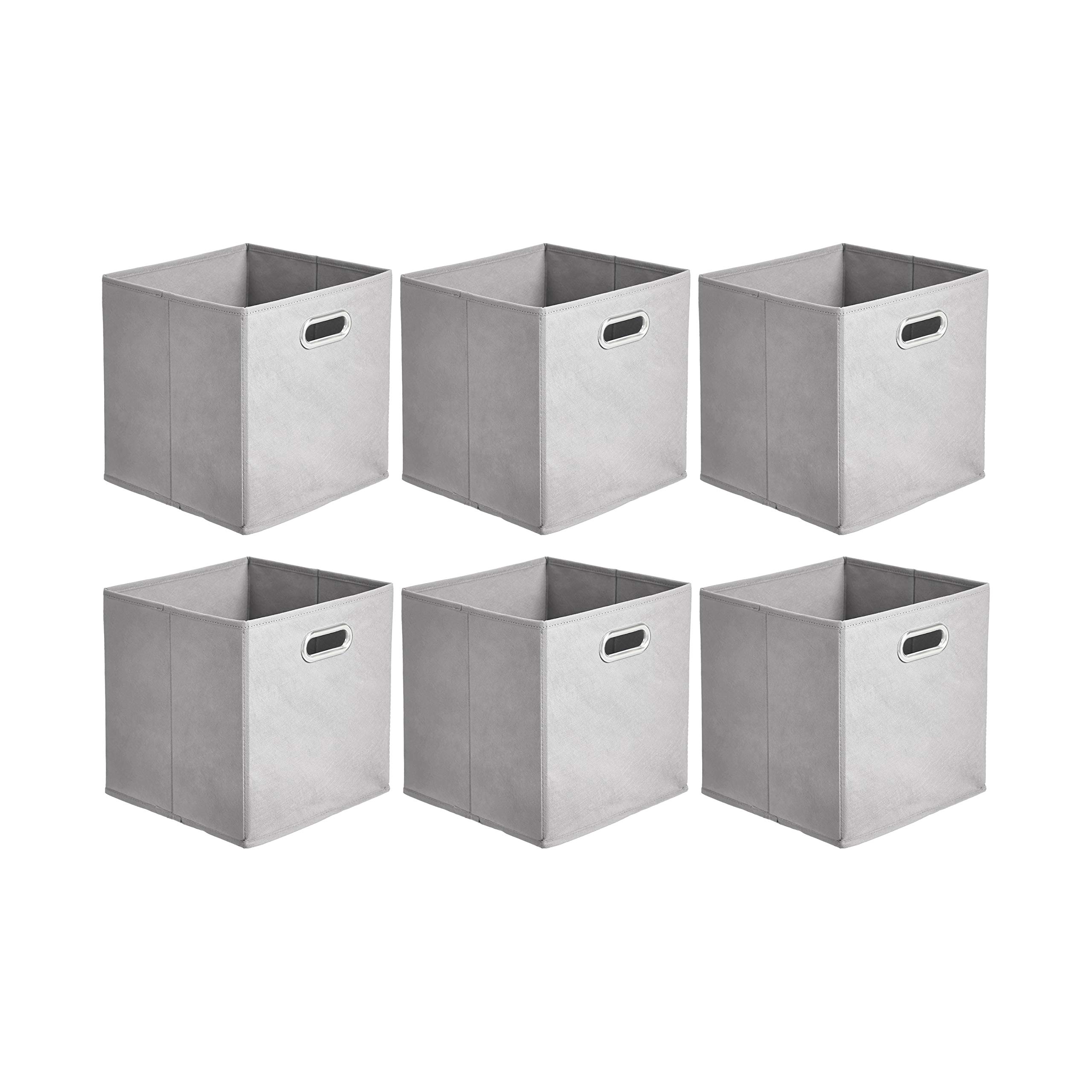
A six‑pack that fits most modular cube shelving systems with grommet handles and a clean, modern look.
Why I picked it: I chose these when I needed a sleeker option that slides into standard cubbies and looks contemporary.
Best for: Modern bookshelves, cubby organizers, craft storage.
Affordable and stylish for shelf-forward rooms.
Pros
- Fits modular cube systems well
- Grommeted oval handle for a clean look
- Collapses flat
- Durable non-woven fabric
Cons
- Handles can sit slightly crooked
- Occasional initial packaging smell
My take
These are the bins I reached for when organizing a modular bookshelf—size and finish match the cubby openings I had at home, and they give a tidy, modern appearance.
The grommeted oval handle reads cleaner than sewn-in fabric and makes pulling a bin out feel smooth. Once I popped the bottom in, the cubes held their shape and were surprisingly sturdy under load.
I did notice that on some sets the metal grommet sits a touch off-center; it bothered me visually but didn’t affect function. A faint factory smell can be present out of the package, but it dissipated for me after a few days airing out.
If you care about a neat, contemporary look and accurate fit for standard cubbies, this is the set I used most for that purpose.
3. Household Essentials Foldable Fabric Storage Bin (11-inch) – Best for Durability
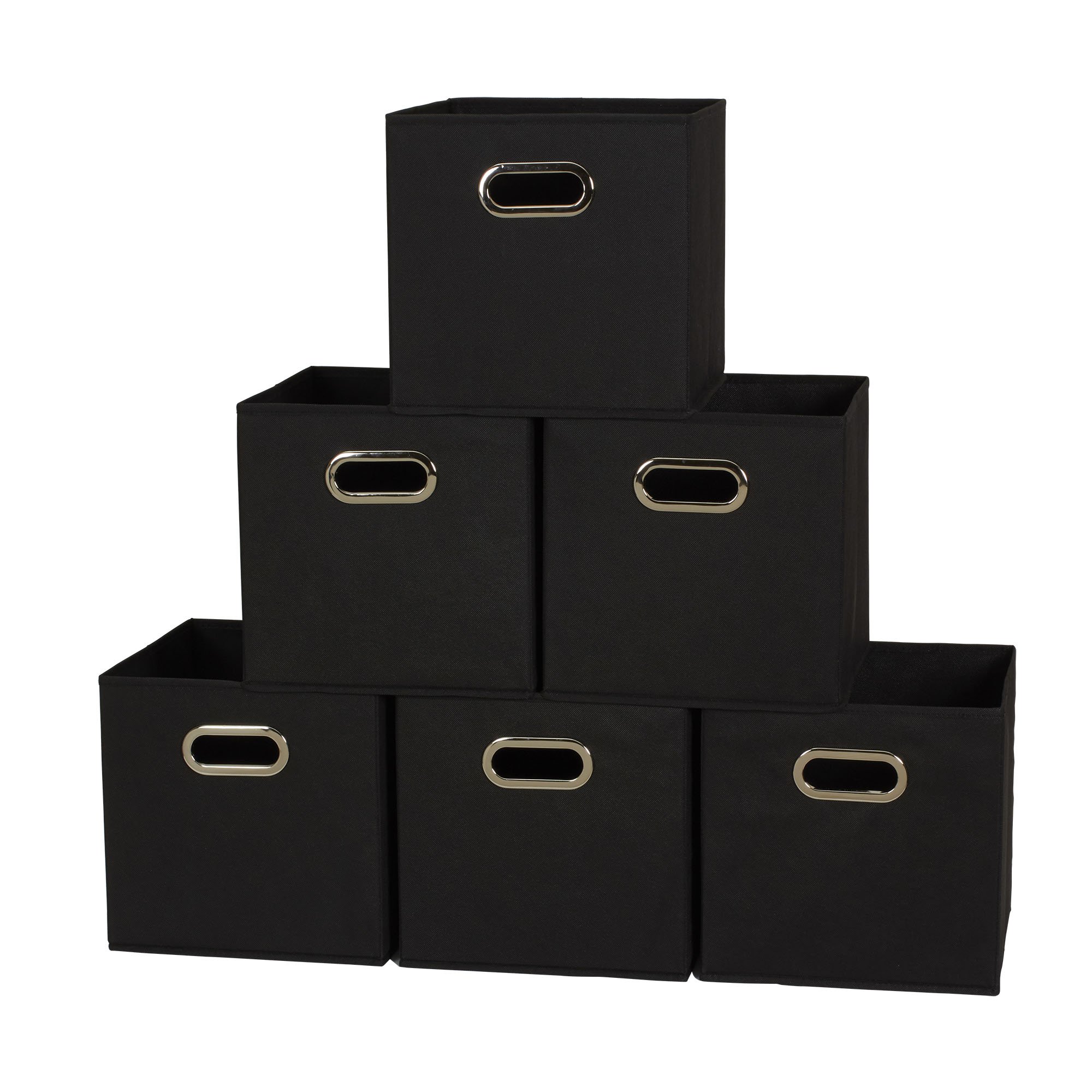
Six classic black bins with chipboard-reinforced sides that feel more substantial than basic fabric cubes.
Why I picked it: I grabbed these when I needed bins that behave like drawers—thicker walls and sturdy sides that don’t collapse.
Best for: Heavier odds-and-ends, bookcase drawers, long-term shelving.
Good value for higher build quality and durability.
Pros
- Sturdy chipboard sides
- Rich fabric finish
- Grommet front handle
- Stackable and foldable
Cons
- Needs bottom board inserted for shape
- Less breathable than thin fabric
My take
When I wanted a storage cube that could act like a drawer, these were the most solid option. The chipboard frame gives a crisp rectangular shape that slides in and out of shelving without collapsing.
The fabric feels higher-end and didn’t show fraying after weeks of use; the silver grommet handle adds an upscale touch. I used them in a bookcase to hide miscellaneous items and they made the shelves look intentionally styled.
They do require inserting the bottom board to reach full stability, so there’s a small step during setup, but that trade-off is worth it for the sturdier walls. If you want bins that look and feel premium on a shelf, these held up best under heavier use.
4. MAX Houser Foldable Fabric Storage Bins (12-inch) – Best for Labeling
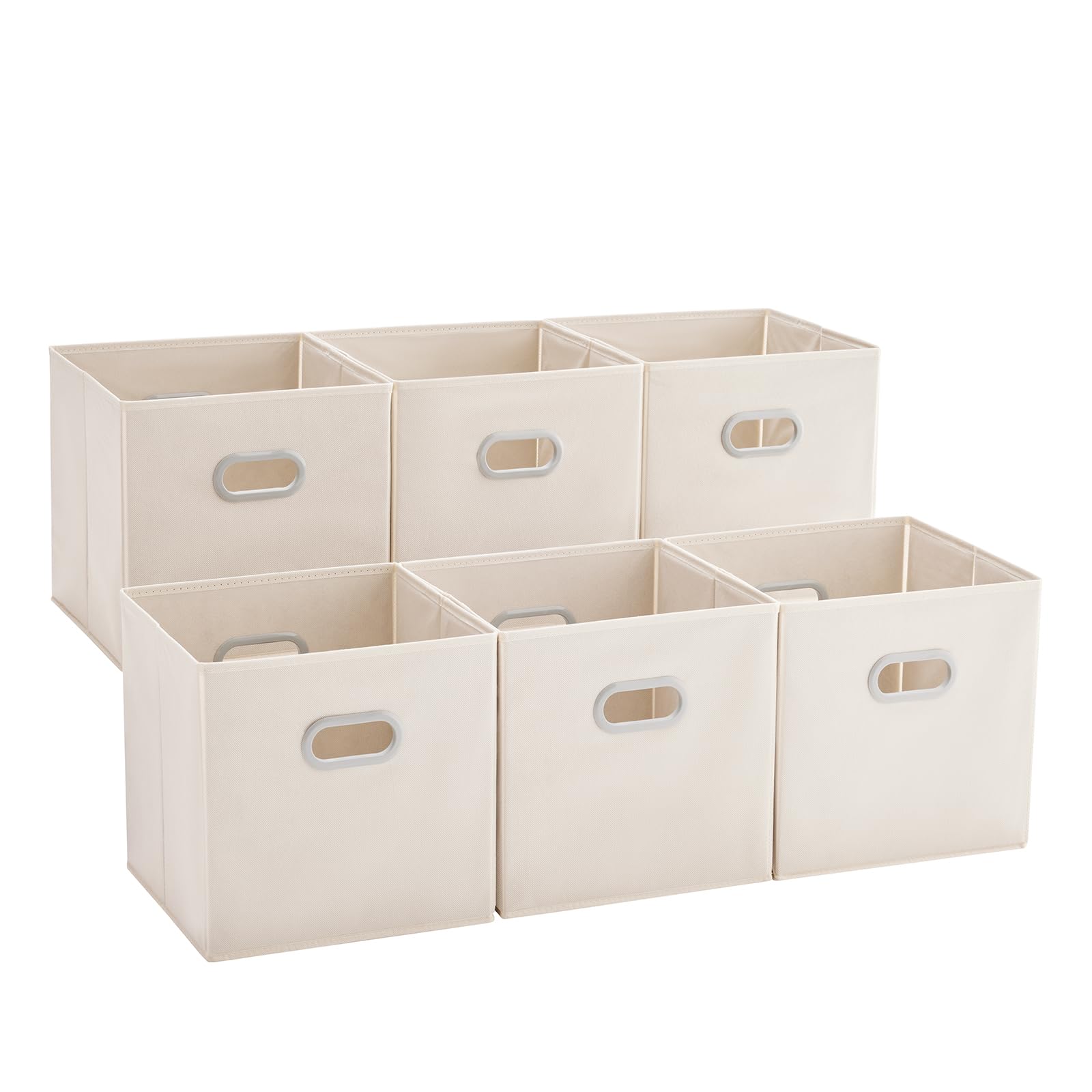
A six‑pack of larger beige cubes that include a label slot and are sized for larger closet or shelf openings.
Why I picked it: I appreciated the integrated label pocket and slightly larger footprint for bulkier items.
Best for: Closets, nursery storage, hiding larger items.
Mid-range choice for larger cubbies and labeled organization.
Pros
- Included label pocket for quick identification
- Larger 12-inch footprint
- Foldable for compact storage
- Durable-feeling fabric
Cons
- Actual interior may be slightly smaller than listed
- Less rigid than chipboard options
My take
I brought these in when I needed a labeled solution for a nursery shelf and a closet where I keep seasonal hats and blankets. The label slot made rotating contents simple and kept things organized for the whole family.
The size felt closer to the larger cubes I wanted, which helped hide bulkier items that wouldn’t fit in smaller bins. I did notice the internal dimensions ran a bit under the advertised size on my sample, so I recommend measuring your shelf opening before committing.
The fabric and handles felt sturdy for light-to-medium loads. I liked having the option to fold them flat when not in use, and the beige color blended into several decor schemes I tried.
5. SONGMICS Non-Woven Fabric Storage Cubes (11-inch) – Best for Everyday Use
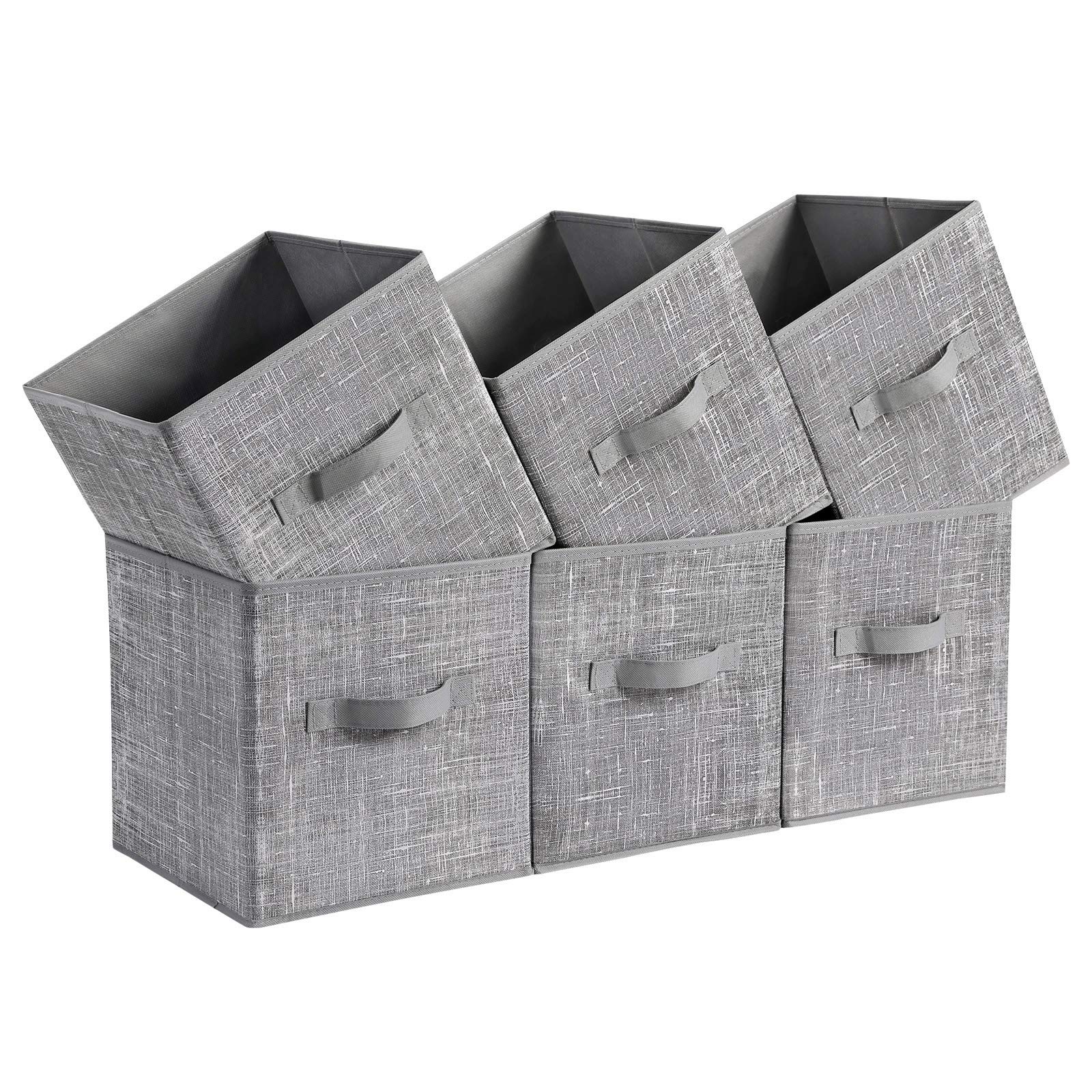
A six-pack of heathered gray, two-handled cubes that combine a classier fabric print with a solid internal cardboard support.
Why I picked it: I picked these for everyday closet and guest-room use where look and structure matter equally.
Best for: Closet shelves, guest-room linens, versatile daily storage.
Value-oriented and practical for frequent handling.
Pros
- Two handles for balanced carrying
- Heathered fabric looks upscale
- Rigid with thick cardboard inserts
- Foldable and stackable
Cons
- Initial packaging odor
- Rated load limit around 11 lb
My take
These cubes became my go-to for closet shelves holding guest towels and spare linens. The heathered cattail gray reads more refined than plain solid fabric, so they upgraded the look of my shelves.
I liked having two handles on each side; pulling a full bin out felt balanced and stable thanks to the thick cardboard bottom and walls. The manufacturer’s stated weight limit is modest, so I avoided overpacking them with heavy books.
The only real annoyance was a factory smell straight from the package that lingered for a while in a closed closet; airing them out fixed it for me. For everyday use where appearance and structure matter, these were a reliable pick.
How I Choose Fabric Storage Bins
Size and fit
I always measure the interior dimensions of the shelves or cubbies where I’ll use the bins before buying. A few inches of wiggle room helps when pulling a full bin in and out.
Consider not just width and height but also depth—some bins advertise nominal sizes that leave little clearance in certain shelving systems.
- Measure shelf opening before you buy
- Leave space for handles and ease of removal
- Choose larger cubes for bulkier items like towels
Structure and base
Bins with chipboard or thick cardboard sides hold their shape better when filled, which I prefer for drawers and heavier items.
If you need lightweight portability and folding storage, a soft-sided, collapsible cube without rigid walls makes more sense.
- Chipboard = drawer-like stability
- Cardboard bottoms improve standing shape
- Soft sides fold flatter for storage
Handles and access
I look for handles that feel solid and are positioned for balanced lifting. Grommeted handles look cleaner; sewn-in fabric handles are softer to grip.
Two handles (one per side) are better if you often carry full bins across a room.
- Grommet handles = neat appearance
- Two handles = balanced carrying
- Check handle alignment on sample sets
Material, smell, and finish
Non-woven fabric is common and breathable, but some sets can have an initial packaging odor that fades after airing.
If appearance matters, choose a heathered or textured finish—those hide wear better than plain solids.
- Air out new bins if they smell
- Heathered fabrics hide stains and wear
- Avoid lightweight thin fabric for heavy loads
Pack size and cost
Multipacks usually offer better per-bin value, but make sure the size fits your shelving.
I balance cost against durability: cheap bins are fine for occasional use, but thicker-walled options last longer in daily traffic.
- Buy a multipack for whole-shelf uniformity
- Consider buying a sturdier small set for high-use areas
Frequently Asked Questions
How do I remove that factory smell from new fabric bins?
I air new bins out for a day or two in a well-ventilated room or outside; a damp cloth wipe and a few hours in sunlight (if fabric is colorfast) usually speeds up the process.
Do these bins require bottom inserts?
Most of the bins I tested stand better with the included bottom board inserted—chipboard or thick cardboard makes a big difference in wall stiffness and shape retention.
Can fabric bins hold heavy items like books?
I avoid stuffing any of these fabric cubes with very heavy books. If you plan to store weighty items, choose a chipboard-reinforced bin and keep loads modest to preserve the shape.
Final Take
After testing the five options, I found there’s no single perfect bin—only the right one for your shelf, contents, and style needs.
For large cubbies and laundry storage I leaned on the 13-inch Amazon Basics set; for a cleaner aesthetic in modular shelves the 10.5-inch Amazon Basics cubes worked best. If you need drawer-like durability, Household Essentials’ chipboard-backed bins felt the most substantial. MAX Houser stood out when I wanted larger cubes with label pockets, and SONGMICS offered the best everyday balance of looks and structure.
Measure your shelf, decide whether structure or collapsibility matters most, and pick the bin that matches how often you’ll use it. I kept one of each style on hand depending on the job, and that mix solved most of my home-organization needs.
