
I tested four compact manual grinders and kept the ones that gave me consistent, even grinds, easy adjustment, and solid build for home and travel.
I hand-tested a range of manual grinders to find the ones I actually enjoy using. My focus was on grind consistency, adjustment range, build quality, and portability.
These picks include precision Timemore models for daily brewing and a wallet-friendly stainless-steel option that still delivers an even grind. I’ll explain when each grinder makes the most sense.
I prioritized burr size, adjustment precision, and how effortless grinding feels over-looking for the best overall everyday option or travel-friendly models.
1. TIMEMORE Chestnut C5 Pro – Best Overall
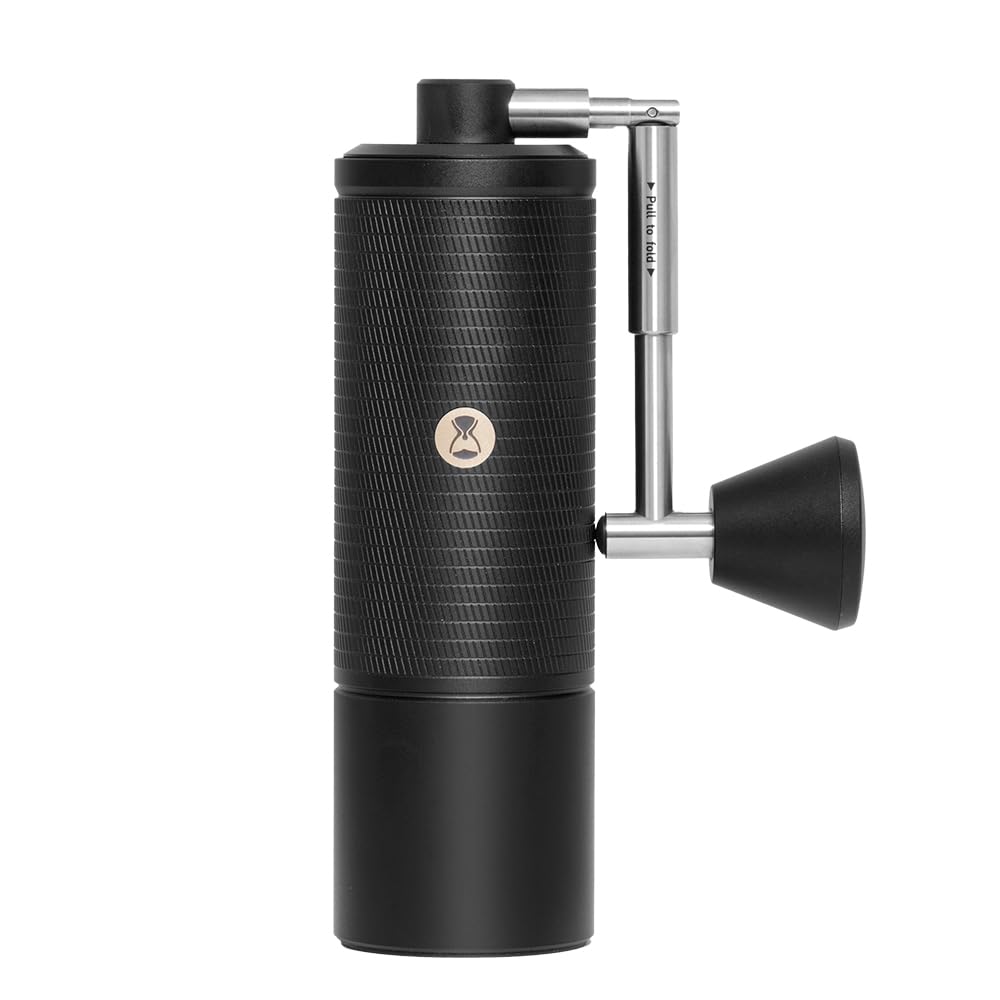
A heavy-duty all-metal grinder with a large 42 mm stainless burr and very fine adjustment for everything from espresso to French press.
Why I picked it: The combination of 42 mm stainless burrs, ultra-fine adjustment, and smooth bearing action made it my go-to daily grinder.
Best for: Home brewers who want a single manual grinder for espresso through French press.
A more expensive, premium manual grinder.
Pros
- 42 mm stainless steel burrs
- Very fine 48-level adjustment
- Smooth bearing-assisted handle
- All-metal one-piece body
Cons
- Heavier than small travel grinders
- Higher-priced than basic models
My take
Right away I noticed the weight and fit of the Chestnut C5 Pro — it feels like a precision tool. The 42 mm CNC stainless steel burrs produce very consistent particles, and the double-bearing central axis keeps the rotation steady.
The adjustment is impressively precise: roughly 48 distinct steps let me dial-in very fine to coarse settings without guessing. I used it for finer pour-over and near-espresso grinds and achieved repeatable results.
Grinding effort is lower than I expected thanks to the bearing-assisted handle; the crank keeps turning smoothly even if I pause. The folding handle also makes it easy to store or pack for a trip.
I packed the included brush and appreciated how the metal body disassembles for cleaning. For me this is the grinder I reach for when I want control and durability in one package.
2. TIMEMORE Chestnut C2S – Best for Everyday
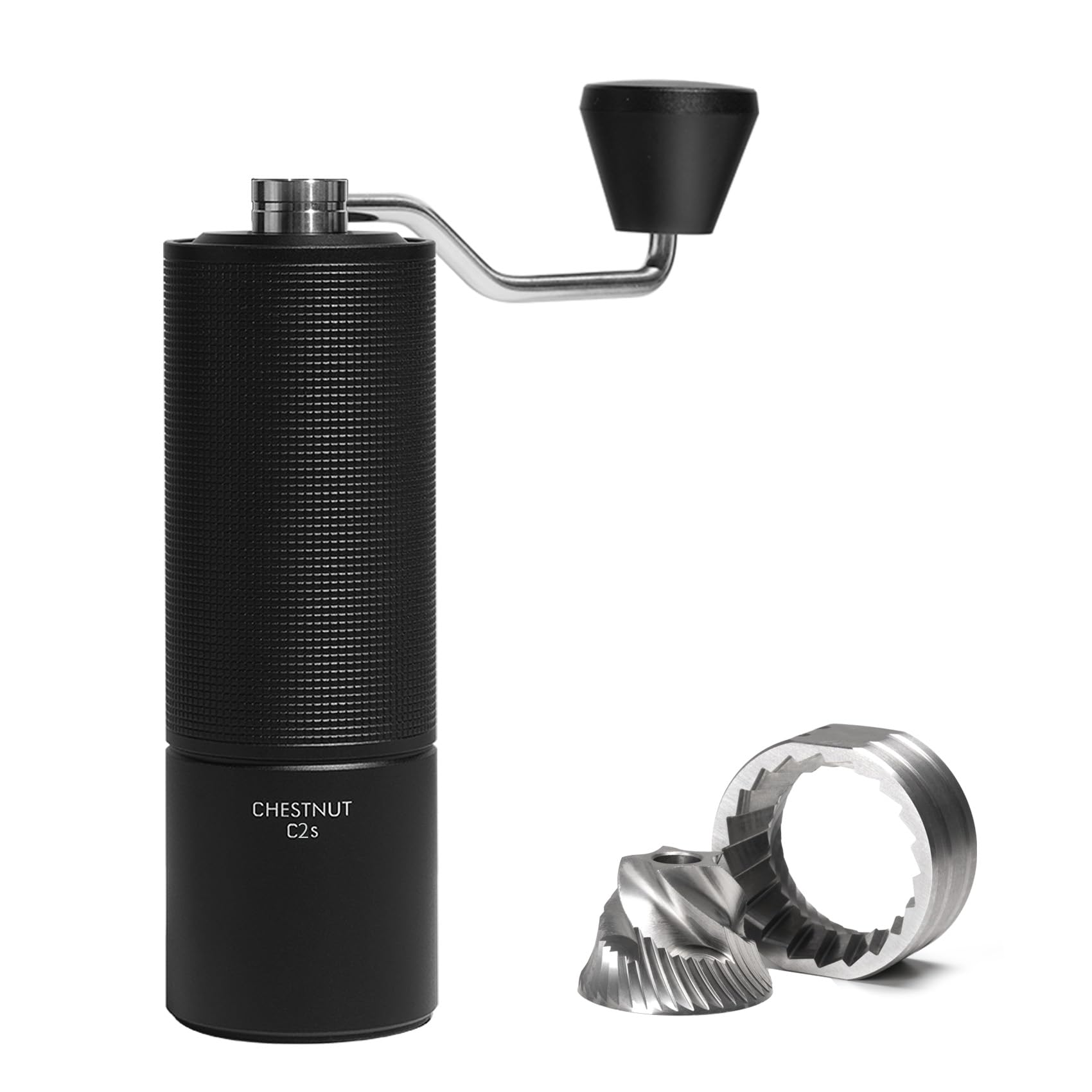
A solid all-metal unibody grinder with a 38 mm burr, precise 36-level adjustment, and a compact footprint for daily use.
Why I picked it: It balances build quality, speed, and grind consistency at a reasonable midrange level.
Best for: People who want a reliable daily manual grinder for pour-over and Aeropress.
A midrange, value-oriented manual grinder.
Pros
- Full metal unibody construction
- 38 mm stainless burrs
- 36 grind settings
- Compact, easy to grip
Cons
- Handle can make it tip if unsecured
- No folding handle on some versions
My take
The C2S felt almost surgical in my hand — tight tolerances, smooth metal surfaces, and a satisfying heft. The 38 mm S2C burrs deliver even grounds that noticeably improved my Chemex and Aeropress cups.
I time-grind about 20 g in under a minute on my usual setting, which makes this a practical daily tool. The 36-step adjustment is straightforward and repeatable once you find your mark.
Disassembly for cleaning is simple: a few main parts and a brush get everything back to new. I kept this grinder on my counter for several weeks and appreciated how quiet and consistent it was.
3. TIMEMORE Chestnut C3S Pro – Best for Travel
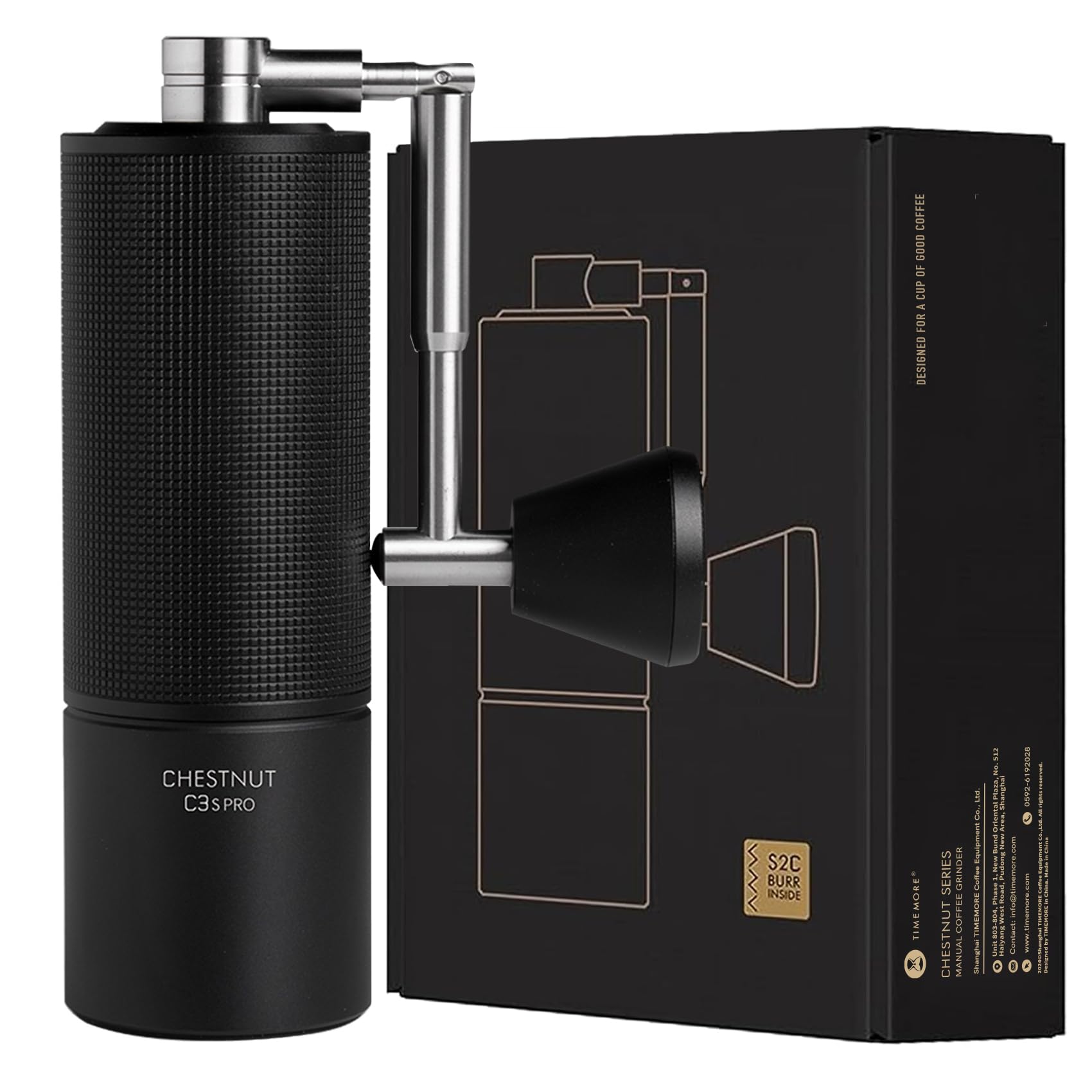
A travel-friendly all-metal aluminum grinder with a patented S2C hexagonal conical burr and a foldable crank for stowing.
Why I picked it: The foldable crank and compact aluminum body make it the most portable high-performance Timemore option I tested.
Best for: Brewers who want a fast, durable grinder they can take on trips.
Mid-priced with travel-focused features.
Pros
- All-metal aluminum body
- Patent S2C hexagonal burr
- Foldable crank handle
- Fast, even grinding
Cons
- A bit heavier for airline carry
- Adjustment takes a moment to learn
My take
I reached for the C3S Pro whenever I packed a kettle and V60 for a weekend trip. The foldable crank saves space and the build feels robust enough to survive travel.
The S2C patent conical burrs produce very even particles for pour-over and Aeropress, and I found grind times significantly shorter than older travel grinders I’ve used. It’s quick without feeling sloppy.
Adjusting grind size took a few practices, but once set I could reproduce the setting reliably. Overall it’s the travel grinder I kept when I wanted near-home performance away from the kitchen.
4. VEVOK CHEF Manual Grinder – Best Budget
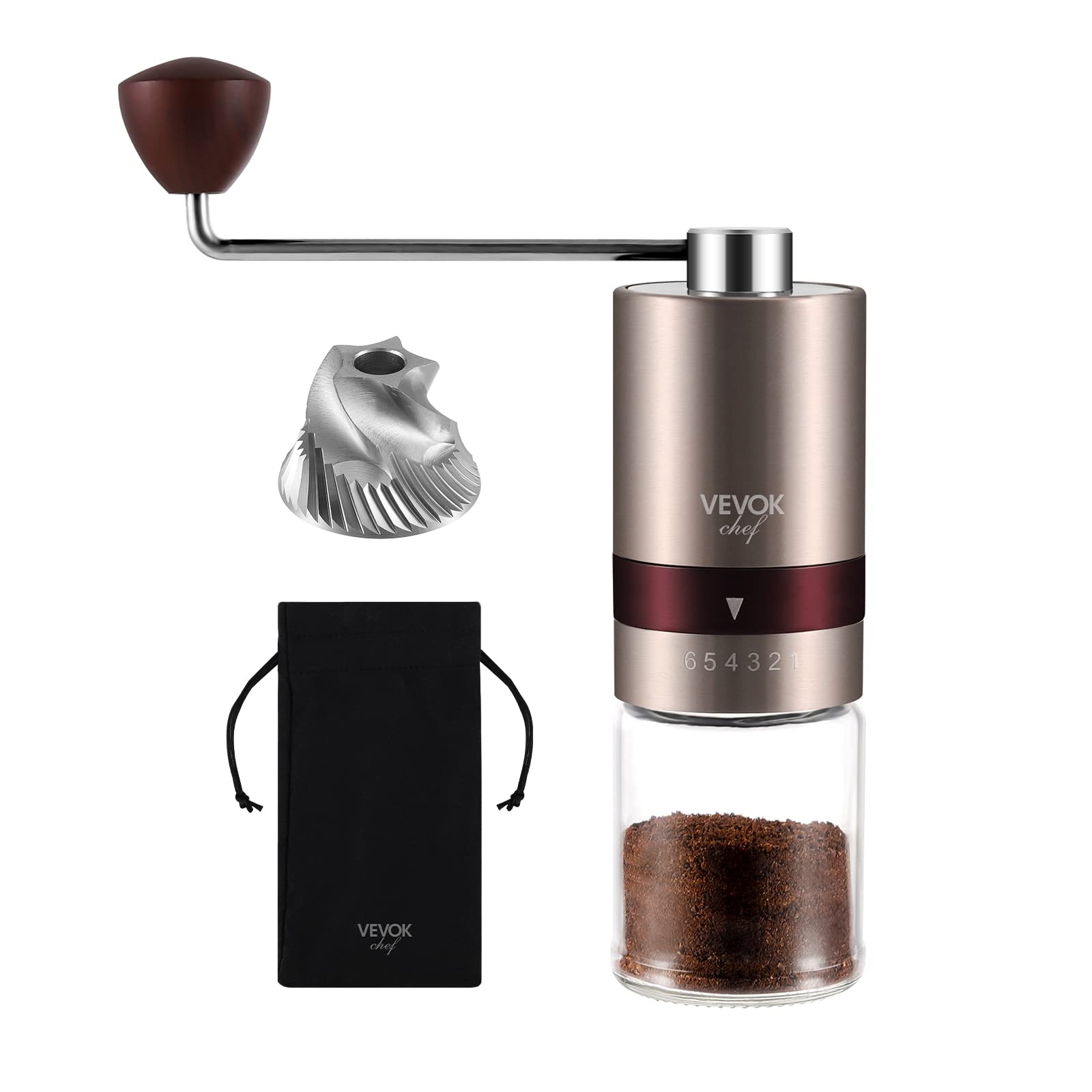
A compact stainless-steel grinder with six external grind settings, a CNC stainless burr, and a small hopper for 1–2 cups.
Why I picked it: It delivers surprisingly even grounds and portability at a price I don’t mind leaving in a travel bag.
Best for: Novices and travelers who want an affordable, easy-to-use manual grinder.
An affordable entry-level manual grinder.
Pros
- Six easy external settings
- Stainless steel conical burr
- Compact and portable
- Includes carrying bag
Cons
- Small bean hopper capacity
- Adjustment feel less refined
My take
I was impressed at how even the grounds were for such an inexpensive, compact unit. The CNC stainless burr is sharp and the six-step external adjustment makes switching between espresso and pour-over straightforward.
The grinder’s hopper holds about 15–20 g of beans, while the glass grounds jar accepts more — so I learned to load in batches for larger pours. That small hopper is the main trade-off for its handy size.
Cleaning is simple because the stainless surfaces don’t cling to grounds, and the included bag makes it easy to slip into luggage. If you want a reliable, budget-friendly option for travel or occasional home use, this is the one I bring.
How I Choose a Manual Coffee Grinder
Burr type and size
I prioritize conical stainless or hardened-steel burrs because they produce a more consistent particle size than blades. Larger burrs (38–42 mm) grind faster and feel smoother under load.
- Larger burrs = faster, more even grinding
- Stainless or hardened steel resists wear
- Conical shapes reduce fines and heat buildup
Adjustment range and repeatability
I look for a clear, tactile adjustment system so I can reproduce settings for pour-over, Aeropress, and coarser brews. More steps means finer control; 30+ steps covers most needs.
- Fine steps for espresso and fine pour-over
- Coarse range for French press and cold brew
- Mark or note a favorite setting for faster repeatability
Build, weight, and portability
I decide how I’ll use the grinder most. Heavy, all-metal grinders win on durability and stability at the counter. Lighter aluminum or smaller models win for travel and packing.
- All-metal bodies feel and last longer
- Foldable handles save pocket or luggage space
- Consider hopper capacity when you grind for multiple cups
Ergonomics and cleaning
I test crank leverage and how easy the grinder is to disassemble. A smooth bearing and a well-sized handle make grinding effortless; straightforward disassembly makes cleaning quick.
- Bearing-assisted handles reduce fatigue
- Removable parts and a brush simplify cleaning
- Anti-slip bases or textured grips improve stability
Frequently Asked Questions
How much coffee do these grinders hold?
I found capacities vary: the Timemore C5 Pro holds about 30 g, the C2S around 25 g, and many compact travel grinders hold 15–20 g per hopper load.
Can a manual grinder handle espresso and French press?
Yes. I used the same Timemore models for fine settings close to espresso and coarse settings for French press — a wide adjustment range is key.
Are manual grinders hard to clean?
Not really. I disassemble the main parts, brush out grounds, and wipe metal surfaces. Models with straightforward disassembly make this fastest.
Final Take
I kept the Timemore C5 Pro for the days I want the best precision and durability, and I reach for the C2S when I want a reliable daily grinder with a smaller footprint.
For travel, the C3S Pro’s foldable handle and aluminum body are the easiest to pack without sacrificing grind quality. If I want to save money but still grind fresh, the Vevok CHEF is a compact, capable alternative.
Pick the grinder that fits how you brew most often: precision and power for daily home use, or compact portability for travel. I tested these so you can skip the guesswork.
