
I tested plug-in and battery motion-activated night lights across bedrooms, hallways, and stairs. These six options cover simple dusk-to-dawn use, adjustable brightness, motion-triggered convenience, rechargeable stick‑w
I rely on small, motion-activated lights to keep my home navigable at night without blasting overhead lights. Over several weeks I installed the units below in bathrooms, hallways, stairways, closets and next to bedside outlets to see how sensors, brightness and mounting options perform in real-life use.
This roundup covers true dusk-to-dawn plugs, motion-plus-light sensors, adjustable units and rechargeable stick-on lights. I include what I like, who each is best for, and the few trade-offs I ran into while using them.
I compared basic dusk-to-dawn plugs, motion-enabled plug-ins, adjustable dimmers, and rechargeable stick-ons to highlight where each type shines in a home setup.
1. GE Light‑Sensing LED Night Light – Best Simple Dusk-to-Dawn
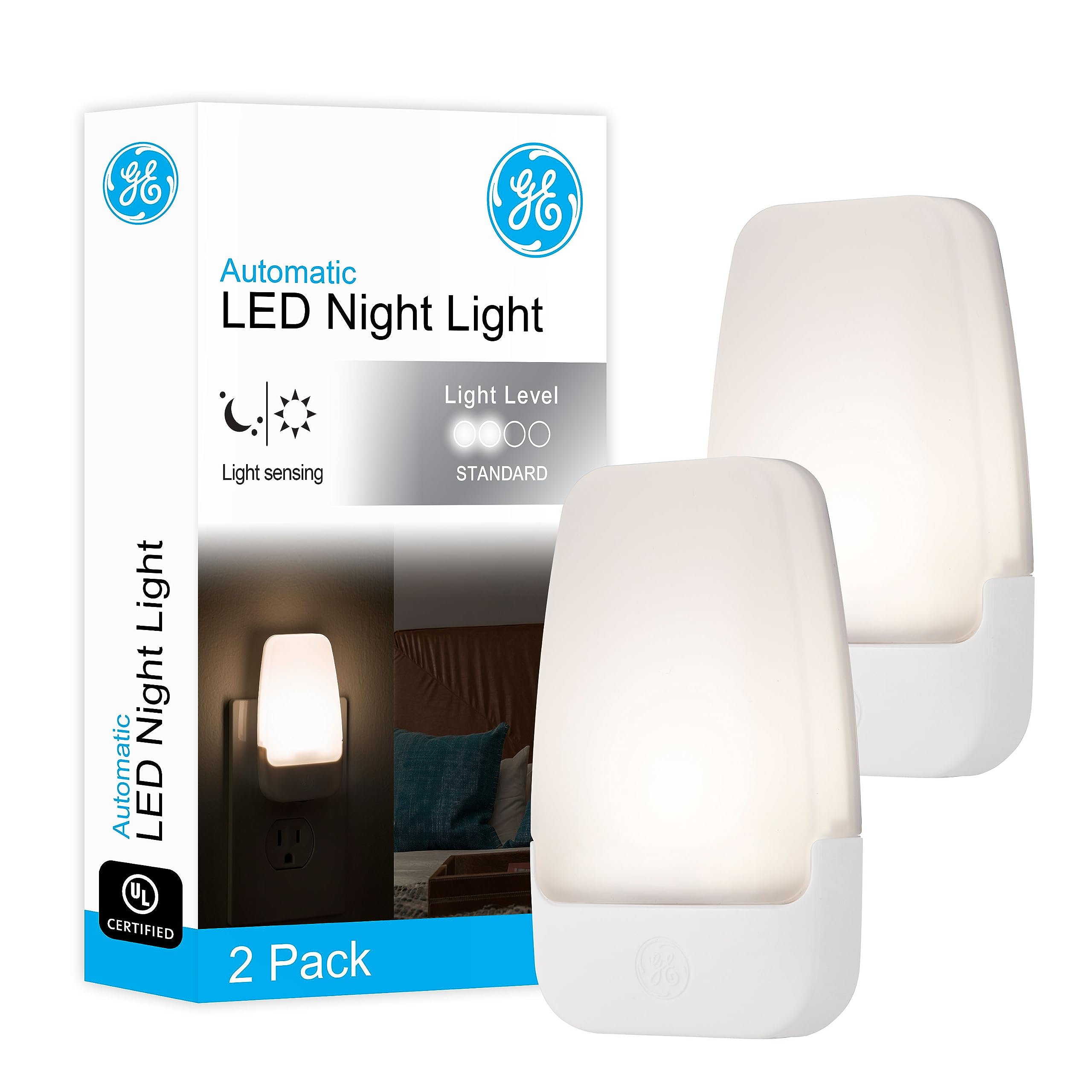
A compact, plug‑in dusk-to-dawn night light that stays cool to the touch and preserves the second outlet.
Why I picked it: Reliable automatic on/off at dusk and dawn with a compact design that won’t block the second socket.
Best for: Bedrooms, bathrooms, hallways where you want constant low-level light.
Very budget-friendly value in a two-pack.
Pros
- Automatic dusk-to-dawn operation
- Slim profile keeps second outlet usable
- Cool-running, long-lasting LED
- UL‑certified safety
Cons
- Fixed brightness only
- Not motion-activated
My take
I keep a pair of these plugged in around the house for no-fuss night lighting. They turn on when the room gets dark and off again at dawn, which is exactly the automatic behavior I want for hallways and bathrooms.
The LED stays cool and the glossy white finish blends into my outlets. Because the unit is slim, I can still use the adjacent socket for a phone charger—an underrated practical detail.
If you want a simple, always-ready night light with dependable dusk-to-dawn sensing, this GE unit does the job without extra features or fiddly settings.
2. AUVON Plug‑in Motion Night Light – Best Motion & Dimmable
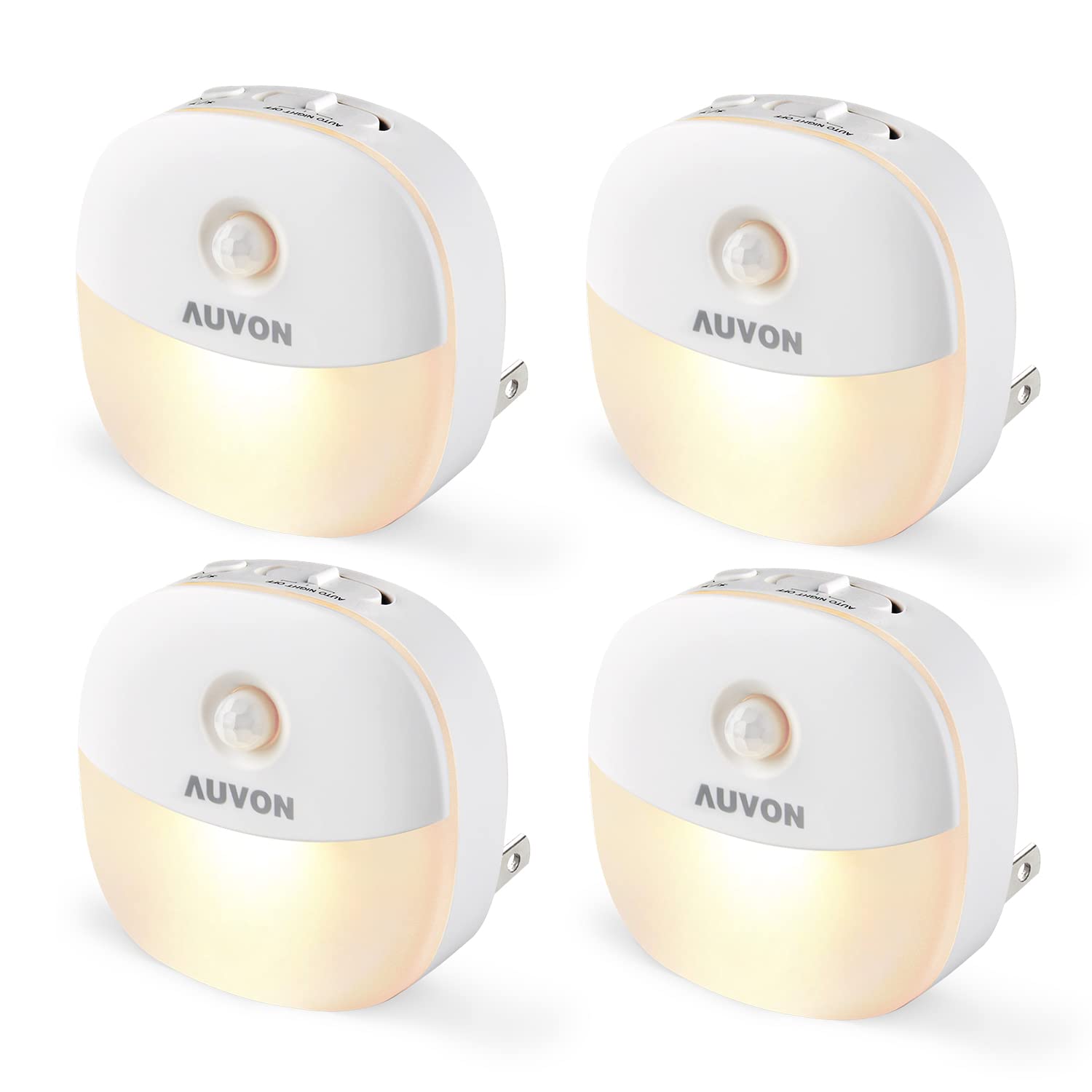
A plug-in night light with both motion and dusk-to-dawn sensors plus wide-range motion detection and adjustable brightness.
Why I picked it: Offers motion-triggered lighting and stepless dimming across a useful detection cone for hallways and stair landings.
Best for: Hallways, stairs, and children's rooms that need motion-activated light without full overheads.
Good midrange option with adjustable output and safety features.
Pros
- Motion plus dusk-to-dawn sensing
- Stepless dimming to 1–50 lm
- Sensitive 3–5 m, 120° motion range
- Fire-resistant casing
Cons
- Auto mode may trigger in very high traffic areas
- Multiple settings take a moment to learn
My take
I installed one of these in a long hallway and appreciated how it stays dark during the day but comes alive when someone walks past at night. The motion sensor reliably detects movement across about three to five meters with a broad 120° cone.
The dimming options are genuinely useful: I set a low, warm level for overnight trips and a brighter setting for when I need to fetch something quickly. The unit remembers the last brightness, so I don’t have to fiddle with it every time.
Safety features like over-current protection and a fire-resistant shell give me confidence using these around kids. For spaces where motion-triggered illumination matters, this AUVON balances sensitivity and adjustable light well.
3. MAZ‑TEK Adjustable LED Night Light – Best Adjustable Brightness
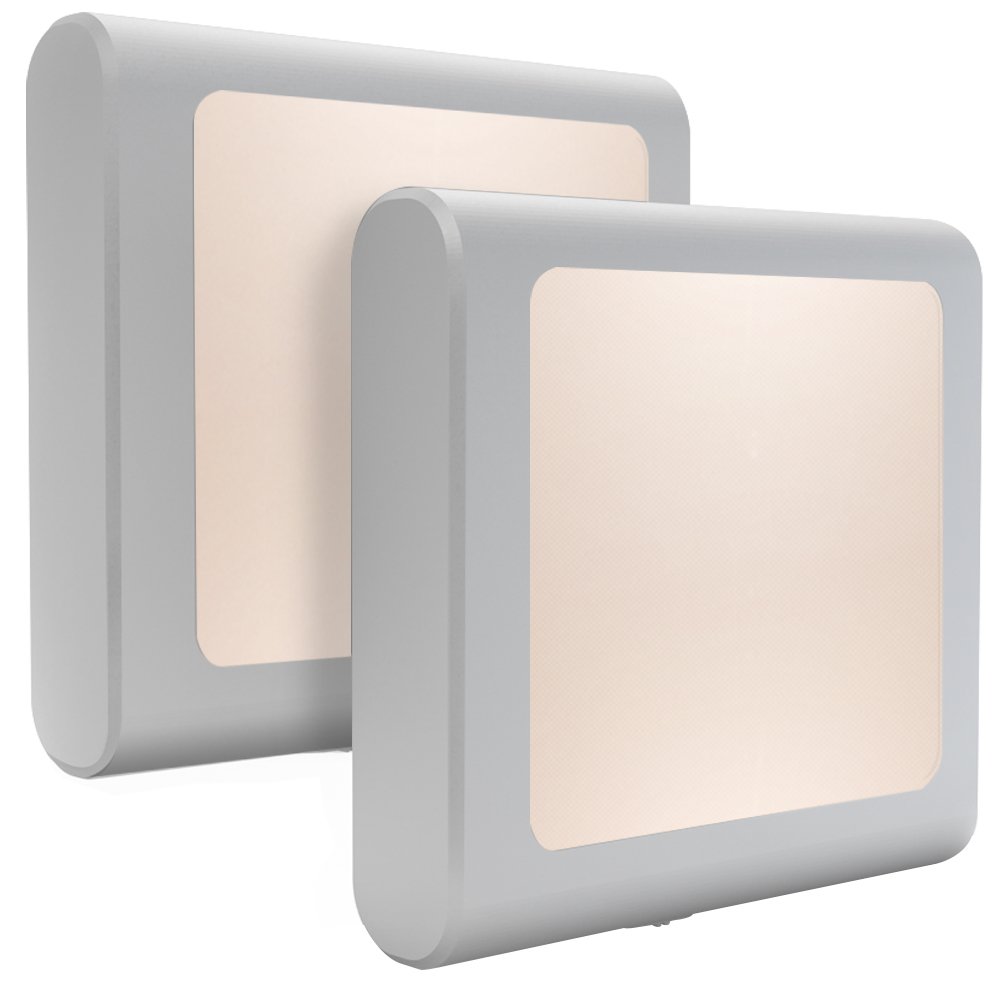
A slim plug-in with a slide dimmer for stepless control from off to a gentle warm glow.
Why I picked it: I liked the slide dimmer that lets me dial in exactly how much light I want in a corridor or kid’s room.
Best for: Long hallways and rooms where precise low-level lighting matters.
Affordable option with useful dimming control.
Pros
- Stepless slide brightness control
- Small, unobtrusive design
- Very low energy use
- Won’t block second outlet
Cons
- No motion activation
- May remain on all day if area stays dark
My take
This MAZ‑TEK unit became my go-to for a long, dark hallway because the slide dimmer lets me set a subtle glow that still lights the floor but won’t wake the household.
The maximum output is modest, but the distributed front surface gives a soft wash rather than a focused beam—exactly what I want for ambient path lighting.
One small quirk: if the location stays dark during daytime (like windowless corridors), the sensor can keep it on until overhead lights are used. For most nighttime-only spots, though, the adjustable control is excellent.
4. Maxxima MLN‑16 LED Night Light – Best Bright Daylight Output
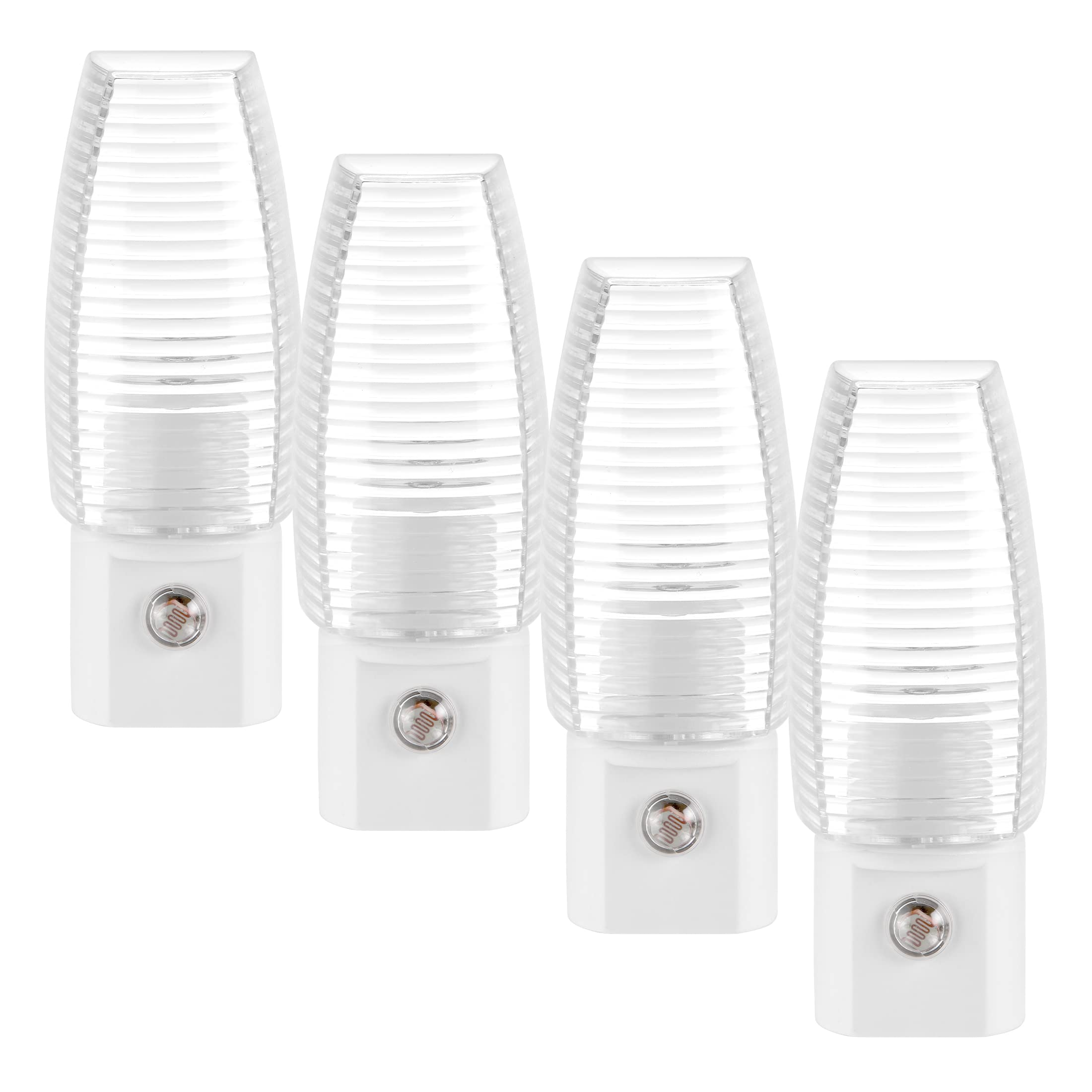
A daylight‑balanced plug-in night light with a relatively bright output for better visibility in dim spaces.
Why I picked it: I picked it for situations where a stronger, daylight-toned nightlight is helpful to see steps or doorways.
Best for: Senior living areas, bathrooms, or long hallways that need more visible light.
Value four-pack for spreading consistent daylight output through the house.
Pros
- 5000K daylight color
- Higher practical output
- Dusk-to-dawn sensing
- No bulb replacement needed
Cons
- Color temperature is cool for bedrooms
- Not motion-activated
My take
I use these Maxxima lights where extra visibility matters—near staircases and in a bathroom that’s used at night. The daylight tone (5000K) reads clearer than warm nightlights, which helps when footing or details matter.
Because they output a brighter, cooler light, I avoid them in bedrooms where a warm, low-glow is preferable. In circulation areas and for older family members who need better visibility, they’re a strong option.
The pack of four makes it easy to create consistent lighting throughout a house, and the built-in dusk-to-dawn sensor keeps them off when ambient light is sufficient.
5. AUVON Rechargeable Motion Night Light – Best Rechargeable Stick-On
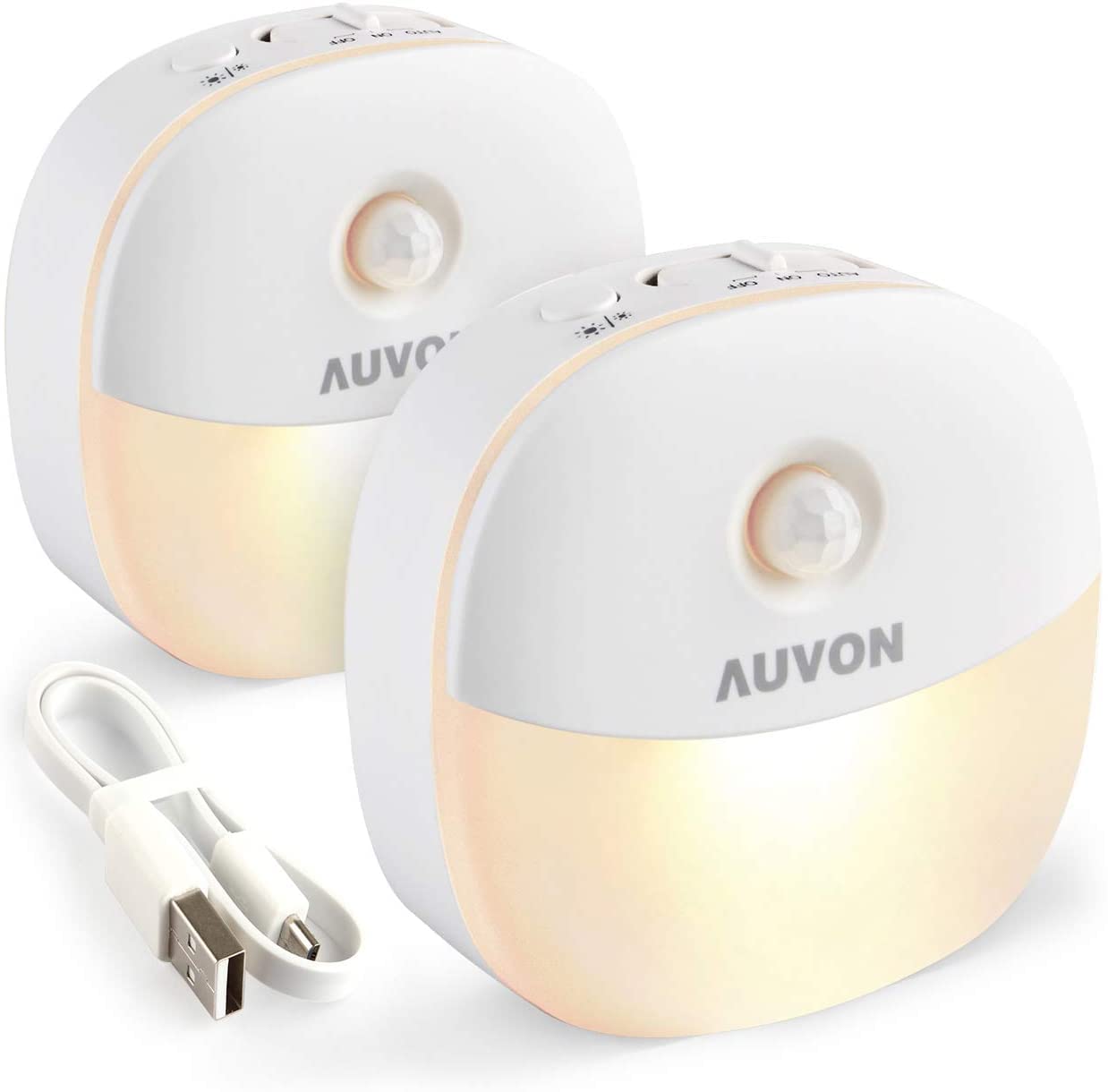
A compact, rechargeable motion light with magnetic mounting and multi-mode operation that I used on stairs and inside closets.
Why I picked it: Rechargeable and magnetic mounting made these ideal for spots without outlets or where I want removable lights.
Best for: Stairs, closets, cabinets and temporary lighting needs.
A practical rechargeable choice that avoids disposable batteries.
Pros
- Rechargeable with USB cable
- Magnetic strip and adhesive mounting
- PIR motion sensing to 3–5 m
- Five lighting modes
Cons
- Smaller light footprint
- On-time is short (20 seconds)
My take
These AUVON stick-on lights are the most versatile units I tested. I mounted one on a stairwell wall with the magnetic base and it reliably kicks on when I descend at night.
The PIR sensor picks up motion well—even slightly off to the side—and the different modes let me choose Auto, On, or Off and two brightness levels. A two-hour charge and the claim of very long standby in low-use modes make them low-maintenance.
They’re not floodlights, but for marking steps, illuminating a cabinet, or guiding midnight trips, the rechargeable format and flexible mounting are huge conveniences.
6. Briignite Plug‑in Night Light – Best Pack for Multiple Rooms
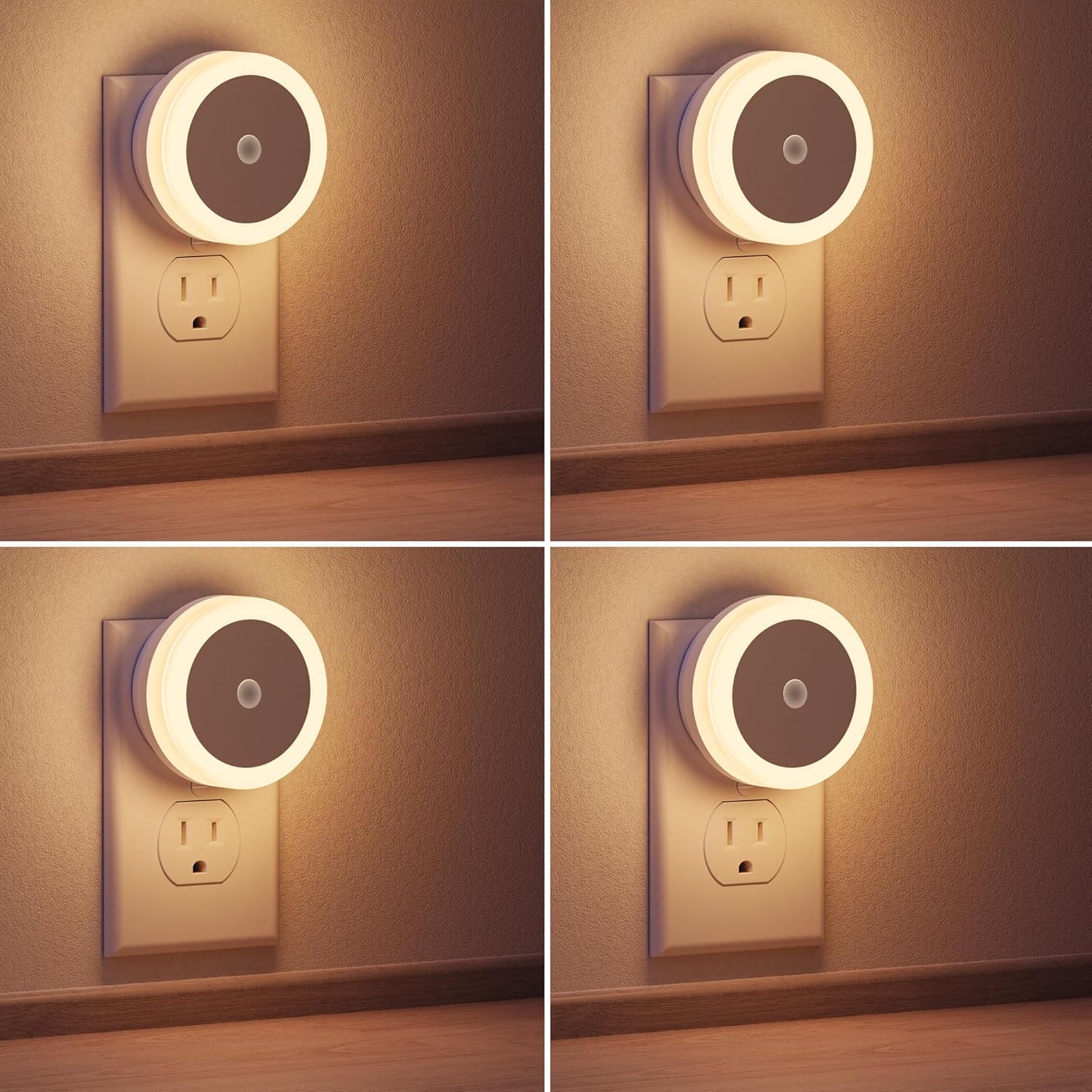
A four-pack of compact plug-ins with warm 3000K output that won’t obstruct neighboring outlets.
Why I picked it: I wanted a multi-room solution with a warm color temperature and compact footprint.
Best for: Equipping multiple bedrooms, bathrooms, and hallways at once.
Great value when you need several identical night lights.
Pros
- Warm 3000K color temperature
- Compact, unobstructing design
- Automatic dusk-to-dawn sensing
- Low power consumption
Cons
- Some units are brighter than expected
- Limited adjustability
My take
I distributed this four-pack across bedrooms and a master bathroom so everyone had consistent, warm illumination at night. The 3000K tone is easy on the eyes and avoids that harsh blue tint that wakes you up.
They’re compact enough to leave the second outlet usable and the light sensor keeps them off during daylight or when the room is bright. A couple of placements were brighter than I anticipated, so I chose locations where a stronger warm glow was welcome.
Overall, this pack is the fastest way I’ve found to equip several rooms with reliable dusk-to-dawn lighting.
How I Choose Motion-Activated Night Lights
Key features I evaluate
I look for the sensor type first: simple dusk-to-dawn sensors are perfect for steady low-level light, while motion + light sensors are best where lights should stay off until someone passes.
Brightness and color temperature determine use: warm, low-lumen lights are ideal for bedrooms; higher, daylight-toned outputs work better for stairways or senior living areas.
- Sensor type — dusk-to-dawn vs motion + dusk-to-dawn
- Brightness — check lumen ranges or adjustable dimming
- Mounting and form factor — plug-in vs stick-on vs magnetic
- Power source — mains vs rechargeable (avoid disposable batteries)
- Safety certifications and housing materials
Placement tips I use
I place plug-ins near steps and long corridors where even a low glow prevents stumbling. For closets and cabinets, rechargeable stick-ons win because they don’t need an outlet.
If a unit triggers too often, I move it slightly or switch to a model with a narrower detection cone or manual dimming to reduce nuisance activations.
- Mount at ankle-to-waist height for best motion detection
- Avoid pointing sensors at windows or bright lamps
- Use warm color temps in sleeping areas to avoid disruption
Frequently Asked Questions
Will a dusk-to-dawn night light stay on during the day?
I found that dusk-to-dawn units stay off whenever ambient light is high enough. In windowless areas that stay dark all day, they can remain lit until overhead lights are used, so I opt for motion-enabled or adjustable models in those spots.
How far do motion sensors typically reach?
In my tests most PIR plug-ins detect movement reliably around 3–5 meters and cover a wide cone. Rechargeable stick-ons use similar PIR tech but have a shorter practical range depending on placement.
Are rechargeable night lights worth it?
Yes—I use rechargeable units where outlets aren’t available or when I want removable lights. The convenience of USB charging and magnetic mounts outweighs the slightly smaller light footprint for stair and closet use.
Final Take
I recommend picking a dusk-to-dawn plug for simple, always-on corridor lighting, a motion-plus-dim unit for busy hallways and stairs, and a rechargeable stick-on for closets or spots without power.
Across the six options here I balanced sensor behavior, color temperature, and mounting style so you can match the right light to each room’s needs.
